Power Out for 12 Hours — Is Refrigerator Food Still Safe?
After a 12-hour power outage, refrigerated perishables may be unsafe unless they stayed at 40°F or below. This guide explains what to keep or discard, how to evaluate frozen food, and how to size backup power for a refrigerator.
Last updated:
Direct answer: If your refrigerator lost power for 12 hours, most refrigerated perishable food should be discarded unless a reliable thermometer confirms that the food stayed at 40°F (4°C) or below, or it was kept cold with ice, frozen gel packs, or backup power.
A closed refrigerator is generally expected to keep food safely cold for about four hours. A freezer has a longer window: approximately 48 hours when full or 24 hours when half full, provided the door stayed closed. Do not taste food to decide whether it is safe.
The practical rule after a 12-hour outage: use temperature evidence when you have it. Without trustworthy temperature evidence or another cold source, discard high-risk refrigerated foods such as meat, seafood, milk, eggs, leftovers, soft cheese, cooked rice, and cut produce.

A 12-hour power outage creates two separate questions:
- Is the food currently safe to eat?
- How can you prevent the same loss during the next outage?
This guide answers both. It starts with the food-safety decision, then shows how to estimate your refrigerator's actual energy use and choose a backup battery without relying on a misleading nameplate wattage alone.
The 4-24-48 Rule for Refrigerator and Freezer Outages
The simplest outage rule to remember is 4-24-48:
| Appliance | Expected safe holding time | Conditions | Official source |
|---|---|---|---|
| Refrigerator | Up to about 4 hours | Door remains closed and the refrigerator was properly cold before the outage | FoodSafety.gov |
| Half-full freezer | About 24 hours | Door remains closed | CDC |
| Full freezer | About 48 hours | Door remains closed | FDA |
On a phone, swipe the table sideways to view all columns.
These are planning limits, not a guarantee that every refrigerator warms at the same rate. Insulation, room temperature, how full the appliance is, its starting temperature, and how often the door is opened all affect the result.
What to Do Immediately After a 12-Hour Power Outage
- Do not begin by smelling or tasting food. Harmful bacteria may be present even when food looks and smells normal.
- Check the refrigerator thermometer before leaving the door open. Record the temperature or take a photo.
- Check the most temperature-sensitive foods first. Test milk, meat, seafood, leftovers, egg dishes, soft cheese, cooked rice, and cut produce with a clean food thermometer when possible.
- Separate clearly safe shelf-stable foods from questionable perishables. Do not let a long sorting process warm items that are still cold.
- Check the freezer separately. Ice crystals and a temperature of 40°F or below can make frozen food safe to refreeze or cook.
- Discard uncertain high-risk food. Do not attempt to save it by cooking it after prolonged unsafe storage.
For a more extensive item-by-item reference, see UDPOWER's companion guide: Food Safety During a Power Outage: Fridge and Freezer Guide.
Use Temperature Evidence Instead of Guessing
Outage duration is the starting point, but temperature is the strongest evidence when it has been measured correctly. Use the following decision order.
| What you know | Recommended decision | Why |
|---|---|---|
| The refrigerator or food is 40°F or below | Generally keep | The food is still within the normal cold-storage range. Continue refrigerating it and use highly perishable items promptly. |
| The food is between 41°F and 45°F when power returns | Use caution | The FDA says perishables measured at 45°F or below should be cooked and consumed as soon as possible. Do not use this exception when you know the food remained above 40°F for hours. |
| The food is above 45°F after a 12-hour outage | Discard high-risk perishables | The food has likely spent too long outside safe refrigeration. |
| No thermometer, no ice, and no backup power | Discard high-risk perishables | After 12 hours, there is no reliable evidence that the food stayed safely cold. |
| Food was moved to a cooler that remained at 40°F or below | Generally keep | The cooler served as a working cold source. |
Why smell and appearance are not enough
Spoilage organisms may cause an obvious odor, color change, or slimy texture, but disease-causing bacteria do not always create a warning you can see or smell. Tasting a questionable item adds risk without providing reliable information.
Temperature history is more useful than appearance. When the temperature history is unknown after a 12-hour outage, the safer decision is to discard high-risk refrigerated food.
What to Throw Away and What May Be Kept After 12 Hours
The table below applies when refrigerated food was exposed to unsafe temperatures and was not protected by ice, gel packs, a cooler, or backup power.
| Food category | Discard | Usually safe to keep | Source |
|---|---|---|---|
| Meat, poultry, and seafood | Raw meat, cooked meat, poultry, fish, seafood, thawing meat, deli meat, hot dogs, bacon, sausage, meat salads, gravy, stuffing, broth, soups, and stews | Unopened shelf-stable products that do not require refrigeration | FoodSafety.gov chart |
| Dairy | Milk, cream, sour cream, yogurt, buttermilk, eggnog, soy milk, opened baby formula, and dairy-based dips | Butter and margarine | FoodSafety.gov chart |
| Eggs | Shell eggs, hard-cooked eggs, egg dishes, egg products, custards, puddings, and quiche | No high-risk egg product should be kept when its temperature history is uncertain | FoodSafety.gov chart |
| Cheese | Soft cheese, cottage cheese, cream cheese, ricotta, mozzarella, queso fresco, shredded cheese, and low-fat cheese | Hard cheese such as cheddar, Swiss, Parmesan, provolone, and Romano; processed cheese; grated Parmesan or Romano in a container | FoodSafety.gov chart |
| Leftovers and prepared meals | Pizza, casseroles, cooked rice, cooked pasta, cooked potatoes, fresh pasta, pasta salad, cheesecake, and refrigerated cookie dough | Bread, rolls, tortillas, plain muffins, plain cakes, waffles, pancakes, and bagels without perishable fillings | FoodSafety.gov chart |
| Fruit | Cut fruit, pre-cut melon, sliced coconut, and fruit dishes containing dairy or eggs | Whole uncut fruit, dried fruit, opened fruit juice, and opened canned fruit | FoodSafety.gov chart |
| Vegetables | Cut vegetables, packaged pre-cut greens, cooked vegetables, cooked tofu, potato salad, baked potatoes, and opened vegetable juice | Whole uncut vegetables, fresh mushrooms, herbs, and spices | FoodSafety.gov chart |
| Sauces and dressings | Creamy dressings, opened spaghetti sauce, fish sauce, oyster sauce, and temperature-abused mayonnaise under the conditions listed by FoodSafety.gov | Ketchup, mustard, pickles, olives, relish, jam, jelly, peanut butter, soy sauce, barbecue sauce, and vinegar-based dressings | FoodSafety.gov chart |
| Pies and pastries | Custard pies, cream-filled pastries, cheese-filled pastries, chiffon pies, and other fillings made with eggs or milk | Fruit pies and baked goods without perishable fillings | FoodSafety.gov chart |
The official chart contains additional food-specific exceptions. When an item is not listed or its temperature history is unclear, discard it rather than taste-testing it.
What About Food in the Freezer After 12 Hours?
Freezer food is often still safe after a 12-hour outage, especially when the freezer was full and remained closed.
- A full closed freezer may maintain a safe temperature for approximately 48 hours.
- A half-full closed freezer may maintain a safe temperature for approximately 24 hours.
- Food that still contains ice crystals or measures 40°F or below may generally be refrozen or cooked.
- Texture and quality may decline even when the food remains safe.
- Ice cream and frozen yogurt should be discarded once they have thawed, even when other frozen items may be refrozen.
A Practical Timeline for a 12-Hour Refrigerator Outage
| Time since power loss | Main objective | What to do |
|---|---|---|
| 0-15 minutes | Stop unnecessary heat gain | Keep refrigerator and freezer doors closed. Record the outage start time. Confirm that the outage is not caused by a tripped household breaker or an unplugged appliance. |
| 15 minutes-4 hours | Preserve the initial cold reserve | Do not repeatedly check the food. Prepare a cooler, ice, frozen bottles, or backup power before opening the refrigerator. |
| At about 4 hours | Protect high-risk perishables | If the outage will continue, transfer meat, seafood, milk, eggs, leftovers, soft cheese, and cut produce into a cooler that can remain at 40°F or below. |
| 4-12 hours | Maintain a measurable safe temperature | Refresh ice as needed or run the refrigerator from a compatible backup battery. Use a thermometer rather than a fixed on-and-off schedule. |
| When power returns | Make a safe keep-or-discard decision | Check temperature before prolonged sorting. Discard unsafe perishables, clean leaks or spills, and return retained food only after the refrigerator is cooling normally. |
| After the event | Restore readiness | Recharge backup batteries, replace used ice packs, clean coolers, and record how much power your refrigerator consumed. |
For a broader household plan, use the UDPOWER 24-, 48-, and 72-hour power outage checklist.
How Much Energy Does a Refrigerator Need for 12 Hours?
A refrigerator's compressor switches on and off. For that reason, multiplying its maximum running wattage by 12 hours can greatly overestimate normal energy use. The yellow EnergyGuide label is often a better starting point because it gives estimated annual electricity use in kilowatt-hours per year.
The Federal Trade Commission's EnergyGuide explanation shows how the label reports appliance energy use.
EnergyGuide calculation
Estimated refrigerator energy for 12 hours:
(Annual kWh × 1,000 ÷ 365) ÷ 2
Minimum battery capacity using 90% conversion efficiency:
12-hour refrigerator energy ÷ 0.90
Recommended planning capacity:
Minimum battery capacity × 1.15 reserve
12-hour battery sizing by annual EnergyGuide use
| EnergyGuide use | Estimated refrigerator use in 12 hours | Minimum battery at 90% efficiency | Recommended capacity with 15% reserve | Practical UDPOWER range |
|---|---|---|---|---|
| 300 kWh/year | 411Wh | 457Wh | 526Wh | S1200 provides substantial reserve |
| 400 kWh/year | 548Wh | 609Wh | 700Wh | S1200 |
| 500 kWh/year | 685Wh | 761Wh | 875Wh | S1200 |
| 600 kWh/year | 822Wh | 913Wh | 1,050Wh | S1200 for a refrigerator-focused plan |
| 700 kWh/year | 959Wh | 1,065Wh | 1,225Wh | S2400 offers safer reserve |
| 800 kWh/year | 1,096Wh | 1,218Wh | 1,401Wh | S2400 |
| 1,000 kWh/year | 1,370Wh | 1,522Wh | 1,750Wh | S2400 |
| 1,200 kWh/year | 1,644Wh | 1,827Wh | 2,101Wh | S2400 with limited reserve or a recharge plan |
| 1,500 kWh/year | 2,055Wh | 2,283Wh | 2,625Wh | Requires recharging, load cycling based on temperature, or more capacity |
These are planning estimates. Ambient temperature, door openings, ice-maker operation, battery temperature, inverter standby use, refrigerator condition, and compressor cycling affect actual results.
The more accurate method: measure a normal 24-hour period
When possible, connect the refrigerator through a properly rated plug-in energy meter on a normal day and record at least 24 hours of consumption. A 24-hour measurement captures compressor cycling, defrost cycles, fans, and other real loads that a label or nameplate may not show clearly.
Measured method:
24-hour measured Wh ÷ 2 = expected 12-hour refrigerator use
Expected use ÷ 0.90 × 1.15 = recommended battery capacity
For additional appliance planning, see Portable Power Station Runtime Planning for Outages.
UDPOWER Picks for a 12-Hour Refrigerator Outage
Refrigerator backup requires both adequate battery capacity and enough output to start the compressor. Capacity determines how long the refrigerator can run; rated output and surge support determine whether it can start reliably.
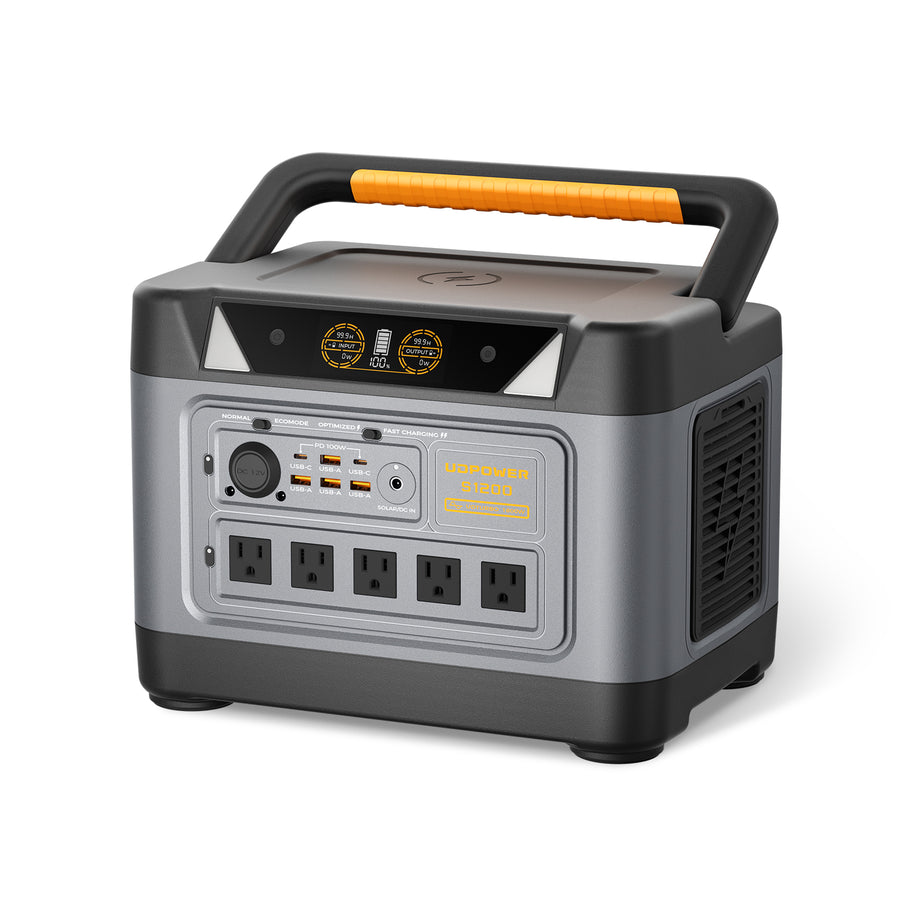
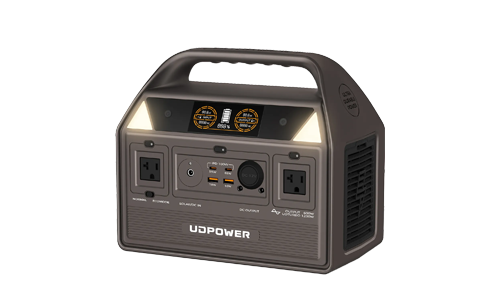
UDPOWER S1200: Best for a Refrigerator-Focused 12-Hour Plan
The S1200 is the practical starting point for many modern full-size refrigerators when the primary goal is protecting food rather than powering an entire kitchen.
- Battery capacity: 1,190Wh
- Rated AC output: 1,200W pure sine wave
- Surge support: Up to 1,800W with UDTURBO
- Battery: LiFePO4, rated for 4,000+ cycles
- UPS-style switchover: Less than 10ms with UPSPRIME
- Solar input: Up to 400W
- Weight: Approximately 26 lb
- Official refrigerator estimate: About 10-15 hours for a standard refrigerator averaging 60-100W
Using a 90% conversion estimate, the S1200 provides approximately 1,071Wh of usable AC energy. It is a strong match when the refrigerator's EnergyGuide label is around 600 kWh/year or less and the battery is primarily reserved for the refrigerator.
It can also support a modest router, phone-charging, or LED-light budget when the refrigerator is efficient, but high-power cooking appliances can quickly consume the reserve.
View UDPOWER S1200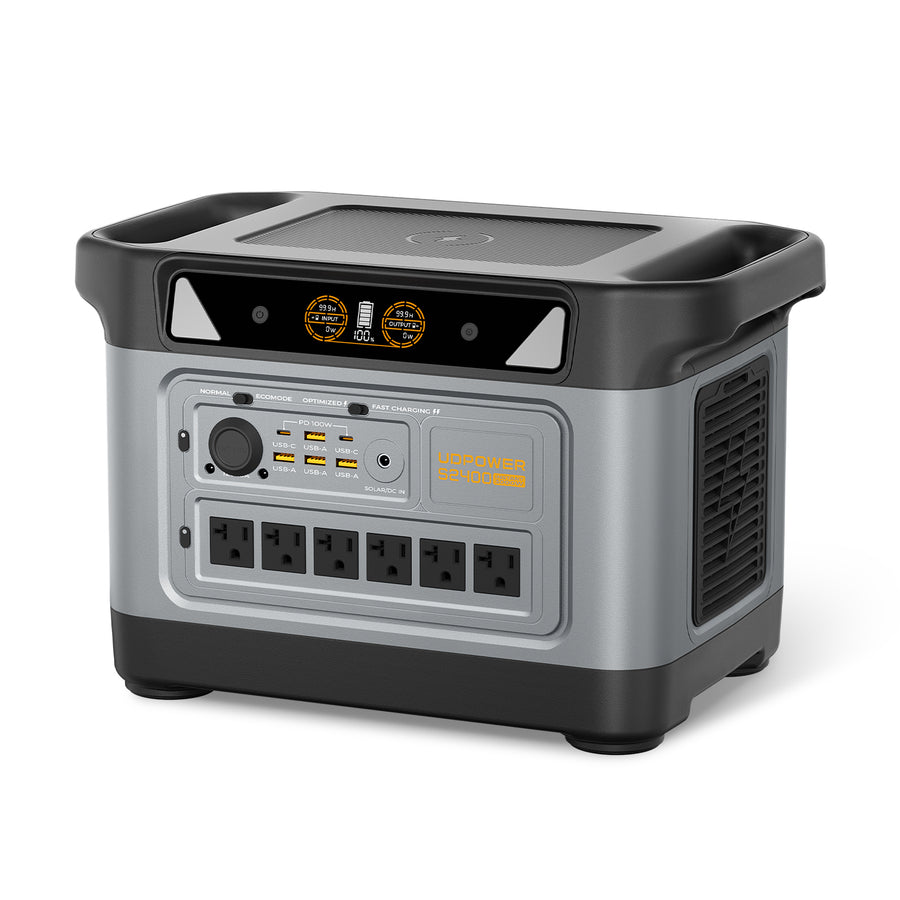
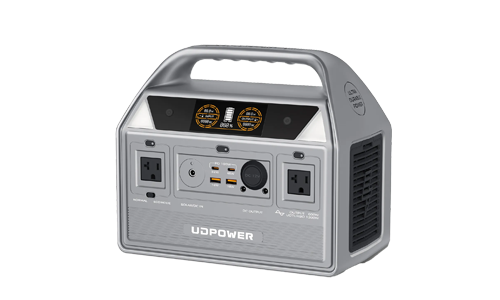
UDPOWER S2400: Best for More Runtime and Additional Essential Loads
The S2400 provides substantially more energy reserve for larger refrigerators, older compressors, hot-weather outages, or households that also need internet, lighting, phone charging, or another small essential load.
- Battery capacity: 2,083Wh
- Rated AC output: 2,400W pure sine wave
- Surge support: Up to 3,000W with UDTURBO
- Battery: LiFePO4, rated for 4,000+ cycles
- UPS-style switchover: Less than 10ms with UPSPRIME
- Solar input: Up to 400W
- AC outlets: Six
- Weight: Approximately 40.8 lb
- Official refrigerator estimate: About 18-30 hours for a standard refrigerator averaging 60-100W
At 90% conversion efficiency, the S2400 provides approximately 1,875Wh of usable AC energy. It is the safer 12-hour choice for refrigerators using roughly 700-1,000 kWh per year, or for a refrigerator plus carefully selected low-power essentials.
The additional output also gives more compressor-starting margin, although every refrigerator should still be tested before an emergency.
View UDPOWER S2400Product specifications and runtime examples are based on current official UDPOWER product pages. Actual runtime varies by refrigerator, ambient conditions, battery state, door openings, and additional loads.
Estimated Refrigerator Runtime by Average Load
The following table uses 90% conversion efficiency and assumes the listed wattage is the refrigerator's true average draw over time, not only the compressor's running wattage.
| Average refrigerator load | S1200 estimated runtime | S2400 estimated runtime | 12-hour planning interpretation |
|---|---|---|---|
| 60W | About 17.9 hours | About 31.2 hours | Either model can cover 12 hours under the stated conditions |
| 80W | About 13.4 hours | About 23.4 hours | S1200 is close to the target; S2400 provides more reserve |
| 100W | About 10.7 hours | About 18.7 hours | S2400 is the safer continuous-power choice for 12 hours |
| 150W | About 7.1 hours | About 12.5 hours | S2400 is near the 12-hour target without a large reserve |
| 200W | About 5.4 hours | About 9.4 hours | Use measured cycling data, temperature-controlled rationing, or a recharge plan |
| 250W | About 4.3 hours | About 7.5 hours | Neither model provides 12 hours of continuous 250W output without recharging |
Example: refrigerator plus essential outage loads
| 12-hour load | Estimated energy | S1200 result | S2400 result |
|---|---|---|---|
| 500 kWh/year refrigerator | About 685Wh | About 386Wh usable reserve remains | About 1,190Wh usable reserve remains |
| Wi-Fi router at 12W for 12 hours | 144Wh | Can fit after the example refrigerator | Fits with substantial reserve |
| Two 10W LED lights for 5 hours | 100Wh | Possible, but reserve becomes smaller | Fits comfortably |
| Phones and small electronics | Approximately 30-80Wh, depending on devices | Usually manageable when high-power loads are avoided | Usually manageable with more margin |
| Coffee maker, kettle, microwave, or heater | High short-term demand | Can sharply reduce refrigerator runtime | May run within output limits, but still consumes the outage reserve quickly |
A priority list helps prevent nonessential devices from consuming the refrigerator reserve. See What to Run First During a Power Outage.
How to Prepare Before the Next 12-Hour Outage
1. Keep appliance thermometers in both compartments
The refrigerator should normally remain at 40°F or below, while the freezer should normally remain at 0°F or below. A thermometer turns an uncertain outage into a measurable decision.
2. Freeze water containers and gel packs in advance
Frozen containers add thermal mass and can be moved into a cooler when an outage extends beyond four hours. Leave expansion space in containers before freezing them.
3. Keep a cooler available
The cooler should be large enough for high-risk foods rather than every condiment in the refrigerator. Prioritize meat, seafood, milk, eggs, leftovers, soft cheese, cut produce, and medications that have their own storage instructions.
4. Photograph the refrigerator label
Save photos of the EnergyGuide label, model number, electrical label, and plug. This information makes battery sizing and replacement research easier when the refrigerator is installed against a wall.
5. Test backup power before storm season
Fully charge the power station, connect the refrigerator directly according to both product manuals, and confirm that the compressor starts normally. Let the setup run long enough to observe at least several compressor cycles.
6. Measure a full day of energy consumption
A 24-hour test reveals whether the refrigerator consumes 500Wh, 1,000Wh, or more per day under your actual kitchen conditions. Repeat the test during hot weather if summer outages are your main concern.
7. Reserve the battery for priority loads
Label the outage plan clearly: refrigerator first, then communication, medical equipment, lighting, and device charging. Avoid using the same battery for resistance heaters, kettles, hair dryers, and other high-power convenience loads unless capacity has been deliberately budgeted.
8. Add solar only as a recharge plan
Solar input can extend an outage, but actual production varies with sunlight, panel angle, shade, weather, and the power station's input limit. Do not count the panel's full advertised wattage as guaranteed continuous input.
Explore compatible options on the UDPOWER foldable solar panel collection.
Common Mistakes That Spoil Food or Waste Backup Power
Opening the refrigerator every hour
Repeated checks release cold air and introduce warm, humid kitchen air. Prepare the cooler or backup source first, then make one short, organized opening.
Keeping food because it still feels slightly cool
A hand cannot reliably distinguish 39°F from 49°F. Use an appliance or food thermometer.
Taste-testing questionable food
Taste cannot confirm food safety and may expose you to the very hazard you are trying to detect.
Assuming a power station's watt rating determines runtime
Watts determine whether the station can operate the refrigerator. Watt-hours determine how long it can operate it. Both must be checked.
Using a fixed refrigerator cycling schedule
Advice such as “run it for 15 minutes every hour” is not reliable for every refrigerator. A hot kitchen, an older door seal, a large warm food load, or a defrost cycle can change the result. Cycle power only by monitoring temperature.
Running cooking appliances from the refrigerator battery
A kettle or microwave can consume in minutes what a refrigerator may use over several hours. Separate essential refrigeration energy from convenience energy.
Waiting until the outage to test compressor startup
The refrigerator may have a brief startup surge that is much higher than its normal running draw. Test compatibility on a normal day.
Frequently Asked Questions
Is refrigerator food safe after a 12-hour outage if the door was never opened?
No unopened-door guarantee extends the standard refrigerator window to 12 hours. Keeping the door closed helps, but most refrigerated perishables should still be discarded unless a thermometer confirms they stayed at 40°F or below or another cold source protected them.
What if my refrigerator thermometer reads 39°F after 12 hours?
A reading of 39°F indicates that the refrigerator is still within the normal safe cold-storage range. Continue refrigerating the food and use highly perishable items promptly.
What if the refrigerator reads 44°F when the power returns?
FDA guidance says perishable food measured at 45°F or below should be cooked and consumed as soon as possible. This should not be used to save food that is known to have remained above 40°F for several hours. When the temperature history is uncertain, discard the highest-risk items.
Can I keep meat if it still smells normal?
No. Smell is not a reliable food-safety test. After a 12-hour outage without trustworthy temperature evidence, discard refrigerated meat, poultry, seafood, and related leftovers.
Can I cook questionable meat to make it safe?
Not reliably. Prolonged temperature abuse may make perishable food unsafe even when it is later thoroughly cooked. Discard questionable meat rather than attempting to rescue it.
Is frozen food still safe after a 12-hour outage?
Often, yes. A closed full freezer may stay cold for about 48 hours, and a half-full freezer for about 24 hours. Food that still contains ice crystals or measures 40°F or below may generally be refrozen or cooked.
Should I throw away hard cheese and butter?
FoodSafety.gov generally lists hard cheese, processed cheese, grated hard cheese in a container, butter, and margarine among the foods that may be kept. Soft cheese, shredded cheese, milk, yogurt, and similar perishables should be discarded after unsafe warming.
Can the UDPOWER S1200 run a refrigerator for 12 hours?
It can run many efficient refrigerators for around 12 hours, but not every model. The official S1200 page estimates about 10-15 hours for a standard refrigerator averaging 60-100W. Check the EnergyGuide label or measure a normal 24-hour period before relying on it.
When should I choose the UDPOWER S2400 instead?
Choose the S2400 when the refrigerator has higher annual energy use, the compressor needs more startup margin, the outage may last longer, or you also need to power a router, lights, phones, or another essential device.
Does a 1,200W refrigerator require a 1,200Wh battery?
Not necessarily. Watts and watt-hours measure different things. The watt rating relates to instantaneous power, while watt-hours represent stored energy. Refrigerator sizing must account for startup surge, average energy use, desired runtime, and conversion loss.
Should I run the refrigerator continuously or cycle it?
Continuous power is simpler and more predictable when enough capacity is available. If battery energy must be rationed, use a thermometer and cycle according to actual refrigerator temperature rather than following a fixed hourly schedule.
Can solar panels keep the refrigerator running during a long outage?
Solar can replace part of the energy used during daylight and extend total runtime. Production is not guaranteed, however, because clouds, shade, temperature, panel angle, and input limits affect charging. Keep enough stored battery energy for periods without useful sunlight.
What should I buy first: a power station or a cooler?
A cooler, appliance thermometer, and frozen gel packs are the lowest-cost first layer of protection. A compatible power station adds convenience, longer cold storage, and the ability to support other essential electronics.
Build a Refrigerator Backup Plan Before the Next Outage
Start with the refrigerator's EnergyGuide label or a 24-hour energy-meter test. Then choose a battery that covers the calculated 12-hour load, conversion loss, compressor startup, and at least a modest reserve.
Compare Portable Power Stations View the UDPOWER S1200 View the UDPOWER S2400 Read the Refrigerator Battery Sizing GuideRelated Articles