

Floating Neutral vs Bonded Neutral for Portable Power Stations
Last updated: October 16, 2026 · Reviewed for U.S. portable power station use, home backup, transfer switches, RV power, outlet testers, GFCI behavior, and neutral-ground compatibility.

A bonded neutral means the AC neutral conductor is intentionally connected to the equipment grounding system or chassis at the power source. A floating neutral means that neutral-to-ground connection is not made inside the source.
Neither design is automatically better or safer. The correct arrangement depends on how the power source is being used and where the intended neutral-to-ground bonding point exists in the complete electrical system.
For most portable power station owners plugging appliances directly into the station's built-in outlets, the safest approach is simple: use the station exactly as the manufacturer designed it and do not add, remove, or improvise a neutral-ground bond.
The issue becomes much more important when a portable power station is connected to an RV electrical system, transfer switch, generator inlet, home panel, EV charger, or other equipment that checks grounding and neutral conditions.
Floating Neutral vs. Bonded Neutral at a Glance
The difference is physically small but electrically important.
| Feature | Floating Neutral | Bonded Neutral | Why It Matters |
|---|---|---|---|
| Neutral connected to ground/chassis inside source? | No | Yes | Determines where fault current can return to the source |
| Neutral referenced to ground at source? | Not by an internal neutral-ground bond | Yes | Affects testing and system integration |
| Common on portable inverter power sources? | Yes, on many designs | Also possible | Never assume based on product category alone |
| Direct appliance use | Use according to manufacturer instructions | Use according to manufacturer instructions | Do not modify a listed product simply because of its neutral topology |
| Simple 3-light outlet tester | May report “open ground” or another unusual result | More likely to resemble a normal grounded household receptacle | A tester result must be interpreted in context |
| Home transfer equipment | May be appropriate in some non-switched-neutral systems | May require switched-neutral transfer equipment or another approved design | Source and transfer equipment must be evaluated together |
| RV electrical management system | May be detected as an open-ground or wiring condition | May satisfy some neutral-ground checks | Follow RV, EMS, and source-manufacturer requirements |
| EV charging equipment | Some EVSE may reject the source | May behave differently depending on the complete grounding system | EVSE performs safety checks before charging |
| Best description | Neutral and equipment ground are separated inside the source | Neutral and equipment ground are intentionally connected at the source | Neither description alone tells you whether an entire installation is safe |
Generac's current technical guidance uses the same basic distinction: a bonded-neutral source has neutral connected to the generator frame, while a floating-neutral source does not. Generac also notes that a floating-neutral source can make a plug-in tester indicate an “open ground” condition. See Generac's bonded vs. floating neutral guidance.
Hot, Neutral, and Ground: The Three Conductors People Often Mix Up
You do not need to become an electrician to understand neutral bonding, but it helps to separate three different jobs.
| Conductor | Normal Job | Does It Normally Carry Load Current? | Simple Way to Think About It |
|---|---|---|---|
| Hot | Delivers AC energy from the source to the load | Yes | The outgoing power path |
| Neutral | Provides the normal return path for many 120V loads | Yes | The normal return path |
| Equipment ground | Provides a protective fault-current path and bonds exposed conductive parts | Not during normal operation | The safety path |
The key point is that neutral and ground are not interchangeable wires.
Neutral carries normal operating current. Equipment grounding conductors and grounded metal parts are intended for safety and fault conditions, not as an everyday return path for appliance current.
Why are neutral and ground connected at all?
Because an electrical system needs an intentional reference and a low-impedance fault-return path appropriate to its design.
In a normal U.S. residential system, the grounded conductor and equipment grounding system are bonded at the service bonding point. Depending on the house, that point may be in the main service equipment, an outdoor service disconnect, or meter-main equipment rather than the indoor panel you casually call the “main panel.”
Downstream panels normally keep neutral and equipment ground separated.
What Does Neutral-Ground Bonding Actually Mean?
Bonding means intentionally making an electrical connection between conductive parts so they stay at substantially the same electrical potential and provide an effective fault-current path.
A neutral-ground bond is therefore an intentional connection between the grounded circuit conductor and the equipment grounding system at the appropriate point in the electrical system.
This is different from driving a ground rod into the earth.
Bonding is not the same as grounding to earth
This distinction causes a lot of confusion in generator and portable power station discussions.
| Term | What It Means | Common Misunderstanding |
|---|---|---|
| Neutral-ground bond | An intentional connection between neutral and the equipment grounding system at the correct bonding point | “Bonding means installing a ground rod” |
| Equipment grounding conductor | Protective conductor connecting equipment grounding points and exposed conductive parts | “Ground wire carries normal return current” |
| Grounding electrode | Connects an electrical system to earth through approved grounding electrodes | “A ground rod automatically fixes neutral problems” |
OSHA's portable-generator guidance illustrates why the distinction matters. Under specified conditions, OSHA permits a portable generator frame to serve the grounding function for cord-and-plug-connected equipment without a separate earth electrode. When a generator supplies a structure through transfer equipment, the system requirements change. See OSHA's Grounding Requirements for Portable Generators.
What Is a Floating Neutral?
In everyday portable-power terminology, a floating neutral means the AC output neutral is not bonded to the equipment grounding system inside the source.
The neutral and ground remain electrically separated within the power source.
This arrangement appears in many inverter-based portable power products, although it is not safe to assume that every inverter or every battery power station is built this way.
Why would a manufacturer use a floating output?
A portable inverter may be designed to operate as a self-contained source for plug-connected equipment while also avoiding a permanent internal neutral-ground bond that could conflict with another bonding point when integrated into a larger electrical system.
But that does not mean a floating output is automatically “transfer-switch ready.”
Compatibility still depends on:
- the exact portable power station design;
- whether its equipment-ground terminal is internally connected as expected;
- the transfer equipment;
- whether the neutral is switched;
- GFCI or AFCI protection;
- the building service bonding arrangement;
- manufacturer instructions;
- applicable electrical requirements.
What Is a Bonded Neutral?
A bonded-neutral power source intentionally connects the neutral conductor to the source's equipment grounding system or frame.
That means the power source carries its own neutral-ground bonding point.
This can be appropriate when the source is operating as a separately derived electrical system or in another configuration specifically designed for that bond.
OSHA states that when a portable generator is a component of a separately derived system, its neutral conductor is bonded to the generator frame. See OSHA 1926.404 grounding requirements.
A Floating Neutral Is Not the Same as an Open Neutral Fault
This distinction is critical.
An intentionally floating neutral is a design characteristic of a power source.
An open neutral in household wiring is an unintended break or loose connection in a conductor that is supposed to carry current.
| Condition | Intentional? | Where It Occurs | What It Means |
|---|---|---|---|
| Floating neutral source | Potentially yes | Inside a portable inverter, generator, or other source design | Neutral is not bonded to equipment ground at that source |
| Open neutral fault | No | House wiring, cord, connector, receptacle, panel, or equipment | The intended neutral-current path has been interrupted |
An open neutral in a building can create serious voltage and shock hazards and should not be described casually as “floating neutral.”
If outlets in your house suddenly show abnormal voltages, lights become unusually bright or dim, or equipment behaves differently across multiple circuits, turn off affected equipment and call an electrician or utility provider as appropriate. That is a different issue from the intentionally isolated output of a portable inverter.
Why Portable Power Stations Are Different From Traditional Generators
Most articles about floating vs. bonded neutral were originally written around gasoline generators.
A portable power station is different.
Instead of an alternator driven by an internal-combustion engine, a battery power station normally stores DC energy and uses an electronic inverter to create AC output.
That difference matters because the inverter manufacturer controls how the AC output is referenced, isolated, monitored, and protected.
You therefore should not assume:
- that a portable power station follows the same neutral rules as a construction generator;
- that all battery stations have floating neutrals;
- that all pure sine wave inverters have the same grounding topology;
- that two models from the same brand behave identically;
- that battery mode and AC bypass mode necessarily have identical internal power paths;
- that a bonding accessory made for one brand or model is suitable for another.
For general operating safety, see UDPOWER's Portable Power Station Safety Guide.
Why Does My Outlet Tester Say “Open Ground”?
This is one of the most common reasons portable power station owners discover the topic of floating neutral.
You plug a three-light receptacle tester into the power station and it reports:
- OPEN GROUND;
- bad ground;
- wiring fault;
- or a light pattern that does not match a normal household outlet.
That result does not automatically mean the power station has a broken ground wire.
Many inexpensive outlet testers are designed around the electrical relationships expected in conventional building wiring. An intentionally floating inverter output does not present exactly the same neutral-to-ground reference.
Generac specifically notes that a floating-neutral generator can cause a GFCI tester to show an “open ground” indication. See Generac's neutral guidance.
Do not use a three-light tester as your only neutral diagnosis
A simple plug-in tester cannot tell you everything about:
- internal inverter isolation;
- bonding topology;
- protective relays;
- equipment-ground continuity inside the product;
- behavior in bypass mode;
- compatibility with a transfer system.
If you need the neutral configuration for a home or RV installation, use the manufacturer's documentation or have the equipment professionally verified.
Does a Floating Neutral Stop a GFCI From Working?
This question is often oversimplified online.
A GFCI fundamentally works by comparing the current leaving on the energized conductor with the current returning through the normal circuit conductor. If enough current returns by another path, the device detects the imbalance and trips.
OSHA describes a GFCI as sensing an imbalance between hot and neutral current. See OSHA's GFCI explanation.
So it is not accurate to say simply:
“A GFCI needs an earth-ground connection or neutral-ground bond to work.”
However, system topology still matters because it determines what fault-current paths actually exist.
The TEST button and a plug-in GFCI tester are not the same thing
This is especially important with floating portable power sources.
A GFCI device's built-in TEST mechanism is part of the device itself.
Many external plug-in GFCI testers work differently. OSHA explains that common testers intentionally send a small amount of current from hot to the equipment-ground path to create an imbalance. See OSHA's explanation of GFCI test equipment.
If a portable source has no neutral-ground reference that allows the tester's intended test current to flow, the plug-in tester may not behave the same way it does on normal premises wiring.
Do not bypass a GFCI or other protective device simply to make a tester show the result you expected.
Why Some Devices Reject a Portable Power Station
Most ordinary appliances do not care whether the portable source is floating or bonded.
A refrigerator, lamp, laptop charger, TV, router, fan, or phone charger may operate normally as long as voltage, frequency, waveform, and available power are correct.
Other equipment actively checks grounding or polarity before it will operate.
| Device or System | Possible Symptom | Why Neutral/Ground May Matter | Best Next Step |
|---|---|---|---|
| RV electrical management system | Open-ground or wiring fault warning | EMS may expect shore-power style neutral/ground relationships | Check EMS, RV, and power-source documentation |
| EV charging equipment | Charger refuses to start | EVSE performs grounding and safety checks before energizing the vehicle | Use only a manufacturer-approved solution |
| UPS or power conditioner | Site wiring fault indicator | Some equipment monitors neutral/ground or polarity relationships | Check the equipment manual |
| Surge protector | Ground/protection indicator behaves unexpectedly | Some indicator and protection circuits reference ground | Do not assume indicator behavior proves source failure |
| Transfer switch / panel | GFCI trip, fault indication, or compatibility problem | Multiple or missing bonding points can change current paths | Have an electrician evaluate the full system |
| Some furnace or appliance controls | Unit receives power but will not operate normally | Some control systems monitor polarity or grounding conditions | Follow appliance and backup-source manufacturer guidance |
Jackery's current support documentation provides a useful industry example: it notes that conventional floating portable power sources can be rejected by EVSE because the charging equipment performs ground-continuity and residual-current checks. See Jackery's EV charging explanation.
The larger lesson is not about one brand. It is that an appliance refusing to operate can be a safety check working as intended.
Floating vs. Bonded Neutral With a Transfer Switch
This is where neutral topology becomes much more important.
A portable power source connected to household wiring becomes part of a larger electrical system. You can no longer look only at the power station.
You need to know what the transfer equipment does with the neutral.
Some transfer equipment switches only the energized conductors
In many transfer arrangements, the house neutral remains connected to the building's electrical system while the hot conductor or conductors are transferred between utility and backup power.
In that kind of system, the source's neutral arrangement must be coordinated with the existing service bonding point so the installation does not create an unintended parallel neutral-ground path.
Other transfer equipment switches the neutral
Some transfer switches transfer the neutral as well as the energized conductors.
That can change whether the backup source is treated as a separately derived system and therefore changes where bonding is required.
| System Question | Why It Matters |
|---|---|
| Does the transfer equipment switch the neutral? | Determines whether the backup neutral remains connected to the service neutral |
| Where is the home's service bonding point? | Determines the existing neutral-ground reference |
| Is the portable source floating or bonded? | Determines whether another bonding point exists at the source |
| Does the source use GFCI-protected output? | Unexpected current paths can affect protective-device behavior |
| Does the manufacturer approve panel connection? | Electrical compatibility cannot be inferred from plug shape alone |
| Is the source 120V only or 120/240V? | Neutral compatibility does not solve a voltage mismatch |
For a complete explanation of panel connection, read Can You Connect a Portable Power Station to a Transfer Switch?.
If you are choosing the panel connection method itself, see Transfer Switch vs. Interlock Kit.
What Happens If There Are Two Neutral-Ground Bonds?
When an active electrical system has unintended neutral-ground connections in more than the intended locations, normal neutral current can divide onto conductors and conductive paths that are supposed to serve primarily as equipment grounding paths.
Depending on the design, possible symptoms can include:
- GFCI nuisance tripping;
- unexpected current on grounding conductors;
- site-wiring fault indications;
- problems with transfer equipment;
- unwanted parallel current paths;
- equipment compatibility issues.
This is why the simple phrase “bond neutral to ground for safety” can become dangerous advice when taken out of context.
The bond must be in the right place for the actual system configuration.
What Happens If a System That Requires a Bond Has None?
The opposite problem can also occur.
If an electrical system is designed to depend on an intentional bonding point and that path is absent, a fault from an energized conductor to exposed metal may not produce the fault current that the protective scheme expects.
The result can be a system that appears to power equipment normally while not responding to a fault as intended.
This is why neither “always float the neutral” nor “always bond neutral and ground” is safe universal advice.
Floating Neutral and RV Shore Power
RV owners encounter this issue frequently because an RV is designed to connect to shore power that normally has an established grounding and bonding arrangement upstream.
When a portable power station replaces the campground pedestal, an RV electrical management system may examine the incoming source and decide that it does not look like normal shore power.
The EMS may report:
- open ground;
- reverse polarity;
- wiring error;
- ground fault;
- or may refuse to connect power to the RV.
A warning in this situation should not simply be bypassed.
UDPOWER's RV Shore Power Guide explains this issue in more detail and recommends against bypassing EMS or ground-fault protection merely to make an incompatible source appear acceptable.
Why RV advice and home-panel advice are not interchangeable
An RV has its own distribution panel, shore-power inlet, transfer equipment in some models, converters, inverters, generators, and sometimes automatic source switching.
The correct neutral configuration depends on the complete RV electrical architecture.
Do not copy a bonding solution from another RV simply because both rigs use a 30A or 50A connector.
What About UPS and Pass-Through Mode?
Portable power stations increasingly include UPS, EPS, or pass-through functions.
That means the station may operate in at least two very different conditions:
- AC utility power is present and loads are being supplied through a bypass or charging path.
- Utility power disappears and the internal inverter begins supplying the load from the battery.
Do not assume that every portable station presents exactly the same internal neutral, ground, and power path in both conditions.
Some products use internal relays or switching arrangements that affect how the source interacts with upstream AC power. Other products maintain a floating inverter output.
This matters most for:
- equipment with site-wiring-fault indicators;
- RV systems;
- EV charging;
- home transfer equipment;
- industrial or commercial equipment;
- systems that depend on a particular neutral-ground relationship.
How Do You Know Whether Your Power Station Is Floating or Bonded?
For an ordinary user, the safest method is not to start probing an energized receptacle.
-
1. Check the user manual.
Search for terms such as “floating neutral,” “bonded neutral,” “neutral bonded to ground,” “floating ground,” “grounding,” or “ground-neutral.” -
2. Check the manufacturer's support database.
Some manufacturers publish grounding information in FAQs rather than the product specification table. -
3. Check labels on the equipment.
Some generators clearly state “Neutral Floating” or “Neutral Bonded to Frame.” -
4. Ask the manufacturer for the exact model.
Do not assume the answer for one product applies to another model from the same brand. -
5. For home, RV, or hardwired integration, let an electrician verify it.
A professional can evaluate the source together with the transfer equipment and installation rather than testing one component in isolation.
What if my outlet tester says open ground?
Treat that as a clue, not a complete diagnosis.
It may be consistent with a floating-neutral inverter, but the proper next step is to confirm the source design rather than automatically adding a neutral-ground connection.
Should You Use a Neutral-Ground Bonding Plug?
A neutral-ground bonding plug is an accessory that creates a connection between neutral and equipment ground at a receptacle.
These accessories are sometimes used with specific generators, inverters, RV systems, or EV-charging configurations when the equipment manufacturer explicitly supports that arrangement.
That does not make a bonding plug a universal fix for portable power stations.
A bonding plug may be inappropriate when:
- the station is connected to utility AC;
- the station is operating in bypass mode;
- the source is connected to building transfer equipment;
- another bonding point already exists;
- the manufacturer does not approve the accessory;
- the grounding topology changes with operating mode;
- you do not know whether the transfer switch switches neutral.
The correct question is not:
“How do I bond my portable power station?”
The correct question is:
“Does this specific application require a bond, and where is the approved bonding point supposed to be?”
Ground Rod vs. Neutral Bond: Another Common Mix-Up
If a portable source appears to have a floating neutral, some users assume the solution is to attach it to a ground rod.
That is not the same thing.
A ground rod connects equipment to earth. It does not automatically create the neutral-to-equipment-ground relationship required by a particular electrical system.
Likewise, adding a neutral-ground bond does not automatically answer whether a grounding electrode is required.
These are separate design questions.
OSHA's portable-generator fact sheet makes this distinction by describing circumstances where a generator frame can serve the grounding function for cord-connected equipment and other circumstances involving a structure where grounding and transfer requirements change. See OSHA portable-generator grounding guidance.
Common Symptoms and What They Actually Mean
| What You See | Possible Explanation | What It Does Not Prove | Recommended Action |
|---|---|---|---|
| Outlet tester says OPEN GROUND | Source may use an intentionally floating output | Does not prove the station is defective | Check manufacturer documentation |
| Plug-in GFCI tester will not trip | Tester may rely on hot-to-ground test current that cannot flow as expected | Does not by itself prove the GFCI mechanism is faulty | Follow the GFCI and power-source test instructions |
| RV EMS refuses power | EMS may reject the source's neutral/ground relationship | Does not mean the EMS is malfunctioning | Confirm RV and source compatibility |
| EV charger shows ground fault | EVSE may not detect its expected grounding reference | Does not mean the vehicle is faulty | Use only an approved EV-charging configuration |
| GFCI trips after connecting to transfer equipment | There may be an unintended neutral/ground path or another compatibility issue | Does not prove the GFCI is “too sensitive” | Stop and have the system evaluated |
| Normal refrigerator or laptop works perfectly | Appliance may not depend on a particular neutral-ground reference | Does not prove the source is compatible with home panel wiring | Direct-use success should not be used to approve panel integration |
What UDPOWER Users Need to Know
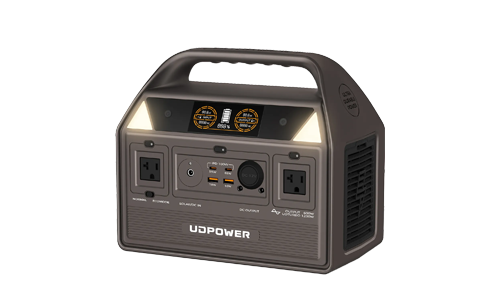
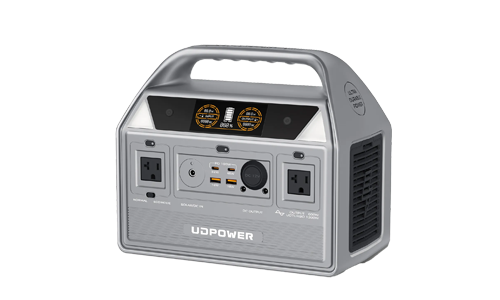
The UDPOWER S2400 is designed primarily as a portable 120V source for powering devices directly from its built-in outputs.
For larger emergency loads and longer runtime, it is the strongest current UDPOWER option for portable home backup.
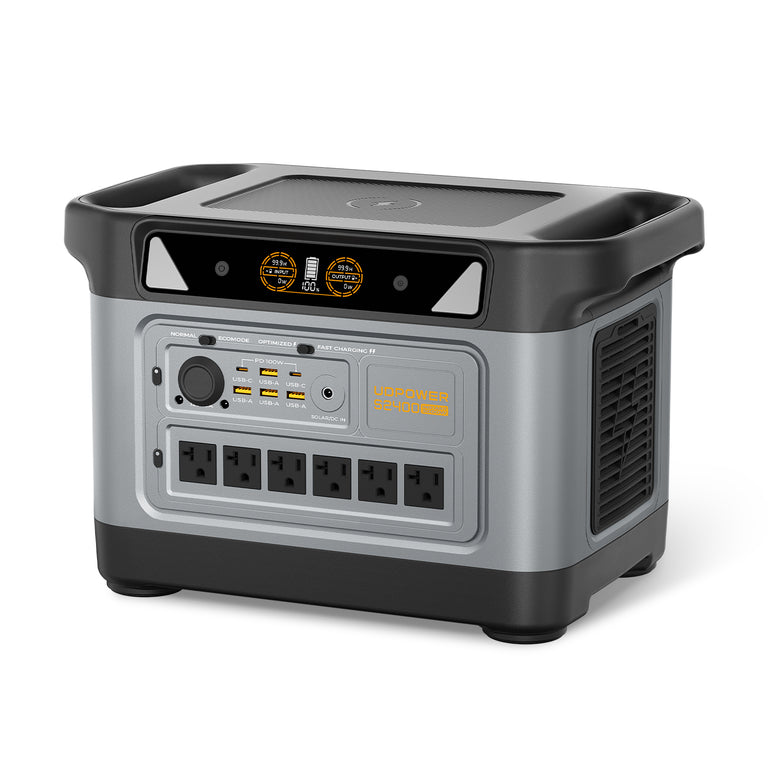
UDPOWER S2400 for Direct Essential-Load Backup
| Specification | S2400 | Why It Matters |
|---|---|---|
| Battery capacity | 2,083Wh LiFePO4 | Provides substantial portable energy for outage essentials |
| Rated AC output | 2,400W pure sine wave | Supports many refrigerators, kitchen appliances, electronics, tools, and other compatible loads |
| AC voltage | 120V, 60Hz | Designed for standard U.S. 120V loads; does not provide native 240V output |
| AC outlets | 6 | Allows multiple devices to be powered directly without modifying home wiring |
| UPSPrime | ≤10 ms switchover | Useful for compatible essential devices during brief grid interruptions |
| Solar input | Up to 400W | Provides an off-grid recharge option during extended outages |
| Published neutral topology | Not specified on the current public product specification page | Do not assume floating or bonded neutral for panel, RV, EVSE, or other integrated applications |
The neutral point is important: UDPOWER's current public S2400 specifications identify its output as 120V, 60Hz pure sine wave but do not publish the unit as either “floating neutral” or “bonded neutral.”
That means this article should not be read as claiming that the S2400 has one topology or the other.
For normal use, power compatible devices directly from the S2400's outlets as designed.
For any installation involving a home transfer switch, generator inlet, hardwired circuit, RV distribution system, EV charging system, or other arrangement where neutral-ground topology matters, have the complete setup verified first.
UDPOWER's current product guidance specifically states that the S2400 should not be connected directly to a home transfer switch unless the setup has been reviewed and installed by a licensed electrician. The unit provides 120V AC and does not provide native 240V output.
View UDPOWER S2400 Compare UDPOWER Portable Power Stations View Home Backup Power StationsWhen Neutral Type Does Not Need to Dominate Your Buying Decision
If your intended use is:
- running a refrigerator directly;
- powering a CPAP;
- keeping a modem and router online;
- charging phones and laptops;
- running lamps or a TV;
- powering camping appliances;
- operating tools directly from the station;
then battery capacity, inverter output, startup capability, waveform, ports, runtime, and recharge speed are usually more useful buying criteria than whether an internet forum calls the neutral “floating.”
Use the product as the manufacturer designed it.
If you are sizing loads, UDPOWER's Surge Current Guide explains why refrigerators, pumps, compressors, and motors may require significantly more power during startup than while running.
When Neutral Type Becomes a Major Buying Question
You should specifically investigate neutral-ground topology before buying or installing equipment when your plan includes:
- a home transfer switch;
- a generator interlock;
- a hardwired backup-power inlet;
- an RV shore-power connection;
- an RV electrical management system;
- EV charging;
- equipment with a site-wiring-fault indicator;
- specialized commercial or industrial equipment;
- automatic source-transfer equipment;
- multiple AC power sources that can be connected to the same distribution system.
Quick Decision Guide for Portable Power Station Owners
-
You are plugging appliances directly into the station.
Use the station as designed. Do not add a neutral-ground bond just because a receptacle tester looks different from a wall outlet. -
A simple outlet tester says OPEN GROUND.
Check whether the manufacturer documents a floating output before concluding that the station has a fault. -
A plug-in GFCI tester does not trip the protection.
Do not immediately bypass or modify anything. External testers may depend on a ground-current test path that behaves differently on a floating source. -
Your RV EMS refuses to connect.
Do not bypass the EMS. Verify the power source, RV distribution system, and EMS requirements. -
Your EV charger refuses to operate.
Do not defeat the EVSE's ground check. Confirm whether the power-station manufacturer supports EV charging and which accessories are approved. -
You want to connect the station to a transfer switch or interlock.
Identify the station's neutral topology, transfer-switch neutral behavior, home service bonding point, source voltage, and manufacturer approval before installation. -
You found a neutral-ground bonding plug online.
Do not assume it is appropriate. A bond that is correct in one operating mode can create an unwanted second bond in another. -
The manufacturer does not publish the neutral configuration.
Ask the manufacturer or have a qualified electrician verify the source before using it in an installation where neutral topology matters.
Questions to Ask Before Connecting a Portable Power Station to Anything Beyond an Appliance
- Is the portable power station's AC neutral floating or bonded?
- Is that configuration the same in battery mode and AC bypass mode?
- Does the manufacturer approve the intended application?
- Does the transfer switch switch the neutral?
- Where is the service neutral-ground bonding point?
- Does the station's AC output use GFCI protection?
- Does the connected equipment perform a ground-continuity or polarity test?
- Is the source 120V only or true 120/240V split phase?
- Are any branch circuits shared-neutral or multi-wire circuits?
- Will another AC source ever be connected at the same time?
- Does the system use an RV EMS, EVSE, UPS, transfer switch, or surge device that checks grounding?
- Is a manufacturer-approved grounding or bonding accessory available for this exact model?
Common Floating-Neutral Mistakes
Assuming “open ground” means the station is defective
A portable inverter can intentionally present differently from a premises-wiring receptacle. Confirm the product design before diagnosing a fault.
Assuming floating neutral means there is no equipment grounding conductor
These are not the same statement. Neutral-to-ground bonding and equipment-ground continuity are separate questions.
Assuming neutral and ground do the same job
Neutral normally carries load current. The equipment grounding path is primarily protective.
Installing a bonding plug because an RV EMS complains
A warning may indicate that the source and RV are electrically incompatible in their current configuration. Do not bypass a protective system without manufacturer-supported guidance.
Leaving a bonding accessory installed in every operating mode
A configuration suitable for an isolated battery source may not be appropriate while that same station is connected to utility AC or another bonded electrical system.
Assuming a floating-neutral station automatically works with a transfer switch
You still need to confirm voltage, neutral switching, GFCI behavior, inlet arrangement, source rating, manufacturer instructions, and household wiring.
Assuming a bonded-neutral source is inherently safer
A bond in the wrong location can create unintended current paths. Safety comes from a correctly designed complete system, not from choosing “bonded” as a label.
Confusing a floating neutral with an open neutral fault
One can be an intentional source design. The other is an electrical fault that may be dangerous.
Using generator advice without checking whether it applies to a battery inverter
Portable generators and inverter power stations can have different internal designs. The exact product manual takes priority over generic internet rules.
A Better Way to Think About the Topic
Instead of asking:
“Is floating neutral safe?”
ask:
“Where is the required bonding point in this complete electrical system?”
Instead of asking:
“Should I bond my power station?”
ask:
“Does the manufacturer and system design require a neutral-ground bond at this source?”
And instead of asking:
“Why does my tester say open ground?”
ask:
“Is this tester designed to correctly interpret an isolated portable inverter output?”
Those questions lead to much safer answers.
Frequently Asked Questions
What is the difference between a floating neutral and a bonded neutral?
A floating neutral is not connected to equipment ground inside the power source. A bonded neutral has an intentional neutral-to-ground or neutral-to-frame connection at the source. Neither configuration is automatically better; the correct arrangement depends on the complete electrical system.
Are portable power stations usually floating neutral?
Many portable inverter power sources use floating outputs, but you should not assume this applies to every portable power station. Check the exact model's manual or manufacturer support information. Different models from the same brand can use different electrical designs.
Is a floating neutral dangerous?
Not simply because it is floating. A floating output can be an intentional part of the manufacturer's electrical design. Safety depends on how the source is used, its protective systems, what equipment is connected, and whether it is integrated into another electrical system.
Is a bonded neutral safer than a floating neutral?
Not universally. A bonded neutral can be correct in one system and create an unwanted additional bonding point in another. The safe configuration is the one that matches the source, transfer equipment, grounding system, and manufacturer instructions.
Why does my portable power station show open ground on an outlet tester?
A simple receptacle tester may interpret an intentionally floating neutral as an open-ground condition because the source does not have the same neutral-to-ground relationship as a conventional household receptacle. Confirm the power station's documented electrical design before assuming there is a defect.
Does an open-ground reading mean the ground pin on my portable power station is broken?
Not necessarily. A tester may be reacting to the absence of a neutral-ground bond rather than proving that the equipment-ground connection itself is physically open. The two conditions are different.
Is floating neutral the same as open neutral?
No. A floating neutral can be an intentional characteristic of an isolated power source. An open neutral is an unintended break in a neutral conductor that is supposed to carry current and can create serious hazards in household wiring.
Will a GFCI work with a floating neutral?
A GFCI detects an imbalance between current leaving and returning through the normal circuit conductors, so its basic protection does not simply depend on having an earth-ground wire. However, the overall neutral and grounding topology affects fault-current paths, and external plug-in GFCI testers may behave differently on a floating source.
Why won't my plug-in GFCI tester trip when connected to a portable power station?
Many plug-in testers create their test fault by sending a small current from hot to the equipment-ground path. On a floating source, that test path may not behave like it does on normal household wiring. Follow the GFCI and power-source manufacturer's approved test procedure instead of modifying the source.
Can I use a neutral-ground bonding plug on a portable power station?
Only when the power station manufacturer and the specific application support that arrangement. A bonding plug is not a universal fix for an open-ground indication, RV EMS warning, EV charging problem, or transfer-switch installation.
Can I make my own neutral-ground bonding plug?
Do not improvise one based only on generic internet instructions. Adding a neutral-ground connection in the wrong operating mode or when another bond already exists can create unsafe parallel current paths. Use only manufacturer-approved equipment and configurations.
Does a floating neutral work with a transfer switch?
It can in some systems, especially where the neutral remains connected to the building's service system, but this is not a universal rule. The electrician must confirm the power source, neutral switching, service bonding point, GFCI protection, voltage, and transfer equipment together.
Does a bonded neutral require a switched-neutral transfer switch?
A bonded source can require different transfer-equipment treatment than a floating source because leaving the source bond connected while also remaining connected to another bonding point may create an unintended parallel path. The correct arrangement depends on the source and transfer-switch design and should be determined by a qualified electrician.
Why does my RV surge protector or EMS reject my portable power station?
Some RV electrical management systems check the incoming neutral, ground, voltage, and polarity before connecting power to the RV. A floating portable source may not look like conventional campground shore power to the EMS, causing it to display a wiring fault or refuse the connection.
Why won't my EV charger work with a portable power station?
Some EV charging equipment verifies grounding and neutral conditions before energizing the charging cable. A floating source may fail that safety check. Do not bypass the EVSE's protection; use only an application and accessory specifically supported by the power station and charging-equipment manufacturers.
Does a ground rod fix a floating neutral?
No. Connecting equipment to earth and creating a neutral-ground bond are different electrical functions. A ground rod does not automatically create the correct neutral-to-ground relationship for a portable power source.
Is the UDPOWER S2400 floating neutral or bonded neutral?
UDPOWER's current public S2400 product specification page does not identify the unit as either floating neutral or bonded neutral. Users should therefore not assume either configuration for transfer-switch, RV, EVSE, or other integrated applications. For normal use, power compatible devices directly from the unit as designed. For an installation where neutral topology matters, confirm the configuration before connection.
Can the UDPOWER S2400 be connected to a home transfer switch?
UDPOWER does not recommend connecting the S2400 directly to home transfer equipment unless the setup has been reviewed and installed by a licensed electrician. The S2400 provides 120V, 60Hz AC output and does not provide native 240V output, so voltage and neutral compatibility both need to be considered.
Bottom Line
Floating neutral and bonded neutral describe where the neutral-to-ground connection exists. Neither one is universally correct.
For ordinary portable power station use, you generally should not need to modify anything. Plug compatible devices directly into the station, stay within its voltage and power ratings, and follow the manufacturer's instructions.
The neutral question becomes important when you connect the source to something that expects a larger electrical system: a home transfer switch, interlock, RV panel, RV EMS, EVSE, UPS, or other equipment that checks grounding conditions.
The three rules worth remembering are:
- Do not diagnose a portable inverter solely from a three-light outlet tester.
- Do not add a neutral-ground bond simply because equipment reports “open ground.”
- When connecting to building or RV wiring, identify where the system's intended bonding point is before making the connection.
For UDPOWER users, the safest practical approach is direct device backup unless a more integrated system has been professionally verified. The S2400's 2,083Wh battery, 2,400W rated 120V pure sine wave output, six AC outlets, UPSPrime functionality, and solar charging support make it a strong option for refrigerator, router, CPAP, lighting, electronics, and other selected 120V essentials without requiring modifications to household wiring.
Build a Safer Backup Power Setup
Choose the power station around the devices you actually need to run. If your plan includes an RV or home electrical system, confirm voltage, neutral topology, and transfer-equipment compatibility before installation.
Compare UDPOWER Portable Power Stations View UDPOWER S2400 Read the Transfer Switch Guide Compare Transfer Switches and InterlocksSources & Further Reading
- OSHA — Grounding Requirements for Portable Generators
- OSHA — Wiring Design and Protection, Portable Generator Grounding and Bonding
- OSHA — How GFCIs Detect Current Imbalance
- OSHA — How Plug-In GFCI Testers Work
- Generac — Bonded vs. Floating Neutral
- WEN — Bonded Neutral vs. Floating Neutral Generators
- Jackery — Floating Portable Power Sources and EVSE Ground Checks
- NFPA — NFPA 70 National Electrical Code
- UDPOWER S2400 Official Specifications
- UDPOWER Portable Power Station Safety Guide
- UDPOWER — Can You Connect a Portable Power Station to a Transfer Switch?
- UDPOWER — Transfer Switch vs. Interlock Kit
- UDPOWER RV Shore Power Guide
- UDPOWER Surge Current Guide
Related Articles


