How Many Amps Does a Microwave Use? 120V Amp Chart, Real Examples, and Battery Backup Sizing
ZacharyWilliamQuick answer
Most U.S. household microwaves use about 8–15 amps on a 120V outlet, depending on the microwave’s input watts. A small 700W cooking-power microwave may draw roughly 8–10A, while a 1,000W to 1,200W cooking-power microwave often draws roughly 12–15A from the wall.
The safest quick formula is:
Do not use the cooking wattage printed on the front of the microwave as the electrical draw. A “1,000W microwave” usually means cooking output, not wall input. Always check the rating label when possible.

Why microwave amps vary
Microwave amp draw is not based only on the big watt number printed on the front of the unit. It depends on the electrical input rating, the outlet voltage, the microwave design, and whether other loads are sharing the same circuit.
In the U.S., most household microwaves plug into a standard 120V outlet. If the microwave label says “Rated Input Power: 1,550W,” the simple estimate is:
That is why two microwaves both advertised as “1,000W” can behave differently. One may pull close to 1,350W from the wall, while another may pull 1,550W or more.
Microwave amp chart: input watts to amps at 120V
Use this table when your microwave nameplate shows input watts. The numbers are rounded for easy home planning.
| Microwave input rating | Estimated amps at 120V | Typical meaning | Planning note |
|---|---|---|---|
| 900W input | 7.5A | Small compact microwave | Usually manageable on a normal kitchen circuit if not overloaded |
| 1,000W input | 8.3A | Compact countertop model | Check the circuit if coffee makers, toaster ovens, or kettles share the same outlet area |
| 1,200W input | 10.0A | Upper end of small microwaves | May work with a 1,200W power station only if the label is truly at or below 1,200W |
| 1,350W input | 11.3A | Common mid-size microwave | Better matched with a 2,000W-class or higher backup power source |
| 1,500W input | 12.5A | Common 900W–1,100W cooking-power unit | Too high for many small power stations; check continuous AC output |
| 1,550W input | 12.9A | Common full-size countertop unit | Needs more headroom than a 1,200W station can safely provide continuously |
| 1,600W input | 13.3A | Large countertop microwave | Good match for a 2,400W-class power station |
| 1,700W input | 14.2A | Over-the-range or higher-power unit | Often calls for a dedicated 15A or 20A circuit depending on the model manual |
| 1,800W input | 15.0A | High draw for a 120V microwave | A shared 15A circuit may trip; follow the manufacturer’s installation instructions |
Method: amps are calculated using the standard watts ÷ volts relationship described by the U.S. Department of Energy’s appliance energy-use guidance: DOE appliance energy-use guide.
Cooking watts vs input watts: the number many people miss
The front label may say 700W, 900W, 1,000W, or 1,200W. That is usually cooking output, not the power pulled from the wall. The wall input is higher because the microwave also runs the magnetron/inverter system, fan, light, display, turntable, and internal electronics.
| Advertised cooking power | Estimated wall input range | Estimated amps at 120V | Power station fit |
|---|---|---|---|
| 600W cooking | 850W–1,000W input | 7.1A–8.3A | Compact power station may work if continuous AC output is high enough |
| 700W cooking | 1,000W–1,200W input | 8.3A–10.0A | UDPOWER S1200 may work only if the microwave label stays at or below 1,200W input |
| 900W cooking | 1,300W–1,500W input | 10.8A–12.5A | Better fit for UDPOWER S2400 |
| 1,000W cooking | 1,400W–1,600W input | 11.7A–13.3A | Use a higher-output power station; do not assume a 1,000W station is enough |
| 1,100W cooking | 1,550W–1,700W input | 12.9A–14.2A | Recommended fit: 2,000W-class or higher continuous AC output |
| 1,200W cooking | 1,600W–1,800W input | 13.3A–15.0A | Recommended fit: UDPOWER S2400 or equivalent headroom |
Typical microwave wattage ranges vary by model. For a broad consumer reference, see: EnergySage microwave wattage guide.
Real microwave examples: what the label can actually show
Here are real-world examples from manufacturer or installation documents. Use them to understand the difference between cooking power, input watts, and circuit requirements.
| Model example | Label or document detail | Estimated / stated amps | What it teaches | Source |
|---|---|---|---|---|
| Toshiba EM131A5C-BS countertop microwave | 120V, 60Hz, 1,550W rated input power | 1,550W ÷ 120V = 12.9A | A common countertop microwave can draw much more than 1,000W from the wall | Toshiba specs |
| LG LMC2075ST NeoChef countertop microwave | 120V / 60Hz, input amps/watts listed as 14A / 1,600W in spec sheet | 14A stated; 1,600W ÷ 120V = 13.3A by simple math | Some labels list amps directly; use the stated amps when available | LG spec sheet |
| GE over-the-range microwave installation example | 120V, 60Hz, 15A, 1.70kW; separate 15A to 20A branch circuit required in the installation instructions | 15A stated | Over-the-range models often need a more careful dedicated-circuit plan | GE installation instructions |
How to find your microwave’s exact amps
If you want the most accurate answer, skip the guessing and look for the rating label.
- Unplug the microwave first if you need to move it.
- Look inside the door frame, on the back panel, side panel, or near the power cord area.
- Find wording such as Rated Input Power, Input Watts, Current, Amps, or 120V~60Hz.
- If the label gives watts only, divide watts by 120 for a U.S. outlet estimate.
- If the label gives amps directly, use that number first.
| What the label says | What to do | Example |
|---|---|---|
| Rated Input Power: 1,550W | Divide input watts by voltage | 1,550 ÷ 120 = 12.9A |
| Current: 14A | Use the stated amp number | Plan for a 14A load, plus circuit headroom |
| Output Power: 1,000W | Do not use this alone for electrical sizing | Look for input watts elsewhere on the label or manual |
| No readable label | Search the exact model number or use a plug-in watt meter | A watt meter can show real watts/kWh on a 120V device |
The U.S. Department of Energy notes that plug-in electricity usage monitors can measure 120V devices and display watts and kWh: DOE electricity usage monitors.
Do microwaves need a 15A or 20A circuit?
Many countertop microwaves can run on a normal 120V kitchen circuit, but that does not mean the circuit has unlimited room. A microwave drawing 12–15A can trip a breaker if the same circuit is also powering a coffee maker, toaster, air fryer, electric kettle, or refrigerator.
| Situation | Likely issue | Practical advice |
|---|---|---|
| Microwave works alone but trips with a coffee maker | Shared kitchen circuit is overloaded | Run one high-watt appliance at a time |
| Lights dim when microwave starts | High load, voltage drop, or shared wiring path | Try a different circuit; call an electrician if it continues |
| Plug or cord gets warm | Possible poor contact, undersized cord, or unsafe setup | Stop using it and inspect the outlet, plug, and manual guidance |
| Over-the-range microwave | Often has stricter installation requirements | Follow the installation manual; many specify a separate 15A to 20A branch circuit |
Can a portable power station run a microwave?
Yes, but only if the power station’s continuous AC output is higher than the microwave’s real input watts. For most household microwaves, a small 300W–600W power station is not enough. A microwave is a short-use, high-draw kitchen appliance.
If your goal is to run a microwave during a power outage, camping trip, RV stop, or off-grid meal break, look for four things:
- 120V pure sine wave AC output for normal U.S. microwave plugs.
- Continuous wattage above the microwave input rating, not just surge wattage.
- Enough watt-hours for repeated short heating sessions.
- Ventilation and one-appliance-at-a-time use to avoid overload and heat buildup.
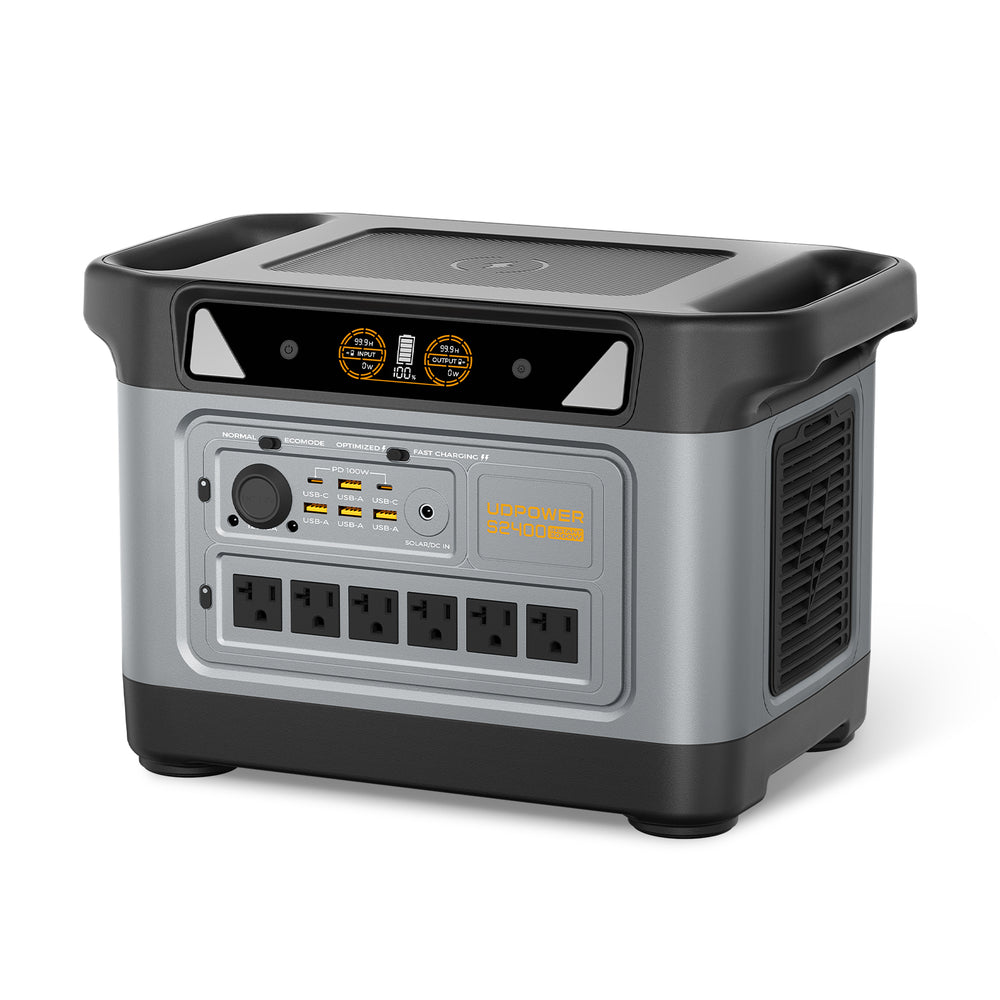
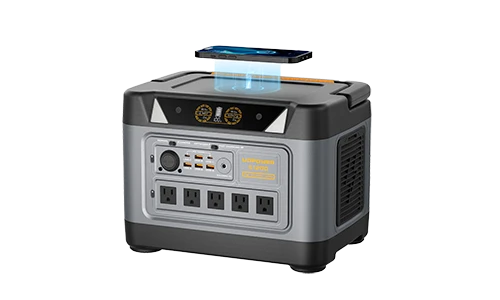
Best UDPOWER pick for most microwaves: UDPOWER S2400
The UDPOWER S2400 is the safer fit for typical microwave use because it gives you much more continuous AC headroom than a 1,200W-class unit.
- 2,083Wh LiFePO4 battery capacity
- 2,400W pure sine wave AC output
- 3,000W surge support for startup demands
- 6 AC outlets plus DC and USB outputs
- UPS-style backup with ≤10ms switchover
- Good fit for many 900W–1,200W cooking-power microwaves when the microwave input stays below 2,400W
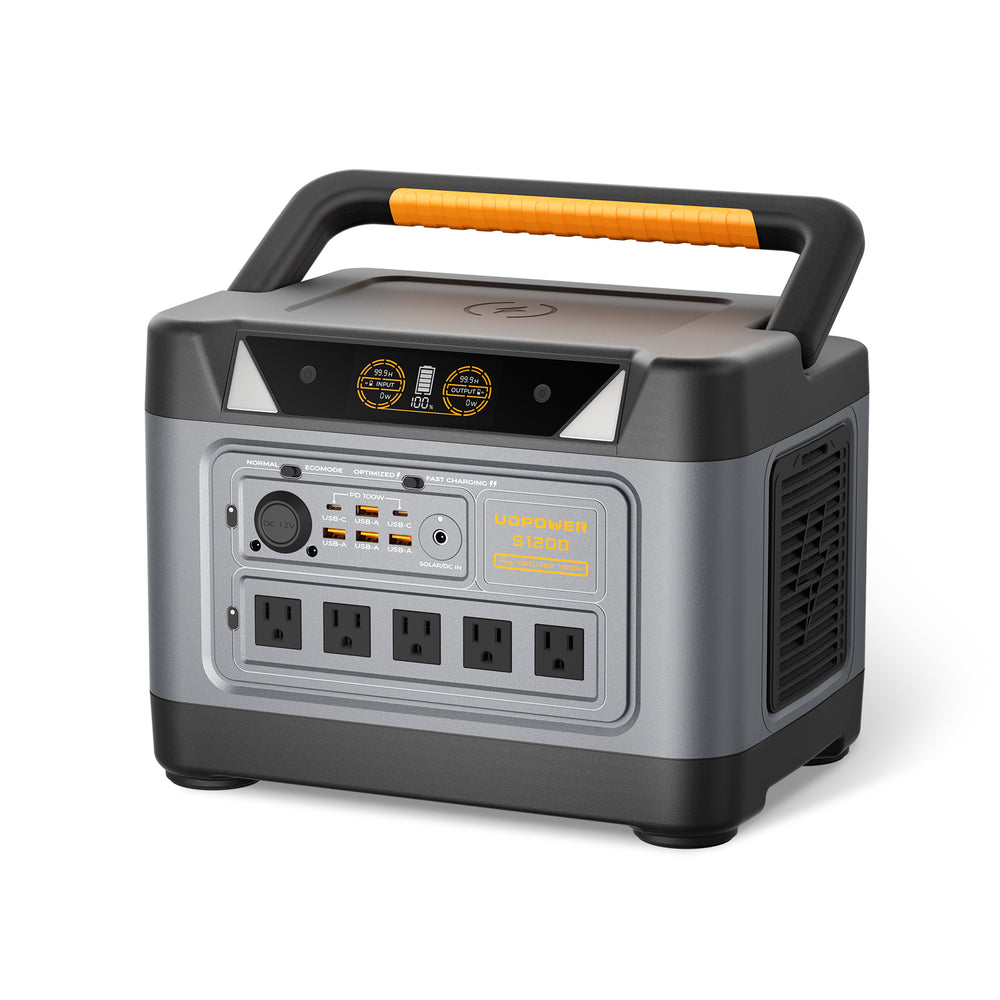
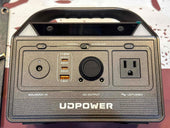
Limited-fit option: UDPOWER S1200
The UDPOWER S1200 can be a practical emergency backup for smaller loads, but microwave use requires careful label checking.
- About 1,191Wh capacity
- 1,200W pure sine wave AC output
- 1,800W max / surge rating
- 5 AC outlets on the 5-AC version
- UPS mode with ≤10ms response time
- Best considered only for compact microwaves whose rated input stays at or below 1,200W
How long can a battery backup run a microwave?
Microwave runtime is usually measured in minutes of cooking time, not hours of continuous operation. That is good news: most people only need 2–10 minutes at a time to reheat food or boil water.
The table below uses a conservative planning estimate:
| Microwave input watts | Approx. amps at 120V | UDPOWER S1200 estimated total cooking time | UDPOWER S2400 estimated total cooking time | Typical number of 5-minute heat cycles on S2400 |
|---|---|---|---|---|
| 1,050W | 8.8A | About 58 minutes | About 101 minutes | About 20 cycles |
| 1,200W | 10.0A | About 51 minutes if the microwave stays within rating | About 89 minutes | About 17 cycles |
| 1,500W | 12.5A | Not recommended: above S1200 continuous AC output | About 71 minutes | About 14 cycles |
| 1,600W | 13.3A | Not recommended: above S1200 continuous AC output | About 66 minutes | About 13 cycles |
| 1,700W | 14.2A | Not recommended: above S1200 continuous AC output | About 62 minutes | About 12 cycles |
For deeper load planning, see UDPOWER’s Battery Runtime Basics: Watts → Watt-hours.
Common microwave amp mistakes to avoid
| Mistake | Why it matters | Better approach |
|---|---|---|
| Using cooking watts as input watts | Undersizes the circuit, generator, or battery backup | Use rated input watts or stated amps from the nameplate |
| Buying a power station with the same wattage as the microwave’s cooking rating | A “1,000W microwave” may pull 1,400W–1,600W from the wall | Choose continuous AC output above the real input rating |
| Running a microwave with other high-watt kitchen appliances | Can trip breakers or overload a portable power station | Run the microwave by itself during heating cycles |
| Trusting surge wattage for continuous cooking | Surge is for short startup peaks, not several minutes of heating | Match the microwave to the continuous AC rating |
| Using a thin extension cord | Voltage drop and heat can create a safety issue | Plug directly into a suitable outlet or follow manufacturer cord guidance |
| Placing a power station in a closed cabinet while running a microwave | High AC loads produce heat inside the inverter system | Keep the power station upright, ventilated, and away from stove heat or water |
A simple buying rule for microwave backup power
If you only remember one rule, use this:
For most household microwaves, choose a power station with at least 2,000W continuous AC output. For a compact low-input microwave, a 1,200W-class station may work only after checking the microwave’s input label.
For UDPOWER shoppers, that means the S2400 is the recommended microwave-ready option, while the S1200 should be treated as a smaller-load backup unit unless your microwave label clearly stays within its continuous AC rating.
Related reading from UDPOWER
If you are building a practical outage or camping power plan, these guides connect directly to microwave sizing, kitchen appliance backup, and overall watt-hour planning:
FAQs
How many amps does a 1,000W microwave use?
If 1,000W is the cooking output, the microwave may draw roughly 1,400W–1,600W from the wall, or about 11.7A–13.3A on a 120V outlet. If the label says 1,000W input, then it is about 8.3A at 120V.
Does a microwave use 15 amps?
Some do. A 1,800W input microwave is about 15A at 120V. Many common countertop models fall closer to 10A–14A, but over-the-range and higher-power models may list 15A directly.
Can I plug a microwave into a regular outlet?
Many countertop microwaves plug into a standard 120V outlet, but the circuit must have enough available capacity. If the microwave shares a circuit with another high-watt appliance, the breaker may trip.
Should a microwave be on a dedicated circuit?
Many built-in and over-the-range microwaves require or recommend a dedicated 15A or 20A circuit. Countertop models vary. Always follow the installation manual for your exact unit.
Can a portable power station run a microwave?
Yes, if the power station’s continuous AC output is higher than the microwave’s input watts. For most household microwaves, choose a 2,000W-class or higher station. The UDPOWER S2400 is the better fit for typical microwave use.
Can the UDPOWER S1200 run a microwave?
Only some compact, low-input microwaves. The S1200 has 1,200W continuous AC output, so the microwave’s rated input must stay at or below that level. Many 900W–1,200W cooking-power microwaves pull more than 1,200W from the wall, so S2400 is usually the safer pick.
How long will the UDPOWER S2400 run a microwave?
It depends on the microwave input watts. Using a conservative 85% usable AC estimate, a 1,500W microwave may get about 71 minutes of total heating time from a full S2400. Since most microwave use is only a few minutes at a time, that can cover many short heating cycles.
Why does my microwave trip the breaker?
The circuit may be overloaded, especially if another high-watt appliance is running at the same time. A weak outlet, long extension cord, or high-input microwave can also contribute. Stop using the setup if the cord or plug gets warm.
Does lowering the microwave power level reduce amps?
It depends on the microwave design. Some inverter microwaves reduce power more smoothly, while many traditional microwaves cycle full power on and off. Lower settings may reduce average energy use, but they may not reduce the peak draw enough for a smaller power station.
What is the best way to measure my microwave’s real power draw?
Use the nameplate for rated input watts, or plug the microwave into a 120V electricity usage monitor rated for the load. A monitor can show real watts and kWh used during actual cooking.
Sources and calculation references
The article uses simple electrical math and public product/manufacturer references. Always confirm your own microwave’s label before sizing any circuit or backup power system.
- U.S. Department of Energy: Estimating appliance and home electronic energy use
- EnergySage: How many watts does a microwave use?
- Toshiba EM131A5C-BS specifications
- LG LMC2075ST spec sheet
- GE microwave installation instructions example
- UDPOWER S2400 official product page
- UDPOWER S1200 official product page