

40V 2Ah Battery mWh Rating: How Many Milli-Watt Hours Is It?
Last updated: May 29, 2026
Quick answer: A 40V 2Ah battery is usually rated at 80Wh, which equals 80,000mWh.
The math is simple: 40 volts × 2 amp-hours = 80 watt-hours. Then convert watt-hours to milli-watt-hours: 80Wh × 1,000 = 80,000mWh.
One important catch: some “40V MAX” tool batteries are calculated using a lower nominal voltage, often 36V. In that case, 36V × 2Ah = 72Wh = 72,000mWh. If your battery label already shows Wh, use the printed Wh rating first.

40V 2Ah to mWh: the Exact Math
To find a battery’s energy rating, you need voltage and amp-hours. A 40V 2Ah battery means the battery platform is 40 volts, and the pack capacity is 2 amp-hours.
          Watt-hours = Volts × Amp-hours

          40V × 2Ah = 80Wh

          Milli-watt-hours = Wh × 1,000

          80Wh × 1,000 = 80,000mWh
So the clean answer is:
40V 2Ah = 80Wh = 80,000mWh
Plain-English version: mWh is just Wh written in smaller units. One watt-hour equals 1,000 milli-watt-hours. That is why the mWh number looks much larger even though the battery has not changed.
mWh vs Wh vs mAh: What Each Rating Actually Tells You
Battery labels can be confusing because they often mix volts, amp-hours, milliamp-hours, watt-hours, and milli-watt-hours. The easiest way to understand them is to separate “charge amount” from “actual stored energy.”
| Rating | Full name | What it tells you | Best use | Example for 40V 2Ah |
|---|---|---|---|---|
| V | Volts | Electrical pressure of the battery platform | Matching tools, chargers, and battery systems | 40V platform |
| Ah | Amp-hours | Charge capacity at that battery voltage | Comparing batteries within the same voltage family | 2Ah |
| mAh | Milliamp-hours | A smaller way to write Ah | Phones, small electronics, power banks | 2Ah = 2,000mAh |
| Wh | Watt-hours | Actual stored energy because it includes voltage | Comparing batteries across different voltages | 40V × 2Ah = 80Wh |
| mWh | Milli-watt-hours | Wh written in thousandths | Small battery labels and exact conversions | 80Wh = 80,000mWh |
The key point: mAh alone can be misleading when two batteries have different voltages. A 2Ah battery at 40V stores much more energy than a 2Ah battery at 12V. That is why Wh and mWh are better for comparing real energy.
Do not write “MWh” for this battery. Lowercase mWh means milli-watt-hour. Uppercase MWh means megawatt-hour, a huge unit used for utility-scale energy. A 40V 2Ah tool battery is 80,000mWh, not 80,000MWh.
Why Some 40V 2Ah Batteries Show 72Wh Instead of 80Wh
If you search 40V 2Ah batteries, you may see two different answers: 80Wh and 72Wh. That does not always mean someone made a math mistake. It usually comes from the difference between maximum voltage and nominal voltage.
Many outdoor power tool batteries are marketed as “40V MAX.” The fully charged pack may be close to 40V with no load, but the nominal working voltage may be closer to 36V. Some brands calculate watt-hours from the advertised maximum voltage; others calculate from nominal voltage.
| Label style | Calculation | Wh rating | mWh rating | What to do | Example source |
|---|---|---|---|---|---|
| 40V × 2Ah | 40 × 2 | 80Wh | 80,000mWh | Use this if the battery label says 40V and 2Ah but does not print Wh. | BLACK+DECKER 40V MAX 2.0Ah battery |
| 36V nominal × 2Ah | 36 × 2 | 72Wh | 72,000mWh | Use this if your battery or manual lists 36V nominal or prints 72Wh. | Greenworks 40V 2.0Ah battery |
| Printed Wh on the pack | No manual math needed | Use the printed value | Printed Wh × 1,000 | Best choice for airline, shipping, and safety forms. | FAA battery Wh guidance |
Practical rule: For everyday estimating, a 40V 2Ah battery is about 72–80Wh. For a form, airline question, or shipping document, use the Wh rating printed on the battery casing or in the official manual.
40V Battery mWh Conversion Chart
Use this chart when the battery label gives you voltage and amp-hours but not mWh. The “40V calculation” is the simple advertised-platform calculation. The “36V nominal estimate” is useful for many 40V MAX-style packs.
| Battery label | 40V Wh calculation | 40V mWh rating | 36V nominal Wh estimate | 36V nominal mWh estimate | Common use case |
|---|---|---|---|---|---|
| 40V 1.5Ah | 40 × 1.5 = 60Wh | 60,000mWh | 36 × 1.5 = 54Wh | 54,000mWh | Light trimmers, compact tools |
| 40V 2Ah | 40 × 2 = 80Wh | 80,000mWh | 36 × 2 = 72Wh | 72,000mWh | String trimmers, blowers, light mowers |
| 40V 2.5Ah | 40 × 2.5 = 100Wh | 100,000mWh | 36 × 2.5 = 90Wh | 90,000mWh | Longer yard sessions |
| 40V 4Ah | 40 × 4 = 160Wh | 160,000mWh | 36 × 4 = 144Wh | 144,000mWh | Mowers, chainsaws, high-drain tools |
| 40V 5Ah | 40 × 5 = 200Wh | 200,000mWh | 36 × 5 = 180Wh | 180,000mWh | Extended mowing and backup packs |
| 40V 6Ah | 40 × 6 = 240Wh | 240,000mWh | 36 × 6 = 216Wh | 216,000mWh | Large lawns and repeated tool use |
| 40V 8Ah | 40 × 8 = 320Wh | 320,000mWh | 36 × 8 = 288Wh | 288,000mWh | Heavy outdoor work |
This is also why two batteries with the same Ah rating are not automatically equal. A 2Ah battery at 40V has far more stored energy than a 2Ah battery at 20V.
Can You Fly With a 40V 2Ah Lithium Battery?
For U.S. passenger travel, battery size is commonly handled by Wh rating. According to FAA guidance, rechargeable lithium batteries from 0–100Wh are generally allowed on passenger aircraft for personal use, while 101–160Wh batteries need airline approval, and batteries above 160Wh are not allowed on passenger aircraft.
| Battery | Typical Wh range | mWh range | Air travel meaning | Important note | Source |
|---|---|---|---|---|---|
| 40V 2Ah | 72–80Wh | 72,000–80,000mWh | Usually under the 100Wh threshold | Spare lithium batteries must be protected from damage and short circuit and carried according to airline rules. | FAA PackSafe battery rules |
| 40V 2.5Ah | 90–100Wh | 90,000–100,000mWh | Often near the limit | Use the printed Wh label and ask the airline if the label is unclear. | FAA PackSafe battery rules |
| 40V 4Ah | 144–160Wh | 144,000–160,000mWh | May require airline approval | Many airlines have stricter rules than the general federal limit. | FAA PackSafe battery rules |
| 40V 5Ah or larger | 180Wh+ | 180,000mWh+ | Often over passenger-aircraft limits | Do not assume it can fly just because it is a tool battery. | FAA PackSafe battery rules |
Travel tip: If the label is scratched, missing, or hard to read, airlines may refuse the battery even if your math is correct. Keep the manufacturer label visible and carry the battery in a way that protects the terminals.
What Does 80,000mWh Mean in Real Use?
An 80Wh battery is compact, but it is not tiny. In tool terms, it can run a cordless trimmer, blower, or small mower for a job that depends heavily on tool load and stop-start use. In electronics terms, 80Wh is roughly the size of a large laptop battery.
One thing to remember: a power tool battery normally needs its own brand-compatible tool, charger, inverter adapter, or USB adapter. You cannot safely connect random devices directly to the pack terminals.
| Example load | Estimated runtime from 80Wh before losses | Real-world expectation | Useful note |
|---|---|---|---|
| 10W LED work light | 80Wh ÷ 10W = 8 hours | About 6.5–8 hours with a compatible adapter | Good use for emergencies and garage work |
| 20W phone/tablet charging | 80Wh ÷ 20W = 4 hours | Multiple phone charges are possible with the right USB adapter | Adapter efficiency affects results |
| 60W laptop charging | 80Wh ÷ 60W = 1.3 hours | Often close to one full laptop charge, depending on the laptop | Only use an approved inverter or USB-C adapter |
| 300W power tool draw | 80Wh ÷ 300W = 0.27 hours | About 16 minutes of continuous draw before losses | Many tools do not draw full power continuously |
| 600W heavy tool draw | 80Wh ÷ 600W = 0.13 hours | About 8 minutes of continuous draw before losses | High-drain tools reduce runtime quickly |
Better planning method: For tools, think in tasks, not just minutes. Wet grass, thick weeds, dull blades, high blower speed, and cold batteries can all shorten runtime. For electronics, watt-hours are more predictable.
Recommended UDPOWER Power Stations for Charging 40V 2Ah Tool Batteries
A 40V 2Ah battery is only about 72–80Wh, but charging it in the real world still depends on your charger wattage, conversion loss, and how many packs you want to refill. If you want to recharge tool batteries during outages, camping trips, garage work, or off-grid yard maintenance, a portable power station is more practical than trying to improvise with battery adapters.
The estimates below use a simple planning formula: power station capacity × 90% ÷ 80Wh. Actual results vary by charger efficiency, battery age, temperature, and whether the charger stops exactly at full.

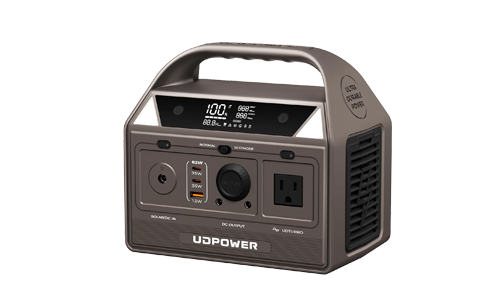
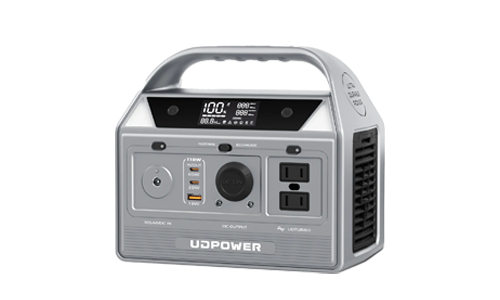
UDPOWER C400 — best compact choice for a few 40V 2Ah packs
The UDPOWER C400 Portable Power Station has a 256Wh LiFePO4 battery, 400W output, 800W surge, and compact 6.88 lb design. It is a good fit if you want a small backup source for cordless tool batteries, phones, lights, small electronics, and light camping loads.
- Estimated 40V 2Ah recharges from 80Wh rating: about 2–3 full charges
- Estimated 40V 2Ah recharges from 72Wh rating: about 3 full charges
- Best for: small yard jobs, day trips, garage backup, light emergency charging
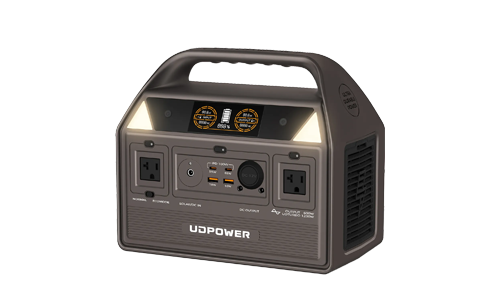
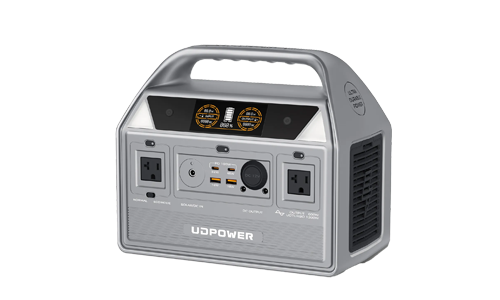
UDPOWER C600 — better for multiple batteries and weekend use
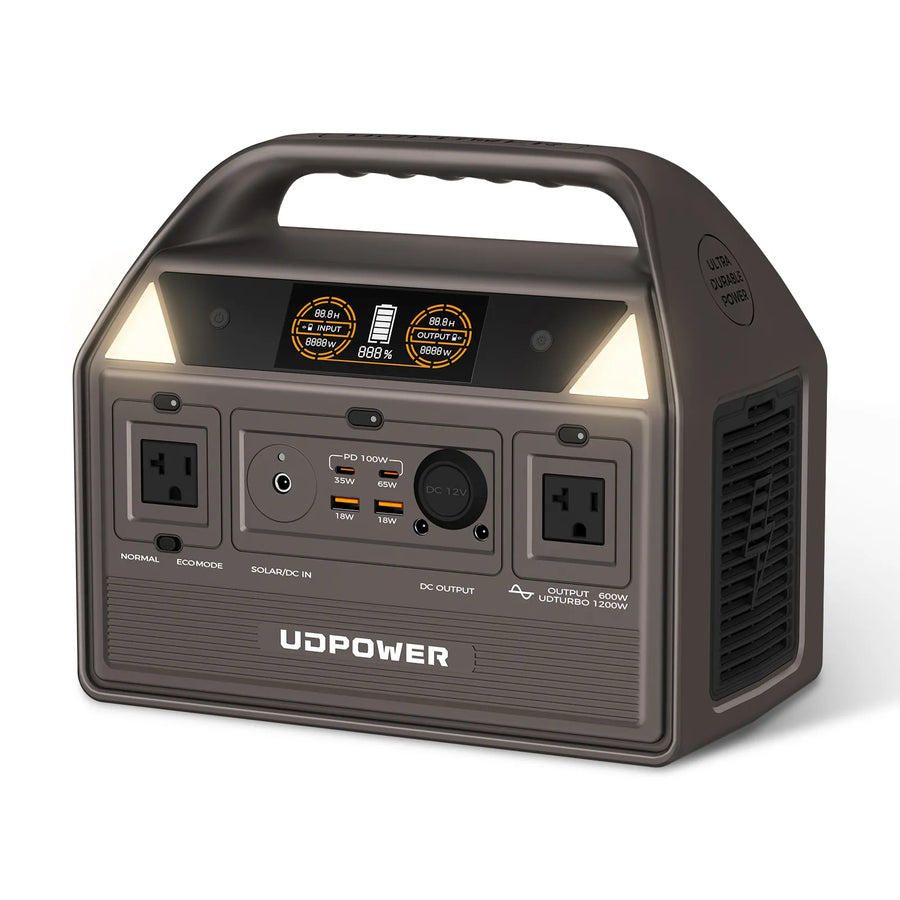
The UDPOWER C600 Portable Power Station provides 596Wh capacity, 600W rated output, 1200W peak output, LiFePO4 chemistry, and multiple AC/DC/USB outputs. It is a stronger match if you want to charge several 40V packs and still have power left for a laptop, camera gear, lights, fan, or cooler.
- Estimated 40V 2Ah recharges from 80Wh rating: about 6 full charges
- Estimated 40V 2Ah recharges from 72Wh rating: about 7 full charges
- Best for: weekend camping, multi-battery yard work, tool charging plus electronics
UDPOWER S1200 — best balance for outage planning
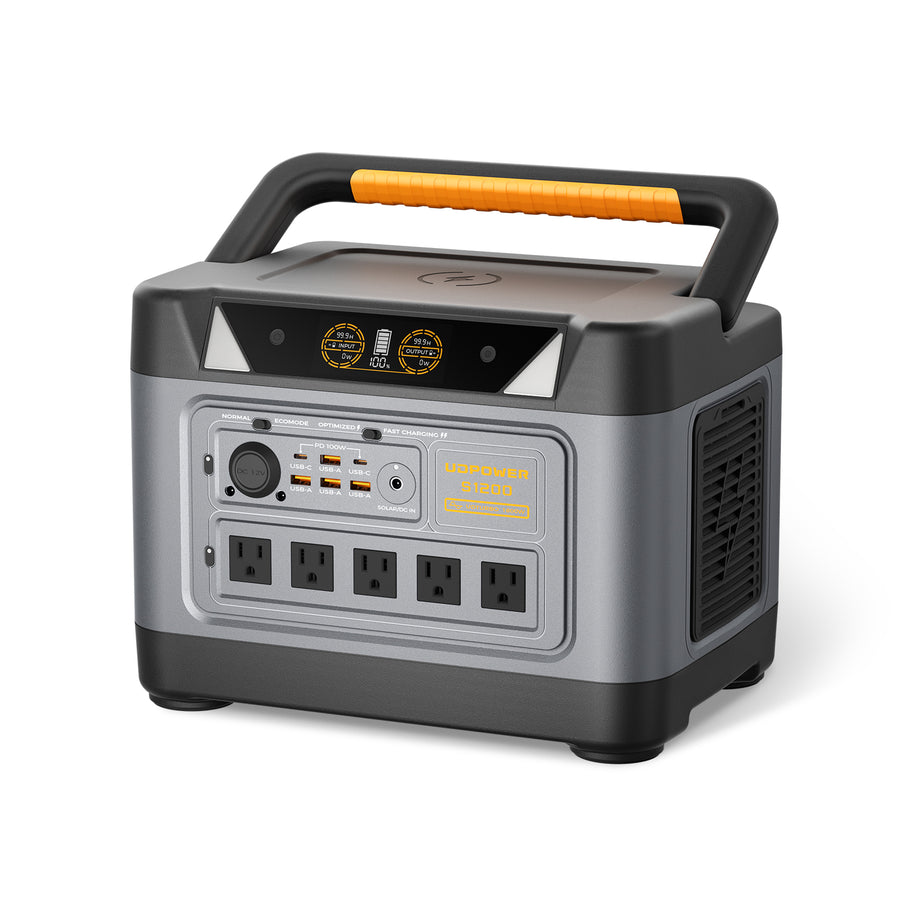
The UDPOWER S1200 Portable Power Station has 1,190Wh capacity, 1,200W rated output, up to 1,800W surge, LiFePO4 battery chemistry, and UPS-style backup support. It makes sense if you want to charge tool batteries while also backing up practical home essentials.
- Estimated 40V 2Ah recharges from 80Wh rating: about 13 full charges
- Estimated 40V 2Ah recharges from 72Wh rating: about 14 full charges
- Best for: power outage prep, CPAP/router/lights, refrigerator-class planning, repeated tool charging
UDPOWER S2400 — best for heavy backup and high-output needs
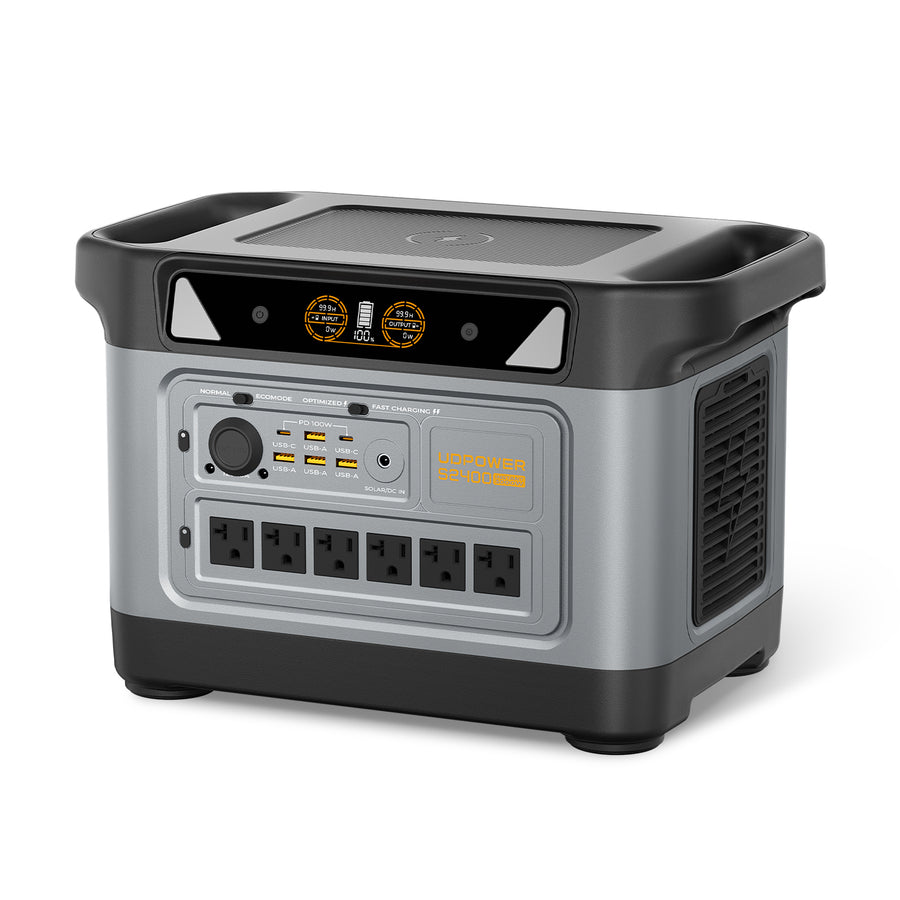
The UDPOWER S2400 Portable Power Station offers 2,083Wh capacity, 2,400W rated output, up to 3,000W surge, 6 AC outlets, and up to 400W solar input. It is the best fit if tool charging is only one part of a larger backup plan involving RV use, appliances, emergency power, and solar recharging.
- Estimated 40V 2Ah recharges from 80Wh rating: about 23 full charges
- Estimated 40V 2Ah recharges from 72Wh rating: about 26 full charges
- Best for: high-capacity backup, larger work setups, RV use, and solar-supported outages
| UDPOWER model | Official capacity | Rated output | Estimated 40V 2Ah recharges using 80Wh | Best match | Official link |
|---|---|---|---|---|---|
| C400 | 256Wh | 400W | About 2–3 | Compact backup for a few packs | View C400 |
| C600 | 596Wh | 600W | About 6 | Multiple packs plus small electronics | View C600 |
| S1200 | 1,190Wh | 1,200W | About 13 | Home outage and longer overnight backup | View S1200 |
| S2400 | 2,083Wh | 2,400W | About 23 | Heavy-duty backup, RV, appliances, solar kits | View S2400 |
For side-by-side model selection, use the UDPOWER power station comparison guide. For solar-supported charging during longer outages or outdoor use, browse UDPOWER solar generator kits.
Common Rating Mistakes to Avoid
1. Confusing mWh with mAh
A 40V 2Ah battery is 2,000mAh, but 2,000mAh does not tell the full energy story unless you also know voltage. The useful energy rating is 80Wh or 80,000mWh when calculated from 40V.
2. Comparing Ah across different voltages
A 40V 2Ah battery and a 20V 2Ah battery do not store the same energy. The 40V pack is about twice the energy when both are calculated from the advertised voltage.
| Battery | Calculation | Wh | mWh | Why it matters |
|---|---|---|---|---|
| 20V 2Ah | 20 × 2 | 40Wh | 40,000mWh | Same Ah, lower voltage, less stored energy |
| 40V 2Ah | 40 × 2 | 80Wh | 80,000mWh | Same Ah, higher voltage, more stored energy |
| 12V 2Ah | 12 × 2 | 24Wh | 24,000mWh | Ah alone is not enough for comparison |
3. Ignoring charger wattage
The battery’s Wh rating tells you how much energy it stores. The charger’s wattage tells you how fast it can recharge. A small 60W charger and a faster 150W charger may refill the same 40V 2Ah battery at very different speeds.
4. Assuming every 40V pack uses the same internal voltage
Different brands may use different labeling conventions. Some list maximum voltage, some list nominal voltage, and some print Wh directly. For safety, shipping, and travel, the printed Wh rating is the cleanest answer.
5. Treating a tool battery as a universal power bank
A 40V tool battery is designed for a matching tool system. To charge phones, laptops, or other electronics, use a brand-approved USB adapter, inverter adapter, charger, or a dedicated portable power station.
Useful Official References
| Reference | Why it is useful | Link |
|---|---|---|
| FAA PackSafe battery guidance | Explains Wh calculation and airline battery thresholds. | FAA airline passengers and batteries |
| BLACK+DECKER 40V MAX 2.0Ah battery | Example of a 40V 2Ah pack that lists 80Wh and notes 36V nominal voltage. | BLACK+DECKER LBX2040 |
| Greenworks 40V 2.0Ah battery | Example of a 40V 2Ah pack listed at 72Wh MAX. | Greenworks 40V 2Ah battery |
| UDPOWER product comparison | Compares UDPOWER capacity, output, solar input, and best-use cases. | UDPOWER comparison guide |
FAQ: 40V 2Ah Battery mWh Rating
What is the mWh rating of a 40V 2Ah battery?
A 40V 2Ah battery is typically 80Wh, which equals 80,000mWh. The calculation is 40V × 2Ah = 80Wh, then 80Wh × 1,000 = 80,000mWh.
Why does my 40V 2Ah battery say 72Wh?
Some 40V MAX batteries are calculated from nominal voltage instead of maximum voltage. If the nominal voltage is 36V, then 36V × 2Ah = 72Wh, or 72,000mWh.
Should I use 72,000mWh or 80,000mWh?
For quick estimating, use 80,000mWh if your label only says 40V 2Ah. If the battery label or manual prints 72Wh, use 72,000mWh. For air travel or shipping, use the printed Wh rating whenever available.
Is mWh the same as mAh?
No. mAh measures charge capacity, while mWh measures energy and includes voltage. A 40V 2Ah battery is 2,000mAh, but its energy is 80Wh or 80,000mWh when calculated from 40V.
How do I convert Ah to mWh?
Multiply volts by amp-hours to get Wh, then multiply by 1,000 to get mWh. Formula: mWh = V × Ah × 1,000.
How do I convert mAh to mWh?
First divide mAh by 1,000 to get Ah. Then multiply by voltage and by 1,000. A simpler formula is mWh = V × mAh. For example, 40V × 2,000mAh = 80,000mWh.
Can I take a 40V 2Ah battery on an airplane?
A 40V 2Ah battery is usually around 72–80Wh, which is typically below the 100Wh threshold used in U.S. passenger battery rules. Spare lithium batteries must be carried and protected according to airline and FAA rules, and airlines may apply stricter limits.
How many times can a UDPOWER C600 charge a 40V 2Ah battery?
Using 596Wh capacity and a 90% planning efficiency, the UDPOWER C600 can provide about 536Wh of usable charging energy. Dividing by an 80Wh battery gives about 6 full charges, with real results depending on charger efficiency and battery condition.
Can a 40V 2Ah battery run a laptop?
It can only do so through a compatible adapter or inverter. In energy terms, 80Wh is roughly enough for many laptop charging sessions, but the actual result depends on the laptop battery size, adapter loss, and output method.
Is 80,000mWh a lot?
For a handheld tool battery, 80,000mWh is a useful compact pack. For home backup, it is small. That is why a portable power station in the 256Wh to 2,083Wh range is more practical for repeated tool battery charging and emergency power.
Need More Than One 40V Battery Charge?
If you only need to identify the rating, a 40V 2Ah battery is usually 80,000mWh. If you need to charge several tool batteries during an outage, at a campsite, or away from wall power, choose a portable power station by total Wh capacity and charger wattage.
View Portable Power Stations Compare Models View Solar Generator KitsRelated Articles


