

Primitive Camping 101: Benefits, Tips, & Essentials
Primitive camping (also called backcountry or dispersed camping) means leaving the picnic tables, hookups, and flush toilets behind and camping in places with few or no built-in facilities. It’s one of the most rewarding ways to experience wild public lands in the U.S., but it also demands more planning, skills, and the right gear.
Quick definition: Primitive camping usually happens away from developed campgrounds, without amenities like restrooms, running water, or electrical hookups. You bring in everything you need and pack out everything you use.

What Is Primitive Camping?
In simple terms, primitive camping means staying in a remote area without the conveniences of developed campgrounds. There are no hookups, no bathhouses, and often no marked campsites. You hike, paddle, or drive (where legal) into a more isolated spot and make camp using what you bring and what nature safely allows.
| Feature | Primitive Camping | Developed Campground |
|---|---|---|
| Location | Remote, off the beaten path; often on public land with minimal infrastructure. | Closer to roads and facilities; designated loops and numbered sites. |
| Facilities | Usually none or very limited (no toilets, tables, trash cans, or water spigots). | Bathrooms, potable water, trash bins, picnic tables, fire rings, sometimes showers. |
| Reservations | Typically first-come, first-served or regulated by simple permits. | Often reservation-based with booking windows and campsite fees. |
| Cost | Free or very low-cost permit fees. | Nightly campground fees; sometimes day-use or parking fees. |
| Experience | Quiet, more solitude, strong sense of wilderness and self-reliance. | More social, family-friendly, convenient but less “wild.” |

Where Can You Primitive Camp in the U.S.?
Rules vary by state and by land agency, so always confirm details with the local ranger district or park office before you go. In general, Americans who primitive camp typically use:
- National forests and grasslands (U.S. Forest Service).
- Bureau of Land Management (BLM) lands, especially in the West.
- Backcountry zones inside national and state parks where permits are required.
- Some wildlife management areas and local preserves that allow dispersed camping.
| Land Type (U.S.) | Primitive Camping Style | Typical Rules (Always Verify Locally) |
|---|---|---|
| National Forest | Dispersed campsites off forest roads or trails. | Often free, usually limited stay (e.g., 14 days); camp at least a set distance from water and developed sites; follow fire restrictions. |
| BLM Land | Roadside or hike-in dispersed sites in desert or open country. | Pack out all waste; respect sensitive desert soils; sometimes extra rules for popular areas or seasonal closures. |
| National Park Backcountry | Designated backcountry zones or numbered primitive sites. | Almost always requires a permit; specific rules for food storage, group size, campfire bans, and bear canisters. |
| State Parks & WMAs | Varies widely by state; some allow walk-in primitive sites. | Nightly fees or permits; may restrict dispersed camping to specific zones and ban campfires during dry seasons. |
For up-to-date regulations, use official agency websites (e.g., National Park Service, U.S. Forest Service, state park systems) or call the local ranger station before heading out.

Key Benefits of Primitive Camping
Why rough it when you could plug into full hookups? Primitive camping offers some unique benefits:
1. Real Solitude and Quiet
Developed campgrounds can feel like busy neighborhoods—kids on bikes, generators running, and headlights at night. Primitive camping usually means fewer neighbors and more silence, so you can actually hear the wind, water, and wildlife.
2. Stronger Connection with Nature
When you’re far from buildings and infrastructure, you notice the stars, the change in weather, and subtle details of the landscape. For many people, this deeper immersion in nature is the whole point of going primitive.
3. Skill-Building & Self-Reliance
Primitive camping forces you to plan better and learn new skills: reading maps, filtering water, managing food without coolers full of ice, and staying warm safely. These skills carry over into everyday life and emergency preparedness.
4. Lower Costs Over Time
Once you invest in a good kit—shelter, sleeping system, water treatment, and maybe a compact power station—your actual camping fees can be very low or even zero in many dispersed areas. This makes primitive camping one of the most affordable ways to travel.

Challenges & Risks to Know About
The same things that make primitive camping appealing can also increase risk if you’re not prepared:
- No services: You must bring your own water or treatment and manage all trash and waste.
- Remoteness: Response times for search and rescue can be much longer.
- Exposure to weather: Storms, heat, or unexpected cold can be more serious far from shelters.
- Wildlife: Improper food storage can attract bears, rodents, and other animals.
- Navigation mistakes: Getting lost is easier without obvious campground loops and signs.
None of this should scare you away—but it should motivate you to plan carefully, start with beginner-friendly areas, and build experience gradually.
Primitive Camping Essentials Checklist

Think in systems: shelter, sleep, water, food, clothing, navigation, safety, and power. Here’s a high-level checklist to adapt to your climate and trip length.
| System | Key Items | Notes for Beginners |
|---|---|---|
| Shelter | Backpacking tent or tarp shelter, stakes and guylines, groundsheet, extra cordage. | Practice pitching at home; learn how to secure your shelter in wind and rain before you’re deep in the backcountry. |
| Sleep System | Sleeping bag or quilt, sleeping pad, pillow (or stuff sack with clothes), clean sleep clothes. | Choose a bag rated below expected low temperatures; a quality sleeping pad makes a big difference in warmth and comfort. |
| Water | Water bottles or hydration bladder, filter or purifier, backup purification tablets, collapsible water container in camp. | Plan for at least 3–4 quarts per person per day (more in heat), plus extra for cooking; know where reliable water sources are on your route. |
| Food & Cooking | Backpacking stove and fuel, lighter and waterproof matches, cook pot, utensil, lightweight meals, snacks, bear-safe storage (canister or hang system where required). | Simple, calorie-dense foods work best (instant rice, noodles, nuts, dehydrated meals). Practice using any bear canister or hang method before your trip. |
| Clothing | Moisture-wicking base layers, insulating mid-layer, waterproof shell, hat, gloves, extra socks, camp shoes. | Think in layers, not heavy single pieces. Avoid cotton for anything important to warmth. |
| Navigation | Map and compass, GPS or smartphone navigation app with offline maps, power bank or compact power station for recharging. | Don’t rely only on your phone. Keep it in airplane mode, and have a paper map backup even on short trips. |
| Safety & First Aid | First-aid kit, headlamp with spare batteries, whistle, multi-tool, repair tape, backup fire starter, sun protection, bug repellent. | Customize your first-aid kit for allergies, medications, and the specific activities you’re doing. |
| Power & Lighting | Headlamps, small lantern or string lights, plus a battery solution such as a portable power station and/or solar panel. | For primitive camping that still relies on phones, cameras, GPS, or CPAP, a compact LiFePO₄ power station can be much quieter and cleaner than a gas generator. |
Planning Off-Grid Power (with UDPOWER Examples)
Primitive camping doesn’t have to mean going completely without electricity. Many campers still want to keep a phone, GPS, camera, or small fan running. The key is to size your battery to your actual usage and trip length.

Step 1: Estimate Your Daily Energy Use
Start by listing the devices you’ll actually bring, then estimate how many watt-hours (Wh) per day you’ll use. The table below shows a simple example for a minimalist 2-person primitive camp.
| Device | Approx. Power (W) | Daily Use (Hours) | Daily Energy (Wh) | Notes |
|---|---|---|---|---|
| 2× Headlamps (USB) | 1 | 2 | 2 | Recharge every night or every other night. |
| 2× Smartphones | 8 | 1 | 8 | One full charge per phone per day. |
| GPS / Navigation Device | 5 | 1 | 5 | Used for tracking and offline maps. |
| Camera / Action Cam | 10 | 1 | 10 | Charging batteries or the camera body. |
| Small USB Fan (optional) | 5 | 4 | 20 | For hot nights in a tent. |
| Estimated Daily Total | ~45 Wh | This is a light-usage example; many campers will plan for 80–150 Wh/day. |
For many primitive campers, 80–150 Wh per day is a reasonable planning number once you include brighter lanterns, more electronics, or a small 12V cooler.
Step 2: Pick a Battery Size That Matches Your Trip
UDPOWER offers several LiFePO₄ portable power stations that work well for different primitive camping styles. Below are example capacities (based on official specs) and how many days of a 150 Wh/day budget each could cover in ideal conditions.
| Model | Picture | Battery Capacity (Wh) | Output | Approx. Weight | Approx. Days @ 150 Wh/day* | Best Fit for Primitive Camping |
|---|---|---|---|---|---|---|
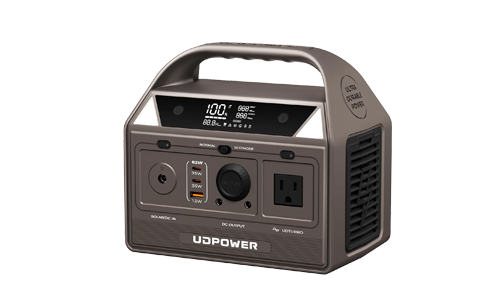
| UDPOWER C200 |  |
192 Wh | 200 W rated, 400 W surge (pure sine wave) | ~5.4 lb | ~1–1.5 days | Ultralight overnighters, day hikes with base camp, charging phones, headlamps, and small devices. |
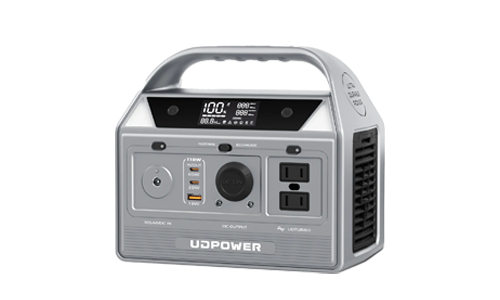
| UDPOWER C400 |  |
256 Wh | 400 W output | ~6.9 lb | ~1–2 days | Weekend trips where you want extra margin for cameras, tablets, or a small 12V fan. |
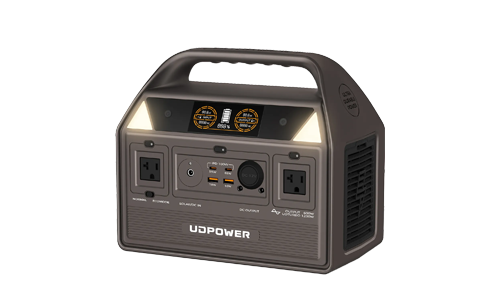
| UDPOWER C600 |  |
596 Wh | 600 W rated, up to 1,200 W peak | ~12.3 lb | ~3–4 days | Longer off-grid stays, powering a 12V fridge, cameras, laptops, and lighting for a small group. |
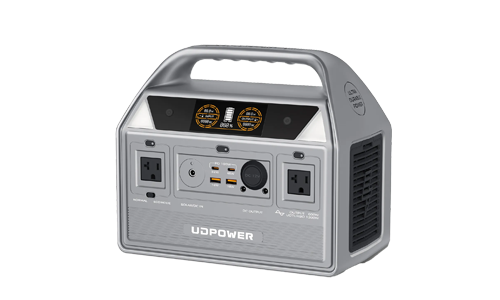
| UDPOWER S1200 |  |
1,190 Wh | 1,200 W rated, up to 1,800 W surge | ~26 lb | ~7–8 days | Basecamp setups, group primitive trips, or powering hungrier devices like mini fridges, induction plates (within limits), or medical equipment such as CPAP. |
*These are simplified examples for planning. Real-world runtime is typically lower because of inverter losses, temperature, and how you use your devices. For most trips, it’s wise to assume that about 70–85% of the rated watt-hours will be usable.
Step 3: Add Solar if You Want to Stay Out Longer
For multi-day primitive trips, pairing a portable power station with a folding solar panel lets you recharge during the day and arrive back at camp with a full battery.UDPOWER’s portable solar panels are designed to match their power stations. For example:
- UDPOWER 120W Portable Solar Panel – a good match with the C200 or C400 for light setups and shorter trips.

- UDPOWER 210W Portable Foldable Solar Panel – higher-output panel for the C600 or S1200, with adjustable stand and weather-resistant construction, suitable for camping and RV use.

A simple rule of thumb for primitive camping is to aim for solar input in the same ballpark as your daily energy use. If your campsite and weather allow it, a 120–210 W panel can replace a significant portion of your daily power consumption during sunny hours.
Safety, Regulations & Leave No Trace
Primitive campers have a bigger responsibility to protect wild places. The Leave No Trace Center for Outdoor Ethics summarizes this in seven core principles. Adapted for primitive camping, they include:- Plan ahead and prepare: Know local rules, fire restrictions, and weather; bring maps and backups.
- Travel and camp on durable surfaces: Use existing campsites, rock, gravel, or dry grasses when possible.
- Dispose of waste properly: Pack out all trash, use catholes where allowed, or pack out human waste in sensitive areas.
- Leave what you find: Don’t build structures, move artifacts, or strip vegetation.
- Minimize campfire impacts: Use a stove instead of a fire when possible; follow local fire bans.
- Respect wildlife: Observe from a distance, store food securely, and keep pets under control.
- Be considerate of other visitors: Keep noise low, dim lights, and maintain distance from other camps.
Beginner-Friendly Primitive Camping Tips
1. Start Close to Home
Your first primitive camp doesn’t have to be a week-long trek. Try a one- or two-night trip in a nearby national forest or state park backcountry area so you can bail out if something goes wrong.
2. Practice with Your Gear Before You Go
Set up your tent, test your stove, and practice using your water filter and power station in your backyard or a regular campground. Work out the kinks before you’re miles from the trailhead.
3. Pack with Checklists
It’s easy to forget small but essential items—like your headlamp or lighter. Print or save a checklist on your phone and go through it before every trip.
4. Respect Weather Windows
Check multiple forecasts for the region and elevation you’ll be camping at. Primitive camping in heavy storms or burn-ban conditions can be risky for beginners; choose a safer weather window until you’re more experienced.
5. Share Your Plan with Someone You Trust
Leave a simple “trip plan” with a friend or family member: where you’re going, vehicle description, route, who you’re with, and when you’ll be back. This helps search and rescue if something goes wrong.
Sample 2-Night Primitive Camping Packing Plan
Use this sample plan as a starting point for a 2-night primitive trip for one person. Adjust for climate, your own gear, and any group equipment you can share.
| Category | Item | Example Choice | Notes |
|---|---|---|---|
| Shelter | Tent or tarp | 1-person backpacking tent | Include stakes, guylines, and a small repair kit. |
| Shelter | Groundsheet | Polycryo or lightweight footprint | Protects your tent floor on rough ground. |
| Sleep System | Sleeping bag or quilt | Rated slightly below expected low | Down or synthetic; match to climate. |
| Sleep System | Sleeping pad | Insulated inflatable pad | Essential for warmth on cold ground. |
| Water | Storage & treatment | 2–3 bottles, 1 filter, backup tablets | Plan where you’ll refill each day. |
| Food | Meals & snacks | 3 days of food (2 dinners, 2 breakfasts, 3 lunches) | Dehydrated or simple stove-friendly foods. |
| Cooking | Stove & cookware | Light stove, small pot, utensil, fuel | Check fuel before you leave. |
| Clothing | Layers | Base, mid-layer, shell, extra socks | Pack dry sleep clothes in a dry bag. |
| Navigation | Map, compass, GPS/phone | Paper map + downloaded offline maps | Keep electronics in airplane mode when not needed. |
| Power | Battery & charging | UDPOWER C200 or C400 (for light use) | Charge at home; use for phone, headlamp, and small devices. Add a small solar panel if you want extra margin. |
| Lighting | Headlamp & backup | Rechargeable headlamp + small backup light | Always bring one spare light source. |
| Safety | First-aid & emergency | Personal first-aid kit, whistle, multi-tool, firestarter | Customize your kit for your needs and area. |
| Hygiene | Leave-No-Trace kit | Trowel (if allowed), toilet paper, bags, hand sanitizer | Follow local rules on catholes vs. pack-out systems. |
| Misc. | Extras | Camera, notebook, small camp chair | Optional comfort items—watch total pack weight. |
Final Thoughts
Primitive camping is one of the purest ways to experience wild places in the U.S. It trades convenience for freedom, quiet, and self-reliance. With a bit of planning, a solid essentials kit, and a right-sized off-grid power setup, you can enjoy the benefits of modern safety and navigation while still feeling fully unplugged from everyday life.Start small, learn the basics, treat the land with care, and you’ll quickly discover why so many people fall in love with primitive camping—and keep going back year after year.
Related Articles


