NJ Solar Incentives 2026: What New Jersey Homeowners Can Still Claim
New Jersey homeowners can still benefit from solar incentives in 2026, but the savings structure has changed. This guide explains the current NJ solar incentive programs, including SuSI / ADI SREC-II payments, net metering, solar sales tax exemption, renewable energy property tax exemption, and community solar options. It also covers the federal residential solar credit change, common contract mistakes, system sizing tips, and how portable power stations like the UDPOWER S1200 and S2400 can support essential backup power during outages.
Latest update: May 9, 2026
Quick answer
In 2026, New Jersey homeowners can still benefit from several strong solar incentives, but the incentive stack has changed. The big difference is federal: the IRS says the Residential Clean Energy Credit is not available for qualified clean energy property placed in service after December 31, 2025. That means most homeowner-owned rooftop solar systems installed in 2026 no longer get the old 30% federal residential solar tax credit.
New Jersey still has meaningful solar savings through the SuSI/ADI SREC-II program, net metering, a solar sales tax exemption, a renewable energy system property tax exemption, and community solar options for renters or homes that are not a good fit for rooftop panels. For most NJ homeowners in 2026, the smartest move is to size the system close to real annual usage, confirm who owns the SREC-II income, and ask your installer to show the exact registration path before you sign.

What changed for NJ solar incentives in 2026?
For years, many solar quotes in New Jersey were built around a simple message: install solar, claim a 30% federal tax credit, then add state-level incentives on top. In 2026, that is no longer the right starting point for most homeowner-owned systems.
The better 2026 question is: without the old federal homeowner credit, do New Jersey’s remaining incentives still make solar worth evaluating? In many cases, yes — but the details matter more than they used to.
The 2026 reality in plain English
- Federal homeowner tax credit: generally not available for clean energy property placed in service after December 31, 2025, based on current IRS guidance.
- New Jersey SuSI / ADI: still provides production-based SREC-II income for qualifying solar systems.
- Net metering: still gives strong bill-credit value when a system is sized around the home’s actual annual electricity use.
- Sales tax exemption: New Jersey exempts qualifying solar energy devices from sales tax.
- Property tax exemption: the added value from a certified renewable energy system may be exempt from local property tax assessment increases.
- Community solar: useful for renters, condo owners, shaded homes, and homeowners who do not want panels on their roof.
This article focuses on ordinary New Jersey residents comparing rooftop solar, solar leases, PPAs, and community solar in 2026. It is not tax advice. Use it as a practical homeowner checklist, then confirm the final numbers with your installer, tax professional, and utility.
NJ solar incentives 2026 quick table
The table below gives a fast overview of the main solar-related incentives a New Jersey homeowner should ask about in 2026.
| Incentive or program | 2026 status | How it helps | What to ask before signing | Source |
|---|---|---|---|---|
| Federal Residential Clean Energy Credit | Not available for property placed in service after Dec. 31, 2025, according to IRS guidance | Previously reduced federal tax liability by 30% for qualifying residential clean energy property; most new 2026 homeowner-owned systems should not assume it applies | Was the system placed in service by the deadline? Who is claiming any tax benefit under a lease or PPA? | IRS Residential Clean Energy Credit |
| New Jersey SuSI / ADI SREC-II | Available for qualifying net-metered residential systems registered through the ADI program | Provides a fixed production-based payment for SREC-IIs generated by eligible solar production | What is the current residential SREC-II rate on the official ADI page? Will you or the installer/financier receive the payments? | NJ Clean Energy ADI Program |
| ADI 15-year qualification life | Available for ADI-participating projects that meet program rules | Gives long-term value to production because SREC-II eligibility runs for 15 years | When is the system registered and accepted? What paperwork confirms the incentive level? | ADI Program FAQs |
| Net metering | Available for qualifying customer-generators | Credits exported solar energy at full retail value over the annualized period, with remaining excess credited at wholesale value at the end of that period | How close is system production to your annual usage? What is the annual true-up month? | NJ Net Metering and Interconnection |
| Solar sales tax exemption | Available for qualifying solar energy devices and systems | Avoids New Jersey sales tax on eligible solar energy devices or systems | Is the seller applying the exemption correctly? Is Form ST-4 or another accepted certificate needed? | NJ Sales Tax Exemption Administration |
| Renewable energy system property tax exemption | Available for certified renewable energy systems on residential, commercial, or industrial property | May exempt the added assessed value created by the renewable energy system | Who files Form CRES? What does your local assessor need? | NJ Division of Taxation |
| Community Solar Energy Program | Available through participating community solar projects | Lets subscribers benefit from solar bill credits without owning rooftop panels | What is the guaranteed bill-credit discount? Is there an exit fee? How is consolidated billing handled? | NJ Community Solar for Subscribers |
Tip: Incentive rates and program blocks can change. Before signing a 2026 contract, check the official New Jersey Clean Energy Program ADI page and ask your installer to identify the exact rate and registration step used in your quote.
Is the 30% federal solar tax credit available in 2026?
For most homeowner-owned solar systems placed in service in 2026, the answer is no. The IRS Residential Clean Energy Credit page states that the credit equals 30% of the costs of new qualified clean energy property installed from 2022 through December 31, 2025, and that the credit is not available for property placed in service after December 31, 2025.
What “placed in service” means for a homeowner
Do not treat “contract signed,” “deposit paid,” or “panels delivered” as the same thing as placed in service. For tax purposes, the important date is usually when the system is ready and available for its intended use. If your system was completed around the end of 2025 or early 2026, ask a tax professional how your specific facts should be handled.
This change matters because many old solar calculators, installer pages, and comparison articles still assume a 30% federal credit. In 2026, a New Jersey quote should stand on its own using New Jersey incentives, net metering value, utility-rate savings, and the ownership structure of the system.
| Question | 2026 answer | Why it matters |
|---|---|---|
| Can I claim the old 30% federal residential credit for a new system installed in 2026? | Do not assume you can. IRS guidance says the Residential Clean Energy Credit is not available for property placed in service after Dec. 31, 2025. | A $30,000 project that once expected a $9,000 federal credit now needs a different payback calculation. |
| Can I still claim a credit for a system completed before the deadline? | Possibly, if the system meets IRS requirements and was placed in service within the eligible period. | End-of-2025 installs should be reviewed carefully with tax records, PTO documentation, invoices, and a tax professional. |
| What about leases and PPAs? | The homeowner usually does not own the system, so the homeowner typically does not claim the residential credit. Always check who owns tax benefits, SREC-II payments, and equipment. | Lease and PPA prices may still reflect benefits captured by the system owner, but you need to see that value in the contract terms. |
How New Jersey’s SuSI / ADI SREC-II incentive works
New Jersey’s Successor Solar Incentive program is usually called SuSI. For most residential rooftop projects, the relevant pathway is the Administratively Determined Incentive program, or ADI.
The simple version: a qualifying solar system earns one SREC-II for each megawatt-hour of solar electricity it produces. One megawatt-hour equals 1,000 kilowatt-hours. The SREC-II has an administratively set dollar value, and ADI projects are eligible to receive SREC-IIs for a 15-year qualification life if program rules are met.
What homeowners should verify
- Current rate: Check the official ADI Program incentive table before signing. As of this update, the official ADI page lists net-metered residential as a current market segment and shows the incentive value in its table. Because rates and blocks can change, use the official page as the final reference.
- Ownership: If you buy the system with cash or a loan, SREC-II income usually should be part of your value calculation unless your contract says otherwise. If you use a lease or PPA, the system owner may receive the SREC-II payments.
- Registration: Ask who submits the ADI registration, when it is submitted, and what document proves acceptance.
- Metering: SREC-II production is based on measured solar production, not just your bill savings.
One practical way to evaluate a quote is to ask your installer for two payback calculations: one using only electric-bill savings and one adding SREC-II income. If the deal only works when every assumption is perfect, it may be sized too aggressively.
SREC-II income examples by solar system size
The SREC-II math is not complicated. Start with expected annual solar production in kWh, divide by 1,000, then multiply by the current SREC-II value for your market segment.
Formula: Annual SREC-II income = annual solar production ÷ 1,000 × current SREC-II value.
The examples below use $85 per SREC-II for simple planning because that has been the commonly listed residential ADI value in current NJ solar guidance and the official ADI page should be checked before contract signing. If the official rate shown for your registration changes, replace $85 with the current value.
| Example system size | Estimated annual production | SREC-IIs per year | Estimated annual SREC-II income at $85 | Estimated 15-year SREC-II income at $85 | Best-fit household profile |
|---|---|---|---|---|---|
| 6 kW | 7,200 kWh | 7.2 | $612 | $9,180 | Smaller home, efficient appliances, modest AC usage |
| 8 kW | 9,600 kWh | 9.6 | $816 | $12,240 | Typical single-family home with moderate electric use |
| 10 kW | 12,000 kWh | 12 | $1,020 | $15,300 | Larger home, higher summer AC use, EV charging or electric appliances |
| 12 kW | 14,400 kWh | 14.4 | $1,224 | $18,360 | Large household with high annual kWh demand |
These are planning examples, not promises. Real production depends on roof direction, shade, panel wattage, inverter design, system losses, snow cover, maintenance, and local weather. A good NJ solar proposal should include a production estimate, shade report, and year-one kWh projection.
Net metering in New Jersey: why sizing matters
Net metering is often more important than homeowners realize. New Jersey’s official net metering guidance explains that net metering enables customers to receive full retail credit on their utility bill for each kWh their system produces over the annualized period. At the end of that annualized period, any remaining excess generation is credited at the wholesale value of electricity.
The practical rule
Solar energy that offsets your own retail electricity use is usually worth much more than excess energy left over at annual true-up. That is why a right-sized system can be better than an oversized one.
| System sizing choice | What happens during the year | Possible result at annual true-up | Homeowner takeaway |
|---|---|---|---|
| Undersized system | Most solar is used directly or credited against your bill | You still buy more grid power than necessary | Safe but may leave savings on the table |
| Right-sized system | Production roughly matches annual usage | Minimal leftover excess after annual true-up | Often the best balance for payback and incentive value |
| Oversized system | Large credits build up during high-production months | Excess may be credited at wholesale value instead of retail value | Can reduce ROI unless future loads, such as EV charging or heat pumps, justify it |
If you plan to add an EV, heat pump, induction range, electric water heater, or home office equipment, tell the installer. Future load can justify a bigger system. Guesswork cannot.
NJ solar sales tax and property tax exemptions
Solar sales tax exemption
New Jersey’s sales tax rules include an exemption for solar energy devices or systems designed to provide heating, cooling, electrical power, or mechanical power by collecting and transferring solar-generated energy. The state’s sales tax guidance also notes that qualifying systems may include mechanical or chemical devices for storing solar-generated energy.
| Solar project cost | Approximate NJ sales tax rate | Potential avoided sales tax | What to verify |
|---|---|---|---|
| $20,000 | 6.625% | $1,325 | Whether the seller is applying the exemption correctly |
| $30,000 | 6.625% | $1,987.50 | Whether documentation such as Form ST-4 is needed |
| $40,000 | 6.625% | $2,650 | Whether every line item in the quote is eligible |
Renewable energy system property tax exemption
Solar panels can increase home value, but New Jersey’s renewable energy system property tax exemption may help prevent the added renewable-energy-system value from increasing your local property tax assessment. The state explains that the exemption is the difference between the assessed value before and after the renewable energy system has been installed.
Property tax exemption checklist
- Ask your installer whether they help prepare the local paperwork.
- Review Form CRES requirements with your municipality or local tax assessor.
- Keep installation records, system specifications, and certification documents.
- Confirm how your municipality handles the exemption before assuming it is automatic.
Community solar for renters and shaded roofs
Not every New Jersey home is a good rooftop solar candidate. You may rent, live in a condo, have heavy tree shade, own an older roof, or simply not want a long-term system attached to your property. Community solar can be a practical alternative.
New Jersey’s Community Solar Energy Program allows subscribers to receive solar-related bill credits without owning rooftop panels. The state also notes that community solar now offers consolidated billing with all four electric distribution companies, and that more than half of project capacity must be subscribed by low- to moderate-income subscribers below 80% of area median income.
| Best for | Why it can work | Questions to ask |
|---|---|---|
| Renters | No roof ownership required | Can you cancel if you move? Is there a minimum term? |
| Homes with shade | Bill credits come from an off-site solar project | What discount is guaranteed on credited energy? |
| Condo owners | Avoids roof-permission problems | Does your utility account qualify for the project? |
| Homeowners avoiding upfront cost | No rooftop installation needed | Are there enrollment fees, exit fees, or credit limits? |
2026 homeowner checklist before signing a solar contract
Because the federal tax-credit assumption changed, 2026 solar contracts deserve a closer read. Use this checklist before you commit.
Ask these questions in writing
- What is my 12-month electricity usage? Ask for the system design to match real kWh usage, not just roof space.
- What is the expected annual solar production? The quote should show kWh production, not just panel count.
- What SREC-II rate is used? Ask for the official ADI rate source and whether the rate is locked only after registration or acceptance.
- Who receives SREC-II payments? This is especially important for leases and PPAs.
- How is net metering handled? Ask about utility interconnection, annual true-up timing, and whether the system is oversized.
- Is the sales tax exemption included? Make sure the quote does not quietly charge tax on exempt equipment.
- Who handles the property tax exemption paperwork? If nobody handles it, ask your municipality what you need to file.
- Will the solar system work during an outage? Most grid-tied solar systems shut down during outages unless designed with approved battery backup and islanding equipment.
A better quote comparison method
Do not compare only monthly payment. Compare total system cost, expected annual production, SREC-II ownership, net metering value, warranty terms, financing cost, buyout terms, roof work, and outage capability. A lower monthly payment can be less valuable if it gives away SREC-II income or locks you into weak contract terms.
Home backup gap: where UDPOWER fits
New Jersey solar incentives can reduce the cost of generating energy, but they do not automatically solve outage backup. A standard grid-tied rooftop solar system may still shut down during a blackout for utility-worker safety unless it includes approved backup equipment.
That is where a portable power station can be useful. It is not a replacement for a code-compliant rooftop solar system or a whole-home battery. It is a practical backup layer for critical plug-in loads: refrigerator, router, phones, laptop, lights, CPAP, fan, small kitchen devices, and emergency charging.
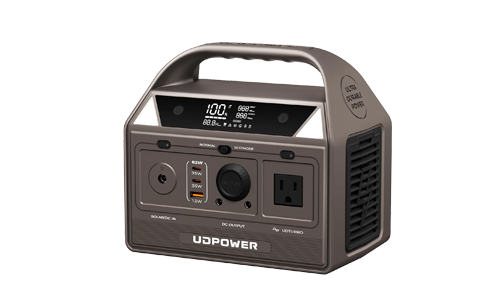
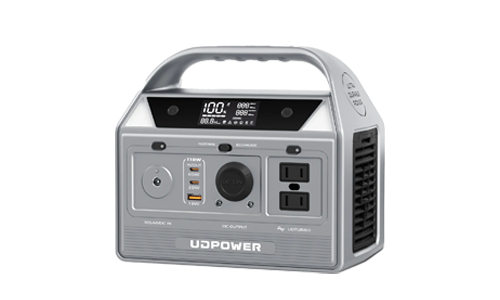
UDPOWER S1200 Portable Power Station
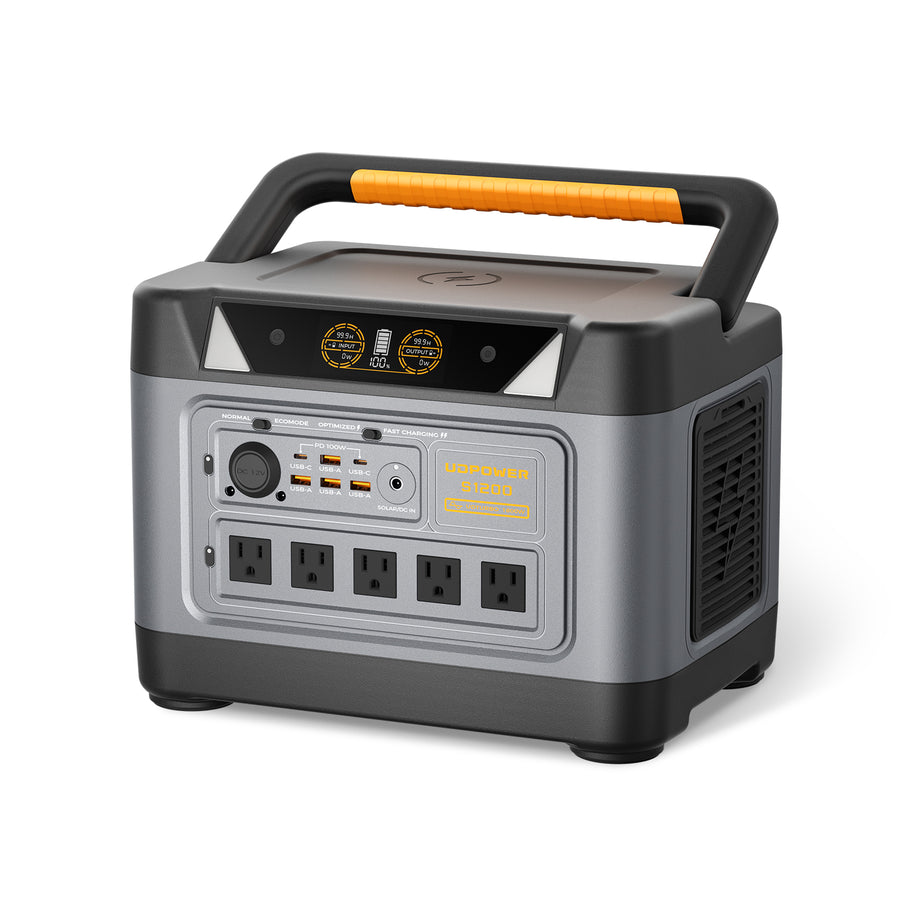
The S1200 is a strong fit for homes that need quiet backup power without a gas generator. It is useful for short outages, storm readiness, CPAP use, refrigerator support, phones, laptops, and Wi-Fi.
- 1,190Wh capacity
- 1,200W rated pure sine wave output
- Up to 1,800W surge with UDTURBO
- LiFePO4 battery with 4,000+ cycles
- 5 AC outlets + 10 DC outlets on the 5-AC version
- <10 ms UPSPRIME backup switching
- <25 dB quiet operation
- About 26.0 lbs
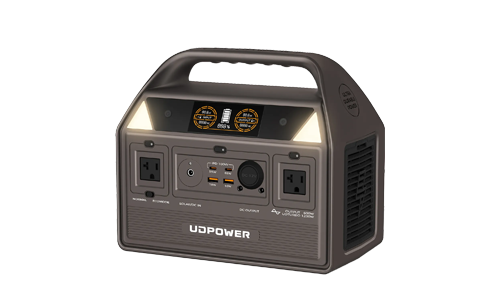
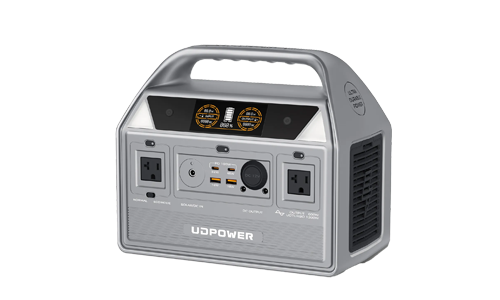
UDPOWER S2400 Portable Power Station
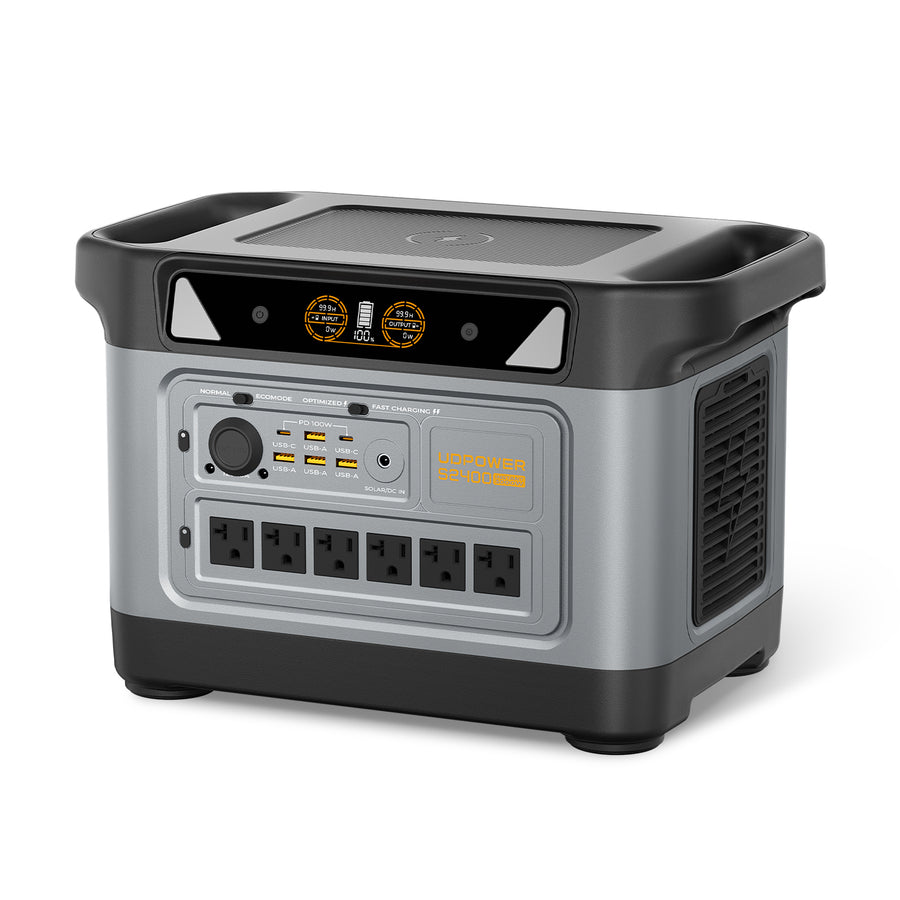
The S2400 gives more output and more battery capacity for homes that want extra headroom for larger plug-in appliances, RV use, emergency backup, and longer critical-load support.
- 2,083Wh capacity
- 2,400W pure sine wave AC output
- Up to 3,000W surge support for motor start-ups
- LiFePO4 battery built for frequent use
- 6 AC outlets + 10 DC outputs
- UPSPRIME switchover time ≤10 ms
- Solar input 12–50V, 10A max, up to 400W solar charging
- Good fit for refrigerator, router, lights, electronics, CPAP, and selected higher-wattage plug-in loads
Important: Do not backfeed a home by plugging a power station into a wall outlet. Use the power station’s outlets directly, or hire a qualified electrician for approved transfer equipment if you want to power selected home circuits.
Common mistakes that cost NJ homeowners money
| Mistake | Why it hurts | Better move |
|---|---|---|
| Using an old calculator that assumes a 30% federal homeowner credit | It can make payback look much faster than it really is in 2026 | Use a 2026 calculation that excludes the federal residential credit unless your tax professional confirms eligibility |
| Oversizing far beyond annual usage | Excess at annual true-up may be worth less than retail offset value | Size around actual annual kWh plus realistic future loads |
| Ignoring SREC-II ownership in a lease or PPA | You may not receive the production incentive even though it appears in sales materials | Ask who receives SREC-II payments and whether that value is reflected in your rate |
| Assuming rooftop solar works during a blackout | Most grid-tied systems shut down during outages unless designed for backup operation | Ask about battery backup, transfer equipment, or add a portable backup layer for plug-in essentials |
| Not checking roof condition | A roof replacement soon after solar installation can be expensive | Inspect roof age, decking, leaks, and warranty issues before installation |
| Focusing only on monthly payment | Low payment can hide long term, high interest, escalators, or lost incentive ownership | Compare total cost, production, contract length, buyout terms, and incentive ownership |
Related UDPOWER guides
These guides help readers move from incentive research to practical backup-power planning:
FAQ: NJ solar incentives 2026
Does New Jersey still have solar incentives in 2026?
Yes. New Jersey still has state-level solar benefits, including the SuSI / ADI SREC-II program, net metering, a solar sales tax exemption, a renewable energy system property tax exemption, and community solar options. The main change is that the old 30% federal residential solar tax credit is generally not available for property placed in service after December 31, 2025.
What is the biggest NJ solar incentive in 2026?
For homeowner-owned rooftop solar, the SuSI / ADI SREC-II program is usually the most important state incentive because it pays based on solar production. Net metering is also a major part of the value because it reduces electric bills when your system is sized properly.
How much is an SREC-II worth in New Jersey?
The SREC-II value depends on the ADI market segment and the current incentive table. Homeowners should check the official New Jersey Clean Energy Program ADI page before signing because incentive levels and capacity blocks can change. Many current residential examples use $85 per SREC-II for planning, but the official ADI page should be treated as the final reference.
Do solar leases and PPAs qualify for the same incentives?
The system may participate in incentive programs, but the homeowner may not receive every incentive directly. In a lease or PPA, the third-party system owner often receives tax benefits and may receive SREC-II income. Always ask who owns the equipment, who receives SREC-II payments, and how the value is reflected in your monthly rate or bill-credit discount.
Is net metering still worth it in New Jersey?
Yes, net metering can be valuable when your system is sized around your home’s annual electricity usage. The strongest value comes from offsetting retail electricity. Oversizing too far beyond annual usage can weaken payback because leftover excess at annual true-up may be credited at a lower wholesale value.
Can renters get solar savings in New Jersey?
Yes. Renters and homeowners without suitable roofs can look at community solar. A subscriber can receive solar bill credits without installing panels on their own property. Before enrolling, check the bill-credit discount, contract term, cancellation rules, and whether there are fees.
Does rooftop solar keep my house running during a blackout?
Not automatically. Many grid-tied solar systems shut down during utility outages unless they include approved battery backup and islanding equipment. For plug-in essentials, a portable power station can provide a simple backup layer, but it should not be used to backfeed a home through a wall outlet.
Should I buy a bigger solar system to earn more SREC-II income?
Not necessarily. SREC-II income rewards production, but net metering value depends heavily on how much of that production offsets your own annual usage. A system that is too large can leave excess energy credited at lower wholesale value at annual true-up. Size for real usage first, then future loads if they are likely.
Useful sources
Use these official pages to confirm the latest rules and program details before signing a solar contract:
- IRS — Residential Clean Energy Credit
- New Jersey Clean Energy Program — ADI Program
- New Jersey Clean Energy Program — ADI Program FAQs
- New Jersey Clean Energy Program — Net Metering and Interconnection
- New Jersey Division of Taxation — Sales Tax Exemption Administration
- New Jersey Division of Taxation — Property Tax Abatements and Exemptions
- New Jersey Clean Energy Program — Community Solar for Subscribers
Build a smarter 2026 solar-and-backup plan
Use New Jersey solar incentives for long-term energy savings, then add a practical backup layer for outages, storms, and essential plug-in devices.
View UDPOWER portable power stations | See S2400 | See S1200
Related Articles