

Cost of Solar Powered Generator: A Complete Guide for Smart Buyers
Search “cost of solar powered generator” and you’ll usually get one of two bad answers. The first says they’re cheap. The second says they’re expensive. Neither one helps you decide what you should actually budget.
That’s because a solar generator is not one fixed thing. A small backup unit for phones, Wi-Fi, and lights costs very differently from a bigger portable system meant to handle longer outages, more devices, or faster solar recovery. The smarter question is not just “How much does a solar generator cost?” It’s “How much should I spend for the kind of backup I really need?”
In this guide, we’ll break down the cost of a solar powered generator in a way normal buyers can actually use: entry cost, bundle cost, hidden costs, upgrade traps, and the easiest way to choose between a smaller setup and a larger one. We’ll also show where the UDPOWER S1200 and UDPOWER S2400 make the most sense.

Table of Contents
How much does a solar powered generator cost?
For most shoppers, the honest answer is: it depends on whether you are buying just the power station, a starter solar bundle, or a larger setup meant to give you longer runtime and faster solar recharge.
Looking at current UDPOWER pricing, you can already see three useful spending levels:
| Buying Level | Typical Spend | What You’re Really Buying | Best For | Source |
|---|---|---|---|---|
| Portable station only | $349.99 to $699.99 | Battery backup first, solar later if needed | Home essentials, weekend use, outage prep |
S1200 S2400 |
| Starter solar bundle | $549.99 to $949.99 | Power station plus a practical solar panel setup | Camping, RV use, longer outage flexibility |
S1200 + 120W / 240W S2400 + 120W / 240W |
| Larger solar-ready setup | $799.99 to $1,149.99 | Bigger battery plus stronger solar recovery | Users who already know small systems are not enough |
S1200 + 420W S2400 + 420W |
The key point is simple: people often talk about “solar generator cost” as if it were one number, but real buyers usually choose between a battery-only purchase, a starter bundle, or a larger backup setup.
What really drives the price?
A solar generator costs more or less based on four things: how much power it can output, how much energy it can store, how quickly it can recharge, and how much solar hardware you want to include from day one.
| Cost Driver | Why It Matters | What Buyers Usually Get Wrong |
|---|---|---|
| AC output | This determines what appliances you can actually run | People focus on battery size first, then realize the inverter is too small for the devices they want |
| Battery capacity | This determines how long you can run those devices | People buy enough power to start something, but not enough energy to run it for long |
| Recharge speed | A faster recharge makes the system far more useful in real outages | Shoppers underestimate how frustrating slow refill times can be |
| Solar bundle size | Panels, cables, and parallel accessories can raise total spend quickly | Many buyers budget only for the station and forget the solar side entirely |
| Port count and convenience | More AC ports, USB-C power, and UPS support improve everyday usability | These details do not look dramatic in ads, but they often change real-world satisfaction |
That is why smart buyers compare solar generators in this order: output first, runtime second, recharge third, total setup cost fourth. If you reverse that order, you usually end up buying too small or paying to upgrade later.
Should you buy the panel now or later?
Not everyone needs a full solar bundle on day one. In many cases, it is smarter to decide first whether your real problem is backup power or off-grid recharging.
| Buyer Type | Buy Station First? | Buy Solar Now? | Reason |
|---|---|---|---|
| Short-outage home backup buyer | Yes | Usually later | If most outages are short, battery capacity matters more than solar on day one |
| Weekend camper | Usually yes | Maybe | Many campers can charge before the trip and add a panel later if they use the station more often |
| RV or boondocking user | No | Usually yes | Off-grid use is where the solar part of a solar generator matters most |
| Storm-prep buyer planning for longer outages | No | Often yes | Longer outages usually push buyers toward both bigger capacity and a solar recovery plan |
If you are still unsure about panel sizing, these related guides fit naturally here: 120W vs 210W vs 2×120W, Solar Panel Connector Types, and Solar Charging Voltage Safety.
Realistic budget paths
The easiest way to understand solar generator cost is to think in budget paths instead of one fixed price.
| Budget Path | Current Price | Who It Fits Best | Source |
|---|---|---|---|
| S1200 unit only | $349.99 | Value-focused shoppers who want real backup capacity without jumping into a larger setup yet | Official page |
| S1200 + 120W solar panel | $549.99 | Starter solar buyers who want practical portability | Official bundle |
| S1200 + 420W solar panel | $799.99 | Buyers who want a smaller station but stronger solar recovery than a light starter kit | Official bundle |
| S2400 unit only | $699.99 | Home backup buyers who care more about runtime and headroom | Official page |
| S2400 + 240W solar panel | $949.99 | Balanced larger setup for buyers who want more than entry-level solar charging | Official bundle |
| S2400 + 420W solar panel | $1,149.99 | Serious buyers preparing for longer outages or more demanding use | Official bundle |
This is the part many people miss: moving from a “cheap solar generator” mindset to a “smart long-term buy” mindset usually means deciding whether you want to save money today or avoid upgrading later.
What about tax credits?
Buyers often assume any solar generator might qualify for a tax credit, but that is not a safe assumption.
According to the IRS consumer guidance for the Residential Clean Energy Credit, battery storage technology must be not less than 3 kWh, and eligible clean energy installations must generally be owned by the taxpayer and installed at a residence the taxpayer lives in. Because of those rules, portable solar generators should not automatically be treated as tax-credit purchases. Always verify before building tax savings into your budget.
| Tax-Credit Reality Check | What It Means for Buyers | Source |
|---|---|---|
| Battery storage threshold | IRS consumer guidance says battery storage must be at least 3 kWh | IRS Publication 5968 |
| Ownership and residence matter | The IRS says eligible installations must be owned by the taxpayer and may be installed at a residence the taxpayer lives in | IRS Publication 5968 |
| Practical takeaway | Do not assume a portable solar generator purchase automatically qualifies | IRS overview |
How to avoid overpaying
The easiest way to waste money on a solar generator is to shop by headline price alone.
- Start with the loads you actually care about. Don’t buy based on vague future plans.
- Check output before capacity. If the inverter cannot run the appliance, battery size won’t save you.
- Then check runtime. Starting a device and running it long enough are two different things.
- Price the real setup. Include the panel and any cable or adapter you may need.
- Don’t overbuy for tiny needs. Wi-Fi, phones, and lights do not always require a large power station.
- Don’t underbuy for fridge-level expectations. If you want meaningful outage support, size honestly.
For planning help, these UDPOWER guides work well as follow-up reads: Battery Runtime Basics, Power Priorities: What to Run First, Runtime Planning for Outages, and How to Keep Wi-Fi Running During a Power Outage.
Best-fit UDPOWER picks
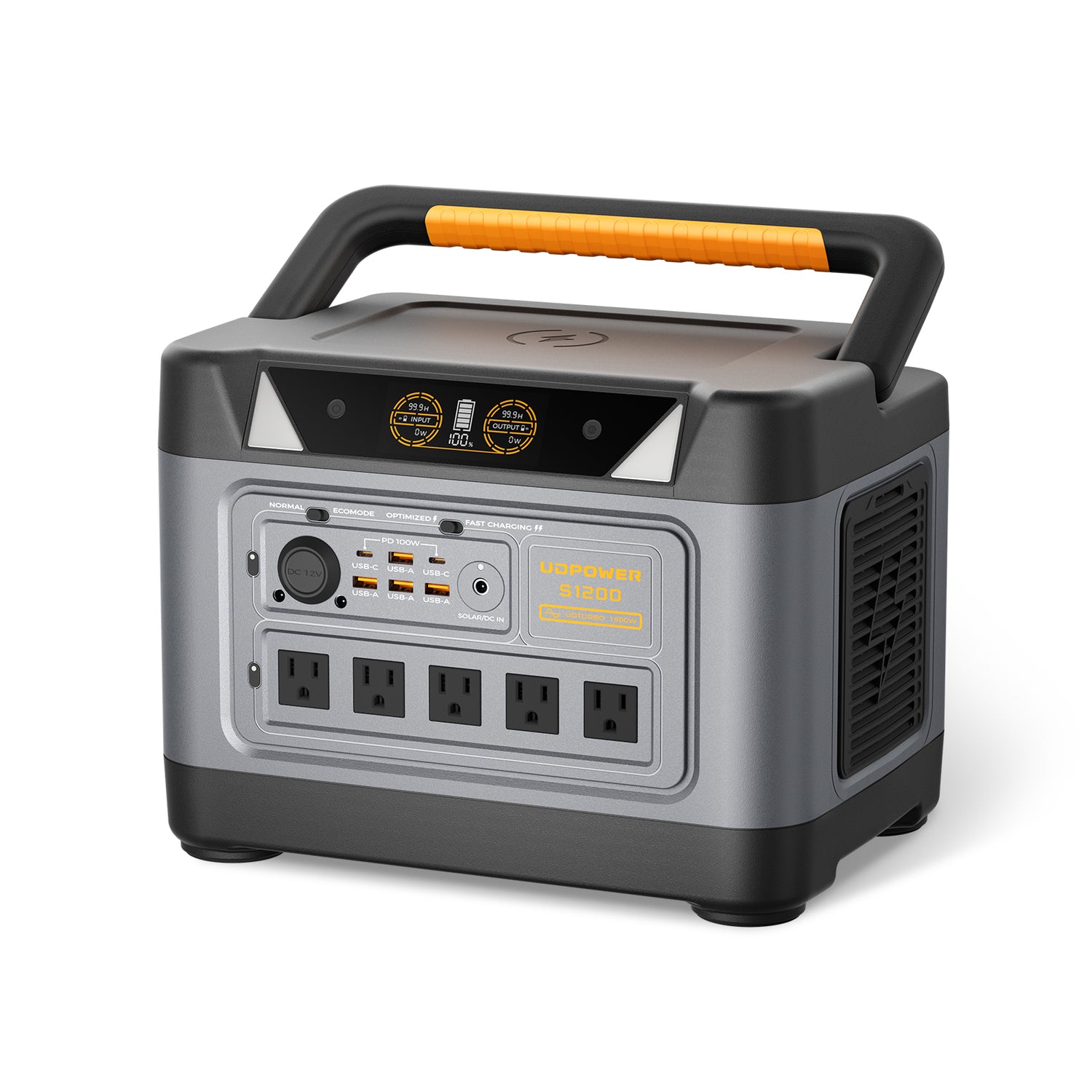
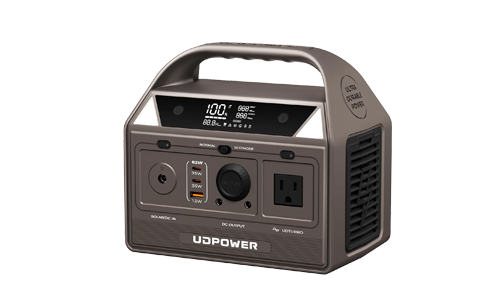
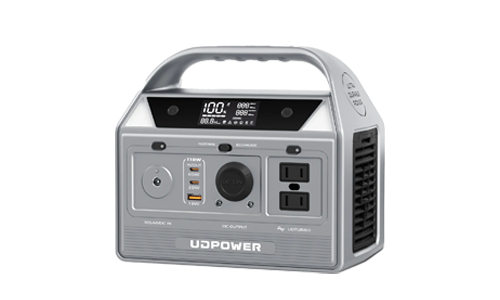
UDPOWER S1200
The S1200 is the smarter starting point for buyers who want meaningful backup power without jumping straight to a larger-budget setup. The current official page lists 1,190Wh capacity, 1,200W output, 1.5-hour fast charging, and less than 10ms UPS backup.
It makes the most sense for people who want to cover home essentials, travel use, communications gear, lights, and the kinds of outage tasks where value per dollar matters.

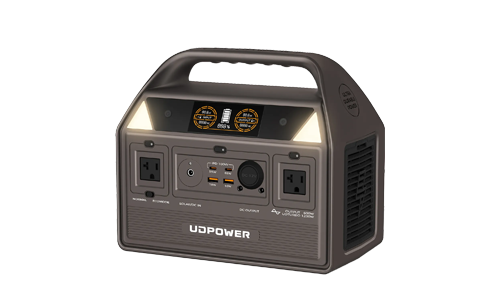
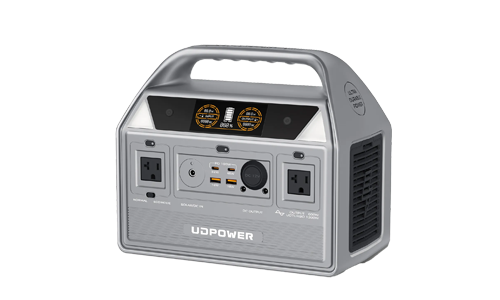
UDPOWER S2400
The S2400 is the better fit when you already know a smaller station will feel limiting. The current official page lists 2,083Wh capacity, 2,400W output, 1.5-hour fast charging, and up to 3,000W surge support.
It fits buyers who care more about runtime, heavier-use backup, and having enough room to power more devices without treating every watt like a crisis.
FAQ
How much does a good solar powered generator cost?
For most buyers, a genuinely useful setup usually starts in the mid-hundreds and rises depending on whether you are buying the station only or adding solar from the start.
Is it cheaper to buy the generator first and panels later?
Often yes. For many home-backup buyers, starting with the power station is the more budget-smart move, then adding solar later if your use grows.
Why does the price jump so much when solar is added?
Because the total cost is not just the battery. Panels, cables, and sometimes parallel accessories all add to the final price.
Should I shop by battery size or output first?
Output first. If the station cannot run the device, battery size won’t fix that. After output, compare runtime.
Is a small solar generator enough for home backup?
It can be enough for essentials like phones, Wi-Fi, lights, and laptops. It usually is not enough if you expect a normal whole-home experience.
When does it make sense to move up to a larger system?
When you care about longer runtime, more appliance flexibility, or fewer compromises during outages, a larger station usually makes more sense.
Can I assume a portable solar generator qualifies for a tax credit?
No. Tax treatment depends on IRS rules, including battery size and installation-related details, so it should always be verified before purchase.
What is the most common buying mistake?
Buying based on sticker price instead of real use. That usually leads to underbuying, then spending more later to replace or upgrade.
Related Articles


