

Gas Furnace Battery Backup: Can a Power Station Run a Gas Furnace During an Outage?
Last updated: August 13, 2026
Yes, a properly sized portable power station can run many residential gas furnaces during a power outage. Even though the furnace produces heat by burning natural gas or propane, it still needs electricity for the blower motor, inducer motor, ignition system, control board, gas valve, and safety controls.
For a typical 120V forced-air gas furnace, the two numbers that matter most are the furnace's actual running watts and its highest startup demand. A rough planning range of several hundred watts is useful when shopping, but it should not replace checking or measuring your own furnace.
A 1,200W-class power station can be appropriate for a furnace whose measured electrical demand stays comfortably within that output limit. A 2,400W-class unit provides much more headroom for higher blower loads, startup demand, longer outages, or a few additional essentials. Hardwired furnaces require a safe, code-compliant connection method; do not backfeed a wall outlet or improvise a connection to your electrical panel.

Will a Gas Furnace Work During a Power Outage?
Usually not. A modern gas furnace needs both fuel and electricity.
Natural gas or propane supplies the heat, but electricity operates the parts that allow the furnace to start, move air, monitor the flame, and shut itself down safely. Depending on the furnace, those electrical loads can include:
- Circulating blower motor
- Draft inducer motor
- Electronic ignition system
- Furnace control board
- Gas valve and safety controls
- Thermostat or connected HVAC controls
- Condensate equipment on some high-efficiency installations
The blower is often one of the largest electrical loads. Lennox describes the furnace blower motor as the electric motor responsible for moving conditioned air through the duct system. Lennox: HVAC Blower Motor.
This is why a house can still have natural gas service during a blackout while the furnace remains completely unusable.
How Many Watts Does a Gas Furnace Use?
There is no single correct "furnace wattage." A small modern furnace with an efficient variable-speed ECM blower may draw dramatically less power at a low airflow setting than an older furnace with a conventional blower running at high speed.
As an initial shopping estimate, several hundred watts is reasonable for many forced-air gas furnaces. However, published estimates vary widely, and your actual furnace should determine the final power station size.
| Information You Have | What It Tells You | Can You Use It for Battery Sizing? | Best Practice | Source |
|---|---|---|---|---|
| Generic furnace watt estimate | Useful for getting into the right general power-station category. | Only for preliminary planning. | Verify your own furnace before purchasing solely on this number. | Mosby Building Arts |
| Blower motor specification | Shows one major component load, but not necessarily the entire furnace. | Useful, but incomplete. | Remember the inducer, controls and ignition also consume power. | Lennox |
| 15A or 20A furnace circuit | Shows the branch circuit rating, not how much power the furnace continuously consumes. | No. | Do not calculate runtime from the circuit breaker rating. | Lennox engineering data |
| Measured whole-furnace running watts | Shows what the complete furnace actually needs while operating. | Yes. | Use this for realistic runtime calculations. | UDPOWER sizing guide |
| Measured highest startup demand | Shows whether the inverter can handle the furnace as motors start. | Yes. | Compare it with the power station's output capability and your furnace requirements. | UDPOWER sizing guide |
Why Furnace Blower Watts Vary So Much
Blower wattage is affected by more than the motor label. Motor design, commanded airflow, duct resistance, filter condition, blower speed and system static pressure all influence electrical demand.
Current Lennox engineering data for a variable-speed ECM furnace family illustrates this clearly: published blower input watts change substantially as airflow settings and external static pressure change. That means a wattage number from another homeowner's furnace is not necessarily a reliable prediction for yours. View Lennox engineering data.
6 Things to Check Before Buying a Furnace Battery Backup
1. Is the Furnace 120V?
Many residential forced-air gas furnaces in the U.S. operate from a 120V branch circuit. Confirm the actual electrical requirements on your furnace documentation or equipment label.
This matters because portable power stations such as the UDPOWER S1200 and S2400 provide U.S.-standard 120V AC output. They are not replacements for 240V whole-home electrical service.
2. What Is the Actual Running Load?
This number determines how heavily the inverter will be loaded and is the foundation of your runtime calculation.
3. What Happens When the Blower or Inducer Starts?
Motors can demand more power while starting than while operating normally. A power station that looks large enough based only on steady running watts can still shut down if the startup demand exceeds what its inverter can support.
4. Is the Furnace Plug-Connected or Hardwired?
This can be more important than wattage.
If the furnace has been installed with an approved cord-and-plug arrangement, powering it from a power station may be relatively straightforward when permitted by the equipment instructions and local electrical requirements.
A hardwired furnace is different. You should not cut wires, fabricate a plug, backfeed an outlet, or improvise a panel connection during a blackout.
5. Does the Furnace Operate Correctly on the Backup Source?
A furnace contains more than a blower. Modern ignition and flame-sensing electronics can make some systems more sensitive to power-source characteristics and grounding arrangements than an ordinary lamp or phone charger.
6. How Long Do You Actually Need Heat?
An inverter rating answers, "Can it run the load?" Battery capacity answers, "For approximately how long?" You need both numbers.
How to Find Your Furnace's Real Power Demand
The best furnace backup calculation uses the entire furnace's actual electrical consumption rather than a generic blower watt number.
If Your Furnace Has an Approved Plug Connection
- Check the furnace manual and equipment label for voltage and electrical requirements.
- Use a properly rated power meter if the installation allows one to be safely placed between the receptacle and furnace.
- Start a normal heating cycle.
- Observe the furnace during ignition, inducer operation and blower startup.
- Record the normal operating watts and the highest demand your meter can reliably capture.
- Repeat the observation through several cycles rather than relying on a few seconds of data.
If Your Furnace Is Hardwired
Do not open energized wiring or attempt DIY measurements inside a furnace disconnect or electrical panel just to obtain a wattage number. Ask an HVAC technician or electrician to verify the electrical load and, if necessary, test it with appropriate equipment.
How Long Will a Battery Run a Gas Furnace?
Once you know the approximate running watts, battery runtime becomes much easier to estimate. UDPOWER's practical planning method uses about 90% of nominal capacity when making a first-pass runtime estimate:
This is a planning estimate rather than a guarantee. Real runtime changes with inverter efficiency, temperature, furnace cycling, battery condition, airflow, auxiliary loads and the exact operating state of the HVAC system.
The following examples use: UDPOWER S1200 — 1,190Wh and UDPOWER S2400 — 2,083Wh.
| Furnace Running Load | S1200 Estimated Continuous Runtime | S2400 Estimated Continuous Runtime | What This Means | Calculation Source |
|---|---|---|---|---|
| 300W | About 3.6 hours | About 6.2 hours | A relatively efficient electrical load leaves much more room for overnight cycling. | UDPOWER runtime method |
| 500W | About 2.1 hours | About 3.7 hours | A useful mid-range example for comparing battery capacities. | UDPOWER runtime method |
| 700W | About 1.5 hours | About 2.7 hours | Higher blower demand begins consuming battery capacity quickly. | UDPOWER runtime method |
| 900W | About 1.2 hours | About 2.1 hours | At this load, inverter headroom and runtime both deserve closer attention. | UDPOWER runtime method |
These are continuous-load calculations. A furnace normally cycles on and off, so elapsed clock time can be longer than the continuous-runtime number.
How Much Battery Capacity Do You Need Overnight?
This is where many furnace backup guides become misleading.
A furnace that consumes 500W while heating does not necessarily consume 500W for eight straight hours. Once the home reaches the thermostat setpoint, the burner and blower shut down. The percentage of the night spent actively heating is called the duty cycle.
For example, a 500W furnace operating 50% of an eight-hour night runs for about four total hours. At a 90% planning efficiency, that calls for roughly:
| Furnace Load While Running | 30% Duty Cycle for 8 Hours | 50% Duty Cycle for 8 Hours | 70% Duty Cycle for 8 Hours | Method |
|---|---|---|---|---|
| 300W | About 800Wh | About 1,333Wh | About 1,867Wh | Load × active heating hours ÷ 0.90. See the UDPOWER Runtime Calculator. |
| 500W | About 1,333Wh | About 2,222Wh | About 3,111Wh | |
| 700W | About 1,867Wh | About 3,111Wh | About 4,356Wh | |
| 900W | About 2,400Wh | About 4,000Wh | About 5,600Wh |
This table explains why outside temperature matters so much. The same furnace can last comfortably through a mild fall outage yet drain the same battery much faster during a severe cold snap.
Other factors that can raise the overnight duty cycle include:
- Poor insulation or significant air leakage
- Very low outdoor temperatures
- A high thermostat setting
- Undersized heating equipment
- Open exterior doors
- Restricted airflow
- Heating rooms that do not need to remain fully conditioned during the outage
Best UDPOWER Power Stations for Gas Furnace Backup
For furnace backup, inverter output should be selected first. Battery capacity comes second. There is little benefit in buying a large battery if its inverter cannot reliably start the furnace.
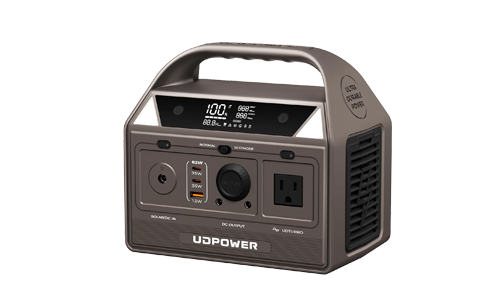
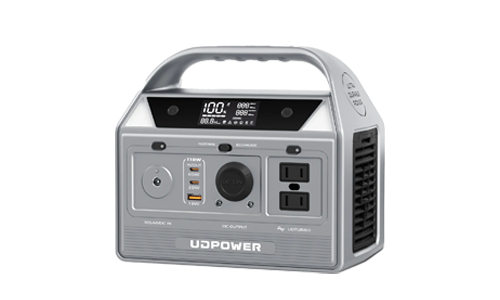
UDPOWER S1200 Portable Power Station
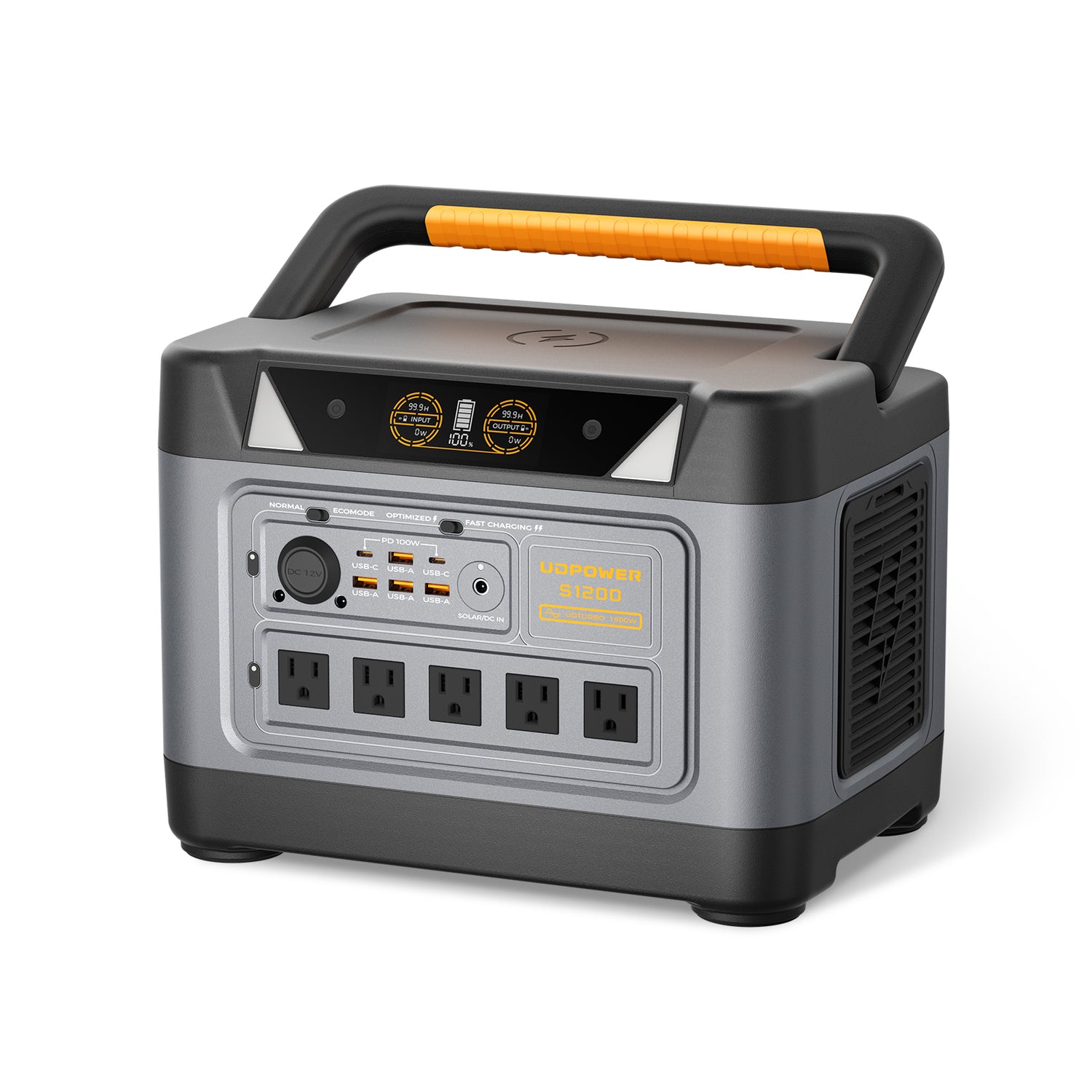
The S1200 is the more compact choice when the furnace's verified electrical demand falls comfortably within its output capability and you primarily need the furnace plus small essentials.
| Specification | UDPOWER S1200 | Why It Matters for a Furnace | Official Source |
|---|---|---|---|
| Battery capacity | 1,190Wh | Determines approximate furnace runtime. | S1200 official product page |
| Rated AC output | 1,200W | Your furnace's normal demand must fit within the unit's supported output. | |
| UDTURBO output | Up to 1,800W | Provides additional compatibility with higher-power loads within the product's operating design. | |
| AC waveform | Pure sine wave | Well suited to electronics and motor-driven equipment when otherwise compatible. | |
| AC output | 120V, 60Hz | Matches the supply format used by many U.S. residential gas furnaces. | |
| UPS transfer | <10 ms | Useful for supported backup applications, but it does not by itself guarantee furnace compatibility. |
Good fit when: your verified furnace demand is comfortably below 1,200W, the startup behavior is compatible, and you want a relatively portable backup primarily for the heating system and a few low-watt essentials.
Think twice when: the furnace approaches the inverter limit, you want to run a refrigerator or several other appliances at the same time, or you need long overnight runtime during severe winter weather.
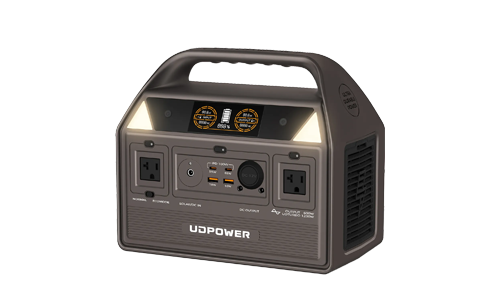
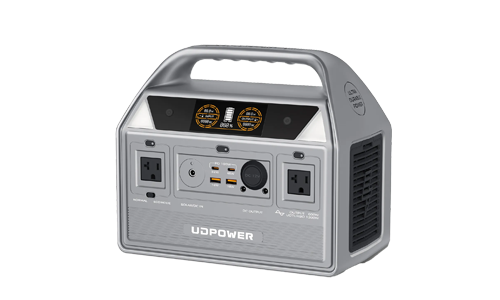
View UDPOWER S1200UDPOWER S2400 Portable Power Station
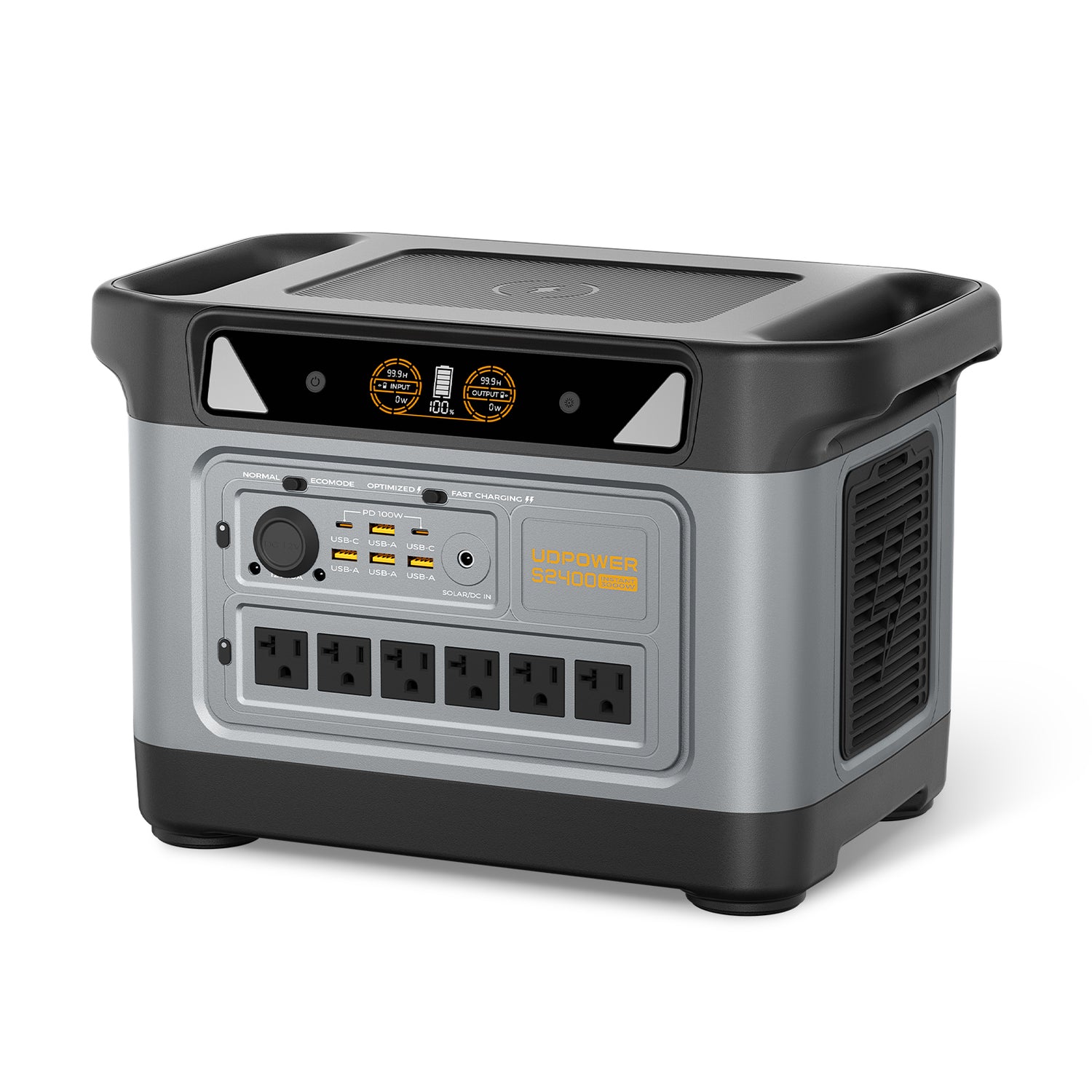
The S2400 is the more conservative furnace-backup choice when you want substantially more inverter headroom and nearly twice the battery capacity of the S1200.
| Specification | UDPOWER S2400 | Why It Matters for a Furnace | Official Source |
|---|---|---|---|
| Battery capacity | 2,083Wh | Provides substantially more stored energy for longer furnace operation. | S2400 official product page |
| Rated AC output | 2,400W | Provides more margin for higher furnace demand and additional essential loads. | |
| Peak output | 3,000W | Provides additional high-load capability within the unit's specifications. | |
| AC waveform | Pure sine wave | Appropriate for sensitive electronics and motor loads when electrically compatible. | |
| AC output | 120V, 60Hz | Suitable for compatible 120V appliances; it does not provide 240V output. | |
| UPS transfer | ≤10 ms | Supports fast backup transfer for compatible equipment. |
Good fit when: you want additional starting/running headroom, longer furnace runtime, or enough capacity to keep selected essentials such as a router, refrigerator or lights operating alongside the furnace while staying within total load limits.
The S2400 is still a 120V portable power station, not a whole-home 240V backup system. UDPOWER specifically advises against backfeeding a home and states that connection to a home transfer switch should be reviewed and installed by a licensed electrician.
View UDPOWER S2400How to Connect Backup Power to a Gas Furnace Safely
The correct connection depends on how the furnace was installed. Do not assume that because the power station has an AC receptacle, every furnace can simply be plugged into it.
Scenario 1: Furnace Already Uses an Approved Plug
If your furnace has a manufacturer- and code-compliant cord-and-plug connection, using a suitable battery power source may be comparatively simple. Confirm:
- The furnace is designed for 120V AC power.
- The power station provides enough running output.
- The starting demand is within supported limits.
- The cord, receptacle and installation comply with the furnace manufacturer's requirements.
- The furnace completes several normal heating cycles during a test.
Scenario 2: Furnace Is Hardwired
A hardwired furnace requires a properly designed means of transferring it from utility power to backup power. This is not a situation for improvised cords.
A licensed electrician can determine whether a suitable furnace transfer device, approved disconnect arrangement, transfer switch or other code-compliant solution is appropriate for your installation.
Why Grounding and Neutral Compatibility Can Matter
If the blower starts on battery power but the furnace refuses to ignite, repeatedly locks out, or reports a flame-related fault, the problem is not automatically "not enough watts."
Modern furnaces use electronic ignition and flame-safety circuits. Some HVAC equipment can be sensitive to correct line polarity, grounding and the electrical system's neutral/ground arrangement.
Portable power sources can use different neutral configurations depending on their design. Generac's electrical guidance, for example, distinguishes between bonded-neutral and floating-neutral power sources. Generac: Bonded vs. Floating Neutral.
This is also why the phrase "pure sine wave" should not be treated as a complete furnace compatibility guarantee. Waveform quality matters, but voltage, frequency, grounding, connection method, output capacity and the furnace's own electronics matter too.
What Not to Do During a Furnace Power Outage
Do Not Backfeed a Wall Outlet
A male-to-male cord or any improvised method of energizing household wiring through a receptacle is unsafe.
Do Not Assume a 15A Breaker Means the Furnace Uses 1,800W
Breaker capacity and actual operating demand are different measurements.
Do Not Put the Power Station Inside the Furnace Cabinet
Keep the unit in a dry, ventilated location and follow the clearances and operating instructions in its manual. Do not block cooling openings or place battery equipment against hot furnace surfaces.
Do Not Run a Large Electric Space Heater Unless You Have Planned for It
A 1,500W resistance heater can consume 1.5kWh in only one hour of continuous operation. If your goal is to stretch limited battery capacity through a winter blackout, using electricity to operate the controls and blower of an existing gas furnace can be far more practical than trying to produce the heat itself with a high-watt electric heater.
Do Not Wait for the Blizzard to Test the Setup
A furnace that works normally on utility power may reveal an installation, connection or compatibility problem when moved to backup power. The safest time to discover that problem is before the outage.
Battery Power Station vs. Gas Generator for Furnace Backup
| Factor | Portable Battery Power Station | Fuel Generator | Why It Matters for Furnace Backup | Source |
|---|---|---|---|---|
| Combustion exhaust | No engine exhaust while operating. | Produces combustion exhaust. | A generator must be operated outside and located safely away from the home. | Ready.gov |
| Fuel | Stored electrical energy; recharge is required. | Requires gasoline, propane or another supported fuel. | Battery systems simplify short outages; generators may offer longer operation if fuel remains available. | UDPOWER comparison guide |
| Noise | Typically much quieter because there is no combustion engine. | Engine noise while running. | Important during overnight heating. | UDPOWER comparison guide |
| Indoor operation | Portable battery stations avoid combustion exhaust, but still require a dry, properly ventilated location according to the product instructions. | Portable combustion generators should never be operated inside the home. | Critical winter safety difference. | Ready.gov |
| Runtime extension | Recharge from an available supported source. | Add fuel while following manufacturer safety procedures. | Long multi-day outages may require a different strategy than a six-hour blackout. | UDPOWER outage runtime guide |
A Practical Winter Outage Plan
Buying the battery is only one part of keeping a house warm during an outage. A better approach is to prepare the entire heating plan before winter.
Before the Storm
- Confirm the furnace voltage and electrical connection type.
- Determine actual operating wattage if possible.
- Have a professional prepare a compliant backup connection if the furnace is hardwired.
- Fully charge the power station.
- Test the furnace through multiple complete heating cycles on the intended backup setup.
- Replace or clean the furnace filter if needed.
- Decide which other appliances are truly essential.
- Keep flashlights, charging cables and backup lighting accessible.
When the Power Goes Out
- Check the power station's state of charge.
- Run the furnace using only the previously tested, safe connection method.
- Keep unnecessary high-watt appliances off.
- Close exterior doors quickly and minimize heat loss.
- Consider temporarily lowering the thermostat to reduce furnace duty cycle.
- Monitor remaining battery percentage rather than assuming the initial runtime estimate will be exact.
Prioritize the Right Loads
During a winter outage, the best use of stored energy is usually not "run everything normally." A more resilient load list might look like:
- Gas furnace — protects comfort and, in severe cold, may help reduce pipe-freezing risk.
- Essential medical equipment — when applicable.
- Refrigerator or freezer — run strategically rather than automatically adding every appliance.
- Internet equipment and phones — relatively small loads that preserve communications.
- LED lighting — low energy cost compared with heating appliances.
For a more complete outage prioritization strategy, see What to Run First During a Power Outage and the 24-, 48- and 72-Hour Power Outage Checklist.
What Size Battery Backup Should You Choose for a Gas Furnace?
| Your Situation | Better Starting Point | Why | Recommended Next Step |
|---|---|---|---|
| Low-to-moderate measured 120V furnace load; furnace is the main backup priority | UDPOWER S1200 | 1,190Wh capacity and 1,200W rated AC output in a more portable package. | Check S1200 specifications |
| Higher furnace load or more startup/output headroom desired | UDPOWER S2400 | 2,400W rated output provides substantially more inverter margin. | Check S2400 specifications |
| Need furnace plus refrigerator, communications and lighting | S2400 is generally the better starting point | More output and 2,083Wh capacity provide greater flexibility for multiple essential loads. | Calculate the combined load with the runtime calculator. |
| Need reliable overnight operation during very cold weather | Size by Wh and expected furnace duty cycle, not inverter watts alone | A furnace may be inverter-compatible but still consume the available battery before morning. | Review outage runtime planning. |
| 240V heating system or electric resistance furnace | Do not assume a 120V portable station is suitable | Voltage and power requirements are fundamentally different. | Have the system requirements evaluated before choosing backup equipment. |
| Hardwired gas furnace | Professional connection planning first | Electrical connection safety must be solved before battery size matters. | Consult a licensed electrician or qualified HVAC professional. |
Gas Furnace Battery Backup FAQs
Can a power station run a gas furnace?
Yes. Many 120V gas furnaces can operate from a properly sized portable power station because the battery is powering the blower, inducer, ignition and controls rather than creating the heat itself. You still need to verify running watts, startup demand, electrical connection and furnace compatibility.
Will a gas furnace work without electricity?
Normally, no. Even though natural gas or propane provides the heat, a modern forced-air furnace depends on electrically powered controls, ignition and air-moving equipment.
How many watts does a furnace blower use?
There is no universal number. Blower wattage varies with motor type, airflow, blower speed, duct resistance and static pressure. Modern ECM blowers can use comparatively little power at lower airflow settings and much more as airflow demand rises. For battery sizing, measuring the complete furnace is more useful than relying on an average blower-watt figure.
What size battery backup do I need for a gas furnace?
Choose enough inverter output to comfortably support both normal operation and startup demand, then calculate battery capacity from the furnace's running watts, desired heating time and expected duty cycle. A 1,200W-class station may work for a verified lower-load furnace; a 2,400W-class station provides more output margin and is generally more suitable when additional essential loads are involved.
How long will a 1,000Wh battery run a gas furnace?
It depends on furnace wattage. Using a 90% planning factor gives about 900Wh of usable energy for a quick estimate. At 300W, that is about 3 hours of continuous operation; at 500W, about 1.8 hours; at 700W, about 1.3 hours. Because a furnace normally cycles, actual elapsed time can be longer.
Can the UDPOWER S1200 run my gas furnace?
It can run a compatible furnace whose electrical demand fits within the S1200's specifications. The S1200 has a 1,200W rated pure sine wave AC output and 1,190Wh battery capacity. Do not decide based on the words "gas furnace" alone; verify the electrical load of your exact unit.
Is the UDPOWER S2400 better for furnace backup?
The S2400 provides 2,400W rated AC output and 2,083Wh capacity, giving more output headroom and longer runtime than the S1200. It is particularly useful when the furnace has a higher electrical demand or you intend to operate a few additional essential devices.
Can I simply plug my furnace into a portable power station?
Only if the furnace already has an approved cord-and-plug connection and the installation, furnace instructions and local electrical requirements permit it. Many furnaces are hardwired. A hardwired furnace needs a properly designed backup-power connection rather than an improvised cord.
Can I connect a power station to my home's transfer switch?
That depends on the equipment and electrical design. UDPOWER states that the S2400 should not be directly connected to a home transfer switch unless the arrangement has been reviewed and installed by a licensed electrician. It supplies U.S.-standard 120V AC and should never be used to backfeed household wiring.
Can I use a power station's UPS function for my furnace?
A fast UPS transfer time can be useful, but it does not guarantee that every furnace will operate correctly. The furnace still needs compatible voltage, adequate output capacity, an appropriate grounding arrangement and a safe electrical connection. Test the actual setup before relying on it for a winter emergency.
Why does my furnace blower work on battery power but the burner will not stay lit?
Do not automatically assume the battery is too small. Ignition and flame-sensing systems can be affected by wiring polarity, grounding or the neutral arrangement of the power source. Stop repeated troubleshooting if the furnace faults or locks out and have an HVAC technician or electrician evaluate the system. Do not improvise a bonding adapter.
Can a portable power station run an electric furnace?
A typical portable 120V power station is generally not an appropriate substitute for the high-power 240V supply used by many electric resistance furnaces. Gas-furnace backup is much more practical because the battery powers the electrical components while natural gas or propane supplies the heat.
Can I run my furnace and refrigerator from the same power station?
Possibly. Add the simultaneous running loads and consider the startup behavior of both motor-driven appliances. The combined demand must stay within the power station's supported output, and both appliances will reduce battery runtime. A higher-output, higher-capacity model such as the S2400 offers more margin for this type of backup plan.
Is a space heater a good alternative during a power outage?
Usually not if your goal is to maximize battery runtime. Many portable electric heaters draw around 1,500W at their highest setting and convert battery energy directly into heat. If a functioning gas furnace can be safely powered, using the battery for the furnace's blower and controls can make much better use of limited stored electricity.
Should a furnace backup power station have pure sine wave output?
Pure sine wave AC is the appropriate choice for modern furnaces containing motors and electronic controls. Both the UDPOWER S1200 and S2400 provide pure sine wave AC output. Waveform alone, however, does not replace checking voltage, wattage, startup demand, grounding and the connection method.
Sources & Technical References
- Lennox — HVAC Blower Motor
- Lennox — ML296UHV Engineering Data
- Generac — Bonded and Floating Neutral Explanation
- Ready.gov — Power Outages
- Electrical Safety Foundation International — Winter Storm Electrical Safety
- UDPOWER S1200 Official Specifications
- UDPOWER S2400 Official Specifications
Build a Better Furnace Backup Plan Before the Next Outage
Start with your furnace's actual electrical requirements, then choose enough inverter output and battery capacity for the heating time you need. If your furnace is hardwired, have the backup connection planned professionally before an emergency.
Compare UDPOWER Portable Power Stations View UDPOWER S1200 View UDPOWER S2400 Calculate Your Estimated RuntimeRelated Articles


