

Best Budget Portable Power Station in 2026: What to Buy Under $500

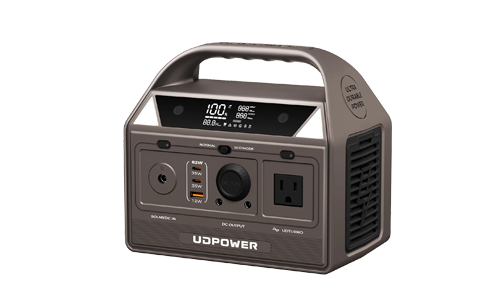
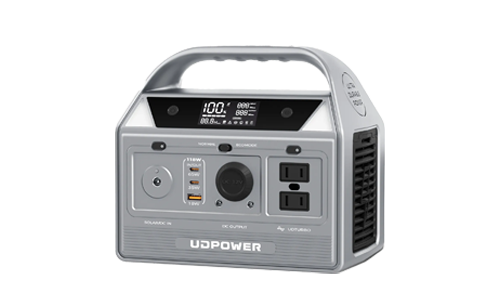
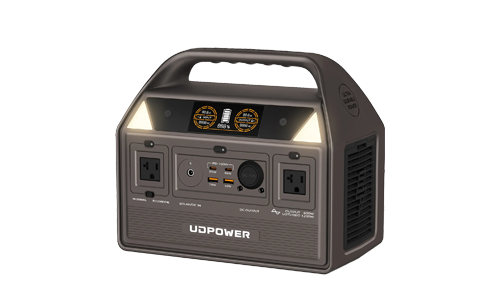
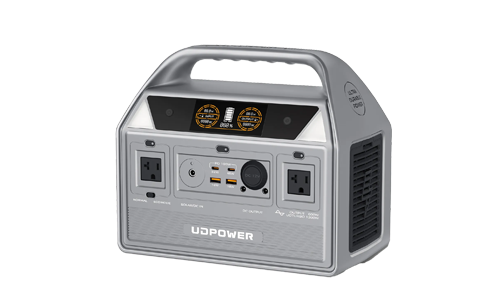
In the current UDPOWER lineup, the C200 is my pick for the lowest-cost light-duty option at $129.99, the C400 is the stronger compact choice at $169.99, and the 1,190Wh S1200 starting at $399.99 offers the strongest value for buyers who actually need refrigerator, CPAP, home-outage, or longer camping runtime.
My buying rule is simple: buy the smallest station that passes both your watt test and your runtime test. A cheap station that cannot finish the job is not a bargain.
What Does “Budget Portable Power Station” Mean in 2026?
A few years ago, “budget” often meant accepting a very small battery, low AC output, slower charging, or older battery chemistry. That definition is less useful now.
The current market has become much more competitive. Depending on sales and capacity, a budget buyer can find everything from a roughly 200Wh grab-and-go battery for little more than $100 to a 1kWh-class LiFePO4 power station below $500.
That creates a new problem: products with completely different capabilities now sit inside the same broad “budget” category.
A 192Wh station and a 1,190Wh station can both be reasonably described as affordable, but they should never be compared as if they solve the same job.
That is why I do not rank budget power stations from cheapest to most expensive. I separate them by what they can realistically accomplish.
| Buyer Type | Useful Starting Class | Typical Jobs | Main Priority |
|---|---|---|---|
| Phone, camera, and light-duty user | About 150–250Wh | Phones, camera batteries, lights, router, light laptop use | Lowest cost and weight |
| Compact camping user | About 250–600Wh | Laptop, fan, lighting, camera gear, short appliance use | Balance of capacity and portability |
| Overnight backup user | About 500–1,200Wh | CPAP, router, fan, TV, portable fridge, longer electronics use | Enough watt-hours to finish the night |
| Home essentials buyer | About 1,000Wh or more | Refrigerator support, CPAP, internet, laptops, lights, mixed loads | Capacity plus appliance output |
If you are not sure what size you actually need, start with the UDPOWER portable power station buying guide before choosing a price tier.
Quick Picks: Best UDPOWER Budget Power Stations by Price
| Budget | Recommended Model | Capacity | Rated AC Output | Best For |
|---|---|---|---|---|
| Under $150 | UDPOWER C200 | 192Wh | 200W | Phones, cameras, lights, router, short trips |
| Under $200 | UDPOWER C400 | 256Wh | 400W | Camping, laptops, fans, photography, vehicle emergency kit |
| Under $500 | UDPOWER S1200 | 1,190Wh | 1,200W | Home essentials, CPAP, refrigerator support, RV and longer outages |
The C600 would normally sit between the C400 and S1200 with 596Wh of capacity and 600W rated output, but its current product page shows the model as sold out. I would not build a buying recommendation around unavailable inventory. If it returns, it remains worth comparing for buyers who want more runtime than C400 without moving to a 26-pound S1200.
You can check live inventory on the UDPOWER Portable Power Stations collection.
The Three Tests Every Budget Portable Power Station Must Pass
When I evaluate a lower-cost power station, I do not start with extras such as screens, lights, or the number of USB ports. I start with three tests.
Test 1: Can It Run the Device?
Rated AC output is the first filter.
If your appliance normally requires 700W, a 200W power station is not the right purchase no matter how cheap it is. Battery capacity cannot compensate for an inverter that is too small.
This is the distinction many first-time buyers miss:
Watt-hours tell you how long it can run.
Motor-driven equipment such as refrigerators, pumps, and some power tools can also demand more power during startup. Check the appliance specification rather than looking only at its normal running wattage.
Test 2: Does It Store Enough Energy?
Once the output rating fits, calculate your energy requirement.
Estimated UDPOWER AC runtime ≈ battery capacity × 0.90 ÷ average load watts
For example, a device averaging 60W for eight hours needs:
60W × 8 hours = 480Wh of delivered energy.
With a 90% planning factor:
480Wh ÷ 0.90 ≈ 533Wh of nominal battery capacity.
That immediately tells you that a 192Wh or 256Wh station is not the right size for that eight-hour requirement even if the device's wattage fits its inverter.
Test 3: Is It Still a Good Value After You Size It Correctly?
Only after a station passes the first two tests should price become the deciding factor.
This order matters. Comparing dollars per watt-hour before checking whether the unit can actually run your appliance can lead you toward a product that looks efficient on a spreadsheet but is useless for your job.
Current UDPOWER Budget Portable Power Station Comparison
The table below uses current product information checked on October 29, 2026. Promotional pricing and inventory can change, so use the official product link for the live selling price before ordering.
| Model | Current Price Checked | Capacity | Rated AC Output | Higher-Load / Startup Capability | Weight | Solar Input | Availability | Official Source |
|---|---|---|---|---|---|---|---|---|
| C200 | $129.99 | 192Wh | 200W | Up to 400W compatible load capability | About 5.4 lb | Up to 150W input specification | In stock | C200 product page |
| C400 | $169.99 | 256Wh | 400W | Up to 800W compatible load capability | 6.88 lb | Up to 150W | In stock | C400 product page |
| C600 | $289.99 listed | 596Wh | 600W | Up to 1,200W higher-load capability | 12.3 lb | Up to 240W | Sold out when checked | C600 product page |
| S1200 3-AC | $399.99 | 1,190Wh | 1,200W | UDTURBO up to 1,800W for compatible loads | 26.0 lb | 400W max | In stock | S1200 product page |
| S1200 5-AC | $449.99 | 1,190Wh | 1,200W | UDTURBO up to 1,800W for compatible loads | 26.0 lb | 400W max | In stock | S1200 product page |
| S2400 | $699.99 | 2,083Wh | 2,400W | UDTURBO up to 3,000W for compatible loads | 40.8 lb | 420W recommended maximum | In stock | S2400 product page |
I include the S2400 for context rather than calling it a sub-$500 budget pick. Once your load genuinely requires roughly 2kWh of storage or more than 1,200W of rated AC output, spending less on a smaller station can create a false economy.
For a simpler side-by-side tool, use the UDPOWER Power Station Comparison.
Which Budget Power Station Gives You the Most Battery for Your Money?
Sticker price tells you how much cash leaves your wallet. It does not tell you how much useful battery energy you are buying.
A more useful comparison is price per estimated usable AC watt-hour.
Using the same 90% planning factor for every model:
| Model | Price Used | Rated Capacity | Estimated Usable AC Energy | Approx. Price per Rated Wh | Approx. Price per Estimated Usable Wh |
|---|---|---|---|---|---|
| C200 | $129.99 | 192Wh | 173Wh | $0.68 | $0.75 |
| C400 | $169.99 | 256Wh | 230Wh | $0.66 | $0.74 |
| S1200 3-AC | $399.99 | 1,190Wh | 1,071Wh | $0.34 | $0.37 |
| S1200 5-AC | $449.99 | 1,190Wh | 1,071Wh | $0.38 | $0.42 |
| S2400 | $699.99 | 2,083Wh | 1,875Wh | $0.34 | $0.37 |
This table reveals something that the purchase price alone hides: at the prices checked, the S1200 3-AC version costs much more upfront than C200 or C400 but delivers roughly twice as much estimated usable battery energy per dollar.
That does not mean everybody should buy the S1200.
If you only need 150Wh on a day trip, the unused 900Wh sitting in a larger battery does not make your trip better. Value per watt-hour matters only after you have chosen an appropriate size class.
Realistic Runtime: What Do You Get for the Money?
Battery capacity becomes much easier to understand when you translate watt-hours into hours of use.
The examples below use:
These are planning estimates, not guaranteed runtimes. Refrigerators, CPAP machines, fans, laptops, and other equipment can change power draw throughout operation.
| Example Average Load | C200 192Wh | C400 256Wh | S1200 1,190Wh | What This Means |
|---|---|---|---|---|
| 10W | About 17.3 hr | About 23.0 hr | About 107 hr | LED lighting or very light electronics |
| 20W | About 8.6 hr | About 11.5 hr | About 53.6 hr | Router/modem-class light load |
| 40W | About 4.3 hr | About 5.8 hr | About 26.8 hr | Low-power CPAP planning example |
| 60W | About 2.9 hr | About 3.8 hr | About 17.9 hr | Laptop-class sustained load |
| 100W | About 1.7 hr | About 2.3 hr | About 10.7 hr | TV, projector, or mixed light loads |
| 200W | About 0.9 hr | About 1.2 hr | About 5.4 hr | C200 reaches its rated AC output |
| 300W | Above rated AC output | About 0.8 hr | About 3.6 hr | C400 or larger class needed for normal rated operation |
| 500W | Above rated AC output | Above rated AC output | About 2.1 hr | S1200-class rated output required |
| 1,000W | Above rated AC output | Above rated AC output | About 1.1 hr | High-power load with short battery runtime |
If you want to calculate a specific appliance, see How to Know If a Portable Power Station Can Power Your Device.
What Different Portable Power Station Budgets Actually Buy
Under $150: Buy Portability, Not Appliance Backup
At this level, the smartest purchase is usually a light station for electronics rather than pretending you are buying a miniature home-backup system.
Think:
- Phones
- Camera batteries
- LED lights
- Router or modem
- Small fans
- Short laptop sessions
- Emergency communication equipment
The C200 fits this category at 192Wh, 200W rated AC output, and about 5.4 pounds.
What you should not expect is overnight refrigerator backup, high-watt cooking, space heating, or multi-day household power.
Under $200: The Compact Sweet Spot
Moving from C200 to C400 adds only about $40 at the prices checked for this update, but rated AC output doubles from 200W to 400W and battery capacity rises from 192Wh to 256Wh.
That makes C400 one of the more interesting value jumps in the current lineup.
It is still a small battery, so I would buy it for portability first: car kits, weekend electronics, cameras, drones, fans, lighting, laptops, and compact camping setups.
Under $300: A Strange Spot Right Now
On paper, a roughly 600Wh station is the natural next step. UDPOWER's C600 has 596Wh and 600W rated output, but it was sold out when this guide was updated.
That changes the buying decision.
I would rather recommend a product that can actually be purchased than tell you a sold-out model is today's best choice. If C600 comes back into stock near its listed $289.99 price, it becomes worth rechecking because its battery capacity is more than twice C400's while remaining much lighter than S1200.
Under $500: This Is Where Home Backup Becomes Much More Practical
The jump from a 200–600Wh portable battery to a 1,190Wh S1200 changes what you can realistically plan around.
At this level, you can start thinking seriously about:
- Overnight CPAP backup
- Long router and internet uptime
- Selective refrigerator backup
- TV and laptop operation during an outage
- Longer RV or van weekends
- Multiple devices connected at the same time
The current S1200 3-AC version starts at $399.99, while the 5-AC version is $449.99. Both use the same 1,190Wh battery and 1,200W rated AC output; the major difference is output configuration and appearance.
Best UDPOWER Budget Portable Power Stations in 2026
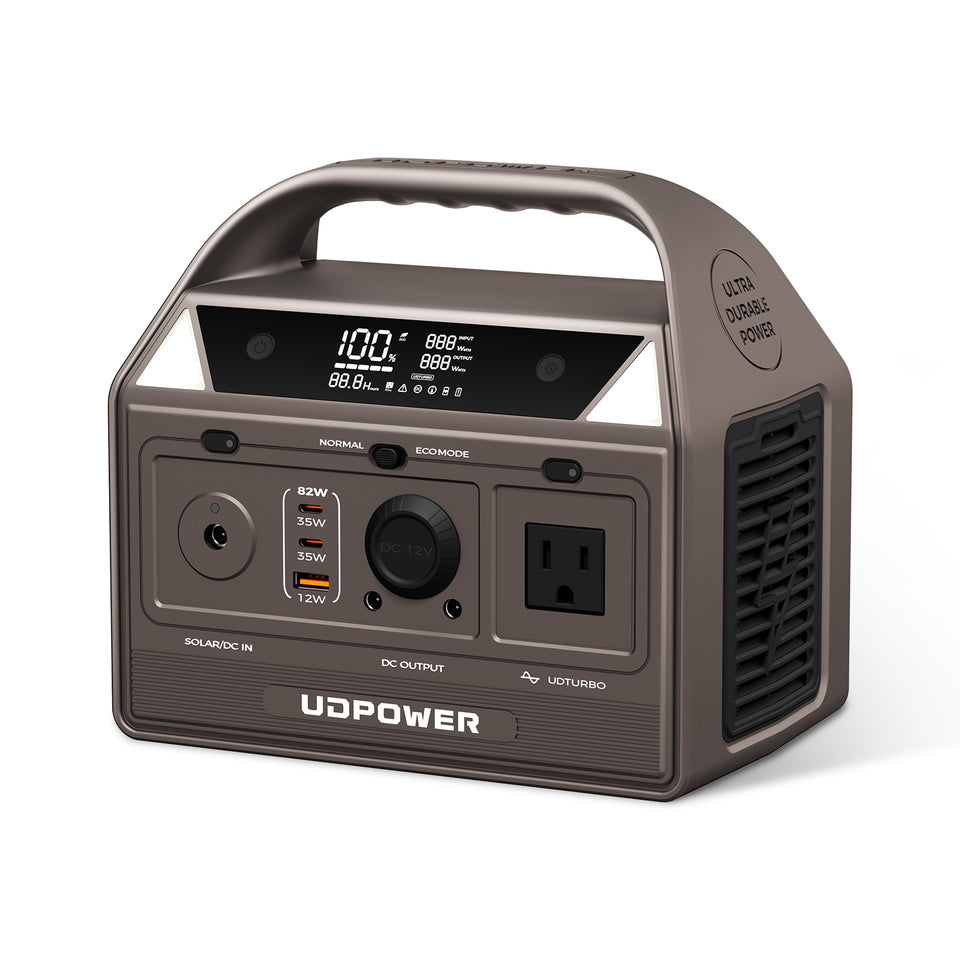
UDPOWER C200: Best Lowest-Cost Pick
- Current price checked: $129.99
- Capacity: 192Wh
- Rated AC output: 200W pure sine wave
- Compatible higher-load capability: up to 400W
- Weight: approximately 5.4 lb
- Solar charging input specification: up to 150W
- Battery chemistry: LiFePO4
- Cycle-life reference: about 80% capacity after 3,000 cycles and about 70% after 4,000 cycles under the applicable test conditions
- Warranty: 5 years
C200 is the model I would choose when the goal is to spend as little as possible without dropping into ordinary USB power-bank territory.
At 5.4 pounds, it is easy to keep in a vehicle, carry around a campsite, move between rooms during a short outage, or pack with camera gear.
Its limitation is easy to understand: 192Wh is still a small battery. About 173Wh of estimated usable AC energy is excellent for phones, lights, routers, cameras, and short laptop sessions, but it is not a substitute for a larger emergency-backup station.
Buy it if: low price, low weight, and basic electronics matter most.
Skip it if: your main goal is refrigerator backup, overnight CPAP use with higher power settings, cooking appliances, or long outages.
View UDPOWER C200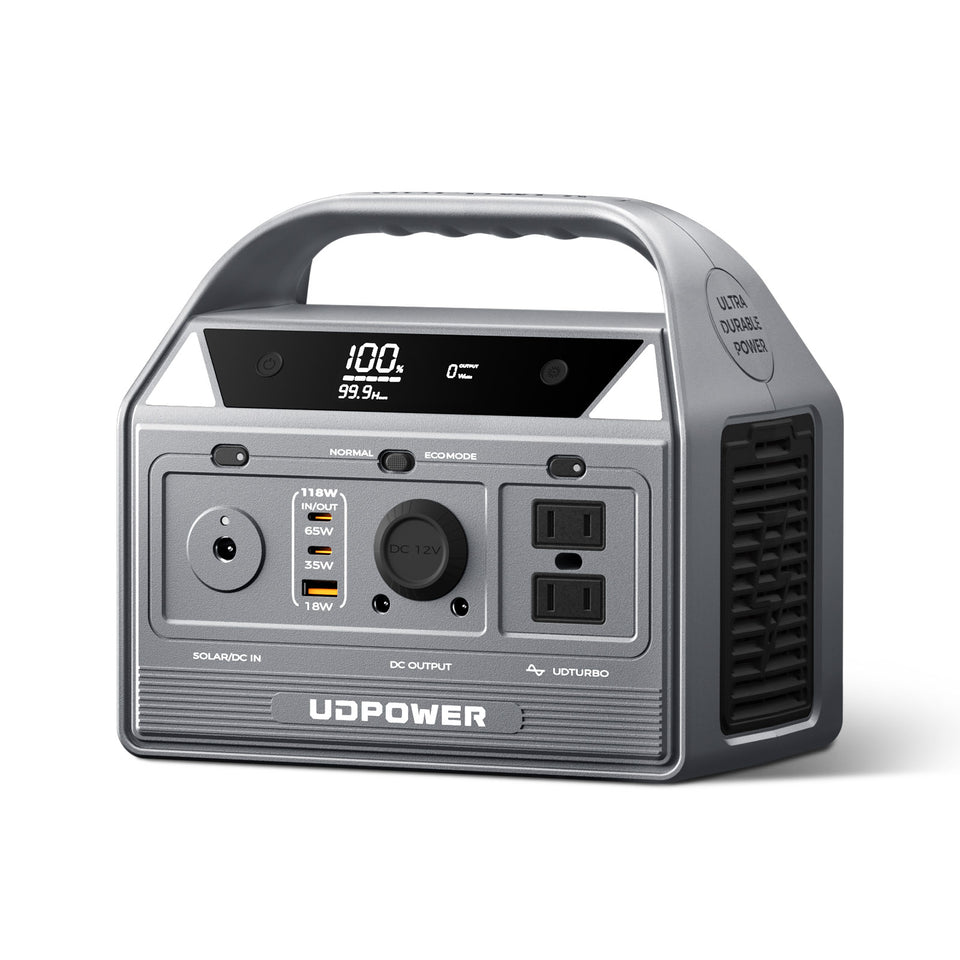
UDPOWER C400: Best Compact Budget Pick
- Current price checked: $169.99
- Capacity: 256Wh
- Rated AC output: 400W pure sine wave
- Compatible higher-load capability: up to 800W
- Weight: 6.88 lb
- Solar input: up to 150W
- USB-C: up to 65W + 35W
- Vehicle jump-start function: supported for compatible 12V vehicles
- Battery chemistry: LiFePO4
- Warranty: 5 years
At the prices checked for this update, C400 may be the easiest budget upgrade to justify.
You spend about $40 more than C200, but rated AC output doubles from 200W to 400W. Capacity also increases, and the unit remains below seven pounds.
That makes it a better fit for users who regularly carry a laptop, camera system, fan, projector, drone batteries, or other equipment that makes a 200W station feel restrictive.
I also like the fact that C400 has a second purpose in a vehicle emergency kit because it includes a compatible jump-start function.
Buy it if: you want more AC flexibility than an entry-level station but still care strongly about portability.
Skip it if: you need a full night of substantial AC energy or dependable long-duration refrigerator backup.
View UDPOWER C400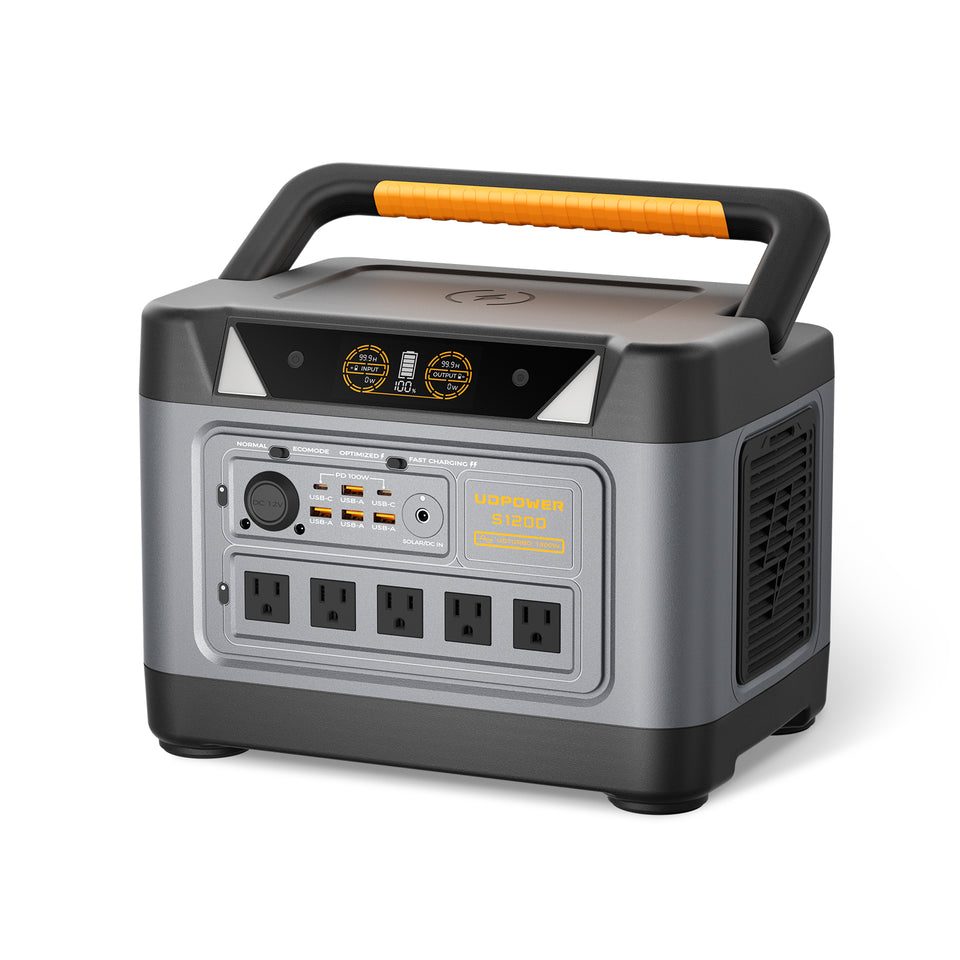
UDPOWER S1200: Best Budget Step-Up for Home Essentials
- Current starting price checked: $399.99 for the 3-AC version
- 5-AC version: $449.99 when checked
- Capacity: 1,190Wh
- Rated AC output: 1,200W pure sine wave
- UDTURBO: up to 1,800W for compatible higher-power loads
- Weight: approximately 26.0 lb
- Solar input: 400W max
- UPS switching: less than 10ms
- Battery chemistry: LiFePO4
- Wireless charging: no
- Warranty: 5 years
S1200 is the point where I stop thinking of a product mainly as a travel battery and start treating it as meaningful backup power.
Its 1,190Wh capacity provides roughly 1,071Wh of estimated usable AC energy using the 90% planning method. That is about 4.6 times the estimated usable AC energy of C400.
More importantly, the 1,200W rated inverter gives you much more appliance flexibility than a 200W or 400W compact station.
S1200 is therefore the strongest current UDPOWER value choice below $500 if your real goal is CPAP backup, refrigerator support, an RV weekend, home internet, laptops, lighting, TVs, or mixed household essentials.
UDTURBO can support compatible loads above the normal rated output, but I still size a routine backup setup around the normal 1,200W rating whenever possible. Operating with margin gives you more room for load overlap and changing appliance behavior.
Buy it if: runtime matters more than minimum carrying weight.
Skip it if: all you need is a phone, camera, light, or short laptop charging. Paying for more than 1kWh of battery would be unnecessary.
View UDPOWER S1200What About the UDPOWER C600?
C600 occupies what would normally be one of the most useful budget categories: roughly 600Wh of energy without the weight of a 1kWh-class station.
Its current specifications include:
- 596Wh battery capacity
- 600W rated pure sine wave AC output
- Up to 1,200W higher-load capability
- Up to 240W solar input
- 12.3 lb weight
- LiFePO4 battery
The issue is availability. The product page showed the unit and current bundles as sold out when this article was updated.
If it returns around its listed $289.99 unit price, it deserves another look. At that price, roughly 596Wh of capacity fills the large gap between C400 and S1200 nicely.
Check C600 AvailabilityHow to Avoid Overbuying a Portable Power Station
Bigger batteries usually look better in a specification table. That does not automatically make them better purchases.
Suppose your weekend requirements are:
- Phone charging: 15Wh
- Camera batteries: 30Wh
- LED lighting: 10W for 4 hours = 40Wh
- Laptop: 60W for 1.5 hours = 90Wh
Total planned energy is about:
That is already close to the practical AC/DC energy budget of a very small station, so C200 may be tight depending on how those devices charge. C400 gives more breathing room.
But jumping all the way to a 1,190Wh S1200 for this exact trip would mean carrying roughly 26 pounds to solve a sub-200Wh problem.
Unless you also want home-backup capability, the bigger station does not automatically create better value.
Why Buying Too Small Can Cost More
The opposite mistake is more common during sales: buying a power station because the price looks irresistible, then discovering that its battery is too small for the intended job.
Example: Eight Hours of CPAP Backup
Suppose your CPAP setup averages 40W.
320Wh ÷ 0.90 ≈ 356Wh nominal battery target
A 192Wh C200 or 256Wh C400 does not meet that planning target.
Buying either one specifically for this eight-hour requirement because it is cheaper could mean buying another battery later.
Your actual CPAP can use substantially more or less power depending on pressure settings, heated tubing, humidification, mask leakage, and other factors, so always use your actual machine's consumption when possible.
Example: Twelve Hours of Refrigerator Backup
Assume a refrigerator averages 70W over time.
840Wh ÷ 0.90 ≈ 933Wh nominal capacity target
That pushes the job into roughly the 1kWh class before you even account for your preferred reserve.
You must also confirm compressor startup requirements. This is why a C200 or C400 may be excellent for camping electronics yet a poor purchase for someone whose real priority is a refrigerator during blackouts.
For refrigerator-specific planning, read Can a Portable Power Station Run Your Refrigerator?.
The Cheapest Model Is Not Always the Cheapest Way to Solve the Problem
One of the most useful ways to think about budget power is cost to solve the job.
Imagine Buyer A spends $129.99 on a small power station for basic travel electronics. It covers the entire trip. That is a successful budget purchase.
Buyer B spends the same amount because the price is attractive but actually needs overnight medical-device backup and refrigerator support. The station cannot provide enough energy, so Buyer B later replaces it with a larger model.
The same low price created good value for one person and poor value for the other.
| Buying Behavior | Looks Cheap Initially? | Long-Term Result |
|---|---|---|
| Buy the smallest correctly sized station | Yes | Usually strong value |
| Buy undersized because it is on sale | Yes | May require an upgrade later |
| Buy far more capacity than you need | No | Money and weight may be wasted |
| Size the load first, then compare price | Not always the lowest sticker price | Usually the most rational purchase |
Do You Need LiFePO4 in a Budget Power Station?
For a product you expect to keep for years, I strongly prefer LiFePO4 battery chemistry.
All current UDPOWER C-Series and S-Series models discussed here use LiFePO4 cells.
Battery life matters because purchase price is only one part of ownership cost. UDPOWER's current battery-life position is approximately:
- About 80% remaining capacity after 3,000 charge cycles
- About 70% remaining capacity after 4,000 charge cycles
Capacity does not suddenly disappear once a battery reaches those points. Cycle-life figures describe expected capacity retention under the specified test conditions.
For an occasional emergency user, reaching thousands of full equivalent cycles can take many years. For frequent camping, RV, mobile work, or daily backup use, long cycle life has a much more direct effect on value.
Rated Output vs. UDTURBO: Do Not Buy From the Biggest Watt Number
Budget shoppers are often drawn to the largest watt number shown on a product page. I prefer to size normal operation around the rated AC output.
For example:
| Model | Rated AC Output | Higher-Load Capability | What I Use for Normal Sizing |
|---|---|---|---|
| C200 | 200W | Up to 400W compatible-load capability | 200W |
| C400 | 400W | Up to 800W compatible-load capability | 400W |
| C600 | 600W | Up to 1,200W higher-load capability | 600W |
| S1200 | 1,200W | UDTURBO up to 1,800W | 1,200W |
| S2400 | 2,400W | UDTURBO up to 3,000W | 2,400W |
UDPOWER's higher-load capability is useful for compatible appliances above normal rated output and is not limited only to a split-second startup event. However, conversion efficiency decreases when operating above rated power.
For that reason, I still prefer to choose a station whose normal rated output covers the loads I expect to use regularly.
Should a Budget Buyer Pay Extra for Solar Panels?
Not automatically.
A solar panel adds the most value when you actually spend meaningful time away from wall power or expect outages long enough that a single battery charge is not enough.
Solar Makes Sense If You:
- Camp for multiple days
- Use a portable refrigerator off-grid
- Spend time in an RV, van, or remote property
- Need a renewable recharge method during extended outages
- Use the power station repeatedly during daylight hours
You Can Usually Skip Solar Initially If You:
- Mainly keep the station charged at home for emergencies
- Use it for short day trips
- Only need phone, laptop, or camera charging
- Regularly have access to AC wall charging
Solar input also needs to be matched to the station.
| Model | Current Solar Input Specification | Best Solar Role |
|---|---|---|
| C200 | Up to 150W input specification | Light off-grid top-up |
| C400 | Up to 150W | Camping and road-trip recharge |
| C600 | Up to 240W | Longer off-grid weekends |
| S1200 | 400W max | Home backup, RV and extended off-grid use |
| S2400 | 420W recommended maximum | Higher-capacity off-grid and backup systems |
If solar is part of your plan, browse the UDPOWER Solar Generator Kits instead of assuming any panel will work with any station.
How Much Portability Are You Actually Buying?
Price and battery capacity get most of the attention, but weight is one of the specifications that determines whether a product actually feels portable in daily use.
| Model | Weight | Estimated Usable AC Energy | Approx. Usable Wh per Pound |
|---|---|---|---|
| C200 | 5.4 lb | 173Wh | About 32Wh/lb |
| C400 | 6.88 lb | 230Wh | About 33Wh/lb |
| S1200 | 26.0 lb | 1,071Wh | About 41Wh/lb |
| S2400 | 40.8 lb | 1,875Wh | About 46Wh/lb |
Bigger models can actually store more energy per pound, but that does not mean they are easier to carry. A 40-pound power station and a 5-pound power station serve very different travel habits.
If you expect to move the unit several times per day, absolute weight matters more than energy density.
Best Budget Power Station by Use Case
| Use Case | My Starting Pick | Why | When to Move Up |
|---|---|---|---|
| Emergency phone and router power | C200 | Low price and low weight | If outage duration regularly exceeds one night |
| Photography and drone kit | C400 | More AC headroom while remaining under 7 lb | If you charge multiple large batteries repeatedly |
| Car camping | C400 | Easy to carry and suitable for modest electronics | If you run a fridge, fan, laptop, and lights for long periods |
| Overnight CPAP backup | S1200 when runtime margin matters | Much more energy reserve than small C-Series models | If powering several additional household loads |
| Home internet and remote work | C400 for short outages; S1200 for long outages | Choice depends mainly on outage duration | If refrigerator or other appliances are added |
| Refrigerator outage backup | S1200 | 1,190Wh capacity plus 1,200W rated AC output | If longer runtime or heavier appliance overlap is required |
| RV weekend | S1200 | Good balance of runtime and movable size | If energy demand approaches several kWh per day |
| High-watt microwave or larger mixed loads | S2400 | 2,400W rated output and 2,083Wh capacity | If you require 240V or much larger stationary storage |
For camping-specific recommendations, see Portable Power Stations for Camping. For outage use, browse Portable Power Stations for Home.
What I Would Not Pay Extra for on a Budget Power Station
When the budget is tight, I prioritize function over cosmetic extras.
I would rather spend money on:
- More useful battery capacity
- A correctly sized inverter
- LiFePO4 cells
- A solid BMS
- Useful USB-C output
- Faster recharge capability
- Appropriate solar input
- Meaningful warranty coverage
before paying extra primarily for:
- Decorative lighting
- An oversized screen
- Ports I will never use
- Marketing-focused peak numbers that do not match my normal load
- Capacity I do not need
A good budget product is not the one with the longest specification sheet. It is the one where most of what you paid for contributes directly to the job you bought it to do.
Safety and Warranty Matter More When Shopping on a Budget
Price pressure is not a reason to ignore battery safety.
Look for a real battery management system and meaningful product testing rather than choosing an unknown battery solely because it appears cheaper.
UL Solutions describes UL 2743 as a standard covering portable power packs intended to provide portable power when normal grid power is unavailable.
Current UDPOWER product specifications list certifications including UL 2743, FCC, RoHS, and UN38.3 for models such as C200 and C400.
Check the Warranty Before You Compare the Discount
A budget power station is still a rechargeable battery system you may expect to use for years.
UDPOWER currently provides a five-year warranty on its portable power stations, along with a 30-day return policy subject to the applicable policy terms.
That matters when evaluating the true value of a low purchase price.
Battery Power and Gas Generators Are Not the Same Product
A portable power station operates without gasoline-engine exhaust, which makes it useful for applications where a combustion generator would be inappropriate.
If you use a gasoline generator for backup charging or larger loads, follow generator-specific safety rules. The U.S. Consumer Product Safety Commission states that portable fuel-burning generators must be operated outside and away from buildings because carbon monoxide can be deadly.
See the CPSC Carbon Monoxide Information Center for current guidance.
My Budget Portable Power Station Buying Checklist
Before clicking Buy, I would run through this list in order:
- Write down what you actually want to power.
- Check each device's rated voltage and wattage.
- Identify refrigerators, pumps, and other equipment with startup demand.
- Add the wattage of loads that may operate simultaneously.
- Estimate daily or outage energy consumption in watt-hours.
- Use 90% as the UDPOWER runtime planning factor.
- Choose an inverter rating that comfortably covers normal operation.
- Decide how much weight you are realistically willing to carry.
- Check AC, USB-C, DC, and car-output ports you actually need.
- Check solar input only if solar is part of your real charging plan.
- Check current inventory and actual selling price instead of old MSRP.
- Review warranty, returns, certifications, and support before checkout.
Frequently Asked Questions About Budget Portable Power Stations
What is the best budget portable power station in 2026?
It depends on the job. In the current UDPOWER lineup, C200 is the lowest-cost choice for light electronics, C400 is the stronger compact option for camping and mobile use, and S1200 is the best value step-up under $500 for buyers who need substantially more runtime and appliance capability.
What is the best portable power station under $200?
At the prices checked on October 29, 2026, UDPOWER C400 costs $169.99 and combines a 256Wh LiFePO4 battery with 400W rated pure-sine-wave AC output. It is a stronger choice than C200 when you can spend slightly more and need additional AC headroom.
What is the best portable power station under $500?
The UDPOWER S1200 is the strongest current UDPOWER value option below $500. The 3-AC version starts at $399.99 and provides 1,190Wh of capacity, 1,200W rated AC output, up to 1,800W UDTURBO support for compatible loads, 400W maximum solar input, and less-than-10ms UPS switching.
How many watt-hours should a budget portable power station have?
Choose watt-hours from the required runtime rather than from a generic target. Multiply your average load in watts by the number of hours you need it to run. For UDPOWER AC runtime planning, divide that energy requirement by 0.90 to estimate the nominal battery capacity needed.
Is a 200Wh portable power station enough?
Around 200Wh can be enough for phones, cameras, lights, routers, small fans, and short laptop use. It is generally too small for long refrigerator backup, high-watt cooking appliances, or substantial overnight loads unless your actual energy requirement is very low.
Is a 1,000Wh power station worth paying more for?
Yes when your energy requirement justifies it. A roughly 1,000Wh or larger battery becomes much more practical for CPAP backup, refrigerators, home internet, RV use, and longer outages. It is unnecessary if your normal use is only phone, camera, or occasional laptop charging.
Can a budget portable power station run a refrigerator?
Some can, but refrigerator sizing requires both sufficient AC output for compressor startup and enough watt-hours for the desired runtime. For meaningful outage backup, a larger model such as S1200 is a more practical starting point than a 192Wh or 256Wh station.
Can a budget portable power station run a CPAP overnight?
It depends on the CPAP's actual power consumption and whether heated humidification or heated tubing is used. For example, a 40W average load running eight hours requires 320Wh of delivered energy, or about 356Wh of nominal battery capacity using a 90% planning factor.
Is LiFePO4 worth it in a cheap portable power station?
Yes. LiFePO4 is particularly attractive for a product you expect to recharge repeatedly over several years. Current UDPOWER portable power stations use LiFePO4 batteries, with the company's cycle-life position specifying about 80% remaining capacity after 3,000 cycles and about 70% after 4,000 cycles under the applicable conditions.
Should I choose the model with the highest surge or UDTURBO wattage?
Not by itself. Start with rated AC output because that is the most useful number for normal sizing. Higher-load capability can help with compatible appliances above the rated level, but efficiency decreases when operating above rated output and the battery still needs enough watt-hours to provide useful runtime.
Do I need a solar panel with a budget portable power station?
Not necessarily. Solar is most useful for multi-day camping, RV use, remote properties, and extended outages where wall charging may not be available. If you mainly charge the station at home and use it for short trips or brief outages, buying the power station first and adding solar later can be more economical.
What is the difference between watts and watt-hours?
Watts describe power output and help determine whether the station can run an appliance. Watt-hours describe stored energy and help determine runtime. A good budget power station must provide enough of both.
Is the cheapest portable power station usually the best value?
No. The cheapest station is good value only when it can complete the job you are buying it for. An undersized battery that needs to be replaced later can cost more than buying the correctly sized station once.
How long do UDPOWER LiFePO4 batteries last?
UDPOWER's current battery-life position is approximately 80% remaining capacity after 3,000 charge cycles and 70% remaining capacity after 4,000 cycles under the applicable test conditions. Actual service life also depends on temperature, charging habits, storage, depth of discharge, and usage patterns.
Choose the Lowest-Cost Power Station That Actually Fits Your Load
Start with your highest-watt device, calculate how many watt-hours you need, then compare price, weight, recharge options, and warranty inside the correct size class. That is a much safer way to save money than buying the cheapest battery first and hoping it works.
Compare UDPOWER Models View All Portable Power Stations Read the Complete Buying GuideRelated Articles


