

12V Solar Panel Kit: Components, Sizing, Wiring & Battery Guide
Last updated: September 18, 2026
A 12V solar panel kit can be as simple as a small panel keeping a battery topped up, or as complete as a multi-panel RV system with a charge controller, LiFePO4 battery, inverter, fuses, monitoring, and DC distribution. The right setup depends less on the words “12 volt” and more on how much energy you use each day, how much battery capacity you need overnight, and how much sunlight you can realistically collect.
This guide explains how to build or choose a 12V solar panel kit with battery, how to size the solar array, what changes between a 100W and 200W kit, how series and parallel wiring affect voltage and current, and when an all-in-one portable power station may be simpler than building a traditional 12V battery system.
Quick Answer
A complete 12V solar system normally includes solar panels, a solar charge controller, a 12V battery, properly rated wiring and circuit protection, and an inverter only if you need 120V AC power.
Do not choose panel wattage from battery amp-hours alone. First calculate your daily energy use in watt-hours. Then divide that energy requirement by your available peak sun hours and allow room for real-world losses from heat, panel angle, wiring, controller operation, dirt, and partial shade.
For many small RV and camping systems, 100W is best for light loads or battery maintenance, 200W is a more useful starting point for moderate daily use, and 400W gives substantially more recovery capability for refrigeration and multiple devices. Those are planning ranges, not universal rules.

What Is a 12V Solar Panel Kit?
A 12V solar panel kit is a group of components designed to collect solar energy and use it to charge or support a nominal 12V electrical system. Typical applications include RV house batteries, vans, boats, trailers, small cabins, sheds, camping systems, and portable off-grid equipment.
The phrase can be confusing because a “12V” solar panel normally produces substantially more than 12 volts when operating. The 12V label describes the battery system the panel is intended to support, not a fixed panel output voltage.
A traditional system follows this basic path:
A kit sold as a 12V solar panel battery charger may contain only a small panel plus a controller or regulator. A larger 12V solar panel kit with battery may include almost everything above.
That distinction matters when comparing products. A kit that includes a 200W panel but no battery, inverter, fuse block, or mounting hardware is not equivalent to a complete off-grid electrical system.
What Components Does a 12V Solar Kit Need?
| Component | What It Does | Do You Always Need It? | What to Check | Reference |
|---|---|---|---|---|
| Solar panel | Converts sunlight into DC electrical power. | Yes | Rated watts, Vmp, Voc, Imp/Isc, connector type and physical size. | UDPOWER Solar Panels |
| Solar charge controller | Regulates charging between the solar array and battery. | Normally yes in a traditional battery system | Battery voltage, battery chemistry, maximum PV voltage, current and solar wattage. | Victron Energy |
| 12V battery | Stores solar energy for use when the panel is not producing enough power. | Yes if energy must be stored | Battery chemistry, Ah/Wh capacity, BMS limits, charge voltage and temperature restrictions. | UDPOWER Battery Conversion Tools |
| Fuses or breakers | Provide overcurrent protection for wiring and connected equipment. | Yes where required by system design | Protection must be selected for conductor and equipment ratings. | Renogy |
| Solar and battery cable | Carries current between components. | Yes | Current capacity, length, voltage drop, insulation and connector compatibility. | Renogy |
| DC distribution | Distributes battery power to 12V appliances and circuits. | Depends on installation | Total current, fuse positions and wiring requirements. | Follow component manuals and applicable electrical requirements. |
| Inverter | Converts battery DC power into 120V AC power. | No, if all loads operate directly from DC | Continuous power, startup requirements, input current and waveform. | Solar and Power Inverters Guide |
| Battery monitor | Helps track current, energy use and battery state. | Optional but useful | Compatibility with battery and expected current. | Follow monitor manufacturer specifications. |
Why a “12V Solar Panel” Does Not Output Exactly 12 Volts
One of the most common misunderstandings when shopping for a 12V solar system is assuming the panel itself should produce exactly 12.0 volts.
It cannot work that way. To push energy into a battery, the charging system needs appropriate charging voltage above the battery's resting voltage. The solar panel also needs enough voltage headroom for the charge controller to operate.
For a real-world example, the current UDPOWER 120W Portable Solar Panel is rated at 120W with a maximum-power voltage of 17.92V and an open-circuit voltage of 21.5V.

That is normal behavior. “12V” in this context is a system class, not a promise that panel voltage stays at exactly 12 volts.
The same principle becomes even more important with higher-voltage panels. UDPOWER's current 210W Portable Foldable Solar Panel, for example, lists a 40.0V maximum-power voltage and 48.0V open-circuit voltage. Whether a panel like that can charge a particular device depends on the charge controller's permitted PV input range, not simply on whether the battery is called “12V.”
How to Size a 12V Solar System
The most reliable way to size a 12V solar panel kit is to start with daily energy consumption in watt-hours, not panel wattage or battery amp-hours.
Step 1: Calculate Daily Energy Use
For each device:
For devices that cycle on and off, such as refrigerators, using measured 24-hour energy consumption is better than multiplying the label's maximum wattage by 24 hours.
Here is a sample camping or small RV energy budget. These figures are an example for sizing practice, not universal appliance consumption values.
| Example Load | Planning Use | Daily Energy | Calculation | Method |
|---|---|---|---|---|
| 12V refrigerator | Example measured/cycling consumption | 420Wh | Use 24-hour energy rather than compressor nameplate watts | Planning example |
| LED lighting | 20W × 4 hours | 80Wh | 20 × 4 | Calculated |
| Laptop | 60W × 3 hours | 180Wh | 60 × 3 | Calculated |
| Phones | Combined daily charging allowance | 30Wh | Planning allowance | Planning example |
| Water pump | 60W × 0.5 hour | 30Wh | 60 × 0.5 | Calculated |
| Total | 740Wh/day | Total of example loads | UDPOWER Conversion Tools |
Step 2: Add Operating Margin
A system that produces exactly the same number of watt-hours as your spreadsheet predicts has little margin for cloudy periods, higher-than-expected loads, imperfect panel angle, heat, dirt, wiring losses or charging losses.
For this example, adding a 20% planning reserve gives:
Step 3: Estimate Peak Sun Hours
Peak sun hours are not the same as the number of daylight hours. They express the day's solar energy as an equivalent number of hours at strong reference irradiance.
Local solar resource varies by location, season, weather and panel orientation. The PVWatts calculator can help you understand solar production potential in your area. Real output is also affected by shade, soiling, wiring, temperature and other losses.
Step 4: Calculate Panel Wattage
For portable-system planning, we can use a conservative 0.75 output factor to leave room for several real-world losses. This 0.75 figure is a planning assumption for the examples below, not a guaranteed panel efficiency or a number published by PVWatts.
Using the 888Wh/day example, 4.5 peak sun hours and a 0.75 planning factor:
In practice, a system around 300W would meet the calculated target under the assumed conditions, while moving toward 400W provides more recovery margin for imperfect days.
This is why “How many watts of solar do I need?” should be answered from daily energy use and local solar conditions rather than from battery capacity alone. RV owners can also use our dedicated How Many Watts of Solar Do I Need for an RV? guide for a deeper RV-specific calculation.
What Size Solar Panel to Charge a 12V Battery?
If your main goal is charging a battery rather than replacing a known daily load, first convert the battery's amp-hour rating into watt-hours.
For a nominal 12.8V, 100Ah LiFePO4 battery:
But you rarely need to replace the entire 1,280Wh. If the battery starts at 20% state of charge and you want to return it to full, the nominal energy deficit is approximately:
Now panel size depends on how quickly you need that energy replaced.
| 12.8V LiFePO4 Battery | Nominal Energy | Example Energy to Replace From 20% to 100% | 100W Solar | 200W Solar | 400W Solar | Source / Method |
|---|---|---|---|---|---|---|
| 50Ah | 640Wh | 512Wh | 6.8 peak-sun-hours | 3.4 peak-sun-hours | 1.7 peak-sun-hours | Solar-resource context: PVWatts |
| 100Ah | 1,280Wh | 1,024Wh | 13.7 peak-sun-hours | 6.8 peak-sun-hours | 3.4 peak-sun-hours | Ah/Wh conversion |
| 200Ah | 2,560Wh | 2,048Wh | 27.3 peak-sun-hours | 13.7 peak-sun-hours | 6.8 peak-sun-hours | Additional sizing reference: Renogy |
The table uses a 0.75 planning factor and assumes an 80% refill of the battery's nominal energy. The results are equivalent peak-sun-hours, not ordinary clock hours. A result of 6.8 peak-sun-hours may require more than one calendar day in a location that only receives four useful peak sun hours that day.
How Long Will Solar Take to Charge a 12V Battery?
You can estimate solar recharge requirement with:
For the same 100Ah, 12.8V battery with 1,024Wh to replace:
| Panel Size | Planning Solar Energy per Peak-Sun-Hour | Peak-Sun-Hours to Replace 1,024Wh | At 5 Peak Sun Hours per Day | Reference |
|---|---|---|---|---|
| 100W | 75Wh | 13.7 | About 2.7 solar days | PVWatts |
| 120W | 90Wh | 11.4 | About 2.3 solar days | UDPOWER 120W Panel |
| 200W | 150Wh | 6.8 | About 1.4 solar days | Calculated using 0.75 planning factor |
| 210W | 157.5Wh | 6.5 | About 1.3 solar days | UDPOWER 210W Panel |
| 400W | 300Wh | 3.4 | Less than one strong solar day under the assumed conditions | Calculated using 0.75 planning factor |
The practical lesson is simple: a panel can be capable of charging a battery without being large enough to recharge it every day. That difference is one of the main reasons small solar systems disappoint users in RV and off-grid applications.
100W vs 200W 12V Solar Kit
The choice between a 100W and 200W 12V solar kit should be based on daily energy recovery, not just the price of the panel.
| Solar Size | Planning Output per Peak-Sun-Hour | Planning Output at 5 Peak Sun Hours | Best Fit | Main Limitation | Reference |
|---|---|---|---|---|---|
| 100W | About 75Wh | About 375Wh/day | Battery maintenance, lighting, phones, small electronics, very light camping loads | Slow recovery after a large overnight battery draw | Sizing reference |
| 200W | About 150Wh | About 750Wh/day | Moderate camping loads, small RV loads, faster 12V battery recovery | May still be undersized for refrigeration plus several other daily loads | Calculated using the guide's 0.75 planning factor |
| 400W | About 300Wh | About 1,500Wh/day | RV refrigeration, multiple devices, larger daily energy budgets and quicker recovery | Requires more physical panel area and compatible controller/input limits | Solar variability: PVWatts |
These estimates are deliberately conservative planning values. A panel may produce more during excellent conditions and considerably less during cloud cover, shade, poor alignment, high temperature or low winter sun.
If you are comparing 100W vs 200W simply to keep a lightly used battery topped up, 100W may be enough. If you expect to consume hundreds of watt-hours every night and need the battery recovered before the next evening, 200W or more becomes much easier to justify.
How to Choose a Solar Charge Controller
The solar charge controller is one of the most important components in a traditional 12V solar battery setup. It sits between the panels and battery and controls how solar energy is delivered to the battery.
PWM vs MPPT
| Feature | PWM | MPPT | What It Means in Practice | Reference |
|---|---|---|---|---|
| Basic operation | Works more directly between panel and battery voltage | Tracks the panel's maximum-power operating point and converts voltage/current for battery charging | MPPT gives greater flexibility when panel voltage is substantially higher than battery voltage. | Victron |
| Higher-voltage array | More restricted | Common use case when controller input limits allow it | Always check maximum PV voltage rather than assuming compatibility. | Renogy Controller Sizing |
| System complexity | Often simpler | More advanced electronics | The correct choice depends on panel, battery and system design. | UDPOWER MPPT Guide |
Controller Current Sizing
One useful starting estimate for an MPPT controller is:
For example, if a 200W array is charging a 12V LiFePO4 battery at approximately 14.4V:
That makes a 20A-class controller a common starting range for a 200W/12V design, assuming its maximum PV input voltage, PV wattage limit, battery chemistry settings and manufacturer requirements all match the system.
For 400W:
A 30A-class controller may therefore appear appropriate from current alone, but current is only one specification. Maximum PV open-circuit voltage can be the more important hard limit.
12V Solar Panel Wiring: Series vs Parallel
When more than one solar panel is used, wiring arrangement changes the electrical characteristics of the array.
| Configuration | Voltage | Current | Main Benefit | Main Risk | Reference |
|---|---|---|---|---|---|
| Series | Panel voltages add | Current remains approximately that of the string | Higher voltage and lower current for a given power level can help reduce cable losses. | Array Voc can exceed controller or power-station input voltage. | UDPOWER Solar Voltage Safety Guide |
| Parallel | Voltage remains approximately that of one panel | Panel currents add | Useful where input voltage must remain low. | Total current can exceed controller/input or cable limits. | Solar Panel Connector Guide |
Simple Example
Imagine two identical panels, each with approximately:
- 20V operating voltage
- 5A operating current
- 100W rated power
In series, the array is roughly:
In parallel:
The wattage may be similar, but the electrical requirements are not.
Why Voltage Limits Matter
UDPOWER's current 210W portable panel lists a 48.0V open-circuit voltage. Two identical panels in series would theoretically produce about 96V open circuit before considering environmental effects.
The current S2400 solar input is rated at 12–50V and 10A maximum. Two 48V Voc panels therefore must not be placed in series into that input.
By comparison, UDPOWER offers configurations using two 210W panels with supported charging arrangements that keep the system within the station's input specifications.
For a deeper look at MC4, XT60, DC7909, Anderson and other connections, see Solar Panel Connector Types: MC4, XT60, DC7909 & More.
Choosing a Battery for a 12V Solar Setup
Battery capacity determines how long your system can operate without enough solar input. Battery chemistry determines much more: usable capacity, weight, charge behavior, voltage characteristics, cold-weather restrictions, maintenance requirements and cycle life.
| Battery Type | Strengths | Trade-Offs | Good Fit | What to Verify |
|---|---|---|---|---|
| LiFePO4 | High energy utilization, relatively low weight, stable voltage and strong cycle-life potential. | Higher initial price; charging at low temperatures may be restricted unless protection or heating is provided. | Frequent RV, van, camping and off-grid cycling. | BMS current limit, low-temperature charging protection, charge voltage and manufacturer settings. |
| AGM lead-acid | Widely available, sealed and lower initial cost than many lithium options. | Heavier and generally offers less usable energy for a given nameplate Ah capacity when cycle life matters. | Budget-conscious or occasional systems. | Recommended depth of discharge and charging profile. |
| Flooded lead-acid | Established technology and commonly available. | Requires ventilation and maintenance; acid and gas management must be considered. | Appropriately designed fixed installations. | Ventilation, maintenance, charging profile and mounting requirements. |
Ah Is Not the Same as Wh
Amp-hours alone do not tell you how much energy a battery stores unless you also know its voltage.
| Battery | Nominal Voltage | Capacity | Nominal Energy | Source |
|---|---|---|---|---|
| Example battery | 12.8V | 50Ah | 640Wh | UDPOWER Battery Unit Conversion Tools |
| Example battery | 12.8V | 100Ah | 1,280Wh | How to Calculate Watt-Hours |
| Example battery | 12.8V | 200Ah | 2,560Wh | Calculated from Wh = V × Ah |
12V Systems Carry a Lot of Current at High Power
This is an important issue often missed when people focus only on solar panel wattage.
Power is:
Ignoring inverter losses for a moment, supplying a 1,200W load from a nominal 12V source requires roughly:
A 2,000W load would theoretically approach:
Actual battery-side current may be higher once inverter losses and battery voltage under load are considered.
That is why larger off-grid systems often move to 24V or 48V battery architectures. Doubling system voltage roughly halves current for the same power, which can make wiring and high-power distribution more manageable.
A 12V system remains highly practical for smaller RV, marine, camping and DC loads, but “12V” should not automatically be treated as the ideal architecture for every inverter size.
12V Solar Panel Kit for RV Use
An RV solar system has two separate jobs:
- Store enough energy to run loads when the sun is unavailable.
- Collect enough solar energy during the day to replace what was used.
A large battery with too little solar can keep you running longer at first, but eventually the system falls behind. A large solar array with too little battery may produce plenty of power during daylight but provide insufficient overnight runtime.
RV Sizing Example
Suppose an RV uses 900Wh per day after accounting for refrigeration, lights, electronics, pumps and other loads.
With five peak sun hours and the 0.75 planning factor used throughout this guide:
That makes roughly 300W a more practical minimum design target than trying to operate at the mathematical edge. Moving toward 400W provides additional recovery margin.
But a shaded campsite changes everything. A 400W roof array under trees can produce less useful energy than a smaller portable panel positioned in direct sun. RV users who frequently camp under shade may benefit from combining roof solar with a portable panel, provided the controller and wiring architecture support it.
For trip-length-specific recommendations, see Best Solar Generator Kit Size for RV Weekends vs. Boondocking.
12V Solar Panel Kit for Camping
A camping solar setup has different priorities from a permanently installed RV system. Portability, setup time, panel positioning and packing space often matter as much as maximum solar wattage.
Before buying a fixed 12V solar panel kit for camping, decide what you actually need to power:
- Phones, lights and cameras only
- A 12V compressor refrigerator
- Laptops or communication equipment
- CPAP equipment
- Cooking appliances
- Fans, pumps or small electric blankets
- 120V AC appliances requiring an inverter
For light electronics, a 100W–120W portable panel may be enough to keep a modest battery system recovering during good weather. Refrigeration and multiple devices can quickly push daily demand into several hundred watt-hours, making a 200W or larger solar setup more useful.

A portable panel also gives you something a fixed roof array cannot: the ability to move the panel toward better sunlight while your tent, trailer or vehicle stays in the shade.
For a broader camping energy plan, see How to Get Power When Camping Off-Grid and Are Solar Panels Worth It for Camping?.
Traditional 12V System vs Portable Power Station
A traditional 12V battery system and a solar generator solve similar problems in different ways.
| Feature | Traditional 12V Solar System | Portable Power Station + Solar Panel | Best Choice When... |
|---|---|---|---|
| Battery | Separate battery or battery bank | Built into power station | Traditional systems offer more component-level customization. |
| Solar controller | Separate PWM or MPPT controller | Integrated into compatible power station | Power station reduces component matching. |
| Inverter | Separate if AC power is required | Integrated | Power station is convenient for plug-in AC appliances. |
| DC distribution | Can be designed around permanent RV or cabin circuits | Limited to the station's available DC ports and ratings | Traditional system is better for extensive hardwired 12V circuits. |
| Installation | More wiring, protection and component selection | Usually plug-and-play | Power station is useful when portability and simplicity matter. |
| Expandability | Can be highly modular when designed correctly | Limited by station battery capacity and input/output specifications | Traditional systems suit highly customized permanent builds. |
| Portability | Usually installed in one vehicle or location | Can move between RV, campsite and home | Power station suits multi-use applications. |
This distinction is particularly important when searching for a 12V solar panel kit with battery. A solar generator is not simply another name for a conventional 12V battery kit. It is an integrated alternative that combines several major components into one portable unit.
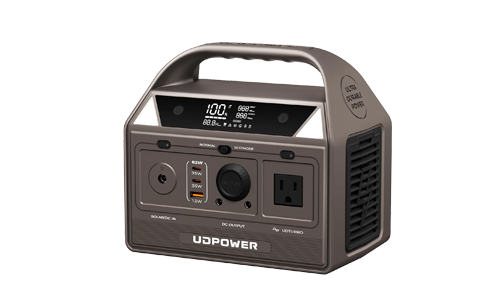
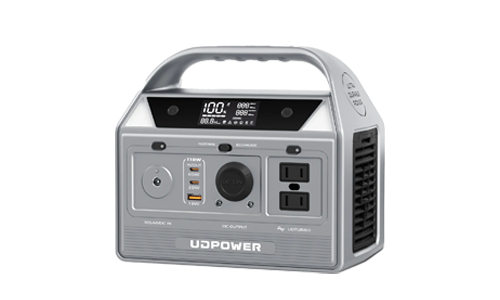
A Simpler Solar Option: UDPOWER Portable Power Stations
If you want solar charging for camping, RV travel or emergency backup but do not need to build a permanent 12V house-battery electrical system, pairing a portable solar panel with a portable power station removes much of the controller, battery and inverter installation work.
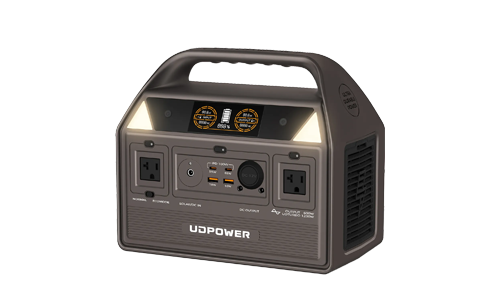
UDPOWER S1200 + Portable Solar Panel
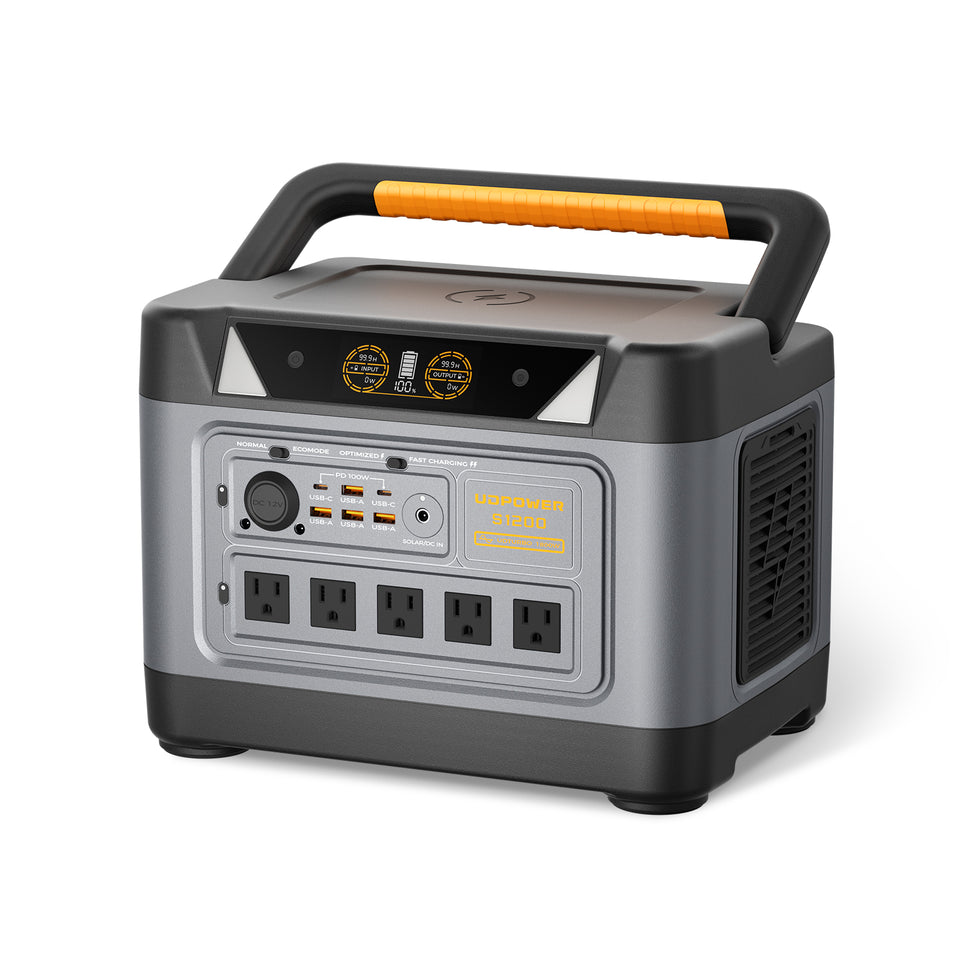
The UDPOWER S1200 is a portable alternative for users who want battery storage, AC output, DC outputs and solar charging in one enclosure.
| S1200 Specification | Current Official Specification | Why It Matters for Solar | Source |
|---|---|---|---|
| Battery capacity | 1,191Wh listed specification | Provides about a 1.2kWh-class stored-energy platform. | S1200 Product Page |
| Rated AC output | 1,200W pure sine wave | Supports considerably larger AC loads than a small standalone 12V inverter setup. | Official Specs |
| Solar input | DC7909, 12–75V, 12A, 400W max | Panel array must remain within voltage, current and power limits. | Official Specs |
| Weight | Approximately 26.0 lb | Portable between a vehicle, campsite and home. | Official Specs |
| Battery chemistry | LiFePO4 | Designed for repeated portable power use. | Official Specs |
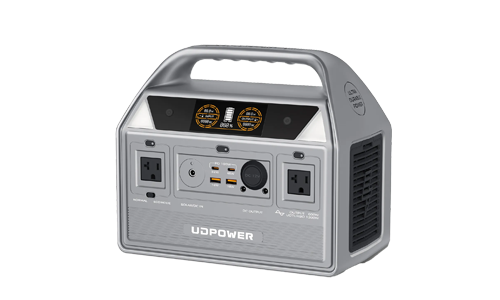
UDPOWER S2400 + 210W Solar Panel

For a larger energy budget, the UDPOWER S2400 provides more than 2kWh of battery capacity and substantially higher AC output while retaining portable solar charging capability.
| S2400 Specification | Current Official Specification | Solar-Relevant Detail | Source |
|---|---|---|---|
| Battery capacity | 2,083Wh | Useful where overnight loads exceed the practical range of a smaller battery. | S2400 Product Page |
| Rated AC output | 2,400W pure sine wave | Supports higher-power appliances within product limits. | Official Specs |
| Solar input voltage | DC7909, 12–50V | Array Voc must stay within the input limit. | Official Specs |
| Maximum DC input current | 10A max | Parallel arrays must also remain within input-current limits. | Official Specs |
| Maximum solar charging | Up to 400W | A panel array can have a higher nameplate total in a supported configuration while actual station input remains limited by the station. | Official Product Page |
| Weight | Approximately 40.8 lb | Portable but better suited to higher-capacity RV, camping and backup applications. | Official Specs |
UDPOWER Portable Solar Panel Comparison
| Specification | UDPOWER 120W Panel | UDPOWER 210W Panel | Why It Matters | Source |
|---|---|---|---|---|
| Rated power | 120W | 210W | Higher wattage can recover stored energy faster when sunlight and charger limits allow. | Solar Panel Collection |
| Maximum-power voltage | 17.92V | 40.0V | Shows why “12V solar” does not mean every panel produces the same voltage. | 120W / 210W |
| Open-circuit voltage | 21.5V | 48.0V | Voc must remain below the receiving device's maximum solar-input voltage. | 120W / 210W |
| Operating current | 5.582A | 5.00A | Parallel panels increase array current. | 120W / 210W |
| Cell efficiency | ≥22% | ≥22% | Relevant when panel area and portability matter. | Official Solar Panels |
| Weather rating | IP65 | IP65 | Useful for portable outdoor operation; follow product instructions for weather exposure and storage. | 120W / 210W |
Common 12V Solar Setup Mistakes
1. Sizing Solar From Battery Capacity Alone
A 100Ah battery does not automatically require a specific panel wattage. A lightly used 100Ah battery may need very little daily replenishment, while the same battery supporting a refrigerator and other loads may need several hundred watts of solar to recover every day.
2. Treating Daylight Hours as Peak Sun Hours
Twelve hours between sunrise and sunset does not mean a 200W panel produces 2,400Wh. Solar intensity changes throughout the day, and local weather, season, orientation and temperature matter.
3. Ignoring Voc
Maximum PV voltage is a hard equipment limit. Series wiring can quickly push an array above it.
4. Looking Only at Connector Type
MC4, DC7909, XT60 or another connector describes a physical connection. It does not guarantee safe voltage or current compatibility.
5. Buying a Large Battery and Too Little Solar
A bigger battery extends runtime, but it also takes more energy to recharge. If the array cannot replace daily consumption, the battery state of charge falls a little more each day.
6. Buying More Solar Than the Controller Can Accept
Adding panels does not automatically increase charging speed. Every controller or power station has maximum PV voltage, current and power limits.
7. Ignoring Wire Length
Low-voltage systems can carry high current. Long, undersized conductors increase voltage drop and heat. Wire size and overcurrent protection should be selected for actual circuit current, length and applicable requirements.
8. Designing Around Perfect Weather
If your power budget only works when the panel delivers its nameplate rating all day, the system has little resilience. Build margin into both storage and solar recovery.
9. Mixing Panels Without Checking Electrical Characteristics
Different panels can have different operating voltages, Voc and current. Mixing them without understanding the controller and array behavior can reduce output or create an incompatible configuration.
10. Assuming More Inverter Watts Means a Better 12V System
A large inverter on a 12V battery bank requires very high DC current. For high continuous loads, system voltage and wiring architecture deserve just as much attention as inverter wattage.
12V Solar Kit Buying Checklist
- Daily energy: How many watt-hours will you actually use in 24 hours?
- Overnight requirement: How much energy must the battery supply without sunlight?
- Battery voltage: Is the system truly 12V nominal?
- Battery chemistry: Does the controller support the required charging profile?
- Battery capacity: Convert Ah to Wh so you can compare storage with daily loads.
- Peak sun hours: Use realistic seasonal solar conditions for your location.
- Solar wattage: Can the array replace your typical daily consumption?
- Panel Vmp and Voc: Are both compatible with the charge controller?
- Controller voltage: Can it accept the array's maximum possible Voc?
- Controller current: Can it safely handle expected charging current?
- Wiring: Is cable size suitable for current and distance?
- Circuit protection: Are fuses or breakers correctly selected?
- AC requirement: Do you actually need an inverter, and how large must it be?
- Expansion: Will you want to add another panel or more battery capacity later?
- Portability: Is a fixed installation necessary, or would a portable power station be more practical?
Frequently Asked Questions About 12V Solar Panel Kits
Can I connect a 12V solar panel directly to a 12V battery?
Normally, no. A conventional solar panel should be connected through a compatible solar charge controller that regulates battery charging. Some small battery-maintainer products contain their own regulation electronics, so always follow the product's specific instructions.
What size solar panel do I need to charge a 12V 100Ah battery?
It depends on how deeply the battery is discharged and how quickly you need it recharged. A 12.8V 100Ah battery contains about 1,280Wh nominally. In the planning example used in this guide, replacing 80% of that capacity requires about 13.7 peak-sun-hours with 100W of solar, 6.8 with 200W, or 3.4 with 400W using a conservative 0.75 planning factor.
Is a 100W solar panel enough for a 100Ah battery?
It can charge the battery, but “enough” depends on your daily energy consumption. If you only replace a small amount of energy each day, 100W may be sufficient. If you routinely draw hundreds of watt-hours overnight, a 100W panel may take too long to restore the battery.
Is 200W solar enough for an RV?
It can be enough for a low-energy RV setup, but refrigeration, furnace fans, laptops and other loads can push daily demand beyond what 200W can reliably replace. Calculate daily watt-hours and local peak sun hours instead of using RV size alone.
How many watts can a 200W solar panel make in a day?
Under the conservative planning assumption used in this guide, a 200W array with five peak sun hours would provide about 750Wh per day: 200W × 5 × 0.75. Actual output varies with location, season, cloud cover, temperature, shade, panel angle and system losses.
What size charge controller do I need for a 200W solar panel and 12V battery?
Using 14.4V as an example charging voltage, 200W ÷ 14.4V is about 13.9A, so a 20A-class MPPT controller is a common starting range. However, you must also confirm maximum PV voltage, maximum solar wattage, battery compatibility and manufacturer requirements.
Can I use a higher-voltage solar panel with a 12V battery?
Yes, a compatible MPPT controller can often use a higher-voltage solar array to charge a 12V battery. The panel does not need to have the same operating voltage as the battery. The controller's maximum PV voltage and power limits must still be respected.
Should solar panels be wired in series or parallel for a 12V system?
There is no universal answer. Series wiring raises array voltage, while parallel wiring raises array current. The correct configuration depends on the controller's voltage and current limits, panel specifications, wire length, shading conditions and overall system design.
Do I need an inverter for a 12V solar system?
Only if you need to run AC equipment. Native 12V DC appliances and properly supported USB/DC devices can operate without converting battery energy to 120V AC, which can simplify the system.
What is the difference between a 12V solar kit and a solar generator?
A traditional 12V solar kit normally uses separate panels, controller, battery, protection, wiring and possibly an inverter. A solar generator combines the battery, charging electronics, inverter and output ports into a portable power station that can be paired with solar panels.
Is a portable power station better than building a 12V solar battery system?
For portable camping, temporary RV use and home backup, an integrated power station is often easier to deploy. A permanent 12V system offers more customization and may be better for hardwired RV, boat or cabin circuits. The right architecture depends on whether you value portability or component-level customization more.
Can I add more solar panels later?
Often yes, but only if the expanded array remains inside the charge controller or power station's voltage, current and wattage limits. Expansion planning should be considered before choosing the original controller and wiring.
Related UDPOWER Guides
Final Takeaway
The best 12V solar panel kit is not necessarily the one with the largest panel or battery. It is the system in which daily loads, battery storage, solar recovery, controller limits and wiring all match each other.
Start with watt-hours per day. Decide how much overnight battery reserve you need. Use realistic peak sun hours to calculate how much solar energy must be recovered. Then confirm panel voltage, controller specifications, battery charging requirements, cable current and circuit protection.
For a permanent RV, van or cabin installation, a component-based 12V solar battery setup offers flexibility. For camping, temporary RV use or emergency backup, a portable solar generator can provide much of the same functionality with far less installation work.
Build a Simpler Off-Grid Power Setup
Explore UDPOWER portable solar panels and LiFePO4 power stations for RV travel, camping and backup power.
View Portable Solar Panels View Solar Generator Kits Compare Portable Power Stations Explore RV & Camping Power StationsExternal reference resources: Solar-production estimates and real-world variability can be explored with PVWatts. Additional 12V battery solar-sizing information is available from Renogy, and PWM/MPPT operating principles are described by Victron Energy.
Related Articles


