Best Seller
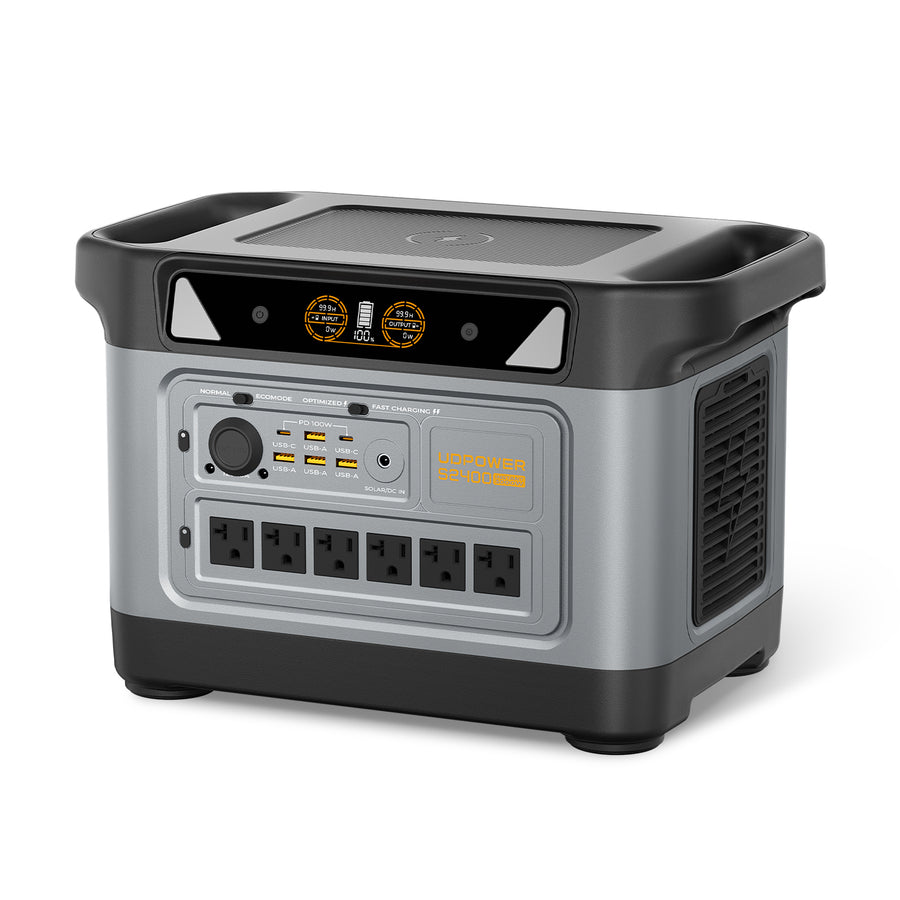
UDPOWER S2400 Portable Power Station
2083Wh LiFePO4 | 2400W AC Output
Portable Power Stations
Reliable, long-lasting LiFePO4 battery backup solutions. Quiet, solar-ready power for camping, RV trips, and emergency home backup.
Best Seller
2083Wh LiFePO4 | 2400W AC Output
Best Seller
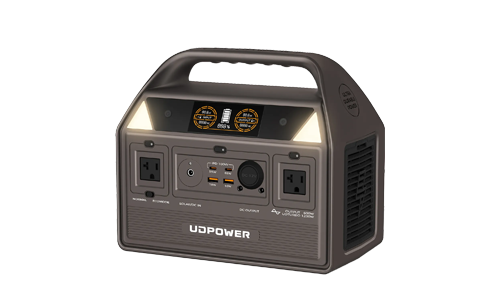
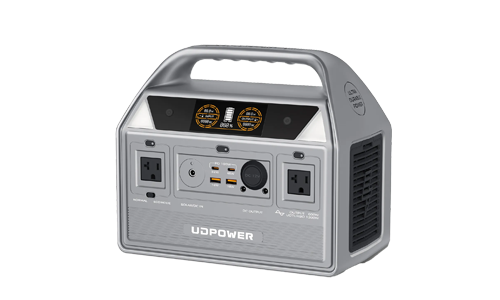
192Wh LiFePO4 | 200W AC Output
| Model | Capacity | AC Output | Best For | Solar Charging | Weight | Price |
|---|---|---|---|---|---|---|
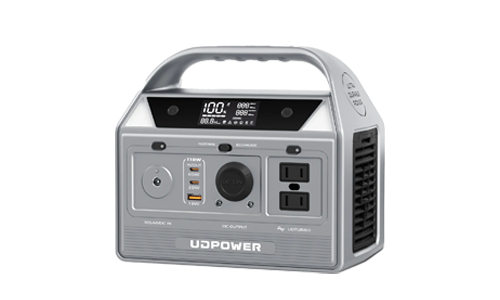
| C200 | 192Wh | 200W | Short Trips | 150W Max | 5.5 lbs | From $129.99 $199.99 |
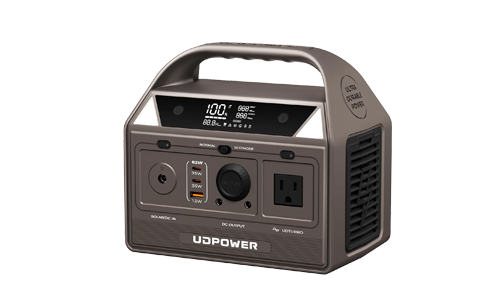
| C400 | 256Wh | 400W | Camping, Fans | 150W Max | 6.88 lbs | From $169.99 $209.99 |
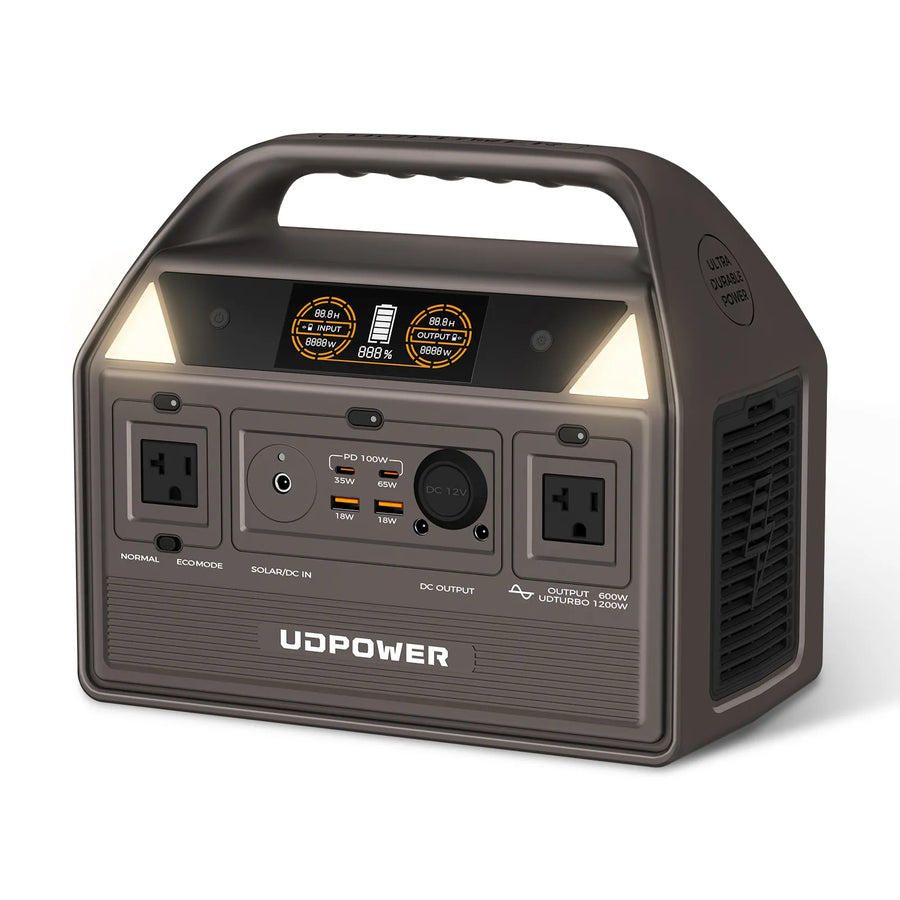
| C600 | 596Wh | 600W | Road Trips | 200W Max | 15.2 lbs | From $289.99 $359.00 |
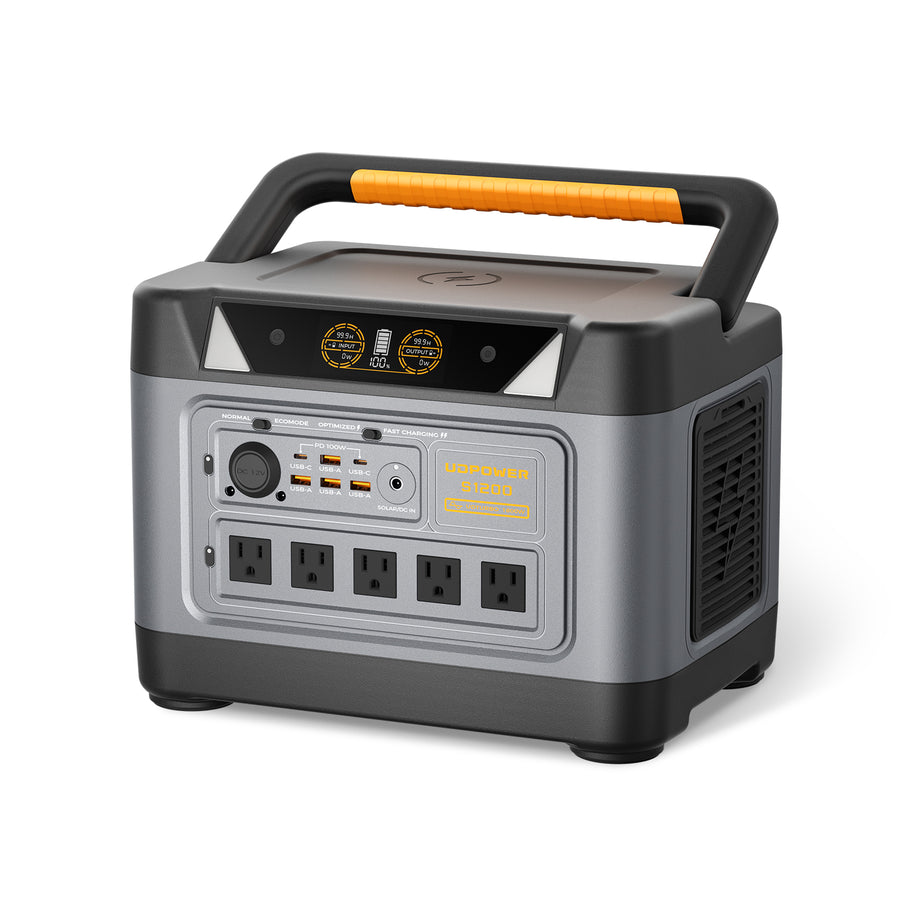
| S1200 | 1190Wh | 1200W | Fridge, Home Backup, CPAP | 400W Max | 26 lbs | From $349.99 $649.00 |
| S2400 | 2083Wh | 2400W | Microwave, Power Tools | 420W+ depending on kit | 40.8 lbs | From $699.99 $1,549.00 |
Estimates are for reference only. Real runtime varies by device cycling, startup surge, temperature, battery condition, and whether AC/DC ports are used.
Every UDPOWER unit is designed for practical off-grid recharging, from wall outlets to solar panels and car charging during travel.
Pair your station with compatible solar panels for quiet, fuel-free recharging in direct sun.
Recharge at home before a trip or restore backup power after an outage.
Use vehicle charging to top up while driving between campsites or job locations.
LFP battery chemistry is designed for long cycle life, stable performance, and dependable everyday backup power.
Clean AC output helps safely power sensitive electronics such as laptops, TVs, routers, and CPAP machines.
Built-in battery management helps monitor voltage, current, temperature, and short-circuit protection.
No gas engine, no fumes, and far less noise than a traditional generator, making it practical for indoor backup use.
Answers to common questions about choosing, using, charging, and maintaining a UDPOWER portable power station.
A portable power station is a rechargeable battery backup that stores electricity and powers devices through AC outlets, USB ports, and DC outputs. Unlike a gas generator, it does not burn fuel, produce exhaust, or require engine maintenance.
It stores energy in an internal battery and uses an inverter to convert DC battery power into AC power for household devices. Many models can also charge phones, tablets, laptops, lights, fans, CPAP machines, refrigerators, and other common appliances.
Choose by checking two numbers: battery capacity in watt-hours and AC output in watts. Capacity affects runtime, while AC output determines whether the station can start and run your device. Small electronics may only need 200W to 600W, while refrigerators, microwaves, coffee makers, or emergency backup setups usually need a higher-output model such as S1200 or S2400.
A simple estimate is: battery capacity in Wh × usable efficiency ÷ device watts = runtime hours. For example, a 1190Wh power station running a 150W refrigerator may provide roughly 6 to 7 hours of continuous compressor runtime, though real refrigerator runtime can be longer because the compressor cycles on and off.
Yes, larger models such as UDPOWER S1200 and S2400 are suitable for many full-size refrigerators. You need to check both running watts and startup surge. Runtime depends on refrigerator efficiency, room temperature, door opening frequency, and whether the compressor runs continuously or cycles.
Yes. A CPAP machine is one of the most common backup power uses. Runtime depends heavily on whether the humidifier and heated tube are enabled. Turning off heating features can significantly reduce power draw and extend runtime during an outage or camping trip.
Yes. Battery-powered portable power stations are safe for indoor use when operated according to the manual because they do not produce carbon monoxide or fuel fumes. This is one of the biggest advantages over gas generators.
For indoor backup, camping, RV use, and quiet charging, a portable power station is often more convenient because it is quiet, rechargeable, maintenance-free, and does not produce exhaust. A gas generator may still be better for very long outages or continuous high-power loads if fuel is available and outdoor operation is possible.
Yes, compatible solar panels can recharge a portable power station through its solar input. Charging speed depends on solar panel wattage, sunlight intensity, panel angle, temperature, and the power station’s maximum solar input rating.
Many UDPOWER models support pass-through use, meaning you can power devices while the station is being recharged. For best battery health, avoid constantly using heavy loads during charging unless needed, and always stay within the model’s input and output limits.
Avoid devices that exceed the power station’s rated AC output or surge capacity. High-power appliances such as large heaters, full-size air conditioners, large pumps, and some power tools may require more output than smaller battery stations can provide.
LiFePO4, also called LFP, is a lithium iron phosphate battery chemistry known for long cycle life, strong thermal stability, and reliable daily use. It is commonly preferred for portable power stations because it lasts longer than many standard lithium-ion batteries.
Store it in a cool, dry place away from direct sunlight, water, and extreme temperatures. For long-term storage, keep the battery partially charged and check it periodically instead of leaving it completely empty for months.
Most portable power stations should not be exposed to rain, water spray, or submersion because the outlets and charging ports are electrical components. Use the unit in a dry, ventilated location and protect it from heavy rain during outdoor use.
UDPOWER offers warranty coverage for its portable power stations. Warranty length and terms can vary by model and sales channel, so check the specific product page or warranty policy for the exact coverage that applies to your purchase.
Compare models, calculate runtime, and choose the UDPOWER portable power station that fits your real devices.