Why Should I Buy a Portable Power Station?
ZacharyWilliamPortable Power Station Buying Guide
Latest updated:
Quick answer
You should buy a portable power station if you want quiet, indoor-safe backup power for essentials such as phones, Wi-Fi, lights, laptops, CPAP machines, small fans, and some refrigerators during outages or outdoor trips. It is not a full replacement for a professionally installed whole-home generator, but it is one of the easiest ways to keep the things that matter most running without gasoline, fumes, or engine noise.
For most homes, the best reason is not “power everything.” It is simpler: keep communication, basic lighting, medical comfort devices, and food protection under control when the grid is down.

What a portable power station actually does
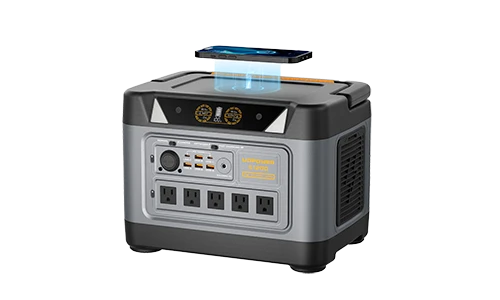
A portable power station is a rechargeable battery with built-in outlets. Instead of producing power with a gas engine, it stores electricity and lets you use that stored energy through AC outlets, USB ports, DC ports, and sometimes wireless charging.
In plain English, it is like a large power bank for real-life devices. A phone power bank can charge your phone. A portable power station can charge phones, run a router, power a laptop, support a CPAP setup, keep lights on, and run some small appliances when sized correctly.
| Power option | Best for | Main strength | Main limit | Safety note |
|---|---|---|---|---|
| Portable power station | Indoor essentials, camping, RV, apartment backup, quiet nighttime use | No gasoline engine, low noise, easy to move, solar-ready on many models | Limited by battery capacity and output wattage | Use within rated output and keep vents clear |
| Gas generator | Long outages, high-wattage outdoor loads, job sites | Can run as long as fuel is available | Noise, fuel storage, maintenance, outdoor-only operation | CDC says gasoline-powered generators should never be used inside a home, basement, or garage and should be kept away from windows, doors, and vents. Source |
| Small USB power bank | Phones, earbuds, small USB lights | Cheap and pocketable | Cannot run AC appliances or larger devices | Useful as a backup layer, not a home backup plan |
| Whole-home standby system | Central HVAC, multiple circuits, automatic backup | Best for whole-home coverage | Higher cost, installation, permits, fixed location | Should be installed by qualified professionals |
Seven practical reasons to buy a portable power station
1. You can keep communication working during an outage
During a power outage, the first thing most people notice is not the refrigerator. It is the phone battery dropping, the Wi-Fi router going dark, and not knowing what is happening next. A portable power station gives you a simple way to keep phones, tablets, laptops, radios, and routers powered long enough to check weather alerts, contact family, work remotely, or follow local updates.
2. It is much easier to use indoors than a gas generator
A battery power station does not burn fuel while powering your devices, so it does not create engine exhaust in normal use. That matters for apartments, townhomes, bedrooms, garages, shared campsites, and nighttime CPAP use. Gas generators still have their place, but they must be operated outdoors and handled carefully because of carbon monoxide risk.
3. It protects comfort and sleep, not just “emergency gear”
Real outages are not only about survival. They are about making a bad night manageable. A quiet battery station can power an LED lamp, small fan, phone, white-noise machine, or CPAP setup without running an engine outside your window. For many households, that is the difference between waiting out an outage calmly and losing an entire night of rest.
4. It can help reduce food-loss risk
Food safety is time-sensitive. FoodSafety.gov notes that a refrigerator can keep food safe for up to 4 hours during a power outage if the door stays closed, while a full freezer can hold safe temperatures longer when kept closed. Source
A portable power station cannot magically run every appliance forever, but it can help you run a refrigerator in planned windows, power a compact fridge, or keep smaller cold-storage priorities under control if the unit is sized correctly.
5. It is useful outside of emergencies
One reason portable power stations make sense is that they do not sit unused for years. You can use one for camping, tailgating, backyard movie nights, mobile work, camera gear, drone batteries, van trips, and RV weekends. That everyday usefulness makes the purchase easier to justify than a tool you only touch during storms.
6. It gives you a cleaner way to add solar charging
Many power stations can recharge from compatible solar panels. That does not mean solar will recharge instantly in every condition. Clouds, shade, panel angle, season, and cable setup all matter. But for camping or multi-day outages, a solar-ready setup gives you a way to stretch your battery instead of depending only on a wall outlet.
For a ready-made solar setup, see UDPOWER solar generator kits or compatible solar panels.
7. It is easier to test before you need it
The best backup plan is one you have already tested. With a portable power station, you can plug in your router, CPAP, fridge, fan, or laptop on a normal day and see the real input/output reading. That gives you a much better plan than guessing during a storm.
When you should not buy a portable power station
A portable power station is not the right answer for every home. You may need a different backup solution if your goal is to run central air conditioning, electric heat, an electric range, a large well pump, a hardwired 240V circuit, or your entire house through a transfer switch.
Best mindset
Buy a portable power station for priority loads, not for “everything.” The smartest setup usually keeps a short list running: phone, router, lights, CPAP, fan, laptop, and possibly refrigerator support.
| Device or goal | Portable power station fit? | Why | Better option if needed |
|---|---|---|---|
| Phones, tablets, router, lights | Excellent | Low wattage and easy to prioritize | Portable power station or USB power bank |
| CPAP machine | Good when sized and tested | Runtime depends heavily on humidifier and heated hose use | Portable power station plus device-specific testing |
| Mini fridge or camping fridge | Good | Moderate power draw and cycling behavior | Medium or large power station |
| Full-size refrigerator | Possible with the right unit | Startup surge and cycling load must be considered | Higher-output power station or generator |
| Microwave, coffee maker, kettle, hair dryer | Short-use only on larger units | These loads pull high watts and drain batteries fast | Use briefly or choose a larger backup system |
| Central AC, electric furnace, whole home | Usually not the right tool | High continuous load and hardwired circuits | Installed standby generator or home battery system |
How to choose the right size
Do not start with the biggest number on the box. Start with what you need to run.
- List the devices you care about. Example: phone, router, LED light, CPAP, fan, fridge.
- Find the watts. Check the label, the power brick, the product manual, or use a plug-in watt meter.
- Estimate hours of use. A router may run all day. A microwave may run for only a few minutes.
- Choose capacity in Wh. Watt-hours are the “fuel tank.” More Wh means longer runtime.
- Check output wattage. Output wattage is the “engine size.” Your power station must handle the device’s running watts and startup surge.
Simple formula
Estimated runtime = usable battery watt-hours ÷ device watts
For planning, use about 85% of the listed battery capacity to leave room for inverter loss and reserve. Example: a 1,190Wh power station gives roughly 1,011Wh of planning energy. A 60W load would run for about 16.8 hours in a simple estimate.
For deeper runtime planning, use the UDPOWER battery runtime estimator guide.
| Battery size | Best buyer | Good for | Not ideal for |
|---|---|---|---|
| Under 300Wh | Solo campers, phone/laptop backup, short trips | Phones, cameras, lights, laptop charging, small USB gear | Long fridge runtime or high-watt appliances |
| 300–700Wh | Weekend campers, apartment backup, light outage kits | Router, laptop, lights, fan, CPAP with careful settings, compact fridge support | Heavy appliances or multi-day refrigerator backup |
| 1,000–1,500Wh | Home essentials, RV weekends, longer camping trips | Router, lights, CPAP, fan, laptop, fridge support, short high-watt use | Whole-home backup or central HVAC |
| 2,000Wh+ | Longer outages, family camping, heavier appliance support | Multiple essentials, larger fridges, more AC output headroom, longer runtime | Hardwired whole-home loads without proper system design |
Realistic runtime examples
The table below uses a planning estimate of 85% usable energy. Actual runtime changes with device age, startup surge, temperature, settings, and whether the device cycles on and off.
| Device | Planning watts | C400 256Wh | C600 596Wh | S1200 1,190Wh | S2400 2,083Wh | Notes and source |
|---|---|---|---|---|---|---|
| Wi-Fi router | 10W | About 21.8 hrs | About 50.7 hrs | About 101 hrs | About 177 hrs | Check your router label; some modem/router combos use more. |
| LED lamp | 10W | About 21.8 hrs | About 50.7 hrs | About 101 hrs | About 177 hrs | Low-watt lighting is one of the easiest outage wins. |
| CPAP without heated humidifier | 30W | About 7.3 hrs | About 16.9 hrs | About 33.7 hrs | About 59 hrs | Settings vary. Test your exact machine before depending on it overnight. See UDPOWER's CPAP outage guide. |
| Laptop or small work setup | 60W | About 3.6 hrs | About 8.4 hrs | About 16.9 hrs | About 29.5 hrs | USB-C charging may be more efficient than AC charging when supported. |
| Box fan or small fan | 50W | About 4.3 hrs | About 10.1 hrs | About 20.2 hrs | About 35.4 hrs | Fan speed changes runtime noticeably. |
| Mini fridge / camping fridge | 60W average | About 3.6 hrs | About 8.4 hrs | About 16.9 hrs | About 29.5 hrs | Real runtime depends on compressor cycling, ambient temperature, and how often the lid or door opens. |
| Full-size refrigerator | 150W average planning load | Not recommended | About 3.4 hrs | About 6.7 hrs | About 11.8 hrs | Many fridges have higher startup surge. EnergySage notes home refrigerators commonly use 300–800W at a given moment. Source |
| Short-use kitchen appliance | 800–1,500W | Not suitable | Usually not suitable | Short use only if within rating | Better fit for short use | High-watt heating appliances drain batteries quickly. Use only within the station's rated AC output. |
For outage planning, think in layers. Run low-watt essentials continuously, then use higher-watt appliances in short windows. A refrigerator may not need to run every minute if the doors stay closed, but it does need enough startup support and a plan.
Where UDPOWER fits
UDPOWER offers portable power stations for different levels of backup: compact everyday charging, weekend camping, home essentials, and heavier outage support. The best model depends on your priority load list.
 Light and compact
UDPOWER C400 Portable Power Station
Best for: phones, laptops, small lights, mobile work, short camping trips, and light backup.
Official specs: 256Wh capacity, 400W output, LiFePO4 battery, 4,000+ cycles, fast charging listed at 1.5 hours.
Why buy this size: choose the C400 if you want something easy to carry and mainly need charging, lighting, and low-watt essentials—not refrigerator backup for long outages.
View UDPOWER C400 Weekend backup
UDPOWER C600 Portable Power Station
Best for: weekend camping, router backup, laptops, lights, fans, cameras, small fridges, and lighter CPAP planning.
Official specs: 596Wh capacity, 600W rated output, 1,200W peak, LiFePO4 battery, 4,000+ cycles, multiple output ports including AC, USB-C, USB-A, and 12V car outlet.
Why buy this size: the C600 is a practical middle ground when a phone power bank is too small but you do not need a large home-backup unit.
View UDPOWER C600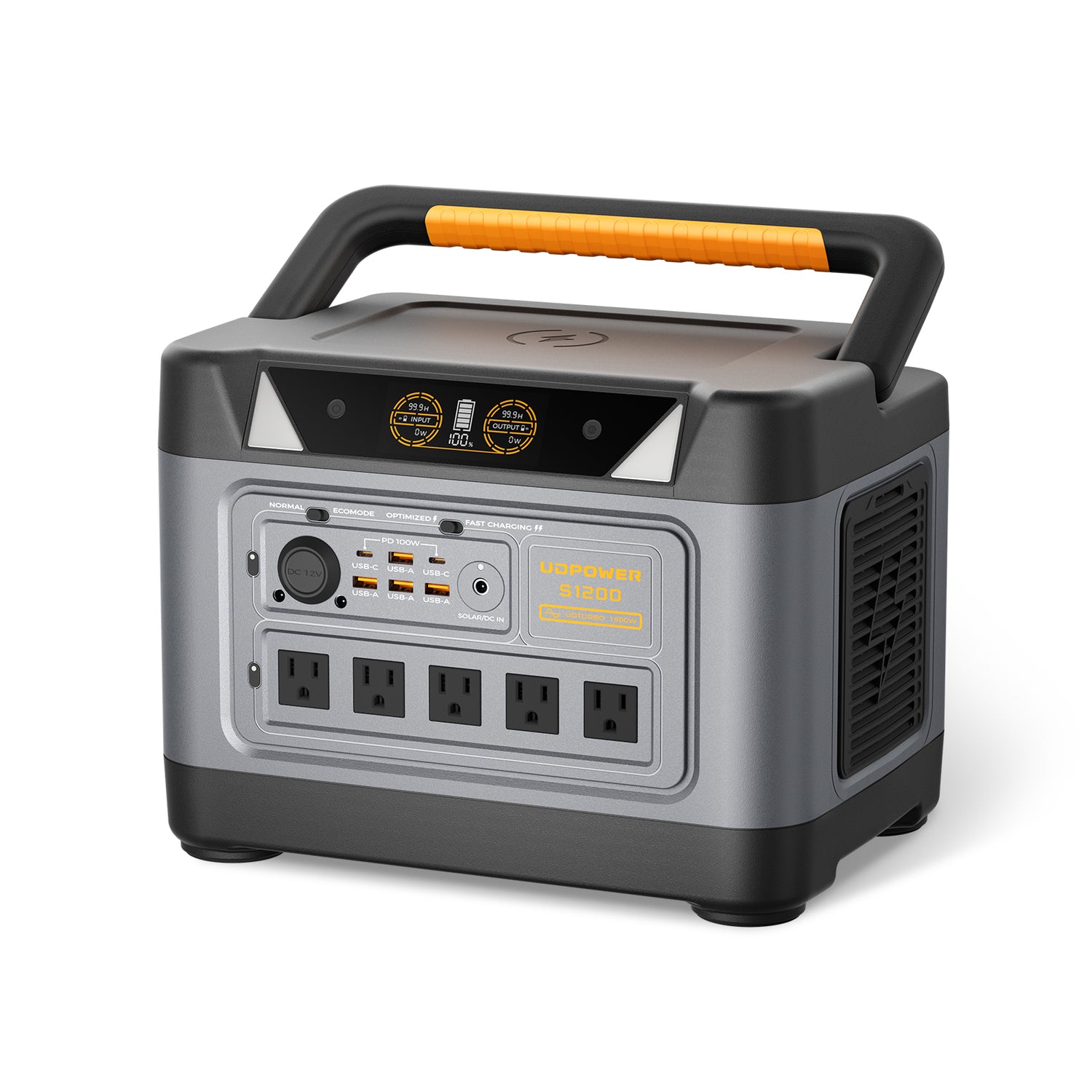 Home essentials pick
UDPOWER S1200 Portable Power Station
Best for: home outage essentials, RV weekends, CPAP backup, router and laptop support, fans, and refrigerator planning when the load is within rating.
Official specs: 1,190Wh capacity, 1,200W rated pure sine wave AC output, UDTURBO support up to 1,800W, LiFePO4 battery, UPSPRIME switchover listed at under 10ms, and 26.0 lb listed weight.
Why buy this size: the S1200 is the size many buyers should start considering when the goal is not just charging devices, but keeping several important home essentials running.
View UDPOWER S1200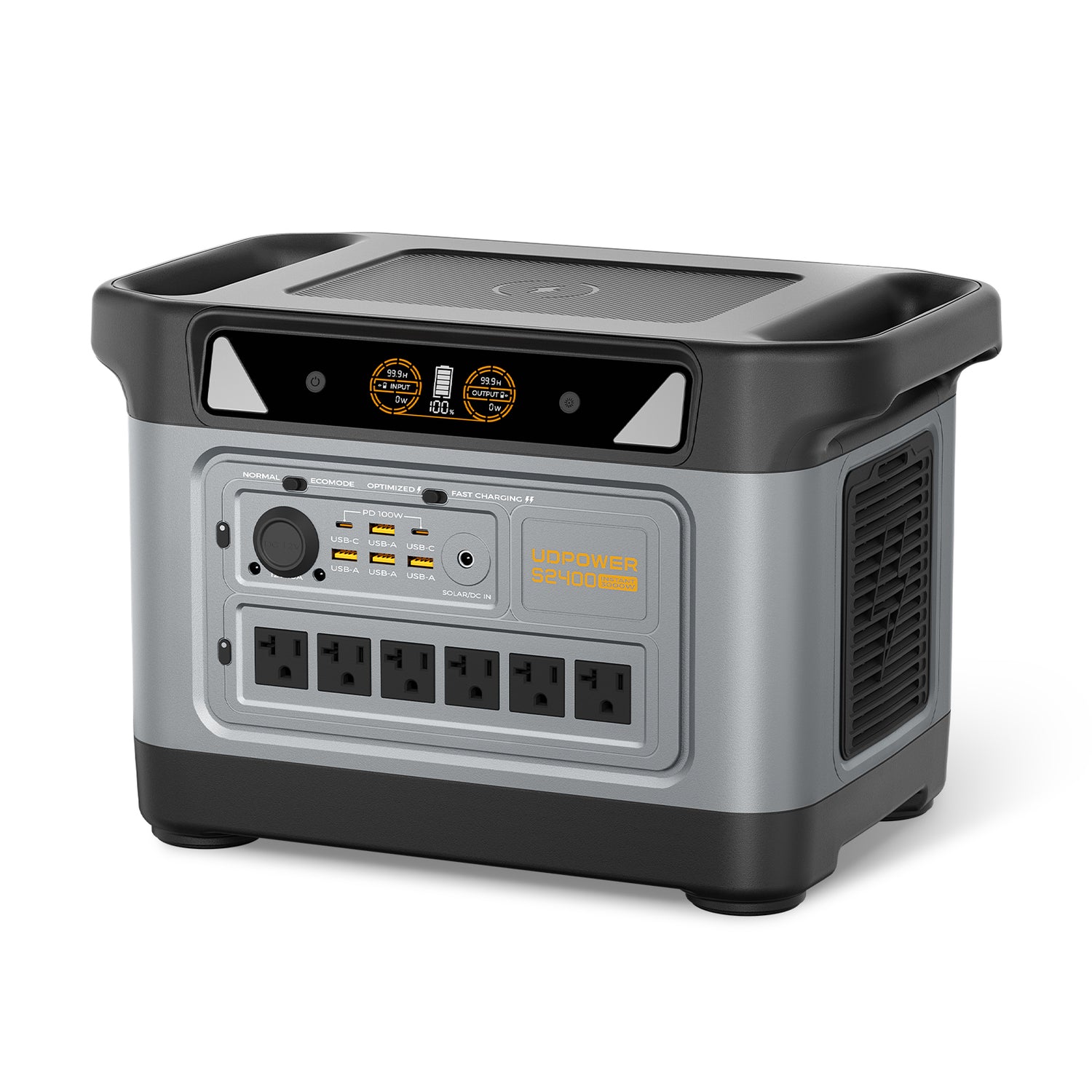 Higher-capacity backup
UDPOWER S2400 Portable Power Station
Best for: longer outages, family camping, heavier appliance support, larger refrigerators, multiple devices, and users who want more output headroom.
Official specs: 2,083Wh capacity, 2,400W pure sine wave AC output, 6 AC outlets, UDTURBO surge support up to 3,000W, USB-C up to 100W, wireless charging up to 15W, and UPS mode with response time listed at 10ms or less.
Why buy this size: choose the S2400 if you want more runtime and more output margin for appliances that are too demanding for smaller stations.
View UDPOWER S2400| Model | Capacity | Rated output | Best fit | Official product page |
|---|---|---|---|---|
| UDPOWER C400 | 256Wh | 400W | Light backup, travel, small electronics | C400 product page |
| UDPOWER C600 | 596Wh | 600W | Weekend camping, router, fan, laptop, compact fridge support | C600 product page |
| UDPOWER S1200 | 1,190Wh | 1,200W | Home essentials, CPAP, fridge planning, RV weekends | S1200 product page |
| UDPOWER S2400 | 2,083Wh | 2,400W | Longer outages, heavier appliances, more runtime margin | S2400 product page |
Best use cases by situation
For home power outages
Buy a power station if your outage plan includes communication, food protection, sleep, and basic comfort. A sensible priority list might look like this:
- Tier 1: phone, router, LED light, radio, medical comfort device such as CPAP
- Tier 2: fan, laptop, small fridge, battery chargers
- Tier 3: refrigerator windows, short appliance use, comfort extras
Read next: Portable Power Station Runtime Planning for Outages.
For camping
A portable power station is often better than a gas generator at a campsite because it is quiet, easy to use, and does not require fuel. It can run lights, phones, laptops, fans, cameras, drone batteries, mini fridges, and some CPAP setups depending on size.
See the UDPOWER portable power station for camping guide for more camping-specific sizing ideas.
For RV weekends
For RV use, a power station is most useful as a flexible backup for small appliances, electronics, lighting, and off-grid charging. It is not a substitute for a full RV electrical system, but it can reduce generator runtime and give you quiet power at night.
For apartments and renters
Apartment users often cannot install a standby generator or store fuel safely. A portable power station is one of the most practical backup options because it can sit in a closet, charge from a wall outlet, and power essentials indoors when needed.
For remote work
If your job depends on a laptop and internet connection, a power station can keep your router and work setup running during short outages. Even a few extra hours can save a workday.
Common mistakes to avoid
| Mistake | What happens | Better approach |
|---|---|---|
| Buying only by capacity | You may have enough battery but not enough output wattage | Check both Wh capacity and W output before buying |
| Ignoring startup surge | Refrigerators, pumps, and compressors may fail to start | Check surge requirements and test your actual appliance |
| Running high-watt heat appliances too long | Battery drains very quickly | Use microwaves, kettles, heaters, and hair dryers only briefly, if within rating |
| Waiting until the storm arrives to test | You discover cable, wattage, or runtime problems too late | Do a 30-minute test with your real devices |
| Assuming solar always delivers the panel rating | Recharge takes longer than expected | Plan for real sunlight, panel angle, shade, and season |
| Trying to power the whole house | You overload the station or drain it too fast | Build a short priority-load plan |
So, is it worth buying one?
Yes, a portable power station is worth buying if you value quiet backup power, simple setup, and flexible use beyond emergencies. The best buyers are people who want to keep essential devices running during outages, camp without generator noise, power CPAP or Wi-Fi backup, protect food for a short outage window, or work through brief grid interruptions.
The purchase makes less sense if your only goal is to run central HVAC, large hardwired appliances, or a whole home for days without careful load planning. In that case, compare a professionally installed standby system, home battery system, or generator setup.
For most households, the sweet spot is simple: buy enough capacity to cover the devices you actually care about, test the setup before a storm, and add solar charging if you expect longer off-grid use.
Choose your backup power size
Start with the devices you need to run, then choose the UDPOWER model that gives you enough capacity and output headroom.
Shop portable power stations View solar generator kits Use the runtime planning guideFAQ
Why should I buy a portable power station instead of a generator?
Buy a portable power station if you want quiet, indoor-friendly battery backup for essentials. A gas generator is better for long outdoor runtime and larger loads, but it requires fuel, maintenance, and careful outdoor-only operation because of exhaust risk.
Can a portable power station run a refrigerator?
Yes, some portable power stations can run a refrigerator, but the unit must handle both running watts and startup surge. Runtime depends on fridge size, age, temperature, door openings, and compressor cycling. For full-size refrigerators, a larger unit such as the UDPOWER S1200 or S2400 is usually a better starting point than a compact model.
Can I use a portable power station indoors?
Yes, portable power stations are commonly used indoors because they store battery power instead of running a gasoline engine. Keep the unit dry, ventilated, and within its rated output. Do not block vents or use damaged cables.
How many watt-hours do I need?
Add up the watts of the devices you want to run and multiply by the number of hours you need them. Then add extra room for inverter loss and reserve. For example, a 60W load for 10 hours needs 600Wh before losses, so a larger battery is safer than a 600Wh unit if you need the full 10 hours.
Is a portable power station good for CPAP backup?
Yes, it can be a good CPAP backup, but you should test your exact machine. Heated humidifiers and heated hoses can use much more power. If runtime matters, many users plan around lower-power settings and confirm performance before an outage.
Can solar panels recharge a portable power station?
Many portable power stations support solar charging, but the panel must match the station’s input specifications. Real solar input depends on sunlight, panel angle, temperature, shade, season, and cable setup.
What size should I buy for camping?
For phone charging, lights, and a laptop, a compact model can work. For a mini fridge, fan, projector, CPAP, or family camping, a 500Wh to 1,200Wh class unit is usually more practical. For longer trips or heavier appliance use, consider a higher-capacity model or a solar generator kit.
Can a portable power station power my whole house?
Usually no. A portable power station is best for selected essentials, not whole-home backup. If you want to power central HVAC, hardwired 240V loads, or many circuits automatically, look at professionally installed backup systems.
Sources and related reading
UDPOWER product and collection pages
- UDPOWER Portable Power Stations
- UDPOWER C400 Portable Power Station
- UDPOWER C600 Portable Power Station
- UDPOWER S1200 Portable Power Station
- UDPOWER S2400 Portable Power Station
- UDPOWER Solar Generator Kits
- UDPOWER Solar Panels
Useful UDPOWER guides
- Battery Runtime Basics: Watts to Watt-hours
- Portable Power Station Runtime Planning for Outages
- CPAP Battery Backup During a Power Outage
- Portable Power Station for Camping