Skip to content
Quiet Campsite Power 5-Year Warranty

Portable Power Station for Camping

Power your campsite without fuel fumes or loud generator noise. UDPOWER LiFePO4 portable power stations help run phones, lights, fans, laptops, CPAP machines, camping fridges, cameras, and small campsite essentials.

battery_charging_fullLiFePO4 Battery
sunnySolar Ready
ecoNo Fuel Fumes

Camping Power Stations

Portable power options for weekend tent camping, CPAP users, camping fridges, family trips, RVs, and overland travel.

Expedition

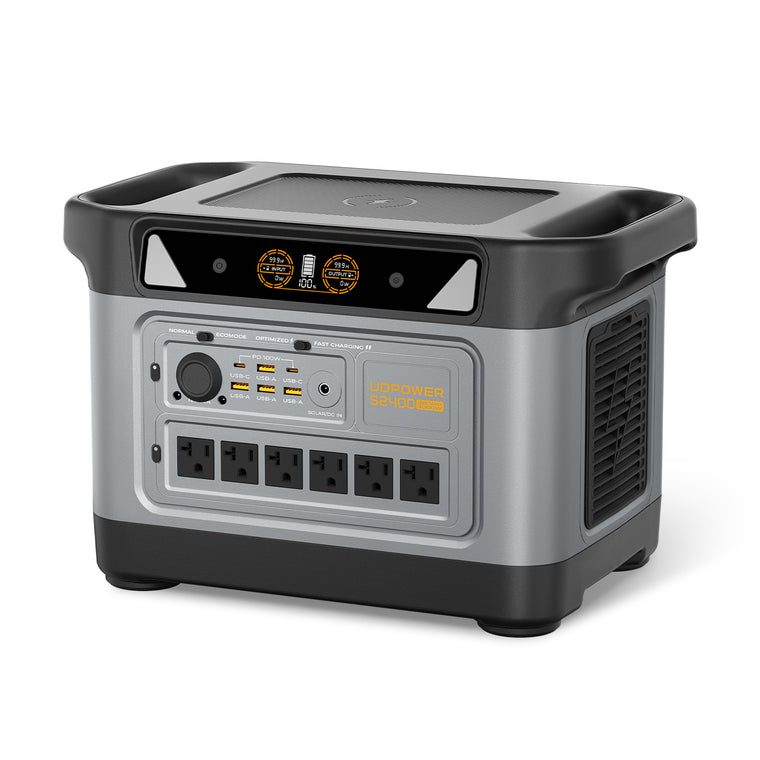
UDPOWER S2400

2083Wh / 2400W rated output

Longest runtime for RV, overland, and larger campsite power setups.

  • check_circle2083Wh high-capacity battery
  • check_circle2400W rated / 3000W surge
  • check_circleBest for high-wattage camp appliances
Family Camping

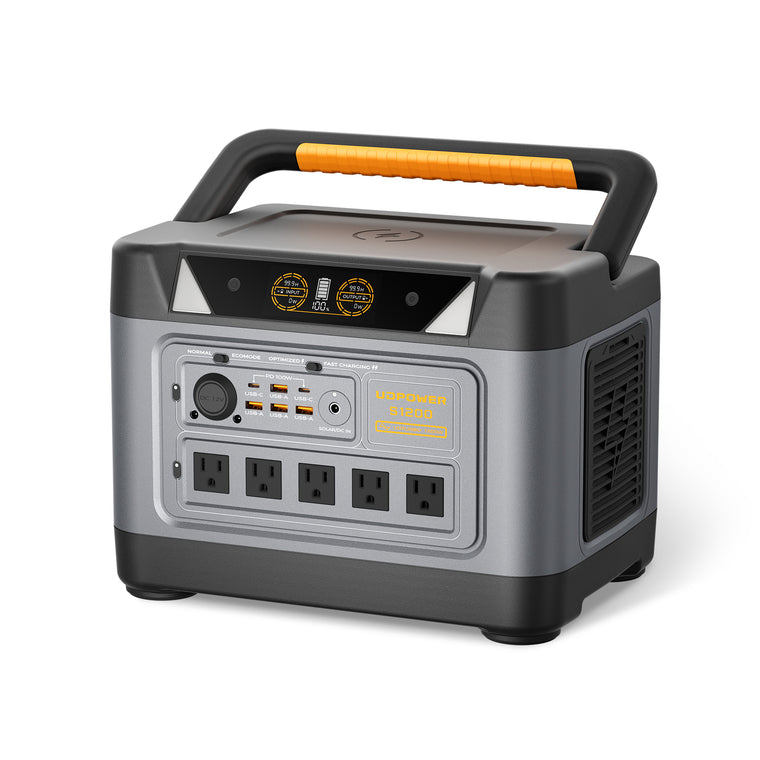
UDPOWER S1200

1190Wh / 1200W rated output

High-capacity option for family camping, CPAP plus extra essentials, and longer trips.

  • check_circle1190Wh LiFePO4 battery
  • check_circle1200W rated / 1800W surge
  • check_circleUPSPrime <10 ms backup support
Best Seller

UDPOWER C600

596Wh / 600W rated output

Balanced capacity for CPAP users, laptops, fans, and small camping fridges.

  • check_circle596Wh LiFePO4 battery
  • check_circle600W rated / 1200W surge
  • check_circleMultiple USB, AC, and 12V outputs
Compact

UDPOWER C400

256Wh / 400W rated output

Best for solo weekend camping, phones, lights, cameras, and laptops.

  • check_circle6.88 lb portable size
  • check_circleGood for light campsite loads
  • check_circleUp to 800W peak in UD-TURBO mode

Camping Power Advisor

Find the Right Camping Power Station

Select your camping style, see the typical devices and estimated load, then get a recommended UDPOWER model based on trip length and 90% usable battery efficiency.

1
Choose your camping style

Each setup loads a realistic campsite device list.

2
Set your trip length

Longer trips require more usable watt-hours.

1 day 7 days

Selected setup

Weekend Tent

Typical campsite devices
Daily use
Daily energy
Trip energy
Efficiency 90%

Recommended model

Estimated continuous runtime
Capacity match Higher = longer runtime

Runtime estimates are for planning only. Real results vary by device cycling, temperature, solar input, cable efficiency, and whether devices run continuously. For fridges, the compressor cycles on and off, so real-world runtime can be longer than a continuous-watt estimate.

Quick Comparison

ModelCapacityAC OutputBest UseRecommended Trip
C400256Wh400W rated / 800W peakPhones, laptops, lights, fans1–2 day weekend
C600596Wh600W rated / 1200W surgeCPAP, laptops, small camping fridge2–3 day trip
S12001190Wh1200W rated / 1800W surgeFamily camping, fridge, coffee maker, CPAP4–5 day family trip
S24002083Wh2400W rated / 3000W surgeRV, overland, high-wattage camp appliances7+ day expedition

Power Every Part of Your Campsite

Run the gear that makes camping safer, quieter, and more comfortable.

tips_and_updates

Lighting

Run string lights, area lanterns, and headlamp chargers without generator noise.

kitchen

Camping Fridge

Keep perishables cold without relying on melting ice.

monitor_heart

CPAP

Quiet, reliable power for overnight therapy in tents, cabins, RVs, and campsites.

devices

Electronics

Charge drones, cameras, laptops, phones, tablets, and speakers.

thermostat

Comfort

Power small fans, electric blankets, and other comfort essentials.

restaurant

Cooking

Brew coffee or run small high-wattage cooking gear with S-series models.

Endless Power with Versatile Recharging

Recharge before you leave, top up while driving, or add compatible solar panels for longer off-grid camping.

Solar Charging

Use compatible solar panels during daylight. Real input depends on sun, angle, temperature, and the model’s input limit.

Car Recharging

Top up through the vehicle 12V outlet while driving between campsites or trailheads.

AC Wall Outlet

Fully charge at home before departure. This is usually the fastest and most predictable recharge method.

Power Station vs. Gas Generator

check_circleUDPOWER Portable Station

  • volume_off
    Whisper Quiet

    No mechanical engine noise, ideal for campsite quiet hours.

  • nest_eco_leaf
    Zero Fumes

    No fuel exhaust, making battery power far more campsite-friendly.

  • build
    Low Maintenance

    No oil changes, fuel stabilizer, spark plugs, or gas cans.

cancelTraditional Gas Generator

  • volume_up
    Extremely Loud

    Engine noise can disturb nearby campers and wildlife.

  • co2
    Harmful Exhaust

    Gas generators must stay outdoors and away from tents due to carbon monoxide risk.

  • oil_barrel
    Messy & Heavy

    Requires fuel storage, oil, and regular engine service.

Camping Power Prep

Camping Power Prep Checklist

Before leaving home, use this quick checklist to avoid under-sizing your power station, missing cables, or arriving at camp without enough usable battery capacity.

Calculate Total Wattage

Add up the running watts of the devices you plan to use at the same time, then leave margin for startup surge.

Verify Cable Compatibility

Pack the right AC adapters, USB-C cables, DC cables, and any fridge or CPAP-specific power cords before leaving home.

Check Solar Panel Connectors

Confirm your solar panel connector, voltage, and input wattage match the selected UDPOWER model before relying on solar charging.

Perform a CPAP Dry Run

If you camp with a CPAP, run it overnight at home using your intended humidifier and heated tube settings to confirm real runtime.

Charge to 100% Before Departure

Start your trip with a full battery. For multi-day camping, recharge during sunny hours or while driving when possible.

Plan for Temperature Safety

Keep the station dry, shaded, and ventilated. Avoid leaving it in direct sun, heavy rain, or extreme temperatures.

Tip: Test your full setup at home before the trip. Run your fridge, CPAP, lights, or fan from the power station for several hours so you know the real runtime before you depend on it outdoors.

Camping Power Learning Center

Plan a Better Camping Power Setup

Use these UDPOWER camping guides to size your battery, compare power stations with gas generators, estimate campsite runtime, plan solar recharging, and choose the right model for tent camping, CPAP camping, RV trips, and overlanding.

Sizing

How Many Wh Do I Need for Camping?

A practical watt-hour sizing guide for weekend tents, CPAP camping, portable fridges, family trips, and off-grid camping setups.

Best for: choosing C400, C600, S1200, or S2400

Camping Basics

25 Reasons Why You Need a Portable Power Station for Camping

See why campers use battery power for lights, fans, phones, laptops, CPAP machines, fridges, cameras, comfort gear, and solar charging.

Best for: first-time camping power buyers

Comparison

Portable Power Station vs Generator for Camping

Compare quiet battery power with gas generators for tents, RVs, campsites, medical gear, food cooling, and campground noise limits.

Best for: deciding between battery and gas

Product Guide

Shop Portable Power Stations for Camping

Compare UDPOWER models by capacity, rated output, weight, solar readiness, and camping use case before choosing your setup.

Best for: model comparison and buying

Outdoor

Portable Power Stations for Outdoor Use

Explore lightweight and high-capacity options for camping, RV trips, outdoor work, tailgating, overlanding, and off-grid travel.

Best for: outdoor and travel scenarios

Solar Recharging

Shop Solar Generator Kits

Pair a portable power station with solar panels for longer camping trips, daytime recharging, and quieter multi-day power.

Best for: camping solar setups

Output Guide

What Can a 500W Power Station Run?

Learn what a compact power station can handle, including phones, tablets, laptops, LED lights, fans, CPAP machines, TVs, and camera gear.

Best for: light camping loads

High Output

What Can a 2000W Portable Power Station Run?

Understand when a larger station makes sense for camping fridges, coffee makers, microwaves, CPAP machines, laptops, fans, and RV essentials.

Best for: S1200 and larger setups

Not sure which model fits your gear? Use the Camping Power Advisor above, then compare recommended UDPOWER models before buying.

Compare Camping Models

Camping Power FAQs

Common Questions About Camping Power Stations

Answers to common questions about choosing, using, charging, and protecting a portable power station during tent camping, RV trips, overlanding, and off-grid stays.

Can I use a portable power station inside my tent?

Yes. A battery-powered portable power station can be used indoors or inside a tent when operated according to the manual because it does not produce fuel fumes or carbon monoxide. Keep the unit dry, ventilated, and away from bedding or fabric that could block vents.

Is a portable power station better than a gas generator for camping?

For most campsite needs, a portable power station is quieter, easier to use, and safer around tents than a gas generator because it does not burn fuel or create exhaust. A gas generator may still be useful for long high-power loads, but it must run outdoors far from sleeping areas and may not be allowed during campground quiet hours.

What size power station do I need for camping?

Choose by matching both capacity and output. Capacity in watt-hours controls runtime, while AC output in watts controls what devices you can run. For light weekend camping, C400 or C600 may be enough. For CPAP, fridges, and family camping, C600 or S1200 is usually more practical. For RV, overlanding, or longer off-grid stays, S1200 or S2400 is a better fit.

How do I estimate camping runtime?

Use this simple formula: battery capacity in Wh × 90% usable efficiency ÷ device watts = estimated runtime. For example, a 596Wh C600 running a 45W average camping fridge load is roughly 596 × 0.9 ÷ 45, or about 12 hours of continuous load. Real fridge runtime can be longer because the compressor cycles on and off.

How long will a power station run a 12V camping fridge?

It depends on the fridge’s average wattage, ambient temperature, insulation, set temperature, and how often you open it. A 40W to 60W average camping fridge may run for about half a day on a C600 under continuous-load math, longer in real cycling use, and much longer on S1200 or S2400. For food safety on multi-day trips, consider solar recharging during the day.

Can a UDPOWER power station run a CPAP machine while camping?

Yes. CPAP machines are a common camping use case for portable power stations. Runtime depends heavily on humidifier and heated tube settings. A CPAP without heating may use around 10W to 20W, while humidifier and heated tubing can raise consumption significantly. For overnight CPAP camping, C600 is a practical starting point, while S1200 gives more margin.

Can I recharge the power station with solar panels at camp?

Yes, compatible solar panels can recharge a UDPOWER power station during the day. Solar charging speed depends on panel wattage, direct sunlight, panel angle, shade, temperature, and the model’s solar input limit. For best results, place the panel in full sun and adjust the angle while watching the input watts on the display.

Can I charge a portable power station from my car?

Yes, many portable power stations can recharge from a 12V vehicle outlet using the compatible car charging cable. Car charging is slower than wall charging or strong solar input, but it is useful while driving between campsites. Do not drain your vehicle battery by charging for long periods with the engine off.

Are UDPOWER portable power stations waterproof?

No. Portable power stations should be protected from rain, water spray, puddles, and submersion. Use the unit in a dry, ventilated location such as under an awning, inside a vehicle, or inside a tent vestibule where it will not be exposed to direct rain. Keep all outlets and charging ports dry.

Can I leave the power station outside overnight?

It is better to keep the power station sheltered and dry overnight. Avoid direct rain, condensation, standing water, and extreme cold or heat. If you need to run a fridge or CPAP overnight, place the station somewhere ventilated, stable, and protected from moisture.

Can one power station run multiple camping devices at once?

Yes, as long as the combined running wattage stays within the station’s rated output and any startup surge remains within the model’s surge capability. Add up your fridge, lights, fans, CPAP, laptop, and chargers before the trip. Running many devices at once also shortens total battery runtime.

Can I power a coffee maker while camping?

Some coffee makers draw 600W to 1000W or more, so you need a power station with enough AC output. Smaller models are better for low-wattage devices, while S1200 or S2400 is more suitable for higher-draw campsite appliances. Always check the wattage label on your coffee maker before use.

Can a portable power station run an electric blanket?

Yes, many electric blankets can run from a power station, but wattage varies widely. A 50W blanket uses far less energy than a 150W blanket. For overnight use, calculate expected runtime and avoid covering the power station itself, because it needs ventilation.

What devices should I avoid using with a camping power station?

Avoid devices that exceed the power station’s rated output or surge limit. Large space heaters, full-size air conditioners, large pumps, and some high-power cooking appliances may drain the battery quickly or exceed the inverter rating. For heating, insulated sleeping gear is usually more efficient than electric resistance heat.

How much solar do I need for multi-day camping?

Start by estimating your daily watt-hours. If your campsite uses about 600Wh per day, you need enough solar input to replace that during daylight, plus extra margin for clouds and imperfect panel angle. A larger power station paired with solar panels gives more flexibility for fridges, CPAP machines, laptops, and longer trips.

Can I use third-party solar panels?

Third-party solar panels may work if the connector type, open-circuit voltage, current, and wattage stay within the power station’s input specifications. Do not mix incompatible panels or exceed the input limit. When unsure, use the solar panels and cables recommended for your UDPOWER model.

Should I use AC or DC power for camping devices?

DC output can be more efficient for compatible devices such as some fridges and lights because it avoids inverter conversion loss. AC output is more convenient for devices with standard wall adapters, such as laptops, CPAP machines, and small appliances. Use the method that matches your device safely and correctly.

How should I store and transport a power station for camping?

Transport it upright in a dry, stable location where it will not slide or be crushed by heavy gear. Avoid leaving it in a hot vehicle for long periods. For storage between trips, keep it in a cool, dry place and check the battery periodically instead of leaving it completely empty for months.

Runtime estimates are for planning only and assume about 90% usable efficiency. Actual camping runtime varies by device cycling, temperature, solar input, cable efficiency, and how many devices run at the same time.

Build a Quieter, Cleaner Camping Power Setup

Choose a UDPOWER portable power station for quiet campsite power without fuel fumes, loud engines, or complicated setup.

My Cart(0 items)

Our Best Sellers
  • Save 19% OFF
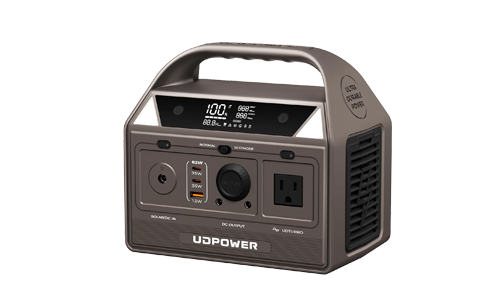
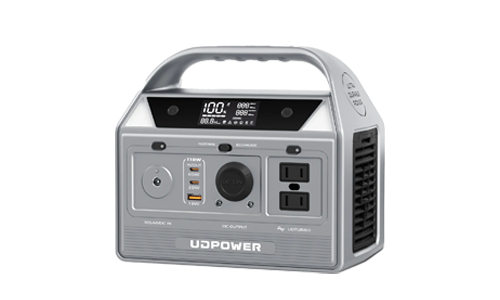
    UDPOWER C400 Portable Power Station
    256Wh 400W 6.88 lbs
    $169.99 $209.99
  • Save 19% OFF
    UDPOWER C600 Portable Power Station
    596 Wh 600W 12.3 lbs
    $289.99 $359.00
  • Save 19% OFF
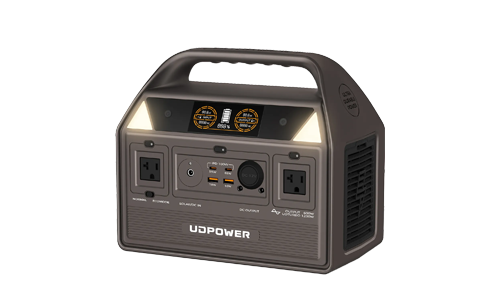
    UDPOWER C600 Portable Power Station - Brown
    596 Wh 600W 12.3 lbs
    $289.99 $359.00
  • Save 19% OFF
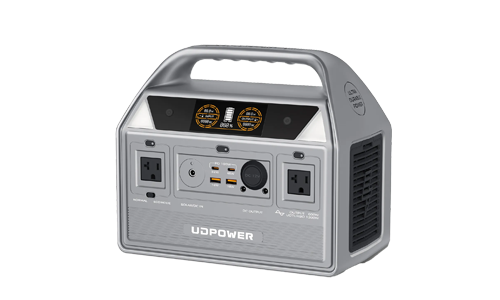
    UDPOWER C600 Portable Power Station - Grey
    596 Wh 600W 12.3 lbs
    $289.99 $359.00