Standby Power for Cold Storage: Backup Sizing Guide
Learn how to choose standby power for refrigerators, freezers, commercial reach-in units, and other cold-storage equipment. This guide explains compressor startup surge, battery-capacity calculations, outage runtime, food-safety temperature limits, backup-system options, and practical UDPOWER product recommendations.
A cold-storage backup plan has one job: keep the stored product within its safe temperature range until normal power returns or the inventory can be moved. The right solution may be a portable battery, a UPS, a standby generator, or an engineered battery system. The correct choice depends on the refrigeration unit’s startup surge, daily energy use, outage duration, temperature limits, and value of the inventory.
Quick answer: What standby power is best for cold storage?
A portable power station can be a practical standby source for one household refrigerator, chest freezer, portable refrigerator, small medical refrigerator, or temperature-monitoring system—provided its AC output can handle compressor startup and its battery has enough watt-hours for the required runtime.
A commercial reach-in cooler may require a larger battery or generator after its real power use has been measured. Walk-in coolers, walk-in freezers, processing rooms, and refrigerated warehouses normally need a professionally sized generator or commercial battery energy-storage system rather than a consumer portable power station.
Do not select backup power from running watts alone. Check all four numbers: running power, startup surge, energy use over time, and required outage duration.

What Does Standby Power for Cold Storage Mean?
Standby power is a secondary source of electricity that becomes available when utility power fails. In a cold-storage application, that secondary source may need to run more than the compressor. Depending on the equipment, it may also power evaporator fans, condenser fans, electronic controls, alarms, door heaters, defrost systems, pumps, lighting, network equipment, and remote temperature monitors.
That is why “the compressor uses 300 watts” is not always enough information. A commercial refrigerator may briefly use much more power during startup, consume additional energy during a defrost cycle, or run almost continuously in a hot kitchen. Two similar-looking freezers can therefore need very different backup systems.
Cold storage has two separate backup requirements
- Power compatibility: The backup source must start and run the refrigeration equipment without overload, voltage instability, or an inverter shutdown.
- Energy capacity: The battery or generator must keep supplying power for the length of the expected outage.
Think of watts as “Can it run?” and watt-hours as “How long can it run?”
A 2,400W inverter may start a refrigerator that a 600W inverter cannot, but runtime still depends on the battery’s watt-hour capacity and the refrigerator’s average energy use.
Cold-Storage Temperature and Outage Limits
A backup-power decision should begin with the product’s temperature limit, not the battery. Food, vaccines, medicines, flowers, laboratory materials, and frozen goods do not all have the same allowable temperature range or the same response procedure after a temperature excursion.
| Storage application | General temperature target | What an outage means | Planning source |
|---|---|---|---|
| Household refrigerator | 40°F or below | An unopened refrigerator generally keeps food cold for about four hours. Temperature should still be checked before deciding whether food is safe. | FoodSafety.gov outage guidance |
| Household freezer | 0°F or below for normal storage | A full unopened freezer may hold temperature for about 48 hours; a half-full freezer for about 24 hours. | FDA food and water safety |
| Restaurant or retail TCS food | Commonly 41°F or below, subject to local rules | The business needs temperature logs, a written corrective-action plan, and local health-code compliance. Household “four-hour” advice should not replace the business’s food-safety procedures. | FDA Food Code |
| Vaccines | Depends on the vaccine and storage unit | Keep the door closed, continue digital temperature monitoring, follow the emergency SOP, and contact the appropriate immunization program or manufacturer after an excursion. | CDC emergency vaccine storage |
| Laboratory or pharmaceutical inventory | Product-specific | Use the facility’s validated temperature range, alarm system, backup plan, and excursion procedure. A generic refrigerator runtime estimate is not sufficient. | ENERGY STAR laboratory refrigeration overview |
These are general planning references. Product labels, facility procedures, local health requirements, and manufacturer instructions take priority.
Do not use smell, taste, or appearance alone to decide whether temperature-abused food is safe. Use recorded temperatures and the applicable food-safety guidance.
Which Backup System Fits Each Type of Cold Storage?
The phrase “cold storage” can describe anything from a 12V camping refrigerator to a refrigerated warehouse. Those loads should not be treated as one category.
| Cold-storage type | Typical backup objective | Most practical standby option | Portable power station fit |
|---|---|---|---|
| 12V portable refrigerator or cooler | Camping, vehicle use, mobile food transport, short outages | Portable power station, preferably using a compatible DC connection | Good fit after checking voltage, connector, and energy use |
| Household refrigerator | Protect perishable food during a short or overnight outage | Portable power station or home battery | Good fit when startup surge has been confirmed |
| Chest or upright freezer | Protect frozen meat and long-term food storage | Portable power station, home battery, or generator | Often a good fit, especially when doors remain closed |
| Small medical refrigerator | Maintain validated temperature and continuous monitoring | Validated battery system or generator under a written emergency plan | Possible only after testing and approval under the facility’s procedure |
| Commercial reach-in refrigerator or freezer | Protect restaurant, grocery, farm, floral, or retail inventory | Larger battery system or generator sized from measured kWh and startup current | May serve as a short bridge for smaller units; do not assume compatibility |
| Walk-in cooler or freezer | Maintain a room, multiple evaporators, fans, controls, and condensing equipment | Professionally sized standby generator or commercial battery system with approved transfer equipment | Generally not suitable |
| Cold-storage warehouse or processing plant | Protect high-value inventory and maintain business continuity | Engineered generator, automatic transfer switch, fuel plan, redundancy, alarms, and documented testing | Suitable only for small control, monitoring, communication, or alarm loads |
UPS, portable power station, or generator?
| Backup type | Best use | Main advantage | Main limitation |
|---|---|---|---|
| Small UPS | Temperature logger, alarm panel, router, controller, or computer | Fast transfer during a brief power interruption | Usually too little battery capacity for hours of compressor operation |
| Portable power station | One refrigerator, freezer, cooler, or a limited group of essential loads | Quiet, no exhaust, movable, indoor operation within product instructions, and optional solar charging | Finite stored energy and limited inverter surge capacity |
| Portable fuel generator | Longer outages and larger refrigeration loads | Can continue operating while fuel remains available | Exhaust, carbon monoxide, noise, fuel storage, maintenance, and outdoor placement requirements |
| Permanent standby generator | Walk-ins, commercial facilities, farms, warehouses, clinics, and automatic backup | High capacity and automatic transfer when professionally installed | Installation cost, maintenance, fuel supply, permits, and site requirements |
| Commercial battery energy-storage system | Facilities requiring quiet automatic backup, load management, or solar integration | Fast response, no local combustion exhaust, and scalable stored energy | Higher system cost and professional engineering requirements |
How to Size Standby Power for Cold Storage
A reliable calculation uses the refrigeration system’s actual energy use instead of a guessed wattage. Work through the following five steps.
Step 1: Find the running load
Running watts describe the power used while the compressor and associated equipment are operating. For a simple household appliance, this may be listed on the label or estimated from volts and amps:
This label calculation may represent a maximum operating condition rather than the appliance’s average demand. It is useful for compatibility checking but may overestimate or underestimate runtime.
Step 2: Measure compressor startup surge
Refrigeration compressors can draw significantly more power during startup than while running. The inverter must tolerate this short surge without shutting down. Startup demand varies with compressor design, temperature, internal pressure, defrost status, and the amount of time since the compressor stopped.
The best approach is to use manufacturer data or a power meter capable of recording inrush or peak demand. Do not assume every refrigerator has the same surge multiplier.
Step 3: Find average energy use
Runtime is usually better estimated from watt-hours, kilowatt-hours per day, or annual EnergyGuide consumption. Refrigerators cycle on and off, so a unit drawing 150W while the compressor runs may average only 60W over a full day.
Example: A refrigerator rated at 500kWh per year has a test-condition average of approximately 57W:
Real outage consumption can be higher than the label estimate when the room is hot, doors are opened frequently, coils are dirty, the appliance is heavily loaded with warm products, or a defrost cycle occurs.
Step 4: Choose the required runtime
Decide whether the backup must cover a brief outage, an overnight outage, a full work shift, or multiple days. Avoid selecting an arbitrary “24-hour battery” without first calculating how much energy the refrigeration unit actually uses.
For UDPOWER planning examples in this guide, a 90% conversion efficiency is used:
Step 5: Add a reserve margin
A cold-storage backup should not be sized to finish the outage at exactly 0%. Add reserve for warm weather, battery aging, frequent door openings, unplanned defrost cycles, longer-than-expected outages, and measurement uncertainty.
A practical planning reserve is often 20% to 30% for a well-measured household load. Commercial and regulated applications may require a larger engineering margin, redundant power, or a second backup source.
Best sizing formula for a measured load:
Battery capacity = average watts × outage hours ÷ 0.90 × reserve factor
For a 25% reserve, use a reserve factor of 1.25.
How to Find the Appliance’s Real Energy Use
The quality of the input data determines the quality of the backup plan. A five-minute power reading may miss compressor starts, defrost heaters, or changing duty cycles. Measure for at least 24 hours when possible.
| Available information | How to use it | Best use | Limitation |
|---|---|---|---|
| Nameplate watts | Use directly as a running-load reference | Initial inverter compatibility check | May not show startup surge or average cycling demand |
| Nameplate volts and amps | Multiply volts by amps for an approximate maximum watt figure | When watts are not printed | AC power factor and motor behavior can make the result imperfect |
| EnergyGuide annual kWh | Multiply by 1,000 and divide by 8,760 to estimate average watts | Household refrigerators and freezers | Based on standardized test conditions, not the exact outage environment |
| Commercial daily kWh | Divide daily kWh by 24, then multiply by 1,000 for average watts | Commercial reach-ins and listed refrigeration equipment | Actual kitchen temperature and door activity may increase use |
| Plug-in energy meter | Record total kWh over 24 to 72 hours and note the highest startup reading | Most plug-in refrigerators and freezers | The meter must be rated for the appliance and capable of measuring the needed data |
| Electrician or refrigeration technician measurement | Measure current, starting demand, circuit load, voltage, and operating sequence | Walk-ins, hardwired systems, three-phase equipment, and high-value inventory | Requires professional assessment |
The U.S. Department of Energy provides a refrigerator and freezer energy-rating search tool. ENERGY STAR also maintains information for commercial refrigerators and freezers.
Why a 24-hour measurement is better
A full-day test captures changing room temperatures, compressor cycling, door openings, fan operation, and at least some automatic control events. For commercial equipment, measuring during a representative business day is more useful than measuring overnight when doors stay closed.
Record both kWh and peak watts
These two readings answer different questions:
- Peak watts: Can the backup source start the compressor?
- Total kWh: How much battery capacity is needed for the outage?
Battery Capacity Required by Cold-Storage Load and Runtime
The table below uses a 90% power-conversion efficiency. It does not yet add a reserve margin. Add approximately 20% to 30% after identifying the base requirement.
| Average cold-storage load | 4-hour battery requirement | 8-hour battery requirement | 12-hour battery requirement | 24-hour battery requirement | Possible application |
|---|---|---|---|---|---|
| 60W | 267Wh | 533Wh | 800Wh | 1,600Wh | Portable refrigerator, mini fridge, or efficient freezer |
| 80W | 356Wh | 711Wh | 1,067Wh | 2,133Wh | Efficient household refrigerator or chest freezer |
| 100W | 444Wh | 889Wh | 1,333Wh | 2,667Wh | Standard refrigerator under moderate conditions |
| 150W | 667Wh | 1,333Wh | 2,000Wh | 4,000Wh | Older refrigerator, larger freezer, or combined essential loads |
| 200W | 889Wh | 1,778Wh | 2,667Wh | 5,333Wh | Refrigerator and freezer combination |
| 300W | 1,333Wh | 2,667Wh | 4,000Wh | 8,000Wh | Small commercial reach-in under measured conditions |
| 500W | 2,222Wh | 4,444Wh | 6,667Wh | 13,333Wh | Higher-demand commercial refrigerator or multiple appliances |
The “possible application” column is illustrative, not a fixed appliance rating. Verify the actual equipment label, peak startup demand, and measured energy use.
This table shows why a portable battery can be useful for a household freezer but inadequate for a walk-in cooler. A 500W average load needs more than 13kWh for 24 hours before adding a reserve margin.
Estimated Cold-Storage Runtime with UDPOWER S1200 and S2400
The following calculations use 90% conversion efficiency and the current official battery capacities:
- UDPOWER S1200: 1,191Wh battery capacity
- UDPOWER S2400: 2,083Wh battery capacity
| Average load used for planning | Possible cold-storage example | S1200 estimated runtime | S2400 estimated runtime | Planning note |
|---|---|---|---|---|
| 45W | Efficient 12V refrigerator or portable cooler | About 23.8 hours | About 41.7 hours | DC operation may reduce conversion losses when the appliance and connection are compatible |
| 60W | Mini fridge or efficient chest freezer | About 17.9 hours | About 31.2 hours | Confirm startup power before relying on the estimate |
| 80W | Efficient full-size refrigerator | About 13.4 hours | About 23.4 hours | Warm rooms and frequent door openings shorten runtime |
| 100W | Standard refrigerator under heavier use | About 10.7 hours | About 18.7 hours | Keep nonessential devices disconnected |
| 120W | Older garage refrigerator or larger freezer | About 8.9 hours | About 15.6 hours | A hot garage can increase compressor duty cycle |
| 150W | Refrigerator plus monitoring and communication loads | About 7.1 hours | About 12.5 hours | Calculate all connected devices, not only the refrigerator |
| 200W | Efficient refrigerator and freezer combination | About 5.4 hours | About 9.4 hours | Do not allow both compressors to start simultaneously during the initial connection |
| 300W | Small commercial refrigeration load | About 3.6 hours | About 6.2 hours | Commercial startup and defrost demand must be measured |
| 500W | Higher-demand commercial appliance | About 2.1 hours | About 3.7 hours | A generator or larger commercial battery is usually more practical |
These are equivalent runtime estimates, not guaranteed clock times. Refrigerators cycle, and actual power consumption changes with temperature, age, door use, defrost cycles, thermostat settings, and stored contents.
For a deeper appliance-specific calculation, read Refrigerator Power Backup: What Size Battery Do You Need? and Can a Portable Power Station Run Your Refrigerator?.
Recommended UDPOWER Products for Cold-Storage Backup
UDPOWER portable power stations are best suited to plug-in refrigerators, freezers, portable coolers, temperature monitors, communication equipment, and limited essential loads. They are not substitutes for a professionally engineered backup system for a walk-in cooler, refrigerated warehouse, or large hardwired compressor.
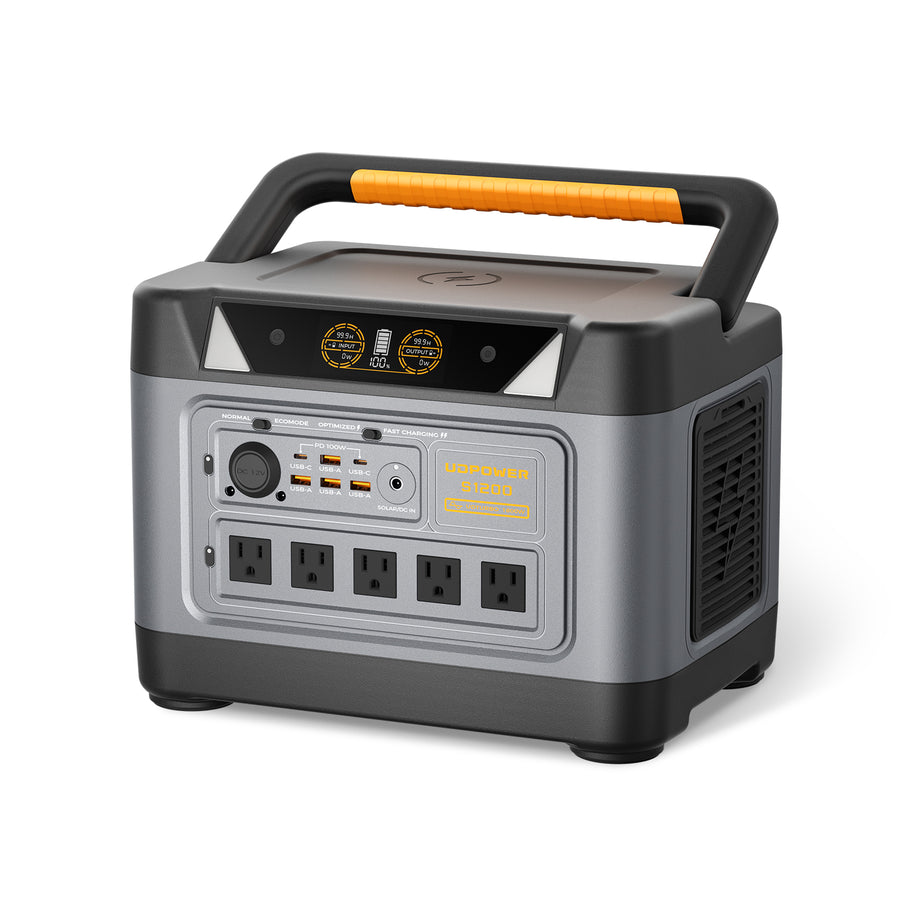
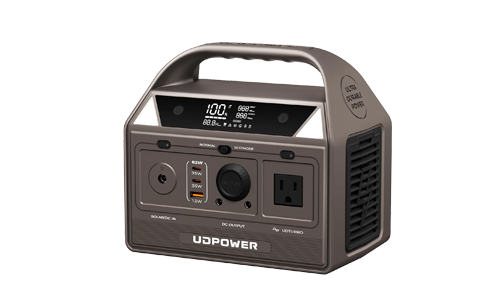
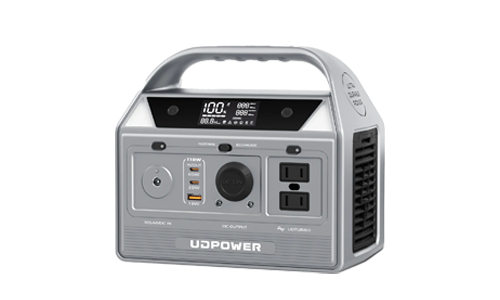
UDPOWER S1200: Best for one refrigerator or freezer
The S1200 is the more portable option for a single efficient refrigerator, chest freezer, garage freezer, portable refrigeration unit, or a cold-storage monitor plus essential communication equipment.
- Battery capacity: 1,191Wh LiFePO4
- Rated AC output: 1,200W pure sine wave
- Surge support: Up to 1,800W
- AC outlets: 5
- UPS transfer: 10ms or less
- Solar input: Up to 400W
- Weight: Approximately 26 lb
Best fit: Short outages, overnight protection for an efficient cold-storage appliance, mobile refrigeration, and homes that need a quiet battery solution.
Not recommended for: Walk-in coolers, large commercial compressors, or any appliance whose measured startup surge exceeds the S1200 limit.
View UDPOWER S1200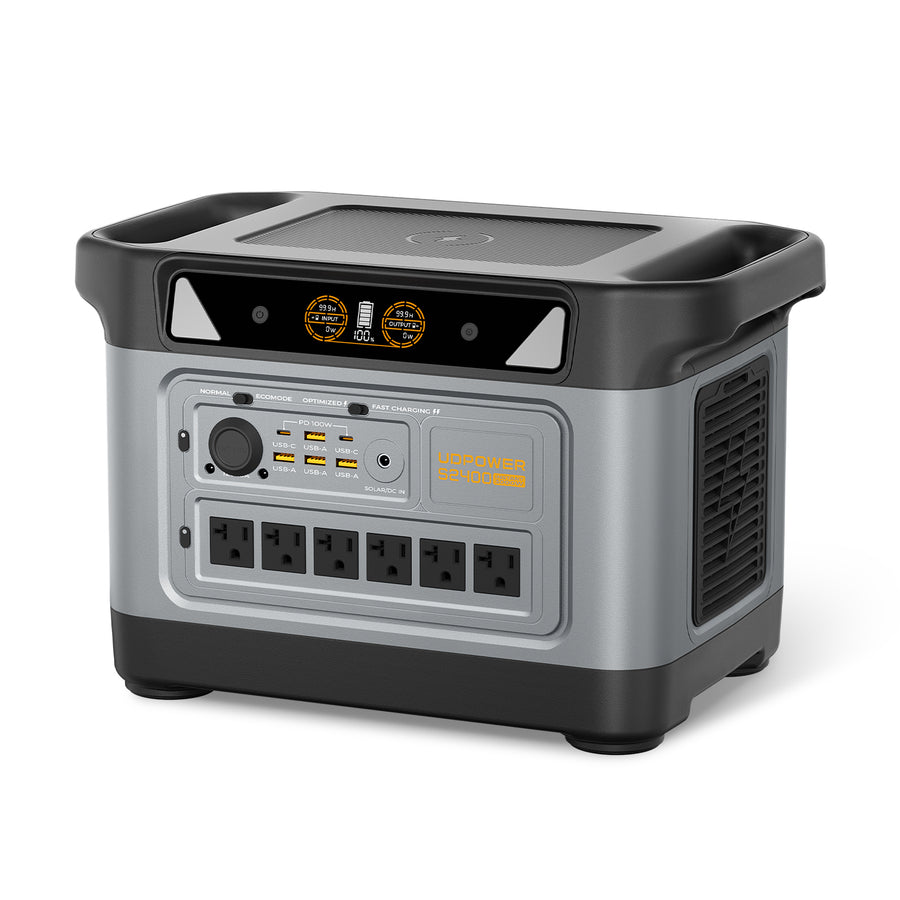
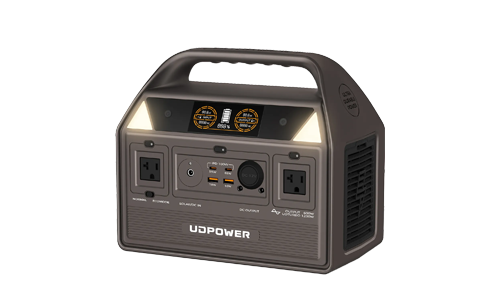
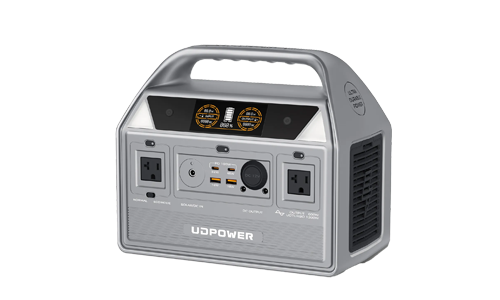
UDPOWER S2400: Best for longer runtime or more startup headroom
The S2400 provides more stored energy and higher inverter output. It is a stronger choice for longer refrigerator backup, an older appliance with higher startup demand, or a measured refrigerator-and-freezer combination.
- Battery capacity: 2,083Wh LiFePO4
- Rated AC output: 2,400W pure sine wave
- Surge support: Up to 3,000W
- AC outlets: 6
- UPS transfer: 10ms or less
- Solar input: Up to 400W
- Weight: Approximately 40.8 lb
Best fit: Longer home outages, refrigerator plus freezer planning, small-business bridge power for a verified plug-in appliance, and solar-supported emergency use.
Not recommended for: Assuming compatibility with a commercial reach-in or walk-in system without measuring startup surge and total energy demand.
View UDPOWER S2400Important placement detail: Keep the power station outside the refrigerated compartment. The S1200 and S2400 need open ventilation and must remain within their specified charging, discharging, and storage temperature limits.
Real-World Cold-Storage Backup Examples
Example 1: Efficient chest freezer during a 12-hour outage
Measured average load: 65W
Required runtime: 12 hours
Reserve: 25%
The S1200 has enough nominal capacity for this calculated requirement, but the startup surge must still remain within its 1,800W capability. The S2400 provides more reserve for hot weather, battery aging, or a longer outage.
Example 2: Refrigerator and freezer backed up together
Combined measured average load: 180W
Required runtime: 8 hours
Reserve: 25%
This calculation is close to the S2400’s 2,083Wh capacity. It leaves little room for an unexpectedly long outage, so solar recharging, scheduled operation, or a second backup source may be needed.
When first connecting two compressor appliances, start one appliance and allow it to stabilize before connecting the second. This reduces the chance of simultaneous startup surges.
Example 3: Small commercial reach-in refrigerator
Measured average load: 500W
Required runtime: 12 hours
Reserve: 25%
The required stored energy is roughly four times the S2400’s battery capacity. The appliance may also have a large compressor surge and defrost load. A generator or commercial battery system is the more appropriate primary standby solution.
An S2400 may still be valuable as bridge power for temperature monitoring, point-of-sale equipment, internet, alarms, lighting, or a smaller verified refrigeration appliance while the main generator starts or service is arranged.
Example 4: Walk-in cooler or freezer
A walk-in system may include one or more compressors, condenser fans, evaporator fans, controls, drain heaters, door heaters, pumps, and defrost equipment. Some systems are hardwired or use three-phase power.
Do not size this application from the evaporator-fan label or compressor running watts alone. A refrigeration contractor and licensed electrician should identify:
- Voltage and phase
- Locked-rotor or startup current
- Running current under peak ambient conditions
- Defrost demand
- Required restart sequence
- Transfer-switch requirements
- Minimum generator or battery-system capacity
Example 5: Vaccine or medical cold storage
A runtime calculation alone does not validate a medical-storage backup. The facility needs continuous temperature monitoring, a digital data logger, emergency contact information, transport materials, an alternative storage location, and a written procedure for temperature excursions.
A battery system may support the storage unit or monitoring equipment, but it should be tested under the applicable facility plan. Follow current CDC emergency storage guidance and the product manufacturer’s instructions.
How to Build a Reliable Cold-Storage Outage Plan
1. Assign each load a priority
During an outage, the battery should not run everything connected to the same room or circuit. Separate loads into three groups:
- Priority 1: Refrigeration compressor, required fans, controls, and temperature monitoring
- Priority 2: Communication, alarm, router, limited lighting, and essential business systems
- Priority 3: Nonessential lighting, convenience outlets, heaters, cooking appliances, and unnecessary chargers
Do not disable built-in refrigerator components or safety controls. Ask a refrigeration technician whether any optional commercial loads can be managed safely.
2. Use the cold mass already inside the appliance
A full freezer usually holds temperature longer than an empty one. Before a forecast storm, households can freeze water containers with room left for expansion and place them in unused freezer space. Cold packs can also help stabilize a cooler used for frequently accessed items.
Do not overcrowd a refrigerator. Refrigerated air needs to circulate around food. Keep appliance settings within the manufacturer’s normal range instead of forcing an extreme temperature that may create other problems.
3. Reduce door openings
Every door opening replaces cold air with warmer, humid air. During an outage:
- Create an inventory list before the storm.
- Move drinks and frequently used items to a separate ice-filled cooler.
- Assign one person to retrieve items.
- Plan what is needed before opening the door.
- Check an external display instead of opening the appliance to inspect temperature.
4. Test the backup before an emergency
A product specification cannot confirm how one particular refrigerator will behave. Conduct a controlled test while utility power is available.
- Fully charge the backup battery.
- Place an appliance thermometer or digital data logger inside the refrigerator or freezer.
- Connect only the intended cold-storage load.
- Confirm that the compressor starts without an overload warning.
- Run the appliance through several compressor cycles.
- Record battery percentage after one, two, four, and eight hours.
- Note room temperature and door activity.
- Repeat the test during warmer conditions if the appliance is in a garage or hot workspace.
5. Create a runtime checkpoint
Do not wait until the battery reaches 5% to make the next decision. Set a checkpoint such as:
- At 75%: confirm outage status and reduce all nonessential loads.
- At 50%: prepare solar charging, generator use, ice, dry ice, or inventory transfer.
- At 25%: move temperature-sensitive items according to the emergency plan.
The exact percentages should be adjusted to the value of the inventory and the estimated restoration time.
6. Plan for solar as energy recovery, not guaranteed continuous power
Solar panels can extend battery runtime during a daytime outage, but panel output changes with clouds, shade, season, panel angle, temperature, and daylight hours. A 400W solar-input limit does not mean the battery will receive 400W all day.
Use solar to replace part of the energy consumed each day. For realistic planning, read Solar Recharging During a Power Outage.
7. Keep a transfer plan for high-value inventory
Backup power can fail, run out of energy, or be needed for another emergency load. Identify an alternative refrigerator, freezer, refrigerated vehicle, cold-storage facility, or approved transport container before an outage occurs.
A complete cold-storage plan has two clocks:
The first clock measures how long the battery can run the equipment. The second measures how long the stored product can remain within specification if the equipment stops. Plan around whichever clock expires first.
8. Test and maintain the system
Check the battery charge regularly, inspect cables, verify temperature alarms, and repeat the load test after replacing the refrigerator or changing the backup configuration. Fuel generators require additional inspection, exercise, fuel management, and maintenance according to the manufacturer and facility plan.
Cold-Storage Backup Safety
Keep the power source in a suitable environment
Do not place a portable power station inside a refrigerator, freezer, walk-in cold room, or other enclosed refrigerated compartment. Keep its ventilation openings clear and operate it within the temperature range listed by the manufacturer.
The current S1200 specifications list:
- Discharging: -4°F to 113°F
- Charging: 23°F to 104°F
- Storage: 32°F to 104°F
Cold ambient conditions can therefore create a situation where a battery can discharge but should not yet be charged. Allow the unit to return to its approved charging temperature before recharging.
Use a direct, properly rated connection
Whenever practical, connect a plug-in refrigerator directly to the power station’s AC outlet. Avoid undersized, damaged, coiled, or unapproved extension cords. Any cord must be properly rated for the appliance’s current, plug type, environment, and distance.
Do not backfeed a building
Never connect a power station or generator to a wall outlet in an attempt to energize a building circuit. A permanent or panel-connected backup system requires approved transfer equipment and installation by a qualified electrician.
Operate fuel generators outdoors
Fuel-burning generators produce carbon monoxide. Ready.gov and the U.S. Consumer Product Safety Commission advise operating portable generators outdoors, at least 20 feet away from windows, doors, and attached garages, with the exhaust directed away from occupied buildings.
Review Ready.gov power-outage safety and CPSC generator safety guidance.
Do not overload the backup source
Include every connected load in the total. Lights, routers, chargers, fans, pumps, and a second refrigerator reduce cold-storage runtime. An overload can shut down the inverter and leave the refrigerator without power.
Allow compressors to restart correctly
Some refrigeration equipment includes a built-in restart delay after power returns. Do not repeatedly switch the compressor on and off. Allow the appliance’s controls to complete their normal restart process, and follow its manual if it does not restart.
A Practical 24-, 48-, and 72-Hour Cold-Storage Strategy
| Outage stage | Primary objective | Cold-storage actions | Power actions |
|---|---|---|---|
| First 15 minutes | Stabilize | Keep doors closed, record outage time, check external temperature display, and identify high-value inventory | Disconnect nonessential loads and confirm the backup source is operating normally |
| 0–4 hours | Protect refrigeration | Avoid door openings and monitor temperature trends | Use battery power for the highest-priority appliance and verify remaining runtime |
| 4–12 hours | Extend runtime | Move frequent-use items to a cooler and prepare an inventory-transfer plan | Begin solar recovery or safely operate the planned generator; remove all nonessential loads |
| 12–24 hours | Prevent loss | Transfer high-risk or high-value products before temperature limits are exceeded | Refuel, recharge, rotate backup sources, or move to alternative storage |
| 24–48 hours | Sustain or relocate | Continue temperature logging and follow food, medical, or business corrective-action procedures | Do not depend on an untested single battery; maintain a dependable charging or generator plan |
| 48–72 hours | Operate under a continuity plan | Use alternative cold storage, refrigerated transport, approved disposal procedures, or supplier support | Maintain fuel, charging access, maintenance checks, and backup redundancy |
For a broader household response plan, use the Power Outage Checklist for 24, 48, and 72 Hours. Business owners can also follow the Business Power Outage Checklist.
Common Cold-Storage Backup Mistakes
- Buying by output watts alone. A 2,000W-class inverter does not automatically provide 24 hours of refrigeration.
- Ignoring compressor startup. The average wattage may look low even though the startup surge exceeds the inverter limit.
- Using a five-minute power reading. Short tests can miss defrost cycles, warm-room operation, or frequent door openings.
- Connecting too many appliances at once. Simultaneous compressor starts can overload a backup source that could run either appliance separately.
- Placing the battery inside the cold room. This can violate its operating requirements and block necessary ventilation.
- Running lights and convenience loads from the same battery. Every extra watt reduces the cold-storage protection window.
- Assuming solar output equals the panel rating all day. Real solar production changes continuously.
- Waiting until the battery is empty to move inventory. Set a decision point while enough energy remains to act safely.
- Relying on an untested UPS function. Test the actual refrigerator, controller, or monitoring system before an emergency.
- Treating regulated inventory like household food. Vaccines, medicines, and commercial food require their own documented procedures.
Frequently Asked Questions About Standby Power for Cold Storage
Can a portable power station run a refrigerator during a power outage?
Yes, when its rated AC output and surge capacity are sufficient for the refrigerator’s compressor and its battery capacity is large enough for the required runtime. Check the refrigerator’s startup demand and measure its energy use before relying on the setup.
What size battery backup do I need for a freezer?
Multiply the freezer’s measured average watts by the required hours, divide by 0.90 for conversion losses, and then add a reserve margin. A freezer averaging 80W needs about 1,067Wh for 12 hours before adding reserve.
How long will a 2,000Wh battery run a refrigerator?
At 90% usable efficiency, a 2,000Wh battery provides approximately 1,800Wh of usable AC energy. It could support an 80W average refrigerator for about 22.5 hours or a 120W average refrigerator for about 15 hours. Actual runtime varies with compressor cycling and operating conditions.
Is a UPS enough for cold storage?
A small computer UPS is usually best for temperature monitors, alarms, routers, and controllers rather than hours of compressor operation. Larger UPS systems may support refrigeration, but they must be sized for motor startup and required energy capacity.
Can the UDPOWER S1200 run a freezer?
It can run many plug-in freezers when the freezer’s running load remains within 1,200W and startup surge remains within the S1200’s 1,800W capability. Runtime depends on the freezer’s measured average energy use.
Can the UDPOWER S2400 run a refrigerator and freezer together?
It may run both when their combined running load and startup surges remain within the S2400 limits. Start and test each appliance separately, then test the complete setup. The combined average energy use determines runtime.
Can a portable power station run a walk-in freezer?
A consumer portable power station is generally not suitable for a walk-in freezer. Walk-in systems may use hardwired, high-voltage, or three-phase compressors and can require substantially more startup power and daily energy. Use a professionally sized standby generator or commercial battery system.
How much surge power does a refrigerator need?
There is no universal number. Startup demand depends on the compressor and appliance design. Use manufacturer data or a meter that can record inrush or peak power instead of applying a fixed multiplier to every refrigerator.
Should a refrigerator remain connected to a power station’s UPS mode?
It may be possible when the appliance remains within the power station’s limits, but the combination should be tested. A refrigerator does not usually require zero-interruption transfer in the same way as a computer, and some appliances include their own restart delay.
Where should the battery backup be placed?
Place it outside the refrigerator, freezer, or cold room in a dry, ventilated location within its approved operating-temperature range. Do not block cooling vents or expose it to water, condensation, or heat-producing equipment.
Can solar panels keep cold storage running indefinitely?
Not automatically. Daily solar production must replace at least as much energy as the refrigeration system consumes, with enough extra production to cover conversion and charging losses. Cloudy weather and limited daylight require additional battery reserve or another backup source.
How often should cold-storage standby power be tested?
Check battery charge and alarms regularly and conduct a real load test several times per year. Commercial, medical, or regulated facilities should follow their written procedures, equipment manufacturer requirements, and applicable authorities.
How can I extend refrigerator or freezer battery runtime?
Keep doors closed, disconnect nonessential loads, clean condenser coils before outage season, maintain proper door seals, keep the room as cool as practical, use cold packs or frozen water containers appropriately, and recharge the battery with solar or another approved source.
What should I do if the refrigerator temperature rises above 40°F?
Record the temperature and duration, then follow the applicable FoodSafety.gov or FDA guidance. Commercial food businesses, medical facilities, and laboratories should follow their documented corrective-action and temperature-excursion procedures.
Choose Standby Power Based on Your Real Cold-Storage Load
Start with the appliance’s startup surge, measured daily energy use, and the number of hours you need to protect. For a household refrigerator, chest freezer, portable cooler, or limited essential load, compare UDPOWER’s LiFePO4 portable power stations.
View Portable Power Stations View Commercial and Institutional Options Read the Refrigerator Sizing GuideSources and Further Reading
- FoodSafety.gov: Food Safety During a Power Outage
- FDA: Food and Water Safety During Power Outages and Floods
- FDA Food Code
- CDC: Emergency Vaccine Storage and Transport
- U.S. Department of Energy: Refrigerator and Freezer Energy Rating Search Tool
- ENERGY STAR: Commercial Refrigerators and Freezers
- Ready.gov: Power Outages
- U.S. Consumer Product Safety Commission: Generator Safety
Product specifications and product images were checked against the current official UDPOWER S1200 and S2400 product pages. Runtime figures are planning estimates based on stated battery capacities and 90% conversion efficiency. Actual results vary by appliance and conditions.
Related Articles