

RV Battery Replacement Guide: Signs, Costs & Choosing the Right Battery
Last updated: September 22, 2026
Quick answer: Replace an RV house battery when it can no longer reliably store enough energy for your normal camping needs, repeatedly loses charge after being fully charged, shows severe voltage drop under load, fails a manufacturer-approved capacity or load test, or develops physical damage such as swelling, leaking, cracking, or excessive heat.
Do not replace the battery based on age or one low voltage reading alone. A bad converter/charger, corroded terminal, battery disconnect switch, blown fuse, solar charging problem, parasitic load, or alternator charging issue can make a healthy RV battery look dead.
For a single 12V RV house battery in the U.S., a practical 2026 planning range is roughly $100–$150 for a basic flooded deep-cycle battery, about $175–$310 for many 100Ah-class AGM batteries, and roughly $300–$800 or more for a 100Ah LiFePO4 battery. A lithium conversion can cost more if the RV also needs a compatible converter/charger, DC-to-DC charger, new wiring, fusing, battery monitor, or professional installation.
If you only need more off-grid AC and USB power, replacing the built-in RV house battery may not be your only option. A portable LiFePO4 power station can add a separate power source without rebuilding the RV's permanent 12V battery system.

Know Which RV Battery You Are Replacing
Before searching for an RV battery replacement, make sure you know which battery is causing the problem. A motorhome can have two very different battery systems, while a travel trailer normally relies mainly on its house battery bank.
| Battery | Main Job | Typical Symptoms When It Fails | What to Shop For |
|---|---|---|---|
| Chassis or starting battery | Starts the motorhome engine and supports vehicle electrical systems | Slow engine cranking, clicking, no-start condition, repeated jump-starts | A starting battery that matches the RV chassis manufacturer's specifications |
| House battery | Runs the RV's 12V living-area systems when external power is unavailable | Lights dim quickly, water pump slows, furnace controls shut down, refrigerator controls lose power, short off-grid runtime | Deep-cycle flooded, AGM, gel, or LiFePO4 battery compatible with the RV electrical system |
| Auxiliary battery bank | Provides additional stored energy for extended off-grid use | Bank charges unevenly, one battery gets weak, runtime drops, inverter shuts down early | Matched batteries that meet the bank's voltage, capacity, wiring, charger, and manufacturer requirements |
This guide focuses primarily on the RV house battery, not the battery used to crank a motorhome engine.
If you are new to RV battery systems, read Deep Cycle Batteries Explained: Types, Size, Life & Uses for a more detailed explanation of deep-cycle batteries, amp-hours, watt-hours, depth of discharge, series wiring, parallel wiring, and charging.
Signs Your RV Battery May Be Bad
Most RV batteries do not suddenly change from perfect to dead. Capacity usually declines over time, and the first clue is often that ordinary camping routines no longer work as long as they used to.
1. Your Off-Grid Runtime Has Become Noticeably Shorter
Suppose your lights, vent fan, furnace controls, water pump, and refrigerator electronics used to make it through the night comfortably. If the same usage now leaves the battery nearly empty before morning, usable capacity may have declined.
This is more meaningful than battery age by itself. A five-year-old battery that still meets your needs does not automatically require replacement, while a newer battery damaged by repeated deep discharge or incorrect charging may already have poor capacity.
2. The Battery Charges but Quickly Goes Flat Again
A battery may appear to reach full voltage while connected to a charger, yet drop rapidly once charging stops and normal RV loads return. That can indicate reduced capacity, sulfation in a lead-acid battery, a weak cell, or another internal problem.
Before condemning the battery, disconnect unexpected loads and verify that the charging system is actually completing the correct charging cycle.
3. Voltage Falls Sharply Under a Normal Load
Open-circuit voltage tells only part of the story. A weak battery can sometimes show an acceptable resting voltage but sag heavily as soon as the water pump, furnace blower, inverter, refrigerator, or another load starts.
If the voltage drop is abnormal for the battery type and load, a proper capacity or load test is more useful than repeatedly checking resting voltage.
4. Low-Voltage Alarms or Inverter Shutdowns Happen Earlier Than Before
An inverter that regularly shuts down from low battery voltage can point to declining battery capacity, but it can also indicate undersized cables, loose connections, excessive load, a poor ground, or a battery bank that is too small for the inverter.
Check the entire current path before buying a replacement battery.
5. Flooded Battery Electrolyte Problems Keep Returning
Flooded lead-acid batteries require periodic electrolyte inspection and maintenance. Excessive water loss, exposed plates, severe corrosion, or repeated difficulty reaching a full charge deserves attention.
Trojan notes that correct electrolyte levels are important to flooded deep-cycle battery performance and life. See its flooded battery watering guidance.
6. A Lithium Battery Repeatedly Trips Its BMS During Ordinary Use
A LiFePO4 battery's Battery Management System can intentionally stop charging or discharging when voltage, current, or temperature reaches a protective limit. One BMS shutdown does not automatically mean the battery is defective.
Repeated shutdowns under loads that used to work normally are worth investigating. Check battery state of charge, temperature, cable connections, maximum discharge current, inverter demand, charger settings, and the battery manufacturer's diagnostic information.
7. The Battery Is Swollen, Cracked, Leaking, Unusually Hot, or Physically Damaged
Stop using a visibly damaged battery. Do not continue charging a battery that is swollen, leaking, cracked, severely overheated, or otherwise physically compromised. Disconnect it only if it is safe to do so and follow the battery or RV manufacturer's service and disposal instructions.
8. One Battery in a Multi-Battery Bank Behaves Differently
If a pair or larger bank was installed at the same time but one battery shows significantly different voltage, temperature, capacity, or charge behavior, the bank should be evaluated as a complete system.
Replacing only one old battery with a new battery can create an unbalanced bank. Whether individual replacement is acceptable depends on the battery chemistry, age, connection method, manufacturer instructions, and test results.
Before Replacing the Battery: Check the RV Charging System
A common and expensive mistake is replacing the house battery when the actual problem is somewhere else in the RV.
Use the symptoms below to narrow the problem before ordering a new battery.
| What You Observe | Possible Cause | What to Check Next |
|---|---|---|
| Battery works after external charging but becomes weak very quickly | Reduced battery capacity or an unexpected parasitic load | Charge fully, isolate unnecessary loads, then perform a capacity test |
| Battery voltage does not increase when connected to shore power | Converter/charger, breaker, fuse, wiring, battery disconnect, or connection problem | Verify converter output and charging voltage at the battery |
| Battery charges from shore power but not from solar | Solar controller settings, solar fuse, panel wiring, shading, or controller fault | Check the solar charge controller before replacing the battery |
| Battery charges from shore power but not while driving | Alternator charging circuit, isolator, relay, fuse, or DC-to-DC charger issue | Test the vehicle-to-house-battery charging path |
| Lights flicker or water pump slows even with a charged battery | Loose cable, corrosion, poor ground, undersized wiring, fuse connection, or battery issue | Inspect both positive and negative high-current connections |
| Everything works while plugged into campground power but fails quickly after unplugging | Battery may have low usable capacity | Test the house battery after a complete charge |
| 12V devices work but regular 120V outlets do not | Likely an AC-side issue rather than simply a house battery failure | Check shore power, breaker, inverter, transfer equipment, and GFCI circuits |
| 120V outlets work on shore power but battery never becomes charged | Converter/charger or DC charging path problem | Check converter breaker, fuses, output voltage, battery disconnect, and wiring |
For a more detailed explanation of what happens between the campground pedestal, converter, 12V system, and house battery, see RV Shore Power: 30 Amp vs. 50 Amp, How It Works & Backup Options.
How to Test an RV Battery Before Replacing It
If there is no visible safety problem, testing can help distinguish a discharged battery from a worn-out battery.
Step 1: Inspect the Battery and Connections
Look for damaged cables, loose terminals, heavy corrosion, cracked cases, swelling, leaking electrolyte, burned connections, or evidence that a battery has moved inside its compartment.
Step 2: Charge the Battery Correctly
Use the correct charging profile for the battery chemistry. Flooded lead-acid, AGM, gel, and LiFePO4 batteries do not necessarily use the same charging settings.
Modern RV converters such as Progressive Dynamics' PD9300 series provide selectable flooded, AGM, and LiFePO4 charging profiles, illustrating why battery chemistry matters to charger setup. See the Progressive Dynamics PD9300 documentation.
Step 3: Let a Lead-Acid Battery Rest Before Using Open-Circuit Voltage
Charging voltage or surface charge can make a recently charged battery look healthier than it really is. For a meaningful open-circuit reading, remove charging sources and significant loads and follow the battery manufacturer's recommended rest period.
Step 4: Measure Voltage at the Battery Terminals
A fully charged 12V lead-acid battery commonly rests around the upper 12-volt range, but exact state-of-charge values vary with battery chemistry, design, temperature, and manufacturer.
Do not use a lead-acid voltage chart for LiFePO4. LiFePO4 has a flatter discharge-voltage curve, so voltage alone can be a poor way to estimate remaining capacity through much of the discharge cycle.
For chemistry-specific voltage information, see the UDPOWER Lithium-Ion Battery Voltage Chart Guide.
Step 5: Test the Battery Under Load
A resting-voltage check can miss a battery that loses voltage badly once current starts flowing. A battery-specific load or capacity test is therefore more useful when deciding whether replacement is necessary.
Deep-cycle batteries should be tested using a method appropriate for the battery type. Do not blindly apply automotive starting-battery test numbers to every RV deep-cycle battery.
Step 6: Measure Real Capacity When Possible
The most useful question is not simply, "Does it show 12 volts?" It is, "How much usable energy can the battery still deliver?"
If a battery originally delivered enough energy for your normal overnight loads but now provides only a fraction of that runtime under comparable conditions, a capacity test can confirm whether the battery itself has degraded.
Important: There is no single voltage or age that automatically means every RV battery must be replaced. Use the battery manufacturer's specifications, measured capacity, load behavior, physical condition, charging performance, and your required runtime together.
How Much Does RV Battery Replacement Cost in 2026?
RV battery replacement cost varies much more than many simple price guides suggest. The battery itself may be only one part of the bill.
A like-for-like flooded or AGM replacement can be relatively straightforward. Converting an older RV from lead-acid to LiFePO4 can involve the battery, converter/charger, solar settings, alternator charging equipment, wiring, fuse protection, mounting, and monitoring.
Typical Battery Purchase Cost
| Battery Type | Practical 2026 Planning Range | Current Retail Examples | What the Price Does Not Include |
|---|---|---|---|
| Flooded 12V deep-cycle | About $100–$150 for many basic Group 24/27-style options |
Walmart: Group 27 deep-cycle example AutoZone: marine/RV deep-cycle examples |
Core deposit where applicable, installation, cables, battery box, troubleshooting |
| 100Ah-class AGM | About $175–$310 for representative current options |
Camping World: Renogy 100Ah AGM Walmart: Group 27 AGM example |
Installation, cables, battery box, charging-system repairs |
| 100Ah-class LiFePO4 | About $300–$800+ depending on brand and features |
Lowe's: 100Ah LiFePO4 example Camping World: 100Ah LiFePO4 example Battle Born: premium 100Ah example |
Possible converter, DC-to-DC charger, wiring, fuse, solar-controller changes, monitoring and labor |
These are shopping examples and planning ranges, not fixed industry prices. Battery pricing changes with capacity, BCI group size, warranty, brand, current rating, Bluetooth monitoring, heating, low-temperature protection, promotions, and local availability.
The Hidden Cost of Replacing Lead-Acid With Lithium
If the RV already has lithium-compatible charging equipment, the upgrade may be relatively simple. If it does not, the battery price can seriously understate the true conversion cost.
| Possible Upgrade | Why It May Be Needed | Current Example |
|---|---|---|
| Lithium-compatible converter/charger | Older converters may not provide the charging behavior specified by the new LiFePO4 battery | Progressive Dynamics PD9300 series |
| DC-to-DC charger | May be needed to properly manage alternator-to-house-battery charging and current | Camping World battery and charging equipment |
| Solar-controller setting or replacement | The controller must support the charging profile specified by the new battery | Check the existing controller manufacturer's battery-profile documentation |
| Battery monitor or shunt | Lithium voltage alone is not a precise state-of-charge indicator through much of its operating range | Cost varies by system |
| Cables, busbars, terminals and fuses | A higher-current battery or inverter upgrade may require different conductors and protection | Cost varies by current, cable length and installation |
| Professional installation | Recommended when the upgrade changes charging equipment, high-current wiring, inverter connections or battery-bank architecture | Labor varies significantly by RV, region and scope |
Budget rule: If you are replacing a battery with the same chemistry, voltage, capacity class, physical size, and connection layout, the battery itself may represent most of the cost. If you are converting from lead-acid to lithium, price the entire charging and protection system before deciding that a particular battery is the cheaper option.
RV Battery Replacement Options: Flooded, AGM, Gel, or Lithium?
The best RV battery replacement is not automatically the battery with the longest specification sheet. It needs to fit the way you camp and the electrical system already installed in your RV.
| Battery Type | Main Advantage | Main Trade-Off | Maintenance | Good Fit For |
|---|---|---|---|---|
| Flooded lead-acid | Low purchase cost and wide availability | Heavy, requires electrolyte maintenance and proper ventilation | Yes | Budget-focused RV owners with an existing compatible system |
| AGM | Sealed and lower-maintenance than flooded lead-acid | Still heavy and generally offers less usable energy per pound than LiFePO4 | Minimal | Owners who want a simpler lead-acid replacement without maintaining flooded cells |
| Gel | Sealed design and good deep-cycle characteristics when charged correctly | Requires the correct charging voltage and is less common in many RV replacement discussions | Minimal | Existing systems already designed around gel charging requirements |
| LiFePO4 | Low weight, high usable capacity, long cycle life and fast charge acceptance | Higher upfront cost and charging-system compatibility must be checked | Minimal | Frequent campers, boondockers, solar users and weight-sensitive RVs |
For a deeper explanation of the underlying battery technologies, see Deep Cycle Batteries Explained.
AGM vs Lithium RV Battery: What Changes in Real Use?
The AGM vs lithium RV battery debate becomes much easier when you stop comparing only the number printed after "Ah."
Two batteries can both say 100Ah while delivering very different usable energy, weight, charging behavior, cycle life, and cold-weather performance.
| Factor | 100Ah-Class AGM | 100Ah-Class LiFePO4 | Why It Matters in an RV |
|---|---|---|---|
| Nominal voltage | Typically 12V class | Typically 12.8V nominal | Charging profiles and voltage behavior differ |
| Weight example | Renogy 100Ah AGM: about 63.9 lb | Grand Teton 100Ah LiFePO4: about 23 lb | Battery-bank weight can affect RV payload |
| Cycle example | Renogy example lists 500 cycles at 50% DoD | Grand Teton example lists 4,000 cycles at 80% DoD | Useful life depends heavily on manufacturer test conditions and actual use |
| Depth of discharge | Deep discharge generally has a larger cycle-life penalty | Many LiFePO4 batteries are designed for deeper regular cycling | Nominal Ah should not be confused with recommended usable capacity |
| Charge acceptance | Usually slower as the battery approaches full charge | Can accept relatively high charge current when the battery and charger support it | Important for short generator runs and solar recovery |
| Cold charging | Battery-specific limits still apply | Charging below the battery's minimum temperature can damage cells unless the battery provides appropriate protection or heating | Critical for winter camping |
| Upfront cost | Usually lower | Usually higher | Compare total system cost, not battery price alone |
Weight and cycle figures above are real product examples, not universal specifications for every AGM or lithium battery. See the Renogy 100Ah AGM listing and Grand Teton 100Ah LiFePO4 listing.
Choose AGM When...
- You want a relatively simple replacement for an existing AGM or compatible lead-acid system.
- Lowest initial cost matters more than reducing battery weight.
- Your RV spends most nights connected to shore power and deep cycling is uncommon.
- You do not want to modify an older charging system.
- Your existing converter and battery compartment are already well suited to AGM.
Consider LiFePO4 When...
- You regularly boondock or dry camp.
- You want more usable energy without doubling the battery-bank weight.
- You recharge frequently from solar.
- You regularly use an inverter.
- You want a battery designed for frequent cycling.
- You plan to keep the RV long enough to benefit from longer cycle life.
- Your charging system is already compatible or you are prepared to upgrade it.
For a deeper look at LiFePO4 longevity, see LiFePO4 Battery Life: How Many Years and Cycles Can You Expect?.
Can You Replace an RV Battery With Lithium?
Often, yes. But replacing an RV lead-acid battery with lithium should not be treated as a blind drop-in swap.
A battery can physically fit in the same box and still be electrically incompatible with part of the RV's charging system.
Check These 8 Things Before Converting to LiFePO4
- System voltage: Confirm that the new battery matches the RV's required battery-bank voltage.
- Physical dimensions: Measure the battery tray or compartment, including height and terminal clearance.
- Terminal location: Confirm that existing cables can reach the new terminals without unsafe stretching or routing.
- Converter/charger: Check whether it has a lithium or battery-specific charging profile that meets the new battery manufacturer's requirements.
- Solar charge controller: Verify that the controller supports the required LiFePO4 charging profile.
- Alternator charging: Determine whether a properly sized DC-to-DC charger or another current-management solution is required.
- Cables and fuses: Confirm that wiring and overcurrent protection are suitable for the battery's possible charge and discharge current.
- Temperature protection: Confirm the battery's minimum charging temperature and whether low-temperature cutoff or internal heating is provided.
Why the Converter Matters
A charger designed around one battery chemistry may not use the charging behavior required by another. Progressive Dynamics, for example, provides separate battery selections for flooded lead-acid, AGM, and LiFePO4 on its PD9300 RV converters.
See the manufacturer's PD9300 battery-profile information.
Why Cold Weather Matters
Do not assume that because a lithium battery can discharge in freezing weather it can also be charged at the same temperature.
Charging limits depend on the specific battery. Victron, for example, warns against charging certain LiFePO4 batteries below their specified minimum charging temperature. Other lithium batteries include a BMS low-temperature cutoff or internal heating.
Always follow the actual battery's specification rather than using one universal temperature rule. See Victron battery charging safety guidance.
A true lithium conversion is a system decision. Before buying the battery, identify every charging source connected to the house bank: shore-power converter, solar controller, alternator charging circuit, generator-fed charger, and any external charger.
What Size RV Replacement Battery Do You Need?
Replacing a battery is a good opportunity to check whether the old battery was actually large enough for your camping style.
Do not start with the biggest battery that fits the compartment. Start with your daily energy use.
Step 1: Estimate Daily Watt-Hours
Use:
Daily energy in watt-hours = Appliance watts × hours used per day
| Example RV Load | Planning Power | Daily Use | Daily Energy |
|---|---|---|---|
| LED lighting | 20W combined | 5 hours | 100Wh |
| Vent fan | 25W | 8 hours | 200Wh |
| Laptop | 65W | 3 hours | 195Wh |
| 12V electronics and device charging | Variable | Daily | 150Wh |
| Water pump | 60W while running | 0.5 hour total | 30Wh |
| Example total | — | — | 675Wh/day |
The actual numbers in your RV may be very different. Refrigerators, furnace blowers, CPAP machines, inverters, televisions, coffee makers, microwaves, air conditioners, and other appliances can change the result dramatically.
Step 2: Convert Ah to Wh
Battery energy is easier to compare in watt-hours:
Nominal watt-hours = Battery nominal voltage × Amp-hours
| Battery | Nominal Calculation | Nominal Energy |
|---|---|---|
| 12V 50Ah | 12 × 50 | About 600Wh |
| 12V 100Ah | 12 × 100 | About 1,200Wh |
| 12.8V 100Ah LiFePO4 | 12.8 × 100 | 1,280Wh |
| 12.8V 200Ah LiFePO4 | 12.8 × 200 | 2,560Wh |
Nominal energy is not always the same as the amount you should plan to use. Battery manufacturer recommendations, depth of discharge, inverter losses, temperature, load level, and battery aging all affect usable energy.
For a deeper sizing comparison, see 12V Solar Battery Guide: 50Ah vs. 100Ah vs. 200Ah Size & Runtime.
How to Replace an RV House Battery
The exact procedure depends on the RV and battery-bank design. Always follow the RV and battery manufacturer's instructions. The process below is a general checklist for a relatively simple RV house-battery replacement, not a substitute for model-specific service instructions.
If the RV uses a complex inverter/charger, multiple series or parallel batteries, large lithium bank, high-current busbars, automatic generator system, solar array, or unfamiliar wiring, professional installation is the safer choice.
1. Record the Existing Battery Specifications
Write down battery chemistry, voltage, Ah capacity, BCI group size or dimensions, terminal orientation, number of batteries, cable layout, fuse size, and charger information.
2. Photograph Every Cable Before Disconnecting Anything
RV battery terminals can carry more than one positive or negative cable. Take clear photos and label cables before removal.
3. Shut Down Charging Sources and Loads
Disconnect shore power, shut down the generator, stop solar charging according to the controller manufacturer's procedure, turn off significant DC and inverter loads, and prevent the engine charging system from energizing the battery circuit.
4. Isolate the Battery System
Use the RV's approved disconnect procedure. On a conventional negative-ground 12V battery installation, the negative connection is commonly removed before the positive connection to reduce the chance of an accidental short through the chassis. Follow the RV manufacturer's instructions if its procedure differs.
5. Remove the Old Battery Safely
Lead-acid batteries can be extremely heavy. A 100Ah-class AGM battery may weigh more than 60 lb. Use proper lifting technique and keep the battery upright where required.
6. Inspect the Tray, Hold-Down and Cables
Do not place a new battery into a badly corroded tray or reconnect damaged terminals. Repair unsafe mounting or cable problems first.
7. Install the New Battery With Correct Polarity
Confirm positive and negative terminal locations before making any connection. Do not assume that two batteries with similar cases use identical terminal orientation.
8. Restore Connections and Battery Hold-Downs
Follow the RV and battery manufacturer's connection sequence and torque specifications. Ensure the battery cannot move during travel.
9. Select the Correct Charging Profile
If the converter or solar controller has selectable battery chemistry, verify the correct setting before normal charging begins.
10. Verify Charging and 12V Operation
After installation, confirm normal resting behavior, charging voltage, converter operation, solar charging if fitted, and normal operation of the RV's 12V systems.
What If Your RV Has Two or More House Batteries?
A multi-battery bank needs more planning than replacing one standalone battery.
Do Not Mix Battery Chemistries in a Normal Shared Bank
Do not simply connect AGM and LiFePO4 batteries together in the same ordinary house bank. Their charging behavior and voltage characteristics differ.
Avoid Mixing Significantly Different Batteries
For a conventional bank, batteries are generally easier to manage when they match in chemistry, model, capacity, voltage, and age, subject to the battery manufacturer's connection requirements.
Check Whether the Bank Is Series or Parallel
| Connection | What Changes | Example |
|---|---|---|
| Series | Voltage increases while Ah stays approximately the same | Two 6V 100Ah batteries in series create a 12V 100Ah bank |
| Parallel | Voltage remains the same while Ah increases | Two 12V 100Ah batteries in parallel create a 12V 200Ah bank |
If you are changing the battery-bank architecture rather than simply replacing like-for-like batteries, verify cable sizing, fusing, charging current, inverter demand, and manufacturer connection limits before making the change.
Should You Replace the RV Battery or Add a Portable Power Station?
These solve different problems.
| Your Goal | Better Starting Point | Why |
|---|---|---|
| Restore the RV's built-in lights, furnace controls, water pump and other 12V house circuits | Replace or repair the house battery system | The RV's permanent DC system depends on its house battery and charging system |
| Upgrade a permanent off-grid battery bank | Properly sized deep-cycle battery bank | Designed to integrate into the RV's permanent electrical system |
| Add AC outlets, USB power and independent stored energy without rebuilding the RV electrical system | Portable power station | Battery, inverter, BMS, charging system, display and outputs are integrated |
| Keep a CPAP, laptop, small refrigerator, electronics or other selected devices running during campground outages | Portable power station can be convenient | Provides a separate backup source for selected equipment |
| Replace the actual 12V battery feeding the RV's factory DC distribution panel | Compatible RV house battery | A portable power station should not automatically be treated as a drop-in house-battery replacement |
Simple rule: If the RV's built-in 12V electrical system has a failed house battery, repair or replace that battery system. If the built-in system works but you want additional independent power for appliances and electronics, a portable power station can be a useful second layer.
UDPOWER Portable Backup Options for RV Travel
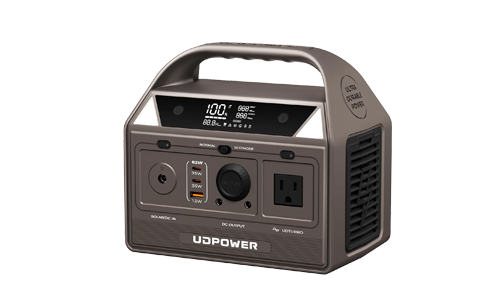
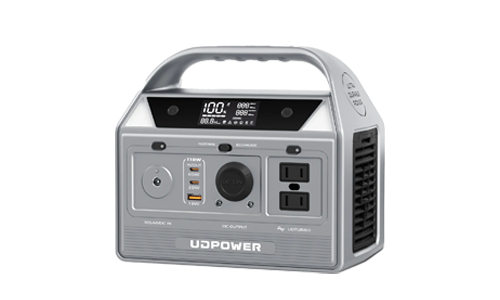
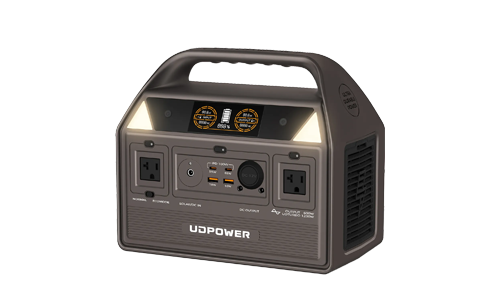
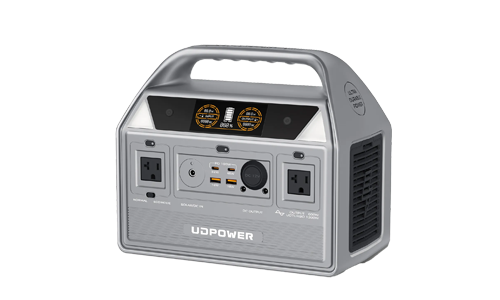
UDPOWER S-Series portable power stations use LiFePO4 batteries and combine battery storage, an inverter, BMS, charging electronics, AC outlets, USB outputs, DC outputs and a display in one portable unit.
They are best viewed as independent RV and camping backup power, not as automatic drop-in replacements for a conventional 12V RV house battery.
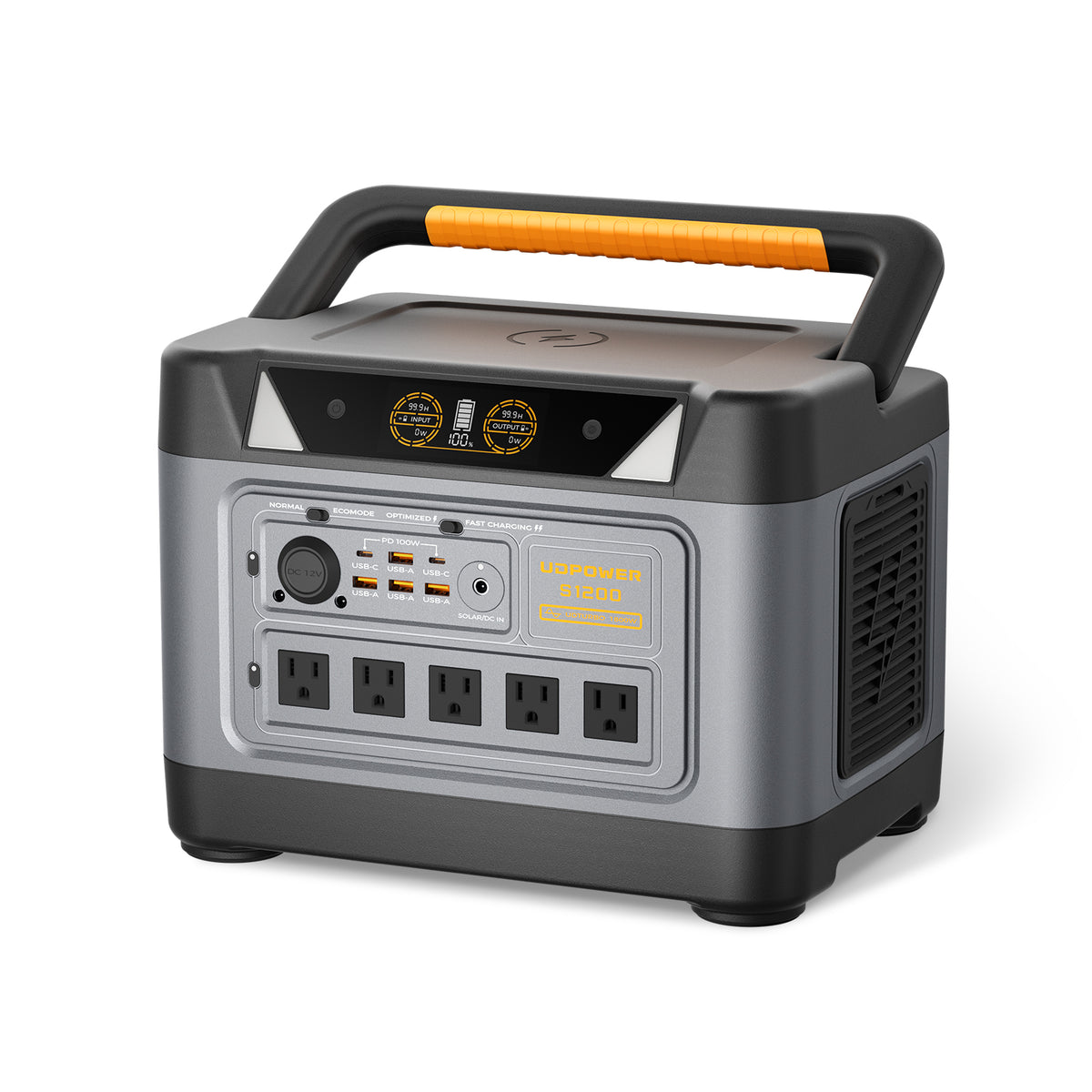
UDPOWER S1200
The S1200 is a balanced option for RV owners who want a portable backup source for selected appliances, electronics, CPAP equipment, refrigeration, lights and campsite equipment without permanently rebuilding the RV battery bank.
| Specification | UDPOWER S1200 |
|---|---|
| Battery capacity | 1,190Wh |
| Battery chemistry | LiFePO4 |
| Rated AC output | 1,200W |
| Higher-power capability | UDTURBO up to 1,800W for compatible loads |
| Cycle life | 4,000+ cycles |
| Weight | 26 lb |
| UPSPrime | <10 ms switchover |
| Warranty | 5 years |

UDPOWER S2400
The S2400 provides substantially more battery capacity and AC output than the S1200. It is better suited to RV travelers who need longer backup runtime or want to operate multiple compatible devices and larger appliances.
| Specification | UDPOWER S2400 |
|---|---|
| Battery capacity | 2,083Wh |
| Battery chemistry | LiFePO4 |
| Rated AC output | 2,400W |
| Higher-power capability | Up to 3,000W for compatible loads in battery/inverter mode |
| Cycle life | 4,000+ cycles |
| Weight | 40.8 lb |
| AC outlets | 6 |
| UPSPrime | <10 ms switchover |
| Warranty | 5 years |
S1200 vs S2400 for RV Backup
| Use Case | S1200 | S2400 |
|---|---|---|
| Phones, laptops, lights and electronics | Strong fit | Strong fit with more reserve |
| CPAP plus other nighttime essentials | Good balance of capacity and portability | Better when longer runtime or more simultaneous loads are needed |
| Portable refrigerator or cooler | Suitable when the actual appliance demand fits the output limits | Longer potential runtime because of larger battery capacity |
| Microwave or higher-power cooking appliance | Check actual wattage carefully | 2,400W rated output provides more headroom for compatible high-power appliances |
| Weight-sensitive travel | 26 lb | 40.8 lb |
| Longer off-grid backup | 1,190Wh | 2,083Wh |
Actual runtime depends on appliance power, compressor cycling, temperature, conversion losses, startup requirements, battery state of charge, and simultaneous loads.
You can estimate individual appliance runtime with the UDPOWER Portable Power Station Runtime Calculator.
Explore Portable Power Stations for RV Camping Compare All UDPOWER Portable Power StationsA Portable Power Station Is Not the Same as an RV House Battery
This distinction matters when planning an RV battery replacement.
A bare RV house battery is part of the vehicle's permanent 12V electrical architecture. A portable power station is a self-contained energy system with its own battery, BMS, inverter, charger, outlets and controls.
A portable station can be excellent for powering individual appliances and electronics, but it should not automatically be wired into the RV's battery terminals or electrical distribution system as though it were a conventional 12V replacement battery.
If you want a portable station to interact with the RV's shore-power inlet or permanent wiring, confirm the design with the RV manufacturer, power-station manufacturer, and a qualified RV electrician. Neutral-ground behavior, converter operation, transfer equipment, bonding, current limits and charging loops all need to be understood first.
How to Make Your New RV Battery Last Longer
Use the Correct Charging Profile
Incorrect charging can reduce battery life regardless of chemistry. Match the converter, solar controller, and external chargers to the battery manufacturer's requirements.
Avoid Leaving Lead-Acid Batteries Deeply Discharged
Lead-acid batteries are particularly vulnerable to sulfation when left discharged. Recharge them according to the manufacturer's instructions after use.
Do Not Treat Every Battery as a 100%-to-0% Device
Depth of discharge affects cycle life. Follow the manufacturer's stated cycle and depth-of-discharge guidance instead of assuming every battery should be drained completely.
Manage Heat
High temperatures accelerate battery aging. Battery compartments should meet the battery manufacturer's installation and operating-temperature requirements.
Respect Lithium Charging Temperature Limits
If you camp in freezing weather, confirm whether the LiFePO4 battery includes low-temperature charge protection or internal heating and understand exactly when charging is permitted.
Keep Flooded Batteries Properly Maintained
Check electrolyte according to the battery manufacturer's maintenance schedule and use distilled water when required.
Keep Connections Clean and Tight
A perfectly healthy battery can perform poorly through corroded or loose connections.
Do Not Ignore Parasitic Loads During Storage
Propane detectors, stereo memory, control boards, inverters and other equipment can continue drawing energy even when the RV appears to be off. Use the RV's approved storage and disconnect procedure.
For more detail on battery aging, see How Long Do Solar Batteries Last? Lifespan by Battery Type & When to Replace Them.
RV Battery Replacement Decision Checklist
- Have you confirmed whether the problem is the house battery or chassis battery?
- Have you checked the converter/charger?
- Have you inspected fuses, terminals, cables and grounds?
- Have you ruled out unexpected parasitic loads?
- Does the battery reach the expected full-charge condition?
- Does it retain charge after resting?
- Does voltage collapse under an ordinary load?
- Have you measured remaining capacity when possible?
- Is the battery physically damaged?
- Are all batteries in a multi-battery bank healthy and reasonably matched?
- Does the replacement match the required voltage?
- Will it physically fit and can the existing cables reach safely?
- Is the converter compatible with the new chemistry?
- Is the solar controller compatible?
- Is alternator charging compatible?
- Are cables and fuses correctly sized?
- Is the battery suitable for the temperatures in which you camp?
- Have you compared total conversion cost instead of battery price alone?
Related RV and Battery Guides
RV Battery Replacement FAQ
How do I know when to replace my RV battery?
Consider replacement when the battery no longer provides enough usable capacity for your normal RV needs, quickly loses charge after being properly charged, shows abnormal voltage sag under load, fails an appropriate capacity test, or develops physical damage. Check the charging system and connections before assuming the battery itself has failed.
How often do RV batteries need to be replaced?
There is no universal replacement schedule. Battery chemistry, temperature, charging quality, depth of discharge, storage conditions, cycling frequency and maintenance all affect service life. Condition and measured usable capacity are more useful than age alone.
How much does an RV battery replacement cost?
For a single battery, basic flooded deep-cycle models can start around the low-$100 range, many 100Ah-class AGM batteries fall around $175–$310, and 100Ah LiFePO4 batteries can range from roughly $300 to $800 or more. A lithium conversion can cost more if the RV also needs charging-system, wiring, fuse or monitoring upgrades.
Can I replace my RV lead-acid battery with lithium?
Often yes, but check voltage, physical fit, converter/charger compatibility, solar-controller settings, alternator charging, cable and fuse ratings, battery monitoring and temperature protection first. A lithium battery should not automatically be treated as a drop-in replacement simply because it fits in the same battery box.
Can I replace an AGM RV battery with LiFePO4?
Yes in many RVs, provided the rest of the electrical system is compatible. Pay particular attention to the converter, solar charge controller, alternator charging circuit and low-temperature charging protection.
Is AGM or lithium better for an RV?
AGM can make sense when low upfront cost and simple compatibility with an existing lead-acid charging system are priorities. LiFePO4 is attractive for frequent cycling, boondocking, solar use and weight reduction. The better fit depends on your RV, charging system, climate, usage and budget.
Should I replace both RV batteries if one is bad?
If batteries are part of the same bank and are similar in age and use, test the entire bank before replacing only one. Mixing a new battery with a significantly aged battery can create imbalance. Follow the battery manufacturer's recommendations for series and parallel banks.
Can a bad converter make my RV battery seem bad?
Yes. If the converter is not charging correctly, even a healthy battery can remain undercharged and deliver poor runtime. Check converter output, fuses, breakers, the battery disconnect and wiring before replacing the battery.
Can I tell if an RV battery is bad just by checking voltage?
No. Voltage is useful, but it does not directly measure remaining battery capacity. A weak battery may show acceptable resting voltage and then sag badly under load. A proper load or capacity test provides more useful information.
Do LiFePO4 RV batteries need a special charger?
They require charging behavior that meets the battery manufacturer's specifications. Some modern RV converters have selectable LiFePO4 profiles, while older equipment may need adjustment or replacement. Check the exact battery and charger documentation rather than assuming compatibility.
Can I charge an RV lithium battery below freezing?
Only if the specific battery manufacturer permits it under the conditions involved. Many LiFePO4 batteries restrict charging near or below freezing unless low-temperature protection or heating is provided. Always follow the battery's stated charging-temperature limits.
Can a portable power station replace an RV house battery?
Not automatically. A portable power station is excellent for independently powering selected AC, USB and DC devices, but a conventional RV house battery is integrated into the RV's permanent 12V electrical system. If the goal is to repair the factory 12V system, use a compatible house battery or have the system professionally redesigned.
What size replacement battery should I buy for my RV?
Start with the RV's required battery voltage and physical space, then calculate your daily watt-hour demand. Choose enough usable capacity for the time you expect to camp without charging, and confirm that the battery and wiring can support your expected current and inverter load.
Need More RV Backup Power?
If your RV house battery system is healthy but you want additional independent power for appliances, electronics, CPAP equipment, refrigeration or off-grid camping, compare UDPOWER's LiFePO4 portable power stations by capacity and output.
View RV Camping Power Options Compare Portable Power Stations Calculate Your RuntimeRelated Articles


