

Night Vision Watts: How Much Power Do Night Vision Devices Use?
Last updated: May 28, 2026
If you searched “night vision watts,” you are probably trying to answer one of three practical questions: how long your night vision will run, whether a power bank is enough, or what size portable power station you need for a night outside. This guide gives you the numbers, the formulas, and realistic runtime charts using common night vision loads.

Night Vision Wattage Chart
There is no single wattage for “night vision” because analog image-intensifier devices, digital goggles, thermal optics, built-in IR LEDs, and external illuminators all draw power differently. Use the chart below as a planning guide, then check the label, manual, or battery/runtime spec for your exact model.
| Night vision gear | Typical planning watts | What changes the draw | Best power source |
|---|---|---|---|
| Analog image-intensifier monocular or goggle, IR off | About 0.1–0.5W | Tube type, gain setting, temperature, battery chemistry, auto shutoff | Fresh AA/CR123 batteries or a small external battery pack |
| Analog night vision with built-in IR on | About 0.5–2W+ | IR brightness level and how often the illuminator is used | Spare batteries for short use; power station only if powering other camp gear too |
| Digital night vision monocular or goggles | About 2–6W | Screen brightness, video recording, Wi-Fi/app connection, IR setting, cold weather | USB power bank for one device; portable power station for all-night setups |
| Digital night vision scope | About 3–8W | Reticle/display brightness, recording, ballistic features, laser rangefinder, IR use | USB-C/12V power bank or a small portable power station |
| External IR flashlight or IR torch | About 2–10W for common compact models; higher for long-range lights | 850nm vs 940nm, beam focus, brightness mode, battery size, heat management | 18650/21700 cells, USB power bank, or DC output from a power station |
| Thermal monocular or thermal scope | About 3–8W | Display brightness, refresh rate, recording, Wi-Fi streaming, sensor and processor load | USB power bank or portable power station for multi-night use |
| Night observation station: optic + IR + phone/tablet + small light | About 10–40W | How much you charge other devices, whether the IR flood is continuous, screen-on time | Portable power station is usually the easiest clean-power option |
Why Night Vision Watts Vary So Much
Two products can both be called “night vision” but behave completely differently from a power standpoint.
Analog night vision is usually the lightest electrical load
Traditional Gen 2 or Gen 3 image-intensifier night vision amplifies available light through an optical tube. The device still needs battery power, but it may run for many hours from a single AA or CR123 battery. That is why many analog monoculars and goggles can average well below 1 watt when the IR illuminator is off.
Digital night vision uses a camera, processor, screen, and IR light
Digital night vision is closer to a low-light video camera. It needs a sensor, image processor, display, and usually infrared illumination. Screen brightness and IR brightness are the two settings that most people notice in the field: turn both up, and runtime drops quickly.
The IR illuminator is often the hidden load
When the built-in IR is low, power draw may be modest. When you add a stronger 850nm or 940nm external IR flashlight for longer range, the illuminator can use as much or more power than the night vision unit itself. This matters for hunters, wildlife watchers, security patrols, and anyone scanning from a fixed position for several hours.
Cold weather lowers practical runtime
Battery chemistry matters at night. A battery that looks fine indoors may sag faster in cold air. If you are sitting still in a blind, glassing from a truck bed, or running an overnight security watch, plan extra capacity instead of sizing to the perfect lab number.
Real-World Examples From Current Device Specs
The easiest way to estimate watts is to use the device battery capacity and listed runtime. The examples below are not a ranking of products; they show how different night vision categories compare.
| Device example | Published power/battery clue | Planning estimate | Source |
|---|---|---|---|
| AGM NVG-40 analog night vision goggles | One CR123A or AA battery; up to 20 hours at 20°C; built-in IR with two levels | Very low draw when IR is not heavily used; often well under 1W by battery/runtime math | AGM NVG-40 datasheet |
| AGM UNVG analog night vision goggle | One AA battery; up to 15 hours with IR off; external pack up to 50 hours | Very low draw with IR off; external battery pack extends watch time without a large station | AGM UNVG datasheet |
| Nightfox Prowl digital night vision monocular | 3200mAh rechargeable battery; 5 hours of constant use | About 2–3W average by rough battery/runtime math, before allowing for real-world settings | Nightfox Prowl specs |
| Nightfox Swift Max digital night vision goggles | 2W infrared LED output; 3 hours with mixed IR use | Plan several watts for the device; more if charging other gear at the same time | Nightfox Swift Max specs |
| Nightfox Swift 2 Pro digital night vision goggles | 2.5W IR LED output; 3200mAh 3.7V battery; 4 hours with mixed IR use | About 3W average by battery/runtime math; IR settings can change actual draw | Nightfox Swift 2 Pro specs |
Battery-to-watt estimates are practical planning numbers. Actual draw changes with settings, battery age, ambient temperature, and whether the device is powering IR, recording video, or charging through a voltage converter.
How to Calculate Night Vision Runtime
You do not need a lab meter to make a good estimate. The U.S. Energy Information Administration explains that watt-hours measure electricity used over time, and the U.S. Department of Energy recommends estimating energy use by finding the wattage and hours of operation. For night vision, the same idea works: convert the battery or power station capacity into usable watt-hours, then divide by the load.
Reference: EIA: measuring electricity and Energy.gov: estimating appliance and electronic energy use.
Battery Wh = Battery voltage × Battery AhDevice average watts = Battery Wh ÷ Runtime hoursPortable power station runtime = Capacity Wh × 0.90 ÷ Device watts
Example 1: a digital night vision monocular
Suppose your digital monocular uses a 3.7V, 3200mAh battery and runs about 5 hours.
3.7V × 3.2Ah = 11.84Wh11.84Wh ÷ 5h = about 2.37W average
For planning, call it a 3W load because cold weather, high IR, and screen brightness can reduce real runtime.
Example 2: a full night vision station
Now add an external IR torch, phone charging, and a small red utility light:
- Digital night vision device: 4W
- External IR illuminator on medium: 6W
- Phone/GPS charging average: 8W
- Red utility light: 2W
Total load = 4W + 6W + 8W + 2W = 20WThat is still a small load compared with a refrigerator or power tool, but it is no longer “just a night vision battery.” For an 8–12 hour session, the total energy need is meaningful.
Night Vision Kit Power Planning
The table below is built for real use, not spec-sheet bragging. Pick the line closest to your setup and adjust the wattage if you know your exact device numbers.
| Use case | Typical load list | Planning watts | 8-hour energy need | Best sizing advice |
|---|---|---|---|---|
| Handheld night walk | Digital monocular + occasional phone top-up | 5–10W | 40–80Wh | A power bank can work; a small station is useful if you also charge cameras and lights. |
| Hunting blind or wildlife watch | Digital night vision + IR torch + phone/GPS + small red light | 15–30W | 120–240Wh | Use a 256Wh+ station if you want margin and easier cable management. |
| Overnight security post | Digital optic + IR flood + tablet/phone + camera batteries | 25–60W | 200–480Wh | Choose a 596Wh station or larger for a full night without babysitting battery levels. |
| Remote base camp | Night vision kit + lights + phone + radio + camera batteries + small cooler cycling | 40–120W average | 320–960Wh | A 1190Wh station gives better weekend margin, especially if weather limits solar. |
| Off-grid cabin observation | Optics + IR + router/camera system + lights + laptop/tablet | 80–200W average | 640–1600Wh | A 2083Wh station is more realistic if you need power beyond one night. |
Portable Power Station Runtime Chart for Night Vision Loads
The runtime estimates below use a 90% conversion efficiency planning factor for UDPOWER portable power stations. Actual runtime can vary with temperature, inverter use, DC/USB vs AC output, device cycling, and battery condition.
| Total night vision setup load | Example setup | UDPOWER C400 256Wh |
UDPOWER C600 596Wh |
UDPOWER S1200 1190Wh |
UDPOWER S2400 2083Wh |
|---|---|---|---|---|---|
| 5W | Analog goggle support, very small digital monocular, light charging | About 46 hrs | About 107 hrs | About 214 hrs | About 375 hrs |
| 10W | Digital monocular + occasional phone top-up | About 23 hrs | About 54 hrs | About 107 hrs | About 187 hrs |
| 20W | Digital night vision + medium IR + phone/GPS + small light | About 11.5 hrs | About 26.8 hrs | About 53.6 hrs | About 93.7 hrs |
| 40W | Night vision station + IR flood + camera batteries + tablet | About 5.8 hrs | About 13.4 hrs | About 26.8 hrs | About 46.9 hrs |
| 80W | Base camp electronics, lights, charging, and small cycling loads | About 2.9 hrs | About 6.7 hrs | About 13.4 hrs | About 23.4 hrs |
For most night vision-only setups, watts are not the problem. Runtime confidence is the problem. A power station gives you easier monitoring, multiple ports, silent operation, and a safer option than running a gas generator near a tent, blind, truck, or cabin.
Recommended UDPOWER Portable Power Stations for Night Vision Power Backup
Choose by your total kit load, not by the word “night vision.” A handheld digital monocular may only need a power bank. A hunting blind, remote camera station, or cabin setup is different.
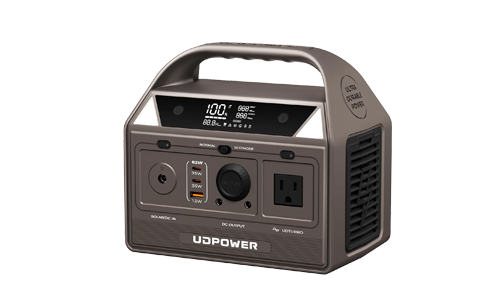
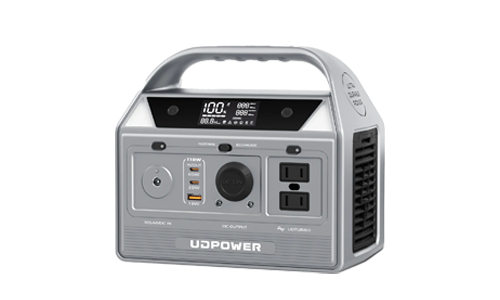
Best compact option: UDPOWER C400

256Wh400W AC outputLiFePO44,000+ cycles
The C400 is the clean fit for a solo night vision kit: digital monocular or goggles, IR torch charging, phone/GPS, headlamp, and camera batteries. It is not oversized for a night outside, but it gives more confidence than relying on several small battery packs.
Choose it for: short hunting sits, wildlife viewing, scouting, camping nights, and low-watt gear under about 20–30W total.
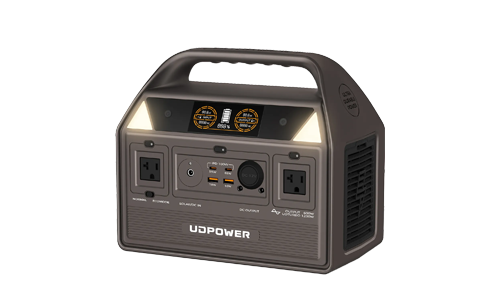
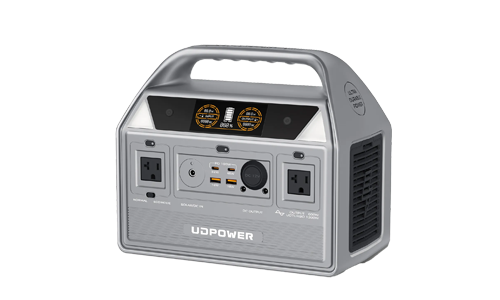
View UDPOWER C400Best balanced option: UDPOWER C600

596Wh600W AC output1200W surgeLiFePO4
The C600 is the practical middle ground for most night vision users. At 20W, it can cover roughly a full day of intermittent observation or more than a typical overnight watch. It also has enough output for laptops, camera chargers, small fans, and other camp electronics.
Choose it for: all-night hunting blind setups, security watch, camping, camera charging, and moderate electronics without moving into a large home-backup unit.
View UDPOWER C600Best long-weekend option: UDPOWER S1200
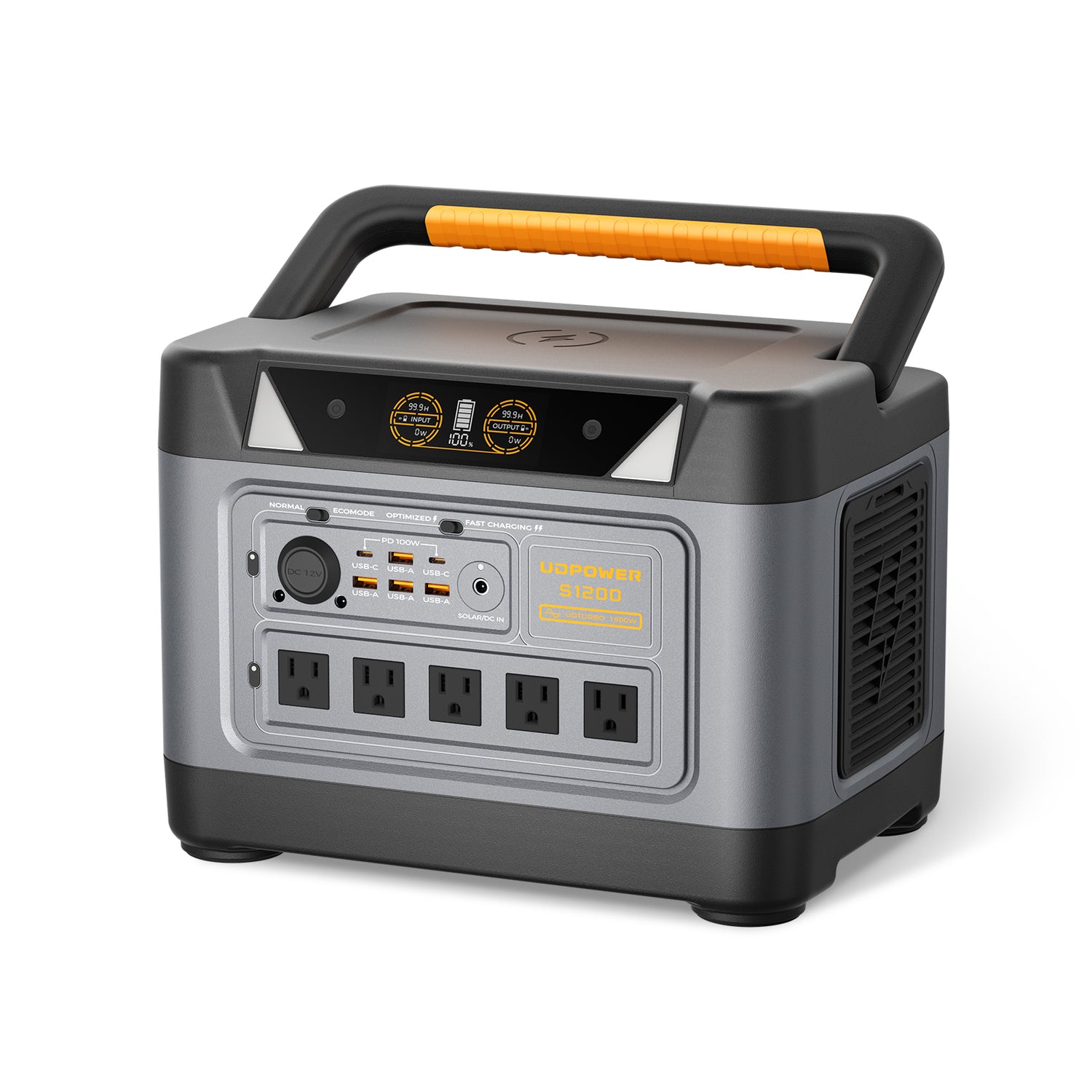
1,190Wh1,200W AC output1,800W surge<10ms UPS
The S1200 makes sense when night vision is part of a larger weekend load: phones, radios, lights, camera batteries, laptop, CPAP, small cooler, or emergency home backup after the trip. It is still portable, but the extra capacity gives you margin when weather, cold, or a longer sit eats into your plan.
Choose it for: multi-night trips, base camps, cabin backup, CPAP plus electronics, and users who want one station for outdoor and home outage use.
View UDPOWER S1200 View solar generator kitsBest off-grid base option: UDPOWER S2400
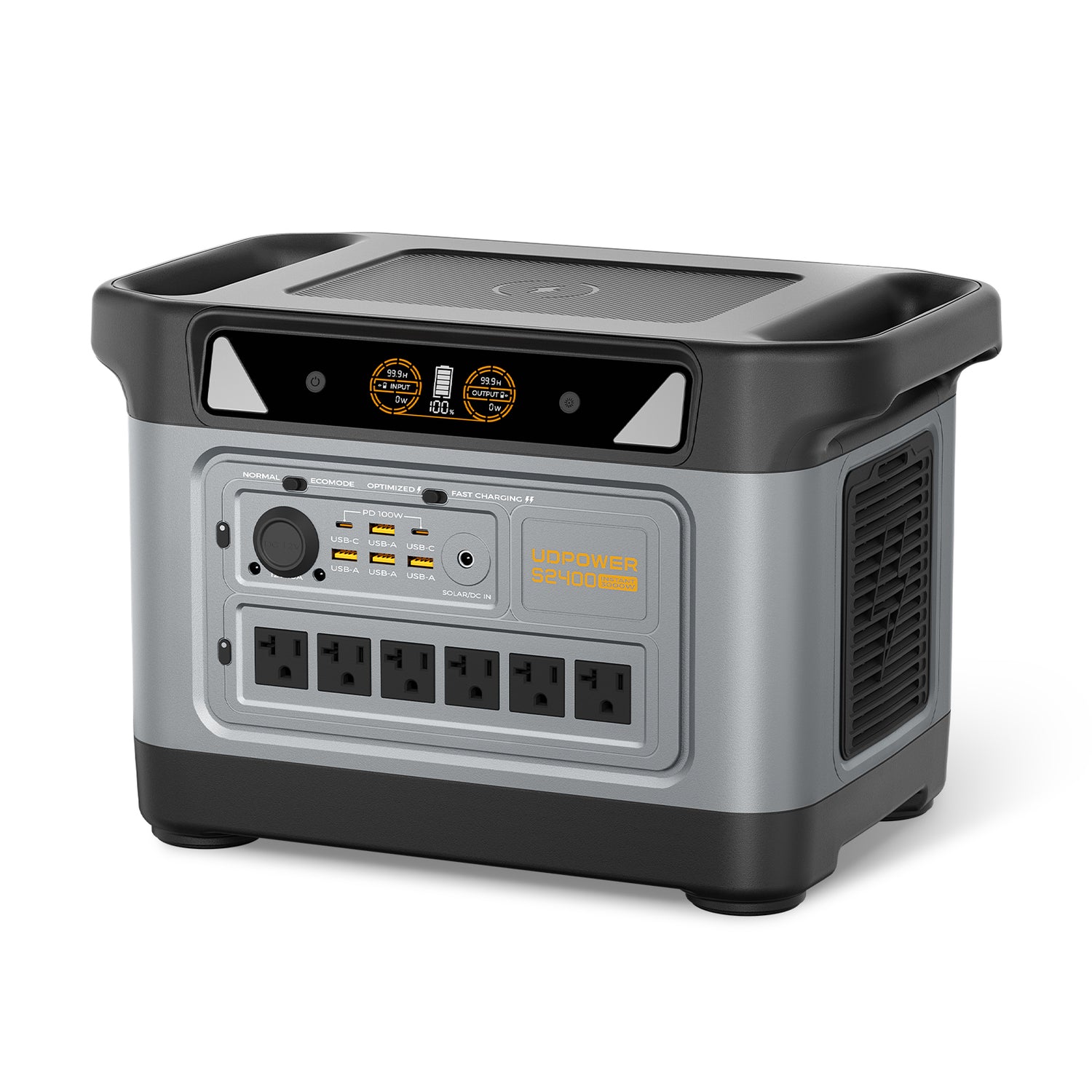
2,083Wh2,400W AC output3,000W surge6 AC outlets
The S2400 is for the user whose “night vision power” is really a full off-grid setup: optics, IR, router, camera system, laptop, lights, fridge or small cooler, and emergency home loads. It is the best fit when the power station needs to support both observation gear and real base-camp comfort.
Choose it for: cabins, RVs, long outages, group trips, and users who want large reserve capacity instead of calculating every watt overnight.
View UDPOWER S2400 View solar panelsField Tips to Make Night Vision Batteries Last Longer
1. Turn down the IR before you blame the battery
IR brightness is one of the fastest ways to drain a digital night vision setup. Use the lowest IR level that gives you a usable image. When animals or people are close, high IR often washes out detail anyway.
2. Keep the screen as dim as you can use comfortably
Digital night vision devices use a display. A bright screen hurts your night adaptation and wastes power. Dim it once your eyes adjust.
3. Use 850nm for range and 940nm for lower visible glow
Many digital devices support both wavelengths or can pair with external illuminators. In general, 850nm usually gives stronger range, while 940nm reduces visible red glow but may need more power or shorter range expectations.
4. Separate “device runtime” from “trip runtime”
A monocular that runs 5 hours does not mean your trip only needs 5 hours of power. Count the phone you use for maps, the camera battery charger, the red light, the radio, and any heated or comfort items.
5. Prefer DC/USB charging when possible
If your device charges from USB-C, USB-A, or 12V DC, use that instead of running an AC wall brick when practical. It keeps the setup quieter, simpler, and usually more efficient.
6. Keep batteries warm, but keep power stations ventilated
Small removable cells can ride in an inner pocket before use. A power station should stay dry and protected, but do not bury its vents under blankets, jackets, or gear.
FAQ: Night Vision Watts and Runtime
How many watts does night vision use?
Analog image-intensifier night vision may average under 1 watt when IR is off. Digital night vision commonly plans around 2–6 watts for the device, and a full setup with external IR, phone charging, and lights can reach 10–40 watts or more.
Does infrared use a lot of battery?
Yes, compared with the optic itself. Built-in IR on low may not be a big load, but high IR or an external IR torch can become the main battery drain in a digital night vision setup.
Can I run night vision from a portable power station?
Yes, if the device can charge or run from USB, 12V DC, or an AC adapter. For one small device, a power bank may be enough. For a night vision kit with IR, phone, lights, camera batteries, and camp electronics, a portable power station is much easier to manage.
What size power station do I need for night vision?
For a single digital monocular, 100Wh or less may cover a night. For a practical field kit, 256Wh is a better starting point. For all-night observation with IR and other electronics, 596Wh is more comfortable. For multi-night trips or base-camp use, 1190Wh or 2083Wh gives better reserve capacity.
How long will a 256Wh power station run night vision?
Using a 90% planning efficiency, a 256Wh station provides about 230Wh usable energy. That is roughly 46 hours at 5W, 23 hours at 10W, 11.5 hours at 20W, or 5.8 hours at 40W.
Is AC or USB better for night vision?
USB or DC is usually better when your device supports it, because it avoids running an AC inverter and wall adapter. AC is still useful for camera chargers, laptops, or devices that only include a wall charger.
Should I buy a power station if my night vision uses AA or CR123 batteries?
Not for the optic alone. If your analog night vision runs all night on spare AA or CR123 batteries, a power station may be unnecessary. It becomes useful when you also need to charge phones, radios, cameras, lights, laptops, or run camp and emergency backup gear.
Why does my digital night vision battery die faster than advertised?
Common reasons include high IR brightness, high screen brightness, cold weather, video recording, Wi-Fi/app use, older batteries, and using an external illuminator. Published runtime is usually based on a controlled setup, not every field condition.
Sources Used for Power Planning
The article uses basic watt-hour calculation methods and current publicly available device/product specifications. External references are linked below with nofollow attributes.
Build a Night Vision Power Setup That Lasts the Whole Watch
Start with your real load list, then choose enough watt-hours for the night, the weather, and the gear you forgot to count. UDPOWER portable power stations give you quiet, clean backup power for night vision, phones, lights, radios, cameras, camping electronics, and emergency home use.
View portable power stations View solar generator kits Get the sizing guideRelated Articles


