

Are Flexible Solar Panels Worth It?
Solar Buying Guide
Last updated: July 9, 2026
Quick Answer
Flexible solar panels are worth it only when you truly need a lightweight, low-profile panel that can follow a slightly curved RV, van, boat, or small trailer surface. They are not the best choice when your main goal is maximum output, long service life, or the lowest cost per watt.
For most people charging a portable power station, a foldable portable solar panel is usually the smarter buy. It can be angled toward the sun, kept cooler with airflow, stored when not in use, and moved away from shade. Flexible panels make sense for special mounting problems; foldable panels make more sense for everyday camping, RV stops, outages, and portable backup power.

Bottom Line: Flexible Solar Panels Are a “Special Use” Product
A flexible solar panel solves one problem very well: it gives you solar charging where a glass-framed rigid panel is too heavy, too tall, or too difficult to mount. That is why you often see flexible panels on curved van roofs, boat cabins, teardrop trailers, golf carts, and lightweight off-grid builds.
But “flexible” does not automatically mean “better.” A panel glued flat to a hot roof can run hotter, produce less power, and age faster than a panel that has airflow underneath it. A flat roof panel also cannot be tilted toward the sun unless the whole vehicle is parked in the perfect direction. For portable power station users, that usually means slower charging than expected.
| Situation | Are flexible panels worth it? | Why | Better option if not |
|---|---|---|---|
| Curved van roof, boat cabin, or lightweight trailer | Yes, often | Low weight and bendable mounting matter more than perfect output. | Use a quality ETFE flexible panel with careful cable routing and airflow where possible. |
| Camping with a portable power station | Usually no | You get more usable energy by moving and tilting a foldable panel throughout the day. | Foldable portable solar panel with kickstand. |
| Home backup charging during outages | Usually no | Output, durability, and speed matter more than low-profile mounting. | Foldable panels for temporary use or rigid panels for permanent systems. |
| RV roof with limited weight capacity | Maybe | Flexible panels reduce weight, but heat and roof adhesion can shorten service life. | Flexible panel with an airflow gap, or lightweight framed panel if the roof allows it. |
| Lowest long-term cost per watt | No | Rigid panels usually win on lifespan and output stability. | Rigid solar panel system. |
| Charging phones, cameras, lights, and small devices on short trips | Not necessary | A small foldable panel is easier to aim, pack, and protect. | 120W portable foldable panel plus a compact power station. |
Flexible vs. Foldable vs. Rigid Solar Panels
Many shoppers mix up “flexible” and “foldable.” They are not the same thing, and that difference affects charging speed, durability, storage, and installation.
| Panel type | What it means | Best for | Main weakness |
|---|---|---|---|
| Flexible solar panel | A thin solar panel that can bend slightly to follow curved surfaces. | Van roofs, boat cabins, curved trailer roofs, low-profile installs. | Heat buildup, shorter lifespan, lower output if mounted flat. |
| Foldable portable solar panel | A portable panel that folds for storage and opens with a kickstand or support legs. | Camping, RV stops, emergency charging, portable power stations. | Needs setup space and must be protected from wind or theft. |
| Rigid solar panel | A framed glass panel designed for permanent mounting. | Home solar, long-term RV roof systems, sheds, cabins. | Heavier, bulkier, usually needs brackets or roof mounting hardware. |
Practical rule
Choose flexible when the mounting surface forces your decision. Choose foldable when you want better daily charging from a portable power station. Choose rigid when the panel will stay mounted for years and you care about long-term output.
What Flexible Solar Panels Do Well
1. They are light enough for surfaces that cannot carry much weight
Weight is the biggest reason to consider flexible panels. On a small trailer, camper shell, boat canopy, or curved van roof, shaving off weight can matter more than squeezing every watt out of the panel.
2. They sit low and reduce wind drag
Flexible panels are thin and low-profile. That is useful when you do not want a roof rack, tall brackets, or a panel edge catching wind on the highway.
3. They can fit curved or awkward surfaces
A rigid panel wants a flat frame. A flexible panel can follow a gentle curve. This can open up roof space that would otherwise go unused.
4. They can be easier to install without drilling
Many flexible panels are installed with adhesive, tape, or low-profile mounting methods. That can be attractive if you want to avoid drilling into a roof. However, easier installation does not mean zero planning. Surface prep, cable routing, water sealing, and future removal all matter.
5. They are easier to hide
For stealth campers and small vans, a low-profile panel can be less obvious from the ground. If visual appearance matters, this is a real advantage.
The Real Drawbacks Most Buyers Miss
The biggest problem is not bending. It is heat.
Solar panels lose performance as they get hotter. A flexible panel bonded directly to a roof has less airflow behind it, so it can run hotter than a panel raised on brackets. That can reduce daytime output and may speed up material aging over time.
1. Flat mounting often means lower daily energy
A flat roof panel is convenient, but it is rarely aimed at the sun. In the Northern Hemisphere, panels generally produce more total energy when they face south and are tilted appropriately. A portable foldable panel can be moved and angled; a glued flexible panel cannot.
2. They usually do not last as long as rigid panels
Flexible panels use thinner materials and are exposed to constant UV, heat, vibration, and bending stress. Some high-quality panels can perform well for years, but it is reasonable to expect a shorter working life than a traditional rigid panel system.
3. Adhesive mounting can make replacement harder
A panel that was easy to install may be difficult to remove. If the panel fails or the roof needs service, adhesive cleanup can become the most annoying part of the job.
4. Over-bending can damage cells
Flexible does not mean foldable like fabric. Every panel has a bending limit. Bending beyond that limit can create cell damage, weak points, or future output loss.
5. Cable strain is a common failure point
On moving vehicles and boats, vibration pulls on cables, junction boxes, and connectors. A good installation includes strain relief, protected cable routes, and weather-resistant cable entry.
| Risk | Why it happens | How to reduce it |
|---|---|---|
| Lower output than expected | Flat angle, shade, heat, clouds, dirty surface, or weak sun. | Keep the panel clean, avoid shade, and use portable panels when you need adjustable angle. |
| Heat buildup | Panel is glued directly to a roof with little airflow. | Leave an airflow path where possible and avoid dark, heat-trapping surfaces. |
| Premature wear | UV exposure, heat cycling, roof flex, vibration, or poor lamination. | Choose better materials such as ETFE surfaces and follow the manufacturer’s bend limit. |
| Water intrusion | Poor cable entry, worn sealant, or low-quality connectors. | Use proper cable glands, inspect sealant, and keep connectors off areas where water pools. |
| Hard removal | Strong adhesive bonds to the roof. | Plan for replacement before installation; avoid permanent adhesives unless you accept the trade-off. |
Related external reading: EIA on orientation and tilt, U.S. Department of Energy PV performance guide, and flexible solar panel pros and cons.
Real-World Output: The Math That Matters
A solar panel’s rated wattage is measured under ideal test conditions. Outdoors, the number you see on your power station display will move constantly. Sun angle, clouds, shade, surface temperature, cable loss, panel cleanliness, and battery charging stage all affect input.
Simple charging formula
Estimated charging time = power station capacity ÷ actual solar input ÷ charging efficiency.
For UDPOWER portable power station estimates, use about 90% conversion efficiency unless your test data shows otherwise.
| Solar setup | Typical sunny-day input range | Best match | What to expect |
|---|---|---|---|
| 120W portable foldable panel | About 70W–100W in good real-world sun | Small power stations, phones, routers, lights, cameras, short camping trips | Easy to move and aim; better for casual users than a roof-glued flexible panel. |
| 210W portable foldable panel | About 130W–180W in good real-world sun | Medium to large power stations, RV stops, longer camping days | Faster charging than 120W, but check voltage compatibility before pairing. |
| 2 × 210W portable foldable panels | About 260W–360W in good real-world sun | Larger power stations and longer backup windows | Best when you need meaningful recharge during one sunny day. |
| Flexible roof panel | Highly dependent on roof heat, angle, and shade | Permanent top-up on vans, boats, and low-profile builds | Convenient but often slower than an adjustable portable panel with the same watt rating. |
Example: Why a foldable panel can beat a flexible roof panel
Imagine two 200W-class panels. One is glued flat to a hot van roof. The other is a foldable panel placed on the ground and aimed at the sun. Even if both panels have similar rated wattage, the foldable panel may deliver more usable energy during the day because it can be angled, cooled by airflow, and moved away from shade.
Do not judge solar by one screenshot
Solar input can jump up and down every few seconds. A better test is a 20–30 minute observation in full sun with the panel clean, fully unfolded, facing the sun, and connected correctly. Watch the average input, not only the highest number.
Best and Worst Use Cases for Flexible Solar Panels
Flexible panels are worth considering for:
- Curved van roofs where rigid panels do not sit safely.
- Boat cabins or marine surfaces where low weight and low profile matter.
- Small trailers with strict roof weight limits.
- Stealth camping setups where a tall framed panel is not ideal.
- Light solar top-up when maximum charging speed is not the main goal.
Flexible panels are usually not the best choice for:
- Home backup systems where you need fast, reliable charging after an outage.
- Hot roofs with no airflow under the panel.
- Users who want the lowest long-term cost per watt.
- People who frequently park in shade but expect strong solar input.
- Portable power station users who can easily set up a foldable panel outdoors.
| Your goal | Best panel type | Why |
|---|---|---|
| Charge a power station at a campsite | Foldable portable panel | You can aim it at the sun, move it away from shade, and store it after use. |
| Keep a van battery topped up while parked | Flexible or rigid roof panel | Permanent roof solar works even when you are not actively setting up gear. |
| Run a fridge, CPAP, fan, lights, and phones during an outage | Foldable panel plus larger power station | Charging speed and battery capacity matter more than a low-profile install. |
| Build a long-life cabin or shed solar setup | Rigid panel | Permanent systems benefit from durability, airflow, and better long-term value. |
| Use solar on a boat with curved surfaces | Flexible panel | Shape, weight, and low profile can matter more than peak output. |
Buying Checklist Before You Choose a Flexible Solar Panel
If you still think flexible solar panels fit your use case, do not buy only by wattage. Use this checklist first.
1. Confirm the surface material
A smooth fiberglass roof, painted metal roof, rubber RV roof, and boat deck all behave differently. Adhesive that works on one surface may not be ideal for another.
2. Check bend limit, not just “flexible” marketing
Every flexible panel has a maximum bend radius or bend angle. Do not force the panel tighter than the manufacturer allows.
3. Look for ETFE surface material when possible
ETFE surfaces are commonly preferred over cheaper surface films because they tend to handle outdoor wear better. That does not make the panel indestructible, but it is a better sign than a no-name panel with vague materials.
4. Match voltage and connector requirements
Do not assume every solar panel works with every power station. Check open circuit voltage, working voltage, current, connector type, and the power station’s solar input range.
5. Plan cable routing before installation
A clean panel install can still fail if the cable is pinched, pulled, rubbed, or left where water pools. Plan the cable path before attaching the panel.
6. Think about replacement on day one
If the panel fails in three to five years, how will you remove it? If the answer is “I have no idea,” rethink the adhesive method.
Recommended UDPOWER Solar-Ready Setups
If your goal is portable power rather than permanent roof solar, a foldable solar panel paired with a LiFePO4 power station is usually easier to live with. Below are practical UDPOWER options based on real use cases.

UDPOWER 120W Portable Solar Panel — best for compact solar charging
- Rated power: 120W
- Open circuit voltage: 21.5V
- Maximum power voltage: 17.92V
- Efficiency: ≥22%
- Waterproof rating: IP65
- Unfolded size: 58.82 × 18.58 × 0.79 in
- Folded size: 18.58 × 15.94 × 1.57 in
- Compatible with UDPOWER C200, C400, C600, S1200, and S2400 according to the product page.
Best for: short camping trips, phone/laptop/camera charging, emergency router backup, and users who want a simple portable solar setup.
View 120W Solar Panel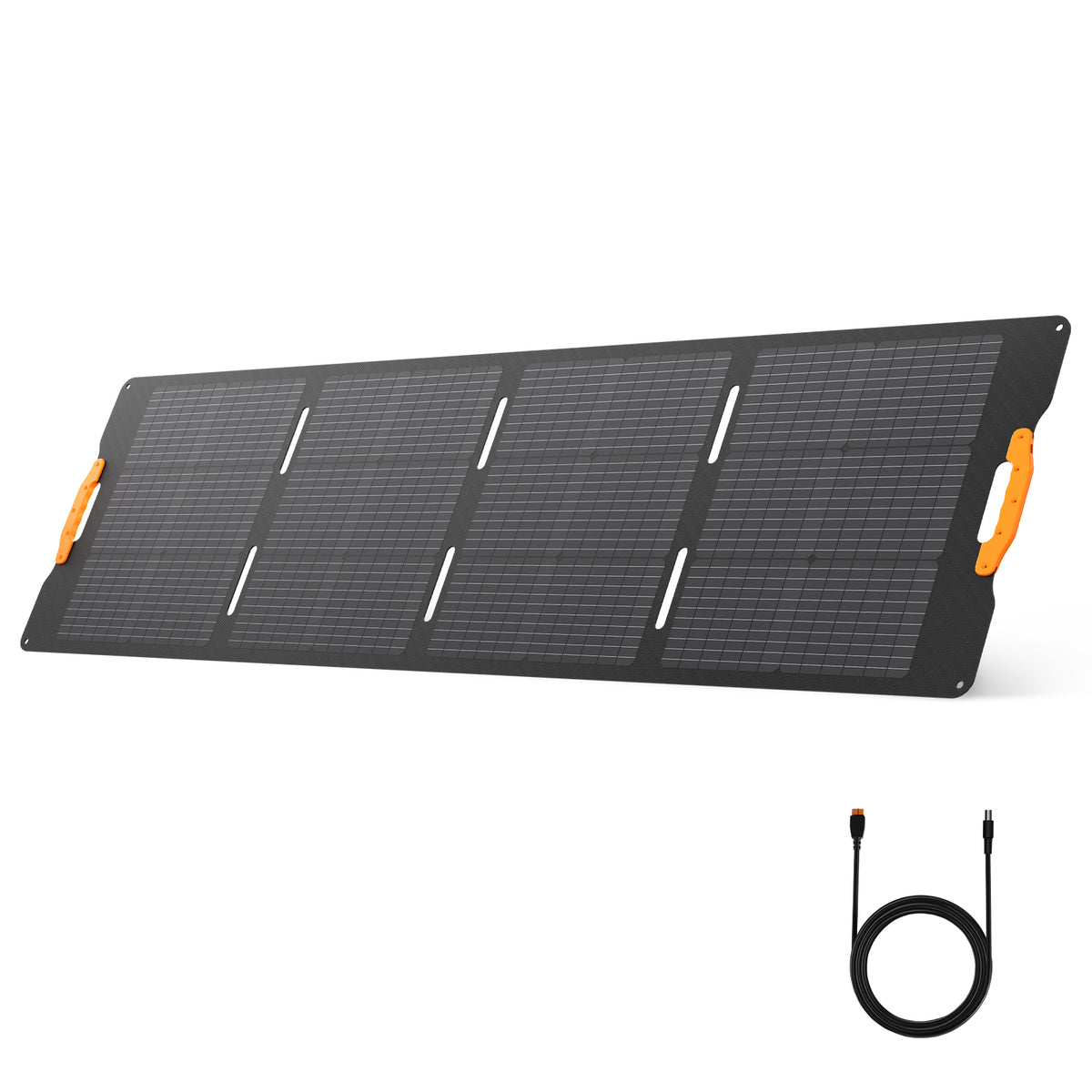
UDPOWER 210W Portable Foldable Solar Panel — better for faster daytime charging
- Rated power: 210W
- Open circuit voltage: 48.0V
- Maximum power voltage: 40.0V
- Running current: 5.00A
- Efficiency: ≥22%
- Waterproof rating: IP65
- Weight: 15.32 lb
- Unfolded size: 86.22 × 23.66 × 0.14 in
- Folded size: 23.66 × 23.15 × 0.79 in
Best for: S1200 and S2400 users who want stronger solar input than a 120W panel can provide. Note: check voltage compatibility before pairing with smaller models; UDPOWER notes that C600 only supports 18V solar panels and should not be used with 210W panels.
View 210W Solar Panel
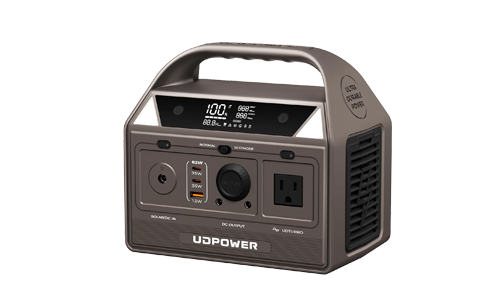
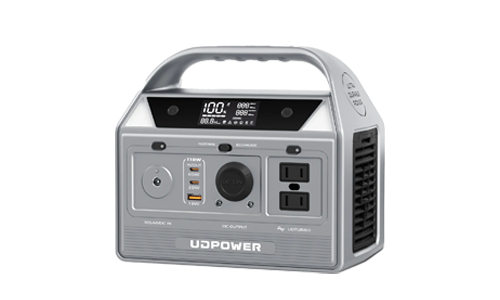
UDPOWER C600 — best compact station for 120W solar pairing
- Battery capacity: 596Wh
- Rated output: 600W
- Peak output: 1200W
- Battery chemistry: LiFePO4
- Cycle life: 4,000+ cycles
- Ports include AC outlets, USB-C, USB-A, and 12V car outlet.
Best for: small fridges, phones, laptops, cameras, lights, fans, and short emergency backup. Pair it with the 120W solar panel for simple outdoor charging.
View C600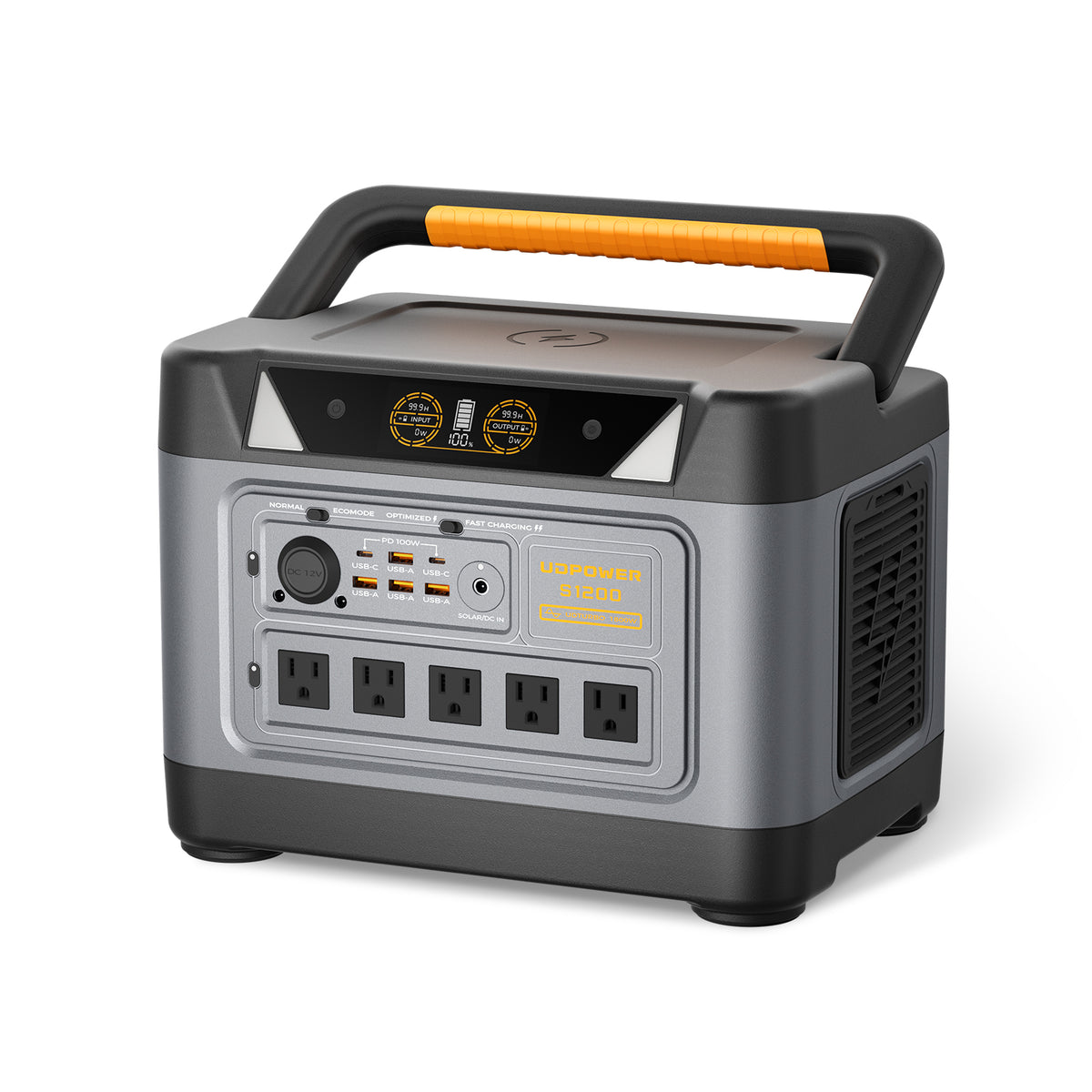
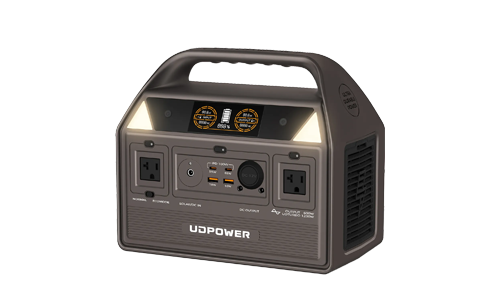
UDPOWER S1200 — best balanced setup for camping and home essentials
- Battery capacity: 1,190Wh
- Rated AC output: 1,200W pure sine wave
- Surge support: up to 1,800W with UDTURBO
- Weight: 26.0 lb
- Battery chemistry: LiFePO4
- Cycle life: 4,000+ cycles
- Useful for refrigerator, CPAP, laptop, fan, lights, and emergency backup use.
Best for: users who need more than a weekend phone charger but still want a portable power station that is manageable to move.
View S1200
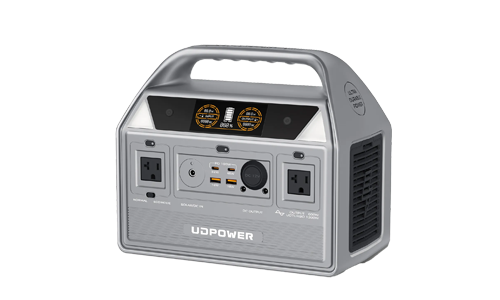
UDPOWER S2400 — best for bigger loads and stronger solar recharge
- Battery capacity: 2,083Wh
- Rated AC output: 2,400W pure sine wave
- Surge support: up to 3,000W with UDTURBO
- Solar charging support: up to 400W input
- Ports: 6 AC outlets plus DC outputs including USB-A, USB-C, DC5521, 12V car port
- UPSPRIME switchover: less than 10 ms
Best for: RV camping, extended outages, refrigerators, microwaves, CPAP backup, power tools, and users who want a larger solar generator setup.
View S2400| Use case | Recommended UDPOWER setup | Why it fits |
|---|---|---|
| Phones, cameras, lights, laptop charging | 120W Solar Panel + compact power station | Simple, portable, and easy to aim toward the sun. |
| Small fridge, fan, laptop, weekend camping | C600 + 120W Solar Panel | Balanced capacity without moving into a large power station. |
| CPAP, refrigerator cycling, family camping, outage essentials | S1200 + 210W or higher solar setup | More battery capacity and stronger AC output for real household essentials. |
| RV, longer outage, higher-power appliances | S2400 + 420W solar bundle | Higher capacity, 2,400W output, 6 AC outlets, and stronger solar input support. |
So, Should You Buy Flexible Solar Panels?
Buy flexible solar panels if your surface demands it. They are useful when weight, curve, and low profile matter more than peak performance. A van roof that cannot accept a rack, a boat cabin with a gentle curve, or a small trailer with limited roof strength can all be good reasons.
Do not buy flexible panels just because they sound more advanced. If you are charging a portable power station at camp, during a blackout, or on an RV stop, foldable portable solar panels are usually more practical. You can place them in better sun, tilt them, keep them cooler, and pack them away when the weather turns bad.
The honest answer is this: flexible solar panels are worth it when they solve a mounting problem. They are not usually worth it as a general replacement for foldable portable panels or rigid solar panels.
Related Reading
- Are Foldable Solar Panels Worth It?
- Is It Worth Getting a Portable Solar Panel?
- UDPOWER Solar Panel Pairing Guide: 120W vs 210W vs 2×120W
- How to Set Up a Foldable Portable Solar Panel for Maximum Efficiency
- Solar Panel Connector Types
- DC Input Connector Types
- Shop Portable Power Stations
- Shop Solar Generators
FAQ: Flexible Solar Panels
Are flexible solar panels worth it for an RV?
They can be worth it if your RV roof has weight limits, curved areas, or no room for raised brackets. If your RV has enough room for portable panels, a foldable solar panel is often easier to aim and can deliver better charging during camp stops.
Do flexible solar panels produce less power than rigid panels?
Often, yes. Flexible panels can produce useful power, but they usually lose more output from heat and flat mounting. Rigid panels often have better airflow and long-term durability.
Are flexible solar panels the same as foldable solar panels?
No. A flexible panel bends slightly to match a surface and is often mounted semi-permanently. A foldable solar panel folds for storage and is usually set up temporarily with a kickstand. For portable power station users, foldable panels are usually more practical.
Can I walk on flexible solar panels?
Do not assume you can walk on them. Some panels may tolerate light pressure better than others, but regular foot traffic can damage cells, scratch the surface, or weaken the panel. Always follow the manufacturer’s instructions.
Do flexible solar panels overheat?
They can run hot when mounted directly to a roof with little airflow underneath. Heat can reduce output and may shorten panel life. If possible, leave airflow space and avoid mounting on surfaces that trap excessive heat.
How long do flexible solar panels last?
Lifespan depends on panel quality, surface material, heat exposure, UV exposure, installation method, and vibration. In general, flexible panels should be viewed as shorter-life products than good rigid panels, especially when glued flat to hot roofs.
Can I connect any flexible solar panel to a UDPOWER power station?
No. You need to match the panel’s voltage, current, connector type, and the power station’s solar input limits. Do not pair panels only by wattage. Check open circuit voltage, working voltage, and connector compatibility before connecting.
What is better for charging a portable power station: flexible or foldable?
For most users, foldable is better. A foldable solar panel can be aimed at the sun, moved away from shade, cooled by airflow, and stored when not needed. Flexible panels are better when you need a permanent low-profile surface-mounted solution.
How many watts of solar do I need for camping?
For phones, lights, and cameras, 120W can be enough. For a fridge, CPAP, fan, laptop, or longer camping trips, 210W or more is more comfortable. For larger power stations such as the S2400, a higher-watt solar bundle helps make one sunny day more useful.
Should I glue a flexible solar panel directly to my roof?
Only if you accept the heat and removal trade-offs. Direct adhesive mounting can look clean, but it may reduce airflow and make replacement harder later. Plan cable routing, roof sealing, and future removal before installing.
Choose a Solar Setup That Fits How You Actually Use Power
Flexible solar panels are useful for special roof and marine installations. For most portable backup, camping, RV, and emergency use, a foldable solar panel plus a LiFePO4 power station is easier to aim, easier to protect, and usually better for real-world charging.
Related Articles


