

Preparing for Lake‑Effect Snow Warning: A Complete Guide to Stay Safe
Latest updated: September 2, 2026 · For U.S. Great Lakes communities and other areas affected by localized lake-effect snow.
Quick answer: If a Lake Effect Snow Warning is issued for your area, treat it as a signal to finish non-essential travel and outdoor errands before the strongest snow band arrives. Lake-effect snow can be highly localized: one town may have manageable roads while another several miles away is experiencing heavy snow and sharply reduced visibility.
Charge your phones and backup batteries, prepare at least several days of food, water and medications, check your vehicle emergency kit, test smoke and carbon-monoxide alarms, and make a plan for a possible power outage. During the storm, avoid unnecessary travel and follow the latest warning text from your local National Weather Service office rather than relying only on a regional snowfall-total map.

Lake-effect snow is different from a broad winter storm in one important way: the worst conditions can be concentrated inside a relatively narrow band. That makes timing and location just as important as the predicted storm-total snowfall.
If you live downwind of Lakes Erie, Ontario, Michigan, Superior or another large body of relatively warm open water, a shift in wind direction can move the heaviest snow from one community to another. The safest preparation plan therefore needs to cover four things at the same time: travel, heat, communications and backup power.
What Does a Lake Effect Snow Warning Mean?
The National Weather Service defines lake-effect snow as snow showers that form when cold, dry air passes over a relatively warmer large lake, picking up heat and moisture. A Lake Effect Snow Warning is used when lake-generated snow is expected to create hazardous or potentially life-threatening conditions.
There is no single snowfall number that every U.S. community uses. Winter warning criteria are set locally because six inches of snow does not create the same impact everywhere. Your local NWS office's warning text is therefore more useful than trying to memorize a nationwide threshold.
| Example | Lake-effect warning criteria shown by NWS | What this tells you | Source |
|---|---|---|---|
| NWS Binghamton, New York | New York examples include 7 inches or more in 12 hours, or 9 inches or more in 24 hours. Northeast Pennsylvania thresholds listed by that office are lower. | Criteria can change across state and forecast-office boundaries. | NWS Binghamton |
| NWS Cleveland | The office lists a Lake Effect Snow Warning criterion of 6 inches or greater for the northernmost portions of its forecast area. | A national "X inches always equals a warning" rule is not reliable. | NWS Cleveland |
| National NWS definition | The warning is tied to hazardous or life-threatening lake-generated snow rather than one universal accumulation threshold. | Read the local warning's What, Where, When and Impacts sections. | NWS Glossary |
The separate Lake Effect Snow Warning product was restored by the National Weather Service in 2019 after it had previously been consolidated into the broader Winter Storm Warning. Local and regional use can still vary.
Source: National Weather Service Service Change Notice 19-63.
Lake Effect Snow Warning vs. Other Winter Alerts
A common mistake is treating every winter alert as interchangeable. They describe different hazards, and the correct response may be different.
| Alert | Main hazard | Typical pattern | Travel implication |
|---|---|---|---|
| Lake Effect Snow Warning | Heavy lake-generated snow | Often narrow and highly localized | Conditions can change dramatically over a short distance. |
| Winter Storm Warning | Heavy snow, sleet, ice or a combination of winter hazards | Often broader than a single lake-effect band | Dangerous winter travel is expected or occurring. |
| Snow Squall Warning | Sudden intense snow and rapidly falling visibility | Usually short-duration and fast-moving | Road conditions can deteriorate extremely quickly. |
| Blizzard Warning | Strong wind plus falling or blowing snow | Visibility frequently falls below 1/4 mile under warning criteria | Travel may become extremely difficult or impossible. |
For current definitions and local warning criteria, check the National Weather Service winter warning guide.
Why Lake-Effect Snow Requires a Different Preparation Plan
A county-wide snowfall forecast can hide the most important detail: where the persistent snow band actually sets up.
Lake-effect bands can move as wind direction changes. A location that sees light snow in the morning can move into a much heavier band later, while a nearby location improves. Recent NWS Buffalo warning language has included snowfall rates reaching several inches per hour in persistent bands, along with rapidly changing visibility and road conditions.
When a Lake Effect Snow Warning is active, do not decide whether travel is safe only by looking out your window. Check the latest warning, radar, local road information and the entire route. Clear conditions at your house do not guarantee clear conditions 10 or 20 miles away.
This localized behavior is why lake-effect preparation should focus less on the final storm-total number and more on when the band is expected to arrive, whether it will cross your route and how long you may need to remain at home.
What to Do in the First Two Hours After a Warning Is Issued
If a warning is issued before the heavy snow begins, use the remaining safe-weather window efficiently.
| Time | Priority | Actions |
|---|---|---|
| First 15 minutes | Understand the warning | Read the full NWS alert. Confirm the affected counties or zones, start and end times, expected accumulation, snowfall rate, wind and travel impacts. |
| 15–30 minutes | Communication | Charge phones, enable emergency alerts, contact household members and decide whether anyone needs to return home before conditions deteriorate. |
| 30–60 minutes | Power and heat | Fully charge portable power stations and power banks. Check flashlights, CO alarms, furnace operation and backup heat supplies. |
| 60–120 minutes | Final outdoor tasks | Finish only necessary errands while roads remain safe, move vehicles to appropriate parking, bring pets indoors and stage shovels and snow-removal equipment. |
| Once heavy snow begins | Shelter and monitor | Avoid non-essential travel. Monitor the snow band's movement and keep exterior furnace, dryer and other necessary exhaust locations in mind as snow accumulates. |
The safest time to cancel unnecessary travel is before the narrow heavy-snow band reaches your route.
72-Hour Home Preparation Checklist
A major lake-effect event can disrupt roads long after snow stops falling. The problem may not be that your home is buried for exactly three days; the problem is that groceries, medications, fuel, repair services or emergency help may be harder to reach.
Prepare your household to function without an unnecessary trip to the store.
| Category | What to prepare | Why it matters during lake-effect snow |
|---|---|---|
| Water | Plan around at least one gallon per person per day for several days, plus pet needs. | Frozen pipes, local water problems or dangerous roads can limit access. |
| Food | Shelf-stable meals, snacks and food that does not require electric cooking. | High-power cooking appliances consume backup energy quickly. |
| Medication | Prescription medicines and required medical supplies. | Pharmacy access may be difficult during prolonged travel restrictions. |
| Lighting | LED flashlights, headlamps and spare batteries. | LED lighting uses very little stored electricity compared with heating appliances. |
| Communication | Phones, charging cables, battery banks and a weather radio if available. | Warning updates can change as the snow band moves. |
| Warmth | Layers, blankets, hats, gloves and warm sleeping gear. | Passive warmth preserves battery capacity for critical devices. |
| Pets | Food, medications, water and an indoor warm area. | Outdoor exposure becomes dangerous quickly in snow and wind. |
| Snow removal | Shovels, ice melt and appropriate winter clothing. | You may need to maintain a safe exit and clear necessary vents after accumulation. |
| Backup electricity | Fully charged portable power station or other correctly operated backup source. | Phones, router, CPAP, lighting and refrigeration may become priorities if utility power fails. |
For additional preparation guidance, see the National Weather Service winter storm preparation guide.
Do a five-minute home check before the band arrives
- Test smoke and carbon-monoxide alarms.
- Confirm your furnace or primary heating system is operating normally.
- Know where the main water shutoff is located.
- Charge rechargeable lights, phones and battery backups.
- Move frequently used supplies somewhere easy to reach.
- Bring pets indoors.
- Close curtains or blinds before an outage to reduce heat loss.
- Make sure you know where exterior furnace and dryer vents terminate so they can be checked when conditions are safe.
Driving During Lake-Effect Snow: The Route Matters More Than Your Driveway
The best driving strategy during a Lake Effect Snow Warning is usually to avoid unnecessary travel. If you must travel, plan around the possibility that the road ahead may be much worse than the conditions where you started.
Before leaving
- Check the latest NWS warning and radar immediately before departure.
- Check your state's official road-condition or 511 system.
- Tell another person your destination, route and expected arrival time.
- Keep your vehicle's fuel tank at least half full during severe cold.
- Fully charge your phone and keep a vehicle charger available.
- Use suitable winter tires where appropriate for your climate and local rules.
- Clear snow and ice from the entire vehicle before driving.
- Avoid shortcuts on lightly traveled roads simply because a primary route looks slow.
Winter car emergency kit
| Item | Purpose |
|---|---|
| Warm blanket or sleeping bag | Reduces heat loss if you cannot drive away. |
| Hat, insulated gloves and extra socks | Protects extremities if the vehicle cools. |
| Compact shovel | Helps clear snow around wheels or the exhaust area. |
| Ice scraper and snow brush | Maintains visibility. |
| Flashlight or headlamp | Provides light and can help signal rescuers. |
| First-aid kit and medications | Supports medical needs during an extended delay. |
| Non-perishable snacks and water | Useful if you are stuck for several hours. |
| Jumper cables or approved jump starter | Helps with a weak 12V vehicle battery. |
| Sand or another traction aid | May improve tire grip on snow or ice. |
| Phone cable and vehicle charger | Preserves your ability to communicate and navigate. |
| Bright cloth or reflective item | Helps rescuers identify a stranded vehicle. |
The NWS maintains a detailed cold-weather vehicle preparation list with many of these items.
What Should You Do If Your Car Gets Stranded in Snow?
If you become stranded during a winter storm, the National Weather Service generally recommends staying with the vehicle rather than walking away into blowing or heavy snow. A vehicle is easier for rescuers to locate and provides shelter.
- Stay in the vehicle unless a safe shelter is clearly nearby.
- Call or message for help and share your location if service is available.
- Keep the exhaust pipe clear of snow before running the engine.
- The NWS recommends running the engine for about 10 minutes each hour for heat.
- While the engine is running, slightly open a window for fresh air.
- Use a bright cloth, hazard signal or interior light to help rescuers find you.
- Conserve your phone battery rather than continuously streaming video or entertainment.
- Keep moving your arms, legs, fingers and toes periodically without overexerting yourself.
See the full National Weather Service winter storm survival guidance.
Lake-Effect Snow Power Outage and Heating Safety
Heavy snow, falling branches, strong wind and vehicle accidents can all disrupt electrical service. When the power fails during freezing weather, the first goal is not to keep every normal household appliance operating. It is to protect people, communication and essential equipment.
Use this priority order
| Priority | Examples | Backup-power strategy |
|---|---|---|
| 1. Safety and medical | Necessary medical equipment, phone, emergency lighting | Reserve battery capacity first. |
| 2. Communication | Phone, modem, router, radio | Usually relatively low energy demand. |
| 3. Food protection | Refrigerator or freezer | Run strategically and minimize door openings. |
| 4. Basic comfort | Laptop, TV, small electronics | Use only if sufficient reserve remains. |
| 5. High-energy loads | Electric space heater, electric range, large resistance-heating devices | Usually poor choices for conserving portable battery energy. |
Why a space heater can drain a portable battery surprisingly fast
A typical electric space heater may use around 1,500W. At that load, even a 2,000Wh-class battery is measured in hours rather than days.
For example, using a 90% planning efficiency, a 2,083Wh battery provides approximately 1,875Wh of usable AC energy before other real-world losses are considered:
2,083Wh × 0.90 ÷ 1,500W ≈ 1.25 hours
That is why blankets, layered clothing, closing unused rooms and reducing drafts are normally much more energy-efficient than using your emergency battery as the home's primary heat source.
If your furnace requires electricity for controls or a blower, its backup requirements are different from plugging in a portable 1,500W electric heater. Check the furnace specifications and use only a manufacturer-approved connection method.
Carbon monoxide safety is non-negotiable
Battery power stations do not burn gasoline and therefore do not produce combustion exhaust during normal operation. Fuel-powered generators are different.
The CDC says portable generators should be operated outside and more than 20 feet from windows, doors and vents. Never operate a gas generator inside a home or garage, even with doors open.
Source: CDC Carbon Monoxide Poisoning Basics.
How Long Will Food Stay Safe If the Power Goes Out?
A winter storm does not automatically mean food in the refrigerator is safe indefinitely just because it is cold outside.
According to the FDA:
| Appliance | Approximate safe cold-holding time without power | Condition |
|---|---|---|
| Refrigerator | About 4 hours | Door remains closed. |
| Full freezer | About 48 hours | Door remains closed. |
| Half-full freezer | About 24 hours | Door remains closed. |
Keep appliance doors closed as much as possible. A refrigerator thermometer makes outage decisions much easier than guessing by touch or smell.
Source: FDA Power Outage Food Safety Guidance.
For a detailed refrigerator backup calculation, see Can a Portable Power Station Run Your Refrigerator?
How Much Portable Backup Power Do You Need for a Snowstorm?
For winter outage planning, wattage and watt-hours solve two different problems:
- Watts (W) determine whether the power station can operate the load.
- Watt-hours (Wh) determine approximately how long the battery can operate it.
A useful planning formula is:
The following examples use 90% conversion efficiency for straightforward planning. Actual runtime may be lower because of inverter overhead, temperature, device cycling, startup demand and battery condition.
| Example load | Planning wattage | UDPOWER S1200 1,190Wh |
UDPOWER S2400 2,083Wh |
Winter-storm use |
|---|---|---|---|---|
| CPAP | 40W | About 26.8 hours | About 46.9 hours | Actual consumption changes significantly with humidifier and heated-tube settings. |
| Refrigerator average load example | 100W | About 10.7 hours | About 18.7 hours | Compressor cycling and startup surge must also be considered. |
| Essential electronics bundle | 150W | About 7.1 hours | About 12.5 hours | Could represent a refrigerator plus selected communication and lighting loads depending on actual measurements. |
| Moderate mixed load | 300W | About 3.6 hours | About 6.2 hours | Useful for understanding how quickly simultaneous devices consume reserve energy. |
| Heavy mixed load | 500W | About 2.1 hours | About 3.7 hours | Reduce unnecessary appliances during a prolonged outage. |
| Typical high-output space heater example | 1,500W | Above the S1200's 1,200W rated AC output and not recommended as a planning load | About 1.25 hours by simple energy calculation | Very inefficient use of stored emergency energy. |
Do not use generic wattage assumptions when sizing equipment you depend on. Check the actual label, power adapter or measured consumption of your device. Our portable power station sizing guide explains running watts, surge demand and runtime in more detail.
A better snowstorm strategy: separate essential loads from optional loads
Suppose your power goes out at 8 p.m. and the utility gives no restoration time. Running every device immediately wastes the information advantage provided by a fully charged battery.
A better approach is to establish an energy budget:
- Keep phones and emergency lighting available at all times.
- Run the refrigerator only as needed while keeping its doors closed.
- Keep medical equipment at the top of the priority list.
- Use your router only if internet service remains available and useful.
- Avoid electric resistance heating unless there is a specific short-duration need and the power station supports the load.
- Turn off entertainment loads when battery reserve becomes more important than convenience.
For broader outage planning, see Basics of LFP Home Battery Backups.
Can You Use a Portable Power Station in Freezing Weather?
Cold-weather battery planning deserves more attention than it usually receives in snowstorm guides.
A portable power station may be able to discharge at temperatures where it should not be charged. The charging limit is often the more important number during a winter outage.
| Model | Listed discharge range | Listed charging range | Winter planning takeaway |
|---|---|---|---|
| UDPOWER S1200 | -4°F to 113°F (-20°C to 45°C) |
23°F to 104°F (-5°C to 40°C) |
Keep the unit in a dry, protected location and make sure battery temperature is within the charging range before recharging. |
| UDPOWER S2400 | -4°F to 113°F (-20°C to 45°C) |
32°F to 104°F (0°C to 40°C) |
Do not plan to leave the station outside in freezing conditions and then immediately recharge it while the battery remains below its charging range. |
Charge the power station before the storm arrives, keep it indoors in a dry location, keep ventilation openings unobstructed and avoid storing it in an unheated vehicle or shed immediately before you expect to need it.
For a deeper explanation, read How Cold Is Too Cold for a Solar Generator?
Do not depend on solar charging during the heaviest snow band
Solar charging can be useful after a storm, but heavy clouds, falling snow, panel snow cover and short winter daylight can reduce energy production exactly when you need it most.
For lake-effect events, think of solar as a recovery and extension tool, not your only emergency charging plan. Begin the warning period with the battery already charged.
After the band moves away and conditions are safe, portable panels can help restore energy during daylight. Browse current UDPOWER solar generator options if daytime recharging is part of your backup plan.
Which UDPOWER Power Station Is Better for Lake-Effect Snow Backup?
For a winter storm, capacity should be matched to the devices you actually intend to protect. A portable power station is not a whole-home heating system, but it can be extremely useful for refrigeration, communication, medical equipment, lighting and selected household electronics.
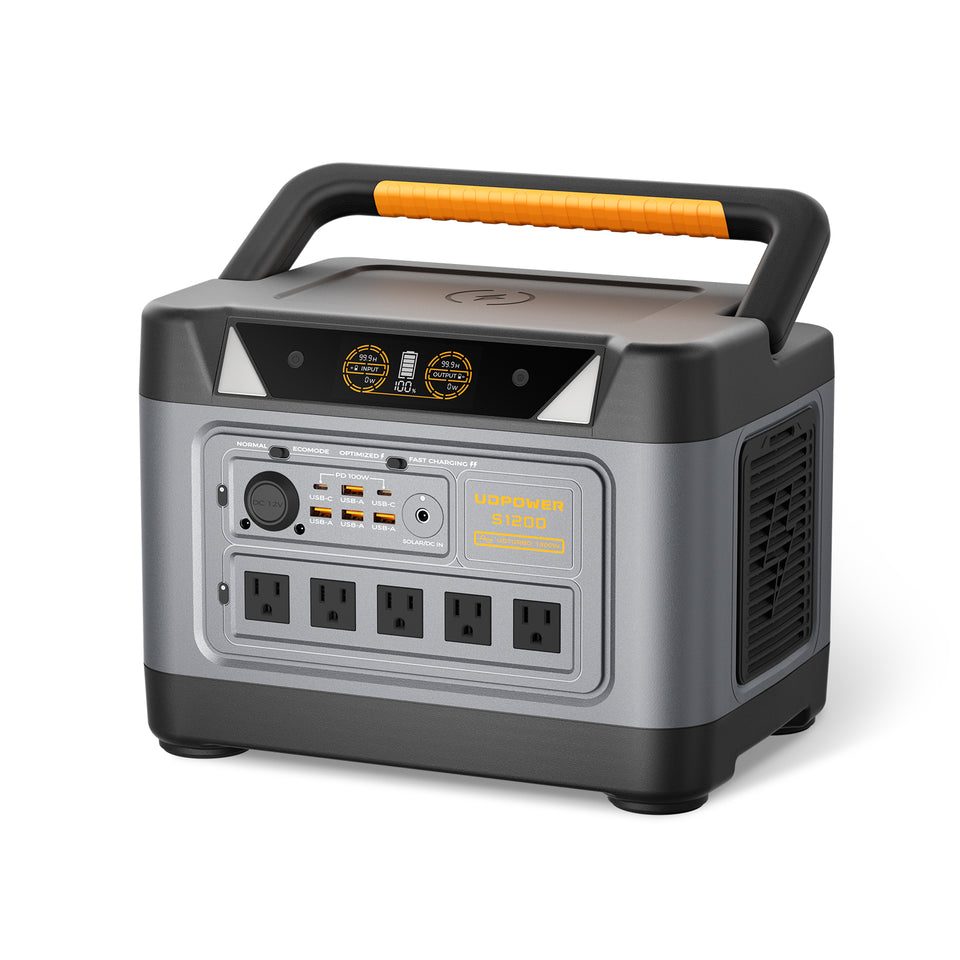
UDPOWER S1200: Best All-Around Winter Backup Choice
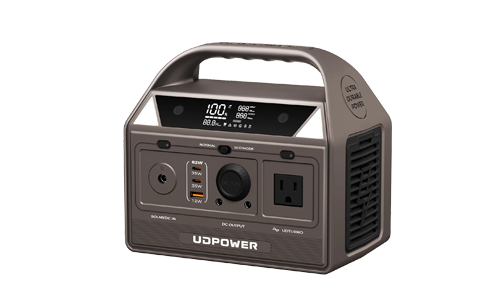
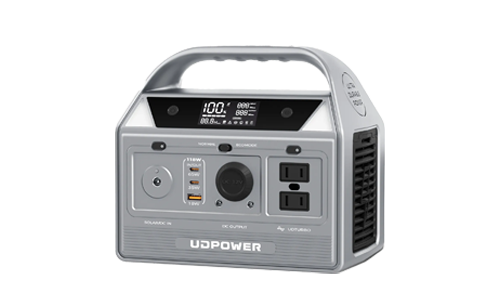
The S1200 is the more portable choice for households that mainly want to protect a refrigerator, CPAP, communication equipment, phones, lighting and selected electronics during a winter outage.
- Battery capacity: 1,190Wh LiFePO4
- Rated AC output: 1,200W pure sine wave
- UDTURBO: up to 1,800W
- AC outlets: 5
- USB-C: 2 ports, up to 100W
- Solar input: up to 400W
- UPS response: ≤10ms
- Weight: approximately 26.0 lb
- Listed charging temperature: 23°F to 104°F
Best fit: Refrigerator backup, CPAP, Wi-Fi, phones, lighting, laptops and a controlled list of essential household loads.
View UDPOWER S1200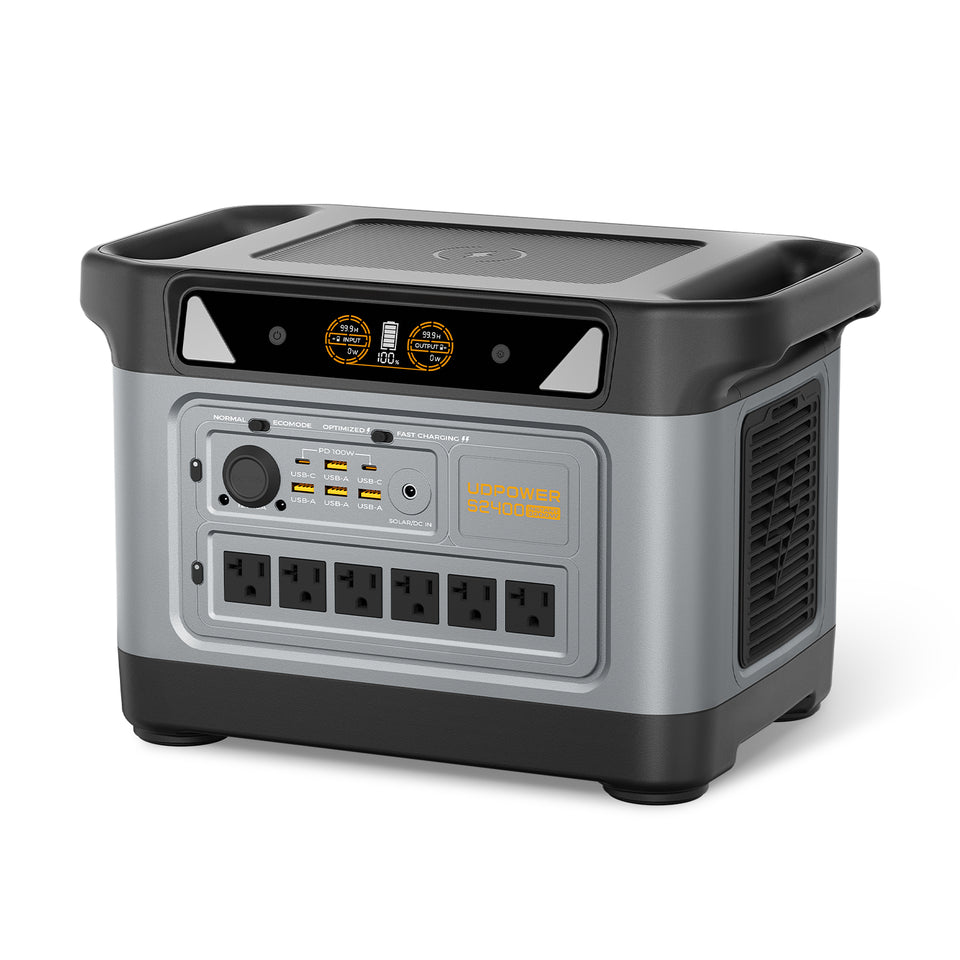
UDPOWER S2400: Better for Longer Outages and More Simultaneous Loads
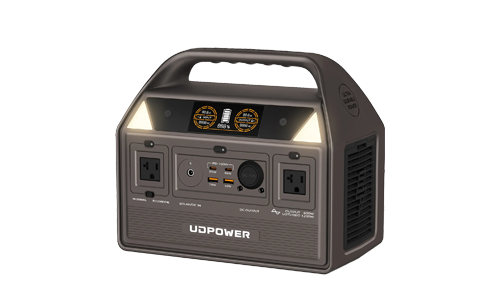
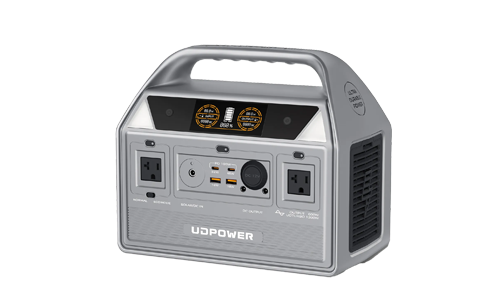
The S2400 makes more sense when you need substantially more battery reserve, want to run several household essentials together or need more AC output headroom.
- Battery capacity: 2,083Wh LiFePO4
- Rated AC output: 2,400W pure sine wave
- UDTURBO: up to 3,000W
- AC outlets: 6
- USB-C: 2 ports, up to 100W
- Solar charging: supported for off-grid recharging
- UPS response: ≤10ms
- Weight: approximately 40.8 lb
- Listed charging temperature: 32°F to 104°F
Best fit: Longer refrigerator backup, CPAP plus household electronics, multiple simultaneous loads and households that want more reserve energy between recharges.
View UDPOWER S2400S1200 vs. S2400 for a lake-effect snow outage
| Need | S1200 | S2400 |
|---|---|---|
| Phones, Wi-Fi and lights | Excellent fit | More capacity than necessary unless other loads are added |
| CPAP overnight | Strong choice | Better when CPAP shares power with other essentials |
| Refrigerator backup | Good short-outage choice | Better for longer runtime and additional loads |
| Multiple household essentials | Requires more load management | Better fit |
| Frequent movement between rooms | Easier at about 26 lb | Heavier at about 40.8 lb |
| Extended outage reserve | 1,190Wh | 2,083Wh |
You can also compare the full lineup on the UDPOWER Portable Power Stations page or browse models specifically positioned for home backup.
If someone in the household relies on sleep-apnea equipment, use the dedicated CPAP, APAP and BiPAP backup power guide to calculate overnight energy use rather than relying on a generic CPAP wattage.
What to Do After the Lake-Effect Snow Band Moves Away
A temporary break in the snow does not automatically mean the storm is over. Lake-effect bands can shift and return, and roads may remain hazardous long after visibility improves.
- Check the latest NWS forecast before leaving home.
- Check official road conditions rather than assuming plows have cleared every route.
- Clear snow from necessary furnace and dryer exhaust areas when conditions are safe.
- Check your vehicle exhaust before starting a snow-covered car.
- Avoid touching downed utility lines or objects in contact with them.
- Recharge phones and backup batteries while utility power is available.
- Replenish emergency supplies that were used.
- Check on neighbors who may need assistance.
- Keep pets away from road salt, antifreeze and snow-removal equipment.
The National Weather Service notes that post-storm hazards can include blocked roads, ice, damaged power lines and other conditions that are not immediately obvious. See its after-winter-storm safety guidance.
Frequently Asked Questions About Lake Effect Snow Warnings
What does a Lake Effect Snow Warning mean?
It means the National Weather Service expects or is observing hazardous lake-generated snow capable of creating dangerous or potentially life-threatening conditions. Because lake-effect snow often falls in narrow bands, conditions can vary dramatically across a relatively small area.
How much snow triggers a Lake Effect Snow Warning?
There is no single nationwide snowfall threshold. Local National Weather Service offices use criteria appropriate for their forecast area. For example, thresholds published by NWS offices in New York, Pennsylvania and Ohio are not identical. Always use your local warning rather than assuming one universal snowfall number.
How is a Lake Effect Snow Warning different from a Winter Storm Warning?
A Lake Effect Snow Warning specifically concerns hazardous snow generated by lake-effect processes and often emphasizes narrow, localized bands. A Winter Storm Warning can cover broader combinations of heavy snow, sleet, ice and other winter hazards.
Can one town have a whiteout while another nearby town has little snow?
Yes. That sharp geographic difference is one of the defining practical hazards of lake-effect snow. The heaviest band can remain over one area or shift as the wind changes, producing very different conditions only a few miles apart.
Is it safe to drive during a Lake Effect Snow Warning?
Non-essential travel should be avoided when dangerous conditions are expected. If travel is unavoidable, check the full route, current radar, the latest NWS warning and official road conditions immediately before leaving. Conditions at your starting location may not represent conditions farther down the road.
What should I do if my vehicle becomes stranded in lake-effect snow?
National Weather Service guidance generally recommends staying with the vehicle, calling for help, remaining visible and conserving battery power. If you run the engine for heat, keep the exhaust pipe clear of snow and slightly open a window while the engine is running to reduce carbon-monoxide risk.
How long will refrigerator food stay cold after a power outage?
The FDA says an unopened refrigerator will generally keep food cold for about four hours. A full unopened freezer can maintain temperature for about 48 hours, while a half-full freezer is approximately 24 hours. Use an appliance thermometer whenever possible.
Can I run a gas generator inside a garage during a snowstorm?
No. The CDC says generators should never be operated inside a home or garage, even with doors open. Portable generators should be outside and more than 20 feet from windows, doors and vents because of carbon-monoxide risk.
Can a portable power station run a refrigerator during a snowstorm?
Yes, if the power station has sufficient rated output for the refrigerator's running and startup demand and enough watt-hours for the desired runtime. Refrigerator compressors cycle, so actual runtime should be calculated from the refrigerator's real energy use rather than a single generic wattage.
Is a portable power station useful for a space heater?
It may technically power a compatible heater if the heater stays within the unit's supported output, but electric resistance heating consumes battery energy extremely quickly. During a prolonged outage, stored energy is usually better prioritized for refrigeration, communication, medical equipment and lighting.
Can I charge a portable power station below freezing?
It depends on the model. Charging and discharging temperature limits are different. For example, the current UDPOWER S1200 lists a charging range beginning at 23°F, while the S2400 lists 32°F. Always follow the temperature limits for your specific model.
Should I depend on solar panels during active lake-effect snow?
No. Heavy cloud cover, falling snow, accumulated snow on the panel and short winter daylight can significantly reduce solar production. Start the storm with your battery charged and treat solar as a way to extend or restore capacity when weather conditions improve.
Lake-Effect Snow Warning Checklist: The Short Version
- Read the entire local NWS warning, not just the headline.
- Cancel unnecessary travel before the heavy band arrives.
- Charge phones, power banks and portable power stations.
- Prepare several days of food, water and necessary medication.
- Test smoke and carbon-monoxide alarms.
- Prepare warm clothing and blankets before any heating outage.
- Keep your vehicle at least half full and stage a winter car kit.
- Prioritize medical devices, communication, refrigeration and lighting if power fails.
- Do not operate fuel-burning generators inside or near doors, windows or vents.
- Keep battery power stations within their specified charging temperature range.
- Continue checking alerts even after the snow temporarily stops.
- National Weather Service: Lake Effect Snow definitions
- National Weather Service: Winter Weather Warnings, Watches and Advisories
- National Weather Service: Preparing for Winter Storms
- National Weather Service: What to Do During a Winter Storm
- National Weather Service: Safety After a Winter Storm
- CDC: Carbon Monoxide Poisoning Basics
- FDA: Power Outage Food Safety
- UDPOWER S1200 Official Specifications
- UDPOWER S2400 Official Specifications
Build Your Winter Backup Power Plan Before the Next Warning
Start with the devices you cannot afford to lose during an outage, calculate their wattage and runtime, then choose enough battery capacity to maintain a practical emergency reserve.
View Portable Power Stations View Home Backup Options Get the Power Station Sizing GuideRelated Articles


