

Battery Backup for a Hospital Bed: How to Choose the Right Size
Last updated:
A battery backup for a hospital bed can keep the bed adjustable during an outage, but the bed frame is often only one part of the power plan. A pressure-relief mattress pump, CPAP machine, oxygen concentrator, lift, monitor, or other home-care equipment may use more energy than the bed itself.
The right battery therefore depends on what must remain powered, how long the outage may last, and whether each device is approved for use with an external backup power source.
Quick Answer
For a home electric hospital bed used mainly for occasional positioning, a 1,000Wh-class pure sine wave power station is a practical starting point. Because the bed motors normally run for only a few minutes at a time, this capacity can often support many adjustment cycles.
Choose a 2,000Wh-class power station when the setup includes a continuously operating air mattress or low-air-loss pump, when several essential devices share the battery, or when overnight and extended-outage coverage is important.
Do not select a battery from the bed's wattage alone. Check the labels and manuals for the bed frame, mattress pump, and every connected medical device. Equipment such as ventilators, oxygen concentrators, infusion pumps, and other devices whose interruption could create an immediate health risk requires an emergency plan approved by the medical equipment provider or healthcare professional.

What Actually Needs Backup Power?
Start by separating the hospital bed system into individual electrical loads. This prevents a common sizing mistake: buying enough battery for the bed motor while overlooking a mattress pump that runs around the clock.
| Equipment | How It Normally Uses Power | Why It Matters During an Outage | What to Check |
|---|---|---|---|
| Electric hospital bed frame | Draws power mainly while the head, foot, height, or tilt motors are moving. | The bed may stop in its current position when household power fails. | Input watts or amps, motor rating, emergency-lowering instructions, and approved backup options. |
| Alternating-pressure mattress pump | Usually operates continuously or cycles automatically throughout the day. | Its daily energy use may be much greater than the bed motor's use. | Rated watts or VA, alarm behavior, restart behavior, and maximum permitted interruption. |
| Low-air-loss mattress system | Uses a blower or pump to maintain airflow and mattress pressure. | A long interruption may prevent the surface from operating as intended. | Manufacturer instructions and the patient's prescribed pressure-care plan. |
| CPAP or BiPAP machine | Runs continuously while the person sleeps. Heated humidification can substantially increase consumption. | It adds an overnight continuous load to the same battery. | Average watts with the actual pressure, humidifier, and heated-tube settings. |
| Patient lift | Uses power intermittently during transfers and may have its own rechargeable battery. | A depleted lift battery can complicate transfers even if the bed remains adjustable. | Lift battery condition, charger requirements, and manual lowering procedure. |
| Oxygen concentrator or other critical medical equipment | May operate continuously and can have a higher starting or running load. | An interruption may have immediate consequences for some users. | Healthcare provider instructions, durable medical equipment provider guidance, backup cylinders, and an evacuation plan. |
Does an Electric Hospital Bed Already Have a Battery Backup?
Some hospital beds include a built-in battery, accept an optional manufacturer-approved battery, or provide an emergency hand crank. However, those features do not all provide the same protection.
Depending on the bed model, an internal battery may be designed to:
- Lower the bed during an emergency.
- Complete a limited number of positioning movements.
- Operate only selected functions.
- Power all bed adjustments for a limited period.
- Support transportation between rooms rather than a long household outage.
Other beds rely on a manual crank when AC power and battery power are unavailable. A crank may adjust only the deck height and not the head or foot sections. The exact behavior is model-specific.
Information to find before buying an external battery
- The exact bed manufacturer and model number.
- The voltage, amperage, wattage, or VA shown on the bed control box.
- Whether the bed has an internal or optional backup battery.
- Which bed functions remain available on battery power.
- Whether the manufacturer permits connection to a portable power station or UPS.
- The location and operating instructions for the emergency hand crank or lowering control.
- The specifications of any powered mattress placed on the bed.
How Much Power Does a Hospital Bed Use?
Many home hospital bed motors fall within a broad planning range of approximately 100 to 300 watts while moving. The actual number must come from the bed's label, control box, power supply, or manual.
The important distinction is that a bed motor is normally an intermittent load. A 200-watt motor does not necessarily consume 200 watts for 24 hours. It may operate for only several minutes during repositioning.
A mattress pump is different. Even a relatively small 30- to 60-watt pump can consume much more energy over a full day because it remains on continuously.
| Example Load | Power | Daily Operating Time | Approximate Daily Energy |
|---|---|---|---|
| Hospital bed motor | 200W | 10 minutes | 33Wh |
| Hospital bed motor | 200W | 30 minutes | 100Wh |
| Pressure mattress pump | 30W | 24 hours | 720Wh |
| Low-air-loss pump | 60W | 24 hours | 1,440Wh |
| CPAP machine example | 40W | 8 hours | 320Wh |
These are planning examples, not universal specifications. A powered support-surface pump documented by Stryker, for example, is rated at less than 60VA and is intended for continuous operation. Other mattress systems may use more or less power.
How to measure your real power consumption
A plug-in electricity meter can provide a more useful estimate than relying on a generic wattage chart. With the equipment supplier's approval, connect the meter between the wall outlet and the device and record:
- The highest wattage shown while the bed moves.
- The wattage when the bed is idle.
- The mattress pump's normal operating wattage.
- Any temporary increase when the pump first starts or changes modes.
- The total kilowatt-hours used over a representative 24-hour period.
How to Calculate the Required Battery Size
Battery capacity is measured in watt-hours, abbreviated as Wh. The basic calculation is:
Total device watt-hours ÷ conversion efficiency × safety reserve
For practical planning, this guide uses 90% AC conversion efficiency and recommends retaining approximately 20% extra capacity for battery aging, cold temperatures, inverter standby consumption, unexpected repositioning, and longer-than-expected outages.
Example 1: Hospital bed used for positioning only
Assume the bed motor draws 200 watts and operates for a total of 30 minutes per day:
200W × 0.5 hour = 100Wh per day
Even after adding standby consumption and reserve capacity, this is a relatively small daily energy requirement. A 1,000Wh-class battery can potentially provide many days of occasional bed adjustments, assuming no other major load is connected.
Example 2: Bed plus a 60W mattress pump for 12 hours
Assume the bed uses 100Wh for daily adjustments and the pump runs continuously:
60W × 12 hours = 720Wh
720Wh + 100Wh for bed movement = 820Wh
After accounting for conversion loss and a 20% reserve:
820Wh ÷ 0.90 × 1.20 = approximately 1,093Wh
A power station with roughly 1,200Wh of capacity would be an appropriate starting point for this example.
Example 3: Bed plus a 60W mattress pump for 24 hours
60W × 24 hours = 1,440Wh
1,440Wh + 100Wh for bed movement = 1,540Wh
1,540Wh ÷ 0.90 × 1.20 = approximately 2,053Wh
This example points to a power station near the 2,000Wh class. It also shows why a continuous mattress pump can determine the required battery size even though its wattage appears modest.
Estimated Hospital Bed Backup Battery Runtimes
The table below estimates continuous AC runtime for the UDPOWER S1200 and S2400. Calculations use 90% conversion efficiency.
| Continuous Combined Load | Typical Example | UDPOWER S1200 1,190Wh |
UDPOWER S2400 2,083Wh |
|---|---|---|---|
| 25W | Small support-surface pump | About 42.8 hours | About 75.0 hours |
| 30W | Pressure mattress pump example | About 35.7 hours | About 62.5 hours |
| 40W | CPAP example without a high heated load | About 26.8 hours | About 46.9 hours |
| 50W | Mattress pump and small accessory load | About 21.4 hours | About 37.5 hours |
| 60W | Low-air-loss pump example | About 17.9 hours | About 31.2 hours |
| 75W | Powered mattress with additional accessories | About 14.3 hours | About 25.0 hours |
| 100W | Several small continuous loads | About 10.7 hours | About 18.7 hours |
| 150W | Larger combined continuous load | About 7.1 hours | About 12.5 hours |
| 200W | Bed motor while actively moving | About 5.4 hours of continuous motor operation | About 9.4 hours of continuous motor operation |
| 250W | Bed motor plus another active load | About 4.3 hours | About 7.5 hours |
| 300W | Higher-power bed or combined equipment | About 3.6 hours | About 6.2 hours |
A hospital bed motor normally does not run continuously, so the 200W and 300W rows should not be interpreted as total household-outage duration. They show how long the battery could theoretically support that load if it stayed on without stopping.
More realistic daily-use scenarios
| Planning Scenario | Example Assumptions | Estimated S1200 Coverage | Estimated S2400 Coverage |
|---|---|---|---|
| Occasional bed positioning | 200W motor for 10 minutes per day, plus approximately 3W standby | About 10.2 days | About 17.9 days |
| Frequent bed positioning | 200W motor for 30 minutes per day, plus approximately 3W standby | About 6.3 days | About 11.0 days |
| Bed plus 30W mattress pump | 30W pump running continuously and 30 minutes of daily bed movement | About 28.9 hours | About 50.5 hours |
| Bed plus 60W mattress pump | 60W pump running continuously and 30 minutes of daily bed movement | About 16.0 hours | About 27.9 hours |
| Bed, 60W pump, and 40W CPAP | Mattress pump for 24 hours, CPAP for 8 hours, and 30 minutes of bed movement | About 13.3 hours | About 23.3 hours |
Actual runtime may be shorter because of battery age, temperature, inverter standby consumption, starting loads, device cycling, and unplanned use. Do not plan to drain the battery completely before taking action.
What Battery Capacity Should You Choose?
| Battery Capacity | Best Suited To | Limitations | General Recommendation |
|---|---|---|---|
| Under 500Wh | Limited emergency adjustments of a bed with no continuous powered mattress. | May provide little reserve for overnight loads or an extended outage. | Use only after confirming the exact load and required adjustment cycles. |
| 500–800Wh | Bed positioning, short outages, or a small mattress pump for a limited period. | A continuous pump can use most of the available capacity in one day. | Better as a short-duration or secondary backup than a full-day system. |
| 1,000–1,300Wh | Hospital bed alone, bed plus a smaller continuous pump, or overnight coverage. | May not cover 24 hours when a 50–60W pump and other devices are connected. | A practical starting range for many home hospital bed setups. |
| 2,000–2,500Wh | Bed plus a powered mattress, longer outages, or several essential low-to-moderate loads. | Still requires load management when high-consumption medical equipment is involved. | Better for full-day planning and additional reserve. |
| Expandable or generator-supported system | Multi-day outages, high continuous loads, or several essential devices. | Requires a recharging plan, safe installation, and equipment-specific approval. | Consider multiple charging methods and a separate medically approved backup plan. |
Do not size the battery to exactly one expected outage
A calculation that predicts exactly 12 hours of runtime provides no room for a cold battery, an aging battery pack, additional repositioning, or a delayed utility restoration. A more dependable plan includes:
- At least 20% unused capacity in the initial calculation.
- A defined battery level at which the caregiver begins recharging or relocating.
- A second charging location or transportation plan.
- A manual method of lowering or positioning the bed when supported by the bed manufacturer.
- A separate plan for life-sustaining or clinically critical equipment.
Recommended UDPOWER Battery Backup Options
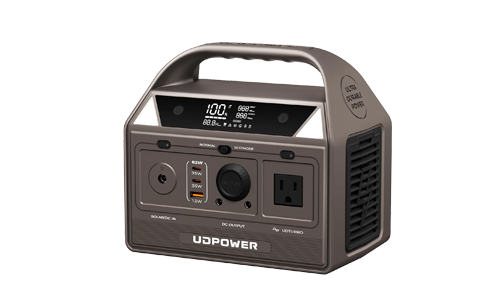
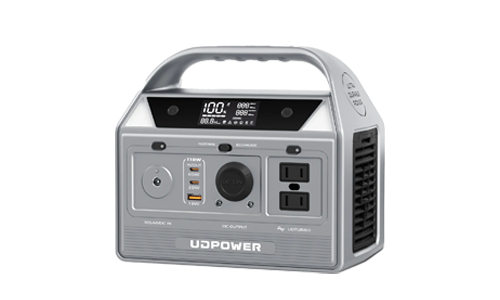
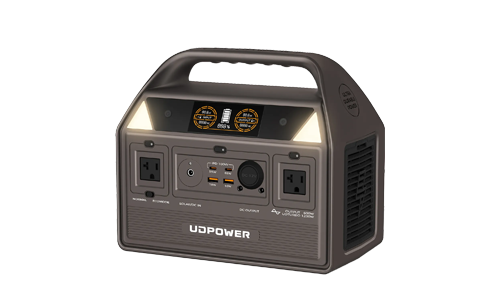
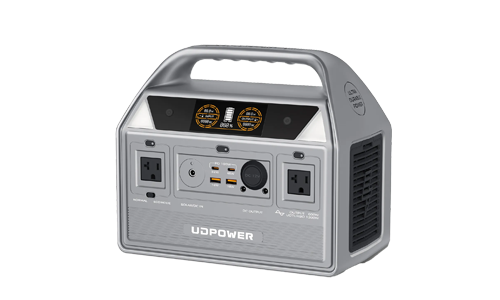
The following UDPOWER models provide pure sine wave AC output and can function as general-purpose home backup power stations. Compatibility with a hospital bed, mattress system, or medical device must still be confirmed with the equipment manufacturer or supplier.
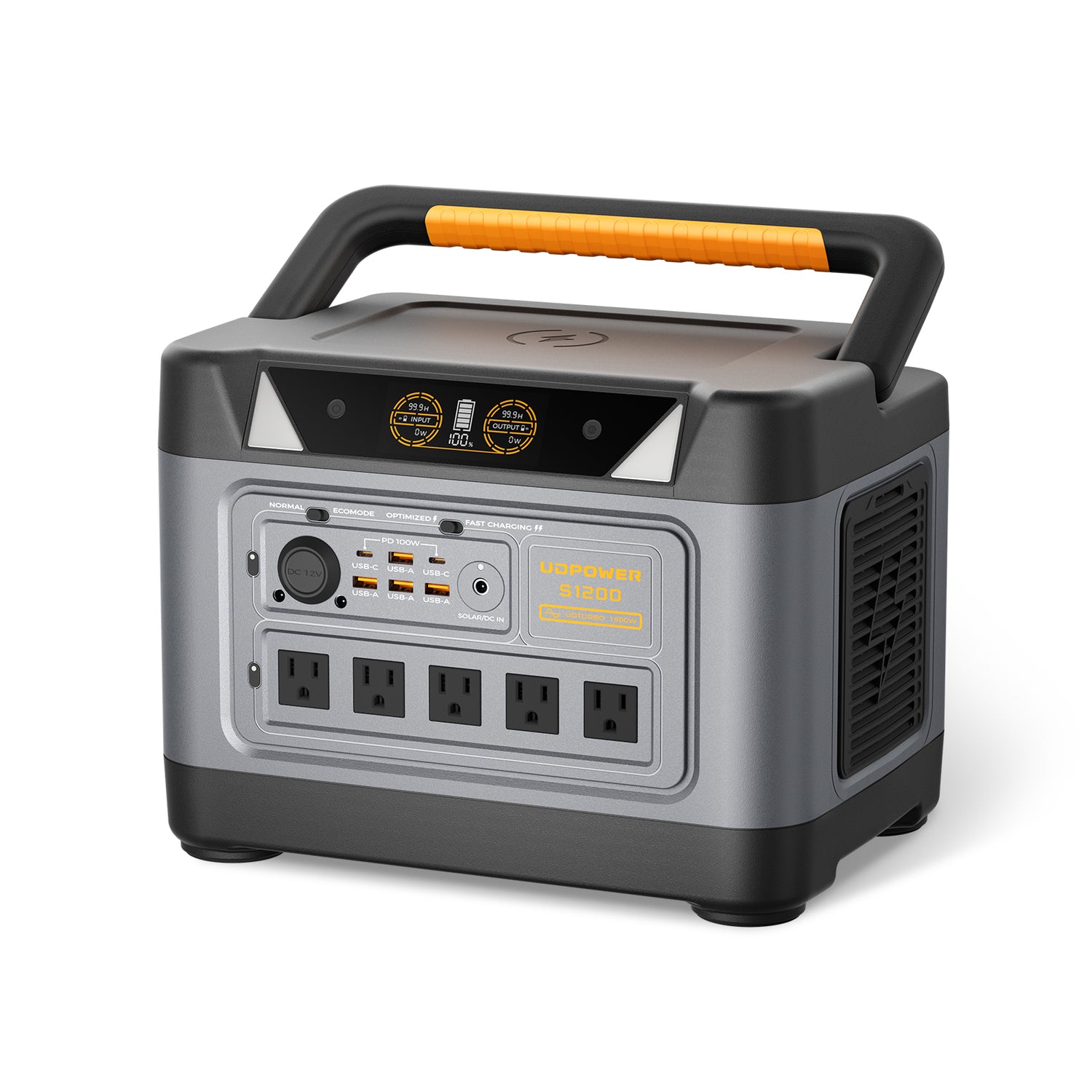
UDPOWER S1200: Best for a Bed and Moderate Backup Loads
The UDPOWER S1200 is a practical choice when the primary goal is to keep an electric bed adjustable, support a smaller powered mattress for a limited period, or provide overnight backup without moving a heavier 2,000Wh-class unit.
| Battery Capacity | 1,190Wh |
|---|---|
| Rated AC Output | 1,200W pure sine wave |
| Maximum Output | 1,800W |
| AC Outlets | 5 |
| UPS Transfer Time | 10 milliseconds or less |
| Weight | Approximately 26 lb |
| Best-Fit Scenario | Hospital bed positioning, shorter outages, overnight coverage, or a moderate continuous pump load. |
At a continuous 60W load, the calculated runtime is approximately 17.9 hours. At a 30W load, it is approximately 35.7 hours. Actual runtime will vary.
View the UDPOWER S1200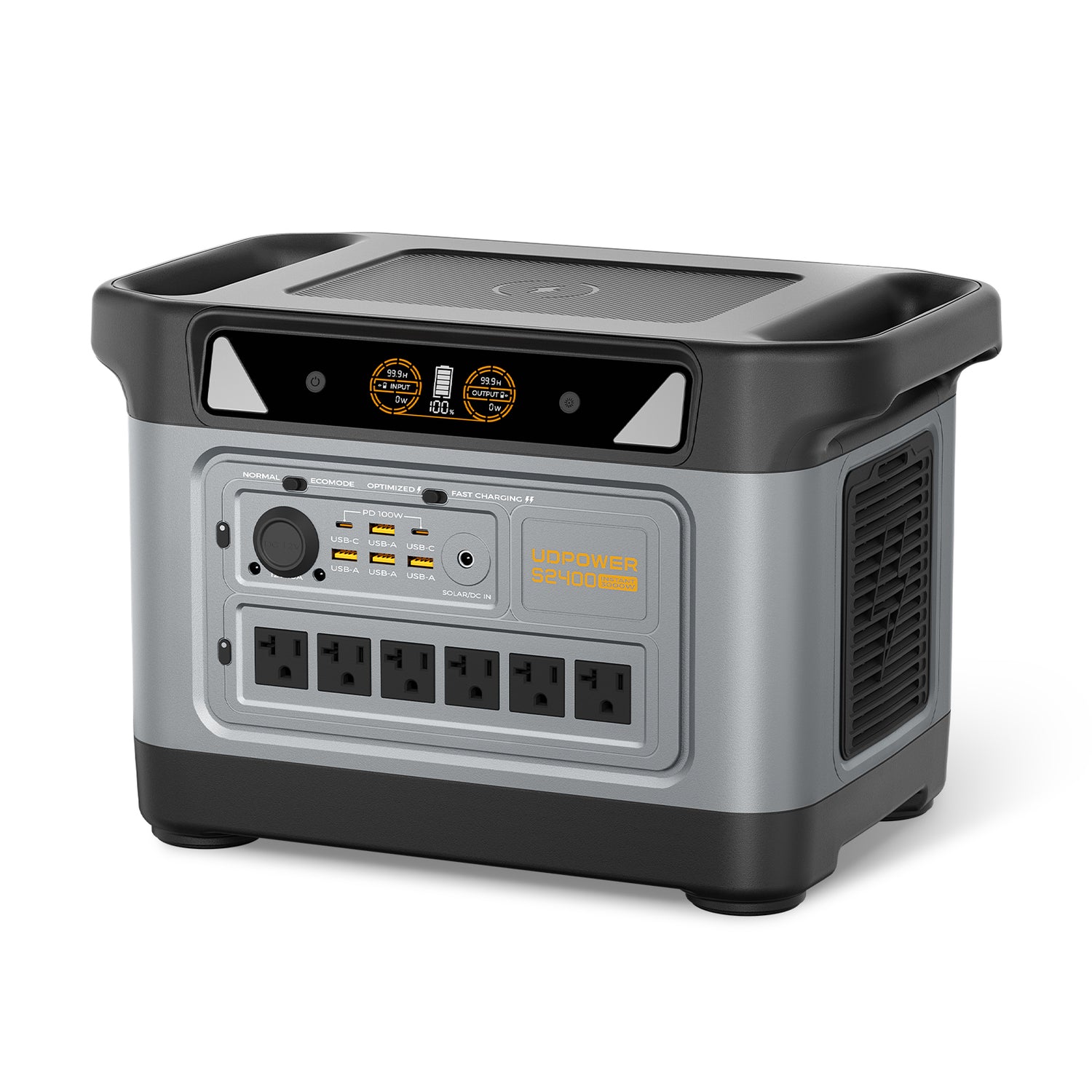
UDPOWER S2400: Best for a Bed, Powered Mattress, and Longer Outages
The UDPOWER S2400 provides more capacity for a continuously operating pressure mattress, several overnight devices, or households that need a larger reserve before recharging becomes necessary.
| Battery Capacity | 2,083Wh |
|---|---|
| Rated AC Output | 2,400W pure sine wave |
| Startup Output | 3,000W |
| AC Outlets | 6 |
| UPS Transfer Time | 10 milliseconds or less |
| Weight | Approximately 40.8 lb |
| Best-Fit Scenario | Bed plus a continuously powered mattress, longer outages, or several essential devices. |
At a continuous 60W load, the calculated runtime is approximately 31.2 hours. At a 30W load, it is approximately 62.5 hours. Actual runtime will vary.
View the UDPOWER S2400For a side-by-side view of capacity, output, weight, ports, and intended uses, see the UDPOWER S1200 vs. S2400 comparison .
How to Set Up and Test a Hospital Bed Battery Backup
Do not wait for a storm or outage to discover that the bed plug does not fit, the mattress pump resets, or the battery is stored too far away.
1. Identify every device that must remain powered
List the bed, mattress pump, CPAP, lift charger, monitor, phone charger, lighting, and other equipment. Separate essential loads from convenience loads such as televisions.
2. Read the equipment manuals
Confirm that external backup power is permitted. Look for restrictions involving extension cords, third-party batteries, generators, inverter output, grounding, or emergency operation.
3. Record the electrical ratings
Photograph the labels on the bed control box and mattress pump. Record watts when provided. When only volts and amps are shown, estimate watts with:
The calculated result is often the maximum input rating rather than average consumption, so a watt meter can still improve the runtime estimate.
4. Place the power station safely
Keep it upright on a stable, dry surface with ventilation around the air inlets and outlets. Do not place it under the bed, cover it with blankets, or position it where spilled liquids can reach it.
Keep cords away from wheels, side rails, lift mechanisms, walking paths, and transfer areas. Follow the oxygen equipment provider's clearance and fire-safety instructions whenever oxygen is used in the room.
5. Prefer a direct connection
When permitted by the equipment manual, plug the bed or pump directly into the power station. Avoid daisy-chaining extension cords, power strips, adapters, or multiple UPS units.
6. Test each device separately
Operate every bed function through its complete range while watching the power station's output display. Then test the mattress pump and listen for alarms or unusual restart behavior.
7. Test the complete setup
Connect the planned combination of devices and confirm that the total output remains well below the power station's continuous rating. Simulate an outage by disconnecting the power station from the wall while a caregiver is present.
Check whether:
- The bed remains responsive.
- The mattress pump continues without an alarm.
- The pump automatically resumes its correct mode.
- Any CPAP or other connected device restarts properly.
- The power station displays a realistic runtime estimate.
- No plug, cord, adapter, or power supply becomes unusually warm.
8. Perform a timed runtime test
A short transfer test cannot confirm full-night runtime. When it is safe and approved, run the planned equipment from the battery for several hours and compare the percentage consumed with the calculated estimate.
What to Do During a Power Outage
A written priority plan helps conserve power without overlooking important care needs.
Recommended power priority
- Equipment whose interruption could create an immediate health risk, following the healthcare provider's emergency plan.
- Therapeutic mattress or pressure-management equipment that must remain operating.
- Necessary bed positioning and transfers.
- Communication devices, emergency lighting, and caregiver phones.
- Comfort and entertainment devices only when adequate reserve remains.
Conserve power without interrupting required care
- Turn off unused AC outlets and nonessential devices.
- Do not leave televisions, heated blankets, or space heaters on the medical backup battery.
- Use the bed motors only as needed, but continue any prescribed repositioning schedule.
- Reduce optional heated humidification only when approved for the user and device.
- Monitor the remaining battery percentage at regular intervals.
- Begin recharging or relocation before the battery reaches a critical level.
Keep a manual fallback available
Store the bed's emergency crank, lowering tool, and printed instructions in a clearly marked location. Make sure caregivers know which functions can be operated manually.
Also keep important phone numbers available on paper, including the equipment supplier, healthcare provider, utility company, local emergency management office, and a transportation contact.
Important Safety Considerations
Use pure sine wave AC output
Pure sine wave output is generally preferred for motor controllers, pumps, and sensitive electronics because it more closely resembles household utility power. It does not replace the need to confirm compatibility with the equipment manufacturer.
Do not exceed the power station's limits
Check both continuous output and startup demand. Although a hospital bed may use only a few hundred watts, another appliance connected to the same battery can push the total above its rating.
Keep the battery dry and ventilated
Never cover the power station with bedding, store it inside a closed cabinet while operating, or place it where liquids, cleaning products, or condensation can reach it.
Protect cords from the moving bed
Hospital bed wheels, height-adjustment mechanisms, side rails, and patient lifts can crush or pull a cable. Leave enough slack for safe bed movement without creating a trip hazard.
Follow oxygen safety rules
Keep power equipment, connectors, and potential ignition sources at the distances specified by the oxygen supplier. Do not handle plugs with wet hands or use damaged electrical cords.
Do not treat displayed runtime as a guarantee
A power station estimates runtime from the load measured at that moment. A cycling mattress pump, bed movement, heated humidifier, or changing pressure setting can alter the estimate.
Recharge before severe weather
Keep the battery charged when storms or grid interruptions are forecast. Test it after long storage and follow the manufacturer's recommended maintenance and storage schedule.
Plan beyond the battery
A complete home-care emergency plan may include a utility medical-alert program, transportation, a second charging location, a generator operated outdoors, backup oxygen cylinders, and an accessible shelter or care facility.
The U.S. Food and Drug Administration's home-use medical device resources and the CDC emergency power guidance provide additional planning information.
Frequently Asked Questions
What size battery backup do I need for an electric hospital bed?
A 1,000Wh-class power station is a practical starting point for a home hospital bed used mainly for intermittent positioning. A 2,000Wh-class model is more appropriate when a pressure mattress pump runs continuously, several devices share the battery, or full-day backup is needed. Calculate the actual load before choosing.
Will an electric hospital bed work during a power outage?
The bed may stop in its current position unless it has a charged built-in backup battery, an approved external backup, or a manual adjustment system. The available emergency functions vary by bed model.
How long will a 1,000Wh battery run a hospital bed?
If the bed motor is used only for a few minutes at a time, a 1,000Wh battery may support many days of positioning. If a 60W mattress pump runs continuously, usable runtime may be closer to 15 hours after accounting for conversion losses and reserve capacity.
Can I use a computer UPS for a hospital bed?
Only when the bed manufacturer permits it and the UPS provides the correct waveform, wattage, startup capacity, and runtime. Many computer UPS units are designed for a short shutdown window rather than an extended outage. Their internal batteries may also lose capacity as they age.
Is the hospital bed's built-in battery enough?
Not necessarily. Some built-in batteries support only emergency lowering or a limited number of adjustments. Others may power more functions. Check the manual for the exact bed model and test the battery according to the manufacturer's instructions.
Can a portable power station run a pressure mattress pump?
It may, provided the pump manufacturer permits external inverter power and the power station has sufficient pure sine wave output and capacity. Because the pump may run continuously, calculate its watt-hours over the entire desired backup period.
Does a hospital bed need pure sine wave power?
Pure sine wave output is generally the safer choice for electronic bed controls and pump motors. However, only the equipment manufacturer can confirm whether a particular external power source is approved.
Can the bed and CPAP machine use the same battery?
They can share a sufficiently sized power station when both devices are compatible and their combined output stays within the power limit. Include the CPAP's overnight energy use, humidifier, and heated tubing when calculating capacity.
Can I connect an oxygen concentrator to the same power station?
Do not do so without guidance from the concentrator supplier or healthcare professional. Oxygen concentrators can be continuous and medically critical loads. The emergency plan may require approved batteries, backup oxygen cylinders, or relocation rather than relying only on a consumer power station.
Should I leave the power station plugged into the wall?
This may be appropriate when the model supports UPS or pass-through operation and the connected equipment is compatible. Follow the power station and medical equipment manuals, complete an outage-transfer test, and periodically verify battery condition.
Can I use an extension cord with a hospital bed backup?
A direct connection is preferable. Use an extension cord only when the bed manufacturer permits it and the cord has the correct grounding, wire gauge, condition, and rating. Do not route it beneath the bed wheels or moving frame.
How often should the backup system be tested?
Test it after installation, after changing any connected equipment, and on a regular caregiver schedule. Many households perform a monthly functional check and a longer runtime check before severe-weather seasons.
Sources and Product Data
| Source | Information Used |
|---|---|
| U.S. Food and Drug Administration: Home Health and Consumer Devices | Home-use medical device preparation and emergency-planning resources. |
| FDA: Medical Devices and Natural Disasters | Preparing medical devices for power interruptions and emergencies. |
| CDC: Emergency Power Sources | Household backup power and emergency preparation guidance. |
| Ready.gov: Power Outage Information | General household power-outage preparation. |
| Medline Basic Home Care Bed Manual | Bed-specific emergency power, battery, and manufacturer-approval considerations. |
| Mayo Clinic: Hospital Bed Instructions | Emergency hand-crank operation when electrical power is unavailable. |
| Compass Health Full-Electric Bed Manual | Manual adjustment limitations when electric and battery power are unavailable. |
| Stryker Air Pump Service Manual | Example powered support-surface specifications, continuous operation, and power-loss behavior. |
| UDPOWER S1200 Official Product Page | Capacity, output, outlets, weight, UPS response time, certifications, and product image. |
| UDPOWER S2400 Official Product Page | Capacity, output, outlets, weight, UPS response time, certifications, and product image. |
Related Articles


