

Camping Power Station Buying Guide: Size, Watts & Runtime
Camping Power Station Buying Guide
Last updated: September 7, 2026
Quick answer: For most campers, the best camping power station is not simply the model with the biggest battery. Start with three numbers: how many watt-hours your campsite uses each day, the highest wattage you may run at one time, and how much energy you can realistically put back into the battery before the next night.
As a practical starting point, 200–300Wh works for light charging and an overnight trip, 500–700Wh is a useful range for weekend car camping, around 1,000–1,200Wh gives much more margin for a CPAP, camping fridge, fan, laptops or family use, and a 2,000Wh-class station makes more sense for RV-style camping, overlanding, multi-day basecamps and higher-wattage appliances.
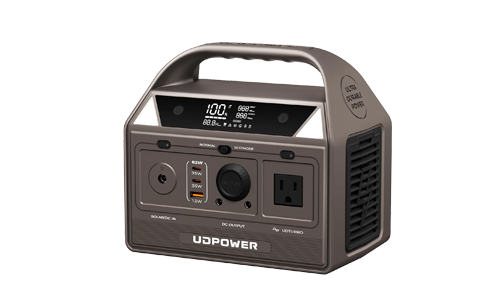
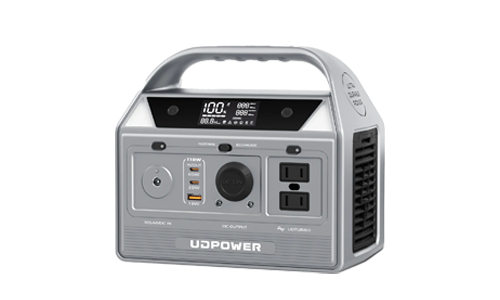
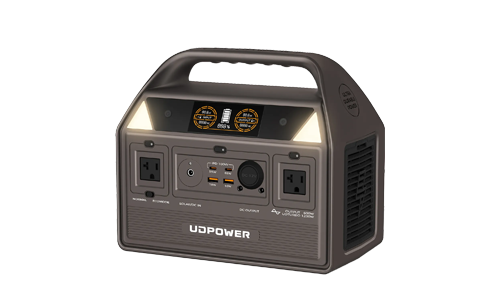
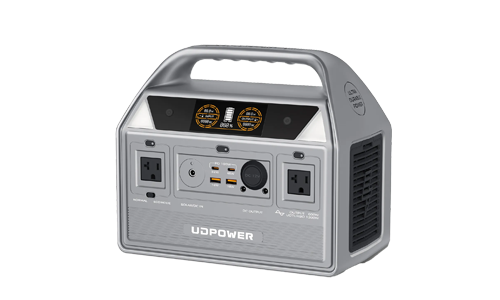
For UDPOWER, the C400 is the lightweight option, the C600 fits many weekend campsites, the S1200 is the strongest all-around family camping choice, and the S2400 is better when capacity and appliance output matter more than carrying weight.

What Size Camping Power Station Do You Need?
The fastest way to choose a power station is to stop thinking about battery sizes for a moment and picture the actual campsite.
Are you walking half a mile from the parking lot with your gear? Are you sleeping beside your vehicle? Will a compressor fridge stay plugged in for 48 hours? Does someone need a CPAP through the night? Are you planning to make coffee with an electric appliance in the morning? Will you have four hours of good sun or spend the weekend under trees?
Those questions change the answer far more than a marketing label such as “camping generator.”
| Camping style | Typical gear | Practical capacity target | UDPOWER starting point | Why |
|---|---|---|---|---|
| Day trip / picnic | Phones, camera, light, speaker | 150–300Wh | C400 | Easy to carry and large enough for repeated device charging. |
| Light overnight camping | Phones, LED lights, camera batteries, small fan | 250–500Wh | C400 or C600 | The deciding factor is usually overnight fan use rather than phone charging. |
| Weekend car camping | Lights, fan, laptop, cameras, drone batteries | 500–800Wh | C600 | A useful balance between capacity and trunk-to-campsite portability. |
| CPAP camping | CPAP, phone, lights, fan | 500–1,200Wh+ | C600 or S1200 | A single night may fit a mid-size station, but humidification, heated tubing and multiple nights increase demand quickly. |
| Camping fridge weekend | 12V fridge, phones, fan, lights, laptop | 700–1,500Wh+ | S1200 | The fridge consumes energy all day, so daily Wh matters more than its brief compressor wattage. |
| Family basecamp | Fridge, several phones, laptops, fan, projector, lighting | 1,000–2,000Wh | S1200 or S2400 | More people usually means longer evening use and several simultaneous loads. |
| RV / overland / extended off-grid | Fridge, communications, cooking appliances, electronics | 2,000Wh+ | S2400 | Higher capacity and output reduce the need to ration every appliance. |
If you want to start with battery capacity alone, see How Many Wh Do I Need for Camping?. For this buying guide, however, we will go one step further and include output and daily recharging.
The Three Numbers That Decide Your Purchase
A useful camping power system has to solve three different problems. Many disappointing purchases happen because only one of them was checked.
1. Daily energy use: Wh per day
This tells you how much stored energy you need. A 25W fan running for eight hours uses about 200Wh. A 40W CPAP running for eight hours uses about 320Wh.
2. Highest simultaneous load: W
This tells you how powerful the inverter must be. A 1,200W kettle may only run for five minutes, but the power station still needs enough output to operate it during those five minutes.
3. Daily recovery: Wh you can recharge each day
This determines whether your battery gets fuller or emptier as the trip continues. Solar, vehicle charging and campground hookups can change the required battery size dramatically.
A good setup must have enough stored energy, enough output power, and enough recharging capability. Increasing only one of these does not automatically solve the other two.
Build a Real Campsite Energy Budget
Make a one-day power list before comparing products. Start with the devices that run for hours. Phones usually look important because everyone carries one, but a fan, CPAP or refrigerator can consume far more energy overnight than several phone charges.
Device watts × hours used = watt-hours used
If a device cycles on and off, such as a compressor refrigerator, daily measured watt-hours are more useful than simply multiplying its compressor wattage by 24 hours.
| Camping device | Planning example | Example daily energy | What to check before buying |
|---|---|---|---|
| Smartphone | 15Wh battery × 2 charges | About 30Wh | Check the phone battery capacity and how many people are charging. |
| LED lantern | 8W × 5 hours | 40Wh | Use the actual wattage at the brightness setting you normally use. |
| Camping fan | 25W × 8 hours | 200Wh | Overnight fan use is often a bigger load than expected. |
| Laptop | 65W × 2 hours | 130Wh | Check the charger label or USB-C charging wattage. |
| CPAP example | 40W × 8 hours | 320Wh | Humidifier, heated hose and pressure settings can change consumption substantially. |
| 12V camping fridge | Compressor cycles throughout the day | Roughly 250–700Wh/day for many small and mid-size camping setups | See the camping fridge power guide. |
| Projector | 120W × 2 hours | 240Wh | Eco mode can significantly reduce power use on some projectors. |
| Coffee maker | 800W × 10 minutes | About 133Wh | High output requirement, but relatively short run time. |
| Electric kettle | 1,200W × 5 minutes | About 100Wh | The station must still support the kettle's wattage while it is heating. |
This table explains an important campsite reality: a high-watt appliance is not always the largest energy consumer. A 1,200W kettle used for five minutes can use less energy than a 25W fan running all night.
If you already know your appliance wattage, you can also use the UDPOWER runtime calculator.
If the power station is supporting a CPAP, fridge or another important overnight load, do not build a plan that only works if the battery reaches nearly 0% at sunrise. Weather, temperature, device settings and longer-than-expected use can erase a small paper margin.
Camping Device Runtime by UDPOWER Power Station
For UDPOWER planning, this guide uses a 90% conversion-efficiency estimate:
Battery capacity in Wh × 0.90 ÷ device watts
The results below are planning estimates for relatively steady loads. Actual runtime changes with temperature, battery condition, inverter standby use, device settings and changing power demand.
| Example steady load | C400 256Wh |
C600 596Wh |
S1200 1,190Wh |
S2400 2,083Wh |
|---|---|---|---|---|
| 10W LED lighting | About 23.0 hr | About 53.6 hr | About 107.1 hr | About 187.5 hr |
| 25W camping fan | About 9.2 hr | About 21.5 hr | About 42.8 hr | About 75.0 hr |
| 40W CPAP planning load | About 5.8 hr | About 13.4 hr | About 26.8 hr | About 46.9 hr |
| 65W laptop | About 3.5 hr | About 8.3 hr | About 16.5 hr | About 28.8 hr |
| 120W projector | About 1.9 hr | About 4.5 hr | About 8.9 hr | About 15.6 hr |
| 500W appliance | Above 400W rated output | About 1.1 hr | About 2.1 hr | About 3.7 hr |
| 1,000W appliance | Above rated output | Above rated output | About 1.1 hr | About 1.9 hr |
Do not use the refrigerator's compressor-running wattage in this table and assume that is its full calendar runtime. Refrigerators cycle. For fridge camping, daily watt-hours are the better sizing method.
Watts vs. Watt-Hours: The Mistake That Causes Bad Purchases
Watts tell you what a power station can run. Watt-hours tell you how long it can run it.
A power station can have enough stored energy for an appliance but still be unable to operate it because the inverter output is too low. The reverse can also happen: a powerful inverter may start a demanding appliance, but a small battery can empty quickly.
| Load | Approximate power | Example use time | Approximate energy | Main buying concern |
|---|---|---|---|---|
| LED lantern | 8W | 5 hr | 40Wh | Capacity |
| Camping fan | 25W | 8 hr | 200Wh | Capacity |
| CPAP example | 40W | 8 hr | 320Wh | Overnight reserve |
| Coffee maker | 800W | 10 min | 133Wh | Output first, then capacity |
| Kettle | 1,200W | 5 min | 100Wh | High output requirement |
| Electric heater | 1,500W | 1 hr | 1,500Wh | Both output and very high energy use |
This is why electric resistance heating is usually a poor use of limited campsite battery capacity. A kettle may be reasonable because it runs for minutes. A heater that runs continuously can consume most of a large battery in a single evening.
Use the rated AC output as the primary number when sizing your campsite. Applicable UDPOWER models also provide UDTURBO/high-load capability above their rated output. That capability can expand appliance compatibility, but conversion efficiency may decrease when operating above rated output, so it should not replace proper load planning.
How Much Solar Charging Do You Actually Need?
A common buying mistake is to calculate only how much battery a trip consumes. On a multi-day trip, the more important question may be how much of that energy you can replace every day.
Minimum of panel-array watts or power-station solar-input limit × effective strong-sun hours × roughly 0.60–0.80
The 0.60–0.80 field factor is not a product guarantee. It simply allows for panel temperature, sun angle, haze, wiring loss, imperfect positioning and changing conditions. Clouds and partial shade can reduce production much further.
Think in terms of a daily recharge deficit
Daily campsite use − daily recovered solar energy
If your campsite uses 800Wh per day and you can reliably recover about 550Wh, your battery is still shrinking by roughly 250Wh each day. You therefore need enough starting capacity to absorb that deficit for the number of days you plan to stay.
This is more useful than asking, “Can a solar panel charge my power station?” Almost any compatible panel can put some energy back. The real question is whether it can put energy back fast enough to keep up with your campsite.
| UDPOWER model | Official solar input | Practical camping fit | Official source |
|---|---|---|---|
| C400 | Up to 150W | Light weekend electronics and smaller solar setups | C400 specifications |
| C600 | 11–28V, up to approximately 240W | Weekend campsite, fridge support and device charging | C600 specifications |
| S1200 | 12–75V, 12A, 400W max | Family camping, CPAP, fridge and longer off-grid stays | S1200 specifications |
| S2400 | 12–50V, 10A max, up to 400W solar input | RV, overland and extended basecamp use | S2400 specifications |
Put the panel in the sun, not the power station
The solar panel needs direct sunlight. The battery station does not. Keep the power station shaded, dry and ventilated while positioning the solar panel where it receives the strongest unobstructed light.
Watch the live input wattage on the display while adjusting panel angle. A small change in orientation can be more useful than guessing whether the panel “looks sunny enough.”
Browse UDPOWER solar panels or compare complete solar generator setups if you expect to stay away from wall power for several days.
Choose the Right Outputs and Charging Method
Outlet count matters, but outlet type matters more. Using the most direct power path can make the campsite easier to manage and can reduce unnecessary conversion.
Use 12V DC for a compatible camping fridge
If your compressor fridge supports a 12V vehicle-style input, connecting it to the power station's 12V DC output is usually preferable to converting battery DC to household AC and then back to DC through the fridge adapter.
See the complete camping fridge power guide for fridge-specific sizing.
Use USB-C directly when possible
Modern phones, tablets, cameras and many laptops can charge directly through USB-C. That can remove the need to carry a separate AC charging brick and keeps AC outlets available for equipment that actually needs them.
Do not count ports without checking combined limits
Having several USB or DC outputs does not necessarily mean every port can operate at its maximum rating simultaneously. Check the product specifications when your setup includes several high-power devices.
Vehicle charging is your backup plan
Car charging can be valuable during a road trip because it recovers energy while you are already driving. It is generally slower than high-power wall charging or a large solar setup, but it can make the difference between arriving at camp with a half-empty station and arriving with a useful evening reserve.
How Much Weight Should a Camping Power Station Have?
“Portable” means different things at different campsites. A 40-pound station can be perfectly portable from the garage to an SUV and then onto a picnic table. It is a very different experience at a walk-in campsite.
Before choosing capacity, think about the distance between your vehicle and the place where the station will actually be used.
| Model | Weight | Dimensions | Where it makes the most sense |
|---|---|---|---|
| C400 | About 6.88 lb | About 8.3 × 5.2 × 7.3 in | Solo camping, day trips, short walk-in distances, compact vehicle storage |
| C600 | 12.3 lb | 11.1 × 6.1 × 9.4 in | Weekend car camping and campsites where you will move the station regularly |
| S1200 | About 26.0 lb | 13.7 × 9.5 × 9.7 in | Family car camping, CPAP, fridge use and established basecamps |
| S2400 | About 40.8 lb | 15.8 × 9.5 × 10.1 in | Vehicle-supported camping, RVs, overlanding and extended basecamps |
Do not ask only, “Can I lift it?” Ask, “Would I willingly carry it from the parking area to my campsite after unloading the cooler, tent, water and everything else?”
Cold, Heat, Rain and Campsite Conditions Matter
Battery capacity on the box is not a promise that the station will behave exactly the same in every environment.
Cold weather
Low temperatures can reduce available battery performance, and the allowable charging temperature can be narrower than the discharge range.
For example, the current S1200 specifications list a discharge range of -4°F to 113°F and a charging range of 23°F to 104°F. The S2400 lists the same -4°F to 113°F discharge range but a 32°F to 104°F charging range. Always check the exact model rather than assuming every LiFePO4 station has identical cold-weather limits.
Hot weather
Do not leave the power station baking in full sun simply because the solar panel needs sunlight. Shade the station, keep its cooling vents unobstructed and give it room for airflow.
Rain and moisture
Do not assume a portable power station is waterproof. Protect the battery station, connectors and open ports from rain, standing water and wet ground.
For a broader trip-planning checklist, see the complete camping supplies list.
Campground Generator Rules Can Change the Best Power Choice
One advantage of battery power becomes obvious after sunset: it does not need a combustion engine to keep a fan, CPAP, refrigerator, phone or light running.
Generator rules vary by campground. Some National Park Service campgrounds restrict generators to specific daytime windows, and some loops prohibit generator use completely. For example, Great Smoky Mountains National Park currently prohibits generator use from 8 p.m. to 8 a.m. and also has generator-free areas. Always check the specific campground rather than assuming one nationwide rule applies.
Check the National Park Service campground rules example.
If you are deciding between battery and fuel power, see Portable Power Station vs. Generator for Camping.
A portable power station does not create gasoline-engine exhaust while powering your devices, but it should still remain dry, ventilated and away from bedding, heaters and anything that blocks its cooling vents.
Flying to your campsite?
Large lithium portable power stations are generally not passenger-airline equipment. The FAA states that rechargeable lithium batteries over 160Wh are forbidden on passenger aircraft, and specifically lists lithium battery-powered stand-alone generators and backup generators over that limit as prohibited.
Every UDPOWER model recommended in this guide exceeds 160Wh, so plan ground transportation rather than packing one for a passenger flight.
Which UDPOWER Power Station Is Best for Camping?
There is no single model that is best for every camper. The practical choice depends on whether portability, overnight runtime or appliance power has the highest priority.
| Model | Capacity | Rated AC output | UDTURBO / peak capability | Weight | Solar input | Best camping role |
|---|---|---|---|---|---|---|
| C400 | 256Wh | 400W | Up to 800W | 6.88 lb | Up to 150W | Lightweight solo and weekend use |
| C600 | 596Wh | 600W | Up to 1,200W | 12.3 lb | Up to approximately 240W | Weekend car camping and moderate overnight loads |
| S1200 | 1,190Wh | 1,200W | Up to 1,800W | About 26.0 lb | 400W max | Family camping, CPAP, fridge and longer trips |
| S2400 | 2,083Wh | 2,400W | Up to 3,000W | About 40.8 lb | Up to 400W | Extended off-grid camping, RV and high-output appliances |
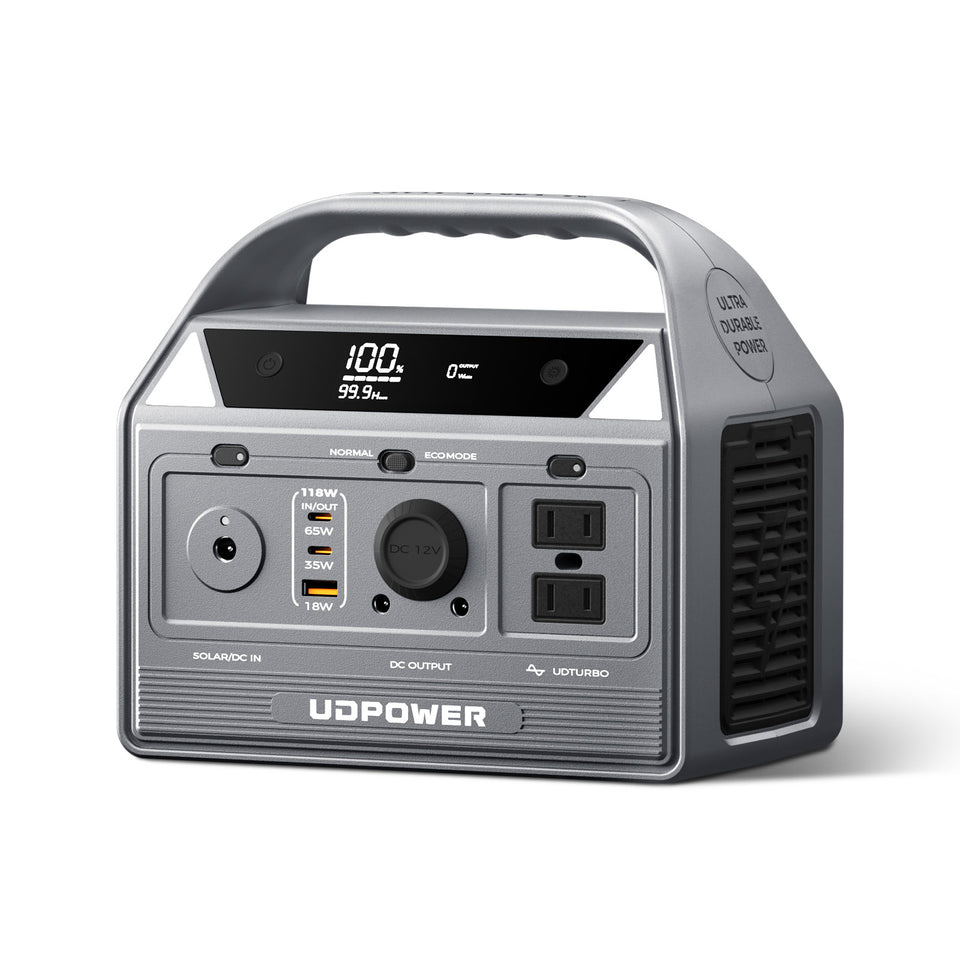
UDPOWER C400: Best for Lightweight Camping
The C400 makes the most sense when carrying comfort matters more than running large appliances. At about 6.88 lb, it is easy to move between the vehicle, picnic table and campsite and provides enough capacity for phones, cameras, LED lights and limited laptop or fan use.
- Capacity: 256Wh LiFePO4
- Rated output: 400W pure sine wave
- UDTURBO / peak: up to 800W
- Weight: about 6.88 lb
- Solar input: up to 150W
- Best for: solo camping, phone and camera charging, lights, laptops and light campsite loads

UDPOWER C600: Best Balance for Weekend Camping
The C600 moves into the range where overnight comfort becomes much easier. Its 596Wh battery provides considerably more room for fans, laptops, camera gear and compatible camping refrigerators while keeping total weight at 12.3 lb.
- Capacity: 596Wh LiFePO4
- Rated output: 600W pure sine wave
- UDTURBO / peak: up to 1,200W
- Weight: 12.3 lb
- Dimensions: 11.1 × 6.1 × 9.4 in
- Solar input: 11–28V, up to approximately 240W
- Best for: weekend car camping, fan, laptops, drones, projector use and moderate fridge loads
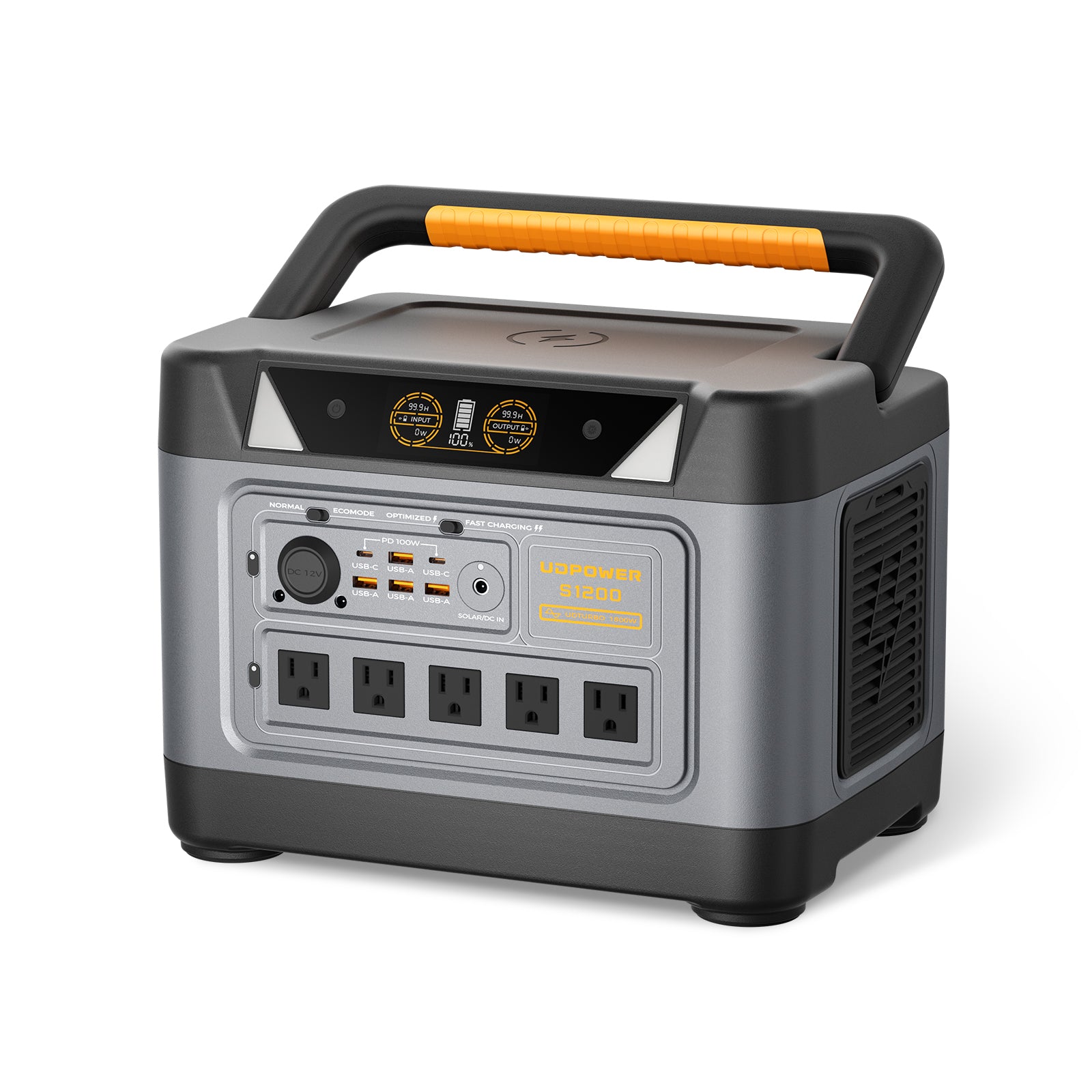
UDPOWER S1200: Best All-Around Family Camping Choice
The S1200 is where campsite energy management becomes much more forgiving. A 1,190Wh-class battery provides room for overnight medical equipment, a fridge, fans, phones and laptops without having to monitor every small charge.
- Capacity: approximately 1,190Wh LiFePO4
- Rated output: 1,200W pure sine wave
- UDTURBO / peak: up to 1,800W
- AC outlets: 5
- Weight: about 26.0 lb
- Solar input: 12–75V, 12A, 400W max
- UPSPrime: ≤10ms response
- Best for: family camping, CPAP, fridge, fan, laptops and multi-night trips
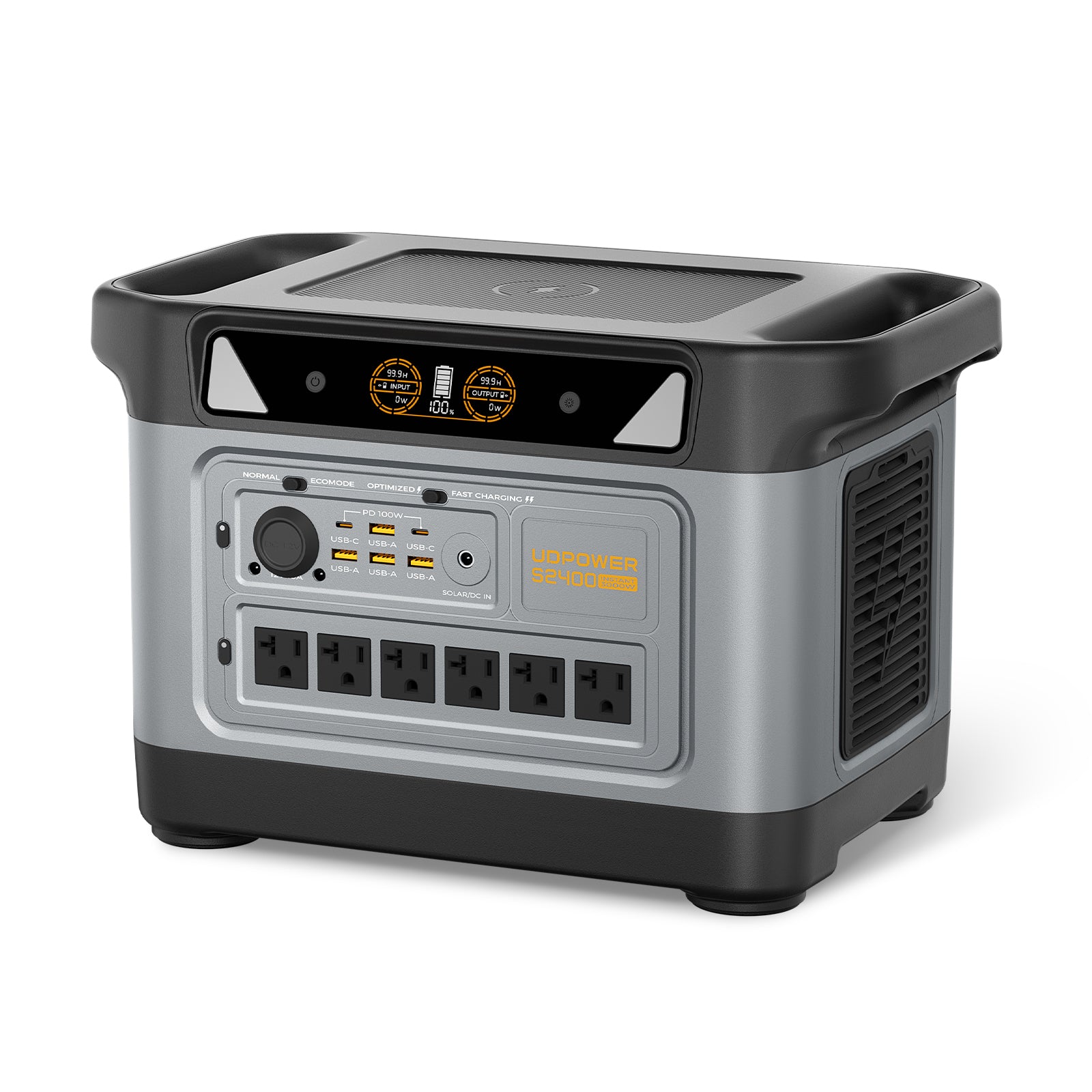
UDPOWER S2400: Best for Extended Off-Grid Camping
The S2400 is a vehicle-supported basecamp power station rather than something most people will want to carry far down a trail. In return, its 2,083Wh battery, 2,400W rated AC output and six AC outlets provide much more flexibility for a larger campsite.
- Capacity: 2,083Wh LiFePO4
- Rated output: 2,400W pure sine wave
- UDTURBO / peak: up to 3,000W
- AC outlets: 6
- Weight: about 40.8 lb
- Dimensions: 15.8 × 9.5 × 10.1 in
- Solar input: 12–50V, 10A max, up to 400W
- Best for: RV camping, overlanding, fridge systems, cooking appliances and extended basecamps
All four models use LiFePO4 battery chemistry. Current product specifications list 80%+ remaining capacity after 3,000 cycles under the specified cycle-life conditions.
Compare Camping Power StationsReal Campsite Sizing Examples
The easiest way to see why different campers need different batteries is to build a complete campsite instead of testing one appliance at a time.
Example 1: Solo weekend camper
| Device | Daily estimate |
|---|---|
| Phone charging | 30Wh |
| LED lighting | 40Wh |
| 25W fan for 6 hours | 150Wh |
| Laptop / camera charging | 100Wh |
| Total | About 320Wh/day |
A C400 could handle a much lighter version of this trip, but once the fan and laptop are used heavily, the C600 gives a much more comfortable weekend margin. Daytime solar or vehicle charging makes the setup easier.
Example 2: One-night CPAP campsite
Assume a CPAP averages 40W for eight hours:
At the 90% UDPOWER planning efficiency used in this guide, supplying 320Wh requires about 356Wh of battery capacity before adding phones, lights, a safety reserve or any increased CPAP consumption.
That makes the C600 a reasonable starting point for a measured one-night 40W-class setup. The S1200 is the safer choice if heated humidification is used, the actual machine draws more power, other devices are sharing the battery, or you are spending more than one night away from reliable charging.
Example 3: Family camping with a refrigerator
| Load | Example daily use |
|---|---|
| Camping fridge | 450Wh |
| Fan | 160Wh |
| Phones and small electronics | 120Wh |
| Laptop / camera charging | 130Wh |
| Total | About 860Wh/day |
Without dependable recharging, two days of this use approaches 1,720Wh before conversion losses or reserve. That pushes the trip toward the S2400.
With good daytime solar recovery, however, an S1200 may be enough because you are replacing part of yesterday's energy before the next night begins.
Example 4: Three-day off-grid basecamp
Suppose the campsite uses 900Wh per day and your solar setup recovers an average of 550Wh during useful daylight.
Over three days, that is roughly a 1,050Wh deficit. Starting with a large battery gives you room to absorb that shortfall, but a cloudy day can make the deficit much larger. That is why extended off-grid trips should be sized around both normal conditions and at least one imperfect solar day.
For more strategies, read How to Get Power When Camping Off-Grid.
The Bedtime Reserve Rule
This is one of the simplest ways to prevent a good campsite power plan from failing at 4 a.m.
Before using electricity for a projector, laptop, coffee setup or other optional evening loads, calculate how much energy must remain for everything that cannot stop before morning.
Overnight critical-load Wh ÷ 0.90 + extra safety margin
If a measured CPAP averages 40W for eight hours, the load requires 320Wh. At 90% planning efficiency, about 356Wh must be available just for the CPAP. Keeping additional reserve means you should not treat a battery showing roughly 360Wh remaining as “plenty” for movie night.
The same rule works for a refrigerator protecting food overnight.
Run This Test Before You Leave Home
A campsite is a bad place to discover that your refrigerator cable does not fit, your CPAP uses twice the power you expected, or your solar panel cannot recover enough energy before sunset.
- Fully charge the power station.
- Connect the exact devices you will take camping. Do not substitute a similar fan, fridge or CPAP.
- Run the overnight loads for the same number of hours you expect at camp.
- Record the starting and ending battery percentages.
- Test your highest-wattage appliance separately. Confirm the station can operate it without overload.
- Test solar charging outdoors. Check actual input watts instead of assuming the panel reaches its label rating.
- Test vehicle charging if it is part of your backup plan.
- Pack every required charging cable with the device it belongs to.
If your actual campsite gear consumes 42% of the battery during a test night at home, that is a much stronger planning number than a generic appliance wattage chart.
What Else Should You Check Before Buying?
LiFePO4 battery chemistry
For frequent camping, LiFePO4 is attractive because of its long cycle life and thermal stability. UDPOWER's current camping models use LiFePO4 cells.
Pure sine wave AC output
Pure sine wave output is preferable for sensitive electronics and many appliances with motors or electronic controls. The UDPOWER models covered in this guide use pure sine wave AC output.
Recharge speed
Fast wall charging is especially valuable between trips or when you stop somewhere with power for only a short time. Solar-input capability matters more once you are already off-grid.
Outlet placement
Count the plugs you will actually use and look at their physical size. Large adapters can sometimes block neighboring outlets even when the specification sheet says there are enough ports.
Fan noise
A power station is far quieter than a gas generator, but cooling fans may still turn on under charging or heavy loads. If the station will sit close to where you sleep, do not place it directly beside your head simply because it is battery powered.
Warranty and support
A camping power station is both a battery and an inverter, so after-sales support matters. UDPOWER portable power stations are backed by a five-year warranty under the applicable warranty terms.
Camping Power Station Buying Mistakes to Avoid
| Mistake | Why it causes problems | Better approach |
|---|---|---|
| Buying only by output watts | A 2,000W inverter does not tell you how long the battery lasts. | Compare both W and Wh. |
| Buying only by battery Wh | A large battery can still have insufficient output for a kettle, coffee maker or other high-power appliance. | Check the highest simultaneous wattage. |
| Using perfect solar numbers | Panel labels are not guaranteed all-day campsite output. | Plan for shade, clouds, heat and imperfect panel angle. |
| Ignoring the recharge deficit | A battery can slowly empty every day even when solar is connected. | Compare daily Wh used with daily Wh recovered. |
| Running every device through AC | Some DC and USB devices can avoid unnecessary conversion stages. | Use compatible USB-C or 12V DC outputs when practical. |
| Choosing capacity before considering weight | A station can become inconvenient at walk-in sites. | Match battery size to the actual carry distance. |
| Depending on the final few percent overnight | Small changes in temperature or device use can erase the planned margin. | Keep a dedicated bedtime reserve for critical loads. |
| Leaving the battery in full sun | The panel needs sun; the battery station benefits from shade and airflow. | Separate panel placement from station placement. |
| Assuming generator rules are universal | Generator hours and generator-free zones vary by campground. | Check the exact campsite rules before leaving. |
| Skipping the home test | Actual device consumption, connectors and operating behavior can differ from estimates. | Run your complete setup before the trip. |
FAQ: Camping Power Stations
What size power station do I need for camping?
For light phone, camera and lighting use, roughly 200–300Wh may be enough. Weekend camping with a fan, laptop and other electronics often fits better in the 500–700Wh range. A CPAP, camping fridge, family campsite or multiple nights can justify 1,000Wh or more, while RV-style and extended off-grid setups often benefit from around 2,000Wh. Calculate your actual daily watt-hours before buying.
Is a 500Wh power station enough for camping?
Yes, for many weekend campers. A 500–600Wh-class unit can handle phones, lights, camera batteries, a fan, laptop use and some CPAP or fridge setups. It becomes less comfortable when several overnight loads are combined or when you cannot recharge during a multi-day trip.
Is a 1,000Wh power station enough for camping?
A 1,000Wh-class power station is a strong size for family car camping, CPAP use, a camping fridge, laptops, fans and multiple devices. Whether it lasts one night or several days depends on total daily watt-hour consumption and how much energy you recover through solar or vehicle charging.
Can a portable power station run a CPAP while camping?
Yes, if the station has enough capacity and the CPAP's power requirements are within its output limits. Runtime varies significantly with machine model, pressure settings, humidifier and heated tubing. Measure or verify your actual CPAP consumption and run an overnight test before the trip.
Can a power station run a camping fridge?
Yes. A 12V compressor refrigerator is a common power-station load. Size the system using the fridge's daily watt-hour consumption rather than assuming its compressor runs continuously. Hot weather, frequent opening and colder temperature settings can increase energy use.
Should I use AC or DC for a camping refrigerator?
If the fridge supports direct 12V DC input, using the power station's compatible 12V output is usually the more direct option because it avoids running the battery through the AC inverter and then through the fridge's AC-to-DC adapter.
Do I need solar panels for a camping power station?
Not necessarily. For a one-night trip, a sufficiently large fully charged battery may be all you need. Solar becomes much more valuable on multi-day trips, especially when a refrigerator, CPAP or other device consumes energy every day.
How much solar power do I need for camping?
Start with your daily energy use. A campsite using 800Wh per day needs a solar system capable of recovering a meaningful portion of those 800Wh during realistic sunlight. Always stay within the power station's voltage, current and maximum solar-input limits.
Can I recharge a portable power station from my car?
Compatible UDPOWER models support vehicle charging with the appropriate charging cable. It is usually slower than high-power AC charging, but it is useful during road trips because the battery can recover energy while you are already driving.
Can I use a portable power station inside a tent?
A battery power station does not produce gasoline-engine exhaust while powering devices, but it still needs sensible placement. Keep it dry, keep ventilation openings clear, avoid covering it with bedding or clothing, and keep it away from heaters, spills and rain.
Can a portable power station run an electric heater while camping?
A sufficiently powerful station may operate some electric heaters, but resistance heating consumes battery energy very quickly. A 1,500W heater running for one hour uses roughly 1,500Wh before conversion losses, so electric heating is usually an inefficient use of a limited camping battery.
How many watts should a camping power station have?
Choose the rated output according to the highest-wattage device or combination of devices you expect to run at the same time. Phones and lights need very little output, while coffee makers, kettles and cooking appliances can require 800–1,500W or more.
Can I take a camping power station on an airplane?
Large lithium portable power stations generally exceed passenger-aircraft battery limits. The FAA states that rechargeable lithium batteries over 160Wh are forbidden on passenger aircraft. The UDPOWER camping models covered in this guide are all above 160Wh, so they should not be planned as passenger-airline baggage.
Why does my real power station runtime differ from the calculation?
Runtime changes with inverter and conversion losses, temperature, battery condition, device settings, changing power demand and appliance cycling. The most reliable approach is to use calculations for initial sizing and then test the exact equipment you will take camping.
Which UDPOWER power station is best for camping?
C400 is best when lightweight portability is the priority. C600 offers a useful balance for weekend car camping. S1200 is the strongest all-around choice for family camping, CPAP, refrigerators and longer trips. S2400 is better for RVs, overlanding, extended off-grid camping and higher-wattage campsite appliances.
Final Recommendation
Do not buy a camping power station by asking only, “How many watts does it have?” Start by building one realistic day at camp.
Add up the watt-hours you will consume. Find the highest wattage you may run simultaneously. Then estimate how many watt-hours you can realistically recover from solar, your vehicle or shore power before the next night.
For light trips, the C400 keeps weight low. For a real weekend campsite, the C600 offers a useful balance. For a family setup, CPAP, refrigerator or longer stay, the S1200 provides much more breathing room. For extended vehicle-supported camping, RV use or higher-power appliances, the S2400 gives you the largest reserve and strongest output of the models covered here.
The best camping power station is the one that still has enough battery left when you wake up, not the one with the most impressive number on the product box.
Build Your Camping Power Setup
Choose a battery size from your real campsite energy use, then add solar if your trip lasts longer than the battery alone can comfortably support.
View Camping Power Stations Compare All Power Stations Calculate Your Runtime View Solar Generator SetupsUDPOWER product specifications in this guide were checked against the official product pages on September 7, 2026. Runtime and solar figures are planning estimates rather than guaranteed results. Actual performance varies with connected equipment, temperature, battery condition, sunlight, settings and operating conditions.
Related Articles


