How to Convert kVA to kW?
ZacharyWilliamElectrical Basics · Backup Power Planning
Updated: April 2026
5 kVA at PF 0.8 = 4.0 kW
5 kVA at PF 0.9 = 4.5 kW
5 kVA at PF 1.0 = 5.0 kW
The part most people miss is this: you cannot get an accurate kW number from kVA unless you know the power factor.

What kVA and kW actually mean
If you are comparing generators, UPS systems, inverters, or backup power equipment, you will often see both kVA and kW. They are related, but they are not the same thing.
kVA is apparent power. It tells you the total electrical demand seen by the system. kW is real power. It tells you how much usable power is actually doing work.
In plain English: kW is the number you care about when asking, “What can this really run?”
Why this matters: Power factor connects the two values. Eaton defines power factor as the ratio of working power (kW) to apparent power (kVA), while Schneider Electric’s sizing guidance shows that real-load calculations depend on power factor. If you skip PF, you can easily undersize your setup.
| Key point | What it means for a buyer | Source |
|---|---|---|
| PF = kW ÷ kVA | Power factor is the link between apparent power and usable power. | Eaton |
| kW = kVA × PF | You need the PF value before you can convert correctly. | Schneider Electric |
| PF 0.8 is common in many generator examples | Useful as a planning shortcut, but never assume it if your equipment label says otherwise. | Generator Source |
Mobile tip: swipe the table sideways.
The formula you need
The conversion itself is simple once you know the power factor:
That is the whole conversion. The hard part is not the math. The hard part is using the right PF.
- If your load is purely resistive, PF may be close to 1.0.
- If your load includes motors, compressors, pumps, or other inductive gear, PF is often lower.
- If the label or manual gives you a PF value, use that exact number instead of guessing.
Fast rule: If someone gives you a kVA number without power factor, you do not yet have a finished kW answer.
If all you know is volts and amps
Sometimes the nameplate does not show kVA directly. In that case, first calculate kVA, then convert to kW.
| System type | How to get kVA first | Then convert to kW |
|---|---|---|
| Single-phase | kVA = (Volts × Amps) ÷ 1000 | kW = kVA × PF |
| Three-phase | kVA = (1.732 × Volts × Amps) ÷ 1000 | kW = kVA × PF |
The final step stays the same: once you know kVA, multiply by power factor.
kVA to kW quick conversion chart
Use this table when you need a quick answer. The values below are calculated from the same formula: kW = kVA × PF.
| kVA | kW at PF 0.7 | kW at PF 0.8 | kW at PF 0.9 | kW at PF 1.0 |
|---|---|---|---|---|
| 0.5 kVA | 0.35 kW | 0.40 kW | 0.45 kW | 0.50 kW |
| 1.0 kVA | 0.70 kW | 0.80 kW | 0.90 kW | 1.00 kW |
| 1.5 kVA | 1.05 kW | 1.20 kW | 1.35 kW | 1.50 kW |
| 2.0 kVA | 1.40 kW | 1.60 kW | 1.80 kW | 2.00 kW |
| 2.5 kVA | 1.75 kW | 2.00 kW | 2.25 kW | 2.50 kW |
| 3.0 kVA | 2.10 kW | 2.40 kW | 2.70 kW | 3.00 kW |
| 5.0 kVA | 3.50 kW | 4.00 kW | 4.50 kW | 5.00 kW |
| 7.5 kVA | 5.25 kW | 6.00 kW | 6.75 kW | 7.50 kW |
| 10 kVA | 7.00 kW | 8.00 kW | 9.00 kW | 10.00 kW |
Always treat this as a planning chart, not a substitute for the actual PF printed on your equipment.
Worked examples
Here is how the conversion looks in real life.
Example 1: 5 kVA at PF 0.8
5 × 0.8 = 4.0 kW
Example 2: 3 kVA at PF 0.9
3 × 0.9 = 2.7 kW
Example 3: 1.5 kVA at PF 1.0
1.5 × 1.0 = 1.5 kW
The buying insight most articles skip: once you convert to kW, you still should not shop for a power solution with zero margin. Give yourself headroom for startup surge, inaccurate labels, and real-world overlap between devices.
| Nameplate input | Converted real load | What it tells you |
|---|---|---|
| 0.5 kVA @ PF 0.8 | 0.4 kW / 400W | You are in light-device territory. Think routers, small electronics, charging, and other low-draw essentials. |
| 0.75 kVA @ PF 0.8 | 0.6 kW / 600W | This is where a compact portable power station starts to make sense for longer runtimes and cleaner indoor use. |
| 1.5 kVA @ PF 0.8 | 1.2 kW / 1200W | Now you need a higher-output class, especially if your devices overlap or have motor startup spikes. |
| 2.25 kVA @ PF 0.9 | 2.025 kW / 2025W | You are in the range where output headroom matters a lot. Exact-match sizing becomes risky. |
| 3.0 kVA @ PF 0.8 | 2.4 kW / 2400W | This is already a serious load. If the appliance has a heavy startup surge, do not assume a perfect 1:1 match is enough. |
Mobile tip: swipe the table sideways.
Common conversion mistakes
- Assuming 1 kVA always equals 1 kW. That is only true when PF = 1.0.
- Using 0.8 automatically. It is common in generator examples, but not universal.
- Ignoring startup surge. Motors, compressors, pumps, and fridges can need more than their running watts at startup.
- Mixing up power and energy. kW or W tells you output. Wh tells you runtime.
- Shopping to the exact converted number. Real systems are rarely as neat as paper math.
Best practice: Convert kVA to kW first, then choose a power station or generator with comfortable continuous-output headroom. After that, check battery capacity if runtime matters.
How to use the number when shopping for backup power
This is where kVA-to-kW math becomes useful instead of just academic.
Once you know the real load in kW, translate it into the two numbers that matter for a portable power station:
- Continuous output watts — can it run the load at all?
- Battery capacity in Wh — how long will it run the load?
This is also why a lot of shoppers get confused. UPS systems and some generators may be listed in VA or kVA, but portable power stations are usually sold by watts and watt-hours.
| If your converted load is… | Shop roughly in this output class | Why |
|---|---|---|
| Up to 300W | 400W class | Enough for light essentials with a little breathing room. |
| 301W to 500W | 600W class | Better headroom for mixed electronics and longer use. |
| 501W to 1000W | 1200W class | A safer step up for real household overlap, not just one tiny load. |
| 1001W to 2000W | 2400W class | Better for bigger essentials, heavier overlap, and more flexibility. |
| Near the output ceiling, or with motor startup | Buy margin, not just math | Exact-match sizing is where frustration starts. |
After that, use a runtime guide or calculator to figure out how long the battery will actually last with your load mix. A good next step is UDPOWER’s Portable Power Station Runtime Calculator and the plain-English guide Battery Runtime Basics: Watts → Watt-hours.
Recommended UDPOWER products by wattage class
Once your kVA number has been converted into real watts, these UDPOWER models line up naturally by output class.
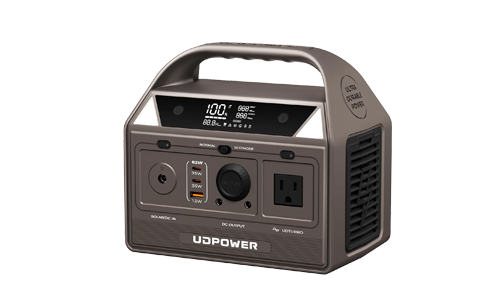
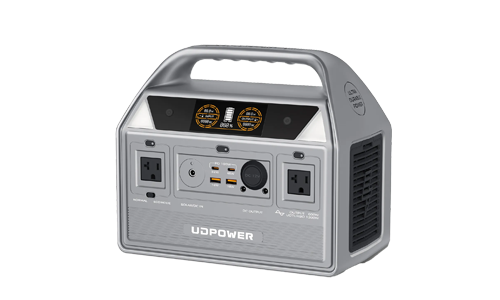
 Best for light loads under the 400W class
UDPOWER C400
A smart fit when your converted load is small and portability matters more than running bigger appliances. Think router, phone charging, lights, laptops, and other low-draw essentials.
- 256Wh capacity
- 400W output
- Up to 800W surge
- Compact option for short outages and grab-and-go use
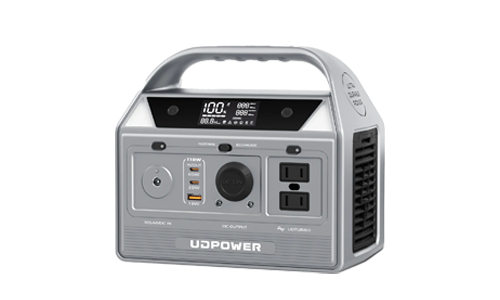
 Best for the 600W class
UDPOWER C600
If your converted load lands around the mid-hundreds, this gives you better runtime and better headroom than a tiny entry unit, without jumping straight into a much larger system.
- 596Wh capacity
- 600W rated output
- Up to 1200W peak
- Good balance for home essentials, camping, and mobile backup
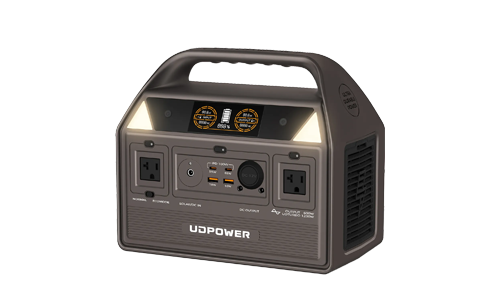
 Best for the 1200W class
UDPOWER S1200
This is the practical step-up for people who have already done the math and know they need real household-level output, not just charging ports and a small inverter.
- 1,190Wh capacity
- 1,200W output
- Up to 1,800W surge support
- Fast charging and UPS-ready backup for core essentials
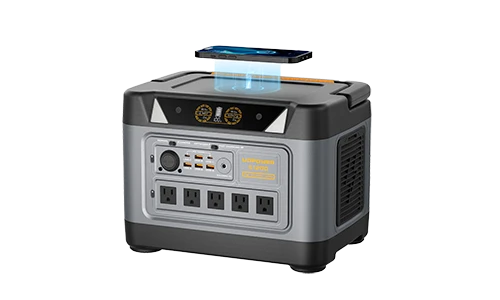
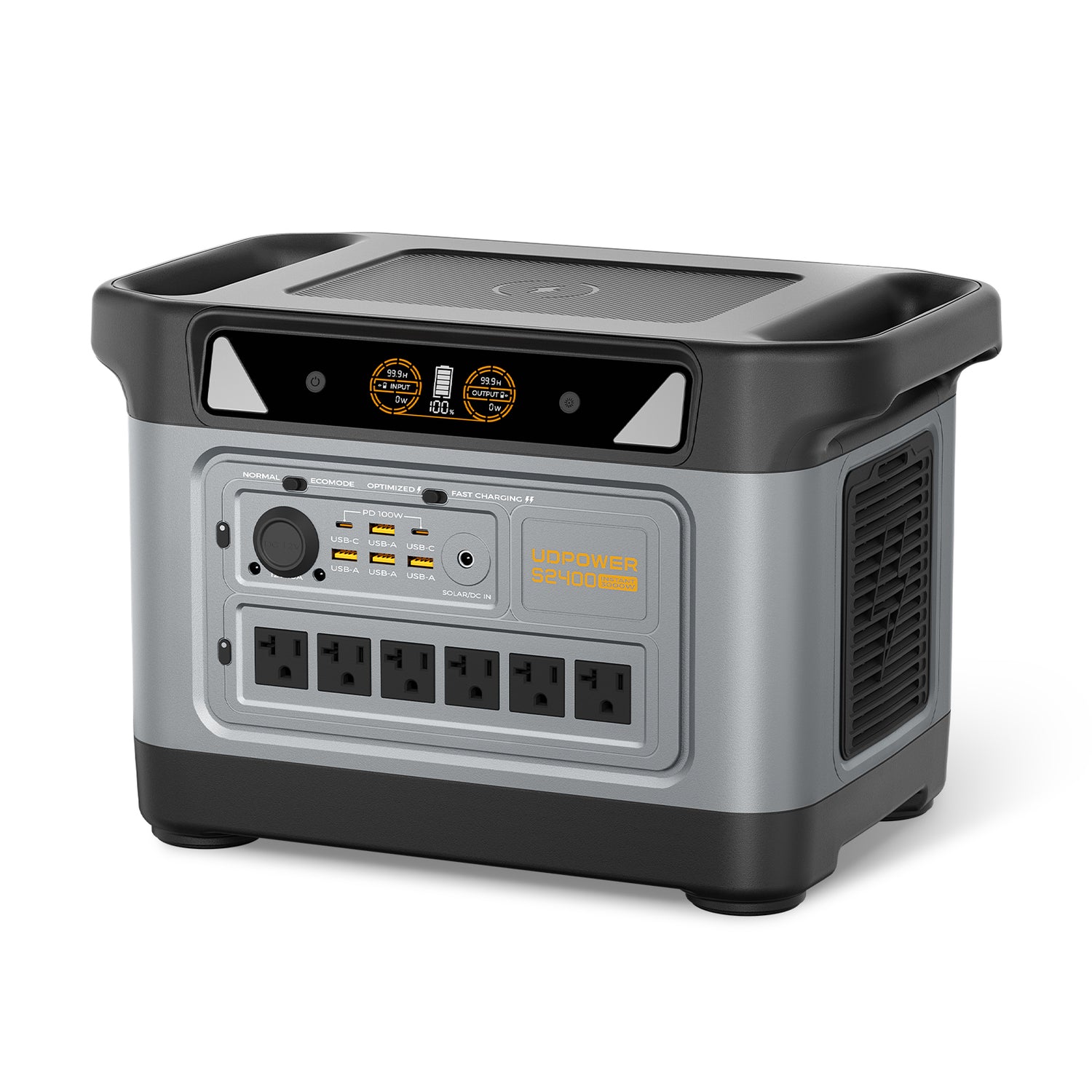 Best for the 2400W class
UDPOWER S2400
If your converted load is much higher or you want more output flexibility during outages, the S2400 is the cleaner choice. It makes more sense than forcing a smaller unit to live at the edge of its rating.
- 2,083Wh capacity
- 2,400W output
- Up to 3,000W surge support
- Built for larger essentials, longer outages, and heavier overlap
Simple buying rule: convert kVA to kW first, buy for output second, and only then compare battery size for runtime. That order keeps you from buying a battery that lasts a long time but cannot actually run the load you care about.
FAQ
Does 1 kVA always equal 1 kW?
No. That only happens when the power factor is 1.0. If PF is 0.8, then 1 kVA equals 0.8 kW.
What is the formula to convert kVA to kW?
The formula is: kW = kVA × power factor.
What power factor should I use if it is not listed?
Check the equipment label, manual, or manufacturer data sheet first. If you guess wrong, you can end up with the wrong kW number. Many generator examples use 0.8 as a planning value, but it is not a universal default.
Can I convert kVA to watts directly?
Yes, but do it in two steps. First convert kVA to kW with the PF. Then multiply kW by 1000 to get watts.
Is kW or kVA more important when buying backup power?
For real usable output, kW or watts matters more. For battery runtime, watt-hours (Wh) matters too. In other words: output first, runtime second.
Is the same formula used for single-phase and three-phase systems?
Yes. Once you already know the kVA value, the final step is the same: kW = kVA × PF. The difference is only in how you calculate kVA from volts and amps.
Why can a load with the right running watts still fail to start?
Because startup surge can be much higher than running watts. Compressors, pumps, and motors are the classic examples. Always leave headroom if the load is not purely resistive.
Can I use kVA math to choose a portable power station?
Yes. Convert the load to real watts first, then choose a portable power station whose continuous output can handle that load with margin. After that, compare battery capacity for runtime.
Ready to size your setup the practical way?
Start with your converted real load, then match it to output watts, then check runtime. That is the fastest way to avoid buying too small or overspending on the wrong class.
Check Your Runtime Shop Power Stations Get the Planning Guide