How to Calculate Watt-Hours (Wh) of a Power Bank
ZacharyWilliamIf you’ve ever compared “20,000mAh” vs “26,800mAh” and still felt unsure, you’re not alone. Watt-hours (Wh) is the number that actually tells you how much energy is inside a power bank—and it’s the cleanest way to estimate runtime, compare models, and understand travel limits.
If you’re using this math to decide whether a pocket bank is enough for your situation, two quick next reads help a lot: how to check whether a battery can run your device (W vs Wh, surge, AC vs DC), and portable power stations vs solar generators if you’re planning for more than phones.

What watt-hours actually mean
A watt-hour is the energy needed to supply one watt for one hour. So a 74Wh power bank can (in ideal math) run a 74W load for one hour, or a 7.4W load for ten hours.
In the real world, a power bank’s internal battery doesn’t deliver energy straight to your device. It usually has to convert voltage (for USB outputs) or invert DC to AC (for outlets on larger battery systems). That’s why Wh is still the right starting point—it’s the universal “energy unit”—but we’ll also talk about losses so your estimates stay realistic.
If you want the “same topic, more examples” version, UDPOWER also has a dedicated walkthrough: mAh → Wh (the clear, correct way).
The only formulas you need
Everything comes from one basic relationship:
Energy (Wh) = Voltage (V) × Capacity (Ah)

If your label is in milliamp-hours:
Wh = (mAh × V) ÷ 1000

Reverse conversions:
Ah = Wh ÷ V
mAh = (Wh × 1000) ÷ V
Key point: you need voltage. mAh alone is not enough to calculate Wh accurately. If you’d rather click than calculate, use Battery Unit Conversion Tools.
Step-by-step: mAh → Wh (with real examples)
Most USB power banks use lithium-ion cells with a nominal cell voltage around 3.6–3.7V. Many brands rate mAh at that internal cell voltage, then a circuit boosts it to 5V/9V/12V for USB output.
- Find the capacity (mAh) printed on the power bank or spec sheet.
- Find the nominal battery voltage. If it’s not printed, a common assumption for typical Li-ion power banks is ~3.7V. (Some use LiFePO4 at ~3.2V; more on that below.)
- Plug it into the formula: Wh = (mAh × V) ÷ 1000. (Or use UDPOWER’s converter to double-check.)
Example 1: 10,000mAh (typical Li-ion)
Wh = (10,000 × 3.7) ÷ 1000 = 37Wh
A “10,000mAh” bank is usually about 37Wh of stored energy.
Example 2: 20,000mAh (typical Li-ion)
Wh = (20,000 × 3.7) ÷ 1000 = 74Wh
This is why “20,000mAh” commonly lines up with ~74Wh.
Example 3: 26,800mAh (near a common travel threshold)
Wh = (26,800 × 3.7) ÷ 1000 ≈ 99.16Wh
This is roughly ~99Wh when rated at 3.7V.

Conversion table (assuming 3.7V Li-ion internal cell rating)
| Advertised capacity | Nominal voltage used | Calculated energy | What it means in plain English |
|---|---|---|---|
| 5,000mAh | 3.7V | 18.5Wh | Good for small top-offs, earbuds, one phone partial charge. |
| 10,000mAh | 3.7V | 37Wh | Often 1–2 phone charges depending on phone size and losses. |
| 15,000mAh | 3.7V | 55.5Wh | More comfortable buffer for travel days and heavier phone use. |
| 20,000mAh | 3.7V | 74Wh | A popular “all-day” size for multiple devices. |
| 26,800mAh | 3.7V | ~99Wh | Near a commonly referenced airline threshold (always check your carrier). |
| 30,000mAh | 3.7V | 111Wh | Large bank—may require airline approval in some situations. |
| 50,000mAh | 3.7V | 185Wh | Very large; often restricted for air travel and less pocketable. |
If your power bank uses LiFePO4 (3.2V nominal)
Some battery packs (and many portable power stations) use lithium iron phosphate (LiFePO4). The nominal cell voltage is typically around 3.2V, so the same mAh number converts to fewer watt-hours.
If you’re wondering why the voltage is different (and what that means for real-world use), see: The Complete LiFePO4 (LFP) Battery Guide.
| Advertised capacity | Nominal voltage used | Calculated energy | Quick note |
|---|---|---|---|
| 10,000mAh | 3.2V | 32Wh | Same mAh, different chemistry/voltage. |
| 20,000mAh | 3.2V | 64Wh | Still a solid bank, just fewer Wh than 3.7V math. |
| 26,800mAh | 3.2V | ~85.76Wh | Below 100Wh when calculated at 3.2V. |
| 30,000mAh | 3.2V | 96Wh | Often still under 100Wh in pure conversion terms. |
The voltage “trap” that makes mAh confusing
Here’s the part that trips people up: mAh is not a universal unit of energy. It’s a unit of charge. A “20,000mAh” rating means very different things at different voltages.
Same mAh, different Wh:
10,000mAh at 3.7V  →  37Wh
10,000mAh at 12V   →  120Wh
That’s why Wh is the fair comparison number.

Watch for how brands present capacity
- Most common: mAh rated at the internal cell voltage (often ~3.7V). Great—convert it to Wh.
- Sometimes: a brand markets “20,000mAh @ 5V” (less common, but it happens). That would imply 100Wh (20,000 × 5 ÷ 1000). If you see this, look for a printed Wh figure on the label to confirm.
- Best-case: the label already lists Wh. When it does, use that number first.
Practical tip: if a power bank only advertises a giant mAh number, flip it over and check the fine print. Many reputable models list Wh on the back label. If you want a quick “double conversion” reference, this guide is handy: Wh ↔ mAh conversion (with examples).
Usable Wh: why you won’t get 100% of the label
Even if your math is perfect, your device won’t receive every watt-hour stored inside. Conversion and heat losses are normal. The goal is a realistic estimate, not a fantasy runtime.

| Output type | What’s happening | Typical planning range | Rule-of-thumb estimate |
|---|---|---|---|
| USB (5V/9V/12V) | DC-DC conversion (boost/buck) | ~85–95% | Usable Wh ≈ Rated Wh × 0.90 |
| AC outlet (inverter) | DC to AC inversion + overhead | ~80–90% (varies by load) | Usable Wh ≈ Rated Wh × 0.85 |
| Wireless charging | Inductive loss + alignment issues | Often lower than wired | Prefer cable if you need maximum runtime |
If you’re planning for something important (travel day, medical device, work-from-anywhere), use a conservative efficiency number. You’ll be happier with the result.
Related (when you start dealing with AC loads, surge, or “will it run this?” questions): How do you know if a portable power station can power your device? and UPS vs portable power station (when efficiency isn’t the only concern).
Turn Wh into runtime (and quick sanity checks)
Once you have Wh, runtime becomes simple:
Ideal runtime (hours) = Battery Wh ÷ Device W

More realistic planning:
Estimated runtime (hours) = (Battery Wh × Efficiency) ÷ Device W
If you want an instant estimate without a calculator app, use UDPOWER’s runtime calculator. If your next question is “how long will it take to recharge this battery?”, the companion guide is here: battery charging time calculator.

Quick runtime table (using a 74Wh power bank as an example)
Below assumes ~90% efficiency for USB power (a practical planning number for many quality banks).
| Device / load | Typical draw (W) | Estimated usable energy | Estimated runtime |
|---|---|---|---|
| Phone top-ups / light charging | 5–10W | 74Wh × 0.90 ≈ 66.6Wh | ~6.5–13 hours of “continuous” 5–10W draw |
| Tablet / higher-speed phone charging | 15–25W | ~66.6Wh | ~2.6–4.4 hours |
| Laptop charging (USB-C PD) | 45–65W | ~66.6Wh | ~1.0–1.5 hours of continuous 45–65W draw |
The “phone charges” shortcut (without getting lost in specs)
Phone batteries vary a lot, but many modern smartphones are roughly in the 10–15Wh range. If you assume a practical end-to-end efficiency (bank conversion + phone charging losses), you can use a simple estimate:
Estimated full charges ≈ (Power bank Wh × 0.80) ÷ (Phone battery Wh)
Example: A 74Wh bank → 74 × 0.80 ≈ 59Wh usable end-to-end. If your phone is ~12Wh, that’s ~4.9 “theoretical” charges. Real life may be lower depending on heat, fast charging, and cable quality.
Why airlines talk about Wh (not mAh)
Air travel rules and airline policies often reference watt-hours because Wh is a consistent measure of energy and risk. A big mAh number can be misleading if voltage isn’t specified, so Wh is the standard yardstick.
- Power banks are typically required to be in carry-on luggage (not checked).
- Policies often differentiate between under 100Wh and 101–160Wh, with the larger range sometimes requiring airline approval.
- Rules can vary by airline and route—always verify your carrier’s current policy before you fly.

If your power bank is near a threshold, it helps to have the Wh printed clearly on the label. If it’s not printed, do the conversion and keep a screenshot or spec page handy.
For a simple travel-friendly explainer (including Wh thresholds), see Wh ↔ mAh conversion guide. If you’re traveling with a laptop and want a practical, “what will work at the airport/hotel” breakdown, this is useful too: How to charge a MacBook Pro without a charger.
When a “power bank” isn’t enough: stepping up in Wh
Most pocket power banks live in the tens of watt-hours. That’s perfect for phones and tablets. But once you’re trying to cover outages, run a CPAP, keep a router alive overnight, or power higher-draw gear, the conversation shifts from “mAh” to “total Wh capacity” very quickly.
To show the difference, a common “20,000mAh” power bank (about 74Wh when rated at 3.7V) is in a totally different class than a portable power station.

| Category | Example | Energy (Wh) | Roughly equal to how many 20,000mAh (~74Wh) banks? | Best for |
|---|---|---|---|---|
| Pocket power bank | “20,000mAh” typical Li-ion | ~74Wh (at 3.7V) | 1× | Phones, tablets, light laptop top-ups |
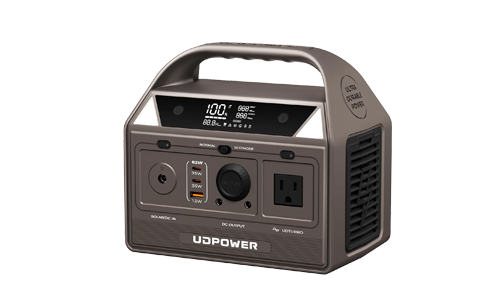
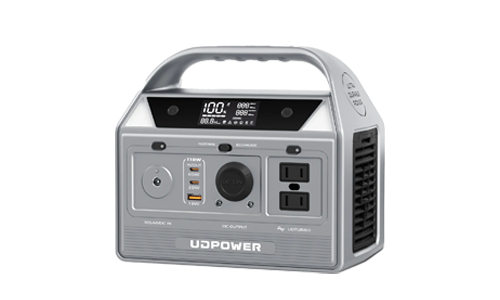
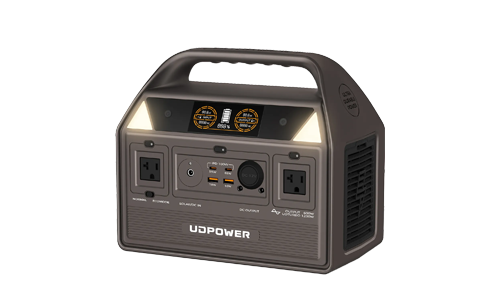
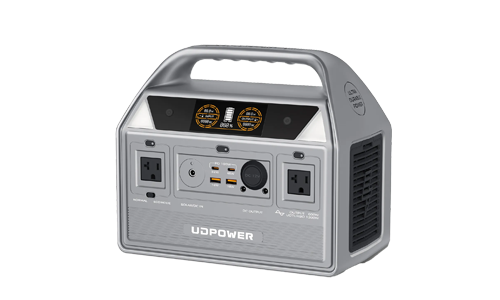
| Portable power station | UDPOWER S1200 | 1,190Wh | ~16× | Home essentials, road trips, backup for more than just USB devices |
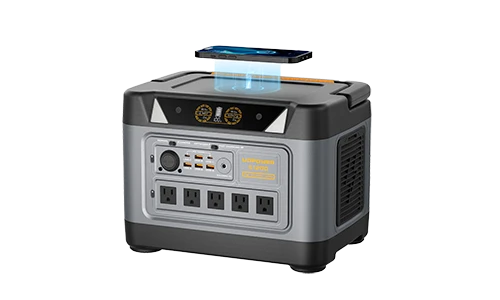
| Higher-capacity portable power station | UDPOWER S2400 | 2,083Wh | ~28× | Longer runtimes, heavier appliances, multi-device backup |
If your main goal is “keep my phone alive,” you don’t need a big unit. But if you’re doing real backup planning, Wh capacity (and the inverter rating) matter more than any single mAh number.

If you’re stepping up from a power bank, these are the most relevant UDPOWER guides:
Browse by category if you’re still narrowing it down: Portable Power Stations, Solar Generators, and Solar Panels.
Tools to make this painless
If you want to skip manual math (or double-check your numbers), these tools can help:
- Battery Unit Conversion Tools — convert between mAh, Ah, Wh, volts, watts, amps, and more.
- Portable Power Station Runtime Calculator — estimate runtime using Wh capacity and device wattage.
- Battery charge time calculator — estimate how long it takes to recharge based on input watts.
If your “power bank” shopping overlaps with solar (very common for camping), these are worth bookmarking:
- Is a solar power bank worth it? (honest limits + when it makes sense)
- Are portable solar panels worth it?
- 120W vs 210W vs 2×120W solar panels (how to pick based on what you’re charging)
Even if you’re shopping for a small power bank, it’s worth thinking in Wh. It keeps comparisons honest.
FAQs
Do I need voltage to calculate watt-hours?
Yes. mAh alone doesn’t tell you energy. You need voltage to convert charge (mAh) into energy (Wh).
Why is a 20,000mAh power bank usually around 74Wh?
Because many power banks rate mAh at the internal cell voltage (~3.7V). Using Wh = (mAh × V) ÷ 1000 gives 20,000 × 3.7 ÷ 1000 ≈ 74Wh.
What if my label only shows “mAh” and no voltage?
Look for fine-print specs on the back label, the manual, or the product page. If it’s a typical lithium-ion USB power bank, ~3.7V is a common nominal internal rating—but it’s better to confirm when possible.
If a power bank says “74Wh,” do I still need to convert?
No—Wh is already the energy unit you want. Use Wh directly for comparisons and runtime estimates.
Why does my device get fewer watt-hours than the bank’s rating?
Because of conversion losses (boosting to USB voltages, heat, cable loss, and the device’s own charging inefficiency). Planning at 80–90% usable energy is often more realistic than assuming 100%.
How do I estimate runtime from Wh?
Start with runtime (hours) = Wh ÷ W. Then adjust for efficiency: (Wh × efficiency) ÷ W.
Can I compare two power banks by mAh alone?
Only if they’re rated at the same voltage (and most marketing doesn’t make that obvious). Converting both to Wh is the clean way to compare.
Does fast charging change the Wh calculation?
No. Fast charging changes how quickly energy flows (watts), but it doesn’t magically change the total stored energy (Wh). It can affect losses, though—heat can reduce efficiency.
Is Wh the same as W?
No. W is instantaneous power draw. Wh is energy over time (power × time).
If I need backup for more than phones, what should I look at?
Start with the total Wh you need and the wattage your devices require. For higher loads and longer runtimes, a portable power station with a higher Wh capacity and a strong inverter rating is typically a better fit than a pocket bank.
Helpful references
- FAA: Lithium batteries & air travel guidance
- Watt-hour (Wh) definition
- Ampere-hour (Ah/mAh) definition
Always check your specific airline’s policy before flying. Requirements can vary by carrier and route.