What are the disadvantages of a portable power station?
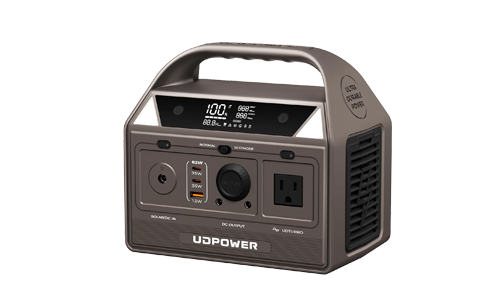
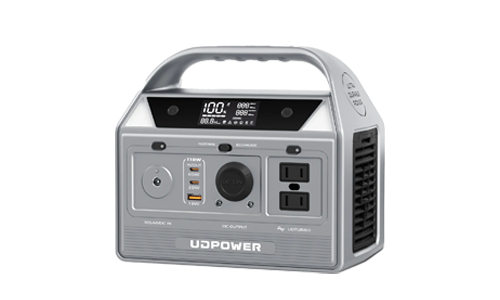
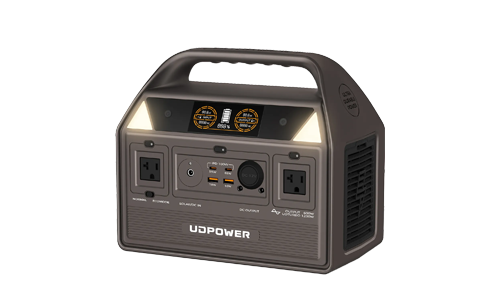
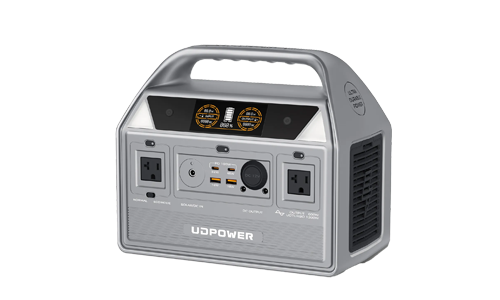
Portable power stations provide quiet, fuel-free electricity for camping, emergencies, CPAP machines, refrigerators, internet equipment, and other essential devices. However, they also have important limitations. This guide explains 14 disadvantages of portable power stations, including limited battery runtime, inverter and startup-surge limits, conversion losses, slow recharging, unpredictable solar production, temperature restrictions, battery aging, weight, UPS limitations, and the inability of most models to power standard 240V or whole-home appliances. It also compares UDPOWER C600, S1200, and S2400 models to help readers choose the right capacity and output for their actual power needs.
Last updated: June 23, 2026
Portable power stations solve a real problem: they provide electricity without gasoline, exhaust fumes, or the constant noise of a conventional generator. That makes them useful for camping, RV travel, CPAP backup, refrigerators, internet equipment, mobile work, and short power outages.
The disappointment usually begins when the buyer expects a battery to behave like an unlimited source of electricity. A power station can only supply the energy stored inside it, and every appliance connected to it reduces that reserve. The right question is therefore not simply, “Is a portable power station good?” It is, “Does its capacity, output, charging speed, and port selection match the way I plan to use it?”

Portable Power Station Disadvantages at a Glance
| Disadvantage | Who notices it most | What goes wrong | Best practical response |
|---|---|---|---|
| Limited stored energy | Users running heaters, cookers, air conditioners, or power tools | High-watt loads can empty even a large battery in one or two hours | Reserve battery power for essentials and run heat-producing appliances only briefly |
| Conversion losses | Anyone calculating runtime directly from the Wh label | The connected appliance receives less energy than the battery's rated capacity | Use a realistic efficiency factor instead of dividing Wh by watts without a buffer |
| Output limit | Users with microwaves, kettles, pumps, refrigerators, or tools | The appliance may overload the inverter even when the battery is full | Check running watts and startup watts separately |
| No standard 240V output | Homes with central AC, electric dryers, water heaters, and well pumps | Many large or hardwired household loads cannot be connected | Use the station for selected 120V essentials or choose a dedicated home backup system |
| Recharge delay | Multi-day outage and off-grid users | The battery may be depleted faster than it can be replenished | Compare daily energy use with realistic daily charging capacity |
| Variable solar production | Users depending on solar as their only charging source | Clouds, heat, shade, panel angle, and season reduce charging power | Use solar as a runtime extender and keep another charging option available |
| Strict solar input range | Users connecting third-party or multiple panels | Incorrect voltage, current, connector, or wiring may prevent charging or damage equipment | Verify open-circuit voltage, current, polarity, and connector type before connection |
| Temperature sensitivity | Winter campers, hot garages, and vehicles parked in the sun | Charging may be restricted and available power may decline | Store the unit indoors and keep it within the manufacturer's charging range |
| Weight | Older users, solo campers, and anyone moving the unit frequently | Large-capacity models can weigh 25–40 pounds or more | Buy enough capacity for the job, not the largest battery available |
| Battery aging | Long-term emergency-preparedness buyers | The battery gradually holds less energy as it ages | Choose LiFePO4 chemistry, avoid extreme temperatures, and test the unit regularly |
| Fan and low-load behavior | Bedroom, CPAP, and always-on internet users | Cooling fans may cycle, and some units may shut down when the load is extremely low | Test the exact overnight load before relying on it |
| UPS limitations | Desktop computers, servers, networking equipment, and sensitive electronics | Transfer time and power conditioning may not match a dedicated UPS | Perform an unplug test and use a dedicated UPS where data protection is critical |
| Integrated construction | DIY and long-term off-grid users | Battery, inverter, controller, and display are housed in one system | Choose a strong warranty and consider a modular system for permanent installations |
| Transport and return restrictions | Air travelers and buyers choosing very large units | Large lithium batteries cannot travel as ordinary passenger baggage and can be expensive to return | Confirm transportation and return policies before purchasing |
The most serious disadvantage depends on the application. A 596Wh station may be excellent for a laptop and camping lights but unsuitable for a 1,500W space heater. The product has not failed; the energy plan has.
The Two Power Budgets Every Buyer Must Understand
Most buying mistakes happen because people look at only one number. A portable power station actually has two separate limits.
1. The power budget: watts
Watts tell you how much electricity the station can supply at one moment. If a power station is rated for 1,200W, the total continuous demand of all connected AC devices should stay within that rating.
Startup surge matters too. Refrigerators, pumps, compressors, and some power tools may briefly require much more power when their motors start. A device can therefore use only 200W while running but still shut down a small station during startup.
2. The energy budget: watt-hours
Watt-hours tell you how long the stored energy can support a load. A 1,200W inverter does not mean the unit can produce 1,200W indefinitely. Runtime depends on battery capacity.
For UDPOWER runtime planning, this article uses a 90% conversion-efficiency estimate. Real runtime may still vary because of temperature, battery condition, inverter overhead, appliance cycling, and startup behavior.
1. High-Watt Appliances Drain the Battery Quickly
Limited runtime is the most important disadvantage because battery energy is finite. Appliances that create heat usually consume the most power. Common examples include space heaters, electric kettles, hair dryers, toaster ovens, induction cookers, hot plates, and electric water heaters.
A 1,500W heater may physically run from a sufficiently powerful station, but that does not mean it will run for an entire night. Using the 90% planning method, a 2,083Wh battery provides approximately 1,875Wh of usable energy. At a constant 1,500W load, the mathematical estimate is only about 1.25 hours.
| Example load | Typical use | S1200 estimated runtime 1,190Wh × 90% |
S2400 estimated runtime 2,083Wh × 90% |
Planning note |
|---|---|---|---|---|
| 10W | Router or small LED load | Up to about 107 hours | Up to about 187 hours | Very low loads may be affected by standby draw or automatic shutoff behavior |
| 40W | CPAP without heavy humidifier use | About 26.8 hours | About 46.9 hours | Actual CPAP draw changes with pressure, humidifier, and heated hose settings |
| 100W | TV, fan, or combined internet equipment | About 10.7 hours | About 18.7 hours | Suitable for continuous essentials when other large loads are disconnected |
| 600W | Small cooker, tool, or appliance | About 1.8 hours | About 3.1 hours | Continuous high load produces much shorter runtime than intermittent use |
| 1,200W | Microwave, coffee maker, or high-power appliance | About 54 minutes | About 1.6 hours | S1200 is at its continuous output limit; actual appliance surge must also be checked |
| 1,500W | Space heater or high-power cooker | Not recommended as a normal continuous load | About 1.25 hours | Better used in short intervals rather than as an overnight heat source |
These are planning estimates, not guaranteed runtimes. Appliance cycling can increase runtime, while inverter overhead, heat, cold, aging, and startup surges can reduce it. See the portable power station runtime planning guide for a complete outage load plan.
How to reduce this disadvantage
- Use battery power for refrigeration, communication, medical equipment, lighting, and charging first.
- Run microwaves, coffee makers, and cooking appliances in short sessions.
- Avoid using electric resistance heat as the main emergency heating method.
- Turn off unused AC and DC output sections when possible.
- Choose direct USB-C or DC power instead of AC adapters when the equipment supports it.
2. Usable Energy Is Lower Than the Capacity on the Label
A battery's watt-hour rating describes the energy stored in the battery pack. Your appliance does not normally receive every watt-hour. Energy is consumed by the inverter, voltage conversion, cooling system, display, battery-management system, and normal heat losses.
This does not mean the advertised capacity is false. It means stored battery energy and delivered appliance energy are not identical measurements.
| UDPOWER model | Rated battery capacity | 90% planning estimate | What the estimate is useful for | Official source |
|---|---|---|---|---|
| C600 | 596Wh | About 536Wh | Comparing realistic AC runtime for small and medium loads | C600 specifications |
| S1200 | 1,190Wh | About 1,071Wh | Planning refrigerator, CPAP, Wi-Fi, lighting, and device charging | S1200 specifications |
| S2400 | 2,083Wh | About 1,875Wh | Planning longer backup or short operation of higher-watt appliances | S2400 specifications |
A very small AC load can sometimes achieve lower efficiency because the inverter's own operating consumption becomes a larger share of total demand. For a phone, tablet, or compatible laptop, using a direct USB port is often more efficient than turning on the AC inverter and plugging in a separate wall charger.
To understand the calculation in more detail, read how to calculate watt-hours and realistic battery runtime .
3. Output and Startup-Surge Limits Can Prevent an Appliance From Running
Battery capacity and inverter output solve different problems. A large battery may contain enough energy for several hours, but the appliance still will not run if its immediate power requirement exceeds the inverter's output limit.
Motor-driven appliances add another complication. Refrigerators, freezers, water pumps, air conditioners, and power tools may briefly draw several times their normal running power while starting.
Example
A refrigerator may average less than 100W over time because its compressor cycles on and off. However, the compressor can require a much higher startup surge. Selecting a station based only on the average wattage can lead to overload shutdowns.
The UDPOWER S1200 supplies 1,200W continuous AC output with up to 1,800W surge support. The S2400 supplies 2,400W continuous output with up to 3,000W surge support. Those higher ratings reduce—but do not eliminate—the need to verify the appliance's actual demand.
4. Most Portable Power Stations Are Not Whole-Home or 240V Systems
Many portable stations sold in the United States provide standard 120V AC outlets. That works for plug-in household essentials but not for most central air conditioners, electric dryers, electric water heaters, large well pumps, electric ranges, or other hardwired 240V equipment.
UDPOWER S1200 and S2400 models provide 120V AC output. The S2400 can run selected high-watt 120V appliances within its 2,400W continuous rating, but it is not designed to energize an entire household electrical panel or supply standard 240V appliances.
For a practical comparison of battery stations and fuel-powered backup, see portable power station vs. generator for power outages .
5. Recharging Can Become the Real Bottleneck
Gas generators can continue operating when more fuel is added. A portable power station must pause or reduce its load when the stored battery energy has been used faster than it can be replenished.
Fast wall charging is helpful when grid electricity is available. During a blackout, however, the wall outlet may be the one charging source you do not have. Car charging is usually much slower, while solar output depends on weather and daylight.
The recharge-to-load test
A sustainable off-grid setup must replace at least as much energy as it consumes over the same period.
Suppose your essential devices consume 1,200Wh per day, but your solar setup produces only 700Wh after weather and conversion losses. You have a 500Wh daily deficit. A larger battery delays the problem, but it does not solve the energy shortage.
| Daily consumption | Daily charging | Daily result | Likely outcome | Recommended action |
|---|---|---|---|---|
| 500Wh | 700Wh | 200Wh surplus | The battery can recover if conditions remain similar | Keep reserve capacity for cloudy weather |
| 1,000Wh | 1,000Wh | Balanced | Little room for bad weather or unexpected loads | Reduce nonessential use or add charging headroom |
| 1,200Wh | 700Wh | 500Wh deficit | The battery becomes progressively emptier each day | Reduce load, increase solar capacity, or add another charging source |
| 2,500Wh | 1,000Wh | 1,500Wh deficit | A portable system cannot sustain the planned lifestyle | Move heating, cooking, or other major loads to another energy source |
This is why a daily energy plan is more useful than simply buying the largest battery you can afford.
6. Solar Charging Is Weather-Dependent
A solar panel's rated wattage is measured under controlled test conditions. Outdoor production changes throughout the day and is affected by cloud cover, temperature, haze, season, panel angle, cable loss, and partial shading.
A 210W panel should not be expected to produce 210W continuously from sunrise to sunset. Its strongest production normally occurs during a smaller part of the day when sunlight is direct and the panel is properly positioned.
Why partial shade matters
Shade on a small area of a folding solar panel can reduce output by much more than the shaded percentage suggests. Tree branches, vehicle shadows, tent poles, roof racks, and even another panel can create significant charging losses.
How to plan more realistically
- Use solar primarily to extend runtime and restore essential energy.
- Place the entire panel in direct sunlight rather than behind glass.
- Adjust the panel angle while watching the live input wattage on the station.
- Reposition the panel as the sun moves when practical.
- Expect less production in winter, cloudy weather, and extreme heat.
- Keep a wall or vehicle charging option available when reliability is critical.
The NREL PVWatts calculator can help estimate seasonal solar availability, although a foldable portable panel will not always perform like a permanently installed, optimally positioned array.
For more practical buying guidance, read whether a portable solar panel is worth buying .
7. Solar Voltage, Current, and Connector Limits Are Strict
A power station cannot accept every solar panel simply because an adapter fits. The panel configuration must stay within the station's permitted input-voltage and current range.
The most important solar number is often the panel's open-circuit voltage, listed as Voc. When panels are connected in series, their voltages add. When panels are connected in parallel, current increases. Cold weather can also raise panel voltage.
| Model | Published solar input range | Maximum solar input | Planning concern | Official source |
|---|---|---|---|---|
| UDPOWER C600 | 11–28V | Up to approximately 240W | Limited voltage range requires careful matching of third-party panels | C600 product page |
| UDPOWER S1200 | 12–75V, 12A | Up to 400W | Confirm total series Voc remains below the limit in cold conditions | S1200 product page |
| UDPOWER S2400 | 12–50V, 10A maximum | Up to 400W | Do not exceed the voltage or current limit when combining panels | S2400 product page |
Matching UDPOWER panels and approved cables reduces this disadvantage. Browse the current UDPOWER portable solar panel collection before building a multi-panel setup.
8. Extreme Heat and Cold Affect Charging and Runtime
Lithium batteries work best within a moderate temperature range. Cold conditions can reduce available power and slow battery chemistry. Charging a battery that is too cold may be restricted by the battery-management system. Excessive heat can increase fan operation, accelerate battery aging, and cause protective power reduction.
For example, the UDPOWER S1200 publishes a discharge range of -4°F to 113°F, a charging range of 23°F to 104°F, and a storage range of 32°F to 104°F. The S2400 publishes a discharge range of -4°F to 113°F and a charging range of 32°F to 104°F.
Better storage and use habits
- Do not leave the station in a vehicle parked in direct summer sun.
- Store it in a dry interior space rather than an unconditioned shed or freezing garage.
- Allow a very cold unit to warm gradually before charging it.
- Keep all ventilation openings clear during charging and operation.
- Do not place blankets, clothing, or luggage over the cooling vents.
9. More Capacity Usually Means More Weight
“Portable” does not always mean lightweight. Battery cells, the inverter, cooling system, frame, and protective enclosure all add weight. A unit that is comfortable to move from a closet to a kitchen may be tiring to carry across a campground or up several flights of stairs.
| Model | Capacity | Continuous output | Published weight | Portability tradeoff |
|---|---|---|---|---|
| C600 | 596Wh | 600W | Approximately 12.3 lb | Easy to move for camping, vehicle travel, cameras, laptops, and smaller backup loads |
| S1200 | 1,190Wh | 1,200W | Approximately 26 lb | More suitable for home essentials but noticeably heavier for frequent carrying |
| S2400 | 2,083Wh | 2,400W | Approximately 40.8 lb | Longer runtime and higher output, but better treated as movable rather than handheld equipment |
Buying too small creates runtime problems. Buying far too large creates cost, storage, and lifting problems. The best size is the smallest model that comfortably covers your required output and energy budget with a reasonable reserve.
10. Battery Capacity Gradually Declines
Every rechargeable battery loses some capacity with age and use. Battery life is affected by cycle count, temperature, storage conditions, depth of discharge, charging behavior, and the amount of time spent at extreme states of charge.
Modern LiFePO4 batteries generally offer better cycle life and thermal stability than many older lithium-ion designs, but they are not permanent. A station used daily will age differently from one stored for emergencies and tested only a few times per year.
How to slow unnecessary battery aging
- Keep the power station away from prolonged extreme heat.
- Follow the storage-charge guidance in the product manual.
- Recharge and test an emergency unit periodically rather than forgetting it for years.
- Use the manufacturer-supplied charger and approved accessories.
- Do not continue operating a unit with a swollen enclosure, unusual odor, liquid exposure, or physical damage.
UDPOWER currently publishes a five-year limited warranty for products purchased through eligible channels, subject to the warranty terms and proof-of-purchase requirements.
11. Fans, Standby Consumption, and Low-Load Shutoff Can Be Annoying
Portable power stations are much quieter than gasoline generators, but they are not always silent. Cooling fans may turn on during fast charging, high output, or warm conditions. In a bedroom or quiet camper, even occasional fan cycling can be noticeable.
The inverter and internal electronics also consume a small amount of electricity whenever an output section remains active. That overhead matters most when the connected device uses only a few watts.
Some stations automatically shut down very low AC or DC loads to prevent unnecessary battery drain. This can create problems with small monitoring devices, intermittent medical accessories, or equipment that spends long periods in standby.
What to test before relying on the unit overnight
- Charge the station fully.
- Connect the exact CPAP, router, sensor, or other low-power device.
- Use the same operating mode you plan to use during an outage.
- Leave the setup running for a complete night.
- Confirm that the output stays active and note the remaining battery percentage.
12. UPS Mode Is Not Automatically Equal to a Dedicated Computer UPS
Some portable power stations offer fast transfer to battery power when utility power fails. This can be useful for routers, modems, CPAP machines, security equipment, and selected electronics.
UDPOWER publishes a transfer time of 10 milliseconds or less for the S1200 and S2400. However, the connected device must still tolerate that transfer. Compatibility can vary by power supply, load, operating state, and sensitivity.
A dedicated UPS may also provide features specifically designed for computers and servers, including detailed power conditioning, surge protection, monitoring software, and controlled shutdown.
For internet backup planning, see how to keep Wi-Fi running during a power outage .
13. An All-in-One Design Is Convenient but Less Modular
A portable power station combines the battery, inverter, solar controller, charging electronics, display, ports, cooling system, and protective controls in one enclosure. This makes setup much easier than building a battery system from separate parts.
The tradeoff is that the system is less modular. If the built-in inverter, charging circuit, display, or proprietary connector develops a problem, the user may not be able to replace that individual component at home. Capacity expansion also depends on whether the model was designed to support external batteries.
When an all-in-one unit makes sense
- You want a ready-to-use product with minimal wiring.
- You need movable emergency or recreational power.
- You prefer factory-integrated safety controls.
- You do not want to design a battery, inverter, fuse, and charge-controller system.
When a modular system may be better
- You are building a permanent off-grid cabin or large RV electrical system.
- You expect to expand capacity significantly over time.
- You need individual components to be field-replaceable.
- You need 240V, automatic whole-home transfer, or integration with permanently installed solar.
14. Air Travel, Shipping, and Returns Are More Complicated
Large lithium batteries are regulated during transportation. The U.S. Federal Aviation Administration states that ordinary passenger lithium-ion batteries are generally limited to 100Wh, with airline approval sometimes available for certain batteries between 101Wh and 160Wh.
Portable power stations such as the 596Wh C600, 1,190Wh S1200, and 2,083Wh S2400 exceed those passenger-baggage limits. They should not be treated like small phone power banks when planning air travel.
Review the current FAA lithium battery transportation guidance and contact the airline before traveling with any battery-powered equipment.
Returns can also require more planning than returning an ordinary consumer accessory. Lithium battery packages may require approved carriers, original protective packaging, specific labels, and careful handling. Non-quality returns may involve shipping or transaction costs, while verified quality issues are handled according to the current policy.
Read the complete UDPOWER return and refund policy before purchasing, and keep the original box and protective materials until you have fully tested the unit.
Which UDPOWER Size Reduces These Disadvantages?
A larger model does not remove every disadvantage. It provides more runtime and output, but it also increases weight and cost. The right model depends on the appliances you must operate, how long they must run, and how you will recharge the battery.
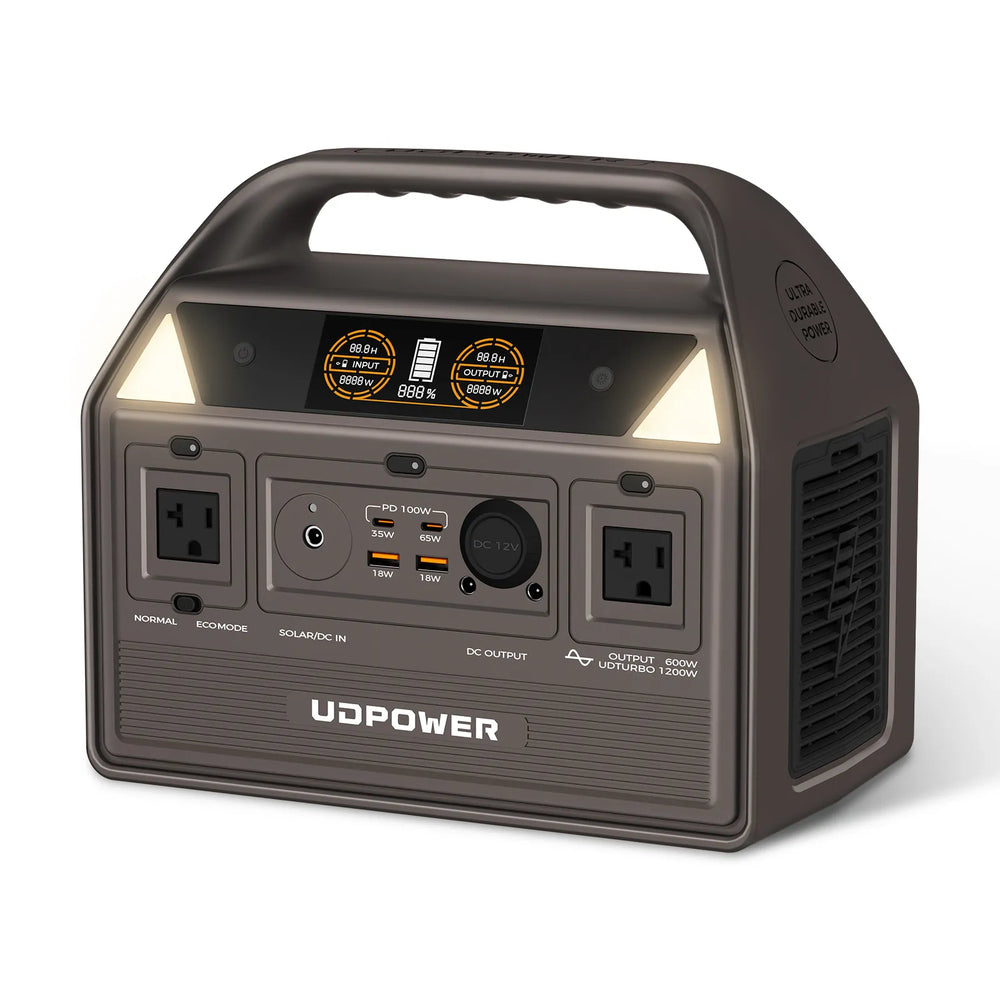
UDPOWER C600: Best for portable, lower-watt essentials
Capacity: 596Wh
Continuous output: 600W
Peak output: Up to 1,200W
Weight: Approximately 12.3 lb
Solar input: 11–28V, up to approximately 240W
The C600 is a practical choice for laptops, phones, cameras, lighting, routers, small fans, car refrigerators, and lower-power camping equipment. Its main advantage is portability.
It does not solve the high-watt appliance problem. A 600W continuous output rating means it is not the right primary station for kettles, heaters, large microwaves, or other heavy AC loads.
View UDPOWER C600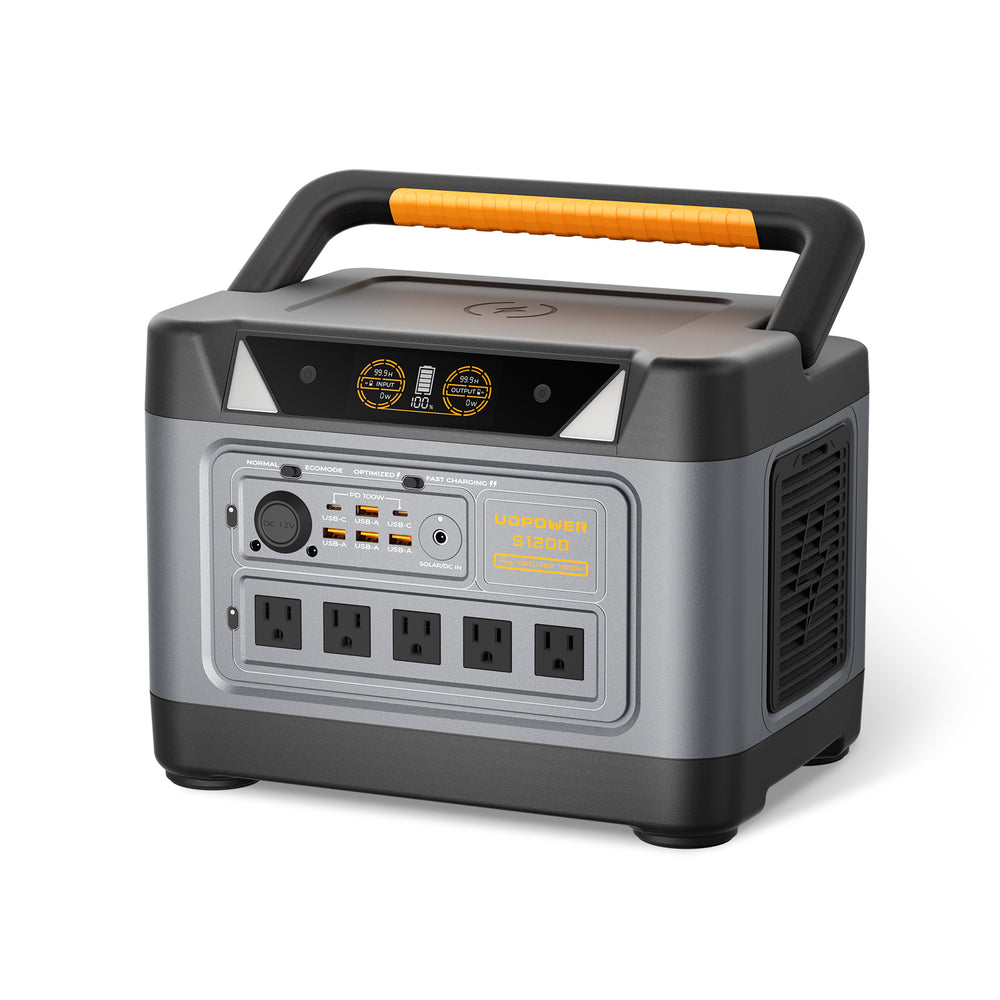
UDPOWER S1200: Best balance for household essentials
Capacity: 1,190Wh
Continuous output: 1,200W
Surge support: Up to 1,800W
Weight: Approximately 26 lb
Solar input: 12–75V, 12A, up to 400W
Wall charging: Approximately 1.5 hours under published test conditions
UPS transfer: 10 milliseconds or less
The S1200 provides more practical headroom for refrigerator cycling, CPAP use, internet equipment, lights, televisions, laptops, fans, and short operation of selected household appliances.
It reduces the risk of buying too little output but remains a 120V essentials-focused station. It is not intended for central air conditioning, electric water heaters, large 240V appliances, or whole-home panel backup.
View UDPOWER S1200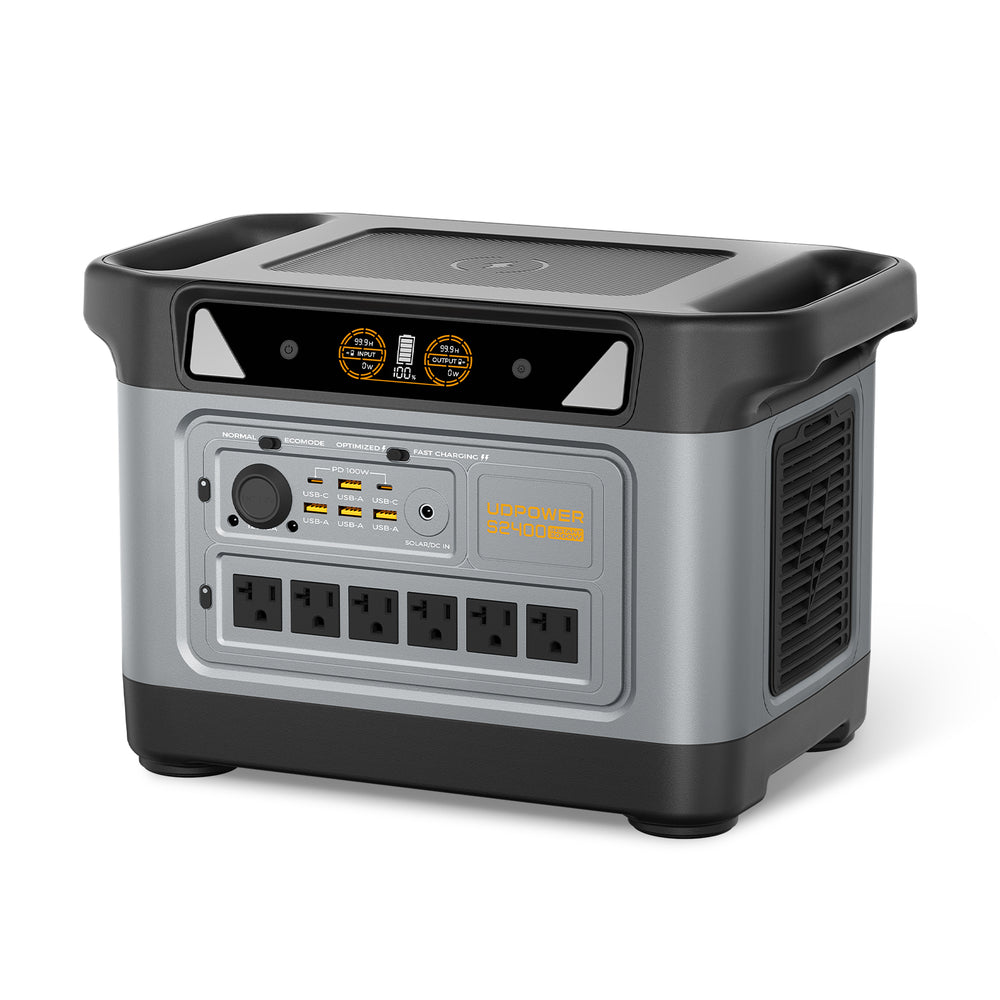
UDPOWER S2400: Best for higher output and longer essential backup
Capacity: 2,083Wh
Continuous output: 2,400W
Surge support: Up to 3,000W
Weight: Approximately 40.8 lb
Solar input: 12–50V, 10A maximum, up to 400W
Wall charging: Approximately 1.5 hours under published test conditions
UPS transfer: 10 milliseconds or less
The S2400 provides more output for microwaves, coffee makers, selected cooking appliances, refrigerators, tools, and multiple simultaneous devices. Its larger battery also extends essential-load runtime.
The tradeoff is weight. At approximately 40.8 pounds, it is movable but may not be convenient for long-distance carrying. It also remains a 120V portable station rather than a 240V whole-home battery system.
View UDPOWER S2400Compare all currently available models in the UDPOWER portable power station collection .
The 15-Minute Power-Outage Drill That Prevents Buyer’s Remorse
Specifications are useful, but an at-home test reveals whether the station actually fits your equipment and routine. Complete this test shortly after receiving the unit while the packaging and accessories are still available.
- Charge the station to 100% using the supplied equipment.
- Connect the modem, router, lights, medical device, or other priority load.
- Record the total displayed output wattage after the devices stabilize.
- Start the refrigerator or other motor-driven appliance and watch for overload behavior.
- Calculate runtime using capacity × 0.90 ÷ total load.
- Disconnect wall power to test UPS transfer if that feature is part of your plan.
- Listen for fan noise in the room where the station will be used.
- Confirm that very low loads remain powered for the required period.
- Check that every required cable and connector is present.
- Store the test results with the power station so other household members can use it correctly.
Before choosing a portable power station, confirm:
- The combined continuous wattage of your priority appliances
- The startup surge of every compressor, motor, and pump
- The total watt-hours required for the planned backup period
- The charging method available during an outage
- The maximum solar input voltage and current
- The number and type of AC, USB-C, USB-A, and DC ports
- The unit's weight and storage location
- The charging and operating temperature range
- UPS transfer compatibility with your exact electronics
- The current warranty, shipping, and return terms
When a Portable Power Station Is the Wrong Choice
A portable power station may not be the right primary solution when your plan requires:
- Continuous electric space heating for many hours
- Central air conditioning
- A standard electric dryer, water heater, range, or other 240V appliance
- Whole-home panel backup without selecting individual loads
- Several days of heavy electricity use with no reliable recharging source
- A permanent off-grid electrical installation that must be easily expandable and field-repairable
- Regular EV charging rather than a very small emergency top-up
In these situations, a fuel generator, permanently installed home battery, modular solar-battery system, or combination of technologies may be more appropriate.
When the Disadvantages Are Worth Accepting
Portable power stations remain one of the simplest ways to provide quiet, indoor-compatible backup for selected devices. Their disadvantages are usually manageable when the use case includes:
- Keeping a refrigerator cold during a short outage
- Powering a CPAP machine overnight
- Keeping a modem, router, phones, and laptops operating
- Running lights, fans, televisions, cameras, or small appliances
- Providing clean portable power for camping or RV travel
- Supporting mobile work, photography, drone charging, or outdoor events
- Using solar panels to extend runtime rather than expecting unlimited power
For refrigerator-specific planning, use the refrigerator power backup sizing guide . For a complete emergency priority list, see what to power first during an outage .
Frequently Asked Questions
What is the biggest disadvantage of a portable power station?
The biggest disadvantage is limited stored energy. High-watt appliances can empty the battery quickly, even when the station has enough inverter output to run them. Buyers should calculate both appliance wattage and required runtime before choosing a model.
Can a portable power station replace a gas generator?
It can replace a generator for selected low- and medium-power essentials, especially when quiet indoor use is important. It usually cannot match a fuel generator for continuous high-watt loads, multi-day operation, or rapid refueling.
Why does a power station not deliver all of its advertised watt-hours?
Some energy is used by the inverter, voltage conversion, cooling system, display, battery-management system, and normal heat loss. Runtime estimates should include a conversion-efficiency allowance rather than assuming every stored watt-hour reaches the appliance.
Can a portable power station run a space heater?
A sufficiently powerful model may run a space heater, but runtime is usually short because heaters often draw 750W to 1,500W continuously. Battery power is generally better reserved for refrigeration, communication, medical equipment, lights, and brief appliance use.
Can a portable power station run a refrigerator?
Many models can run a refrigerator if the station's continuous and surge output exceed the refrigerator's running and startup demand. Runtime depends on compressor cycling, ambient temperature, refrigerator size, door opening, and battery capacity.
Why does solar charging produce fewer watts than the panel rating?
Panel ratings are measured under standardized conditions. Real output is reduced by sun angle, panel temperature, clouds, haze, partial shade, cable loss, season, and charging-controller limits.
Can I connect any solar panel to a portable power station?
No. The panel's open-circuit voltage, current, polarity, connector, and total wiring configuration must remain within the station's published input limits. A physically fitting adapter does not guarantee electrical compatibility.
Do portable power stations work in freezing weather?
They may discharge in cold weather within the manufacturer's operating range, but available performance can decline. Charging restrictions are often stricter than discharge restrictions. Let a very cold unit warm before attempting to charge it.
Can I use a portable power station as a UPS?
Some models include fast transfer capability, but compatibility depends on the connected device. Test the exact computer, router, CPAP, or other equipment by disconnecting wall power while it is operating. Use a dedicated UPS where preventing data loss is critical.
Are portable power stations completely silent?
No. They do not have combustion-engine noise, but internal cooling fans may operate during fast charging, high output, or hot conditions. Low-power use may be nearly silent depending on the model and room temperature.
Can I take a portable power station on an airplane?
Most full-size portable power stations exceed passenger-aircraft lithium battery limits. FAA guidance generally limits ordinary rechargeable lithium batteries to 100Wh, with airline approval sometimes available for certain batteries up to 160Wh. Always verify the battery rating and airline rules before travel.
Is it better to buy a larger portable power station than I need?
A reasonable reserve helps with surge power, battery aging, and longer outages. However, buying far more capacity than needed increases cost, weight, and storage requirements. Choose the smallest model that covers the required output and runtime with practical headroom.
How long do LiFePO4 portable power stations last?
Lifespan depends on cell quality, cycle count, temperature, storage, charging behavior, and depth of discharge. LiFePO4 batteries generally offer long cycle life, but their usable capacity still declines gradually with age and use.
Are portable power stations worth buying despite the disadvantages?
They are worth considering when you need quiet, portable power for specific 120V, USB, or DC essentials. They are less suitable when the goal is unlimited electricity, whole-home 240V backup, continuous electric heating, or several days of heavy use without recharging.
Final Verdict
Portable power stations are not unlimited generators. Their batteries eventually run out, their inverters have output limits, solar production changes with weather, and larger models become heavy. Those are genuine disadvantages—not minor details.
They are also predictable disadvantages. Once you calculate running watts, startup surge, daily watt-hours, charging opportunities, and required ports, it becomes much easier to choose the correct size and avoid disappointment.
For most households, the best strategy is not to power everything. It is to create an essentials-first plan covering refrigeration, medical needs, communication, lighting, and limited comfort loads. A correctly sized station can then provide quiet and practical backup without fuel storage, exhaust, or outdoor generator operation.
Choose a Power Station Based on Your Real Loads
Compare battery capacity, continuous output, surge capability, solar input, ports, and weight before deciding. Start with the appliances you must run—not the largest capacity number on the product page.
View Portable Power Stations Get the Runtime Planning Guide Compare Power Stations and GeneratorsSources and Further Reading
- UDPOWER C600 official specifications
- UDPOWER S1200 official specifications
- UDPOWER S2400 official specifications
- UDPOWER warranty policy
- UDPOWER return and refund policy
- Consumer Reports: Things to know about portable power stations
- National Renewable Energy Laboratory PVWatts calculator
- Federal Aviation Administration lithium battery guidance
Related Articles