

California PSPS 2026 Guide: How Public Safety Power Shutoffs Work and How to Prepare
Last updated: August 26, 2026
California wildfire season can turn an ordinary hot, windy day into a very different kind of power outage. A Public Safety Power Shutoff, usually shortened to PSPS, happens when an electric utility intentionally turns off power in selected areas because weather and fire conditions could make energized power lines unusually dangerous.
Quick Answer: What Should You Know About a California PSPS in 2026?
A PSPS is a planned wildfire-safety outage, not a conventional blackout. California utilities may temporarily shut off selected circuits when extreme fire-weather conditions create an unacceptable wildfire risk. The California Public Utilities Commission describes PSPS as a measure of last resort.
In 2026, PSPS is not just a fall-season concern. PG&E has already documented PSPS activity in May, June, and July 2026. If your utility tells you that your address may be affected, think about the outage in two stages: first, power may remain off while dangerous weather continues; second, crews usually must inspect affected lines after conditions improve before restoration can be completed.
The most useful preparation is not trying to power your entire house. Identify your essential loads first—refrigeration, medical equipment, phones, internet equipment, lighting, and other truly necessary devices—then build a backup-power plan around those loads.

What Is a California PSPS?
A Public Safety Power Shutoff is a preventive outage used to reduce the chance that electrical equipment could ignite a wildfire during dangerous weather. Instead of waiting for a tree, branch, damaged conductor, or other hazard to cause a fire, a utility may temporarily de-energize selected electrical circuits.
The California Public Utilities Commission says utilities use PSPS as a last-resort wildfire safety measure. That distinction matters. A PSPS can create serious hardships for households and communities, so the decision is intended to balance wildfire risk against the consequences of losing electricity.
A PSPS Does Not Automatically Mean a Wildfire Is Burning Near You
A PSPS can occur because conditions are favorable for rapid fire ignition and spread even when there is no active wildfire at your address. Likewise, a utility PSPS message is not an evacuation order. For evacuation information, follow your county, city, sheriff, fire department, and emergency-management alerts.
PSPS outages are usually geographically targeted. Two homes in the same county—or even in nearby communities—may have different outage status because they are served by different electrical circuits.
What Is Different About California PSPS in 2026?
The biggest mistake in 2026 is thinking of PSPS as something that only needs attention in October. California's wildfire risk still tends to become especially visible during hot, dry, windy periods, but actual 2026 utility records show that PSPS activity can begin much earlier.
| Date | 2026 Development | Why It Matters to Residents | Official Source |
|---|---|---|---|
| May 17–18, 2026 | PG&E monitored and implemented its first PSPS event of 2026 as dry and windy conditions affected parts of Northern and Central California. | Shows that household PSPS preparation should be completed before late-summer fire season. | PG&E |
| May 28, 2026 | CPUC posted Southern California Edison's 2026 PSPS Action Plan. | PSPS procedures continue to be actively reviewed and updated rather than treated as a static program. | CPUC |
| June 10–11, 2026 | PG&E conducted another targeted PSPS. About 4,500 customers in eight counties remained affected on the morning of June 11, with restoration completed later that day. | Illustrates why an improving weather forecast does not mean electricity returns immediately. | PG&E |
| July 15, 2026 | PG&E reported approximately 5,000 customers de-energized in portions of eight counties after the potential scope had been reduced from an earlier estimate. | Demonstrates that PSPS scope can change significantly as forecasts and field observations improve. | PG&E |
| August 20, 2026 | CPUC, the Office of Energy Infrastructure Safety, CAL FIRE, and Cal OES held an interagency PSPS public briefing. | Confirms that PSPS remains an active statewide wildfire-safety issue for the 2026 season. | CPUC |
The practical lesson is simple: prepare based on conditions and utility notifications, not a calendar date. A household in a high-fire-threat area should have its alert settings, backup lighting, food plan, medications, charging equipment, and essential-power plan ready before a PSPS Watch appears.
PSPS vs. Other California Power Outages
Not every outage during fire season is a PSPS. Understanding the difference helps you decide what information to look for and how long you may need to prepare.
| Event | What It Is | Usually Planned? | What You Should Do |
|---|---|---|---|
| Public Safety Power Shutoff | Utility intentionally de-energizes selected lines because wildfire risk is unusually high. | Yes, when forecasts provide enough lead time. | Follow PSPS alerts, charge essential devices, prepare for weather plus inspection time. |
| Ordinary outage | Equipment failure, vehicle collision, tree contact, storm damage, animals, or another unexpected cause. | No | Use the utility outage map and estimated restoration information. |
| Fast wildfire-safety equipment response | Protective equipment or safety settings can interrupt service after detecting a potential electrical hazard. | Usually no | Check the utility outage page; don't assume a sudden outage is a scheduled PSPS. |
| Planned maintenance outage | Power is turned off so crews can safely perform scheduled electrical work. | Yes | Use the scheduled maintenance notice and restoration window from your utility. |
| Rotating outage | Controlled load reduction used in a grid-supply emergency. | Controlled, but for a different reason | Follow utility and grid-emergency notices rather than wildfire PSPS guidance. |
The CPUC maintains a broader explanation of California outage types on its Power Outage Resources page.
Which California Utilities Can Use PSPS?
California PSPS is not a PG&E-only program. CPUC identifies multiple investor-owned electric utilities that may use preventive de-energization as part of wildfire-safety operations.
- Pacific Gas and Electric Company (PG&E)
- Southern California Edison (SCE)
- San Diego Gas & Electric (SDG&E)
- Liberty Utilities
- Bear Valley Electric Service
- PacifiCorp/Pacific Power
Procedures, terminology, notification timing, outage maps, and restoration practices can differ by utility. Always use the provider serving your exact address rather than relying only on a statewide news report.
How to Check Whether Your California Address Is in a PSPS
If severe fire weather is developing, use this order of operations:
- Identify your electric utility.
- Open that utility's official PSPS or outage page.
- Check the exact service address rather than only the county name.
- Confirm that your phone number, email address, and alert preferences are current.
- Check again as the event approaches. PSPS boundaries can shrink or expand as forecasts change.
| Area / Utility | Best Official Resource | Useful for |
|---|---|---|
| PG&E | PG&E PSPS Updates | Current PSPS event information and affected-area updates |
| PG&E | PG&E 7-Day PSPS Forecast | Looking ahead for elevated PSPS potential |
| Southern California Edison | SCE Outage Center | Checking outage and PSPS status |
| San Diego Gas & Electric | SDG&E PSPS Dashboard | Current and potential PSPS conditions |
| Statewide | Cal OES PSPS Information | Statewide PSPS event awareness |
| Historical | CPUC PSPS Dashboard and Resources | Post-event information and historical PSPS impact data |
Don't Stop at the County List
When a utility says a county is “in scope,” that does not mean every customer in that county will lose power. PSPS decisions are usually circuit-specific. Use your exact address whenever the utility's tool allows it.
What Triggers a PSPS?
There is no universal rule such as “power shuts off at exactly 50 mph.” Utilities consider multiple conditions together and may change the scope as updated forecasts and real-world observations arrive.
PG&E identifies factors that can include:
- Low humidity
- Forecast high winds
- Very dry vegetation and ground fuels
- Vegetation conditions near electrical equipment
- National Weather Service Red Flag Warnings
- Real-time observations from weather stations and field crews
- Conditions in high-fire-threat areas
You can review PG&E's description of its decision process on the official Public Safety Power Shutoff page.
Why a PSPS Forecast Can Change Quickly
Wind direction, humidity, vegetation dryness, forecast confidence, local observations, and circuit exposure are constantly reassessed. A customer notified 48 hours in advance may ultimately keep power, while changing conditions can also bring additional locations into consideration.
That is why a PSPS notice should be treated as a signal to prepare, not as a guarantee that your electricity will definitely be disconnected.
California PSPS Notification Timeline: When Will You Be Warned?
The exact warning schedule varies by utility and weather. Forecasts can also deteriorate faster than expected, so advance notice is a goal rather than a guarantee.
| Utility | Typical Early Notice | Closer to Shutoff | Official Information |
|---|---|---|---|
| PG&E | When forecasts allow, alerts may begin roughly two days before a potential shutoff. | PG&E's forecast-based process may progress from Watch messaging approximately 48–24 hours ahead to Warning messaging approximately 4–1 hours ahead. | PG&E Outage Alerts |
| SCE | SCE says it intends to notify customers approximately two days before a possible PSPS when possible. | Additional communications can occur about one day ahead and when shutoff is expected soon. | SCE PSPS Notifications |
| SDG&E | SDG&E can begin monitoring potential events 7–10 days ahead and says customer notifications may begin about two days before a likely shutoff. | Forecasts and customer communications continue through the day before and day of the event. | SDG&E PSPS Process |
PG&E Customers: Add Alerts for More Than Your Own Home
PG&E customers with active accounts are automatically enrolled in certain PSPS notifications using the contact information on file. PG&E also offers Address Alerts for locations that may not be tied to your account—useful if you monitor an elderly parent's home, a rental property, a business, or another important address.
Before fire-weather season intensifies, verify that your utility has a phone number and email address you actually use.
How Long Can a California PSPS Last?
There is no reliable “standard” PSPS duration because the outage is controlled by two separate clocks.
Clock 1: How Long Dangerous Weather Continues
If damaging winds, low humidity, or other hazardous conditions continue, lines may need to remain de-energized. A favorable afternoon forecast does not guarantee that the local weather has already reached a safe level.
Clock 2: Inspection, Damage Assessment, Repair, and Re-Energization
After weather reaches an acceptable level, crews may need to inspect affected lines before power can safely return. If they find damaged equipment, fallen trees, debris, or fire-related access restrictions, restoration takes longer.
SCE says restoration will typically take around eight hours after winds subside, although it can take longer when daylight inspections or repairs are required. SDG&E advises allowing roughly four to eight hours of daylight for field patrols after dangerous winds decrease, with longer outages possible when damage or other conditions delay restoration.
Those estimates should not be treated as guaranteed deadlines. They explain why the best household plan is based on an uncertain outage window rather than assuming electricity will return at a specific hour.
A Better Way to Plan
If losing power for six hours would create a serious problem, don't build a six-hour backup plan. Add margin for forecast changes, overnight inspection delays, reduced solar charging, battery conversion losses, and the possibility that equipment needs repair before the circuit can be energized.
California PSPS Preparation Timeline
The most effective PSPS plan changes as the potential shutoff gets closer. Use the following timeline instead of waiting until the lights go out.
72–48 Hours Before a Possible PSPS
- Confirm the exact address is in the utility's potential PSPS scope.
- Update utility phone, text, and email contact information.
- Charge portable power stations, power banks, phones, tablets, radios, and rechargeable lights.
- Refill prescriptions and confirm how temperature-sensitive medications will be protected.
- Make a written list of electrically powered medical devices in the household.
- Freeze reusable ice packs and reduce unnecessary refrigerator-door opening.
- Refuel your vehicle if you may need to leave the area.
- Download offline maps and save emergency contact numbers.
- Test backup internet options such as cellular hotspot service.
- Check that flashlights work without relying on your phone flashlight.
24 Hours Before a Likely Shutoff
- Bring your primary backup batteries as close to 100% charge as practical.
- Lower unnecessary home electrical use so battery-powered devices remain fully charged.
- Pre-cool the refrigerator and freezer without setting unsafe temperatures.
- Place flashlights where people can reach them in the dark.
- Charge phones even if they are already above 50%.
- Fill safe drinking-water containers if your home depends on an electric well pump.
- Know how to manually open an electric garage door.
- Save the utility outage page as a browser bookmark.
- Check on family members or neighbors who may need assistance.
About Four Hours Before an Expected Shutoff
- Move essential devices to the outlets or rooms you plan to power.
- Unplug unnecessary electronics and high-wattage appliances.
- Make sure everyone knows which outlets are backed up and which are not.
- Switch critical devices to fully charged backup batteries where appropriate.
- Prepare food that does not require lengthy electric cooking.
- Make final checks of utility and local emergency alerts.
Once the Power Is Off
- Keep refrigerator and freezer doors closed as much as possible.
- Run only essential devices from your backup power source.
- Check remaining battery percentage before adding another appliance.
- Turn off loads when they are no longer needed.
- Use daylight for tasks whenever possible.
- Continue checking official PSPS and local emergency information.
- Do not approach downed lines or damaged electrical equipment.
Build a PSPS Power Budget Instead of Trying to Power the Whole House
Backup-power planning becomes much easier once you separate essential loads from convenience loads.
A refrigerator, CPAP device, modem, phone charger, and LED light can often be supported with dramatically less energy than a central air conditioner, electric range, clothes dryer, or electric water heater.
| Priority | Typical Device | PSPS Strategy | Why |
|---|---|---|---|
| Critical | Medical equipment | Reserve backup capacity first and maintain an independent contingency plan. | Loss of power may create an immediate health or safety issue. |
| High | Refrigerator / essential food storage | Run strategically and minimize door opening. | Protects food while reducing continuous battery demand. |
| High | Phone and communications | Keep phones charged; power modem/router only when useful if battery capacity is limited. | Maintains access to utility and emergency information. |
| High | Well controls or small water-system equipment | Check actual running and startup requirements before assuming compatibility. | Motor loads can require substantially more startup power than their normal running load. |
| Medium | Fans and small cooling devices | Use in occupied rooms rather than cooling unused space. | Can improve comfort without the demand of central AC. |
| Medium | Laptop | Charge intermittently rather than leaving connected continuously. | Preserves battery capacity. |
| Low | TV, gaming equipment, decorative lighting | Use only after critical runtime is secured. | Consumes energy that may be needed later. |
| Usually avoid on limited battery capacity | Electric oven, clothes dryer, large resistance heater, central AC | Use another plan unless your backup system is specifically sized for the load. | High continuous wattage can drain portable batteries quickly. |
Simple runtime planning formula
Estimated runtime ≈ Battery capacity in Wh × usable-energy factor ÷ average load in watts
For the planning examples below, we use a 90% usable-energy factor to account for conversion losses. Actual runtime changes with load behavior, temperature, battery state, inverter losses, appliance cycling, and other conditions.
For a deeper explanation of household demand, see How Many Watts Does a House Use?.
Portable Power Stations for California PSPS Backup
A portable power station can be useful during a PSPS because it can operate essential devices without gasoline, engine exhaust, or outdoor generator setup. It is particularly practical for indoor loads such as a refrigerator, CPAP device, modem, phones, lights, laptop, fan, and other moderate-power equipment.
The important limitation is capacity. A portable power station is most effective when you deliberately prioritize loads instead of treating it as an unlimited whole-home power source.
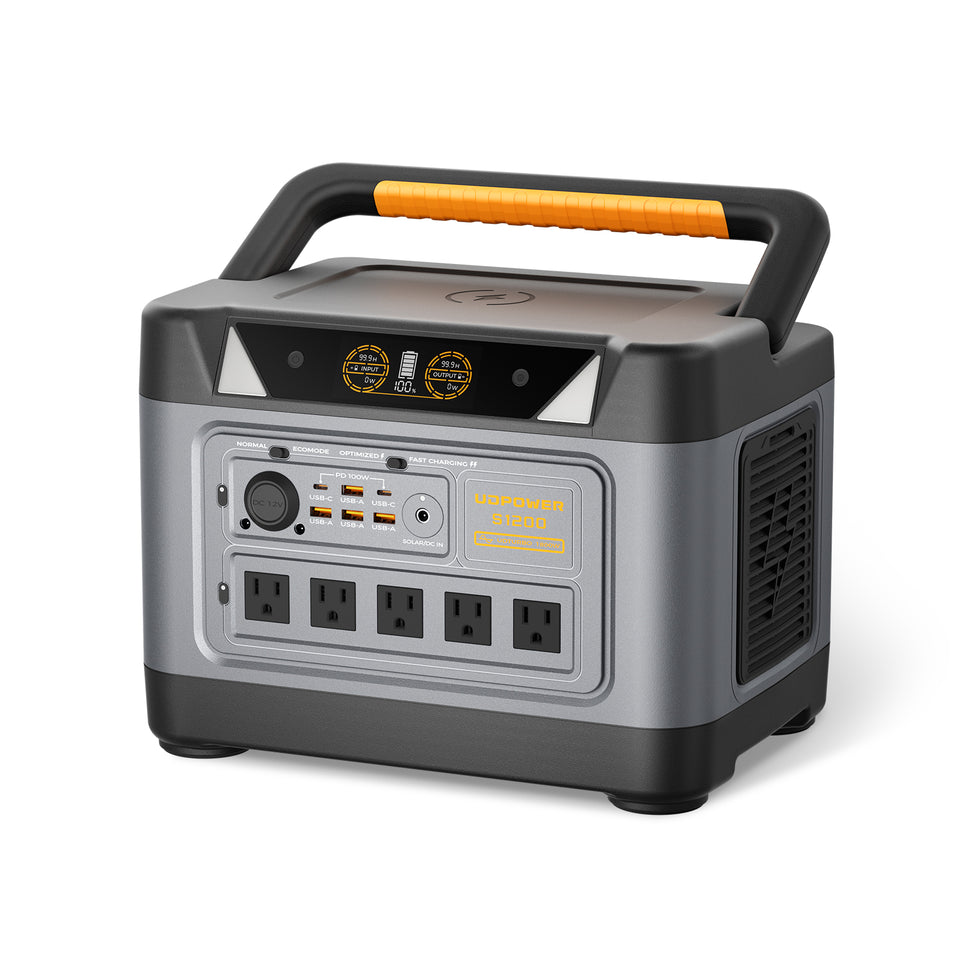
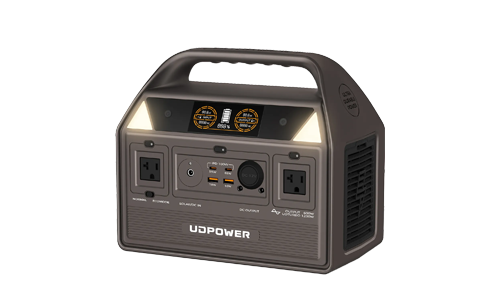
UDPOWER S1200: Focused Backup for Core Essentials
The UDPOWER S1200 is a practical option when the goal is to keep a selected group of essential devices running instead of attempting whole-home backup.
- Battery capacity: 1,191Wh
- Rated AC output: 1,200W
- Listed peak output: 1,800W
- Battery chemistry: LiFePO4
- AC outlets: 5
- USB-C: 2 ports, up to 100W
- Solar input: Up to 400W
- UPS transfer time: ≤10ms
- Weight: 26.0 lb
- Dimensions: 13.7 × 9.5 × 9.7 in
For PSPS use, the S1200 is better matched to a disciplined essential-load plan—such as refrigeration plus communications, or medical equipment plus lower-wattage electronics—than to electric cooking, space heating, or central air conditioning.
View UDPOWER S1200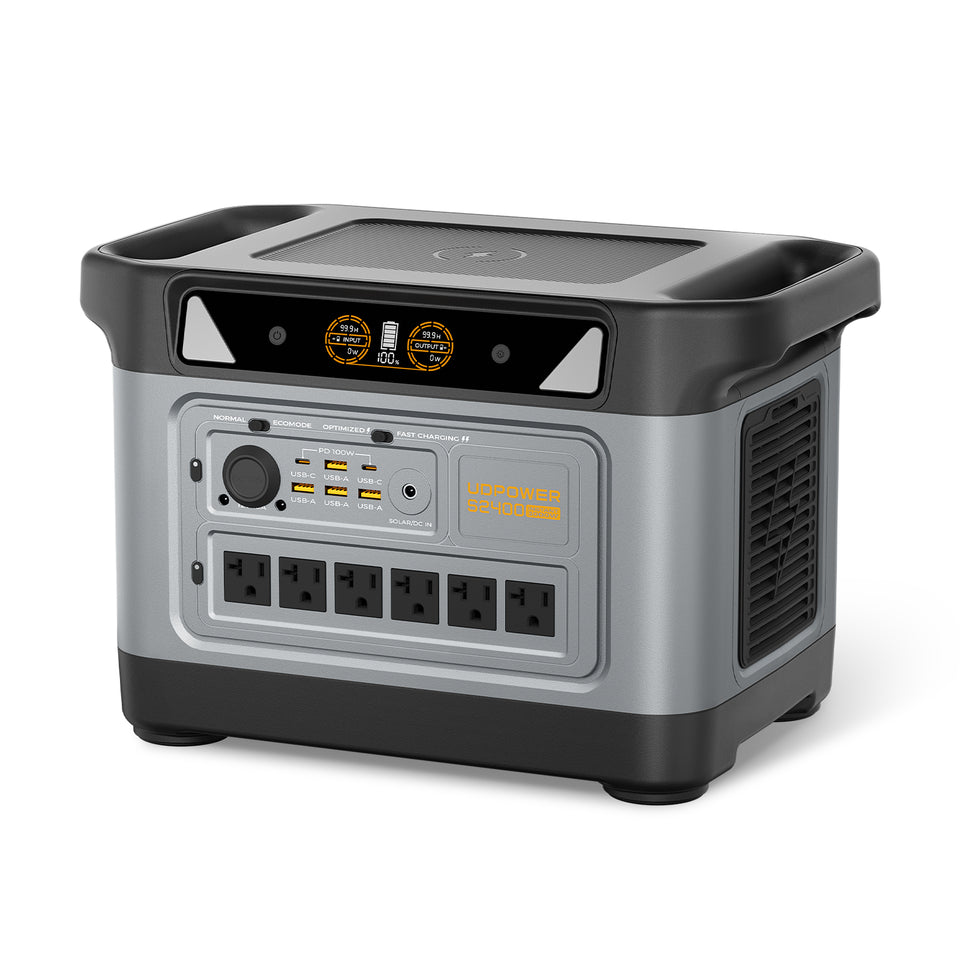
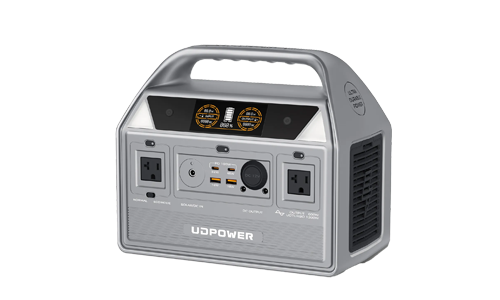
UDPOWER S2400: More Capacity for Longer PSPS Outages
The UDPOWER S2400 provides more stored energy and higher output for households that want additional runtime or need to support a broader group of essential devices.
- Battery capacity: 2,083Wh
- Rated AC output: 2,400W
- Listed peak output: 3,000W
- Battery chemistry: LiFePO4
- AC outlets: 6
- USB-C: 2 ports, up to 100W
- Solar input: Up to 400W
- UPS transfer time: ≤10ms
- Weight: 40.8 lb
- Dimensions: 15.8 × 9.5 × 10.1 in
The larger 2,083Wh battery is particularly useful when a PSPS stretches beyond the initial weather window and into inspection or restoration time.
View UDPOWER S2400Example PSPS Runtime Planning
The following numbers are planning examples, not guaranteed appliance runtimes. They use the listed battery capacities and a 90% usable-energy assumption.
| Example Average Load | Example Use | S1200 1,191Wh | S2400 2,083Wh |
|---|---|---|---|
| 35W | Low-power communications, charging, and lighting profile | About 30.6 hours | About 53.6 hours |
| 65W | Moderate medical/communications profile | About 16.5 hours | About 28.8 hours |
| 105W | Refrigeration plus small communications load | About 10.2 hours | About 17.9 hours |
| 145W | Broader group of essential household loads | About 7.4 hours | About 12.9 hours |
| 185W | Multiple continuously averaged essential loads | About 5.8 hours | About 10.1 hours |
| 800W | High-draw appliance example | About 1.3 hours | About 2.3 hours |
Notice how sharply runtime falls as average wattage rises. This is why cutting a few hundred watts of unnecessary load can be more valuable than obsessing over small phone chargers.
For more models and backup-power options, browse the UDPOWER S-Series portable power stations and portable solar panels.
Food, Medical Equipment, Internet, and Other PSPS Priorities
1. Refrigerators and Freezers
FoodSafety.gov says an unopened refrigerator keeps food cold for about four hours. A full freezer can maintain a safe temperature for approximately 48 hours, while a half-full freezer is closer to 24 hours, provided the door stays closed.
That means the first four hours of a PSPS do not automatically require running a refrigerator continuously from a battery. Your strategy depends on indoor temperature, refrigerator condition, how often the door is opened, the food inside, and the expected outage duration.
Review the federal guidance before an outage at FoodSafety.gov.
2. CPAP and Other Electrically Powered Medical Equipment
If someone in your household depends on powered medical equipment, treat that load separately from normal household electronics. Determine the actual wattage and overnight energy use before fire-weather season, confirm how the equipment behaves when utility power fails, and keep an independent backup plan if loss of power could create a medical emergency.
For CPAP-specific planning, see Sleep Apnea Equipment Backup Power and How to Power a ResMed AirSense CPAP.
Do Not Treat a Consumer Battery as Your Only Medical Emergency Plan
If electricity is medically critical, talk with your medical provider and utility about appropriate emergency arrangements before an outage. Have a plan for equipment failure, depleted batteries, evacuation, extreme heat, and an outage that lasts longer than expected.
3. Internet and Mobile Service
Your modem and Wi-Fi router may continue working from backup power if the upstream network remains operational. Cellular service may also remain available, but local congestion and infrastructure outages can affect performance.
Useful preparation includes:
- Keep phones fully charged.
- Have at least one charged USB power bank.
- Know how to activate a mobile hotspot.
- Download important documents and maps for offline use.
- Write down essential phone numbers in case another device must be used.
- Do not use your last battery capacity for entertainment if you still need outage alerts.
4. Well Pumps and Water
A PSPS can become a water outage for homes that rely on electrically powered wells or booster pumps. Unlike a refrigerator or phone charger, pumps are motor loads and may require substantial startup power in addition to running power.
Do not choose a backup power source for a pump based only on horsepower printed on the motor. Check the equipment nameplate, voltage, running amps, startup requirement, pump controller, and wiring arrangement.
If you cannot safely power the pump during a PSPS, storing drinking water before the shutoff is often more practical than discovering the limitation after the power is gone.
5. Heat and Cooling
Fire-weather events can overlap with high temperatures. A battery-powered fan may provide substantially longer runtime than trying to operate a large air conditioner from a limited-capacity portable battery.
If air conditioning is a critical requirement, calculate the actual load before purchasing backup equipment. See Can a Solar Generator Power an Air Conditioner? for additional planning considerations.
Will Solar Panels Work During a California PSPS?
This question has two different answers depending on what kind of solar system you own.
Grid-Tied Rooftop Solar
A common grid-connected rooftop solar system may shut down when utility power goes out. This anti-islanding behavior helps prevent the system from energizing utility lines while crews may be working on them.
The CPUC explains that most rooftop solar systems will not provide household power during an outage unless the system is specifically designed to operate independently from the grid. You can read the CPUC's PSPS FAQs for additional guidance.
Portable Solar Panels Connected to a Power Station
A portable solar panel and compatible portable power station are different because they can operate independently from the utility grid. During daylight, solar input can extend backup runtime when weather and site conditions allow.
However, do not build a PSPS plan around receiving the panel's nameplate wattage all day. Smoke, clouds, haze, sun angle, shade, temperature, and the available hours of daylight can significantly reduce energy production.
Use Solar as a Runtime Extender, Not a Guaranteed Daily Refill
If your critical loads require 1,500Wh per day, a plan that only works when the solar panel produces its theoretical maximum is too fragile. Start with enough stored energy for the most important loads, then treat solar charging as a way to extend that reserve.
For a broader explanation, read Can a Solar Generator Power a House? and Is It Worth Getting a Solar Generator?.
Fuel Generator Safety During a PSPS
Fuel generators can support much larger loads than some portable batteries, but they introduce a serious carbon monoxide hazard if used incorrectly.
The CDC says generators should be operated outdoors and more than 20 feet away from windows, doors, and vents. Never run a gasoline or other combustion generator inside a house, garage, basement, carport, shed, or similar enclosed or partially enclosed area.
Read the current guidance at the CDC Carbon Monoxide Safety page.
Never Backfeed a Home Through a Wall Outlet
Do not connect a generator or portable power station to a household receptacle in an attempt to energize home wiring. Whole-home or selected-circuit backup requires properly designed transfer equipment and should be installed in accordance with electrical codes and manufacturer requirements by a qualified professional.
If you only need to run a refrigerator, modem, CPAP device, phones, lights, and other plug-in essentials, directly connecting those devices to an appropriately sized portable power station can avoid the complexity of trying to energize the home's electrical panel.
The PSPS “Three-Layer Backup” Strategy
A useful California PSPS plan does not depend on a single battery, single fuel source, or single forecast. A more resilient approach has three layers.
Layer 1: Immediate Power
Keep phones, lights, communications equipment, and medically important devices ready to operate immediately. This is the layer that prevents a short outage from becoming disruptive.
Layer 2: Essential Household Runtime
Use a portable power station, home battery, generator, or another appropriate backup source for refrigeration and other priority equipment. Size this layer around actual watt-hours, not just advertised inverter watts.
Layer 3: Extension and Escape Options
This may include portable solar charging, additional battery capacity, vehicle charging, access to another safe location, or the ability to temporarily relocate if the outage, wildfire threat, heat, smoke, or medical needs make staying home impractical.
Why This Works Better Than “How Big a Generator Do I Need?”
The biggest uncertainty in a PSPS is not whether your backup device can produce enough watts for five minutes. It is whether you still have enough usable energy after the weather event lasts longer than forecast and restoration requires additional inspection time.
How Much Battery Capacity Should You Reserve?
Instead of running every appliance until your power station reaches 0%, assign a reserve for the loads that matter most.
| Battery State | Suggested Household Mindset | Example Action |
|---|---|---|
| 75–100% | Normal essential-load operation | Run refrigeration, critical medical loads, communications, and limited lighting. |
| 50–75% | Start conserving if restoration remains uncertain | Reduce laptop, TV, cooking, and other discretionary loads. |
| 25–50% | Protect the remaining energy | Prioritize medical needs, communications, and time-sensitive refrigeration. |
| Below 25% | Emergency reserve | Avoid nonessential loads and reassess solar, vehicle, relocation, or other recharge options. |
This is not a mandatory battery-management rule. It is a decision framework that prevents a common outage mistake: using most of the stored energy during the first few comfortable hours and having little left when conditions become more difficult overnight.
Common California PSPS Mistakes
Waiting Until the Utility Says Power Will Definitely Be Shut Off
By that stage, stores may already be busy, batteries may not have enough time to charge, and weather may change faster than expected. A potential PSPS notice is the time to prepare.
Assuming the Entire County Will Lose Power
PSPS boundaries are circuit-specific. Always check your exact address.
Assuming Power Returns as Soon as the Wind Stops
Utilities normally need an acceptable weather all-clear and post-event inspection before re-energizing affected lines.
Buying Backup Power Based Only on Maximum Watts
Output wattage determines what a power station can operate. Battery capacity determines how long it can operate it. For a multi-hour or multi-day PSPS, both matter.
Expecting Rooftop Solar to Work Automatically
Many grid-tied systems shut down during an outage unless they include equipment designed to isolate from the grid and provide backup power.
Using High-Wattage Appliances Because the Battery Can Run Them
The ability to turn on an appliance is not the same as the ability to run it efficiently through a long outage. An 800W or 1,500W load can consume a large share of a portable battery very quickly.
Ignoring Smoke and Evacuation Risk
A battery plan solves an electricity problem. It does not replace an evacuation plan. If emergency officials tell you to leave, follow those instructions rather than remaining at home to protect food or equipment.
What to Do After Power Returns
Restoration is not the end of the PSPS checklist.
- Confirm power is stable. Avoid immediately turning on every major load at once.
- Check refrigerator and freezer temperatures. Follow federal food-safety guidance if food has been above safe temperatures.
- Recharge backup batteries. A second weather event or ordinary outage can follow the first.
- Inspect extension cords and temporary wiring. Remove temporary setups that are no longer needed.
- Refill emergency supplies. Replace used water, batteries, medications, ice, fuel, or shelf-stable food.
- Review what failed. If your router, CPAP, refrigerator, or charger consumed more power than expected, update your power budget before the next event.
- Keep utility alerts enabled. Restoration from one PSPS does not mean fire-weather risk has ended for the season.
A Simple PSPS Decision Checklist
| Question | If Yes | If No |
|---|---|---|
| Has your utility identified your address as potentially affected? | Move into active preparation. | Continue monitoring if your region remains under elevated fire-weather risk. |
| Is anyone dependent on electrically powered medical equipment? | Prioritize a medically appropriate backup and contingency plan. | Continue with normal essential-load planning. |
| Do you rely on an electric well pump? | Store water and verify pump backup compatibility before the outage. | Maintain normal emergency drinking-water supplies. |
| Can your backup source cover at least your essential loads? | Calculate expected runtime. | Reduce the load list before adding more equipment. |
| Can you recharge during the outage? | Treat recharging as additional resilience. | Increase stored-energy margin or reduce consumption. |
| Is restoration timing uncertain? | Conserve energy early. | Still retain an emergency reserve. |
California PSPS 2026 FAQ
What does PSPS mean in California?
PSPS means Public Safety Power Shutoff. It is a preventive utility outage in which selected electrical lines are temporarily de-energized because extreme weather and wildfire conditions create an elevated risk that electrical infrastructure could start a fire.
Is a PSPS the same as a normal blackout?
No. A normal blackout is typically caused by an unexpected equipment failure, storm, collision, tree contact, or another unplanned problem. A PSPS is an intentional wildfire-safety action based on risk conditions.
Does a Red Flag Warning automatically mean there will be a PSPS?
No. A Red Flag Warning can be one factor utilities consider, but PSPS decisions use multiple forecasts, real-time observations, vegetation and fuel conditions, circuit exposure, and other information. There is no single universal trigger that automatically produces a shutoff.
Does a PSPS mean I need to evacuate?
No. A PSPS notification is not an evacuation order. It means your utility may shut off electricity for wildfire safety. Follow local emergency-management, fire, sheriff, city, and county authorities for evacuation instructions.
How can I check if my PG&E address is in a PSPS?
Use PG&E's official PSPS Updates page and check your exact service address. PG&E also provides a 7-Day PSPS Forecast for advance awareness. Because PSPS scope can change with weather, check again as the event approaches.
How much warning will PG&E give before a PSPS?
When forecast conditions allow, PG&E may begin PSPS communications roughly two days in advance and issue additional notifications as the potential shutoff gets closer. Weather can change rapidly, so advance notice cannot always follow an exact schedule.
How much warning does Southern California Edison give?
SCE says it intends to notify potentially affected customers approximately two days ahead when possible, followed by additional communications as a potential shutoff approaches and when service is restored.
How much warning does SDG&E give?
SDG&E can begin monitoring a potential event about 7–10 days ahead and typically starts customer notifications around two days before a likely shutoff when forecasts allow.
How long does a California PSPS usually last?
There is no fixed duration. Power may remain off while hazardous weather continues, and restoration generally requires inspection after conditions improve. Damage, darkness, blocked access, fire activity, or repairs can extend the outage.
Why doesn't the utility restore power immediately when the wind stops?
The utility must first determine that conditions are safe enough to begin restoration activities. Crews may then need to inspect lines and equipment before re-energizing circuits. If damage is found, repairs can add additional time.
Can one neighborhood have power while another nearby area remains off?
Yes. PSPS decisions and restoration can occur circuit by circuit. Nearby communities—and sometimes nearby streets—can have different electrical configurations and different wildfire exposure.
Will my rooftop solar panels keep my house running during a PSPS?
Not necessarily. Many grid-tied rooftop solar systems shut down during a utility outage for safety. A system needs appropriate equipment and operating capability to isolate from the grid and provide backup power during an outage.
Can I use portable solar panels during a PSPS?
Yes, a compatible portable solar panel can recharge a portable power station independently of the electrical grid. Actual energy production depends on sun, smoke, clouds, shade, temperature, panel angle, and available daylight.
Is a 1,000Wh power station enough for a PSPS?
It depends on your loads and outage duration. A battery around that size may provide useful backup for lower-wattage essentials, but high-power appliances can consume the available energy quickly. Add the average wattage of your essential devices and calculate the required watt-hours before choosing a system.
Should I run my refrigerator continuously from a battery?
Not always. Refrigerators cycle on and off, and an unopened refrigerator can retain safe temperatures for a period after utility power fails. Your strategy should consider food temperature, refrigerator condition, room temperature, outage duration, and available battery capacity rather than automatically running it continuously.
Can I plug a portable power station into a wall outlet to power my house?
No. Do not backfeed household wiring through a wall receptacle. If you want a backup source connected to home circuits, use properly designed transfer equipment that complies with applicable codes and equipment instructions.
What should I do first when I receive a PSPS warning?
Confirm whether your exact address is affected, charge all backup batteries and communication devices, review medical and refrigeration needs, store water if you rely on an electric well, and start reducing unnecessary electricity use before the shutoff.
Prepare Your Backup Power Before the Next PSPS Alert
The best time to calculate essential loads, charge backup batteries, and decide what you can live without is before California fire weather puts your address into a PSPS forecast.
View S-Series Backup Power Stations View UDPOWER S1200 View UDPOWER S2400 Get the Essential-Load Runtime GuideOfficial Sources and Further Reading
- California Public Utilities Commission — Public Safety Power Shutoffs
- California Public Utilities Commission — PSPS FAQs
- California Public Utilities Commission — Power Outage Resources
- California Governor's Office of Emergency Services — Public Safety Power Shutoff
- PG&E — Public Safety Power Shutoffs
- PG&E — Current PSPS Updates
- PG&E — 7-Day PSPS Forecast
- PG&E — Outage Alerts
- PG&E — Weather and Fire Detection
- Southern California Edison — Check Outage Status
- Southern California Edison — PSPS Notifications
- Southern California Edison — Outage Alerts
- San Diego Gas & Electric — PSPS Information
- San Diego Gas & Electric — PSPS Dashboard
- San Diego Gas & Electric — PSPS Restoration
- FoodSafety.gov — Food Safety During a Power Outage
- CDC — Carbon Monoxide Safety
Related Articles


