

Battery Group Size Chart: Complete BCI Battery Dimensions & Cross-Reference Guide
Last updated: October 21, 2026

A battery group size is a standardized way to identify whether a battery is physically and functionally suitable for a vehicle or piece of equipment. For everyday replacement shopping, the most visible part is the battery's maximum length, width, height, and terminal arrangement. However, Battery Council International (BCI) also considers performance characteristics and battery chemistry when defining group-size classifications.
Common examples include Group 24 at 10 1/4 × 6 13/16 × 8 7/8 inches, Group 27 at 12 1/16 × 6 13/16 × 8 7/8 inches, Group 35 at 9 1/16 × 6 15/16 × 8 7/8 inches, Group 48/H6 at 11 × 6 15/16 × 7 1/2 inches, and Group 94R/H7 at 12 7/16 × 6 15/16 × 7 1/2 inches.
Do not choose a replacement from dimensions alone. Match the vehicle-approved group, voltage, terminal location, terminal type, hold-down arrangement, chemistry, and required CCA or Ah rating before buying.
If you have ever seen labels such as 24F, 27, 31, 35, 48, H6, LN3, 65, or 94R and wondered whether they describe battery capacity, this guide is for you.
The numbers are primarily used to solve a fitment problem: will the battery fit the tray, can it be secured correctly, and will the vehicle's cables reach the correct terminals? But the answer is more nuanced than simply comparing three measurements.
This battery group size chart covers the dimensions people search for most often, explains BCI versus DIN/EN and JIS naming, shows why similar-looking batteries are not automatically interchangeable, and provides a practical replacement checklist you can use before ordering.
What Is a Battery Group Size?
BCI stands for Battery Council International. Its group-size system is widely used in North America to standardize battery fitment across passenger vehicles, trucks, lawn equipment, powersports equipment, farm equipment and other applications.
According to Battery Council International, batteries are classified using characteristics including:
- Maximum overall dimensions
- Terminal position and arrangement
- Performance characteristics
- Battery chemistry and technology designations
That distinction matters because many battery-size explanations online reduce a group number to nothing more than length × width × height.
For a shopper, physical fit is usually the first reason to check the group number, but a battery that fits the tray is not automatically the correct replacement.
A group number is not the same thing as an exact capacity rating. Two batteries that fit the same BCI group can still have different CCA, reserve capacity, amp-hour ratings, technology and intended use. Always check the actual battery specifications in addition to its group designation.
Quick Battery Group Size Chart
If you only need the dimensions for the most frequently searched battery groups, start here.
| BCI Group | Length | Width | Height | Metric Dimensions | Common Cross-Reference |
|---|---|---|---|---|---|
| 24 | 10 1/4 in | 6 13/16 in | 8 7/8 in | 260 × 173 × 225 mm | Common RV, marine and automotive-size family |
| 24F | 10 3/4 in | 6 13/16 in | 9 in | 273 × 173 × 229 mm | Distinct from standard Group 24 |
| 27 | 12 1/16 in | 6 13/16 in | 8 7/8 in | 306 × 173 × 225 mm | Larger footprint than Group 24 |
| 31A / 31T | 13 in | 6 13/16 in | 9 7/16 in | 330 × 173 × 240 mm | Same case dimensions; terminal designs differ |
| 34 | 10 1/4 in | 6 13/16 in | 7 7/8 in | 260 × 173 × 200 mm | Lower than Group 24 |
| 35 | 9 1/16 in | 6 15/16 in | 8 7/8 in | 230 × 175 × 225 mm | Common automotive group |
| 47 | 9 9/16 in | 6 15/16 in | 7 1/2 in | 242 × 175 × 190 mm | H5 / LN2 |
| 48 | 11 in | 6 15/16 in | 7 1/2 in | 278 × 175 × 190 mm | H6 / LN3 |
| 49 | 13 15/16 in | 6 15/16 in | 7 1/2 in | 353 × 175 × 190 mm | H8 / LN5 |
| 51R | 9 3/8 in | 5 1/16 in | 8 3/4 in | 238 × 129 × 223 mm | Narrow automotive battery |
| 65 | 12 1/16 in | 7 9/16 in | 7 9/16 in | 306 × 192 × 192 mm | Wide automotive/truck-size case |
| 78 | 10 1/4 in | 7 1/16 in | 7 5/16 in | 260 × 180 × 186 mm | Side-terminal family |
| 94R | 12 7/16 in | 6 15/16 in | 7 1/2 in | 315 × 175 × 190 mm | H7 / LN4 |
| 95R | 15 9/16 in | 6 15/16 in | 7 1/2 in | 394 × 175 × 190 mm | H9 / LN6 |
Dimensions above are maximum overall BCI reference dimensions. Always verify the exact battery manufacturer's specification and vehicle fitment before purchase.
Common BCI Battery Dimensions
The following expanded chart covers common passenger-car, light-commercial, RV, marine and utility battery groups without burying the most useful information inside dozens of rare industrial formats.

| Group | L × W × H — Inches | L × W × H — mm | Useful Note |
|---|---|---|---|
| 21 | 8 3/16 × 6 13/16 × 8 3/4 | 208 × 173 × 222 | Standard orientation |
| 21R | 8 3/16 × 6 13/16 × 8 3/4 | 208 × 173 × 222 | Different terminal arrangement from 21 |
| 22F | 9 1/2 × 6 15/16 × 8 5/16 | 241 × 175 × 211 | Check exact F-type layout |
| 22NF | 9 7/16 × 5 1/2 × 8 15/16 | 240 × 140 × 227 | Narrow case |
| 24 | 10 1/4 × 6 13/16 × 8 7/8 | 260 × 173 × 225 | Popular full-size family |
| 24F | 10 3/4 × 6 13/16 × 9 | 273 × 173 × 229 | Not dimensionally identical to 24 |
| 24R | 10 1/4 × 6 13/16 × 9 | 260 × 173 × 229 | Check terminal orientation |
| 25 | 9 1/16 × 6 15/16 × 8 7/8 | 230 × 175 × 225 | Similar footprint to Group 35 |
| 26 | 8 3/16 × 6 13/16 × 7 3/4 | 208 × 173 × 197 | Compact case |
| 26R | 8 3/16 × 6 13/16 × 7 3/4 | 208 × 173 × 197 | Terminal layout differs from 26 |
| 27 | 12 1/16 × 6 13/16 × 8 7/8 | 306 × 173 × 225 | Longer than Group 24 |
| 27F | 12 1/2 × 6 13/16 × 8 15/16 | 318 × 173 × 227 | Longer than standard 27 |
| 27R | 12 1/16 × 6 13/16 × 8 7/8 | 306 × 173 × 225 | Reverse-family configuration |
| 34 | 10 1/4 × 6 13/16 × 7 7/8 | 260 × 173 × 200 | Shorter height than Group 24 |
| 34R | 10 1/4 × 6 13/16 × 7 7/8 | 260 × 173 × 200 | Different terminal orientation |
| 35 | 9 1/16 × 6 15/16 × 8 7/8 | 230 × 175 × 225 | Popular automotive size |
| 40R | 11 × 6 15/16 × 6 15/16 | 278 × 175 × 175 | T6/LBN3 family reference |
| 41 | 11 9/16 × 6 15/16 × 6 15/16 | 293 × 175 × 175 | Low-height European-style case |
| 42 | 9 9/16 × 6 15/16 × 6 15/16 | 242 × 175 × 175 | T5/LBN2 family reference |
| 47 | 9 9/16 × 6 15/16 × 7 1/2 | 242 × 175 × 190 | H5 / LN2 |
| 48 | 11 × 6 15/16 × 7 1/2 | 278 × 175 × 190 | H6 / LN3 |
| 49 | 13 15/16 × 6 15/16 × 7 1/2 | 353 × 175 × 190 | H8 / LN5 |
| 51 | 9 3/8 × 5 1/16 × 8 3/4 | 238 × 129 × 223 | Narrow case |
| 51R | 9 3/8 × 5 1/16 × 8 3/4 | 238 × 129 × 223 | Different terminal arrangement from 51 |
| 58 | 10 1/16 × 7 3/16 × 6 15/16 | 255 × 183 × 177 | Compare terminal position carefully |
| 58R | 10 1/16 × 7 3/16 × 6 15/16 | 255 × 183 × 177 | Reverse-family version |
| 65 | 12 1/16 × 7 9/16 × 7 9/16 | 306 × 192 × 192 | Wider than H6/H7 families |
| 75 | 9 1/16 × 7 1/16 × 7 5/16 | 230 × 180 × 186 | Side-terminal group |
| 78 | 10 1/4 × 7 1/16 × 7 5/16 | 260 × 180 × 186 | Side-terminal group |
| 85 | 9 1/16 × 6 13/16 × 8 | 230 × 173 × 203 | Check polarity against Group 86 |
| 86 | 9 1/16 × 6 13/16 × 8 | 230 × 173 × 203 | Same case dimensions as 85 |
| 90 | 9 9/16 × 6 15/16 × 6 15/16 | 242 × 175 × 175 | T5 / LBN2 |
| 91 | 11 × 6 15/16 × 6 15/16 | 278 × 175 × 175 | T6 / LBN3 |
| 92 | 12 7/16 × 6 15/16 × 6 15/16 | 315 × 175 × 175 | T7 / LBN4 |
| 93 | 13 15/16 × 6 15/16 × 6 15/16 | 353 × 175 × 175 | T8 / LBN5 |
| 94R | 12 7/16 × 6 15/16 × 7 1/2 | 315 × 175 × 190 | H7 / LN4 |
| 95R | 15 9/16 × 6 15/16 × 7 1/2 | 394 × 175 × 190 | H9 / LN6 |
| 96R | 9 1/2 × 6 15/16 × 6 15/16 | 242 × 175 × 175 | Low-profile automotive case |
| 97R | 9 15/16 × 6 15/16 × 7 1/2 | 252 × 175 × 190 | Similar family to H5 dimensions |
| 98R | 11 1/8 × 6 15/16 × 7 1/2 | 283 × 175 × 190 | Similar family to H6 dimensions |
| 99R | 8 1/8 × 6 15/16 × 6 15/16 | 207 × 175 × 175 | T4 / LBN1 |
| 140R | 8 1/8 × 6 15/16 × 7 1/2 | 207 × 175 × 190 | H4 / LN1 |
| 151R | 7 7/16 × 4 15/16 × 8 7/8 | 188 × 125 × 225 | Compact narrow battery |
| 153R | 6 15/16 × 6 15/16 × 7 1/2 | 175 × 175 × 190 | H3 / LN0 |
| 31A | 13 × 6 13/16 × 9 7/16 | 330 × 173 × 240 | Heavy-duty Group 31 variant |
| 31T | 13 × 6 13/16 × 9 7/16 | 330 × 173 × 240 | Different terminal design from 31A |
| U1 | 7 3/4 × 5 3/16 × 7 5/16 | 197 × 132 × 186 | General utility battery |
| U1R | 7 3/4 × 5 3/16 × 7 5/16 | 197 × 132 × 186 | Different polarity layout from U1 |
| GC2 | 10 3/8 × 7 3/16 × 10 7/8 | 264 × 183 × 277 | 6V golf-cart/deep-cycle format |
| GC12 | 12 7/8 × 7 3/16 × 10 7/8 | 327 × 183 × 277 | 12V golf-cart/utility format |
The actual molded case of a particular battery may measure slightly under the BCI maximum. Do not assume that an extra few millimeters of tray space proves another group is an approved substitute.
BCI, H, LN, DIN and EN Battery Size Cross-Reference
European-style batteries are often sold using labels such as H5, H6, H7, H8 or LN2, LN3, LN4, LN5. In the U.S., the same general dimensional families may be advertised under BCI group numbers.
BCI publishes a reference chart connecting these systems, but there is an important limitation: BCI describes these mappings as a best-fit estimate, not a blanket guarantee that every battery carrying one label can replace every battery carrying another.
| BCI Group | Dimensions (mm) | DIN Code | EN Code | Positive Terminal |
|---|---|---|---|---|
| 153R | 175 × 175 × 190 | H3 | LN0 | Right |
| 140R | 207 × 175 × 190 | H4 | LN1 | Right |
| 47 | 242 × 175 × 190 | H5 | LN2 | Right |
| 48 | 278 × 175 × 190 | H6 | LN3 | Right |
| 148 | 278 × 175 × 190 | H6 | LN3 | Left |
| 94R | 315 × 175 × 190 | H7 | LN4 | Right |
| 49 | 353 × 175 × 190 | H8 | LN5 | Right |
| 95R | 394 × 175 × 190 | H9 | LN6 | Right |
| 99R | 207 × 175 × 175 | T4 | LBN1 | Right |
| 90 | 242 × 175 × 175 | T5 | LBN2 | Right |
| 91 | 278 × 175 × 175 | T6 | LBN3 | Right |
| 92 | 315 × 175 × 175 | T7 | LBN4 | Right |
| 93 | 353 × 175 × 175 | T8 | LBN5 | Right |
Is Group 48 the same as H6?
Group 48, H6 and LN3 share the same 278 × 175 × 190 mm dimensional reference in BCI's cross-reference chart. That makes them closely related labels when shopping for replacement batteries.
However, still verify:
- Terminal orientation
- Hold-down design
- CCA requirement
- Flooded, EFB or AGM requirement
- Battery-management or registration requirements
A useful example is BCI Group 148. It shares the 278 × 175 × 190 mm H6/LN3 case family, but BCI identifies a different positive-terminal location. Same-size does not automatically mean same installation.
Is Group 94R the same as H7?
For dimensional cross-reference purposes, Group 94R corresponds to H7/LN4 at 315 × 175 × 190 mm. Again, vehicle approval and terminal configuration must still be confirmed before replacement.
Why H5, H6, H7 and H8 are easy to recognize
These four popular European-style cases share the same nominal width and height in the BCI cross-reference, while length increases:
| Common Name | BCI Group | Length | Width | Height |
|---|---|---|---|---|
| H5 / LN2 | 47 | 242 mm | 175 mm | 190 mm |
| H6 / LN3 | 48 | 278 mm | 175 mm | 190 mm |
| H7 / LN4 | 94R | 315 mm | 175 mm | 190 mm |
| H8 / LN5 | 49 | 353 mm | 175 mm | 190 mm |
Moving to the next longer case may look tempting if there is empty space in the tray, but a longer battery should never be treated as an automatic “capacity upgrade.” The hold-down, cables, vehicle specification and electrical system all have to support it.
BCI and JIS Battery Cross-Reference
JIS battery labels are common on Japanese and other Asian-market designs. Their codes look very different from BCI numbers because a JIS designation can include performance class, case width/height family, case length class, and terminal orientation.
The following examples show why a cross-reference is useful.
| BCI Group | Reference Dimensions | Example JIS References |
|---|---|---|
| 21 | Approx. 202 × 173 × 225 mm in BCI/JIS fit reference | 50D20R |
| 21R | Approx. 202 × 173 × 225 mm in BCI/JIS fit reference | 50D20L |
| 24 | 260 × 173 × 225 mm | 48D26R, 55D26R, 65D26R, 75D26R and related D26R sizes |
| 24R | 260 × 173 × 225 mm fit reference | D26L-family references |
| 27 | 306 × 173 × 225 mm | 65D31R, 75D31R, 95D31R, 105D31R, 115D31R |
| 27R | 306 × 173 × 225 mm | D31L-family references |
| 35 | Approx. 232 × 173 × 225 mm in BCI/JIS fit reference | 55D23L, 65D23L, 70D23L, 75D23L, 80D23L |
| 51R | 238 × 129 × 227 mm in JIS fit reference | 46B24L, 55B24L, 65B24L and related references |
BCI itself describes international cross-references as best-fit estimates. Use them to understand labels, then confirm the manufacturer's fitment recommendation for your exact vehicle, engine, model year and battery technology.
Group 24 vs Group 27 vs Group 31 Battery Size
Group 24, Group 27 and Group 31 are especially important outside ordinary passenger-car replacement because they frequently appear in RV, marine, commercial, auxiliary and deep-cycle battery discussions.
| Group | Dimensions — Inches | Dimensions — mm | Difference |
|---|---|---|---|
| 24 | 10 1/4 × 6 13/16 × 8 7/8 | 260 × 173 × 225 | Baseline |
| 27 | 12 1/16 × 6 13/16 × 8 7/8 | 306 × 173 × 225 | 46 mm longer than Group 24 |
| 31A / 31T | 13 × 6 13/16 × 9 7/16 | 330 × 173 × 240 | 70 mm longer and 15 mm taller than Group 24 |
Group 24 battery size
A standard Group 24 battery has maximum overall dimensions of 260 × 173 × 225 mm, or roughly 10 1/4 × 6 13/16 × 8 7/8 inches.
Do not automatically substitute a 24F, 24R, 24H or 24T just because the label begins with “24.” Their case height, length or terminal arrangement can differ.
Group 27 battery size
A standard Group 27 is 306 × 173 × 225 mm, or approximately 12 1/16 × 6 13/16 × 8 7/8 inches.
Compared with Group 24, it keeps the same maximum width and height but adds 46 mm of length. That additional case length is enough to make a Group 27 unsuitable for a tray designed tightly around Group 24.
Group 31 battery size
What shoppers commonly call a Group 31 battery is approximately 330 × 173 × 240 mm, or 13 × 6 13/16 × 9 7/16 inches.
BCI's reference table distinguishes 31A and 31T. They share the same maximum case dimensions but use different terminal configurations. This is a good example of why “it is a Group 31” is not always enough information to order the correct replacement.
If your Group 24, 27 or 31 battery is part of an RV house system rather than an engine-starting system, see the UDPOWER RV Battery Replacement Guide before changing chemistry or capacity.
Popular Battery Group Sizes Explained
Group 35 battery size
BCI Group 35 measures up to 230 × 175 × 225 mm, or 9 1/16 × 6 15/16 × 8 7/8 inches.
Its footprint is close to Group 25, which is one reason measuring only the outside of an unidentified battery can be misleading. Terminal configuration and the manufacturer's specified group still matter.
Group 48 battery size
Group 48 measures 278 × 175 × 190 mm, or 11 × 6 15/16 × 7 1/2 inches. BCI cross-references it to H6 / LN3.
Do not confuse Group 48 with Group 148. BCI lists Group 148 at the same 278 × 175 × 190 mm dimensions and the same H6/LN3 dimensional family, but with the positive terminal on the opposite side.
Group 65 battery size
Group 65 measures 306 × 192 × 192 mm, or 12 1/16 × 7 9/16 × 7 9/16 inches.
It is noticeably wider than H6 and H7-style cases. A tray with sufficient length therefore may still be too narrow for Group 65.
Group 94R battery size
Group 94R measures 315 × 175 × 190 mm, or 12 7/16 × 6 15/16 × 7 1/2 inches. Its common European cross-reference is H7 / LN4.
It is 37 mm longer than Group 48/H6 while sharing the same nominal width and height in BCI's cross-reference system.
What Do R, F and Other Battery Group Suffixes Mean?
A suffix is not decoration. It can signal an important difference that affects whether the cables, hold-down or battery tray work correctly.
What does “R” mean in a battery group?
In many BCI group families, R identifies a different or reversed terminal arrangement. For example, Group 51 and 51R share the same maximum dimensions, but their terminal layouts differ.
The practical lesson is more important than memorizing the letter:
Always match the full group designation, not just the number.
Does “F” simply mean reversed terminals?
No. Do not treat every suffix as a universal polarity code.
For example, Group 24 and Group 24F are not even identical in maximum dimensions:
| Group | Length | Width | Height |
|---|---|---|---|
| 24 | 260 mm | 173 mm | 225 mm |
| 24F | 273 mm | 173 mm | 229 mm |
That 13 mm difference in length and 4 mm difference in height is another reason not to shop from an abbreviated “Group 24” description when your vehicle specifies 24F.
How to Measure a Battery for Group Size
If the group label is missing or unreadable, physical measurements can help narrow the possibilities. They should not be your only fitment check.
- Turn the vehicle off and follow the manufacturer's battery safety procedure. Do not place metal measuring tools where they can bridge the terminals.
- Measure length. Measure the longest side of the battery case.
- Measure width. Measure across the shorter side of the case.
- Measure overall height. Include the highest point required by the relevant battery specification, including terminal height where applicable.
- Record positive and negative terminal positions. Do not rely on case size alone.
- Identify terminal style. Top post, side terminal, threaded stud and other terminal types are not interchangeable without an approved design.
- Check the hold-down. Look for bottom ledges, top brackets or other hardware that physically secures the battery.
A battery that “fits in the hole” but moves under braking, vibration or impact is not correctly fitted.
Measure the available space too
When checking a replacement, battery dimensions are only half of the problem. Also inspect the vehicle's available envelope:
- Tray length and width
- Hood or cover clearance
- Terminal clearance above the battery
- Battery cable length
- Cable bend radius
- Hold-down location
- Vent-tube connection where required
A battery can have a case that clears the tray but still be too tall once cables or terminal covers are installed.
Can You Use a Different Battery Group Size?
Sometimes a manufacturer-approved alternative group exists, but you should not change groups simply because another battery appears to fit.
A safe replacement decision has two separate parts:
1. Mechanical compatibility
- Length
- Width
- Height
- Terminal location
- Terminal type
- Hold-down design
- Vent routing
- Cable reach
2. Electrical and system compatibility
- Correct nominal voltage
- Required cold cranking amps
- Reserve capacity or Ah requirement
- Flooded, EFB, AGM or other required technology
- Charging-system compatibility
- Battery monitoring or registration requirements
This is why a physically smaller battery is not automatically a valid substitute, and a larger battery is not automatically an upgrade.
Is a bigger battery group better?
No. A bigger battery case may provide room for a manufacturer to build a battery with greater energy storage or starting capability, but the group number itself does not guarantee that.
A battery that is “better” on paper can still be wrong for the vehicle if:
- It cannot be clamped securely
- The positive and negative cables do not reach naturally
- The terminal orientation creates a short-circuit risk
- The hood has insufficient clearance
- The chemistry is incompatible with the charging system
- The vehicle requires battery registration or coding
Battery Group Size vs CCA, Ah and Reserve Capacity
One of the easiest mistakes is treating physical battery size as a direct capacity rating.
| Specification | What It Tells You | What It Does Not Tell You |
|---|---|---|
| BCI Group | Fitment family including dimensions, terminal arrangement and related classification characteristics | Exact runtime or exact CCA of every battery in the group |
| CCA | Cold engine-starting capability under a standardized test | How many hours an accessory will run |
| Ah | Charge capacity at a specified test rate | Physical case size by itself |
| Reserve Capacity | How long a battery can support a defined load under a standardized test | Whether the battery fits your tray |
| Wh | Energy capacity expressed as voltage × amp-hours under simplified calculation | Terminal layout or vehicle compatibility |
If you are trying to understand the electrical ratings rather than physical dimensions, read How Many Amps Is a Car Battery?.
If your battery label shows CCA but you need to understand capacity, see CCA to Ah Conversion. There is no exact universal conversion between the two, so Reserve Capacity or an actual Ah specification is more useful when available.
Do Lithium Batteries Use BCI Group Sizes?
They can.
A lithium battery manufacturer may design a LiFePO4 battery around a familiar BCI-size enclosure so it can physically fit an existing battery tray or compartment. That does not mean a lithium battery is automatically a drop-in electrical replacement for a flooded lead-acid or AGM battery.
Before changing chemistry, check:
- Charging voltage requirements
- Alternator compatibility
- Low-temperature charging protection
- Battery-management-system limits
- Maximum continuous and peak current
- Vehicle or equipment manufacturer approval
- Physical hold-down and terminal design
This matters especially in RV house-battery systems, solar systems and deep-cycle applications. For a detailed chemistry comparison, see Deep Cycle Batteries Explained.
If you are sizing a battery for solar or off-grid runtime rather than replacing a vehicle starter battery, the 12V Solar Battery: 50Ah vs 100Ah vs 200Ah Guide explains capacity and runtime in more useful terms.
7-Point Battery Replacement Checklist
Use this sequence instead of starting with “Which battery is biggest?”
| Check | What to Confirm | Why It Matters |
|---|---|---|
| 1. Exact application | Year, make, model, engine, equipment version | Different trims can use different batteries |
| 2. Full group designation | Example: 24F instead of simply 24 | Suffixes may change dimensions or terminal arrangement |
| 3. Physical dimensions | Length × width × height | Confirms basic tray and clearance fit |
| 4. Terminal layout | Positive/negative location and terminal style | Prevents cable-reach and polarity problems |
| 5. Hold-down | Bottom ledge, bracket or other retention hardware | Battery must remain securely fixed |
| 6. Electrical rating | CCA, Ah, RC and voltage as applicable | Battery must meet the application's electrical demand |
| 7. Technology | Flooded, EFB, AGM, lithium or other specified chemistry | Charging and vehicle-management systems may depend on it |
The fastest way to identify the correct group
Use this order:
- Check the owner's manual or manufacturer fitment information.
- Read the full group designation on the existing correctly fitted battery.
- Use BCI dimensions as a verification step.
- Check the exact replacement battery specification sheet.
- Confirm the electrical rating and chemistry before purchase.
BCI maintains replacement data covering a large range of vehicle and equipment applications. You can learn more through its Vehicle Battery Replacement Data resource.
When a Portable Power Station Makes More Sense Than a Larger Vehicle Battery
A larger battery group is not always the right answer when your real goal is to run laptops, lights, a CPAP machine, a portable refrigerator, cameras, chargers or other accessories.
A vehicle starter battery is designed around the vehicle's electrical system. Repeatedly draining it to run accessories can leave you without enough starting power.
For independent accessory power, camping or emergency backup, a portable power station separates those loads from the vehicle's installed starter battery.
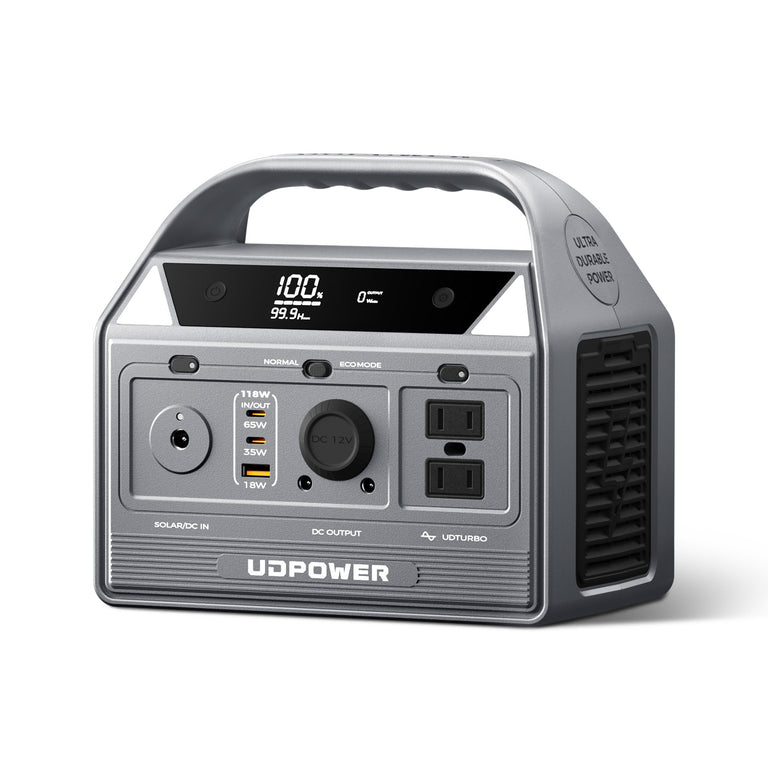
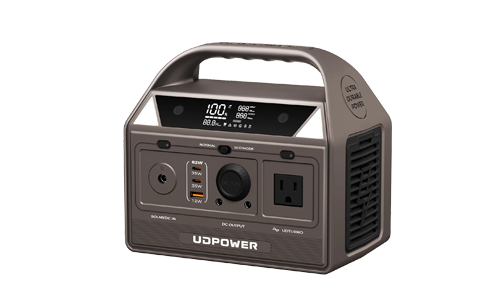
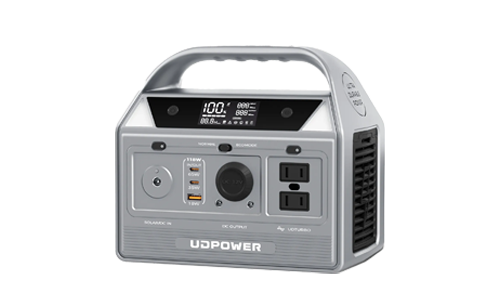
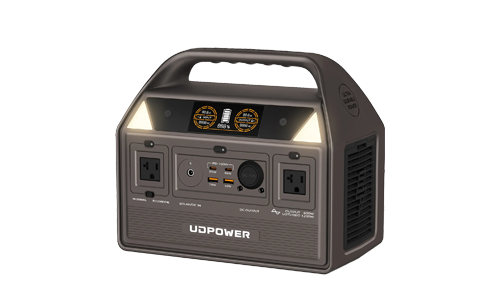
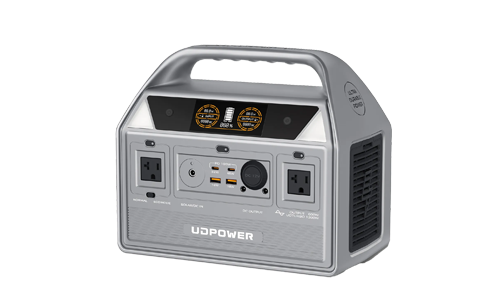
UDPOWER C400: Portable Power Plus 12V Jump-Start Support
The UDPOWER C400 Portable Power Station is not a replacement for a BCI automotive battery. Instead, it provides a separate portable energy source for road trips, camping and emergency use.
- Battery capacity: 256Wh LiFePO4
- Rated AC output: 400W pure sine wave
- Peak output: up to 800W
- Vehicle feature: EC5 jump-starter port
- Jump-start rating: product specifications list up to 400A peak for compatible 12V vehicle starting
- Other outputs: AC, USB-C, USB-A, DC5521 and 12V car output
Your BCI group size determines the correct installed vehicle battery. A portable power station provides independent portable power and should not be treated as a substitute for the vehicle's required starter battery.
For larger RV and camping loads, see UDPOWER Portable Power Stations for RV & Camping. If you are not sure how much portable capacity you need, use the UDPOWER Power Station Comparison to compare capacity, rated output and intended use.
Frequently Asked Questions
What is a battery group size?
A battery group size is a standardized classification used to help identify batteries that meet specific fitment characteristics. BCI group classifications consider maximum dimensions, terminal arrangement, performance characteristics and battery chemistry or technology designations. For most shoppers, the group number is primarily used to find the correct physical and terminal fit for a vehicle or piece of equipment.
What is the most common battery group size?
There is no single group size that is correct for most vehicles. Groups such as 24F, 35, 48/H6, 51R, 65 and 94R/H7 are widely encountered, but the correct battery depends on the exact vehicle, engine, model year and electrical system.
What size is a Group 24 battery?
A standard BCI Group 24 battery has maximum overall dimensions of 260 × 173 × 225 mm, or 10 1/4 × 6 13/16 × 8 7/8 inches. Group 24F, 24R, 24H and 24T have different specifications and should not automatically be treated as interchangeable.
What size is a Group 27 battery?
A standard Group 27 battery measures up to 306 × 173 × 225 mm, or 12 1/16 × 6 13/16 × 8 7/8 inches.
What size is a Group 31 battery?
BCI lists Group 31A and 31T at 330 × 173 × 240 mm, or 13 × 6 13/16 × 9 7/16 inches. They share the same maximum case dimensions but use different terminal configurations.
What size is a Group 35 battery?
Group 35 measures up to 230 × 175 × 225 mm, or 9 1/16 × 6 15/16 × 8 7/8 inches.
What size is a Group 48 battery?
Group 48 measures 278 × 175 × 190 mm, or 11 × 6 15/16 × 7 1/2 inches. BCI cross-references Group 48 with the H6/LN3 dimensional family.
Is Group 48 the same as H6?
Group 48 and H6/LN3 share the same 278 × 175 × 190 mm dimensions in BCI's DIN/EN reference chart. However, BCI describes international mappings as best-fit estimates, so terminal orientation, hold-down design, chemistry and vehicle approval still need to be checked.
What size is a Group 65 battery?
Group 65 measures up to 306 × 192 × 192 mm, or 12 1/16 × 7 9/16 × 7 9/16 inches.
What size is a Group 94R battery?
Group 94R measures 315 × 175 × 190 mm, or 12 7/16 × 6 15/16 × 7 1/2 inches. Its common BCI DIN/EN cross-reference is H7/LN4.
Is H7 the same as Group 94R?
H7/LN4 and BCI Group 94R share a 315 × 175 × 190 mm dimensional reference. They are commonly cross-referenced, but you should still confirm the exact vehicle-approved battery, terminal configuration and battery technology before installation.
What does R mean in a battery group number?
In many BCI group families, an R designation identifies a different or reversed terminal arrangement relative to the related non-R group. Because suffix meanings and complete battery specifications matter, always match the full designation rather than assuming batteries with the same number are interchangeable.
Does a larger battery group number mean a larger battery?
No. BCI group numbers are identifiers, not a simple smallest-to-largest sequence. For example, Group 65 is not automatically larger in every dimension than a lower-numbered group. Use the actual length, width and height specifications.
Does battery group size tell me the Ah capacity?
No exact Ah capacity can be determined from the group number alone. Batteries within a group may have different Ah, CCA and reserve-capacity ratings depending on internal design, chemistry and intended use.
Can I put a smaller battery in a larger battery tray?
Physical space alone does not make a battery suitable. The battery must be securely held down, its terminals must be correctly positioned, its cables must reach without strain, and its voltage, CCA, capacity and chemistry must satisfy the vehicle manufacturer's requirements.
Can I replace an AGM battery with a regular flooded battery of the same group size?
Do not assume that you can. If the vehicle specifies AGM or another particular battery technology, use an approved replacement that satisfies the vehicle manufacturer's requirements. Physical group-size compatibility does not guarantee charging-system or start-stop-system compatibility.
Do LiFePO4 batteries use BCI group sizes?
Some LiFePO4 batteries are built in enclosures designed around common BCI footprints. Matching dimensions does not make the battery an automatic electrical replacement for lead-acid. Charging requirements, current capability, temperature protection, BMS limits and manufacturer approval also need to be checked.
How do I find my car's battery group size?
Start with the owner's manual or manufacturer fitment information, then check the full designation printed on the existing correctly fitted battery. You can use a BCI battery group size chart to verify the dimensions, but vehicle-specific fitment information should take priority over measurements alone.
Bottom Line
A battery group size chart is most useful when you treat it as a fitment reference rather than a shopping shortcut.
Start with the vehicle-approved group number. Then confirm the physical dimensions, terminal orientation, hold-down, electrical rating and battery technology. If you see another naming system such as H6, H7, LN3 or LN4, use the BCI cross-reference to understand the relationship—but do not skip the final fitment check.
For the most frequently searched groups, remember these reference sizes:
- Group 24: 260 × 173 × 225 mm
- Group 27: 306 × 173 × 225 mm
- Group 31A/31T: 330 × 173 × 240 mm
- Group 35: 230 × 175 × 225 mm
- Group 48 / H6 / LN3: 278 × 175 × 190 mm
- Group 65: 306 × 192 × 192 mm
- Group 94R / H7 / LN4: 315 × 175 × 190 mm
Need Portable Power Instead of a Larger Vehicle Battery?
If your real goal is to power camping gear, RV accessories, electronics or emergency essentials without draining the vehicle's starter battery, compare UDPOWER LiFePO4 portable power stations by capacity and output.
Find the Right Size View Portable Power Stations View RV & Camping PowerRelated Articles


