

Apartment Power Outage Backup: A Practical Battery Backup Guide for Renters
Last updated: August 13, 2026
A compact 500–600Wh battery is useful for phones, Wi-Fi, lights, laptops, and small electronics. Around 1,000–1,200Wh is a much more practical starting point if you also want refrigerator backup. A 2,000Wh-class power station provides considerably more breathing room for longer outages, refrigerator operation, CPAP equipment, fans, computers, and several devices at the same time.
The key is not trying to keep your entire apartment running normally. During a blackout, the better strategy is to protect communication, medical needs, food, lighting, and temperature safety first, then spend the remaining battery on comfort.

Losing power in an apartment creates a different problem from losing power in a detached house. A homeowner may be able to install a standby generator, transfer switch, rooftop solar system, or permanently wired home battery. Most renters cannot.
That makes apartment backup power less about powering every circuit and more about building a small, efficient emergency electrical system around the devices that matter most. This guide explains how to do that, how large a battery you actually need, what not to waste electricity on, and where a portable power station fits into a realistic apartment power outage plan.
What Is the Best Backup Power for an Apartment?
For most renters, the best generator alternative for an apartment is a battery-based portable power station combined with smaller dedicated backups such as USB power banks, rechargeable lights, and, when appropriate, a UPS for networking or computer equipment.
Unlike a permanently installed home battery, a portable power station does not need to be wired into the building. You charge it while utility power is available and plug your essential devices directly into its AC, USB, or DC outputs when the power goes out.
This approach works especially well in an apartment because it is portable. One battery can be moved between the refrigerator, bedroom, desk, or living area instead of trying to energize every wall outlet.
| Backup option | Best use in an apartment | Main advantage | Main limitation |
|---|---|---|---|
| USB power bank | Phones, tablets, small USB devices | Cheap, compact, easy to store | Cannot run normal AC appliances |
| UPS | Router, modem, desktop PC, NAS, security equipment | Fast automatic backup for short interruptions | Usually designed for minutes or a few hours rather than long outages |
| Portable power station | Wi-Fi, lights, laptops, CPAP, fans, refrigerators and other plug-in essentials | Large rechargeable battery with AC and DC outputs | Stored energy is finite and must eventually be recharged |
| Fuel generator | Outdoor use where all safety clearances can actually be met | Can keep producing electricity while fuel is available | Combustion exhaust makes it unsuitable for normal apartment use |
| Whole-home battery | Property owners or buildings with approved installation | Can support circuits automatically | Expensive and generally requires electrical installation and property approval |
If you are deciding specifically between battery storage and a generator, see Portable Power Station vs. Generator for Power Outages.
Why a Fuel Generator Is Usually Not an Apartment Solution
A portable gasoline, propane, or other combustion generator should never be treated as an indoor apartment appliance.
The U.S. Consumer Product Safety Commission warns that portable generators should never be operated inside homes, garages, basements, crawlspaces, sheds, or other enclosed areas. Current CPSC guidance also calls for operating them outdoors at least 20 feet from a home, with exhaust directed away from buildings and openings. See CPSC generator safety guidance.
This is one of the main reasons a battery backup for an apartment is so useful. A portable power station stores electricity rather than generating electricity through combustion, so there is no engine exhaust during normal battery operation.
Battery systems still need to be used according to the manufacturer's instructions. Keep ventilation openings clear, keep the unit dry, use undamaged cables, stay within rated output limits, and avoid storing or operating it where excessive heat could build up.
Never backfeed your apartment wiring
Do not try to energize apartment outlets by connecting a generator or portable battery to a wall receptacle with a male-to-male cord or improvised wiring.
CPSC describes this practice as backfeeding and warns that it can create electrocution and fire hazards. Read the CPSC portable generator safety alert.
In a renter-friendly setup, devices should normally be plugged directly into the portable power station or into a properly rated power strip used within the power station manufacturer's limits.
What Should You Power First During an Apartment Outage?
The biggest mistake during a blackout is treating backup electricity as if utility power were still unlimited.
Instead, think of your battery as an energy budget.
| Priority | Device or need | Typical power range | Why it matters | Suggested strategy |
|---|---|---|---|---|
| Critical | Medically necessary electrical equipment | Varies by device | Health and safety | Verify the exact device specifications and have a separate emergency plan |
| Critical | Phone charging | Usually low | Calls, emergency alerts, maps and communication | Charge periodically rather than leaving the phone connected continuously |
| High | Router + modem | Often roughly 10–30W combined | Internet access when the local network remains operational | Use only if your ISP infrastructure still has service |
| High | LED lighting | Often roughly 5–15W per lamp | Safe movement after dark | Use one or two efficient lamps instead of lighting every room |
| High | Refrigerator | About 60–250W while actively cooling for many modern units | Food preservation | Take advantage of the refrigerator's stored cold before spending battery energy |
| Medium | Laptop | Commonly about 30–100W depending on use and charger | Work and communication | Charge the battery, then disconnect the laptop and work from its internal battery |
| Medium | Small fan | Often roughly 20–75W | Comfort during warm outages | Use the lowest effective speed |
| Low | Television | Often roughly 50–150W | Information and entertainment | Prefer phones or battery radios for emergency information if runtime is limited |
Your appliance label or power meter is more useful than any generic wattage chart. Refrigerator compressors, CPAP humidifiers, gaming laptops, fans, and TVs can vary substantially.
For refrigerator-specific measurements, see How Many Watts Does a Refrigerator Use?.
Do You Need to Power the Refrigerator Immediately?
Not necessarily—and this is one of the easiest ways to make an apartment backup battery last longer.
According to USDA food-safety guidance, a refrigerator can generally keep food safe for up to about four hours without electricity if the door remains closed. USDA emergency food-safety guidance.
That means a short outage does not automatically require you to connect the refrigerator to your portable power station the second the lights go out.
This is especially valuable for apartment residents using a 500–1,200Wh battery. Running the compressor unnecessarily during a two-hour outage may consume energy that would have been more useful later.
Use a refrigerator thermometer
An inexpensive refrigerator thermometer removes much of the guesswork. USDA recommends keeping refrigerated food at 40°F or below.
For longer outages, the temperature of the food matters more than the number displayed on the power station.
You can go deeper into refrigerator backup sizing in Refrigerator Power Backup: What Size Battery Do You Need?.
What Size Battery Backup Does an Apartment Need?
There is no single capacity that every apartment needs. The correct size depends on three numbers:
- Running watts: how much power your devices need while operating.
- Startup requirement: whether appliances such as refrigerators need extra power when a motor or compressor starts.
- Watt-hours: how much stored energy you need to reach your target runtime.
A simple apartment sizing rule
| Battery capacity | Best suited to | Realistic apartment role |
|---|---|---|
| 200–300Wh | Phones, USB devices, lights, laptop charging | Basic communication kit or short outage backup |
| 500–600Wh | Wi-Fi, lights, laptops, phones, fan and selected small loads | Good compact apartment emergency battery |
| 1,000–1,200Wh | Refrigerator plus essential electronics | Strong starting point for overnight or moderate apartment outages |
| 2,000Wh+ | Longer refrigerator runtime and multiple simultaneous essentials | Better for longer outages or households with higher backup requirements |
Do not confuse watts with watt-hours
A 2,400W power station does not necessarily run twice as long as a 1,200W power station.
Watts determine what the power station can operate. Watt-hours determine how long it can operate it.
For example, a refrigerator may only average a relatively modest amount of energy over an entire day, but its compressor can demand considerably more power while starting.
Apartment Power Station Runtime Examples
A useful planning estimate for AC-powered devices is:
Estimated runtime = battery capacity in Wh × 0.90 ÷ average load in watts
The 90% factor allows for conversion losses. Actual runtime can still be lower because of inverter standby consumption, temperature, battery condition, appliance cycling, charger losses and changing loads.
Example 1: Basic apartment essentials
Assume your combined average load is approximately 90W:
- Router and modem
- Two efficient LED lights
- Phone charging
- Laptop
| Power station | Battery capacity | Estimated usable AC energy at 90% | 90W example load |
|---|---|---|---|
| UDPOWER C600 | 596Wh | About 536Wh | About 6.0 hours |
| UDPOWER S1200 | 1,190Wh | About 1,071Wh | About 11.9 hours |
| UDPOWER S2400 | 2,083Wh | About 1,875Wh | About 20.8 hours |
Example 2: Add a refrigerator averaging about 70W
If the previous 90W essential load is combined with a refrigerator averaging about 70W over time, the planning load becomes roughly 160W.
| Power station | Estimated runtime at a 160W average load | Best interpretation |
|---|---|---|
| UDPOWER C600 | About 3.4 hours | Short-term mixed backup; verify refrigerator startup demand before use |
| UDPOWER S1200 | About 6.7 hours | Practical refrigerator + electronics backup for shorter outages |
| UDPOWER S2400 | About 11.7 hours | Much stronger margin for an extended apartment outage |
These are planning calculations, not guaranteed runtimes. A refrigerator does not normally draw exactly the same wattage continuously. Compressor cycling, kitchen temperature, door openings, food load and the refrigerator's efficiency all matter.
Use EnergyGuide data for a better refrigerator estimate
If your refrigerator lists annual energy consumption, you can estimate its long-term average wattage:
Average watts = annual kWh × 1,000 ÷ 8,760
A refrigerator rated at 500 kWh per year, for example, averages approximately 57W under the test conditions represented by that annual rating.
This approach is often more useful for outage runtime planning than taking only the compressor's instantaneous running wattage.
Appliances That Drain Apartment Backup Batteries Too Quickly
One of the most important apartment outage skills is knowing what not to run.
High-resistance heating appliances turn stored battery energy into heat very quickly. Even when a large portable power station can operate them, they may be poor choices during a long outage.
| Appliance | Common power range | Why it is difficult on battery backup | Better outage approach |
|---|---|---|---|
| Space heater | Often about 1,500W | Can consume more than 1kWh in less than an hour | Use blankets, layered clothing and a safe heated location when conditions require it |
| Electric kettle | Often 1,200–1,500W | Very high load, even though it runs briefly | Use only when sufficient battery reserve remains |
| Hair dryer | Often 1,200–1,875W | High power for a nonessential outage task | Avoid during an extended blackout |
| Hot plate | Often 1,000–1,800W | Continuous heating consumes stored energy rapidly | Keep shelf-stable foods that do not require cooking |
| Portable air conditioner | Varies widely | High continuous load plus possible compressor startup demand | Use fans when conditions are safe; relocate if indoor temperature becomes dangerous |
Recommended UDPOWER Portable Power Stations for Apartment Backup
The right UDPOWER model depends less on apartment square footage than on the devices you want to run. A 500-square-foot apartment with a refrigerator, medical equipment and work computer can require more backup energy than a much larger apartment where the resident only wants lights and phone charging.
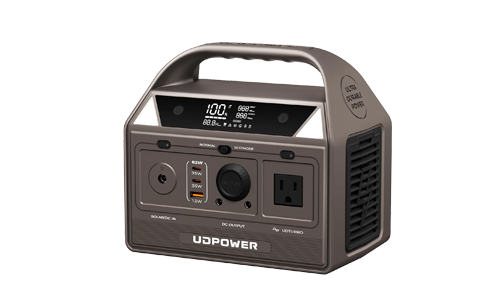
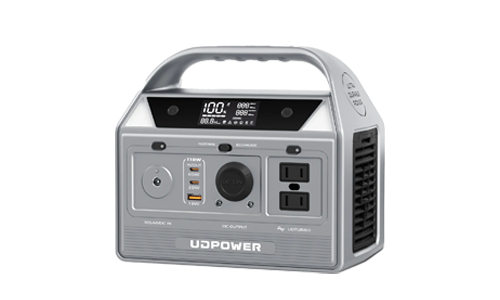
UDPOWER C600 — Best for Wi-Fi, Lights, Laptops and Small Essentials
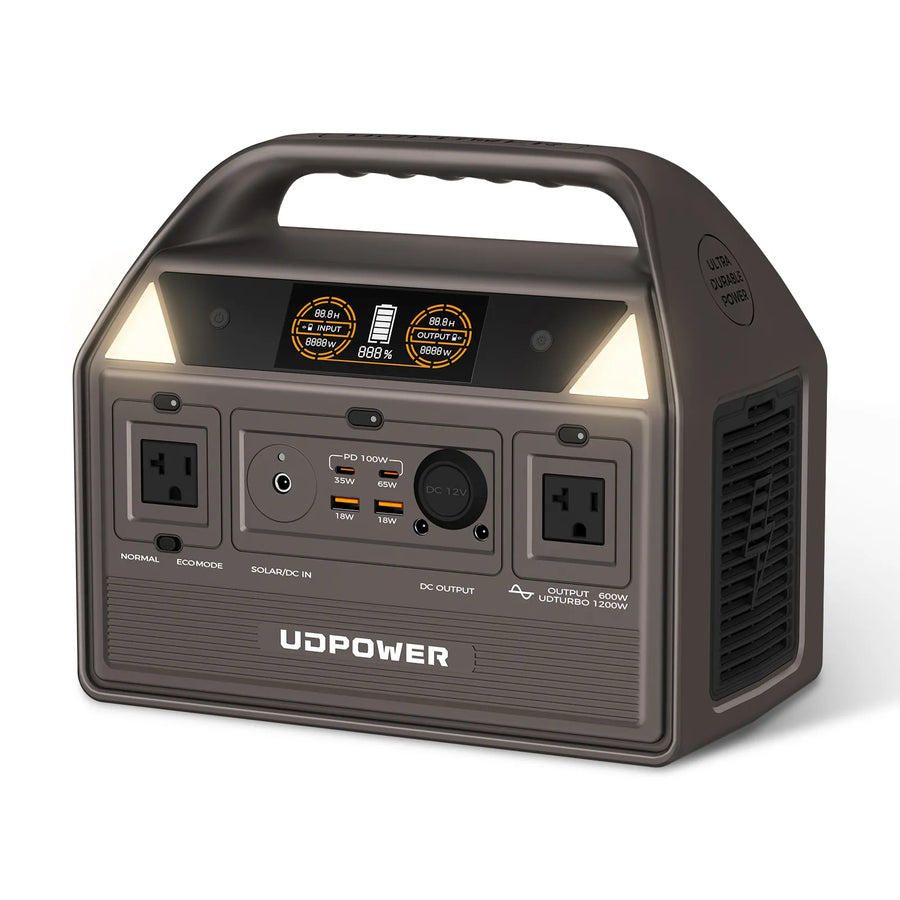
The C600 makes sense when storage space and portability matter and your outage plan is built around smaller loads rather than trying to run a full apartment.
- Battery capacity: 596Wh
- Rated output: 600W
- Higher-power support: up to 1,200W peak
- Battery chemistry: LiFePO4
- Battery life rating: 4,000+ cycles
It is a strong fit for internet equipment, phones, lights, laptops, cameras, small fans and selected small appliances. For a full-size refrigerator, check both the refrigerator's normal demand and compressor startup requirement before relying on a 600W-class unit.
View UDPOWER C600UDPOWER S1200 — Best Balance for Refrigerator + Everyday Essentials
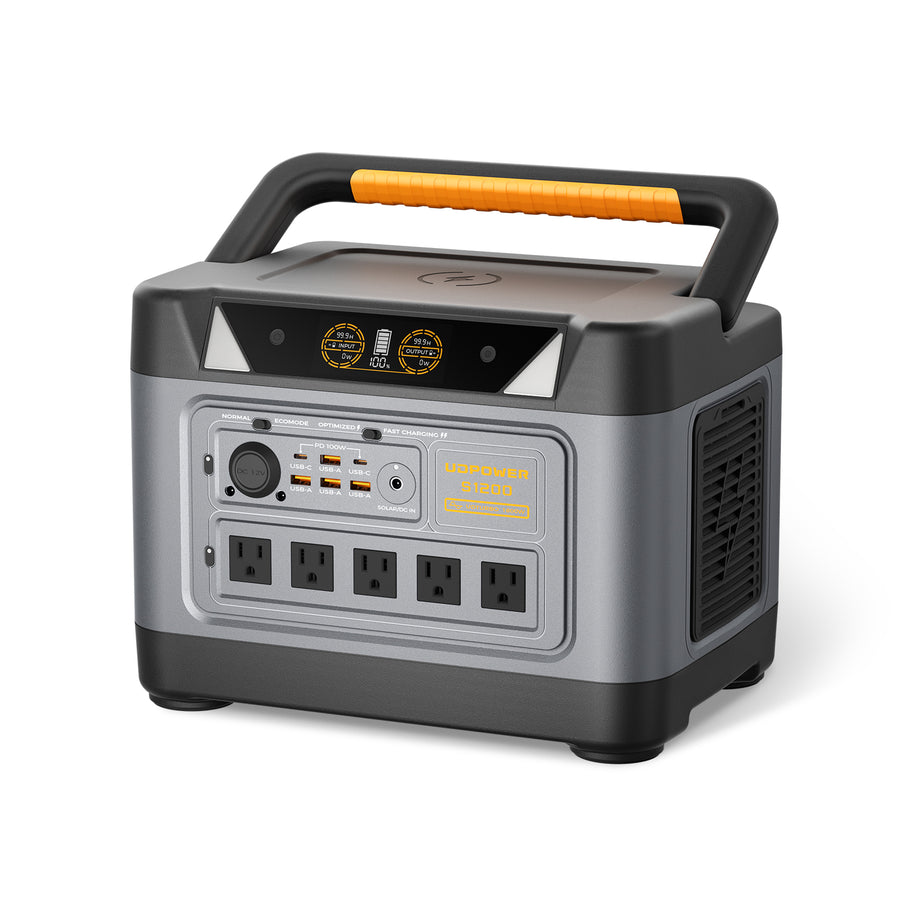
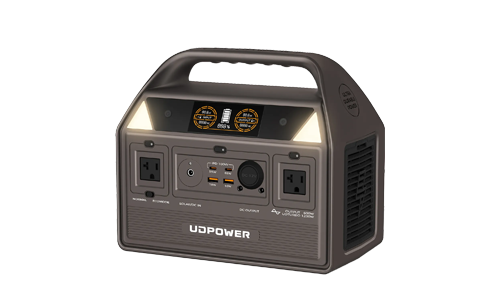
For many apartment residents, the S1200 is the most balanced starting point. Its 1,190Wh battery provides substantially more runtime than a compact power station without moving into a much larger 2kWh system.
- Battery capacity: 1,190Wh
- Rated AC output: 1,200W
- UDTURBO support: up to 1,800W for compatible higher-power loads
- Output ports: up to 14 devices on the current 5-AC configuration
- Battery chemistry: LiFePO4
- Battery life rating: 4,000+ cycles
- UPS switching: less than 10ms according to the current product specification
It is well suited to a refrigerator, internet equipment, phones, laptops, LED lighting, CPAP equipment and other everyday apartment essentials when the combined load stays within the system's operating limits.
Higher-power UDTURBO operation should not be treated as free extra energy: operating heavier loads can reduce conversion efficiency and shorten runtime.
View UDPOWER S1200UDPOWER S2400 — Best for Longer Runtime and More Simultaneous Loads
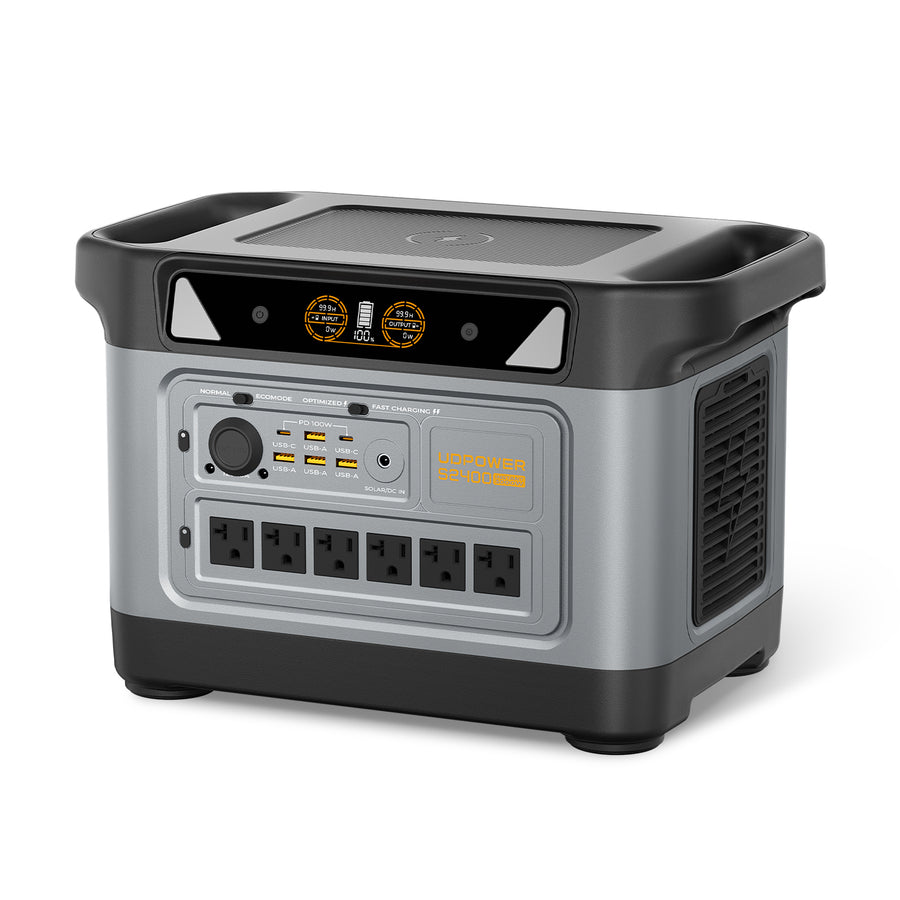
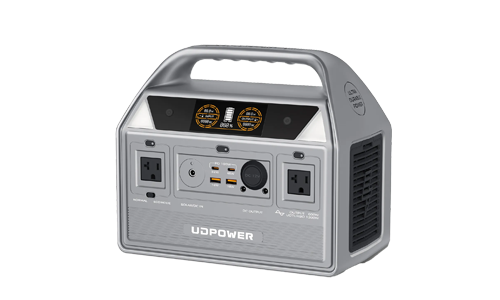
The S2400 is a better apartment backup choice when refrigerator runtime matters more, several people need power, or you expect outages to last overnight or longer.
- Battery capacity: 2,083Wh
- Rated AC output: 2,400W pure sine wave
- UDTURBO support: up to 3,000W for compatible higher-power loads
- AC outlets: 6
- DC outputs: 9
- Total outputs: 15
- Battery chemistry: LiFePO4
- Battery life rating: 4,000+ cycles
- UPSPrime switching: less than 10ms according to the current product specification
- Solar input: up to 400W
A 2kWh-class battery is particularly useful when your outage plan includes a refrigerator plus networking equipment, lights, laptops, fans or CPAP use and you do not know whether power will return within a few hours.
View UDPOWER S2400You can compare the wider range in the UDPOWER Portable Power Station Collection.
A Practical 24-Hour Apartment Power Outage Plan
A good apartment backup plan changes as an outage gets longer. You should not use electricity the same way in hour one as you would in hour eighteen.
First 10 Minutes: Find Out What Happened
- Check whether the outage affects only your apartment or the surrounding area.
- Check your utility's outage map if mobile data is available.
- Turn off unnecessary lights and equipment.
- Keep the refrigerator and freezer doors closed.
- Connect medically necessary devices if backup power is required.
- Switch phones into a power-saving mode.
0–4 Hours: Protect Communication, Not Convenience
If the refrigerator remains closed, use its thermal reserve instead of immediately spending battery capacity on refrigeration.
- Run your router and modem only if internet service is still functioning.
- Use a small number of LED lights.
- Charge phones only as necessary.
- Use laptops on their internal batteries after charging.
- Avoid cooking and heating appliances.
4–12 Hours: Shift Energy Toward Refrigeration
Once the refrigerator's initial no-power window becomes a concern, food preservation becomes a higher priority.
- Check the refrigerator thermometer.
- Connect the refrigerator if its electrical requirements are compatible with your power station.
- Continue keeping the door closed as much as possible.
- Reduce laptop, television and entertainment use.
- Preserve at least part of the battery for overnight lighting and communication.
12–24 Hours: Switch to an Energy Budget
- Estimate the remaining battery percentage and expected outage duration.
- Reduce nonessential AC loads.
- Turn the AC inverter output off when it is not needed if your setup allows it.
- Use USB or DC charging where appropriate instead of unnecessary AC conversions.
- Check whether a safe recharging option is available.
- Monitor indoor temperature during extreme weather.
For a broader emergency timeline, use the Power Outage Checklist for 24, 48 and 72 Hours.
Can You Recharge a Portable Power Station With Solar From an Apartment?
Sometimes, but apartment solar charging is less predictable than it looks in product photos.
A renter may have several limitations:
- The balcony may face the wrong direction.
- Neighboring buildings may block direct sunlight.
- The panel may receive only a few useful hours of sun.
- Windows can reduce useful solar performance compared with unobstructed outdoor sunlight.
- Building or lease rules may restrict items attached to balcony railings.
- Wind can make unsecured portable panels hazardous.
For best charging performance, a portable solar panel should have direct, unobstructed outdoor sunlight and be positioned so that the panel surface faces the sun effectively.
Solar is therefore best considered a bonus recharging method for many apartment residents rather than the foundation of the outage plan.
If you do have safe outdoor solar access, see the UDPOWER Solar Generator Collection and portable solar panels.
Portable Power Station vs. UPS for an Apartment
A UPS and a portable power station solve related but different problems.
A UPS is designed primarily to prevent sensitive electronics from shutting down when utility power disappears. A portable power station is designed primarily to provide a much larger pool of stored energy.
| Situation | Better starting point | Why |
|---|---|---|
| Short power blink | UPS | Designed to keep equipment from rebooting |
| Desktop computer or NAS | UPS | Provides continuity and time to save work or shut down |
| Several-hour blackout | Portable power station | Much larger energy capacity |
| Refrigerator backup | Portable power station | Higher capacity and appliance-oriented AC output |
| Whole apartment outage kit | Portable power station + small UPS where needed | Combines continuity with long runtime |
In many apartments, the most practical setup is actually both: a small UPS for equipment that should not reboot, plus a larger portable power station for the hours that follow.
Read the full comparison: Portable Power Station vs. UPS for Home Backup.
Common Apartment Backup Power Mistakes
1. Buying based only on inverter watts
A powerful inverter does not guarantee long runtime. Check watt-hours as carefully as rated output.
2. Plugging in the refrigerator immediately
During a short outage, a closed refrigerator already provides temporary cold storage. Spending battery energy immediately may be unnecessary.
3. Trying to run electric heat
Space heaters can consume a large battery surprisingly quickly. A battery backup cannot replace a safe heating or cooling plan during dangerous temperatures.
4. Assuming Wi-Fi means internet
Your router may work from battery power while your internet provider's neighborhood equipment is offline. Test whether service actually remains available before leaving networking equipment on for hours.
5. Forgetting startup power
Refrigerators, compressors, pumps and other motor-driven appliances may require considerably more power during startup than during normal operation.
6. Leaving every AC appliance connected
During an outage, simplify. Connect only the devices you are actively using.
7. Waiting until the storm arrives to charge
A discharged backup battery is not a backup. Recharge your power station before severe weather and periodically check its state of charge during storage.
8. Assuming a balcony makes a fuel generator acceptable
It does not. Follow official generator clearance and carbon-monoxide guidance rather than relying on an open balcony door or railing.
9. Expecting a portable power station to run building systems
A renter-owned portable battery will not normally power an apartment building's elevator, hallway lighting, central water pumps, shared HVAC equipment or other common-area infrastructure.
10. Ignoring medical backup planning
If you depend on electrically powered medical equipment, do not base your emergency plan on a generic runtime chart. Verify the device's exact power requirements and backup recommendations with the equipment manufacturer or appropriate healthcare professional.
CPAP users can also read CPAP Battery Backup for Power Outages or visit the CPAP Battery Backup resource hub.
Apartment Power Outage Backup Checklist
Before an outage
- Charge your portable power station.
- Charge smaller USB power banks.
- Test the devices you intend to run.
- Write down the wattage of important appliances.
- Check refrigerator startup compatibility.
- Keep flashlights or rechargeable LED lanterns accessible.
- Install or maintain smoke and carbon-monoxide alarms with backup batteries where required.
- Keep shelf-stable food and drinking water available.
- Keep a refrigerator/freezer thermometer.
- Know your utility's outage reporting method.
- Save important phone numbers offline.
When power fails
- Confirm whether the outage is local or building-wide.
- Keep refrigerator and freezer doors closed.
- Power medically necessary devices first.
- Preserve phone battery.
- Use minimal lighting.
- Disconnect nonessential appliances.
- Do not use combustion equipment indoors.
- Do not backfeed apartment outlets.
If the outage becomes extended
- Start managing battery capacity as an hourly energy budget.
- Prioritize refrigeration once food temperature requires it.
- Reduce entertainment loads.
- Check official emergency updates.
- Recharge from a safe source if one is available.
- Move to a safe heated or cooled location if indoor temperatures become dangerous.
How to Choose Between C600, S1200 and S2400
| Your main goal | Recommended starting point | Why |
|---|---|---|
| Phone, Wi-Fi, lights and laptop | C600 | Compact 596Wh battery with 600W rated output |
| Refrigerator + internet + laptop + lighting | S1200 | 1,190Wh capacity provides a practical middle ground for apartment essentials |
| Longer outages or several simultaneous devices | S2400 | 2,083Wh capacity and 2,400W rated output provide significantly more runtime and load flexibility |
Frequently Asked Questions About Apartment Power Outage Backup
What is the best backup power source for an apartment?
For most renters, a portable battery power station is one of the most practical options because it requires no fuel engine, no permanent electrical installation and can directly power plug-in appliances and electronics. The correct size depends on the loads and outage duration you want to cover.
Can you use a portable power station inside an apartment?
A battery portable power station is designed to operate without combustion exhaust and can generally be used indoors when the manufacturer's operating, ventilation, temperature and electrical safety instructions are followed. Keep ventilation openings clear and do not expose the unit to water or excessive heat.
Can I use a gas generator on an apartment balcony?
You should not treat an apartment balcony as a safe generator location. CPSC guidance says portable fuel generators should be operated outdoors at least 20 feet from a home and away from windows, doors and vents. Apartment balconies are normally attached directly to occupied structures and close to openings or neighboring units.
How big of a portable power station do I need for an apartment?
Around 500–600Wh can work well for communication, lighting, laptops and small electronics. Around 1,000–1,200Wh is a more practical starting point if refrigerator backup is important. A 2,000Wh-class unit provides much more flexibility for longer outages or multiple simultaneous loads.
Can a portable power station run an apartment refrigerator?
Yes, if both the refrigerator's running demand and compressor startup requirement are within the power station's limits. Battery capacity then determines runtime. Refrigerator energy use varies significantly, so check the appliance label, EnergyGuide information or measure consumption directly.
How long will a 1,000Wh battery last during a blackout?
It depends on the load. With a 90% planning efficiency, a 1,000Wh battery provides roughly 900Wh of usable AC energy. A 100W average load would therefore be approximately nine hours in a simple planning calculation, although inverter consumption and real device behavior can reduce actual runtime.
Should I run my refrigerator as soon as the power goes out?
Not always. USDA states that a refrigerator can generally keep food safe for up to about four hours during an outage if the door remains closed. For a short outage, preserving the refrigerator's stored cold can save backup battery capacity for other critical needs.
Is a UPS better than a portable power station for an apartment?
A UPS is better when your priority is preventing a computer, router, NAS or other sensitive electronics from rebooting during a short interruption. A portable power station is usually better when you need several hours of usable energy. Some apartment residents benefit from using both.
Can a portable power station run a space heater?
Some high-output power stations can operate certain space heaters, but space heaters commonly consume around 1,500W and can drain even a large battery quickly. They are generally a poor use of limited stored energy during an extended outage.
Can I run an air conditioner from an apartment battery backup?
Some large power stations may be electrically capable of operating certain window or portable air conditioners, but air conditioning is a heavy continuous load and may sharply reduce runtime. Check both startup power and running wattage before attempting it.
Can I charge a portable power station with a solar panel from my apartment?
Possibly, if you have safe access to direct outdoor sunlight and your building permits the setup. Balcony direction, shading, window glass, weather and building rules can significantly reduce how practical apartment solar charging is.
Can I plug my portable power station into a wall outlet to power the apartment?
No. Do not attempt to backfeed building wiring through a wall outlet. Plug supported appliances directly into the power station instead. Any system designed to energize building circuits requires properly designed electrical equipment and professional installation.
Sources and Further Reading
- Ready.gov — Power Outages
- U.S. Consumer Product Safety Commission — Generator and Carbon Monoxide Safety
- USDA FSIS — Food Safety During Power Outages
- UDPOWER — Portable Power Station vs. Generator for Power Outages
- UDPOWER — Portable Power Station vs. UPS for Home Backup
- UDPOWER — Power Outage Checklist: 24, 48 & 72 Hours
- UDPOWER — How Many Watts Does a Refrigerator Use?
Build an Apartment Backup System Around What You Actually Need
You do not need to power every outlet to make a blackout manageable. Start with communication, medical needs, refrigeration and lighting, calculate the runtime you need, then choose enough battery capacity to cover those essentials.
View UDPOWER Portable Power Stations →
Related Articles


