

Haboob Dust Storm Safety Guide: What to Do Before, During & After
Last updated: August 24, 2026
A haboob is an intense dust storm that forms when strong winds push a dense wall of dust across dry ground. In the American Southwest, many haboobs are produced by thunderstorm outflow: cool air rushes out of a storm, spreads across the desert floor, and lifts loose dust into a fast-moving wall.
The biggest immediate danger is not the dramatic-looking dust cloud itself. It is the sudden collapse in visibility. A roadway that looks clear can become nearly impossible to see within seconds. If a haboob is approaching, the safest choice is to avoid driving into it. If you are already driving and can safely leave the roadway, pull completely off the pavement, stop, turn off your lights, set the parking brake, take your foot off the brake pedal, stay buckled inside the vehicle, and wait for visibility to improve.
At home, close doors and windows, reduce outdoor-air intake, protect indoor air with appropriate filtration, charge phones and backup batteries before the storm arrives, and be ready for a short power outage caused by strong winds or damaged utility equipment.

What Is a Haboob Dust Storm?
A haboob is a particularly intense type of dust storm recognizable by its advancing wall of airborne dust. It can look almost solid from a distance—sometimes like a brown, red, or gray wall stretching across the horizon.
According to the American Meteorological Society's Glossary of Meteorology, haboobs can loft dust thousands of feet into the atmosphere. The leading edge can bring both a rapid increase in wind and a sharp drop in visibility.
The term originated in North Africa and the Middle East, but meteorologists now use it for comparable dust storms in dry and semi-arid regions around the world. In the United States, the word is most closely associated with Arizona, although haboobs also occur in New Mexico, Texas, California, and other areas where strong winds encounter dry, loose soil.
| Haboob characteristic | What it means in practical terms | Source |
|---|---|---|
| Dense wall of airborne dust | The storm may look like a moving wall rather than ordinary blowing dust. | American Meteorological Society |
| Dust may rise roughly 5,000 ft | The visible cloud can extend far above buildings and highways. | AMS Glossary |
| Visibility can fall extremely quickly | Driving conditions can change from manageable to dangerous in seconds. | National Weather Service |
| Duration varies | Some events pass within tens of minutes; stronger systems can persist much longer. | AMS Glossary |
| Strong winds | Dust is only one hazard. Gusts can also affect trees, power lines, outdoor furniture, trailers, and portable equipment. | National Weather Service |
How Does a Haboob Form?
The classic Southwest haboob often begins with a thunderstorm rather than with the dust itself.
The National Weather Service defines thunderstorm outflow as air flowing outward from a thunderstorm. An outflow boundary behaves somewhat like a small-scale cold front, often bringing a wind shift and a temperature drop.
This explains one of the most confusing things about haboobs: you can be hit by the dust before you see any rain. In fact, the thunderstorm that generated the outflow may be miles away.
Haboob vs. Dust Storm vs. Sandstorm
These terms overlap, but they are not always interchangeable.
| Weather event | Main feature | Typical trigger | What you may see |
|---|---|---|---|
| Haboob | Intense wall of airborne dust | Often thunderstorm outflow in the U.S. Southwest | A large, sharply defined wall advancing across the landscape |
| Dust storm | Widespread dust suspended by strong winds | Thunderstorms, fronts, strong gradient winds, or other wind events | Anything from widespread blowing dust to a dense dust wall |
| Sandstorm | Wind-driven sand | Strong winds over exposed sandy terrain | Coarser material moving mainly closer to the surface |
| Dust devil | Small rotating column | Strong daytime surface heating | A narrow spinning column rather than a broad wall |
In everyday conversation, people often use “haboob” and “dust storm” as if they mean the same thing. A better way to think about it is that a haboob is a distinctive, intense dust-storm event, usually characterized by a rapidly advancing dust wall.
Where Do Haboobs Happen in the United States?
Haboobs are strongly associated with the desert Southwest, especially Arizona, but they are not exclusive to Phoenix or even to Arizona.
The National Weather Service notes that dust storms and haboobs can occur anywhere in the United States, although they are most common in the Southwest.
| Area | Why haboobs or severe dust storms occur | Common period of concern |
|---|---|---|
| Central and southern Arizona | Dry desert soils combined with powerful monsoon thunderstorm outflows | Summer monsoon season |
| Southern New Mexico | Dry terrain, strong winds, downbursts, and thunderstorm outflows | Late spring through summer |
| West Texas / South Plains | Dry exposed soils plus thunderstorm outflow boundaries | Spring and summer storm periods |
| Southern California deserts | Strong winds moving across dry desert surfaces | Variable |
| Other dry U.S. regions | Any combination of exposed soil and sufficiently strong wind can create severe blowing dust | Depends on local weather and soil conditions |
In Arizona, the familiar summer pattern is linked to the North American monsoon. Dry ground left by months of hot weather provides abundant loose material, while thunderstorms provide the strong outflow winds needed to lift it.
How Dangerous Is a Haboob?
A haboob is dangerous for several reasons at the same time. Focusing only on the dust misses much of the risk.
| Hazard | What can happen | Your priority |
|---|---|---|
| Near-zero visibility | Drivers may be unable to see stopped traffic, lane markings, curves, or obstacles. | Avoid entering the dust wall. |
| Strong straight-line wind | Branches, debris, signs, outdoor furniture, and loose equipment can become hazards. | Move indoors and secure loose items before arrival. |
| Airborne particles | Dust can irritate the eyes, nose, throat, and respiratory system. | Reduce exposure and improve indoor filtration. |
| Power interruption | Strong winds or debris can damage local utility infrastructure. | Charge essential devices before the storm and keep backup power ready. |
| Falling or windblown debris | Tree limbs and other objects can damage vehicles or property. | Stay away from windows and exposed outdoor areas. |
| Dust contamination | Fine dust can enter HVAC filters, electronics, vents, vehicles, and solar equipment. | Inspect and clean equipment after conditions improve. |
View the National Weather Service glossary.
What Should You Do If a Haboob Hits While You Are Driving?
This is the part worth remembering even if you forget everything else in this guide.
If You See the Dust Storm Before Entering It
Do not deliberately drive into the wall of dust. Turn around, exit the highway, or stop at a safe location before visibility deteriorates if traffic conditions allow.
A haboob can move faster than it appears from a distance, so waiting until visibility is already poor can eliminate your safest options.
If You Are Caught in Dense Dust
- Check traffic around you and begin slowing down.
- Look for a safe place to leave the roadway completely.
- Get as far away from the travel lanes as safely possible.
- Put the vehicle in park.
- Set the parking brake.
- Turn off your headlights and taillights once you are safely stopped off the roadway.
- Turn off emergency flashers when safely parked off the roadway.
- Take your foot off the brake so the brake lights are not illuminated.
- Stay inside the vehicle with your seat belt fastened.
- Wait until visibility improves substantially before re-entering traffic.
This advice surprises many drivers. According to the National Weather Service, motorists traveling through dense dust may instinctively follow the taillights ahead of them. If your vehicle is parked away from the road with its lights illuminated, another driver may mistakenly follow those lights and collide with you.
This applies after you have safely moved completely away from the traveled roadway. If you cannot safely leave the roadway and must continue moving, follow current NWS guidance for the conditions rather than simply switching off your lights while driving.
National Weather Service dust-storm driving guidanceNever Stop in a Travel Lane
One of the worst possible choices is stopping in the active roadway after visibility has collapsed. Drivers behind you may not see your vehicle until there is no time to stop.
Arizona's well-known safety message is simple: “Pull Aside, Stay Alive.”
What Should You Do at Home During a Haboob?
If you are already home, your priorities are different from those of someone on the highway. Think in this order: people, air, electricity, then property.
1. Get People and Pets Indoors
Do not wait for the dust wall to reach your street. Windborne debris and rapidly deteriorating air quality can arrive before the densest part of the storm.
2. Close Windows and Exterior Doors
Closing the building envelope reduces the amount of outside dust entering your living space.
3. Change HVAC to Recirculate When Appropriate
If your air-conditioning or ventilation system allows you to close the outdoor-air intake or use a recirculation setting, doing so can reduce the amount of outdoor particulate pollution entering the home.
The U.S. Environmental Protection Agency recommends keeping windows and doors closed during high outdoor-pollution events and considering recirculation settings, portable air cleaners, and higher-efficiency HVAC filtration when appropriate.
4. Bring Loose Outdoor Items Inside
Secure lightweight patio furniture, umbrellas, trash cans, decorations, tools, and other loose items before strong winds arrive. Do this early rather than walking outside once the dust wall is already reaching your property.
5. Charge Essential Electronics
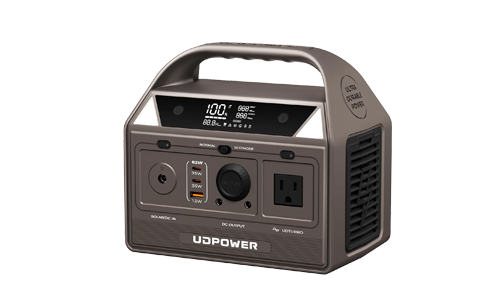
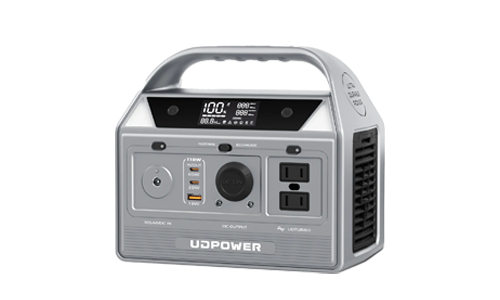
If you have warning before the storm, charge phones, flashlights, battery packs, laptops, radios, medical devices, and your portable power station.
For a broader storm-outage plan, see UDPOWER's 24-, 48-, and 72-hour power outage checklist.
Haboobs and Indoor Air Quality: What Happens to All That Dust?
The dust wall may pass relatively quickly, but the air-quality problem can last longer. Fine and coarse particles remain suspended, settle on surfaces, enter buildings through gaps, and load HVAC filters.
EPA guidance explains that indoor particulate matter can include both fine particles and larger particles. Filtration can help reduce indoor particle concentrations, although no air cleaner removes every pollutant.
A Practical “Clean-Air Room” Strategy
If someone in the household is particularly sensitive to poor air quality, concentrate your resources on one room rather than trying to make the entire house perfect.
- Choose a room with few exterior doors and windows.
- Close the windows and doors.
- Run an appropriately sized portable air cleaner if available.
- Use a HEPA-equipped unit or another appropriately rated particle filter.
- Keep unnecessary door opening to a minimum while outdoor dust levels remain high.
- Replace or clean filters according to the manufacturer's instructions after heavy exposure.
EPA notes that true HEPA filters are designed to capture at least 99.97% of particles at 0.3 microns under the filter's defined test conditions. That does not mean a HEPA-equipped purifier instantly removes 99.97% of the dust from an entire room—the unit still needs appropriate airflow and capacity for the space.
Source: U.S. EPA — What Is a HEPA Filter?
What About Valley Fever?
This issue deserves careful wording because it is easy to exaggerate.
Valley fever is caused by breathing spores from Coccidioides, a fungus found in soil in parts of the southwestern United States and other regions. Wind and activities that disturb soil can put spores into the air.
That does not mean that every haboob causes Valley fever or that everyone exposed to a dust storm will become infected. The Arizona Department of Health Services notes that the exact relationship between dust storms and Valley fever is complex and not completely understood.
The practical takeaway is simpler: avoid unnecessary exposure to blowing dust, especially in regions where Coccidioides is known to occur.
Learn more from CDC Valley Fever guidance and the Arizona Department of Health Services.
Can a Haboob Cause a Power Outage?
Yes. A haboob does not automatically mean the power will fail, but the same strong outflow winds producing the dust can damage the local distribution system.
Possible causes include:
- tree limbs striking power lines;
- wind-damaged poles or distribution equipment;
- windblown debris contacting electrical infrastructure;
- local protective equipment isolating a damaged circuit;
- lightning from the associated thunderstorm;
- subsequent rain, flash flooding, or additional storm damage.
A National Weather Service account of a severe Texas haboob documented wind gusts in the 50–70 mph range along with downed power lines and numerous outages, illustrating why dust and electrical disruption can happen together.
For more detail on why storms interrupt utility service, read Why Did Power Go Out During Storms?.
Do not assume a dust storm will create a long blackout, but do not wait until the lights go out to charge your emergency equipment. Haboobs are fast-moving events, so your backup-power preparation should happen before the dust wall reaches you.
Backup Power for a Haboob: What Is Actually Worth Keeping On?
A dust-storm outage is a poor time to treat your backup battery like a substitute for the entire electrical panel. The smarter approach is to prioritize loads that directly protect communication, indoor air, food, and essential equipment.
| Priority | Typical device | Example power range | Why it matters during a haboob |
|---|---|---|---|
| Highest | Essential medical equipment | Varies by device | Health-critical equipment should be budgeted first. |
| High | Modem / Wi-Fi router | About 10–25W combined for many setups | Maintains alerts and communication if local internet service remains online. |
| High | Phone charging | Roughly 5–30W per device depending on charger and phone | Preserves weather alerts, calls, maps, and emergency communication. |
| High | Portable air cleaner | Often roughly 20–100W depending on size and speed | Helps filter indoor particles when the utility is down. |
| Medium | Fan | Often roughly 20–70W | Useful if HVAC is unavailable and indoor temperature rises. |
| Medium | Refrigerator | Varies greatly; compressor cycles on and off | Becomes increasingly important as an outage lasts longer. |
| Lower | TV, gaming systems, nonessential appliances | Varies | Can consume energy better reserved for critical loads. |
Appliance wattage varies substantially by model. Read the equipment label or use a power meter instead of treating the example ranges above as guaranteed values.
UDPOWER Backup Options for Dust-Storm Outages
For haboob preparedness, battery capacity matters more than simply buying the highest-output power station. A household running a modem, phones, air cleaner, fan, and refrigerator may need substantially more stored energy than someone who only wants communication and lighting.
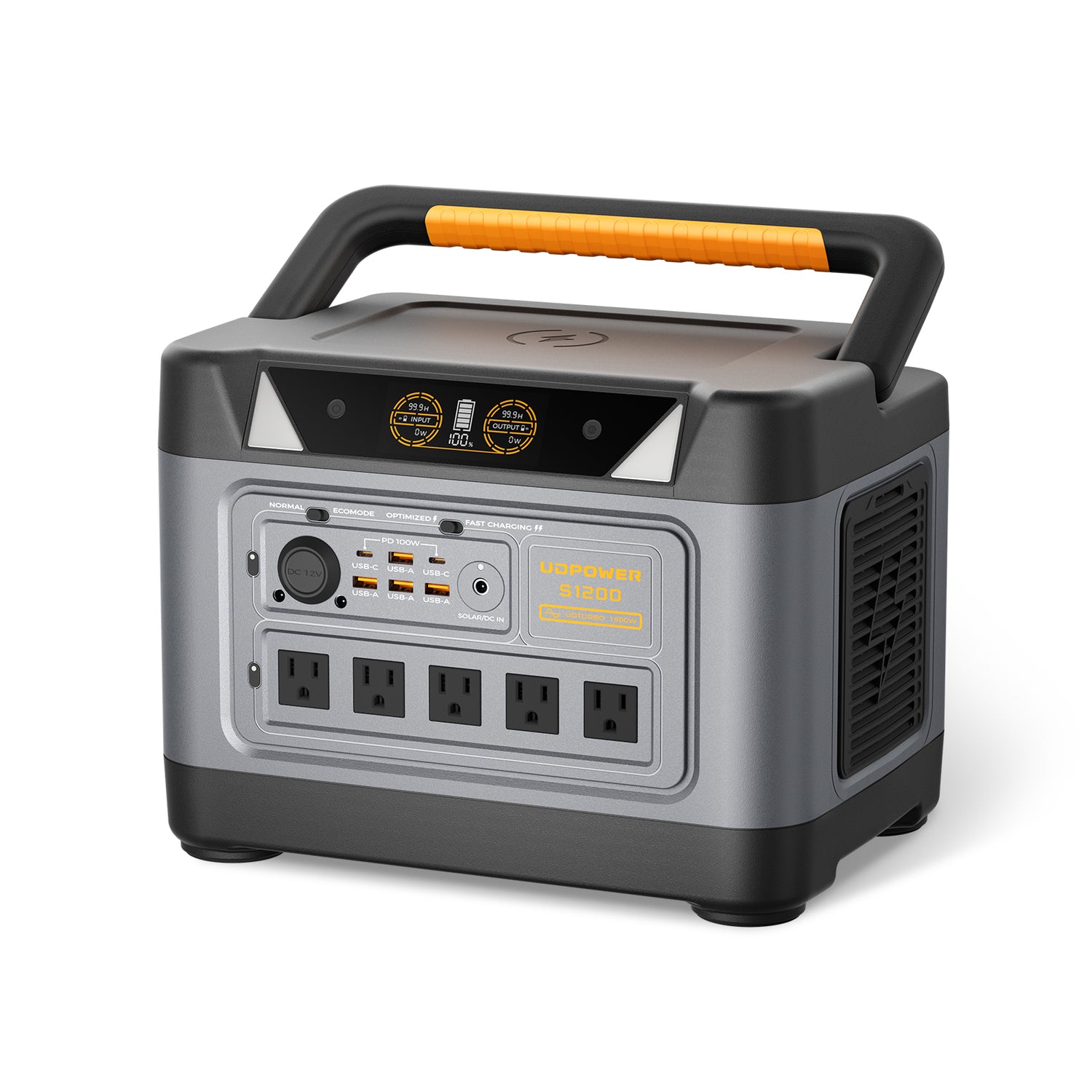
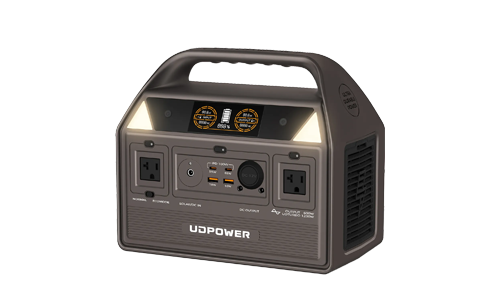
UDPOWER S1200: Practical Home-Essentials Backup
The UDPOWER S1200 is a practical middle ground for keeping several essential devices operating through a short storm outage without moving into very large battery systems.
- Battery capacity: 1,190Wh
- Rated AC output: 1,200W pure sine wave
- UDTURBO: Up to 1,800W for compatible loads
- Battery chemistry: LiFePO4
- Cycle life: 4,000+ cycles
- Output ports: 14 total on the current 5-AC version
- UPSPrime response: Less than 10ms
- Solar input: Up to 400W
- Weight: About 26 lb
For a haboob-related blackout, this size makes sense when the goal is to combine several lower-power essentials—such as communication gear, lighting, an air cleaner, a fan, or carefully budgeted refrigerator use.
View UDPOWER S1200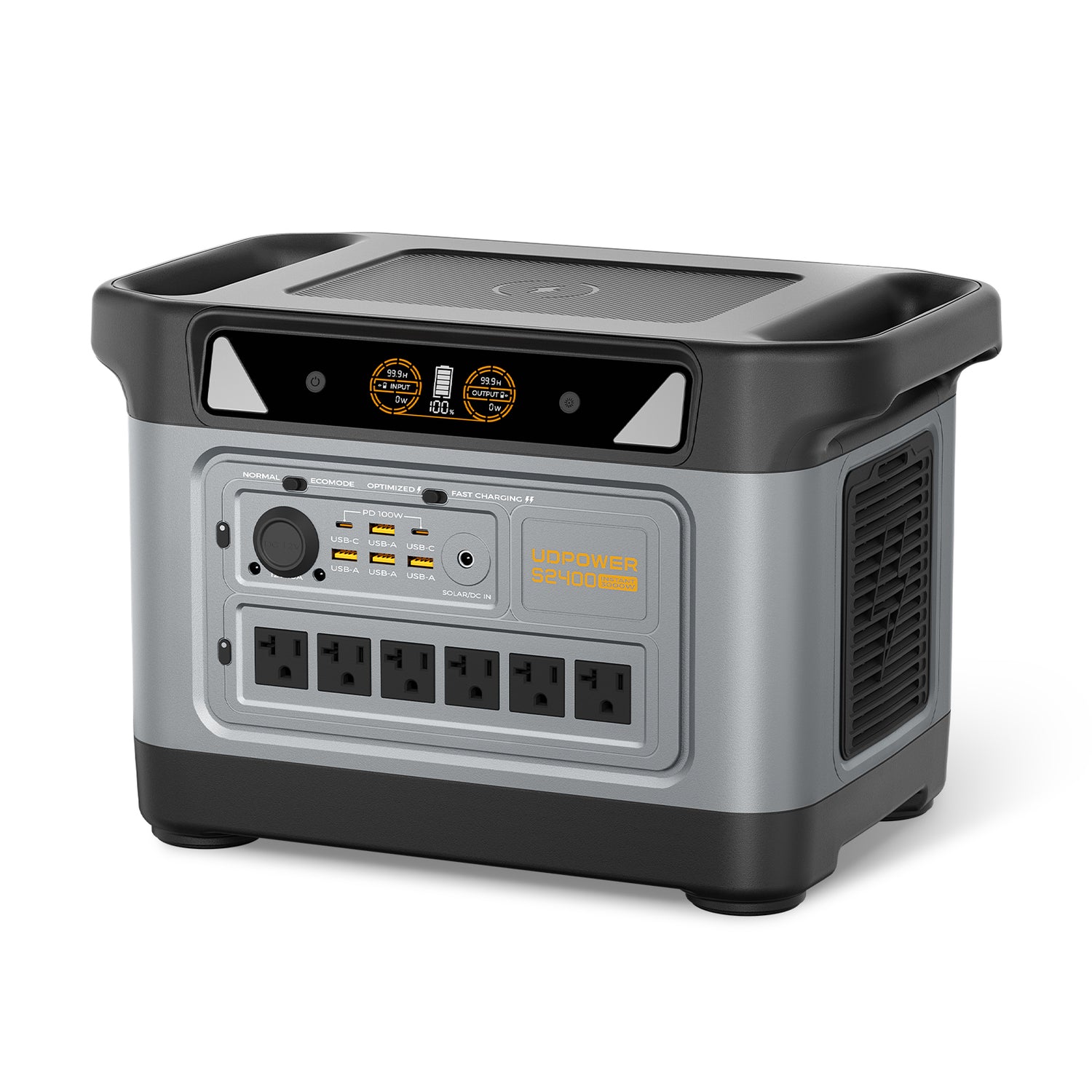
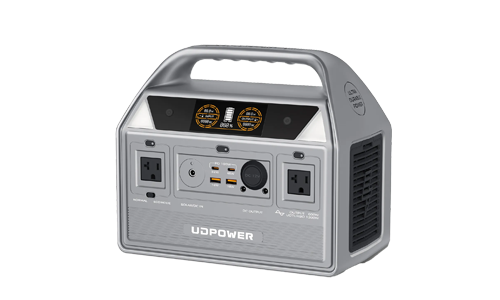
UDPOWER S2400: More Runtime and More Appliance Headroom
The UDPOWER S2400 moves up to a 2,083Wh battery and 2,400W rated output. It is better suited to households that want substantially more runtime or need to support several home essentials together.
- Battery capacity: 2,083Wh
- Rated AC output: 2,400W pure sine wave
- UDTURBO: Up to 3,000W for compatible loads
- Battery chemistry: LiFePO4
- Cycle life: 4,000+ cycles
- AC outlets: 6
- Total output ports: 15
- UPSPrime response: 10ms or less
- Solar input: Up to 400W
- Weight: About 40.8 lb
The extra capacity becomes more valuable if an outage continues after the dust has passed and you want to preserve refrigeration, run filtration for longer, maintain network equipment, or support other essential plug-in devices.
View UDPOWER S2400Estimated Runtime by Emergency Load
The table below uses a planning estimate of approximately 90% usable energy after conversion losses. Actual runtime can be shorter or longer depending on the appliance, power factor, compressor cycling, temperature, inverter behavior, battery state, and other conditions.
| Approximate continuous load | Example use | S1200 1,190Wh |
S2400 2,083Wh |
|---|---|---|---|
| 50W | Router + phones + efficient air-cleaning or lighting setup | About 21.4 hours | About 37.5 hours |
| 100W | Air cleaner + networking + phone charging + small fan | About 10.7 hours | About 18.7 hours |
| 200W | Larger essential-load combination | About 5.4 hours | About 9.4 hours |
| 300W | Several devices operating simultaneously | About 3.6 hours | About 6.2 hours |
| 500W | Higher-demand emergency load | About 2.1 hours | About 3.7 hours |
These are energy-budget estimates, not guarantees. Refrigerators, pumps, compressors, and similar appliances do not behave like perfectly constant loads.
If you are deciding between capacities, browse all UDPOWER portable power stations rather than sizing only by maximum output wattage.
Should You Use Solar Panels During a Haboob?
Not while the dangerous winds and blowing dust are occurring.
Portable solar panels are useful for extending backup power after a storm, but they should not become outdoor projectiles or force you to remain outside in poor air and dangerous wind.
Before the Haboob
- Charge your portable power station from the grid while reliable utility power is still available.
- Bring portable panels and loose cables into a protected location if strong winds are expected.
- Do not depend on last-minute solar charging once a wall of dust is approaching.
During the Haboob
- Do not set up portable panels outdoors in severe blowing dust.
- Do not go outside simply to adjust panel angle or chase a higher charging wattage.
- Keep the power station indoors, dry, and away from open doors or windows.
- Keep the unit's cooling vents unobstructed.
After the Haboob
- Wait for winds and local hazards to subside.
- Inspect the panel surface and connectors for dust or debris.
- Clean equipment according to the manufacturer's instructions before reconnecting it.
- Place the panel in unobstructed direct sunlight when conditions are safe.
- Watch the power station's live solar-input reading while adjusting the panel angle.
Solar is most useful as a recovery resource after the storm, not as your primary plan during the arrival of a haboob. Charge stored batteries before conditions deteriorate, then use solar later when the wind has eased and sunlight has returned.
For a broader explanation of solar-backed emergency power, see Solar Emergency Generator: Everything You Need to Know.
Haboob Safety Checklist: Before, During, and After
| Stage | What to do | Why it matters |
|---|---|---|
| Before | Check weather alerts and radar before driving. | Avoiding the dust wall is safer than reacting after visibility disappears. |
| Before | Charge phones, battery packs, flashlights, and portable power stations. | Strong winds may interrupt utility service. |
| Before | Bring pets indoors and secure loose outdoor objects. | Wind may arrive before the densest dust. |
| Before | Close windows and exterior doors. | Reduces outdoor dust entering the home. |
| During | Stay indoors when possible. | Reduces exposure to airborne dust and debris. |
| During | Run appropriate air filtration and use recirculation settings when suitable. | Helps manage indoor particulate levels. |
| During | If driving, avoid the storm or pull completely off the roadway when safe. | Near-zero visibility can trigger chain-reaction crashes. |
| During | Stay away from downed utility lines. | A line can remain energized even when neighborhood power appears to be off. |
| After | Wait for visibility and wind to improve before traveling. | Residual blowing dust can remain after the main wall passes. |
| After | Inspect HVAC and purifier filters. | A heavy dust load can reduce airflow and filtration performance. |
| After | Clean dust with methods that minimize re-suspension. | Dry sweeping can throw settled particles back into the air. |
| After | Recharge emergency batteries. | A second storm or outage may follow the first event. |
What Should You Do After the Dust Clears?
The dramatic part may be over, but immediately opening every window and aggressively sweeping the house can put settled dust back into the air.
1. Check Outdoor Conditions First
Make sure the main dust plume has passed and local air quality has improved before bringing large amounts of outside air indoors.
2. Inspect HVAC Filters
Heavy airborne dust can load filters quickly. Replace or service them according to the HVAC manufacturer's instructions rather than assuming the normal replacement schedule still applies.
3. Avoid Aggressive Dry Sweeping Indoors
When practical, use damp cleaning methods or a suitable HEPA-filtered vacuum to reduce the amount of settled dust that becomes airborne again.
CDC disaster-cleanup guidance similarly favors wet cleaning or HEPA-filtered vacuuming when dealing with heavy dust rather than simply redistributing particles through dry sweeping.
4. Check Electronics and Power Equipment
Inspect fans, vents, air intakes, cable connections, and exposed ports before returning equipment to normal service. Do not force compressed air deep into sensitive electronics unless the manufacturer specifically recommends it.
Portable power stations should be kept clean, dry, and stored with vents unobstructed. For ongoing care, see How to Maintain Your Portable Power Station.
5. Reset Your Emergency Kit
Recharge anything you used, replace masks or filters as needed, refill water, and restore flashlights and chargers to their normal emergency location. The best time to prepare for the next haboob is immediately after the last one.
A Better Haboob Plan: Think in Three Systems
Most basic dust-storm advice focuses only on driving. That is essential, but households in the Southwest benefit from treating a haboob as three overlapping problems:
Thinking this way creates a more resilient plan than simply keeping an N95 in the glovebox or buying a large battery without deciding what it actually needs to power.
If utility power does fail, it is also useful to distinguish a true outage from abnormal voltage. UDPOWER's brownout vs. blackout guide explains the difference and what appliances may be affected.
Frequently Asked Questions About Haboob Dust Storms
What does “haboob” mean?
Haboob is a term originally associated with intense dust and sand storms in North Africa. It comes from an Arabic root related to blowing or wind. The term is now used by meteorologists for intense dust storms in dry regions around the world, including the American Southwest.
Is a haboob the same as a dust storm?
A haboob is a type of intense dust storm, usually recognizable as an advancing wall of dust. Not every episode of blowing dust forms the dramatic wall normally associated with a haboob.
What causes a haboob in Arizona?
Many Arizona haboobs are caused by thunderstorm outflow. Cool air descends from a thunderstorm, spreads rapidly across dry desert terrain, and lifts loose soil into the atmosphere.
How long does a haboob last?
There is no fixed duration. Some intense dust conditions pass within tens of minutes, while larger events can affect an area for much longer. Residual blowing dust and reduced air quality may continue after the most visible wall has passed.
How high can a haboob get?
The American Meteorological Society notes that dust in intense haboobs may be lofted to around 1,500 meters, or roughly 5,000 feet. Actual height varies considerably from storm to storm.
Should I drive through a haboob?
No, not if you can safely avoid it. The National Weather Service recommends avoiding dense dust whenever possible because visibility can collapse rapidly. If you are caught in one, move completely off the roadway as soon as it is safe to do so and follow NWS dust-storm safety procedures.
Why should I turn my headlights off after pulling over in a dust storm?
Once you are safely parked completely off the traveled roadway, illuminated lights can cause drivers with very limited visibility to follow your vehicle's lights and unintentionally leave the road. NWS therefore advises turning vehicle lights off after safely pulling away from traffic.
Can a haboob cause a blackout?
Yes. Strong thunderstorm outflow winds can damage trees, power lines, poles, and other local utility infrastructure. A haboob does not guarantee an outage, but keeping emergency batteries charged before a severe dust-storm warning is sensible.
Should I open my windows after a haboob?
Wait until blowing dust has subsided and outdoor air conditions have improved. Opening windows immediately can bring additional suspended particles into the home.
Does an air purifier help during a dust storm?
A properly sized portable air cleaner can help reduce airborne particles indoors. EPA recommends choosing equipment appropriate for the room size and notes that HEPA filtration is commonly used for particle removal. No air purifier removes every contaminant, so controlling outdoor-air entry remains important.
Can haboob dust cause Valley fever?
Valley fever is caused by breathing spores from Coccidioides fungi found in soil in certain regions. Wind and soil disturbance can put spores into the air, but it would be inaccurate to say every haboob causes Valley fever. Avoiding unnecessary exposure to blowing dust is a reasonable precaution in endemic areas.
Can I use a portable power station indoors during a haboob?
A battery-based portable power station does not rely on gasoline combustion, making it suitable for many indoor backup applications when used according to the manufacturer's instructions. Keep it dry, keep its ventilation openings clear, and do not place it where blowing dust can enter directly through an open window or doorway.
Should I deploy solar panels during the dust storm?
No. Portable panels should not be deployed in dangerous winds simply to generate power. Charge stored batteries before the storm when possible, then use solar panels after conditions become safe and the panel surface has been inspected and cleaned if necessary.
Reliable Sources Used for This Haboob Guide
Safety information in this guide was checked against current meteorological, public-health, and indoor-air guidance rather than relying on social-media descriptions of dramatic dust storms.
- National Weather Service — Dust Storms and Haboobs
- National Weather Service Tucson — Monsoon and Dust Storm Safety
- National Weather Service Glossary — Dust Storm Warning
- American Meteorological Society — Haboob
- U.S. EPA — Emergencies and Indoor Air Quality
- U.S. EPA — Guide to Air Cleaners in the Home
- U.S. EPA — What Is a HEPA Filter?
- CDC — Reducing Risk for Valley Fever
- Arizona Department of Health Services — Monsoon Dust and Health
Prepare Before the Next Dust Storm Warning
Haboobs move quickly. The best time to charge emergency power, decide which appliances matter, check filters, and prepare your household is before the wall of dust appears on the horizon.
Choose backup power around the devices you actually need to keep running—not simply the largest watt number on the box.
Need a more detailed outage plan? Read the UDPOWER 24-, 48-, and 72-Hour Power Outage Guide .
Related Articles


