

Can I Use Purified Water in My CPAP?
Last updated: June 18, 2026
Quick Answer
You can use purified water in a CPAP humidifier only when the bottle is specifically labeled “distilled water,” “purified by distillation,” or your exact CPAP manual allows drinking-quality or bottled water.
The words purified water alone are not enough. Purified water may have been treated by distillation, reverse osmosis, deionization, or another process. Some purified water also has minerals or electrolytes added back for taste.
For most CPAP humidifier tubs, distilled water remains the safest default because it leaves very little mineral scale. However, model-specific instructions always take priority. For example, the ResMed AirSense 11 Standard tub requires distilled water, while its Cleanable tub permits drinking-quality water.
A CPAP machine does not normally use water to create air pressure. Water is used only in the heated humidifier chamber, where it adds moisture to the airflow. If your CPAP does not have a humidifier, or you run it with the humidifier disabled, you do not need to add water.
Is Purified Water the Same as Distilled Water?
No. Distilled water is one type of purified water, but not every bottle labeled purified water has been distilled.
The U.S. Food and Drug Administration recognizes several treatment methods under the broader purified-water category, including distillation, reverse osmosis, deionization, and demineralization. These processes can produce water with low levels of dissolved material, but they are not identical.

The practical rule: If your CPAP manual says “distilled water only,” look for the actual word distilled on the bottle. Do not rely only on the larger words “purified water” on the front label.
| Water label | Is it distilled? | Use in a CPAP humidifier? | What to check | Source |
|---|---|---|---|---|
| Distilled water | Yes | Best default | Use at room temperature and follow the tank fill line. | CDC CPAP guidance |
| Purified water — purified by distillation | Yes | Generally suitable | Confirm the small print says distilled or distilled by steam. | FDA bottled-water definitions |
| Purified by reverse osmosis | No | Check your manual | RO water may be low in minerals, but it is not automatically a manufacturer-approved substitute for distilled water. | FDA |
| Deionized or demineralized water | No | Check your manual | Low mineral content does not necessarily mean the product meets your CPAP manufacturer's instructions. | FDA |
| Purified water with minerals or electrolytes added | No | Avoid unless approved | Added calcium, magnesium, sodium, or electrolytes can leave deposits in the humidifier tub. | FDA bottled-water overview |
| Spring water or mineral water | No | Usually avoid | These products naturally contain dissolved minerals that can create scale. | FDA |
| Regular bottled drinking water | Not necessarily | Model-specific | Some travel humidifiers allow it, while many home CPAP models specify distilled water. | Philips DreamStation Go |
| Sterile water | Not necessarily | Check your manual | Sterile describes microbiological quality, not necessarily mineral content or distillation method. | FDA sterile-water explanation |
The most important detail is not the brand name, price, or whether the bottle comes from a grocery store. It is the treatment method printed on the label and whether that method matches your CPAP humidifier instructions.
How to Check a Purified Water Bottle Before Using It
-
Read the exact product name.
Look for “distilled water,” not just “purified drinking water.” -
Read the treatment statement.
Check whether it says distilled, reverse osmosis, deionized, demineralized, or another treatment method. -
Check for added ingredients.
Avoid products that list minerals, electrolytes, flavors, fluoride, or other additives unless your CPAP manufacturer specifically permits them. -
Check the seal and storage condition.
Do not use a bottle with a broken seal, unusual odor, visible material, or uncertain storage history. -
Compare the label with your CPAP manual.
The manual for your exact machine and humidifier tub should make the final decision.
Do Not Add Anything to the Water
Do not add essential oils, fragrances, vapor rub, salt, hydrogen peroxide, alcohol, disinfectant, or medication to a CPAP humidifier tank. CPAP manufacturer instructions commonly warn against chemicals and additives because they may irritate the airway or damage the water chamber.
What Major CPAP Manufacturers Require
Generic online advice can be misleading because water requirements are not identical across every CPAP machine. They can even differ between two water tubs made for the same CPAP platform.
| CPAP or humidifier | Manufacturer instruction | Can generic purified water replace distilled? | Official source |
|---|---|---|---|
| ResMed AirSense 10 with humidifier | Fill the tub with distilled water up to the maximum level mark. | No, unless the purified water is specifically distilled. | ResMed AirSense 10 user guide |
| ResMed AirSense 11 Standard water tub | Use distilled water only. | No, unless labeled distilled. | ResMed FAQ |
| ResMed AirSense 11 Cleanable water tub | Drinking-quality potable water is permitted. | Potentially yes, provided the water is drinking-quality and the instructions for that exact tub are followed. | ResMed FAQ |
| Philips DreamStation 2 humidifier | Use only room-temperature distilled water. Do not add chemicals or additives. | No, unless the purified water is distilled. | Philips DreamStation 2 instructions |
| Philips DreamStation Go heated humidifier | The product is designed to permit tap, bottled, or distilled water. | Yes, when used according to the DreamStation Go humidifier instructions. | Philips DreamStation Go |
| ResMed AirMini | Uses a waterless HumidX humidification system rather than a conventional water chamber. | No water is added to the machine. | ResMed AirMini |
Check both the machine model and the water-tub version. A replacement cleanable tub may have different water instructions from the standard tub originally supplied with the machine.
Why Is Distilled Water Usually Recommended for CPAP?
1. It Reduces Mineral Scale
As a heated humidifier evaporates water, dissolved minerals do not evaporate with it. They remain in the chamber and may form a white, gray, or chalky film. Distilled water contains far fewer dissolved minerals than typical tap, spring, or mineral water, so it helps keep the chamber cleaner.
2. It Makes Cleaning Easier
Frequent scale buildup can make the water tub cloudy or rough and can create areas that are harder to wipe clean. Using distilled water does not eliminate the need for regular cleaning, but it usually reduces mineral deposits.
3. It Matches the Instructions for Many Popular Machines
Many commonly used CPAP humidifier manuals in the United States specify distilled water. Following the instructions helps protect the water chamber and avoids uncertainty about whether a substitute is appropriate.
4. It Offers More Consistent Water Quality
The mineral content of tap, spring, bottled, and reverse-osmosis water can vary. A bottle clearly labeled distilled provides a more consistent choice when the manual calls for low-mineral water.
Distilled does not mean maintenance-free. Empty the chamber regularly, allow it to dry, and clean it according to the manufacturer's schedule. Bottled water is not automatically sterile unless the label specifically states that it is sterile.
What If I Already Used Purified Water in My CPAP?
Do not panic. A single night with non-distilled purified water does not automatically mean your CPAP is damaged. The sensible next step is to inspect and clean the removable water chamber.
- Turn off and unplug the CPAP before removing the water chamber.
- Pour out the remaining water instead of topping it off.
- Inspect the chamber for a cloudy film, white residue, unusual odor, discoloration, or visible particles.
- Wash or soak the chamber only as directed in your model's cleaning instructions.
- Rinse thoroughly with the type of water recommended by the manufacturer.
- Let the chamber air-dry completely away from direct sunlight.
- Refill it with the correct water before the next use.
ResMed's cleaning guidance for compatible tubs includes mild dishwashing liquid or a diluted vinegar solution during scheduled cleaning, followed by thorough rinsing. Do not leave vinegar or cleaning solution in the tub during therapy.
For a complete equipment routine, see How to Clean a CPAP Machine.
What Can I Use If Distilled Water Is Unavailable?
The safest response depends on your CPAP model, your medical needs, and whether humidification is optional for your therapy comfort.
Option 1: Check Whether Your Exact Tub Permits Potable Water
Some cleanable or travel humidifiers are designed for drinking-quality water. Confirm this in the manual rather than assuming all CPAP tubs work the same way.
Option 2: Use Purified Water That Is Actually Distilled
A bottle may show “purified water” in large print and “purified by distillation” in smaller print. In that case, it is distilled water.
Option 3: Temporarily Run Without Heated Humidification
Some users can operate their CPAP without adding water by turning humidification off. Do not place an empty chamber on an active heating setting. Follow the manufacturer's instructions for waterless operation, and do not change prescribed pressure settings.
Option 4: Contact the Manufacturer or Equipment Provider
When the label or manual is unclear, contact the CPAP manufacturer, sleep clinic, or durable medical equipment provider before using a substitute for several nights.
Boiling Water Does Not Remove Minerals
Boiling can reduce some microbial risks when done correctly, but it does not turn tap water into distilled water and does not remove mineral content. Do not treat boiled water as an automatic replacement when your manual says distilled water only.
The CDC advises CPAP users to check their manufacturer's instructions and notes that most manufacturers recommend distilled water. It also recommends regular cleaning and replacement of humidifier water.
A Practical Daily CPAP Water Routine
- Wash and dry your hands before handling the water chamber.
- Remove the tub before filling it whenever the manual instructs you to do so.
- Use room-temperature water.
- Fill only to the maximum line.
- Never pour water directly into the CPAP machine.
- Do not move the machine while the chamber contains water.
- Do not top off yesterday's water with fresh water.
- Empty remaining water according to the manufacturer's daily instructions.
- Allow the chamber to air-dry away from direct sunlight.
- Keep the water bottle capped and stored in a clean, cool location.
- Replace a cracked, cloudy, warped, or damaged water tub.
Daily emptying matters because standing water and a warm humidifier chamber can create an environment where microorganisms grow. Distilled water reduces minerals, but it does not replace good cleaning and drying habits.
Can You Use Purified Water in a CPAP While Traveling?
Travel is where the difference between purified and distilled water causes the most confusion. Hotels, airports, campgrounds, and convenience stores may carry bottled drinking water but not a clearly labeled gallon of distilled water.
Before a Road Trip
- Check your humidifier manual before leaving home.
- Carry a factory-sealed container labeled distilled.
- Keep it upright and separate from electronics.
- Pack enough for the expected number of nights plus one extra night.
- Bring the manufacturer's cleaning instructions.
At a Hotel
Ask nearby pharmacies or grocery stores for distilled water. Do not assume complimentary hotel bottled water is distilled. Read the label carefully, especially when it says “purified drinking water.”
While Camping or RV Traveling
Store CPAP water in a clean, shaded location. Do not use untreated lake, river, stream, campground spigot, or unfiltered well water in the humidifier. Keep the CPAP and power supply on a stable, dry surface away from condensation and the water container.
When Flying
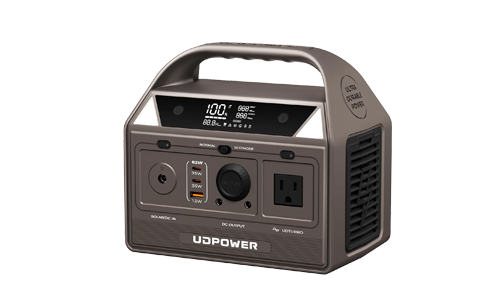
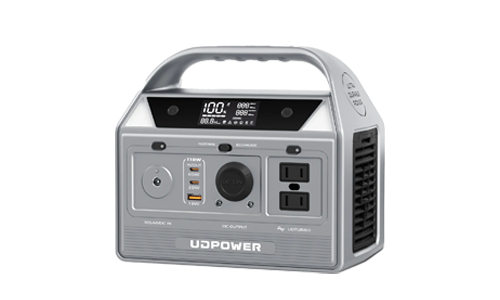
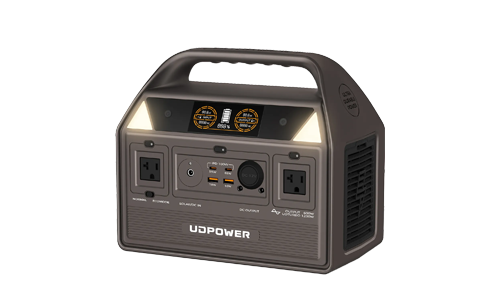
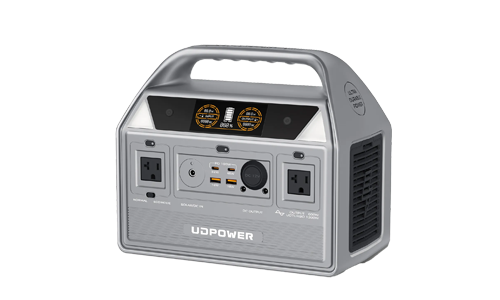
Large portable power stations such as the UDPOWER C600 and S1200 exceed typical airline lithium-battery limits and are intended for home, vehicle, RV, and ground travel rather than passenger-aircraft baggage. Use an airline-compliant CPAP battery for flights and confirm the current airline requirements before traveling.
For additional travel planning, read Portable CPAP Machine for Travel Power Backup.
CPAP Water, Humidification, and Battery Runtime
The type of water does not directly change how much electricity the CPAP consumes. The humidifier heater and heated tube do.
A CPAP blower may use modest power on its own, but heated humidification can significantly increase overnight energy use. This becomes important during a blackout, in an RV, or while camping away from an outlet.
| Typical CPAP setup | Example load | Estimated energy for 8 hours | 596Wh battery estimate | 1,190Wh battery estimate |
|---|---|---|---|---|
| Blower only or low-power setup | 20W | 160Wh | About 26.8 hours | About 53.6 hours |
| Moderate setup | 40W | 320Wh | About 13.4 hours | About 26.8 hours |
| Humidifier in regular use | 60W | 480Wh | About 8.9 hours | About 17.9 hours |
| Heated humidifier and heated tube | 90W | 720Wh | About 6.0 hours | About 11.9 hours |
These are planning estimates, not guaranteed runtimes. Actual results vary with the CPAP model, pressure, humidifier level, heated tube temperature, mask leak, room temperature, battery condition, other connected devices, and AC conversion losses.
Before relying on any battery during an outage, run your complete CPAP setup for a full night under normal conditions. Record the battery percentage before and after the test. This real-world test is more reliable than sizing a backup from the CPAP adapter's maximum input rating alone.
Learn more in CPAP Power Consumption and How Long Will a CPAP Run on a Battery Backup?.
Recommended UDPOWER Backup Power for CPAP Users
Choosing the correct water protects the humidifier chamber. Choosing enough battery capacity helps keep the CPAP operating when utility power is unavailable. For CPAP backup, battery capacity and overnight runtime usually matter more than buying the highest possible output wattage.

UDPOWER C600: A Practical One-Night CPAP Backup
The C600 is a portable choice for users who want one-night backup capacity without moving to a much larger power station.
- Battery capacity: 596Wh
- Rated AC output: 600W
- Peak output: 1,200W
- AC outlets: 2
- Battery chemistry: LiFePO4
- Weight: 12.3 lb
- Solar input: Up to 240W
- Best fit: One-night backup, road trips, RV use, and CPAP operation with moderate humidifier settings
At an average 60W CPAP load, the C600 provides an estimated 8.9 hours using the 90% efficiency planning formula. A high heated-humidifier load may require more capacity.
View UDPOWER C600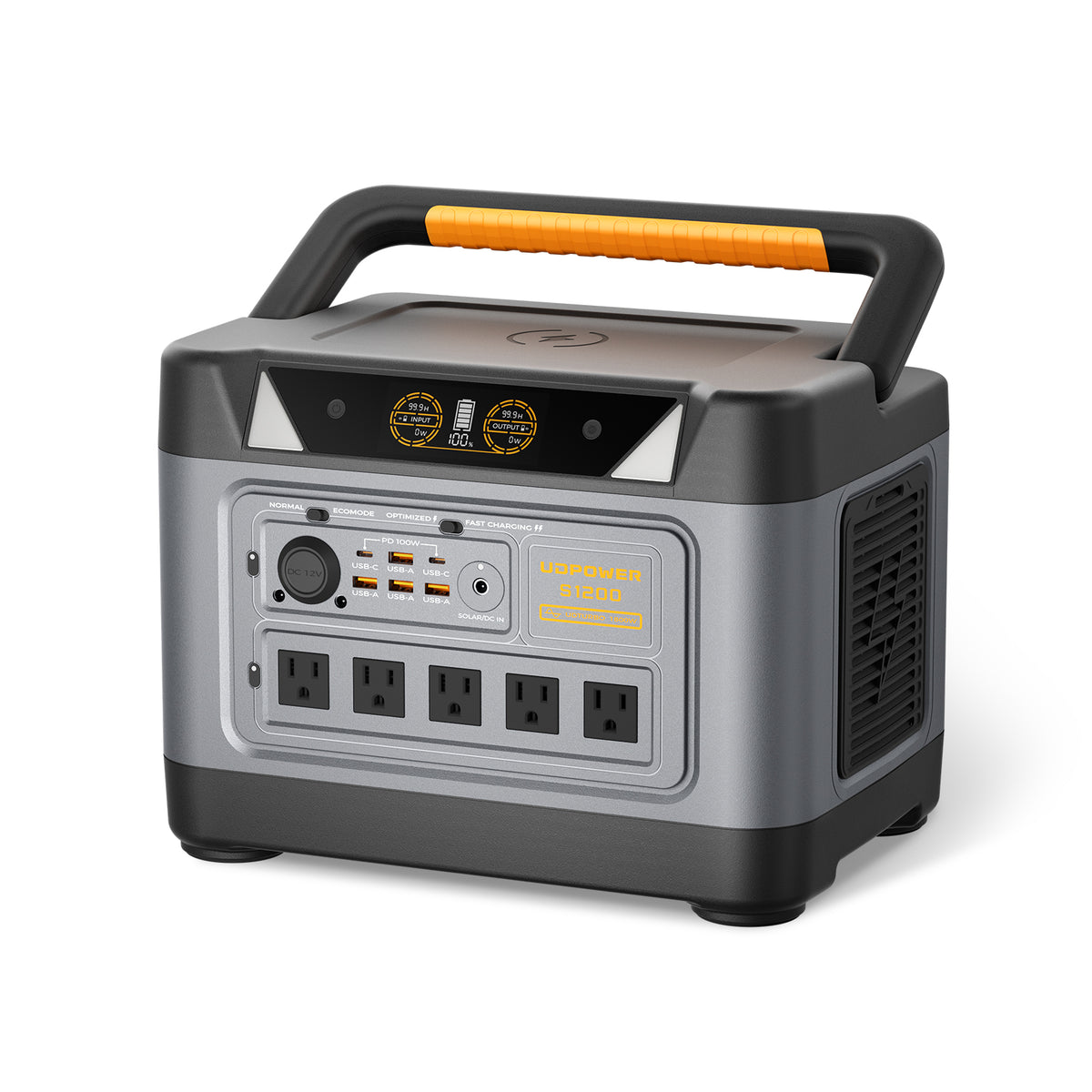
UDPOWER S1200: Better for Humidifier Use and Longer Outages
The S1200 provides more energy reserve for heated humidification, multi-night planning, and running a CPAP alongside phones, lights, or a home internet router.
- Battery capacity: 1,190Wh
- Rated AC output: 1,200W
- UDTURBO output: Up to 1,800W
- AC outlets: 5
- Battery chemistry: LiFePO4
- Weight: Approximately 26 lb
- UPSPrime response: 10ms or less
- Solar input: Up to 400W
- Best fit: Heated-humidifier users, longer outages, multi-night backup, and CPAP plus other essentials
At an average 60W CPAP load, the S1200 provides an estimated 17.9 hours. At a heavier 90W load, the planning estimate is approximately 11.9 hours.
View UDPOWER S1200Bedside Power Safety
Place the power station on a stable, dry, hard surface with its ventilation openings unobstructed. Do not place it on the bed, under blankets, beside an open water container, or where a CPAP chamber leak could reach it. Use the CPAP manufacturer's original AC adapter unless an approved DC cable is available for your exact machine.
Fast Decision Guide
| Your situation | Best next step |
|---|---|
| The bottle says “distilled water.” | Use it if distilled water is permitted by your CPAP manual. |
| The bottle says “purified by distillation.” | Treat it as distilled water, provided there are no added minerals or other ingredients. |
| The bottle says “purified by reverse osmosis.” | Do not assume it replaces distilled water. Check the manual for your exact water tub. |
| The bottle contains minerals or electrolytes. | Avoid it unless the manufacturer expressly permits that water. |
| Your AirSense 11 has a Standard tub. | Use distilled water only. |
| Your AirSense 11 has a Cleanable tub. | ResMed permits drinking-quality potable water for that tub. |
| You have a Philips DreamStation 2. | Use room-temperature distilled water. |
| You have a DreamStation Go humidifier. | Follow its instructions, which permit tap, bottled, or distilled water. |
| You already used non-distilled purified water once. | Empty, clean, rinse, inspect, dry, and return to the recommended water. |
| You cannot find approved water during an outage. | Check whether the humidifier can be safely disabled or contact the manufacturer for model-specific guidance. |
Frequently Asked Questions
Can I use purified bottled water in my CPAP for one night?
It depends on the purification method and your CPAP manual. If the bottle is purified by distillation, it can generally be treated as distilled water. If it is reverse-osmosis, deionized, or purified drinking water with minerals added, check your manual before using it. After a one-time emergency use, empty and clean the chamber according to the manufacturer's instructions.
Is reverse-osmosis water safe for a CPAP?
Reverse-osmosis water is often low in dissolved minerals, but it is not the same process as distillation. Use it only when your exact humidifier instructions permit potable, bottled, or reverse-osmosis water, or when the manufacturer confirms that it is acceptable.
Can I use purified water with minerals added?
It is usually better to avoid it. Minerals added for taste can remain in the water tub as the water evaporates, creating deposits. Choose plain distilled water when your manual recommends distilled water.
Can I use spring water in my CPAP?
Spring water naturally contains minerals and can cause scale in the humidifier chamber. Do not use it unless the instructions for your exact CPAP humidifier specifically permit drinking-quality water.
Can I use regular bottled water in my CPAP?
Not automatically. Bottled drinking water may contain minerals, and bottled water is not necessarily distilled or sterile. Some travel humidifiers permit bottled water, while many home CPAP humidifiers specify distilled water.
Can I use sterile water instead of distilled water?
Sterile and distilled describe different characteristics. Sterile water is controlled for microorganisms, while distilled water is produced through distillation and generally contains very little mineral material. If your manual says distilled water only, do not substitute sterile water unless the manufacturer approves it.
Can I boil tap water and use it in my CPAP?
Boiling does not remove dissolved minerals and does not make tap water equivalent to distilled water. Follow the CPAP manufacturer's instructions rather than using boiled water as a routine replacement.
Will purified water damage my CPAP?
A single use does not automatically damage the machine, but repeated use of mineral-containing water can create scale in the humidifier tub. Water with additives, contamination, or an unsuitable mineral content may also conflict with the manufacturer's instructions.
Why does my CPAP water chamber have white residue?
White or chalky residue is commonly associated with minerals left behind after water evaporates. Switch to the recommended water and clean the chamber according to your manual. Replace the chamber if deposits cannot be safely removed or the surface is damaged.
Should I leave water in the CPAP chamber during the day?
Follow your model's instructions. Many manufacturers recommend emptying the remaining water regularly, wiping or rinsing the tub, and allowing it to air-dry away from direct sunlight.
Can I top off last night's CPAP water?
It is better to empty the remaining water and refill the cleaned or dried chamber with fresh water. Continually topping off old water can leave concentrated minerals and allows water to remain standing longer.
Does using the CPAP humidifier drain a backup battery faster?
Yes. The humidifier heater and heated tube can use considerably more power than the blower alone. During an outage, a 596Wh battery may provide about 8.9 hours at a 60W average load, while a 1,190Wh battery may provide about 17.9 hours using a 90% efficiency estimate.
Can I run a CPAP without water?
Many CPAP machines can operate without heated humidification, but the humidifier must be disabled or configured correctly. Do not run an empty tub on an active heating setting. Consult your manual and do not change prescribed pressure settings.
Prepare Your CPAP for the Next Outage
Use the correct water for your humidifier, measure your real overnight power draw, and choose enough backup capacity for your complete CPAP setup.
View CPAP Backup Selection View Portable Power Stations Get the CPAP Runtime GuideSources and Manufacturer Instructions
- CDC: Preventing Waterborne Germs at Home
- FDA: Bottled Water Definitions and Regulation
- FDA: Bottled Water Everywhere—Keeping It Safe
- ResMed: CPAP and Humidifier FAQs
- ResMed AirSense 10 User Guide
- ResMed AirSense 11 User Guide
- Philips DreamStation 2 Instructions for Use
- Philips DreamStation Go Heated Humidifier
- ResMed AirMini Waterless Humidification
- UDPOWER C600 Official Specifications
- UDPOWER S1200 Official Specifications
Important: This article provides general CPAP care and backup-power information. The instructions supplied with your exact CPAP machine and water tub take priority. Contact your healthcare provider or equipment supplier if humidification changes cause discomfort or interfere with prescribed therapy.
Related Articles


