

What Is Off-Roading and Why Is It So Popular?
Last updated: July 31, 2026
Off-roading is driving or riding a vehicle on unpaved, uneven, or natural terrain where traction, ground clearance, wheel placement, and route conditions matter more than lane markings. It can include maintained dirt roads, forest trails, rocky tracks, mud, sand, snow, desert washes, and designated off-highway vehicle areas.
Off-roading is popular because it combines outdoor exploration, driving skill, manageable risk, vehicle customization, camping, photography, and a strong social community. It gives people a way to reach places that ordinary paved roads do not, while making the journey itself part of the experience.
However, “off-road” does not mean “drive anywhere.” Most legal off-roading in the United States takes place on designated roads, trails, parks, or open areas. Route maps, seasonal closures, vehicle restrictions, permits, and local regulations still apply.

What Does Off-Roading Mean?
In everyday use, off-roading means operating a vehicle away from normal paved streets and highways. The surface may be dirt, gravel, sand, mud, rock, snow, or another form of natural terrain.
The important difference is not simply whether the road is paved. It is whether the terrain begins to control how you drive. Once you must think about tire placement, traction, clearance, slope, ruts, loose surfaces, or the possibility of getting stuck, you are entering off-road driving territory.
That definition covers a wide range of experiences. A family following a rough forest road to a campsite is off-roading at a mild level. A modified four-wheel-drive vehicle climbing large rock ledges is also off-roading, but at a much more technical level.
Government agencies often use the term off-highway vehicle, or OHV, because many legal routes are still recognizable roads or trails. The term does not automatically mean driving across untouched land. In fact, many public areas require vehicles to remain on routes specifically designated for motorized use.
What Actually Counts as Off-Roading?
There is no single line separating an ordinary dirt road from an off-road trail. The answer depends on the route, vehicle, weather, driver experience, and legal designation.
| Driving Situation | Usually Considered Off-Roading? | Why | Main Concern |
|---|---|---|---|
| Smooth, maintained gravel road | Sometimes described as light off-road or soft-roading | The surface is unpaved, but ordinary vehicles may still travel it in dry conditions. | Loose gravel, dust, washboards, reduced braking grip |
| Rutted forest road | Yes | Wheel placement, clearance, and traction can determine whether the vehicle continues safely. | Underbody contact, sidewall damage, getting high-centered |
| Designated 4x4 trail | Yes | The route is intended for capable vehicles and may include rocks, ledges, slopes, or tight turns. | Vehicle damage, rollover risk, recovery difficulty |
| Sand dune or beach route where vehicles are permitted | Yes | Soft sand creates high rolling resistance and requires careful momentum and tire management. | Becoming buried, overheating, tide or access restrictions |
| Muddy trail | Yes | Mud reduces steering and braking control and can conceal deep ruts or holes. | Getting stuck, trail damage, loss of control |
| Driving across vegetation beside a legal trail | It may look like off-roading, but it is often prohibited | Leaving the designated route can damage habitat, create new tracks, and violate land-use rules. | Environmental damage, fines, loss of trail access |
| Private off-road park | Yes | The property is managed specifically for off-road driving, usually with marked trail levels. | Following park rules, waivers, vehicle requirements |
A dirt road can be easy in August and difficult after one storm. Likewise, a route that is comfortable in a lifted 4x4 may be risky in a low-clearance crossover. Off-road difficulty is always relative to the conditions and the vehicle.
Common Types of Off-Roading
Off-roading is not one single sport. Different terrain and trip goals create distinct styles, each with different vehicle, tire, recovery, and planning requirements.
| Type | Typical Terrain | Common Vehicles | Difficulty Range | Main Appeal |
|---|---|---|---|---|
| Scenic trail driving | Gravel roads, forest roads, desert tracks | AWD crossovers, stock SUVs, pickup trucks | Easy to moderate | Reaching viewpoints, campsites, lakes, and trailheads |
| Four-wheeling | Ruts, rocks, climbs, uneven trails | 4x4 SUVs and trucks | Moderate to advanced | Vehicle control, technical driving, exploration |
| Rock crawling | Boulders, ledges, steep rock faces | Modified 4x4 vehicles with low-range gearing | Advanced to extreme | Slow, precise obstacle negotiation |
| Mud driving | Deep mud, wet fields, forest trails | 4x4 trucks, ATVs, UTVs | Moderate to extreme | Traction challenge and vehicle capability |
| Sand and dune driving | Beaches, deserts, dune fields | 4x4 vehicles, UTVs, ATVs, dirt bikes | Moderate to advanced | Open terrain, flowing routes, expansive scenery |
| Snow wheeling | Snow-covered roads and trails | 4x4 vehicles, snow-capable UTVs | Moderate to extreme | Winter access and changing traction conditions |
| ATV and UTV trail riding | Narrow trails, forest routes, dunes, recreation areas | ATVs and side-by-side UTVs | Beginner to advanced | Compact size, open-air riding, group recreation |
| Off-road motorcycling | Single-track trails, desert, forest, motocross areas | Dirt bikes and dual-sport motorcycles | Beginner to expert | Agility, physical involvement, speed, technical skill |
| Overland travel | Mixed paved roads, remote dirt roads, campsites | 4x4 SUVs, pickups, vans, motorcycles | Easy to advanced | Long-distance travel and self-sufficient camping |
Beginners do not need to start with mud pits or rock ledges. Scenic dirt roads and easy designated trails provide the same sense of exploration with a much smaller risk of damage or recovery problems.
Why Is Off-Roading So Popular?
Off-roading is often described as popular because it is exciting. That is true, but excitement alone does not explain why people invest years in the activity. Its real appeal comes from several experiences happening at the same time.
1. The destination is not the only reward
On a normal road trip, the road is usually something to complete before reaching the destination. During an off-road trip, the route becomes part of the destination. Choosing a line through rocks, controlling speed on a descent, or reaching a remote overlook gives the drive its own purpose.
2. It creates a clear sense of progress
Off-roading has a natural skill ladder. A beginner may first learn how to drive a washboard road smoothly. Later, the same driver learns tire placement, controlled descents, recovery, navigation, and vehicle setup.
The feedback is immediate. A good line feels controlled. A poor line creates wheelspin, scraping, or a need to back up. That direct connection between decision and result makes the activity highly engaging.
3. It provides challenge without requiring high speed
Many technical off-road obstacles are crossed at walking speed. The excitement comes from precision and consequences rather than outright speed. This appeals to people who enjoy problem-solving, machines, and outdoor terrain without wanting a racetrack experience.
4. It opens access to outdoor places
Legal off-road routes can lead to dispersed campsites, fishing areas, photography locations, remote trailheads, desert viewpoints, and public-land recreation areas that are difficult to reach in an ordinary low-clearance car.
For many owners, the vehicle is not being used to conquer obstacles for entertainment. It is being used as an access tool for camping, hunting, hiking, stargazing, or wildlife photography.
5. The vehicle becomes a long-term project
Off-road vehicles can be personalized around actual use. Owners may add appropriate tires, skid plates, recovery points, lighting, storage, communications equipment, or camping systems.
That project element keeps people involved even when they are not on the trail. Researching equipment, testing a new setup, repairing damage, and improving organization become part of the hobby.
6. It has a strong community culture
Off-roading often works better in groups. Drivers spot one another through obstacles, share tools, assist with recoveries, exchange route information, and organize trail cleanups.
A good off-road group is not just social. It provides practical safety redundancy when a vehicle breaks, becomes stuck, or loses communication coverage.
7. Modern technology has lowered the entry barrier
Newer vehicles may include terrain modes, hill-descent control, cameras, traction management, locking differentials, and better factory ground clearance. Offline navigation, satellite communication, compact air compressors, rechargeable lighting, and portable power have also made remote trips easier to organize.
Technology does not remove the need for judgment, but it helps more people begin with less specialized knowledge than previous generations required.
8. It offers a temporary break from routine
Off-road driving demands attention. The driver must watch the terrain, listen to the vehicle, plan ahead, and communicate with passengers or spotters. That focus pushes normal work, notifications, and daily distractions into the background.
| Reason People Enjoy It | What the Driver Experiences | Why It Encourages Repeat Trips |
|---|---|---|
| Exploration | Access to remote landscapes and lesser-used routes | Every region and season creates a different trip |
| Skill development | Visible improvement in control, navigation, and decision-making | Drivers can progress gradually to harder terrain |
| Mechanical interest | A practical reason to understand tires, suspension, traction, and recovery | The vehicle can evolve as experience grows |
| Community | Group rides, spotting, recovery help, and shared knowledge | Trips become social events rather than solitary drives |
| Outdoor access | Camping, photography, fishing, hiking, and stargazing opportunities | The activity supports several interests at once |
| Controlled challenge | Problem-solving with real but manageable consequences | No two obstacles or weather conditions feel identical |
| Self-reliance | Planning fuel, water, navigation, recovery, and power | Preparation becomes satisfying rather than burdensome |
Off-Roading vs. Overlanding, Trail Driving, and OHV Riding
These terms overlap, but they describe different priorities.
| Term | Main Focus | Typical Duration | Typical Route | Key Difference |
|---|---|---|---|---|
| Off-roading | Driving on terrain that challenges traction, clearance, or vehicle control | Hours to several days | Dirt roads, 4x4 trails, rocks, mud, sand, snow | The terrain and driving challenge are central |
| Trail driving | Following an established unpaved route | Usually a day trip | Forest roads, scenic trails, backcountry roads | Often easier and more destination-focused |
| Overlanding | Vehicle-supported travel, camping, and self-sufficiency | Several days to months | Mixed highways, dirt roads, border crossings, remote camps | The journey and independent travel matter more than obstacle difficulty |
| Rock crawling | Crossing highly technical rock obstacles | Usually a day | Ledges, boulders, steep climbs | Precision and specialized vehicle capability dominate |
| OHV riding | Using vehicles classified or managed as off-highway vehicles | Hours to several days | Designated OHV trails and recreation areas | Often refers to ATVs, UTVs, dirt bikes, and regulated motorized access |
| Soft-roading | Light travel on mild dirt or gravel routes | Usually a day trip | Maintained forest roads and easy tracks | Limited technical obstacles and lower vehicle requirements |
A person can be off-roading without overlanding, and an overland trip may include very little technical off-roading. A stock SUV driving a rough route to a campsite is also having a legitimate off-road experience, even if no rock crawling is involved.
What Kind of Vehicle Do You Need for Off-Roading?
You do not automatically need a heavily modified truck. The right vehicle depends on the route you intend to drive.
An AWD crossover with suitable tires may handle maintained forest roads and dry gravel tracks. Technical routes with deep ruts, rocks, steep grades, or loose climbs may require four-wheel drive, low-range gearing, greater clearance, underbody protection, and secure recovery points.
Important off-road vehicle features
| Vehicle Feature | What It Does | When It Matters Most | Is It Required for Beginners? |
|---|---|---|---|
| Four-wheel drive | Sends power to both axles and improves traction options | Loose climbs, rocks, mud, deep sand, uneven terrain | Not always for easy dirt roads, but strongly preferred for technical routes |
| Low-range gearing | Allows slow movement with greater torque and control | Steep climbs, descents, rock crawling | Not needed for mild routes |
| Ground clearance | Creates space between obstacles and the underbody | Ruts, rocks, ledges, uneven crests | Some clearance is important on any rough route |
| All-terrain tires | Improve durability and grip on mixed surfaces | Loose gravel, rock, dirt, light mud | One of the most useful early upgrades |
| Full-size spare tire | Allows the trip to continue after serious tire damage | Sharp rocks, remote routes, sidewall punctures | Strongly recommended |
| Rated recovery points | Provide safe attachment locations for vehicle recovery | Any route where getting stuck is possible | Recommended before carrying recovery straps |
| Skid plates | Protect vulnerable underbody components | Rocky trails, deep ruts, ledges | Useful as trail difficulty increases |
| Locking differential | Helps wheels on the same axle turn together when traction is uneven | Cross-axle terrain, rock steps, deep ruts | Helpful but unnecessary on many beginner routes |
| Air compressor | Restores tire pressure before returning to highway speeds | Trips where tire pressure is adjusted for terrain | Important if you intentionally air down |
| Offline navigation | Keeps maps available outside cellular coverage | Remote public lands and unfamiliar trail networks | Recommended for every trip |
How Different Terrain Changes the Drive
Good off-road driving is less about forcing the vehicle forward and more about understanding what each surface does to traction, steering, braking, and clearance.
| Terrain | Main Driving Problem | Practical Approach | Common Beginner Error |
|---|---|---|---|
| Loose gravel | Reduced cornering and braking grip | Slow before turns, leave more stopping distance, and make smooth steering inputs. | Driving at normal pavement speed |
| Washboard road | Repeated vibration reduces tire contact and control | Reduce speed, maintain a relaxed grip, and avoid sudden braking or steering. | Accelerating to “float” over severe washboard without considering visibility or control |
| Mud | Loss of traction and hidden depth | Check the route first, use steady inputs, minimize wheelspin, and turn around before damage becomes likely. | Entering without knowing the exit or base underneath |
| Sand | High rolling resistance and sinking tires | Use smooth momentum, avoid sharp turns, and follow vehicle-specific tire-pressure guidance. | Stopping in the softest section or spinning the tires aggressively |
| Rock | Tire placement and underbody clearance | Move slowly, use a spotter when needed, and keep critical components away from impact points. | Watching only the hood instead of planning several feet ahead |
| Deep ruts | High-centering, sidewall damage, and body lean | Assess rut depth, choose a controlled line, and avoid widening the trail. | Dropping into a rut without checking whether the vehicle can exit |
| Steep descent | Loss of braking control and weight transfer | Use low gearing, descend straight where appropriate, and avoid sudden steering or braking. | Riding the brakes continuously or turning sideways on a steep slope |
| Snow | Hidden road edges, ice, and changing depth | Reduce speed, identify the route carefully, maintain a large safety margin, and turn around early. | Assuming tire tracks prove the route is safe |
| Water crossing | Unknown depth, current, submerged obstacles, and engine or electrical damage | Cross only where legal and designated, verify conditions, and avoid water of uncertain depth or current. | Driving into water to find out how deep it is |
Conditions can change while you are on the trail. Afternoon storms, snowmelt, wildfire closures, fallen trees, traffic, and erosion may turn a familiar route into a different problem on the return trip.
What Makes an Off-Road Trail Difficult?
Trail difficulty is not determined by one obstacle. It is the combination of terrain, weather, distance, vehicle capability, driver experience, and available recovery support.
A short rocky section beside a maintained road may be easier to manage than a mild dirt road that extends 60 miles without cell service. Remoteness magnifies small problems.
Factors that increase difficulty
- Deep ruts that exceed available ground clearance
- Large ledges or rocks that reduce approach, breakover, or departure clearance
- Loose climbs where traction disappears quickly
- Narrow shelf roads with limited room for error
- Water crossings with uncertain depth or flow
- Wet clay, deep mud, snow, or ice
- Long distances between assistance points
- No safe location to turn around
- Night travel or poor visibility
- Extreme heat or cold
- A heavily loaded vehicle with altered handling
- A driver who has not practiced recovery or vehicle controls
How to Start Off-Roading as a Beginner
A successful first trip should feel slightly easier than expected. The goal is to learn how the vehicle behaves, how route information matches reality, and which equipment you actually use.
Step 1: Start with the vehicle you already own
Read the owner’s manual and identify the vehicle’s drive system, ground clearance, spare tire, recovery points, traction modes, jack locations, and towing restrictions. Do not assume every exposed hook or suspension component is suitable for recovery.
Step 2: Choose a legal beginner route
Look for an established route described as easy, maintained, or suitable for stock vehicles. Check whether the road requires high clearance, four-wheel drive, permits, registration, or seasonal access.
On National Forest System land, consult the applicable Motor Vehicle Use Map. The map identifies roads, trails, vehicle classes, and seasons where motorized travel is permitted.
Step 3: Check recent conditions
A trail description from last year may not reflect current washouts, snow, wildfire restrictions, storms, gates, or erosion. Review official closure notices and recent route reports before leaving.
Step 4: Travel with another vehicle or experienced group
A second vehicle provides transportation, communication, tools, and recovery support. It also gives beginners a chance to watch how another driver chooses lines and handles obstacles.
Step 5: Download navigation before losing service
Save the route, nearby legal alternatives, fuel stops, exit points, and emergency locations for offline use. A phone with no downloaded map is not a navigation plan.
Step 6: Set a turnaround time
Decide when the group will turn back even if the planned destination has not been reached. This prevents daylight, weather, or fuel pressure from turning a small delay into a night recovery.
Step 7: Learn one skill at a time
Practice smooth throttle control, safe stopping, obstacle inspection, backing, spotting, and changing a tire before attempting difficult terrain. Recovery equipment is only useful when the group understands how to use it safely.
| Time Before Trip | Action | Why It Matters |
|---|---|---|
| One week before | Select the legal route, review difficulty, and identify permit or registration requirements. | Prevents arriving at a closed or unsuitable trail. |
| Two to three days before | Check weather, wildfire restrictions, snow, road closures, and water conditions. | Off-road surfaces change rapidly after weather events. |
| One day before | Inspect tires, fluids, battery, brakes, lights, spare tire, tools, recovery points, and fuel level. | Small maintenance problems become larger in remote areas. |
| Before departure | Charge communications, navigation, lights, cameras, and portable power equipment. | Remote travel should begin with full reserves. |
| At the trailhead | Confirm the group plan, communication channel, vehicle order, turnaround time, and first stopping point. | Everyone should know what happens if the group separates. |
| After the trip | Inspect tires, underbody, suspension, brakes, fluid leaks, and loose equipment. | Damage is easier to address before the next highway drive or trip. |
Off-Road Safety and Recovery Planning
Off-road safety starts before the vehicle enters the trail. Driving technique matters, but route selection, weather, communication, water, recovery, and the willingness to turn around usually matter more.
Minimum off-road trip checklist
- Legal route map and offline navigation
- Full-size spare tire or suitable spare solution
- Correct jack and tools for the vehicle
- First-aid kit
- Extra drinking water and food
- Weather-appropriate clothing and shelter
- Flashlights or headlamps
- Fire extinguisher where appropriate
- Vehicle-compatible recovery equipment
- Rated recovery points
- Work gloves and eye protection
- Communication plan
- Power for phones, radios, navigation, lights, and satellite devices
- Emergency contact with your route and expected return time
Do not confuse owning recovery gear with being recovery-ready
A strap, kinetic rope, winch, jack, or traction board can create additional danger when used incorrectly. Recovery loads can be severe, attachment points can fail, and vehicles can move unexpectedly.
Use equipment rated for the vehicle and recovery method. Keep bystanders away from the recovery area, follow the equipment manufacturer’s instructions, and obtain hands-on training before relying on unfamiliar recovery techniques.
ATV and UTV riders need vehicle-specific protection
ATVs and recreational off-highway vehicles have different handling and rollover risks from passenger SUVs. Riders should follow the manufacturer’s passenger limits, protective-equipment requirements, and operating instructions.
For side-by-side recreational vehicles, the U.S. Consumer Product Safety Commission recommends helmets, seat belts, protective clothing, keeping body parts inside the vehicle, and never carrying more passengers than available seat belts.
| Safety Topic | Practical Rule | Official Reference |
|---|---|---|
| Legal National Forest routes | Use the applicable Motor Vehicle Use Map to confirm allowed roads, trails, vehicle classes, and seasons. | U.S. Forest Service OHV Maps |
| Route preparation | Carry maps, first aid, extra water and food, tools, and sufficient fuel or energy reserves. | Bureau of Land Management Safety Guidance |
| Low-impact driving | Travel only where motorized use is permitted, minimize wheelspin, respect barriers, and avoid widening trails. | Tread Lightly! 4x4 Tips |
| ATV and UTV protection | Wear appropriate protective equipment, use seat belts where equipped, and follow passenger limits. | U.S. Consumer Product Safety Commission |
| National Park routes | Check the specific park’s designated ORV routes, permits, closures, and vehicle definitions. | National Park Service ORV Example |
How Much Portable Power Does an Off-Road Trip Need?
Portable power is not a replacement for recovery equipment, fuel, drinking water, a spare tire, or emergency communication. Its role is to keep the equipment supporting the trip operational.
Common off-road power uses include navigation, phones, radios, satellite communicators, cameras, drones, camp lighting, laptops, portable refrigerators, fans, and small campsite appliances.
Estimate daily energy use
For AC-powered equipment, a practical UDPOWER planning estimate is:
Actual results vary with device cycling, temperature, battery condition, cable loss, inverter load, and whether the equipment runs through AC, USB, or direct DC output.
| Off-Road Trip Device | Typical Planning Range | Example Daily Use | Estimated Daily Energy |
|---|---|---|---|
| Smartphone | About 10–15Wh per full charge | Two full charges | 20–30Wh |
| Rechargeable headlamp | About 5–10Wh per recharge | One recharge | 5–10Wh |
| LED camp lighting | 5–15W | Four hours | 20–60Wh |
| Two-way radio batteries | Varies by radio and battery | Two to four battery charges | About 20–80Wh |
| Satellite communicator | Small rechargeable battery | One top-up | About 5–20Wh |
| Camera batteries | About 10–20Wh each | Two batteries | 20–40Wh |
| Drone batteries | Often 40–100Wh each | Two batteries | 80–200Wh |
| Laptop | 45–90W during charging or use | Two hours | 90–180Wh |
| 12V portable refrigerator | Often 15–60W average, depending on cycling and conditions | 24 hours | About 360–1,440Wh |
| Portable camp fan | 10–40W | Eight hours | 80–320Wh |
Refrigerators create the largest uncertainty. Ambient temperature, insulation, pre-cooling, food temperature, ventilation, lid openings, and thermostat setting can change consumption substantially. Measure your own equipment before a remote trip whenever possible.
For a deeper camping calculation, see How Many Wh Do I Need for Camping?
Recommended UDPOWER Products for Off-Road Trips
For vehicle-based off-road travel, choose a power station by the devices that must remain operational, not by the largest number available. The battery should also be secured inside the vehicle, protected from water and direct heat, and kept where its vents will not be blocked.
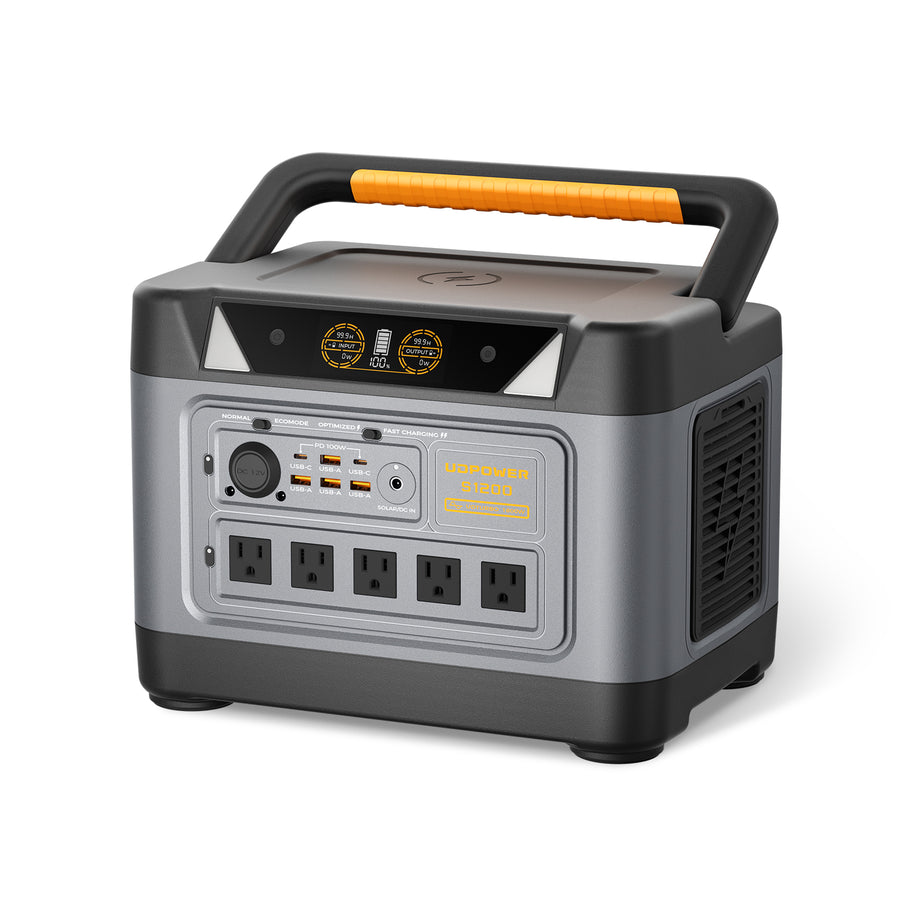
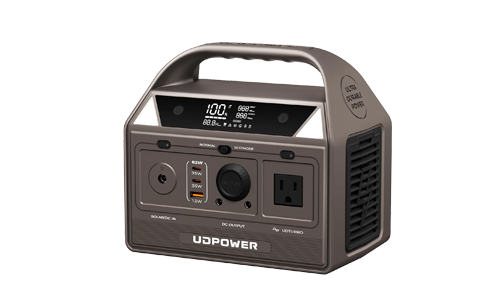
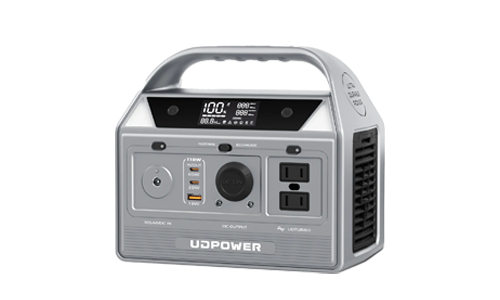
UDPOWER S1200: Best Balance for Weekend Off-Road Trips
The S1200 is a practical fit for one- to three-night vehicle-based trips that include a portable refrigerator, phones, lights, navigation, camera equipment, radios, laptops, or a small fan.
- Battery capacity: 1,190Wh
- Rated AC output: 1,200W pure sine wave
- UDTURBO output support: Up to 1,800W
- Estimated usable AC energy: About 1,071Wh at 90% efficiency
- Weight: Approximately 26 lb
- Solar input: Up to 400W
- AC outlets: Five on the current gray version
- USB-C: Two ports with up to 100W output support
- Additional outputs: USB-A, DC5521, 12V car outlet, and wireless charging
- Battery chemistry: LiFePO4
- UPS response: 10ms or less
Best for: Weekend trail trips, family car camping, fridge-based camps, photographers, drone users, and travelers who want substantial capacity without carrying a 40-pound power station.
View the UDPOWER S1200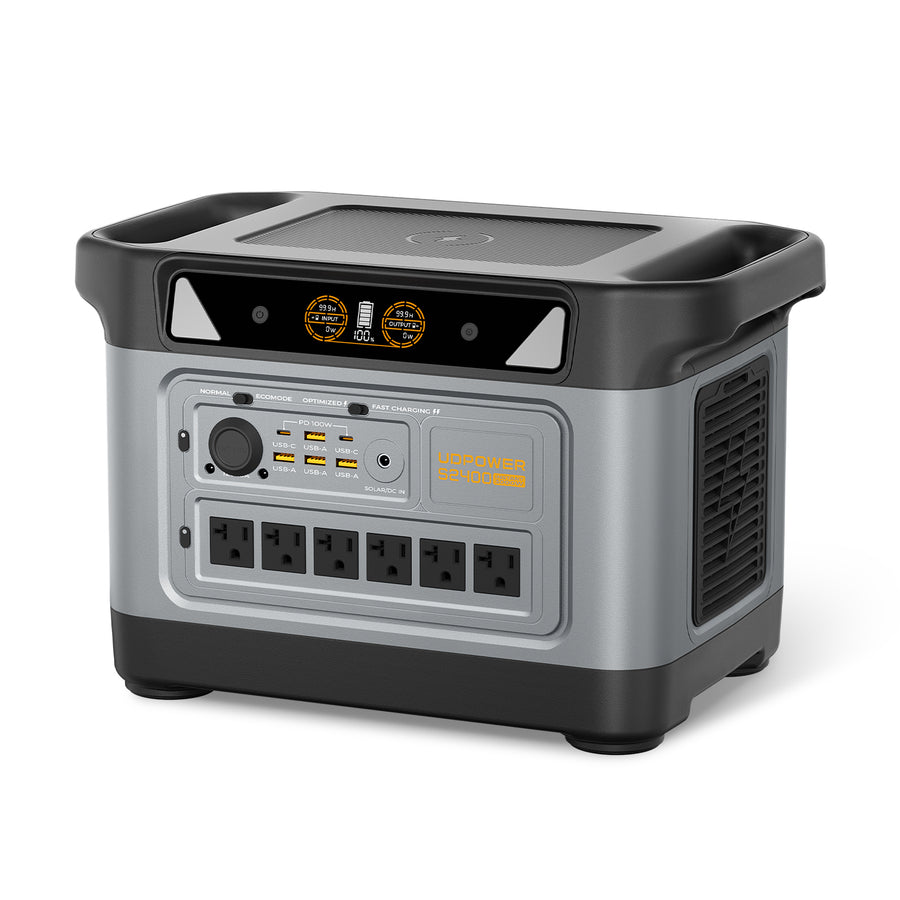
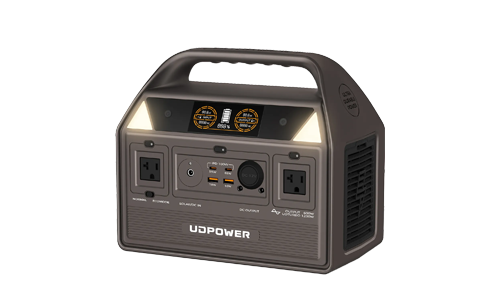
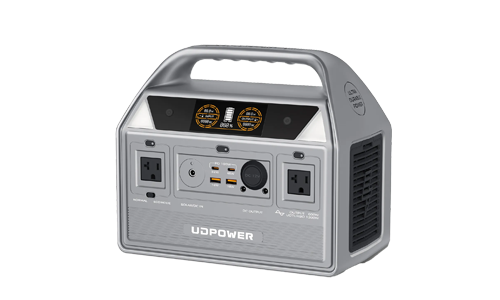
UDPOWER S2400: Best for Multi-Day Off-Road Basecamps
The S2400 is better suited to multi-day trips, larger groups, high daily refrigerator use, multiple camera or drone batteries, laptops, communications equipment, and short-use camp appliances that require more output.
- Battery capacity: 2,083Wh
- Rated AC output: 2,400W pure sine wave
- UDTURBO surge support: Up to 3,000W
- Estimated usable AC energy: About 1,875Wh at 90% efficiency
- Weight: Approximately 40.8 lb
- Solar input: Up to 400W
- AC outlets: Six
- Total output connections: Up to 16
- USB-C: Two ports with up to 100W output
- Additional outputs: USB-A, DC5521, 12V car outlet, and wireless charging
- Battery chemistry: LiFePO4
- UPS response: 10ms or less
Best for: Multi-day basecamps, group trips, extended refrigerator use, content-production equipment, CPAP plus refrigerator setups, and higher-wattage campsite equipment within the unit’s output limits.
View the UDPOWER S2400UDPOWER S1200 vs. S2400 for Off-Road Travel
| Specification | UDPOWER S1200 | UDPOWER S2400 | What It Means on a Trip |
|---|---|---|---|
| Battery capacity | 1,190Wh | 2,083Wh | S2400 provides more reserve for longer trips and heavier daily use. |
| Estimated usable AC energy | About 1,071Wh | About 1,875Wh | Calculated at 90% conversion efficiency for planning. |
| Rated output | 1,200W | 2,400W | S2400 supports more equipment at once and higher-wattage appliances. |
| UDTURBO support | Up to 1,800W | Up to 3,000W | Compatibility still depends on the equipment’s running and startup requirements. |
| Weight | About 26 lb | About 40.8 lb | S1200 is easier to move between a vehicle and campsite. |
| Maximum solar input | Up to 400W | Up to 400W | The same solar wattage replaces a larger percentage of the S1200 battery. |
| AC outlets | Five | Six | S2400 provides more connections for a shared basecamp. |
| Recommended trip style | Weekend trips and moderate power use | Multi-day basecamps and high daily energy use | Choose by overnight loads and daily recharge opportunities. |
| Official product page | View S1200 | View S2400 | Check current bundle availability and detailed input limits before ordering. |
For more models, visit the UDPOWER portable power station collection. Travelers who expect several days without shore power can also compare UDPOWER solar generator kits and foldable solar panels.
Responsible Off-Roading Protects Future Trail Access
Trail access is not guaranteed forever. Routes can be restricted or closed when repeated use creates erosion, habitat damage, safety problems, conflicts with other visitors, or unmanaged user-created tracks.
Responsible off-roading is therefore not separate from the experience. It is what makes future trips possible.
Follow the five T.R.E.A.D. principles
- Travel responsibly: Use routes open to your vehicle type and follow posted restrictions.
- Respect the rights of others: Slow near campers, hikers, horses, cyclists, homes, and other trail users.
- Educate yourself: Check maps, permits, seasonal rules, fire restrictions, and local vehicle requirements.
- Avoid sensitive areas: Protect wetlands, vegetation, wildlife areas, cultural sites, and unstable soils.
- Do your part: Pack out trash, report serious hazards, join trail cleanups, and leave gates as directed.
Stay on the route even when an obstacle is inconvenient
Driving around mud, rocks, or ruts can widen a trail and create several parallel tracks. Where safe and within the vehicle’s ability, use the established route rather than creating a new bypass. When the obstacle is beyond your vehicle or experience, turn around instead of cutting across nearby land.
Avoid unnecessary wheelspin
Wheelspin is often a sign that the current approach is not working. It digs holes, throws soil, damages the route, overheats components, and can move the vehicle sideways. Stop, reassess the line, reduce the obstacle, use an appropriate traction aid, or retreat.
Do not assume an open gate means open motorized access
Gates may be open for livestock, property access, fire crews, or administrative use. Confirm motorized access using official maps and signs rather than relying only on the physical gate position.
Learn more from the Tread Lightly! T.R.E.A.D. Principles.
Common Beginner Off-Roading Mistakes
| Mistake | What Can Happen | Better Approach |
|---|---|---|
| Choosing a trail from a highlight video | The video may hide bypasses, recoveries, damage, weather, or modifications. | Use official route data and recent reports from drivers with comparable vehicles. |
| Following GPS blindly | Navigation may route the vehicle onto closed, seasonal, abandoned, or unsuitable roads. | Compare navigation with official land-management maps. |
| Driving alone on the first trip | A minor breakdown can leave the driver without transportation or recovery help. | Join an experienced group or bring a second capable vehicle. |
| Going too fast | Hidden rocks, washouts, animals, and oncoming vehicles appear too late. | Drive slowly enough to stop within the visible route. |
| Not walking an obstacle | The driver misses holes, underbody hazards, exits, and safer lines. | Stop in a safe place and inspect anything uncertain on foot. |
| Carrying straps without rated recovery points | An unsuitable attachment point may fail under load. | Identify manufacturer-approved or professionally installed recovery points first. |
| Airing down without a compressor | The vehicle returns to pavement with unsafe tire pressure. | Carry a working compressor and pressure gauge before changing pressure. |
| Ignoring vehicle weight | Heavy roof loads and cargo change braking, body roll, clearance, and rollover behavior. | Pack low, secure cargo, and stay within vehicle weight ratings. |
| Planning to arrive after dark | Navigation, obstacle inspection, and campsite setup become harder. | Build enough schedule margin to reach the destination in daylight. |
| Depending entirely on solar charging | Clouds, trees, heat, dust, or poor panel placement may reduce charging. | Begin with enough stored capacity for critical overnight equipment. |
| Refusing to turn around | A manageable trip becomes a recovery, breakdown, or overnight emergency. | Treat turning around as a normal off-road decision, not a failure. |
Related UDPOWER Guides for Off-Road and Remote Travel
Use these guides to plan the camping and power side of an off-road trip:
Frequently Asked Questions About Off-Roading
Is driving on a dirt road considered off-roading?
It can be. A smooth, maintained dirt road is often described as light off-roading or soft-roading. A dirt route clearly becomes off-road driving when traction, clearance, ruts, rocks, slopes, or wheel placement begin to affect safe progress.
Do you need four-wheel drive to go off-roading?
Not for every route. Some maintained gravel roads and mild dry trails can be driven by two-wheel-drive or AWD vehicles with adequate clearance. Four-wheel drive, and especially low-range gearing, becomes more important on steep, loose, rocky, muddy, or deeply rutted terrain.
Can a stock SUV go off-road?
Many stock SUVs can travel easy or moderate routes when the trail is suitable for their tires, clearance, drive system, and recovery options. Check the route rating and vehicle manual rather than assuming every SUV is designed for technical terrain.
Is AWD the same as 4WD off-road?
No. AWD systems generally distribute power automatically and are useful on changing surfaces, snow, gravel, and mild trails. Traditional 4WD systems may provide low-range gearing, stronger torque multiplication, and additional control for technical terrain. System designs vary, so consult the vehicle manual.
What does OHV mean?
OHV means off-highway vehicle. The term may include ATVs, UTVs, dirt bikes, four-wheel-drive vehicles, and other motorized vehicles used on designated off-highway roads, trails, or areas. The exact legal definition can vary by agency and state.
Is off-roading legal on public land?
Only where motorized use is permitted. Public land may be classified as open, limited, or closed to off-highway vehicles. Routes can also have seasonal closures, permit rules, width restrictions, or vehicle-class requirements. Always check the responsible agency’s current map and notices.
Is overlanding the same as off-roading?
No. Off-roading focuses on traveling across unpaved or technically difficult terrain. Overlanding focuses on vehicle-supported travel, camping, exploration, and self-sufficiency. An overland trip may include off-road trails, but difficult obstacles are not required.
What is the first off-road equipment a beginner should buy?
Start with equipment that addresses the most likely problems: a suitable spare tire, jack, basic tools, tire gauge, air compressor if adjusting tire pressure, first-aid kit, offline navigation, lighting, water, communication, and vehicle-compatible recovery equipment. Confirm rated recovery points before using straps or ropes.
Should beginners go off-roading alone?
It is safer to travel with another vehicle or an experienced group, especially outside cellular coverage. Solo travel increases the consequences of tire damage, mechanical failure, getting stuck, injury, navigation errors, and weather changes.
What makes an off-road trail dangerous?
Risk increases with steep slopes, loose surfaces, deep ruts, rocks, water, snow, ice, narrow shelf roads, poor visibility, extreme temperatures, long distances from help, limited turnaround space, and a mismatch between the route and the vehicle or driver.
Does off-roading damage the environment?
It can when vehicles leave designated routes, spin tires excessively, cross sensitive areas, create unauthorized bypasses, or travel during damaging wet conditions. Staying on open routes, respecting closures, minimizing wheelspin, and packing out waste greatly reduces impact.
What size portable power station is useful for off-roading?
For phones, lights, radios, cameras, and short trips, a small or mid-size station may be enough. Trips involving a 12V refrigerator, laptop, fan, drone batteries, CPAP, or several people may benefit from a 1,000Wh-class unit such as the UDPOWER S1200. Multi-day basecamps with heavier daily energy use may be better matched to the 2,083Wh UDPOWER S2400.
Can a portable power station be left outside at an off-road campsite?
It should be kept dry, shaded, ventilated, and protected from dust, direct heat, rain, standing water, and vehicle traffic. Do not place it in a sealed container while operating, and do not block the cooling vents.
Final Takeaway
Off-roading is more than driving away from pavement. It is a form of outdoor travel in which terrain, vehicle capability, planning, and driver judgment shape the journey.
Its popularity comes from a rare combination: access to remote places, a clear path for developing skills, practical vehicle knowledge, community support, and enough uncertainty to make every route feel different.
The best way to begin is not with the most difficult trail or the most expensive modification. Start with a legal, well-documented route, a sound vehicle, another experienced driver, realistic recovery preparation, and enough time to turn around before conditions exceed your margin.
Plan Power for Your Next Off-Road Trip
Compare battery capacity, output, weight, ports, solar charging, and recommended use cases before choosing a portable power station for your vehicle or basecamp.
View Portable Power Stations Get the Product Selection Guide View Solar Generator KitsAlways verify device wattage, charging-input limits, trail regulations, weather, and current route conditions before departure.
Related Articles


