

Which Appliances Use the Most Electricity?
Quick Answer: Heating and Cooling Are Usually the Real Energy Drainers
In most U.S. homes, the biggest electricity drainers are central air conditioning, electric resistance heating, electric water heaters, clothes dryers, electric ovens, hot tubs, pool pumps, and older refrigerators or freezers.
But the answer changes when you are using battery backup. A refrigerator can add up over an entire month because it runs every day, while a 1,500-watt space heater can drain a portable power station in roughly an hour. That makes the heater a much more serious battery drainer, even when it is not the largest item on the monthly utility bill.
The simplest rule is this: appliances that create heat, move heat, cool large spaces, heat water, or run for many hours deserve your attention first. Small chargers and LED lights matter far less than an electric heater, old HVAC system, pool pump, or second refrigerator in a hot garage.

What Makes an Appliance a Real Energy Drainer?
Wattage matters, but it is only one part of the answer. To understand whether an appliance is truly expensive to run, look at four numbers.
Running watts
Running watts show how much power the appliance pulls while operating. Electric heaters, hair dryers, kettles, microwaves, ovens, and dryers often have high running wattage because they must create heat quickly.
Hours of use
A 1,500-watt hair dryer may be used for only ten minutes. A 100-watt device left on all day can use more electricity over time. This is why a modest refrigerator, dehumidifier, pool pump, aquarium heater, or entertainment system can quietly increase a monthly bill.
Duty cycle
Refrigerators, air conditioners, dehumidifiers, sump pumps, and freezers cycle on and off. Their nameplate wattage does not mean they consume that amount every minute of the day. For these appliances, a 24-hour kilowatt-hour measurement is more useful than one instant watt reading.
Startup surge
Appliances with compressors and motors may briefly need more power when starting than they use while running. Startup surge may not add much to the utility bill, but it can determine whether a portable power station can start the appliance successfully.
Monthly energy use:
Watts × hours used per day × days used per month ÷ 1,000 = monthly kWh
Estimated energy charge:
Monthly kWh × electricity rate = estimated electricity cost
The cost examples in this guide use $0.1883 per kWh, the U.S. residential average for April 2026 in the latest available U.S. Energy Information Administration electricity data available when this article was updated. Your utility rate, fixed charges, taxes, and time-of-use pricing may produce a different result.
Which Appliances Use the Most Electricity?
There is no universal ranking for every house. A home with electric resistance heat in Minnesota has a different energy profile from a gas-heated home with heavy air-conditioning use in Arizona. Still, the following appliances are the most common candidates.
| Rank | Appliance or system | Why it drains energy | Monthly-bill risk | Portable battery reality | Data reference |
|---|---|---|---|---|---|
| 1 | Central air conditioning or electric home heating | Large equipment, long seasonal runtime, and high demand during extreme weather. | Very high | Standard central systems are usually not practical portable power station loads. | Seattle City Light |
| 2 | Electric water heater | Repeatedly heats a large tank of water and replaces heat lost during storage. | Very high | Common units are high-wattage, hardwired 240V appliances and are not normal portable battery loads. | Silicon Valley Power |
| 3 | Portable space heater | Electric resistance heat creates a large, continuous load, commonly around 1,500W on high. | High when used for several hours | One of the fastest ways to drain a portable power station. | Otter Tail Power |
| 4 | Electric clothes dryer | Combines a heating element with a tumbling motor for an extended cycle. | High in homes with frequent laundry | Most full-size electric dryers use 240V and are not suitable for standard portable stations. | Silicon Valley Power |
| 5 | Electric oven or range | Maintains high temperatures inside a large cooking chamber. | Moderate to high | A full-size range is generally unsuitable; short microwave or small-appliance use is more realistic. | Silicon Valley Power |
| 6 | Hot tub or spa | Heats and maintains a large volume of water, often outdoors where heat escapes faster. | High | Not an outage priority and generally not a sensible battery-powered load. | Silicon Valley Power |
| 7 | Pool pump | A moderate-to-high motor load that may run for many hours each day. | High during pool season | Possible with some systems, but it can consume energy needed for household essentials. | Silicon Valley Power |
| 8 | Old refrigerator or second freezer | Runs every day, may have worn seals, and often works harder in a hot garage. | Moderate but persistent | A valuable backup load because it protects food, provided startup surge is supported. | ENERGY STAR |
| 9 | Dehumidifier | Uses a compressor and may run for hours in a damp basement, garage, or coastal home. | Moderate to high | Can shorten battery runtime quickly if operated continuously. | Otter Tail Power |
| 10 | Entertainment and computer setup | A TV, console, receiver, speakers, desktop computer, and monitors can remain on for many hours. | Low to moderate individually | Easy to power, but extended entertainment use can take energy away from essentials. | Silicon Valley Power |
A useful comparison: a 1,500W space heater running for ten minutes uses about 0.25kWh. A 50W fan can run for five hours on the same amount of energy. Both may improve comfort, but they create very different utility-bill and backup-power demands.
How Much Can Common Energy Drainers Cost Per Month?
The table below is not a prediction of your bill. It shows how wattage and runtime combine under specific example schedules. Cost calculations use $0.1883 per kWh.
| Appliance | Example usage assumption | Estimated monthly use | Estimated energy charge | What changes the result | Source |
|---|---|---|---|---|---|
| 3-ton central A/C example | 3.0kWh per operating hour, 8 hours per day | 720kWh | $135.58 | Climate, insulation, thermostat, SEER rating, humidity, and compressor cycle time | Appliance energy chart |
| Electric water heater | Utility planning range of 380–500kWh per month | 380–500kWh | $71.55–$94.15 | Household size, shower length, tank losses, water temperature, and equipment type | Water-heating data |
| 1,500W space heater | 6 hours per day | 270kWh | $50.84 | Thermostat cycling, room insulation, heater setting, and outdoor temperature | Portable heater data |
| Pool filter pump | 1.12kWh per hour, 8 hours per day | 268.8kWh | $50.62 | Pump size, speed, filter condition, pool volume, and operating schedule | Pool-pump data |
| Electric oven | 2.3kWh per hour, 1 hour per day | 69kWh | $12.99 | Preheating, temperature, cooking time, oven size, and door opening | Cooking data |
| Electric clothes dryer | 2.5–4kWh per load, 5 loads per week | About 54–87kWh | $10.20–$16.32 | Load size, fabric type, spin speed, sensor-dry use, vent condition, and overdrying | Laundry data |
| Older refrigerator example | Utility example of 72kWh per month | 72kWh | $13.56 | Age, door seals, coils, garage heat, ice maker, size, and door opening | Refrigerator data |
| Efficient refrigerator examples | Utility examples of 28–63kWh per month | 28–63kWh | $5.27–$11.86 | Capacity, freezer position, ice maker, door design, room temperature, and model efficiency | ENERGY STAR refrigerator examples |
| 120W television | 5 hours per day | 18kWh | $3.39 | Screen size, brightness, picture mode, connected devices, and daily viewing time | Television data |
| 1,500W hair dryer | 10 minutes per day | 7.5kWh | $1.41 | Heat setting, airflow setting, and daily use time | Bathroom appliance data |
Estimates cover electricity consumption only. Utility bills may also include fixed customer charges, demand charges, fuel adjustments, local taxes, and different peak or off-peak rates.
Bill Drainers and Battery Drainers Are Not Always the Same
This distinction is one of the most important parts of backup-power planning. Your electric bill measures total kilowatt-hours accumulated over days and weeks. A portable power station must also handle the appliance's immediate wattage and startup surge.
| Energy profile | Common examples | Effect on monthly bill | Effect on portable battery | Best response |
|---|---|---|---|---|
| High watts and long runtime | Space heating, central A/C, electric water heating, pool heating | Very high | Extremely fast drain or not compatible | Reduce runtime, improve efficiency, or use a system designed for whole-home loads. |
| High watts and short runtime | Microwave, kettle, coffee maker, toaster, hair dryer | Often moderate | Fast drain while operating | Use in short bursts and confirm rated output before plugging in. |
| Low watts and long runtime | Wi-Fi router, aquarium equipment, security system, electronics | Can accumulate quietly | Usually manageable | Control unnecessary runtime and disable unused standby features. |
| Cycling compressor load | Refrigerator, freezer, dehumidifier, room A/C | Depends on duty cycle | Runtime is often good, but startup surge matters | Measure energy over 24 hours and verify surge compatibility. |
| Low visible use with standby draw | Smart TV, console, cable box, printer, audio system | Small individually but larger across many devices | Unnecessary drain during an outage | Use switched power strips and shut down devices that are not needed. |
Do not confuse surge power with continuous power. A portable power station's surge capability helps with brief motor startup demand. It does not automatically mean the unit can operate an appliance above its continuous rated output for an extended period.
Is a Refrigerator the Biggest Energy Drainer?
Usually not. A refrigerator matters because it operates around the clock, but a modern efficient model may consume much less electricity than electric heating, central cooling, water heating, clothes drying, or a pool pump.
Refrigerators become more serious energy drainers when they are old, oversized, poorly ventilated, frequently opened, fitted with damaged door gaskets, or kept in a hot garage. A second refrigerator or freezer that contains only a few items can be an especially easy source of avoidable energy use.
| Refrigerator example | Example monthly use | Cost at $0.1883/kWh | Practical interpretation |
|---|---|---|---|
| Older 15-cu.-ft. refrigerator example | 72kWh | $13.56 | An older unit can cost more to operate, especially in a warm garage. |
| 14-cu.-ft. ENERGY STAR top-freezer example | 28kWh | $5.27 | A basic efficient design can use surprisingly little electricity. |
| 19-cu.-ft. ENERGY STAR top-freezer example | 39kWh | $7.34 | A useful planning range for a standard efficient refrigerator. |
| 25-cu.-ft. ENERGY STAR side-by-side example | 63kWh | $11.86 | Larger capacity and additional features can increase energy use. |
The example energy figures above come from Silicon Valley Power's appliance energy chart. For model-specific shopping data, compare annual kilowatt-hours on the yellow EnergyGuide label or search the ENERGY STAR refrigerator database.
During an outage, the refrigerator remains one of the best appliances to prioritize because it protects food. For a refrigerator-specific sizing example, read How Long Will a 2000W Power Station Run a Refrigerator?
How to Find the Real Energy Drainer in Your Home
Internet wattage charts are useful for planning, but your own appliance, climate, settings, and schedule determine the real answer.
Check the EnergyGuide label
Refrigerators, freezers, dishwashers, water heaters, air conditioners, and many major appliances include an estimated annual kilowatt-hour figure. Compare annual kWh rather than relying only on the estimated dollar amount, because electricity prices change.
Read the appliance nameplate
Look for watts, volts, and amps. When watts are not listed, a basic estimate is volts × amps = watts. Treat the result as a maximum or planning figure unless you measure the appliance during real use.
Measure 120V plug-in appliances
A plug-in electricity monitor can measure watts and accumulated kilowatt-hours for a refrigerator, freezer, television, computer, dehumidifier, or other standard plug-in load. For cycling appliances, leave the monitor connected for at least 24 hours. Several days will provide a better picture when weather or usage changes.
Use circuit or whole-home data for large appliances
A basic plug-in meter cannot measure hardwired or 240V appliances such as many central air conditioners, electric dryers, water heaters, or ranges. Use utility interval data, a compatible home energy monitor, or a qualified professional when circuit-level measurement is needed.
Run a one-appliance test
Compare similar days and temporarily change one major load at a time. For example, shorten pool-pump runtime, stop using a garage refrigerator, or reduce space-heater use. A clear change in daily utility data is more useful than guessing.
The U.S. Department of Energy provides additional guidance on EnergyGuide labels, plug-in monitors, nameplate wattage, phantom loads, and calculation methods in its appliance energy-use guide.
How Fast Do Common Appliances Drain a Portable Power Station?
Battery capacity and inverter output answer different questions:
- Watt-hours determine approximate runtime.
- Rated watts determine which loads can operate continuously.
- Surge capability helps start compressors and motors.
- Outlet voltage and plug type determine physical compatibility.
The estimates below use 90% usable energy after typical AC conversion losses:
- UDPOWER S1200 planning energy: 1,190Wh × 90% = approximately 1,071Wh.
- UDPOWER S2400 planning energy: 2,083Wh × 90% = approximately 1,875Wh.
| Appliance | Planning load | S1200 estimate | S2400 estimate | Important limitation |
|---|---|---|---|---|
| Wi-Fi router | 10W | About 107 hours | About 187 hours | Actual routers and modems may need to be counted separately. |
| CPAP | 40W | About 27 hours | About 47 hours | Humidifier and heated hose settings can substantially increase consumption. |
| Portable fan | 50W | About 21 hours | About 37 hours | Fan speed and motor design affect the actual draw. |
| Laptop | 60W | About 18 hours | About 31 hours | The laptop may draw less after its internal battery is charged. |
| Full-size refrigerator | 80W average | About 13 hours | About 23 hours | Compressor startup surge and actual 24-hour average consumption matter. |
| Television | 100W | About 11 hours | About 19 hours | Sound systems, streaming devices, and consoles must be added separately. |
| Coffee maker | 1,000W | About 64 minutes continuously | About 112 minutes continuously | A normal brew cycle is much shorter than the continuous-runtime figure. |
| Microwave | 1,200W input example | About 54 minutes with no output headroom | About 94 minutes continuously | Many “1,000W” microwaves refer to cooking output and may draw more from the outlet. |
| Space heater | 1,500W | Not within the 1,200W continuous rating | About 75 minutes continuously | Even when compatible, resistance heating is an inefficient use of limited backup energy. |
Runtime estimates are planning figures, not guarantees. Temperature, battery condition, appliance cycling, startup surge, ECO settings, inverter standby consumption, and combined loads can change actual results.
What happens when several appliances run together?
| Backup plan | Example combined load | S1200 estimate | S2400 estimate | Practical takeaway |
|---|---|---|---|---|
| Essential overnight setup | 80W fridge average + 40W CPAP + 10W router + 20W LED lighting = 150W | About 7.1 hours | About 12.5 hours | A realistic essential-load plan, subject to refrigerator surge and CPAP settings. |
| Basic workday setup | 80W fridge average + 10W router + 60W laptop + 50W fan = 200W | About 5.4 hours | About 9.4 hours | Reduce screen brightness and unnecessary loads to extend runtime. |
| Short meal window | 1,200W microwave + 80W fridge average + 10W router = 1,290W | Above continuous rated output | About 1.45 hours if operated continuously | A real meal uses only a few minutes, but simultaneous wattage still matters. |
| Space-heater setup | 1,500W heater + 80W fridge average + 10W router = 1,590W | Above continuous rated output | About 1.18 hours | This demonstrates why electric heating is a poor battery-backup strategy. |
For a deeper explanation of watt-hours, conversion losses, and combined loads, see Battery Runtime Basics: Watts to Watt-Hours and Real-World Efficiency .
UDPOWER Backup Power Recommendations
A portable power station should not be selected around the largest electrical load in your house. It should be selected around the appliances that provide the most value during an outage: food preservation, medical support, communication, lighting, airflow, and basic work or cooking needs.
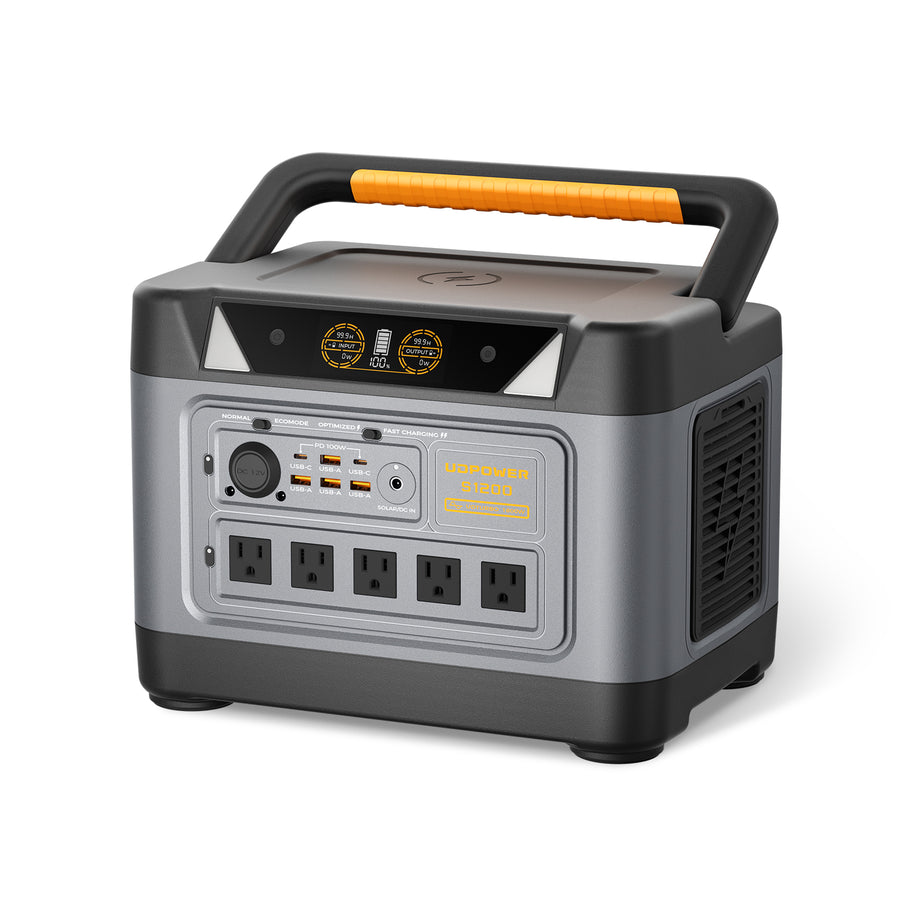
UDPOWER S1200: Best for Core Home Essentials
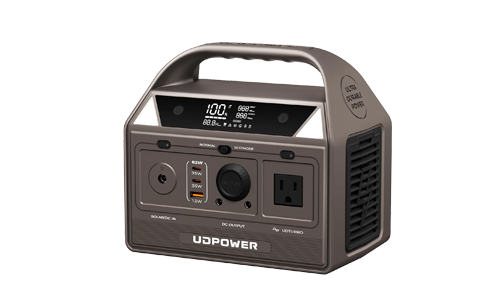
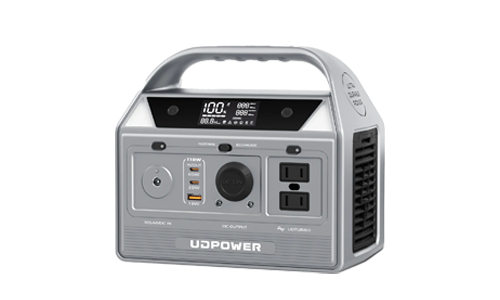
The S1200 is a practical option for a refrigerator, CPAP, modem and router, phones, laptop, LED lighting, fan, television, and other essential 120V loads during short outages.
- Battery capacity: 1,190Wh LiFePO4
- Continuous AC output: 1,200W pure sine wave
- Surge support: UDTURBO up to 1,800W for brief higher-startup demand
- Charging: approximately 1.5 hours under the stated fast-charging conditions
- Battery life: 4,000+ cycles
- Outputs: 5 AC outlets and 10 DC outputs on the current 5-AC version
- UPS switchover: less than 10ms
- Weight: approximately 26.0 lbs
The 1,800W UDTURBO figure is not the continuous output rating. Size normal continuous loads against the 1,200W rated output and leave reasonable operating headroom.
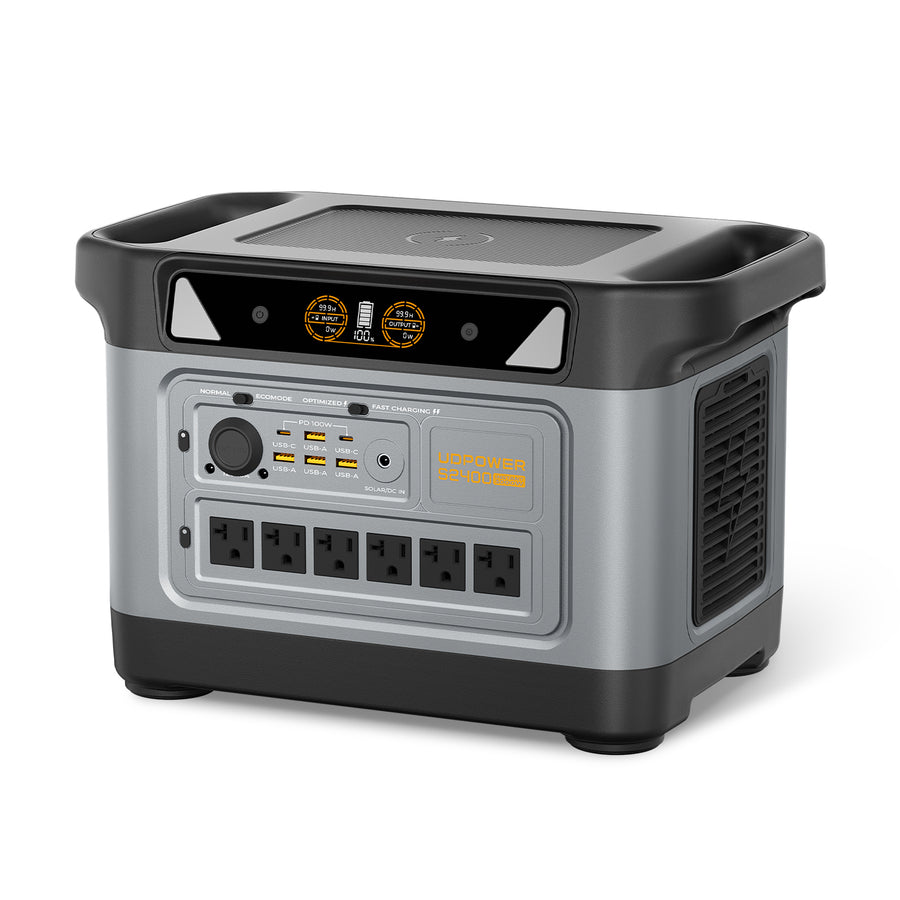
UDPOWER S2400: Best for Longer Runtime and Heavier 120V Loads
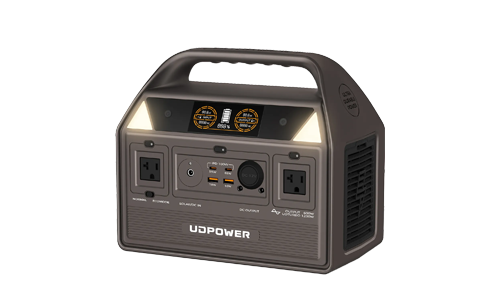
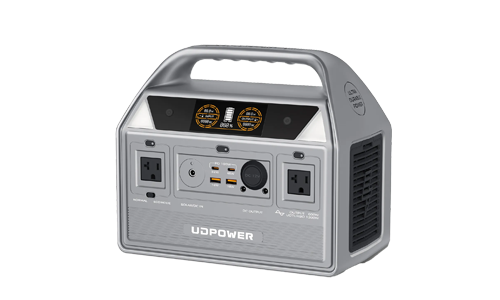
The S2400 provides more capacity and output headroom for a full-size refrigerator, freezer, CPAP, communications, lighting, fans, computers, television, coffee maker, microwave, and multiple essential devices. It is better suited to longer outages and higher combined loads than a smaller station.
- Battery capacity: 2,083Wh LiFePO4
- Continuous AC output: 2,400W pure sine wave
- Surge support: UDTURBO up to 3,000W for brief motor startup demand
- Charging: approximately 1.5 hours under the stated fast-charging conditions
- Battery life: 4,000+ cycles
- Outputs: 6 AC outlets and 10 DC outputs
- Solar input: up to 400W
- UPS switchover: less than 10ms
- Weight: approximately 40.8 lbs
More wattage does not turn a portable station into a whole-home electrical system. Standard electric dryers, central air conditioners, water heaters, ranges, and other hardwired 240V appliances are generally outside its intended use.
Still deciding? Browse the complete UDPOWER portable power station collection, compare the larger models in the UDPOWER S-Series, or view options selected for home backup.
How to Cut Appliance Energy Waste Without Making Life Miserable
The best strategy is not to unplug everything in sight. Start with the equipment that uses the most energy and the habits that repeat most often.
| Energy area | Start today | Maintenance step | Consider when replacing equipment |
|---|---|---|---|
| Heating and cooling | Close blinds during peak sun, use fans strategically, and avoid conditioning unused rooms. | Replace filters, clear vents, inspect ductwork, and address obvious air leaks. | Correctly sized high-efficiency HVAC or heat-pump equipment. |
| Water heating | Shorten unnecessary hot-water use and fix dripping hot-water fixtures. | Check for leaks, sediment, damaged insulation, and incorrect control settings. | An efficient heat-pump water heater where the home and climate are suitable. |
| Laundry | Wash full loads, use cold water when appropriate, and avoid overdrying. | Clean the lint filter after each load and keep the vent path clear. | A sensor-equipped efficient dryer or heat-pump dryer. |
| Refrigeration | Limit long door openings and avoid keeping an unnecessary second unit running. | Clean accessible coils, inspect gaskets, and leave the required ventilation space. | An appropriately sized ENERGY STAR model with a lower annual kWh rating. |
| Cooking | Use a microwave, toaster oven, air fryer, or induction appliance for appropriately sized meals. | Keep seals and cooking surfaces clean and avoid repeated full-oven preheating. | An efficient cooking appliance matched to your actual habits. |
| Pool and humidity control | Review schedules instead of allowing equipment to run automatically for excessive periods. | Clean filters and confirm that sensors and humidity controls are accurate. | A variable-speed pool pump or efficient dehumidifier. |
| Standby electronics | Turn off unused instant-on, listening, remote-access, and keep-warm features. | Group related electronics on a switched power strip where safe and practical. | Products with low standby consumption and clear energy-management controls. |
| Outage planning | Write down the watts for your refrigerator, medical devices, router, lights, and fan. | Test your backup equipment before storm season and recharge it after use. | A power station sized for essential loads, surge demand, and required runtime. |
The biggest savings usually come from fixing one large recurring load—not from eliminating every small comfort. Start with electric heating, cooling, water heating, pool equipment, old refrigeration, and appliances that run longer than expected.
Frequently Asked Questions
Which appliance uses the most electricity in a typical home?
Heating and cooling equipment is often the largest energy user, especially in homes with electric heat or heavy summer air-conditioning demand. Electric water heating is another major load. The exact ranking depends on climate, fuel type, insulation, equipment efficiency, and household habits.
Is a refrigerator the biggest energy drainer?
Usually no. A refrigerator runs every day, but a modern efficient model may use much less energy than central cooling, electric heating, water heating, a clothes dryer, or a pool pump. Old refrigerators and garage units can be considerably less efficient.
Why do electric heaters use so much electricity?
Electric resistance heaters convert electricity directly into heat and commonly draw around 1,500W on their highest setting. Because the load remains high for as long as the heater is operating, several hours of daily use can add hundreds of kilowatt-hours to a monthly total.
What appliance drains a portable power station the fastest?
High-wattage heating appliances are among the fastest battery drainers. Space heaters, hair dryers, kettles, coffee makers, microwaves, hot plates, and toaster ovens can consume energy much faster than a router, laptop, CPAP, fan, or LED light.
Can a 1200W power station run a 1500W space heater?
A 1,500W heater is above a 1,200W continuous output rating and should not be treated as a normal compatible load. A surge rating is intended for brief startup demand and is not a substitute for sufficient continuous output.
Can the UDPOWER S2400 run an electric dryer or central air conditioner?
Standard electric dryers, central air conditioners, water heaters, and ranges commonly use hardwired 240V circuits and may require much more power than a portable 120V station provides. The S2400 is intended for compatible plug-in appliances and essential backup loads, not whole-home 240V equipment.
How do I calculate what an appliance costs to run?
Multiply the appliance's watts by the number of hours used, divide by 1,000 to obtain kilowatt-hours, and multiply the result by your electricity rate. For cycling appliances, use measured kilowatt-hours over a full day instead of assuming the nameplate wattage runs continuously.
How should I measure a refrigerator's electricity use?
Connect it to a compatible plug-in electricity monitor and leave the monitor in place for at least 24 hours. A multi-day test is better because room temperature, door opening, food loading, defrost cycles, and ice-maker activity can change the result.
Do appliances use electricity when turned off?
Many connected appliances continue drawing a small standby load for clocks, remote controls, network connections, instant-on features, sensors, and updates. The individual load may be small, but multiple always-connected devices can add up.
What appliances should I power first during an outage?
Start with medical equipment, refrigerator or freezer, modem and router, phones, LED lighting, and basic airflow. Add laptops, televisions, or short cooking loads only after confirming that enough capacity and output headroom remain.
Is battery capacity or output wattage more important?
Both matter. Output wattage determines whether the power station can operate the appliance. Battery capacity determines approximately how long it can operate that load. Startup surge, voltage, outlet type, and combined wattage must also be checked.
Build a Backup Plan Around Essentials, Not Energy Drainers
Instead of trying to power every appliance in the house, list the devices that protect food, health, communication, and basic comfort. Add their simultaneous wattage, check startup surge, and choose enough battery capacity for the number of hours you actually need.
View All Portable Power Stations View Home Backup Options Get the Runtime Planning GuideRelated Articles


