What Can a 1500W Portable Power Station Run?
ZacharyWilliamA practical guide to what a 1500W portable power station can run at home, at a campsite, in an RV, and during a power outage — with real device examples, runtime math, and clear limits.

Quick Answer: What Can a 1500W Portable Power Station Run?
A 1500W portable power station can run most small and medium household devices, including a refrigerator, TV, Wi-Fi router, CPAP machine, laptop, lights, fan, coffee maker, small microwave, toaster, camping fridge, air pump, camera charger, and many small power tools.
The catch is that 1500W is the output limit, not the runtime promise. It tells you how much power the inverter can supply at one moment. Battery capacity, measured in watt-hours, decides how long your devices will run.
- Best fit: fridge backup, router, CPAP, lights, fan, TV, laptop, camping fridge, coffee maker, and short microwave use.
- Use alone: microwave, kettle, toaster, coffee maker, hair dryer, space heater, induction cooktop, or any load close to 1500W.
- Usually not a good fit: central AC, electric dryer, electric oven, whole-house heating, large well pump, or meaningful EV charging.
What 1500W Really Means
When shoppers ask, “What can a 1500W portable power station run?”, they usually mean three different things at once: whether the appliance can start, whether it can keep running, and how long the battery will last.
1. Continuous output
A 1500W power station can supply up to 1500 watts of AC power continuously, as long as the device does not exceed the station’s limit. For example, a 100W TV is easy. A 1200W coffee maker may work, but it should usually run by itself. A 1600W appliance is over the limit.
2. Startup surge
Refrigerators, freezers, pumps, air conditioners, and some tools may need a short burst of extra power when they start. That startup surge can be much higher than the normal running watts. This is why a refrigerator that averages 80W can still be more demanding than a simple 80W light.
3. Battery capacity
Watts tell you whether a device can run. Watt-hours tell you how long it can run. A 1500W station with a 1000Wh battery and a 1500W station with a 2000Wh battery may power the same appliance, but the larger battery can keep it running much longer.
For simple planning, use 85% usable efficiency for AC loads. Real results vary based on inverter loss, battery reserve, temperature, battery age, and whether the appliance cycles on and off.
What Can a 1500W Portable Power Station Run?
The table below gives practical wattage ranges for common devices. These are planning ranges, not guarantees. Always check your own appliance label before plugging in high-draw equipment.
Mobile tip: swipe the table sideways to see all columns.
| Device or Appliance | Typical Running Watts | Can a 1500W Station Run It? | Best Use | What to Watch |
|---|---|---|---|---|
| Phone charging | 5–20W | Yes | Daily charging, emergency communication, camping | Use USB-C or USB-A when possible to reduce AC inverter loss. |
| Laptop | 45–100W | Yes | Remote work, RV office, outage work setup | Gaming laptops and workstations can draw more under heavy load. |
| Wi-Fi router + modem | 10–30W | Yes | Power outage internet backup | If you have fiber internet, the ONT box may also need power. |
| LED lights | 5–30W each | Yes | Camping, worksite, outage lighting | Several LED lights are still usually an easy load. |
| CPAP machine | 30–90W | Yes | Overnight backup and travel | Heated humidifiers and heated hoses can greatly increase draw. |
| TV | 50–150W | Yes | Outage entertainment, RV use, campsite movie night | Large TVs and bright settings use more power. |
| Small fan | 20–80W | Yes | Sleeping, tents, hot outage nights | High speed and oscillation increase draw. |
| 12V camping fridge | 35–80W average | Yes | Camping food storage, overlanding, RV trips | Hot weather and frequent opening increase energy use. |
| Full-size refrigerator | 60–150W average, higher startup surge | Usually | Short outage food protection | Compressor startup matters. Avoid running microwave, kettle, or heater during startup. |
| Coffee maker | 800–1200W | Yes, short bursts | Morning coffee during camping or an outage | Run it alone and turn it off after brewing. Heating plates waste battery. |
| Compact microwave | 1000–1500W input | Maybe | Short reheating sessions | Check input watts, not only cooking watts. Run it alone if close to the limit. |
| Toaster | 800–1500W | Maybe | Short breakfast use | Many toasters sit near the full 1500W limit. |
| Electric kettle | 1000–1500W | Maybe | Fast boiling for short periods | Use alone. A lower-watt camping kettle is easier on batteries. |
| Hair dryer | 1200–1875W | Low or medium only | Brief use on lower heat settings | High heat often exceeds 1500W. Check the label first. |
| Space heater | 750–1500W | Technically, but poor runtime | Very short emergency warm-up | Heating drains batteries fast and is usually not the best use of stored power. |
| Small power drill | 400–900W | Usually | Light worksite tasks | Startup surge and working load vary by material. |
| Circular saw or heavy tool | 1200–1800W+ | Often not ideal | Only if the tool input and surge fit the station | Binding under load can spike power draw quickly. |
| Window AC unit | 450–1200W running, high startup surge | Depends | Small or inverter units only, with surge headroom | Older compressor AC units can overload a 1500W station at startup. |
| Sump pump | 800–1200W running, high startup surge | Depends | Only after checking startup watts | Critical loads need tested headroom, not assumptions. |
Source note: wattage ranges are planning examples. Use your appliance nameplate, EnergyGuide label, or a watt meter for a more accurate estimate.
What a 1500W Portable Power Station Should Not Run
A 1500W portable power station is useful, but it is not a whole-house generator. The most common mistake is plugging in a device that looks ordinary but behaves like a major appliance.
| Load | Why It Is a Problem | Better Plan |
|---|---|---|
| Central air conditioner | Usually needs much more startup and running power than a 1500W portable station can provide. | Use a properly sized home backup system or focus on fans and one cooled room. |
| Electric dryer | Often requires 240V and several thousand watts. | Do not plan to run it from a 1500W portable station. |
| Electric oven or full electric range | Large heating elements can exceed the station’s output limit. | Use a lower-watt cooking method or fuel-safe outdoor cooking setup. |
| Whole-house electric heat | Heating air with batteries drains capacity very quickly. | Prioritize insulation, warm clothing, low-watt heated blankets, and room-by-room planning. |
| Large well pump | High startup surge and critical reliability requirements. | Check pump specifications and choose a system with tested surge margin. |
| EV charging | A 1500W station is too small for meaningful EV charging. | Use approved EV charging infrastructure or a much larger backup system. |
How Long Will a 1500W Portable Power Station Last?
Runtime depends on battery capacity, not only output watts. A 1500W power station with a small battery may power a large appliance but run out quickly. A larger battery gives you more runtime even if the output rating is similar.
Mobile tip: swipe the table sideways to compare capacities.
| Total Load | Example Devices | 1000Wh Battery | 1500Wh Battery | 2083Wh Battery |
|---|---|---|---|---|
| 30W | Router + small LED light | About 28 hours | About 42.5 hours | About 59 hours |
| 60W | CPAP heat off, 12V fridge average | About 14 hours | About 21 hours | About 29.5 hours |
| 100W | TV, laptop, efficient fridge average | About 8.5 hours | About 12.7 hours | About 17.7 hours |
| 250W | Fridge + router + lights + laptop | About 3.4 hours | About 5.1 hours | About 7.1 hours |
| 500W | Small AC running, larger tool, heavy electronics | About 1.7 hours | About 2.5 hours | About 3.5 hours |
| 1000W | Coffee maker, cooking appliance, power tool | About 51 minutes | About 1.3 hours | About 1.8 hours |
| 1500W | Kettle, heater, microwave near max input | About 34 minutes | About 51 minutes | About 1.2 hours |
Calculation basis: Battery Wh × 0.85 ÷ load watts. Actual runtime varies by inverter efficiency, reserve level, temperature, and device behavior.
How to estimate refrigerator runtime
Refrigerators cycle on and off, so they usually do not draw full running wattage every minute. For planning, use the EnergyGuide label or a watt meter. If you only know running watts, a rough shortcut is to estimate average draw based on duty cycle.
Example: if a refrigerator pulls 150W when the compressor runs and runs about one-third of the time, the average is roughly 50W. At that average, a 1500Wh battery may support it for roughly a day after AC conversion losses. Hot rooms, old seals, frequent door opening, and older compressors can shorten that result.
Can a 1500W Power Station Run Multiple Devices at Once?
Yes, as long as the combined running watts stay under the inverter limit and startup surge does not overload the station. For real-life use, keep steady loads together and run high-draw appliances one at a time.
| Setup | Example Load | Estimated Total | Works on 1500W? | Practical Advice |
|---|---|---|---|---|
| Outage essentials | Fridge average 70W + router 20W + 3 LED lights 30W + phones 20W | About 140W average | Yes | Good priority setup. Avoid opening the fridge often. |
| Remote work | Laptop 65W + monitor 35W + router 20W + phone 15W | About 135W | Yes | Use USB-C for laptop charging if supported. |
| CPAP night kit | CPAP 50W + small fan 35W + phone 10W | About 95W | Yes | Turn off heated humidifier if you need longer runtime. |
| Camping kitchen | 12V fridge 50W + lights 20W + coffee maker 1000W | About 1070W while brewing | Yes | Brew coffee, then turn the coffee maker off. Do not leave the warming plate on. |
| Microwave moment | Microwave 1400W + router 20W + lights 20W | About 1440W | Borderline | Run the microwave alone if it is close to the limit. |
| Heater plus anything | Space heater 1500W + TV 80W | About 1580W | No | A heater on high should be treated as a full-load device. |
Real-Life Scenarios: What 1500W Feels Like
Home outage
A 1500W power station is strongest when used as an essentials backup. It can help keep communication, lights, a refrigerator, a laptop, and a few comfort devices running. It is not meant to keep the entire home operating normally.
- Prioritize refrigerator, router, phones, LED lights, medical devices, and laptop charging.
- Run cooking appliances one at a time.
- Avoid using battery power for long high-heat loads such as space heaters.
Camping and overlanding
For camping, a 1500W-class station can feel very capable because most camping loads are moderate: fridge, lights, fan, camera batteries, laptop, drone charger, air pump, projector, and coffee maker. The main limit is not output — it is how many days you want to stay out and whether you can recharge with solar or your vehicle.
RV travel
In an RV, 1500W can cover personal electronics, lights, fans, a 12V fridge, Wi-Fi, and short kitchen use. It may not be enough for rooftop AC, electric water heating, or multiple large appliances at once. RV users should add up each load instead of assuming the station can replace shore power.
Worksite and tools
A 1500W station can help with chargers, lights, drills, small saws, and short tool use. Heavy saws, compressors, and pumps need more caution because startup surge and working load can spike quickly.
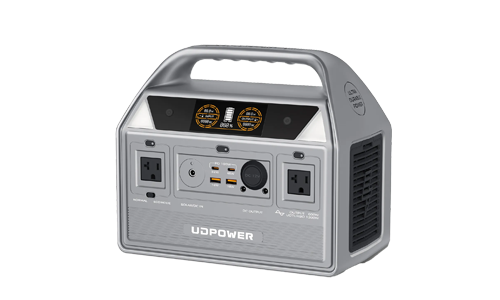
UDPOWER Product Recommendations for 1500W-Class Needs
UDPOWER does not need to force every buyer into the “1500W” label. The right choice depends on whether your real load is below 1200W, near 1500W, or needs extra surge headroom.
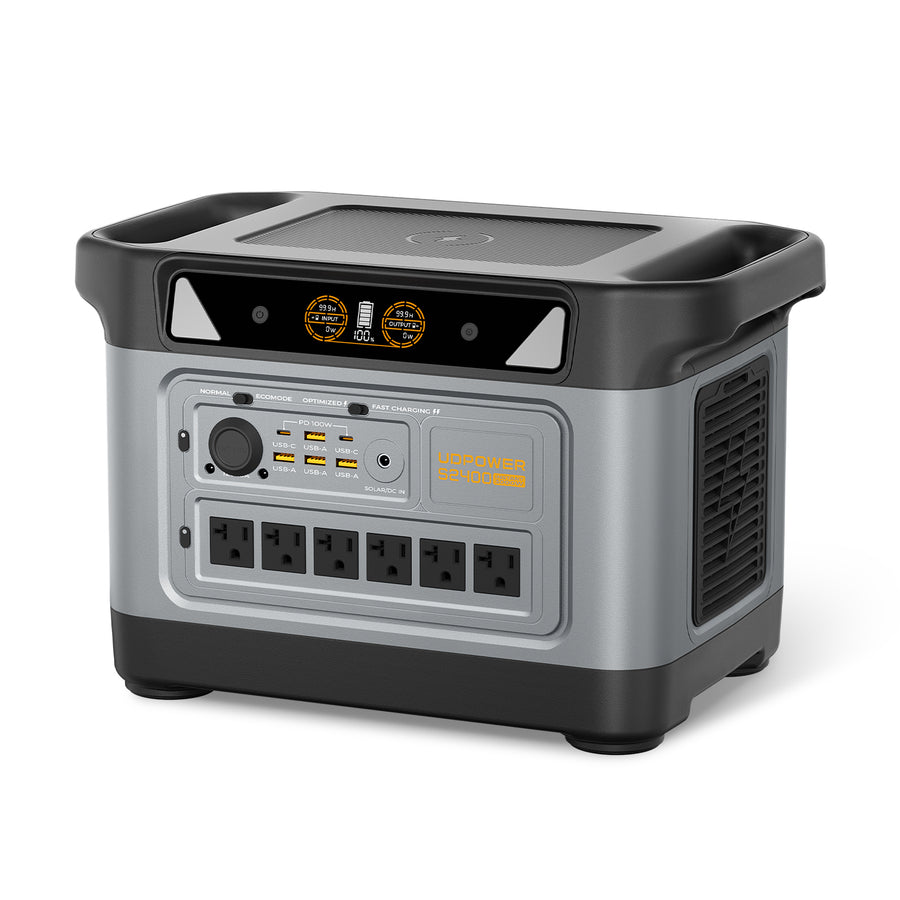
Best Pick If Your Appliances Are Near 1500W: UDPOWER S2400
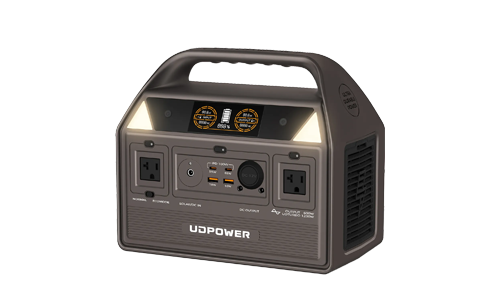
If you are asking about 1500W because you want to run a microwave, kettle, coffee maker, power tools, or a refrigerator with safer startup margin, the UDPOWER S2400 Portable Power Station is the stronger fit.
- Capacity: 2,083Wh LiFePO4 battery
- AC output: 2,400W pure sine wave
- Surge support: UDTURBO up to 3,000W
- Ports: 6 AC outlets + 10 DC outputs
- UPS support: UPSPRIME switchover time ≤10ms
- Best for: fridge backup, RV loads, short cooking bursts, power tools, outage essentials, and users who want more headroom than a strict 1500W-class setup
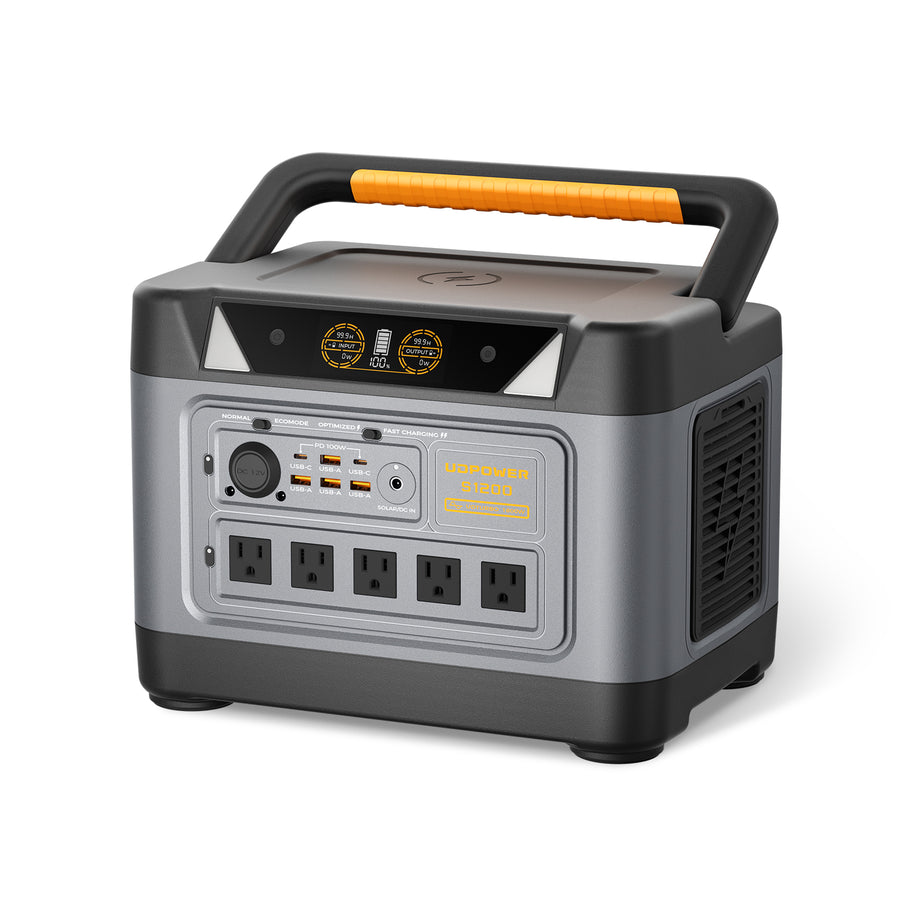
Best Pick for Sub-1200W Essentials: UDPOWER S1200
If your devices are mostly under 1200W — refrigerator, router, TV, CPAP, laptop, lights, fans, and short moderate loads — the UDPOWER S1200 Portable Power Station is a practical, lighter essentials backup.
- Capacity: 1,190Wh LiFePO4 battery
- AC output: 1,200W pure sine wave
- Surge support: UDTURBO up to 1,800W
- Weight: 26.0 lbs
- UPS support: UPSPRIME switchover time ≤10ms
- Best for: outage essentials, CPAP, fridge cycling, router backup, camping electronics, and users who do not need to run true 1500W appliances
You can compare more models in the UDPOWER Portable Power Stations collection.
Buying Checklist for 1500W-Class Power Station Users
Before you buy, write down the exact devices you want to run and separate them into “always-on” loads and “short-burst” loads.
| Feature | Why It Matters | Practical Target |
|---|---|---|
| Continuous AC output | Decides what the station can run steadily. | At least 20% headroom above your biggest regular load. |
| Surge rating | Helps start compressors, pumps, and tools. | Check startup needs for fridge, AC, pump, or tool loads. |
| Battery capacity | Decides runtime. | 1000Wh for short backup, 1500Wh+ for longer use, 2000Wh+ for more confidence. |
| Battery chemistry | Affects cycle life and long-term reliability. | LiFePO4 is preferred for frequent use and long service life. |
| Pure sine wave AC | Better for sensitive electronics and motor loads. | Choose pure sine wave for appliances, CPAP, routers, and electronics. |
| Solar input | Extends runtime during camping or long outages. | Match panel voltage and current to the station’s allowed solar input. |
| Port layout | Reduces adapters and wasted AC conversion. | Use USB-C or DC for small electronics and AC only when needed. |
| Warranty and support | Backup power should be reliable after purchase. | Look for clear warranty terms, local return support, and accessible customer service. |
Simple Test Before You Trust It in an Outage
Do not wait for a storm to learn your numbers. Test your setup on a normal day.
- Fully charge the power station.
- Plug in the exact devices you plan to use.
- Watch the real-time watt display for the first 10 minutes.
- Start compressor devices one at a time.
- Record the wattage and battery percentage drop after one hour.
- Build your real outage plan from those numbers.
Sources
FAQ: 1500W Portable Power Station
Can a 1500W portable power station run a refrigerator?
Usually, yes. Many refrigerators average far below 1500W, but compressor startup surge matters. Check the refrigerator label and test it before relying on it during an outage.
Can a 1500W power station run a microwave?
It depends on the microwave’s input watts. Many compact microwaves pull around 1000–1500W from the wall. If yours is near the limit, run it alone and keep sessions short.
Can a 1500W power station run a space heater?
Technically, it may run a 750–1500W space heater, but runtime will be short. A 1500W heater can drain a 1500Wh battery in less than an hour after losses. It is usually not the best use of battery power.
Can a 1500W power station run a coffee maker?
Yes, many coffee makers use about 800–1200W while brewing. Turn it off after brewing, because warming plates waste battery.
Can a 1500W portable power station run an air conditioner?
Some small or inverter-style window AC units may work, but many compressor AC units have startup surges that can overload a 1500W station. Check the AC label and surge requirements before assuming it will work.
How long will a 1500W power station run a 100W device?
Runtime depends on battery capacity. With a 1500Wh battery and 85% AC efficiency, a 100W device may run about 12.7 hours. With a 1000Wh battery, it may run about 8.5 hours.
Is 1500W enough for camping?
Yes, for most car camping and overlanding setups. It can run a camping fridge, lights, fan, laptop, camera chargers, air pump, projector, and coffee maker. For multi-day trips, battery capacity and solar recharging matter more than output alone.
Is 1500W enough for home backup?
It is enough for selected essentials, not the whole house. It can support a fridge, Wi-Fi, phones, lights, laptop, TV, and many medical devices, but it is not suitable for central AC, electric dryers, electric ovens, or whole-house heating.
Should I buy exactly 1500W or choose more headroom?
If your biggest appliance is close to 1500W, choose more headroom. A 2000W+ inverter is more comfortable for high-draw appliances because it leaves room for startup surge and small supporting loads.
What is better for 1500W-class needs, UDPOWER S1200 or S2400?
Choose UDPOWER S1200 for loads under 1200W and essentials backup. Choose UDPOWER S2400 if you want to run appliances near 1500W, need more battery capacity, or want stronger surge headroom.
Need a Power Station for Real 1500W Loads?
If your goal is to run appliances near 1500W, do not shop by headline wattage alone. Choose enough inverter headroom, enough battery capacity, and the right ports for your actual devices.
View UDPOWER S2400 Compare UDPOWER Models