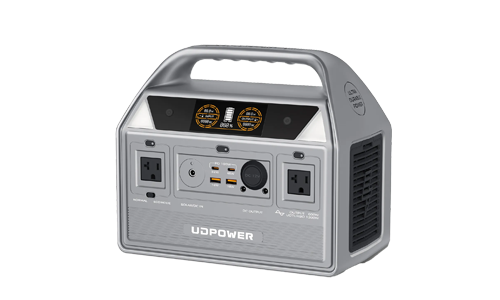
Power Station Safety — Everything You Need to Know Before You Buy
ZacharyWilliamA portable power station can be one of the safest ways to keep phones, lights, routers, CPAP machines, laptops, small fridges, and emergency essentials running without gasoline, fumes, or engine noise. But “safe” does not mean “anything goes.” The safest setup is the one that matches your device wattage, battery chemistry, charging method, solar input limits, temperature range, and real use case.
Quick answer: are portable power stations safe?
Yes, a well-built portable power station is generally safe for indoor and outdoor use when it uses stable battery chemistry, a real Battery Management System, certified components, pure sine wave AC output, proper temperature protection, and clear input/output ratings. The biggest safety mistakes are buying an uncertified unit, blocking the vents, exceeding the rated watts, using the wrong solar panel voltage, charging in extreme heat or cold, storing it damaged, or treating a portable station like a hardwired whole-home electrical system.
If you only remember one rule: choose a certified LiFePO4 power station, stay inside the wattage and solar input limits, keep it ventilated, and test your real appliances before an outage.

What “safe” really means for a portable power station
Most buyers ask, “Is this power station safe?” A better question is: “Safe for what load, in what temperature, with what charging method, and for how long?” A 400W compact unit can be very safe for a laptop, router, light, phone, fan, or small camping device. The same unit becomes the wrong choice if someone tries to run a high-watt kettle, space heater, microwave, or overloaded power strip.
A power station’s safety depends on four layers working together:
- Battery layer: the cell chemistry, cell matching, pack design, cycle life, and physical protection.
- Control layer: the Battery Management System that watches voltage, current, temperature, short circuit risk, and charging behavior.
- Output layer: the inverter, pure sine wave AC output, surge handling, ports, cables, and appliance compatibility.
- User layer: ventilation, correct charger, correct solar panel, correct storage temperature, and not exceeding the rated limits.
Portable power station vs gas generator safety
A battery power station does not create carbon monoxide while powering devices, which is why it can be used indoors when operated correctly. A gasoline generator is different: it must be operated outdoors, away from doors, windows, vents, garages, and living spaces. For outage planning, read UDPOWER’s portable power station vs generator guide.
The safety checklist before you buy
Use this table before comparing prices. It keeps the decision focused on safety, not just watt-hours.
| Safety factor | What to check | Why it matters | Safe buying rule |
|---|---|---|---|
| Battery chemistry | LiFePO4 / LFP vs NMC or unspecified lithium | LFP is widely preferred for long cycle life and thermal stability in backup-power products. | For home backup, RV, camping, or frequent use, choose LiFePO4 when weight is not the only priority. |
| Certification marks | UL2743, UN38.3, FCC, RoHS, and model-specific testing claims | Testing helps verify transport, electrical, electromagnetic, and material safety claims. | Do not rely on vague words like “safe battery” without listed standards. |
| BMS protection | Overload, overcurrent, overvoltage, short circuit, overcharge, over-discharge, and temperature protection | The BMS is the station’s safety brain. It should shut down unsafe operating conditions before they become worse. | Look for protection features listed on the product page, not just in ads. |
| Pure sine wave AC | Whether AC outlets are pure sine wave | Many laptops, CPAP machines, fridges, fans, and electronics prefer cleaner AC output. | Choose pure sine wave for appliances, motors, sensitive electronics, and backup use. |
| Rated output | Continuous watts and surge watts | A device may draw a higher startup surge than its normal running watts, especially fridges, pumps, compressors, and power tools. | Match both running watts and startup surge. Do not buy by capacity alone. |
| Solar input limits | Voltage range, amp limit, watt limit, and connector type | Wrong panel voltage can damage the unit or trigger shutdown. | Check open-circuit voltage before using third-party solar panels. |
| Temperature range | Charging, discharging, and storage temperatures | Charging lithium batteries outside the allowed range can shorten life or create safety risks. | Do not charge in a freezing car or hot closed vehicle unless the product allows that condition. |
| Warranty and support | Return policy, warranty length, manuals, and reachable support | Safety is not only hardware. Good support helps users solve charger, solar, error-code, and storage questions. | Prefer brands with visible warranty, support, manuals, and replacement process. |
LiFePO4 vs NMC: which battery chemistry is safer?
The battery chemistry inside a power station affects safety, weight, lifespan, cost, and how the unit behaves under heat and repeated cycling. Many newer backup-focused portable power stations use LiFePO4, also called LFP, because it is a strong fit for home backup, camping, RV, solar charging, and frequent charge-discharge use.
| Factor | LiFePO4 / LFP | NMC lithium | Buyer takeaway |
|---|---|---|---|
| Thermal stability | Generally stronger thermal stability | Higher energy density but more heat-sensitive | LFP is usually the better safety-first choice for backup power. |
| Cycle life | Commonly thousands of cycles depending on pack design | Often fewer cycles in comparable consumer products | Better for frequent outages, solar cycling, RV use, and daily backup practice. |
| Weight | Can be heavier at the same capacity | Often lighter at the same capacity | If backpack weight is the only goal, NMC may look attractive; for home safety and longevity, LFP usually wins. |
| Best fit | Home backup, RV, camping, CPAP backup, solar generator kits | Ultralight portable electronics and products where compactness dominates | For most U.S. household backup buyers, choose LFP unless there is a specific reason not to. |
UDPOWER’s current C400, C600, S1200, and S2400 power stations use LiFePO4 / LFP battery technology and list long-cycle-life specifications on the official product pages.
Certifications that actually matter
Certification labels can be confusing because different standards test different things. A safe buying decision looks at the whole set: transport safety, product-level safety, electromagnetic compliance, and material restrictions.
| Mark or standard | What it tells buyers | What it does not guarantee | Useful source |
|---|---|---|---|
| UL2743 | Product-level standard for portable power packs. | It does not mean the unit can be hardwired into a home panel without approved equipment and installation. | UL portable power pack testing |
| UN38.3 | Lithium battery transport testing for vibration, shock, altitude, thermal, and related transport stresses. | It is not the same as a full product-use safety certification. | UN38.3 battery transport overview |
| FCC | Electromagnetic compatibility for electronic devices sold in the U.S. | It is not a battery fire-safety certification by itself. | FCC equipment authorization |
| RoHS | Restriction of certain hazardous substances in electrical and electronic equipment. | It does not verify runtime, surge output, or home backup suitability. | RoHS directive overview |
Buyer tip
A certification mark is most useful when it appears together with model-specific specs, a clear manual, visible input/output ratings, and a warranty. Be careful with marketplace listings that copy safety words but do not identify the standard or the tested model.
Rated output, surge watts, and overload safety
Capacity and output are not the same thing. Capacity, measured in watt-hours, is the “fuel tank.” Output wattage is how much power the station can deliver at one time. A 1,000Wh battery with weak output may run small devices for a long time but still fail to start a fridge or coffee maker. A high-output station with too little capacity may start a device but drain quickly.
| Device type | Safety issue to check | Why it matters | Practical rule |
|---|---|---|---|
| Phone, tablet, camera, router | USB-C / USB-A output rating | Low-risk loads, but cable quality still matters. | Use intact cables and avoid daisy-chaining cheap adapters. |
| Laptop | USB-C PD wattage or AC adapter watts | A large laptop may need 65W, 100W, or more. | Use USB-C PD when compatible, or stay within AC output limits. |
| CPAP machine | Humidifier and heated hose load | Heated accessories can raise power draw sharply. | Test your exact CPAP setup before relying on it overnight. |
| Refrigerator or mini fridge | Startup surge and compressor cycling | Startup power can be much higher than average running watts. | Choose a station with enough surge headroom and test with the actual fridge. |
| Microwave, kettle, coffee maker, hair dryer | High continuous watts | These loads can quickly drain the battery and may exceed output limits. | Use only on larger models and only within rated output. |
| Space heater or electric blanket | Long high-watt heat load | Resistive heating is demanding and drains batteries fast. | Usually not the best use for a portable power station. |
For deeper sizing, read UDPOWER’s portable power station buying guide and runtime planning guide for outages.
Solar charging safety: the part many buyers miss
Solar-ready does not mean every solar panel is safe to plug in. The power station has an allowed input voltage, amperage, wattage, and connector type. The panel has its own open-circuit voltage, operating voltage, current, and connector. Those numbers must match.
- Check the power station input range. Look for solar input voltage, amp limit, watt limit, and connector type.
- Check the panel’s open-circuit voltage. This is often listed as Voc. In cold weather, panel voltage can rise, so leave margin.
- Do not mix random panels in parallel. Different voltages, wattages, and brands can create uneven current and poor performance.
- Use the correct cable and connector. A loose or incorrect connector can overheat, disconnect, or fail to charge.
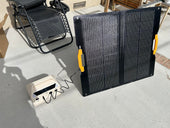
- Keep the panel and station positioned safely. Keep the station shaded and ventilated; let the panel sit in full sun, not the battery box.
| UDPOWER model | Official solar input information | Safe solar note | Official product source |
|---|---|---|---|
| C400 | 150W max solar input; 11V minimum and 28V maximum input voltage listed. | Best for compact solar setups. Check third-party panel voltage before use. | C400 specs |
| C600 | 240W max solar input; 11V minimum and 28V maximum input voltage listed. | Good for medium camping and backup charging. Stay within voltage range. | C600 specs |
| S1200 | Solar charging input listed as 12V–75V, 12A, 400W max. | Stronger solar flexibility for backup and RV use. Do not exceed voltage or wattage limits. | S1200 specs |
| S2400 | Solar charging input listed as 12V–50V, 10A max, up to 400W solar charging. | Best fit for higher-capacity emergency setups and larger essentials. | S2400 specs |
For ready-made setups, see UDPOWER solar generator kits and portable solar panels.
Temperature, storage, and car safety
Temperature is one of the most practical safety issues. A power station may discharge in colder conditions than it can safely charge. That means a unit may run a device in winter, but still should not be recharged until it is within the allowed charging temperature range.
| Situation | Risk | Safer practice |
|---|---|---|
| Charging in a freezing vehicle | Charging outside the allowed range can stress lithium cells. | Let the station warm up indoors before charging. |
| Leaving the unit in a hot closed car | Interior vehicle temperatures can rise quickly and push the station beyond safe storage conditions. | Do not store long-term in a hot vehicle. Keep it shaded, dry, and ventilated. |
| Charging under a blanket, bed, tarp, or pile of gear | Blocked vents trap heat and can trigger shutdown or battery stress. | Charge on a hard, open surface with vents clear. |
| Outdoor camping in light rain or heavy condensation | Moisture can damage ports and create shock risk. | Keep the station dry and protected. Do not operate it in standing water or heavy rain. |
| Long-term storage at 0% or 100% | Very low or very high state of charge for long periods can shorten battery life. | Store with a moderate charge and check periodically according to the manual. |
UDPOWER product pages list model-specific operating ranges. For example, S1200 is listed for discharging from -4°F to 113°F and charging from 23°F to 104°F. C400, C600, and S2400 pages list charging ranges beginning at 32°F. Always follow the exact model page and user manual for the unit you own.
Recommended UDPOWER models by safety use case
The safest power station is not always the biggest one. It is the one that matches the load. Below are practical UDPOWER picks based on official website specifications, intended use, and safety headroom.

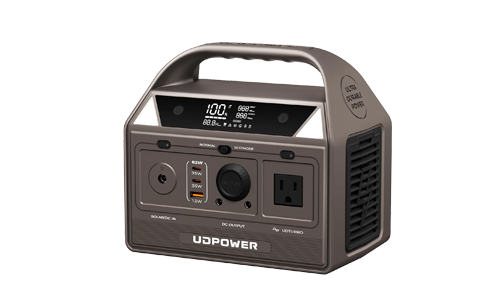
UDPOWER C400 — compact safety-first backup for small essentials
256Wh400W output800W surgeLiFePO4
Best for phones, tablets, laptops, routers, lights, small fans, cameras, drone batteries, road trips, and short camping backup. The C400 is the easiest model to carry and store, but it is not meant for high-watt appliances.
Safety fit: lightweight users who need quiet backup and do not want to overspend on capacity they will not use.
View C400 specs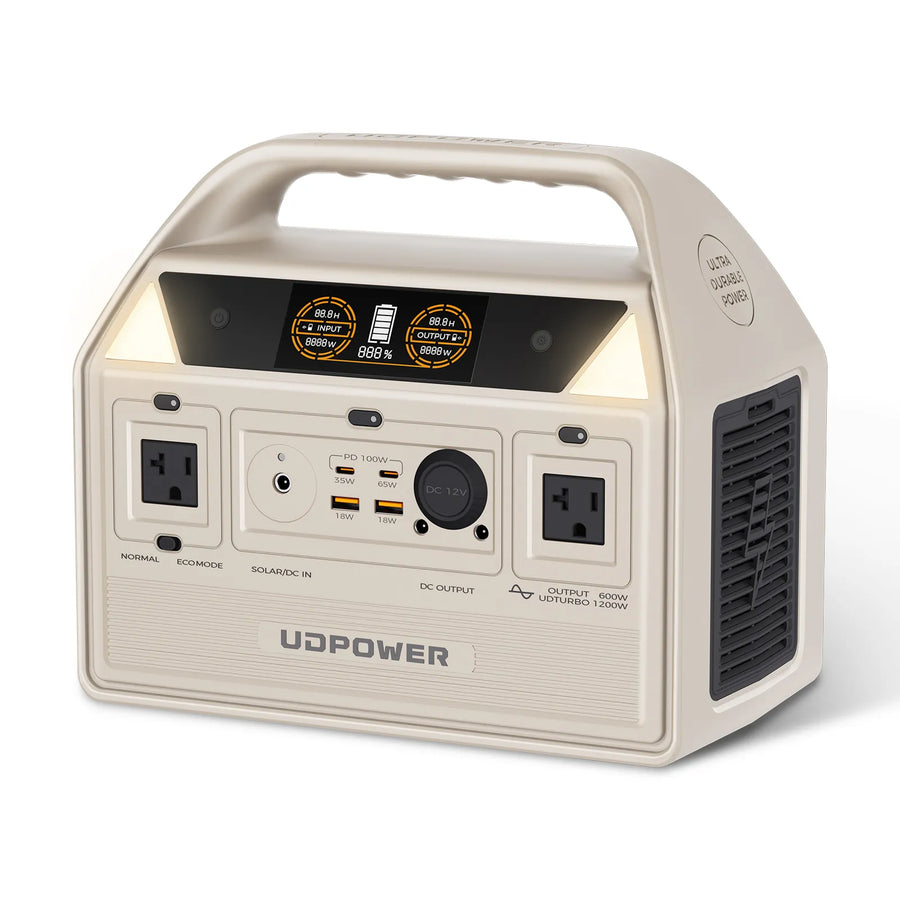
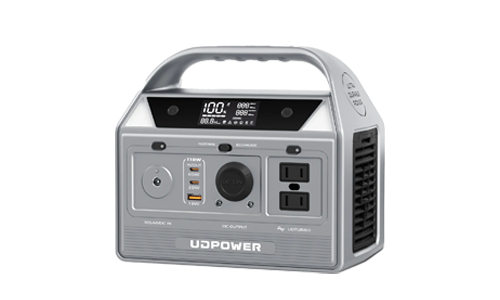
UDPOWER C600 — medium backup for camping, car fridges, and daily outage comfort
596Wh600W output1200W surgeLiFePO4
Best for weekend camping, lights, routers, fans, laptops, cameras, portable coolers, and moderate daily backup. It gives more runtime than a compact station while remaining easy to move.
Safety fit: buyers who need more runtime than a small unit but still want a manageable, quiet battery station for low-to-medium loads.
View C600 specs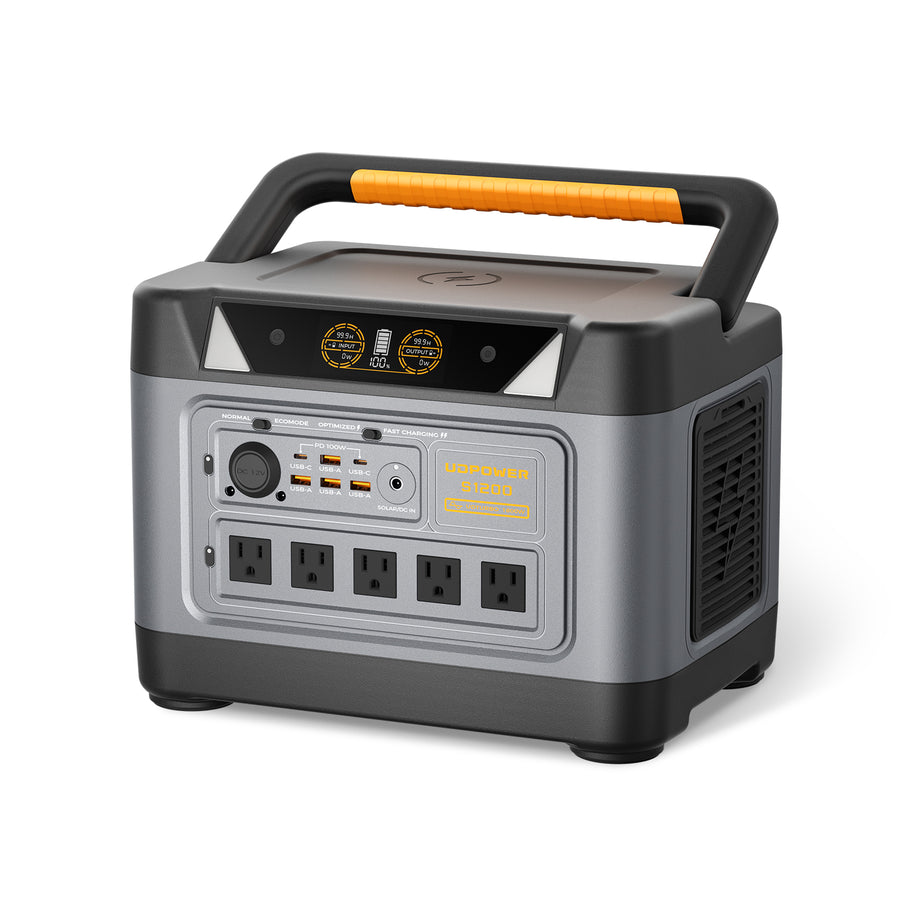
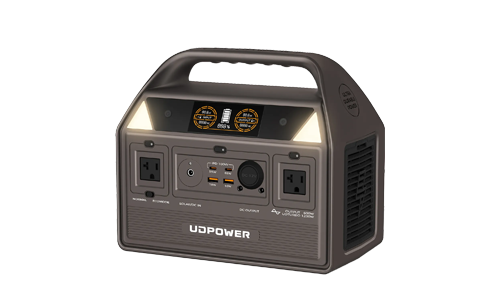
UDPOWER S1200 — best balance for home essentials, RVs, and refrigerator backup
1,190Wh1,200W output1,800W surge<10 ms UPS-style backup
Best for refrigerators within supported load range, routers, CPAP setups, lights, laptops, fans, small appliances, RV weekends, and priority-load outage planning. It offers a practical balance of output, runtime, and portability.
Safety fit: households that want enough headroom for real appliances without jumping straight into the largest unit.
View S1200 specs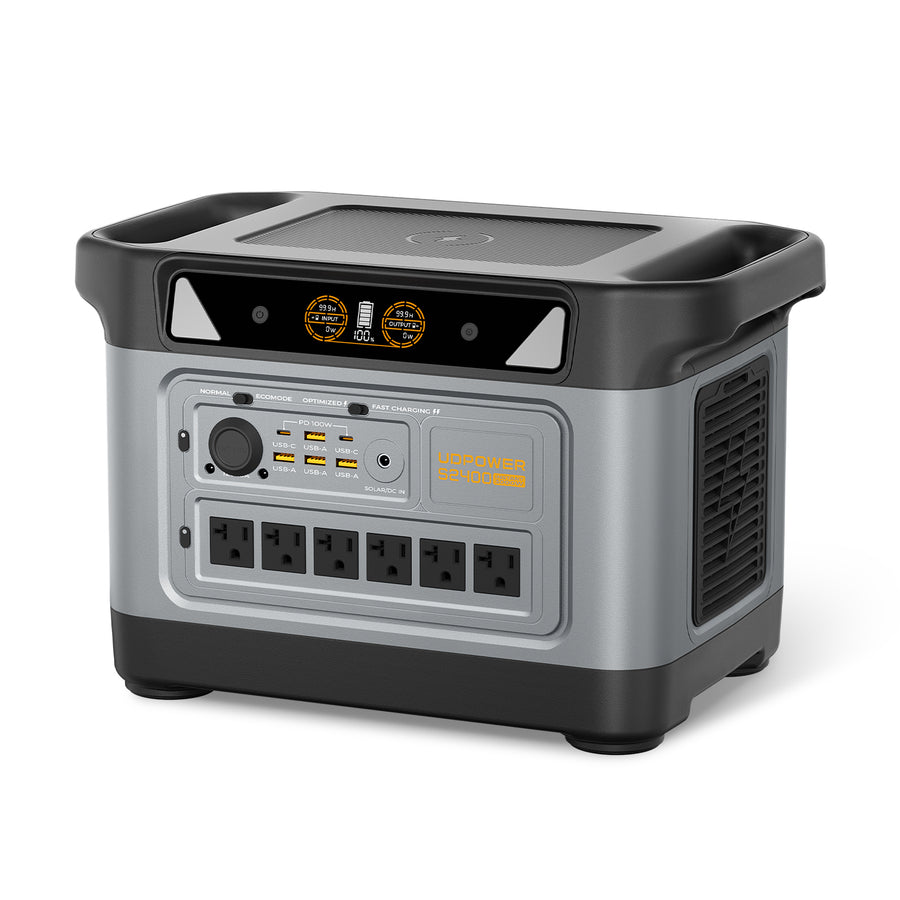
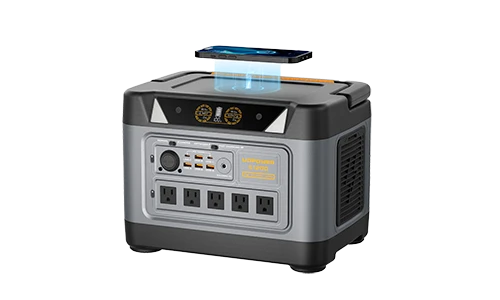
UDPOWER S2400 — high-output backup for bigger essentials
2,083Wh2,400W output3,000W surge6 AC outlets
Best for longer outages, multiple priority devices, refrigerator support, coffee makers or microwaves used briefly within limits, RV use, and larger emergency plans. Its bigger inverter and battery give more safety headroom for demanding loads.
Safety fit: buyers who want fewer overload surprises and longer runtime for home essentials.
View S2400 specs| Model | Capacity | Rated output | Surge | Battery | Best safety-matched use |
|---|---|---|---|---|---|
| C400 | 256Wh | 400W | 800W | LiFePO4 / LFP | Small essentials, outdoor trips, light backup, 12V vehicle jump-start use as supported. |
| C600 | 596Wh | 600W | 1200W | LiFePO4 / LFP | Medium camping loads, fans, routers, laptops, lights, portable coolers. |
| S1200 | 1,190Wh | 1,200W | 1,800W | LiFePO4 / LFP | Home essentials, refrigerators within limits, CPAP backup testing, RV and outage planning. |
| S2400 | 2,083Wh | 2,400W | 3,000W | LiFePO4 / LFP | Higher-output essentials, longer outages, multiple devices, larger RV and home backup needs. |
For side-by-side selection, use the UDPOWER power station comparison page or browse all portable power stations.
How to use a portable power station safely
Good equipment still needs good habits. These steps cover normal daily use, camping, outage backup, and solar charging.
- Put the station on a stable, dry, hard surface. Do not charge or run it under pillows, bedding, closed bins, thick blankets, or piles of camping gear.
- Keep air vents clear. Give the cooling system room to move heat away from the battery and inverter.
- Turn on only the output section you need. AC, DC, USB, and wireless outputs may be controlled separately depending on the model.
- Start with the highest-surge device first. If you are powering a refrigerator and smaller devices, test the refrigerator alone first, then add smaller loads.
- Watch the display for input, output, error codes, and temperature warnings. The display tells you if the plan is working in real time.
- Avoid overloaded power strips. Plug priority devices directly into the station when possible, or use a quality strip within the station’s rating.
- Do not use damaged cables. Replace cords with cracked insulation, loose plugs, bent connectors, or heat discoloration.
- Do not open or modify the battery pack. Internal battery service should be handled by the manufacturer or qualified repair process.
Important for CPAP and medical comfort devices
Many people use portable power stations for CPAP backup, but you should test your exact machine, mask setup, humidifier, heated hose, pressure settings, and runtime needs before an outage. For life-sustaining medical equipment, ask your healthcare provider or equipment supplier about the correct backup plan. A consumer portable power station should not be treated as a medical-grade UPS unless the device maker and your medical provider say it is appropriate.
Pass-through charging and UPS-style backup: safe, but model-specific
Some portable power stations can power devices while the unit itself is charging. Some also offer UPS-style switching to help keep essential devices running during brief grid interruptions. These are useful features, but they are not the same on every model.
| Feature | What it does | Safety note |
|---|---|---|
| Pass-through charging | Lets the station recharge while powering devices. | Avoid pushing near maximum output while charging in hot conditions. |
| UPS-style switching | Switches from wall power to battery power during a power interruption. | Check switchover time and whether your device tolerates it. Not every model is designed for UPS backup. |
| Whole-home connection | Connects backup power to house circuits. | Do not backfeed through a wall outlet. Use only approved equipment and qualified installation where applicable. |
For more detail, read UDPOWER’s portable power station vs UPS guide.
Travel, disposal, and end-of-life safety
Can you fly with a portable power station?
Most real portable power stations are too large for passenger aircraft. The FAA states that rechargeable lithium-ion batteries are generally limited to 100Wh, with airline approval for up to two spare larger batteries from 101Wh to 160Wh. That means common power stations such as 192Wh, 256Wh, 596Wh, 1190Wh, or 2083Wh models should not be packed for normal passenger air travel.
For air travel, check the FAA’s lithium battery PackSafe guidance and your airline’s rules before you pack.
How should you recycle an old or damaged lithium battery station?
Do not put lithium-ion batteries or devices containing lithium-ion batteries in household trash or curbside recycling. The EPA recommends taking lithium-ion batteries to separate recycling or household hazardous waste collection points and protecting terminals to reduce fire risk.
For disposal guidance, see the EPA’s used lithium-ion battery recycling page.
Red flags when comparing portable power stations
Some safety problems are visible before you ever plug in the product. Watch for these warning signs while shopping.
| Red flag | Why it is risky | What to do instead |
|---|---|---|
| No clear battery chemistry | You cannot judge thermal stability, cycle life, or intended use. | Choose a model that clearly lists LiFePO4 / LFP or another named chemistry. |
| No certification details | Vague safety claims are not the same as product testing. | Look for specific marks such as UL2743, UN38.3, FCC, RoHS, or model-level documents. |
| Only peak watts advertised | Peak watts may last briefly and do not tell you continuous output. | Compare rated output first, then surge output. |
| No solar voltage range | Using the wrong panel can damage the unit or fail to charge. | Buy from a brand that lists voltage, current, wattage, and connector requirements. |
| No real support channel | Safety questions often happen during outages, travel, or setup. | Choose a brand with warranty, return policy, manuals, and responsive support. |
| Damaged, swollen, hot, or odor-producing battery | Physical or thermal symptoms can indicate internal failure. | Stop using it, move away from flammable materials if safe, and contact the manufacturer. |
Emergency signs: when to stop using the station
Stop using the power station and disconnect loads if you notice any of the following:
- Smoke, burning smell, chemical odor, or hissing sounds.
- Swollen casing, cracked housing, melted ports, or visible internal damage.
- Unusual heat that does not drop after reducing the load.
- Repeated overload, short-circuit, or temperature warnings under normal loads.
- Charging cable, solar cable, or AC plug that becomes hot to the touch.
If there is smoke or fire
Move people and pets away, avoid breathing smoke, call emergency services, and do not open the battery pack. If the station is merely showing a warning without smoke or flames, shut it down, unplug devices, move it away from flammable materials if safe, and contact support before using it again.
Maintenance schedule for safer long-term use
| When | What to check | Why it helps safety |
|---|---|---|
| Before first use | Read the manual, inspect ports, confirm included cables, and test a small load. | Catches shipping damage, missing cables, or misunderstanding before an outage. |
| Before every camping trip | Check charge level, cable condition, solar connectors, and expected weather. | Prevents charging surprises and unsafe outdoor operation. |
| Monthly during outage season | Power the unit on, confirm display works, test priority loads, and recharge as needed. | Keeps your backup plan real instead of theoretical. |
| After a drop or impact | Inspect casing, ports, screen, fan area, and charging behavior. | Mechanical damage can affect internal safety even if the unit still turns on. |
| Before long-term storage | Store dry, ventilated, away from direct sun, with a moderate charge. | Improves battery life and lowers storage risk. |
FAQ: portable power station safety
Are portable power stations safe to use indoors?
Yes, battery-based portable power stations can be used indoors when operated correctly because they do not burn gasoline or produce carbon monoxide while powering devices. Keep the unit dry, ventilated, and within its rated load and temperature range.
Can I leave a portable power station plugged in all the time?
It depends on the model and charging design. Some stations support pass-through charging or standby use, but long-term battery health is usually better when you follow the manual’s storage and recharge guidance. Avoid leaving any battery station charging in extreme heat or with blocked vents.
Is LiFePO4 safer than regular lithium-ion?
LiFePO4, also called LFP, is commonly preferred for portable power stations because it offers strong thermal stability and long cycle life. That does not remove the need for a BMS, certification, proper ventilation, and correct charging habits.
Can I use third-party solar panels?
Yes, only if the solar panel’s voltage, current, wattage, and connector are compatible with your power station. Always check the panel’s open-circuit voltage and the station’s solar input range before connecting.
Can a power station run a refrigerator safely?
Yes, if the station can handle the refrigerator’s running watts and startup surge. Test the refrigerator by itself first, then add smaller loads only if the display shows safe output headroom.
Can I plug a power station into a wall outlet to power my house?
No. Do not backfeed a home outlet. A portable power station should power devices directly unless you are using approved transfer equipment installed according to applicable electrical requirements.
Can I take a portable power station on a plane?
Most portable power stations are over common airline lithium battery limits. FAA guidance generally limits lithium-ion batteries to 100Wh, with airline approval for up to two 101–160Wh spare batteries. Many power stations exceed that range and should not be packed for passenger air travel.
What should I do if the power station smells hot or shows a temperature warning?
Turn off the output, unplug connected devices, stop charging, move the unit away from flammable materials if safe, let it cool in a ventilated area, and contact the manufacturer before using it again. If there is smoke or fire, move away and call emergency services.
Sources checked for safety and specs
The product details above are based on official UDPOWER product pages and public safety guidance from recognized safety, aviation, recycling, and emergency-preparedness organizations.
| Topic | Source | How it was used |
|---|---|---|
| UDPOWER product specs | UDPOWER Portable Power Stations | Model lineup, capacity, output, battery type, product positioning. |
| Portable power pack testing | UL portable power pack testing | Certification context for UL2743. |
| Battery hazard categories | U.S. CPSC battery safety topic | Battery hazards including overheating, fire, shock, and thermal burns. |
| Air travel lithium battery limits | FAA PackSafe lithium batteries | Watt-hour limits for passenger travel. |
| Recycling and disposal | EPA used lithium-ion batteries | Do-not-trash guidance and recycling handling. |
| Generator comparison safety | FEMA generator safety | Carbon monoxide and outdoor-only generator safety contrast. |
Ready to choose a safer backup power setup?
Start with the devices you truly need during an outage: phone, router, lights, CPAP, fan, laptop, and possibly refrigerator support. Then choose a LiFePO4 power station with enough rated output, surge headroom, solar compatibility, and warranty support for that list.