

How Much Does It Cost to Build a Small Cabin House?
Last updated: October 12, 2026

A small cabin house in the United States commonly costs about $100 to $300 per square foot to build, before land. For a finished cabin in the 400 to 800 sq ft range, that puts many projects somewhere around $50,000 to $240,000. A simple DIY dry cabin can come in below that range, while a contractor-built cabin on a remote, steep, cold-climate, or difficult site can exceed $300 per sq ft.
The number that matters most is not the advertised price of the cabin kit. Your real budget is the cost of the structure + site + foundation + utilities + mechanical systems + interior + permits + contingency.
If you remember only one rule from this guide, use this one: price the land and utility problems before you price the cabin. A $30,000 shell on an easy lot can remain affordable. The same shell on land needing a long driveway, deep well, engineered septic system, extensive grading, and utility extension can become a six-figure project.
This guide focuses on small U.S. cabins used as weekend retreats, hunting cabins, guest houses, rental cabins, off-grid properties, and compact full-time homes. The cost ranges below combine current 2026 cabin pricing data with broader residential construction data and break the total into the expenses a cabin buyer actually has to pay.
What Counts as a Small Cabin House?
For budgeting purposes, a small cabin is usually somewhere between about 200 and 800 sq ft. But square footage alone does not tell you what the project will cost.
A 400 sq ft hunting cabin without plumbing is a completely different construction project from a 400 sq ft year-round home with a bathroom, kitchen, heat pump, well, septic system, and inspected residential electrical service.
| Cabin type | Typical features | Cost tendency | Best fit |
|---|---|---|---|
| Dry cabin | No full plumbing, basic electrical or portable power, simple foundation, minimal interior | Lowest | Hunting, seasonal weekends, remote land |
| Finished weekend cabin | Insulation, electrical, small kitchen, heat source, sleeping space, possibly a bathroom | Moderate | Weekend retreats and vacation use |
| Full-time small cabin house | Code-compliant foundation, kitchen, plumbing, wastewater, HVAC, permanent electrical system | Higher | Primary or long-term residence |
| Rental cabin | Guest-ready kitchen and bath, durable finishes, parking, safety equipment and local rental compliance | Higher | Short-term rental or hospitality use |
| Remote off-grid cabin | Independent water, wastewater, power and heating systems | Can be low or very high | Properties far from public utilities |
This distinction matters because many low cabin prices advertised online are for a shell, kit, or partially finished structure. They are not the final price of a legal, livable cabin sitting on your land.
Small Cabin Cost by Size
The table below is a planning tool rather than a contractor quote. Land is excluded because acreage prices vary dramatically by state, county, road access, views, zoning and utility availability.
| Cabin size | Simple / DIY-heavy | Basic finished cabin | Contractor-built finished cabin | Difficult site / premium build |
|---|---|---|---|---|
| 200 sq ft | $20,000–$45,000 | $35,000–$65,000 | $45,000–$80,000 | $80,000+ |
| 300 sq ft | $25,000–$55,000 | $45,000–$80,000 | $60,000–$105,000 | $100,000+ |
| 400 sq ft | $35,000–$70,000 | $55,000–$105,000 | $75,000–$140,000 | $140,000+ |
| 500 sq ft | $45,000–$85,000 | $70,000–$130,000 | $90,000–$170,000 | $170,000+ |
| 600 sq ft | $55,000–$105,000 | $85,000–$155,000 | $110,000–$200,000 | $200,000+ |
| 800 sq ft | $75,000–$140,000 | $115,000–$200,000 | $145,000–$260,000 | $260,000+ |
Planning references: Angi 2026 cabin cost data, HomeGuide 2026 log cabin cost data, and NAHB construction cost research.
How Much Does a Cabin Cost per Square Foot?
For a quick U.S. planning range, use roughly $100–$300 per sq ft for a completed small cabin before land. Custom interiors, premium timber construction, difficult access and high-cost markets can move above this range.
| Build level | Useful planning range | What that usually means |
|---|---|---|
| Very simple | About $100–$150/sq ft | Simple footprint, owner labor, basic finishes, easy site and limited utility work |
| Typical finished small cabin | About $150–$225/sq ft | Insulation, kitchen, bath, permanent systems and professional trade work |
| Contractor-built / higher specification | About $225–$300/sq ft | Turnkey build, better finishes, more complex mechanical systems or higher labor costs |
| Remote / custom / difficult site | $300+/sq ft is possible | Steep access, specialized foundation, deep utilities, premium materials or extensive engineering |
The most important detail is what the quoted square-foot price includes. One builder may include foundation, mechanical systems and interior finishes. Another may be quoting only the cabin shell.
HomeGuide's 2026 data, for example, places installed log cabins around $100–$300 per sq ft, while kit-only pricing can be dramatically lower. That gap is exactly why comparing an online kit price with a completed local builder quote can be misleading.
Sources: HomeGuide cabin construction costs and HomeGuide cabin kit costs.
How Location Changes Cabin Construction Cost
There is no accurate national cabin price that works equally well in Vermont, Tennessee, Texas, Colorado and California. Labor, snow loads, foundation requirements, wildfire rules, transportation distance and material availability all change the price.
NAHB's analysis of custom single-family homes started in 2024 illustrates how large regional construction differences can be. These numbers are not cabin quotes, but they are useful indicators of regional building-cost pressure.
| U.S. region | NAHB median custom-home price per sq ft | What it means for cabin planning |
|---|---|---|
| East South Central | About $129 or less | Generally lower-cost construction environment, although remote rural work can still be expensive |
| West South Central | About $138 | Often lower construction cost than the Northeast, but foundation and cooling needs vary greatly |
| Pacific | About $167 | Higher labor, permitting or site-related expenses can raise small-cabin budgets |
| Mountain | About $169 | Remote access, snow, slopes and mountain delivery logistics can matter as much as base construction cost |
| East North Central | About $186 | Cold-climate foundations and insulation may add to small-cabin costs |
| Middle Atlantic | About $188 | Higher labor and regulatory costs can increase turnkey construction |
| New England | More than $190 | Cold-weather requirements and relatively high construction costs can push cabins toward the upper end |
Source: National Association of Home Builders regional square-foot analysis.
Your county matters more than the national average. Before choosing a cabin plan, get local prices for excavation, concrete, framing, electrical, plumbing, septic, well work and utility extension.
Full Small Cabin Cost Breakdown
The structure is only one part of the project. The following table is a better way to build a real cabin budget.
| Budget item | 2026 planning range | What changes the price | Source / check |
|---|---|---|---|
| Cabin kit / shell / framing package | $20,000–$90,000+ | Size, timber type, roof shape, windows, doors and what the kit actually includes | HomeGuide |
| Foundation | About $5–$37/sq ft depending on type | Slab, pier and beam, crawl space, basement, soil, frost depth and drainage | Angi |
| Land clearing | About $500–$5,600 per acre in many cases | Tree density, stumps, boulders, slope, access and debris removal | Angi |
| Grading | Often $1–$2/sq ft for common leveling work | Slope, drainage, fill material, erosion control and equipment access | Angi |
| Gravel driveway | Roughly $500–$3,500 for many standard projects | Length, width, base preparation, culvert, grade, drainage and remote material delivery | Angi |
| Building permits | About $525–$3,114 for many projects | Project value, county rules, electrical, plumbing, septic and separate inspections | Angi |
| Private well | Often $3,000–$9,000; difficult/deep wells can cost more | Depth, geology, casing, pump, testing, electrical connection and equipment access | Angi |
| Septic system | About $3,590–$12,463 for many conventional projects | Perc test, soil, bedrooms, drain field, groundwater and engineered system requirements | Angi |
| Electrical | Project-specific | Grid distance, trenching, service panel, number of circuits, off-grid design and backup requirements | Get a local electrician and utility quote |
| Plumbing | Project-specific | Bathroom count, kitchen layout, well/septic connection and freeze protection | Get a local plumbing quote |
| Insulation and air sealing | Project-specific | Climate zone, wall system, roof, floor, windows and year-round use | U.S. Department of Energy |
| Heating / cooling | Project-specific | Climate, insulation, mini-split size, wood heat, ventilation and occupancy | Price after heat-load planning |
| Interior finishes | $15,000–$80,000+ | Kitchen, bath, cabinets, counters, flooring, wall finish and DIY labor | Use actual local material quotes |
| Appliances and furniture | $3,000–$20,000+ | Rental-ready vs personal use, appliance size and finish level | Use current retail pricing |
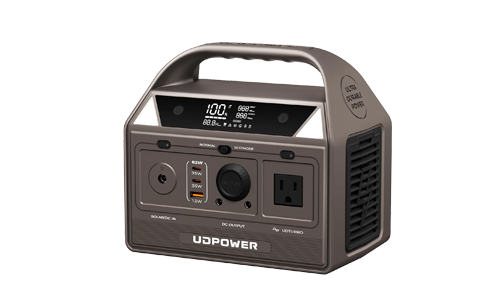
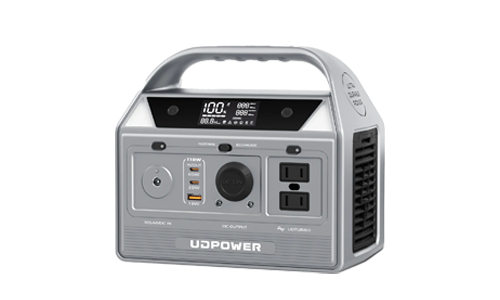
| Portable cabin backup power | Hundreds to several thousand dollars | Battery capacity, inverter output, solar recharge plan and required runtime | UDPOWER power stations |
| Contingency | 10%–20% of planned project cost | Site surprises, material changes, design changes, weather and change orders | Include before construction begins |
The most dangerous line in a cabin budget is often the one marked “TBD.” If the driveway, well, septic, foundation or utility connection has not been priced, you do not yet know what your cabin costs.
DIY vs. Kit vs. Contractor-Built Cabin
Two cabins with the same floor plan can have dramatically different totals depending on who performs the work and how complete the package is.
| Build method | Cost level | Where you save | Where people get surprised | Best for |
|---|---|---|---|---|
| DIY from plans | Lowest potential cash cost | Labor, project management and some finish work | Tools, wasted materials, schedule, inspections and rework | Experienced owners with time |
| Cabin kit | Low to moderate | Preplanned shell and material package | Foundation, assembly, roofing, utilities and interiors may be excluded | Owners wanting a predictable shell |
| Kit + hired trades | Moderate | Owner manages project while specialists handle major systems | Trade scheduling and scope gaps | Many first-time cabin builders |
| General contractor | Moderate to high | Time, coordination and accountability | Allowances and change orders | Full-time homes and rental cabins |
| Custom log / timber build | Highest | Little focus on lowest cost | Engineering, specialty labor and premium materials | Long-term premium projects |
Why the cheapest cabin kit may not be the cheapest cabin
A $25,000 kit and a $70,000 builder quote may not be competing products. The kit might include walls, roof framing and basic windows. The builder quote might include labor, foundation, insulation, electrical work and interior finishing.
Before comparing them, convert every proposal into the same checklist:
- Foundation
- Freight and unloading
- Framing or assembly labor
- Roofing
- Windows and exterior doors
- Insulation and air sealing
- Interior walls and ceilings
- Electrical
- Plumbing
- Heating and cooling
- Kitchen
- Bathroom
- Flooring
- Permits and inspections
Only after those rows are normalized can you tell which option is actually cheaper.
Check These Costs Before Buying Cabin Land
A low land price can hide a high construction price. Before closing on raw land, try to answer the questions below.
| Check before purchase | Why it matters | What to obtain |
|---|---|---|
| Zoning | The parcel may not allow the cabin type or use you want | Written zoning confirmation |
| Minimum dwelling size | Some areas restrict very small permanent homes | County or municipal requirement |
| Short-term rental rules | A vacation rental plan can fail if STR use is restricted | Current local STR ordinance |
| Legal access | A road on a map does not always mean you have legal year-round access | Deed, easement and road-maintenance terms |
| Driveway permit | Highway entrances and culverts may require approval | Driveway / access requirements |
| Septic feasibility | Poor soil can require a more expensive engineered system | Perc or soil evaluation |
| Water | A deep well can change the project budget quickly | Nearby well records and local drilling estimate |
| Grid electricity | The nearest utility pole may still be expensive to connect | Written utility extension estimate |
| Flood risk | May change foundation, insurance and site design | Current flood-zone information |
| Snow / wind design | Structural requirements vary by location | Local design criteria |
| Wildfire exposure | Can influence materials, access, vegetation management and insurance | Local fire and building requirements |
| Construction access | Concrete trucks, septic equipment and delivery trucks need space to reach the site | Contractor site visit |
If your goal is a more independent property, also read How to Live Off the Grid: A Practical Beginner's Guide before committing to a remote parcel.
Realistic Small Cabin Budget Examples
These scenarios show why the final number depends more on how the cabin is used than on square footage alone.
| Cabin scenario | Likely budget before land | Included | Biggest risk |
|---|---|---|---|
| 200 sq ft seasonal dry cabin | $20,000–$50,000 | Simple structure, basic foundation, minimal interior, limited electrical | Road access and site preparation |
| 300 sq ft hunting / weekend cabin | $35,000–$75,000 | Insulation, basic power, heat, sleeping and simple cooking | Turning a simple retreat into a fully serviced house mid-project |
| 400 sq ft finished retreat | $60,000–$130,000 | Kitchen, bathroom, insulation, electrical and heating/cooling | Well and septic |
| 500 sq ft four-season cabin | $80,000–$160,000 | Full bathroom, kitchen, permanent utilities, HVAC and finished interior | Foundation, utility distance and finish upgrades |
| 600 sq ft full-time cabin | $110,000–$200,000 | Code-compliant residence with full mechanical systems | Custom design and difficult site conditions |
| 800 sq ft rental-ready cabin | $150,000–$280,000+ | Guest-ready finishes, parking, full kitchen/bath and stronger durability | Rental regulations, premium finishes and site improvements |
Example: What Might a 500 Sq Ft Cabin Actually Cost?
A 500 sq ft cabin is a useful example because it is small enough to remain efficient but large enough for a real bathroom, kitchen, sleeping area and living space.
Assume an accessible rural parcel, normal soil, one bathroom, simple rectangular floor plan, standard finishes and professional help for major trades.
| 500 sq ft example budget | Planning amount |
|---|---|
| Site clearing, pad and basic access work | $6,000 |
| Foundation | $8,000 |
| Structure, framing, roof, windows and exterior | $40,000 |
| Insulation and air sealing | $7,000 |
| Electrical | $6,000 |
| Plumbing | $7,000 |
| Heating / cooling | $5,000 |
| Kitchen and bathroom | $18,000 |
| Interior finishes | $13,000 |
| Permits, design and inspections | $5,000 |
| Well and septic allowance | $15,000 |
| Appliances and basic furniture | $6,000 |
| Subtotal | $136,000 |
| 15% contingency | $20,400 |
| Planning total before land | About $156,400 |
This is not a claim that every 500 sq ft cabin costs $156,400. The purpose of the example is to show why a finished cabin can cost far more than a $30,000 or $40,000 shell advertised online.
If the owner performs substantial labor, uses a simpler water/wastewater arrangement where legally allowed, chooses basic finishes or already owns improved land, the total may fall substantially. A steep parcel, long driveway, deep well or premium interior can move it the other direction.
Land + site work + foundation + structure + utilities + mechanical systems + interior + permits/design + appliances + contingency = realistic project budget
How Much Should You Budget for Cabin Power?
Power should be planned before construction, not after the cabin is finished.
The first decision is whether the property will use:
- normal grid electricity,
- a completely off-grid electrical system,
- a portable battery system for essential loads,
- a gas generator, or
- a hybrid of several options.
A portable power station is especially useful for weekend cabins, construction-stage power, emergency backup, communication equipment and carefully managed off-grid essentials. It should not be confused with a professionally engineered whole-cabin electrical system.
A realistic small-cabin daily power calculation
Instead of asking only, “How many watts is the power station?” calculate watt-hours per day.
| Cabin load | Planning watts | Daily use | Estimated daily energy |
|---|---|---|---|
| LED lighting | 20W total | 5 hours | 100Wh |
| Wi-Fi / communications | 20W | 8 hours | 160Wh |
| Laptop | 65W | 3 hours | 195Wh |
| Phone charging | 10W average | 2 hours | 20Wh |
| CPAP example | 45W | 8 hours | 360Wh |
| Compact refrigerator equivalent running time | 70W | 8 equivalent hours | 560Wh |
| Small water pump | 300W | 0.3 hour | 90Wh |
| Coffee maker | 900W | 0.1 hour | 90Wh |
| Example daily total | — | — | About 1,575Wh/day |
The refrigerator example uses equivalent compressor-running time rather than assuming the compressor draws its rated power 24 hours a day. Real energy use depends on the refrigerator, ambient temperature, thermostat setting and how often the door is opened.
Appliance watts × hours used = watt-hours consumed
How much usable energy does a portable power station provide?
For practical AC runtime planning, this guide uses a 90% conversion-efficiency assumption.
| UDPOWER model | Rated battery capacity | Planning usable AC energy at 90% | How it fits the example cabin |
|---|---|---|---|
| S1200 | 1,190Wh | About 1,071Wh | Good for a managed overnight essentials load, but not the entire 1,575Wh example without recharging or reducing loads |
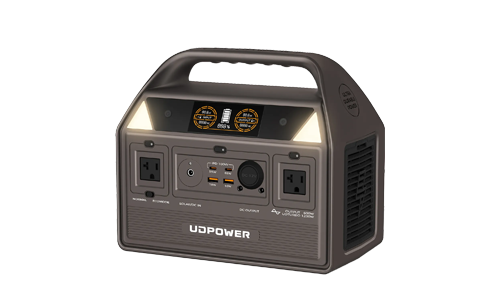
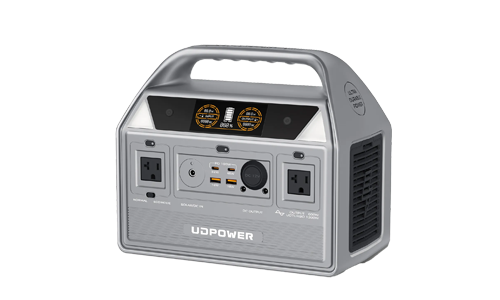
| S2400 | 2,083Wh | About 1,875Wh | Better matched to the full example daily load with additional output headroom |
Actual runtime can be lower or higher depending on appliance cycling, temperature, charging losses, DC versus AC use, battery condition and simultaneous loads.
For a deeper look at system sizing, see Can a Solar Generator Power a House? and UDPOWER S1200 vs. S2400.
Recommended UDPOWER Options for a Small Cabin
The goal is not to buy the biggest battery possible. Match the station to your actual daily watt-hours and the maximum watts you expect to use at one time.
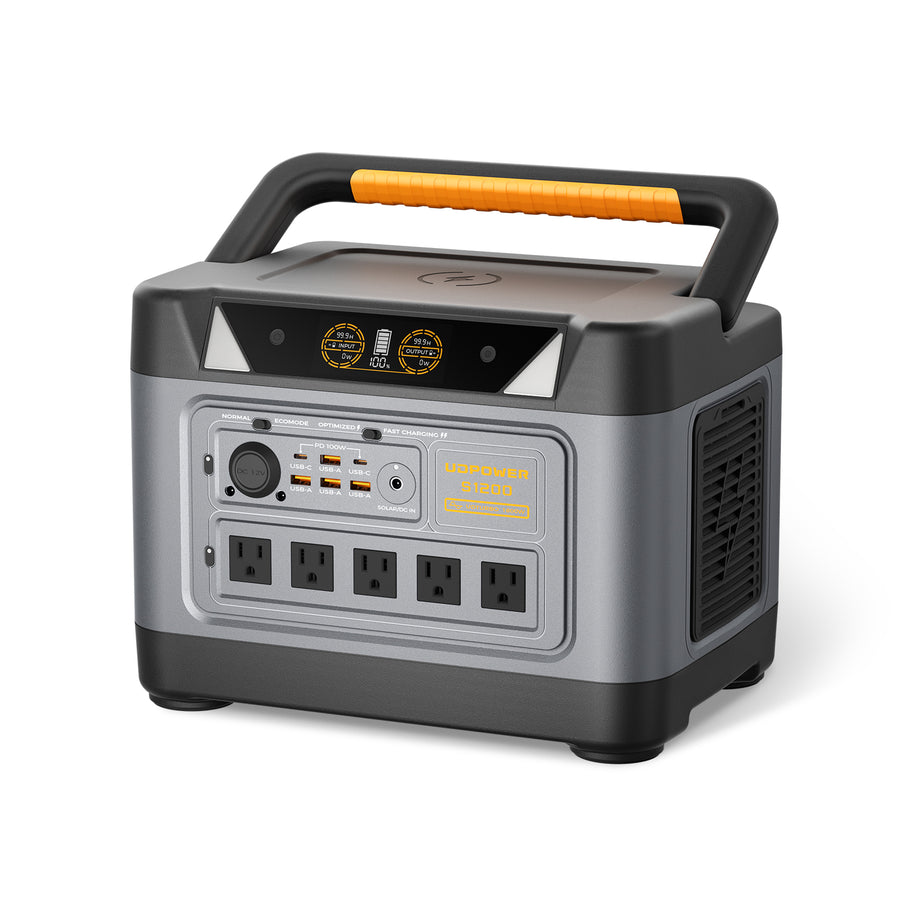
UDPOWER S1200 — Best for Lighter Weekend-Cabin Loads
The S1200 makes the most sense when portability matters and you are deliberately managing your cabin loads. It can cover lighting, communication equipment, laptops, CPAP use, electronics and many refrigerator or short appliance loads as long as total output remains within the station's limits.
- Battery capacity: 1,190Wh
- Rated AC output: 1,200W pure sine wave
- UDTURBO: up to 1,800W for compatible higher-power devices
- Solar input: up to 400W
- AC outlets: 5 on the current gray configuration
- Total output ports: 14
- UPS transfer: ≤10ms
- Battery chemistry: LiFePO4
- Weight: approximately 26 lb
- Planning usable AC energy: approximately 1,071Wh at 90% efficiency
Best cabin fit: weekend cabin, hunting cabin, remote-work cabin, construction support and emergency essentials where loads are kept under control.
View UDPOWER S1200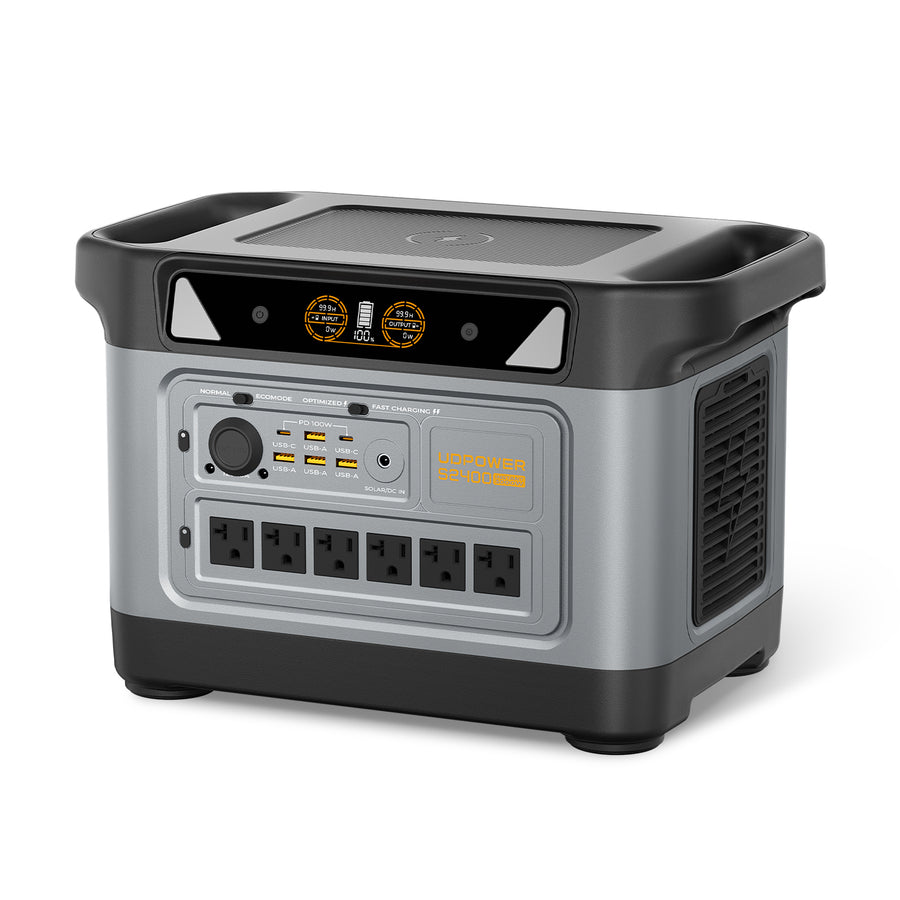
UDPOWER S2400 — Better for Larger Cabin Loads and Longer Runtime
The S2400 is the stronger choice if your cabin power plan includes more simultaneous devices, refrigeration, pumps, coffee makers, microwave-style short loads, tools or longer periods between recharging.
- Battery capacity: 2,083Wh
- Rated AC output: 2,400W pure sine wave
- UDTURBO: up to 3,000W for compatible higher-power devices
- Solar charging: up to 400W
- AC outlets: 6
- Total output ports: 15
- UPS transfer: ≤10ms
- Battery chemistry: LiFePO4
- Weight: approximately 40.8 lb
- Planning usable AC energy: approximately 1,875Wh at 90% efficiency
Best cabin fit: finished weekend cabins, longer stays, larger appliance loads, refrigerator backup, remote property work and users who want more output margin.
View UDPOWER S2400If solar charging is part of your cabin plan, browse UDPOWER portable solar panels and confirm that panel voltage, current and total wattage remain within the input specifications of your specific power station.
You can also compare the broader lineup on the UDPOWER Portable Power Stations page.
How to Lower Cabin Construction Costs Without Creating Future Problems
1. Build a rectangle before you build an architectural statement
Every additional corner, bump-out, dormer and roof intersection adds framing, flashing, labor and potential maintenance. A simple footprint is one of the safest ways to reduce cost without sacrificing building quality.
2. Put the bathroom and kitchen close together
Keeping plumbing fixtures near one another shortens water and drain runs and simplifies freeze protection.
3. Avoid unnecessary hallway space
In a 400–600 sq ft cabin, every square foot should have a job. A compact floor plan lets you reduce the building footprint without making the useful rooms feel as small.
4. Spend on the building envelope before decorative finishes
Insulation, air sealing, roof durability, drainage and moisture control are harder and more expensive to correct later than countertops or cabinet hardware.
5. Design around standard material dimensions
Unusual spans, custom windows and complicated roof geometry can increase material waste and labor. Standard dimensions make sourcing and replacement easier.
6. Separate Phase 1 from Phase 2
A deck extension, landscaping, premium cabinetry, decorative lighting and built-in furniture can often be added after the cabin is weather-tight and functional.
7. Price site work before choosing finishes
Do not spend your contingency fund on upgraded floors before the excavator, well driller and septic contractor have confirmed their costs.
8. Plan power while the walls are open
Decide where you need standard outlets, lighting, network equipment, exterior power, utility equipment and backup-power connections before interior walls are finished.
9. Use efficient appliances when off-grid power matters
Reducing daily energy consumption can be cheaper than continually adding battery and solar capacity.
10. Protect a real contingency fund
A 10%–20% reserve is not spare money for upgrades. It exists for rock discovered during excavation, extra drainage, material changes, permit requirements and other problems that appear after work begins.
How to Compare Cabin Builder Quotes
The best quote is not necessarily the lowest number. It is the quote with the fewest important unknowns.
Before accepting a proposal, ask:
- Does the price include the foundation?
- Does it include excavation and site grading?
- Does it include material delivery and unloading?
- Are windows and exterior doors included?
- Is roofing included?
- What insulation level is included?
- Is interior wall and ceiling finish included?
- Are electrical fixtures included or only rough wiring?
- Are plumbing fixtures included or only rough plumbing?
- Is HVAC equipment included?
- Does the kitchen price include cabinets, countertops and appliances?
- What bathroom allowance is included?
- Are permits and inspection fees included?
- Who pays for utility trenching?
- Who handles well and septic work?
- Are driveway and drainage included?
- What happens if material prices change?
- How are change orders approved and priced?
- What work is specifically excluded?
- What payment schedule is required?
What Should You Budget First?
If you are still in the research stage, this order reduces the chance of falling in love with a cabin plan that does not fit the property or the budget.
- Confirm zoning and legal use.
- Confirm access.
- Investigate septic feasibility.
- Investigate water.
- Get a grid-power extension quote or define an off-grid strategy.
- Confirm likely foundation requirements.
- Estimate clearing, grading and driveway work.
- Choose the cabin size and construction method.
- Price the complete shell.
- Price electrical, plumbing and HVAC.
- Add interior finishes and appliances.
- Add a 10%–20% contingency.
This approach reverses a common mistake: choosing a beautiful cabin first and discovering the expensive property problems later.
Related Cabin and Off-Grid Planning Guides
FAQ: How Much Does It Cost to Build a Small Cabin House?
How much does a 400 sq ft cabin cost to build?
A 400 sq ft cabin may cost roughly $55,000–$140,000 when built as a finished retreat or contractor-built small home before land. A simple DIY dry cabin can cost less, while a remote or custom project can exceed $140,000.
How much does a 500 sq ft cabin cost?
A useful planning range is roughly $70,000–$170,000 before land for many finished 500 sq ft projects. The biggest variables are site work, foundation, labor, utilities, well, septic and finish level.
How much does a 600 sq ft cabin cost to build?
A finished 600 sq ft cabin may land around $85,000–$200,000 before land. A simpler DIY-heavy project can cost less, while a difficult mountain or remote site can cost considerably more.
How much does an 800 sq ft cabin cost?
An 800 sq ft cabin can range from roughly $115,000 for a relatively basic finished build to $260,000 or more for contractor-built, custom or difficult-site construction.
Can you build a small cabin for $50,000?
Yes, but the project usually needs to remain small and simple. A $50,000 budget is most realistic for a DIY-heavy dry cabin, hunting cabin or basic retreat on an easy site. Building a fully finished residence with a foundation, bathroom, kitchen, septic, well, HVAC and professional labor for $50,000 is much more difficult.
Can you build a cabin for $100,000?
Yes. A $100,000 budget can work for some small finished cabins, especially when the property is easy to access, utilities are straightforward and the design is simple. It becomes much harder when the project requires major site work, a deep well, engineered septic or premium finishes.
Is it cheaper to buy a cabin kit?
A kit can reduce design work and make the shell more predictable, but the kit price is not the final cabin price. Foundation, freight, assembly, roofing, electrical, plumbing, insulation, HVAC, kitchen, bathroom, interior finishing and site work may all be separate.
Is it cheaper to build a small cabin or a tiny house?
Neither is automatically cheaper. Cost depends on whether the structure is DIY, prefab or custom and whether it uses permanent utilities. Tiny homes and small cabins both suffer from relatively high fixed costs per square foot because kitchens, bathrooms and mechanical systems remain necessary even as floor area shrinks.
Does the cost to build a cabin include land?
Usually not. Most construction cost estimates exclude the purchase price of the land. You should also budget separately for access, clearing, driveway work, utilities, well, septic and other improvements needed to make raw land buildable.
What is the cheapest type of cabin foundation?
For suitable sites, simple slab or pier-based systems can be less expensive than full basements. The correct foundation depends on soil, slope, frost depth, drainage, flood conditions and local building code, so the cheapest foundation on paper is not always appropriate for the property.
Is an off-grid cabin cheaper to build?
Not necessarily. Avoiding a long grid connection can save money, but an off-grid property still needs energy generation, battery storage, water, wastewater, heating and backup plans. Off-grid makes the most financial sense when systems are sized around low, well-managed loads rather than trying to duplicate a large grid-connected home's energy use.
How much should I budget for unexpected cabin costs?
A contingency of roughly 10%–20% is a sensible starting point. Remote or difficult sites deserve more caution because excavation, road access, well depth, drainage and material delivery can reveal costs that were difficult to know during early planning.
Why are small cabins expensive per square foot?
Many construction expenses are partly fixed. A small cabin still needs a foundation, electrical equipment, kitchen, bathroom, water system, wastewater system, permits and heating. Those costs are spread across fewer square feet, which can make a small cabin more expensive per square foot than a larger house.
Should I connect a cabin to the grid or use a portable power station?
If affordable grid service is already close to the cabin, permanent utility power is usually the most convenient choice for a full-time residence. Portable power stations make more sense for essential backup, weekend cabins, construction-stage use and low-energy setups. Remote cabins should compare the actual utility-extension quote with the cost and limitations of an off-grid system before deciding.
Final Takeaway
A realistic small-cabin budget starts well before you buy lumber or order a kit.
For most U.S. projects, using roughly $100–$300 per sq ft before land is a more useful starting point than relying on a low advertised shell price. A basic cabin on an easy parcel can stay near the lower end. A finished four-season cabin with professional labor, well, septic, difficult access or custom finishes can move quickly toward the upper end or beyond it.
The smartest sequence is simple: check the land, price the site, define the systems, then choose the cabin.
For remote or weekend properties, include power planning at the same stage as plumbing and heating. Knowing your daily watt-hours before construction lets you decide whether grid service, portable battery backup, solar charging or a larger off-grid system makes the most sense instead of trying to solve the problem after the cabin is finished.
Compare battery capacity, AC output and portable solar options before deciding how much backup or off-grid power your cabin really needs.
View Power Station Options View UDPOWER S1200 View UDPOWER S2400 Read the Off-Grid Living GuideRelated Articles


