

How to Choose the Right Solar Generator: A Practical 2026 Buying Guide
Last updated: November 10, 2026
Quick answer: Choose a solar generator by what it must run, how long it must run without sunshine, and how much energy its panels can replace the next day. Calculate the wattage of devices that operate at the same time, the watt-hours you need between charges, and the realistic daily solar input. Then check the solar voltage and current limits, the unit's weight, and whether the battery can cover a cloudy day.
As a starting point, 200–500Wh is reasonable for light electronics; around 500–1,200Wh works for many camping, CPAP, and modest backup setups; and approximately 2,000Wh or more suits longer runtimes or higher-power household appliances. These are starting ranges, not guarantees. A 2,000Wh battery cannot run an appliance that exceeds its inverter's output rating, and a big battery with a small solar panel may take several sunny days to recharge.

If you're comparing solar generators, the tempting approach is to sort by battery size and buy the largest one within budget. I prefer to start with a harder question: What happens if I need power tonight and the sun is poor tomorrow? That question catches the two buying mistakes I see most often: not enough stored energy for overnight loads and not enough solar recovery for a second or third day.
This guide gives you a repeatable way to make the decision, with appliance estimates, battery and solar calculations, compatibility checks, and actual UDPOWER model specifications. The numbers are planning examples unless identified as manufacturer ratings; they are not claimed field-test results for every appliance.
1. First, Know What You're Buying
A solar generator normally means a rechargeable portable power station used with compatible solar panels. The power station stores electricity in its battery and supplies DC, USB, or AC power; the panels convert sunlight into electricity for recharging. Unlike an engine-driven generator, it does not burn fuel to produce electricity on demand. Solar charging works only when sufficient light is available.
Also check whether the advertised package actually includes panels. A battery-only listing can be called “solar ready” without shipping with any solar panel at all. With a bundle, confirm whether “240W of solar” means one 240W panel or two 120W panels, and whether the necessary compatible cables are provided.
| Term on a product page | What it tells you | What it does not tell you |
|---|---|---|
| Wh (watt-hours) | Stored battery energy | How large an appliance can be started |
| W (watts) | Rated power drawn or supplied at a moment | How many hours a battery lasts |
| Rated AC output | Normal continuous AC power ceiling | Usable energy after conversion losses |
| Surge or high-power mode | Possible support above rated output for compatible loads | Universal compatibility with every appliance at that wattage |
| Panel wattage | Panel's rated output under specified test conditions | Continuous real-world charging input throughout the day |
| Maximum solar input | Station's solar charging limit | Permission to exceed voltage, current, or wiring requirements |
The distinction matters. I would rather buy a properly matched 1,200Wh setup with useful solar than a 2,000Wh battery I cannot refill during the trip.
2. Run Four Checks Before Looking at Brands
The right solar generator must pass all four checks. Passing only the first two means you may have a functional battery backup, but not necessarily a sustainable solar setup.
| Decision check | Question to answer | Pass condition | Common failure |
|---|---|---|---|
| Power-now check | How many watts run together? | Combined running load fits rated output; startup demands are supported | Large battery, undersized inverter |
| Night-reserve check | How many Wh are needed without recharging? | Usable stored energy covers the planned interval plus a safety margin | Device stops before morning |
| Next-day recovery check | How many Wh will panels put back? | Expected solar replenishment meets a useful share of daily consumption | Battery loses charge every day |
| Connection-and-use check | Do panels, ports, conditions, and weight fit? | Voltage/current/connector limits, portability, and charging conditions all work | Panel plugs in but cannot charge safely |
If you only need a battery for one weekend and can charge at home, you may decide that solar panels are unnecessary. That is a perfectly sensible outcome; buying solar should solve a real replenishment problem.
3. Build a Daily Energy Budget From Actual Appliances
Start with a list of devices, their actual input power, and the hours they will run. A label is helpful, but a plug-in power meter is better for equipment that cycles or changes power draw. Check an adapter's output and actual device behavior rather than treating the adapter's maximum wattage as the constant load.
These wattages are illustrative planning values, not official consumption figures for any particular refrigerator, CPAP, or laptop.
| Device | Planning power | Daily use | Daily energy | Important measurement detail |
|---|---|---|---|---|
| Two LED lights | 8W total | 5 hours | 40Wh | Sum both lights |
| Wi-Fi router | 12W | 24 hours | 288Wh | Include a separate modem if used |
| Laptop | 50W average | 3 hours | 150Wh | Charging demand tapers as battery fills |
| Camp fan | 25W | 8 hours | 200Wh | Test at the speed you actually use |
| CPAP example | 40W average | 8 hours | 320Wh | Humidifier and heated hose can change this substantially |
| Camping fridge example | 40W while compressor runs | 8 total compressor hours | 320Wh | Measure duty cycle over a full day |
| Phone charging | 15Wh per refill | 2 refills | 30Wh | Use energy per charge, not all-day charger watts |
| Coffee maker | 1,000W | 6 minutes | 100Wh | Short energy use but high instantaneous demand |
Separate overnight essentials from optional daytime loads
For outages and multi-night camping, I split the list in two. Protected loads include anything that must work overnight, such as a prescribed medical device or refrigerator. Flexible loads include a coffee maker, television, and a laptop that can wait until sunlight is strong. This is one of the easiest ways to avoid buying a much bigger battery than necessary.
Refrigerators require particular care: a 100W compressor does not necessarily use 2,400Wh per day because it cycles. But a hot room, repeated door openings, or warm food can increase the duty cycle. For a CPAP, measure a real overnight session using your normal prescribed settings; do not reduce medically necessary settings just to extend battery life. See the CPAP travel power guide for a more detailed approach.
4. Check Running Watts and Startup Demand Separately
Stored watt-hours and inverter output solve different problems. If your kettle draws 1,500W, a station with 2,000Wh of storage but only 1,000W of rated AC output may not run it. When I look at a power station, the rated continuous output is my baseline, followed by any model-specific high-power behavior and actual appliance compatibility.
| Simultaneous-load example | Running draw | Minimum sensible rated-output class | What else to check |
|---|---|---|---|
| Two lights + 50W laptop | 58W | 200–400W | Appropriate USB-C or AC output |
| 40W fridge compressor + 25W fan + 50W laptop | 115W | 400–600W or higher | Refrigerator startup current |
| 100W TV + 12W router + 60W laptop | 172W | 400–600W or higher | Continuous output and overnight energy |
| 1,000W coffee maker + 100W other loads | 1,100W | At least 1,200W, with margin preferred | Appliance label and other loads |
| 1,500W heater + 300W other loads | 1,800W | 2,000–2,400W class or higher | Very rapid battery drain |
Motorized appliances need a separate startup check. A refrigerator, air compressor, pump, or power tool can draw higher current during startup than while running. Manufacturers use terms such as surge, boost, and high-power output differently. On applicable UDPOWER models, UDTURBO can support compatible loads above the rated output continuously, but with reduced conversion efficiency. Do not assume that number is available at full efficiency or that every motor or electronically controlled appliance will run correctly.
Some home equipment also requires 240V, hardwiring, or a transfer mechanism. A typical 120V portable station is not a whole-home 240V substitute. Never backfeed a home outlet to power wiring; use a professionally approved backup connection where required.
5. Calculate Battery Size Using Real Usable Energy
For UDPOWER AC runtime planning, I use a 90% conversion efficiency assumption. It is a consistent estimate, not a promise of 90% output under every load. Inverter overhead at very low loads, device power fluctuations, temperature, battery age, and operating modes can reduce actual runtime.
For example, a 1,190Wh station running a steady 100W AC device has a planning runtime of 1,190 × 0.90 ÷ 100 = 10.7 hours. At 500W, the same estimate becomes 2.1 hours.
| Battery capacity | 25W continuous AC | 60W continuous AC | 100W continuous AC | 500W continuous AC |
|---|---|---|---|---|
| 256Wh | 9.2 hr | 3.8 hr | 2.3 hr | Not appropriate unless the output rating supports 500W |
| 596Wh | 21.5 hr | 8.9 hr | 5.4 hr | 1.1 hr |
| 1,190Wh | 42.8 hr | 17.9 hr | 10.7 hr | 2.1 hr |
| 2,083Wh | 75.0 hr | 31.2 hr | 18.7 hr | 3.7 hr |
Battery-only illustrative estimates, rounded; no solar input, no reserved capacity. Real runtimes are often shorter, particularly for low-power AC loads. The 500W example is not compatible with a 400W-rated station under its normal output rating.
A better buying formula: include time, losses, and reserve
Suppose a campsite needs 600Wh of AC electricity per night and you want a 20% reserve. For one night, 600 ÷ (0.90 × 0.80) = 833Wh of nominal battery capacity. For two nights without meaningful recharging, that rises to about 1,667Wh. This reserve calculation intentionally treats 20% of the battery as unavailable for routine use. It is not an additional inverter-loss multiplier to apply again later.
| AC energy needed before recharge | Minimum battery Wh at 90% efficiency | Battery Wh allowing a 20% reserve | Why it matters |
|---|---|---|---|
| 200Wh | 222Wh | 278Wh | Small electronics overnight |
| 400Wh | 444Wh | 556Wh | Moderate night load |
| 600Wh | 667Wh | 833Wh | CPAP or camping-fridge planning case |
| 900Wh | 1,000Wh | 1,250Wh | Several essential loads together |
| 1,500Wh | 1,667Wh | 2,083Wh | Longer periods between reliable charges |
Direct USB-C or regulated DC power may avoid the station's AC inverter and perform differently. The table is deliberately AC-focused so readers do not confuse optimistic theoretical battery energy with available outlet energy. For deeper examples, see How Long Can a Solar Generator Run?
6. Size the Solar Panels for Energy Replaced Each Day
Now comes the part that can change the entire purchase: how fast the battery recovers. A 2,000Wh station connected to a single 120W panel does not magically become a dependable multi-day power system. When the daily electricity you use exceeds the energy your panels replenish, the battery loses ground.
I use 70% as a conservative solar planning yield here to allow for imperfect positioning, temperature, charging losses, and other real-world conditions. It is a modeling assumption, separate from the 90% AC-use assumption. “Useful sun hours” are not the same as the number of hours between sunrise and sunset. Real production depends on your location and season, plus shading, panel angle, and weather. The PVWatts Calculator can help you understand regional solar resources, though its conventional PV-system model is not a guarantee of portable-panel performance at a campsite.
| Effective panel input | 2 useful sun hours | 4 useful sun hours | 5 useful sun hours | Likely role |
|---|---|---|---|---|
| 120W | 168Wh | 336Wh | 420Wh | Phones, lights, small daily top-ups |
| 210W | 294Wh | 588Wh | 735Wh | Moderate camping recovery |
| 240W | 336Wh | 672Wh | 840Wh | Family or vehicle-camping electronics |
| 400W | 560Wh | 1,120Wh | 1,400Wh | Higher-use off-grid or emergency recovery |
Figures are illustrative Wh added under a simplified planning model, not tested output or full-charge guarantees. Solar power is limited by the station's supported input, even if attached panels have higher combined nameplate watts.
Why “a 420W solar kit” does not mean 420W charging all day
On a dual-210W kit, 420W is the combined rated power of two panels. Actual input can be lower for most of the day, and the station can impose its own charging ceiling. For example, UDPOWER S1200's published maximum solar input is 400W even when a compatible bundled pair of panels is labeled 420W in total. The S2400 has a maximum recommended solar setup of 420W, while its input voltage and current limits still apply. Do not assume 420W sustained input or use its two solar connectors to add two independent charge powers together.
What solar wattage do you need to break even?
If your daily AC usage is 600Wh, the battery must supply around 667Wh when modeled at 90% efficiency. At four useful sun hours and 70% solar yield, the panel requirement is approximately 667 ÷ (4 × 0.70) = 238W before extra reserve for cloudy days. A compatible 240W-class array is therefore a mathematical starting point, not a comfortable worst-weather guarantee. For cloudy seasons or shade, more input within supported limits or lower daily consumption is the practical fix.
| Daily AC use | Battery energy used at 90% | Panel watts for 4 sun hours at 70% | Practical interpretation |
|---|---|---|---|
| 200Wh | 222Wh | 79W | A compatible 120W panel may keep up on good days |
| 400Wh | 444Wh | 159W | Consider a compatible 210W-class panel |
| 600Wh | 667Wh | 238W | 240W-class solar is only a baseline |
| 900Wh | 1,000Wh | 357W | Approach a 400W supported-input class |
| 1,200Wh | 1,333Wh | 476W | Above a 400W input ceiling; reduce consumption or find more charging options |
7. The Three-Day Test: What Happens When the Weather Changes?
Here's a more demanding test than “How long does it run a 100W appliance?” Imagine a 1,190Wh battery and a compatible 210W panel. Your campsite uses 600Wh of AC energy each day, equivalent to approximately 667Wh drawn from the battery at the 90% planning efficiency. You begin with a full battery.
On a good-sun day, the panel replaces about 210 × 4 × 0.70 = 588Wh. On a poor-sun day with just half an effective sun hour, it replaces approximately 74Wh. The difference is what your battery reserve needs to absorb.
| Day | Starting battery energy | AC usage | Solar recovered | Estimated ending battery energy |
|---|---|---|---|---|
| Day 1: sunny | 1,190Wh | 600Wh (about 667Wh battery draw) | 588Wh | 1,111Wh |
| Day 2: cloudy | 1,111Wh | 600Wh (about 667Wh battery draw) | 74Wh | 518Wh |
| Day 3: sunny | 518Wh | 600Wh (about 667Wh battery draw) | 588Wh | 439Wh |
Simplified daily energy ledger, not a charging simulation. It assumes solar is captured while there is enough room in the battery, ignores the exact time of day of each load, and does not include extra standby consumption. Actual state-of-charge movement can be less favorable.
The battery still has energy after three days, but the comfortable reserve has narrowed. At that point, a second cloudy day would be a serious problem. A larger battery, a higher compatible solar input, or reduced consumption would make the setup more resilient. This is why I size for the worst likely recharge interval, not for the most impressive full-sun charging claim.
Try a 24-hour no-sun test before buying
Take your essential AC watt-hours for one full day, divide by 0.90, and compare the result with 80% of the station's capacity. If that test fails, your plan depends on good weather every day. If it passes, repeat with two days when your situation calls for it. For longer outages, the 4-, 12-, 24-, and 48-hour backup guide provides useful additional planning.
8. Don't Buy a Solar Panel Until You Check Electrical Compatibility
A panel can have the right-looking wattage and still be incompatible. I check the station's permitted input voltage, current, wattage, connector, and the panel's open-circuit voltage (Voc) before choosing any cable or array. An adapter can change a connector shape; it cannot turn unsafe voltage into safe voltage.
| UDPOWER power station | Published capacity / AC output | Published solar limits | What to verify | Official source |
|---|---|---|---|---|
| C400 | 256Wh / 400W | 150W maximum; 11–28V input | A panel within the narrower voltage range and correct connector | C400 specs |
| S1200 | 1,190Wh / 1,200W | 400W maximum; 12–75V, 12A | Approved array wiring, cold-condition Voc, and current | S1200 specs |
| S2400 | 2,083Wh / 2,400W | 420W maximum recommended solar configuration; DC7909 input 12–50V, 10A | Approved panel pairing, Voc at cold temperatures, and shared-input behavior | S2400 specs |
Two UDPOWER panel examples show why wattage alone doesn't settle compatibility:
| Solar panel | Rated watts | Published Voc | Maximum-power voltage | Official source |
|---|---|---|---|---|
| UDPOWER 120W portable panel | 120W | 21.5V | 17.92V | 120W panel details |
| UDPOWER 210W foldable panel | 210W | 48.0V | 40.0V | 210W panel details |
A 210W panel's Voc is much higher than a 120W panel's. That matters especially on systems with a 50V maximum PV input: open-circuit voltage can increase in cold weather. A manufacturer-offered kit is the sensible starting point, but you should still follow the current manual and installation instructions for your exact unit and climate. Do not improvise an unapproved arrangement.
Series versus parallel is a safety decision, not just a performance trick
In a series connection, panel voltages add. In a parallel connection, branch currents add while voltage stays in a similar range. Neither is automatically safe for a particular power station. For UDPOWER, do not wire panels in series unless the documentation for your specific model expressly approves that arrangement. Use a matched, approved parallel configuration where the model and kit call for one.
The S2400 has a DC7909 input and a rear XT60 solar connection. Using both at the same time does not add their charging power: the system takes the higher charging power rather than combining them. Two connectors are not proof of two independent MPPT trackers. The mixed-brand panel compatibility guide and solar overpaneling guide explain these distinctions in greater detail.
9. The Features That Matter After the Numbers Work
AC, vehicle, and solar charging
Solar is valuable for replenishing during extended outages and off-grid trips. Wall charging is the predictable way to start a trip with a full battery; car charging may help while driving but is usually slower. Check the actual input limit for each method instead of assuming that a station with fast wall charging is equally fast on solar. When charging from a vehicle, follow the station's instructions and avoid draining a parked vehicle's starter battery.
Outlet types and inverter idle draw
Count the AC outlets, USB-C ports, and regulated DC ports you will really use. A refrigerator that accepts a compatible regulated 12V supply may avoid some AC inverter loss; a laptop with supported USB-C charging can do the same. The connector and current rating still need to match. At very small AC loads, an inverter's own power consumption may become a meaningful part of the nightly budget.
Weight and how far you carry it
“Portable” can describe a 7-pound battery or a roughly 41-pound one. My test is practical: can you lift it into your vehicle, carry it to the campsite, and set it in a dry, ventilated location? Also count the weight and folded size of the panels, not just the battery.
LiFePO4 cycle life and real ownership costs
LiFePO4 batteries are a strong fit for frequently used power stations. For UDPOWER lifespan planning, the current stated battery capacity benchmarks are approximately 80% remaining after 3,000 cycles and 70% after 4,000 cycles, under the specified conditions. Cycle counts describe gradual capacity loss rather than a precise expiration date. Warranty coverage, support, and how often you'll actually use the unit deserve attention alongside the initial price.
Backup switching and temperature limits
Some higher-capacity stations offer UPS-style transfer times, but a published transfer time does not guarantee compatibility with every computer, medical device, or sensitive appliance. Test your actual setup ahead of an outage. Charging temperature matters, too: lithium batteries have operating limits, especially in freezing conditions. Keep the power station itself sheltered from water and excessive heat even when the panel is designed for outdoor exposure. The U.S. Department of Energy's solar and storage overview explains why stored energy and generation must be considered together.
| Feature | Ask yourself | Why it changes your decision |
|---|---|---|
| DC and USB-C ports | Will my devices charge directly? | Can reduce reliance on the AC inverter where compatible |
| AC outlet count | How many devices need plugs at once? | Prevents impractical outlet sharing |
| Charging flexibility | Can I top up from wall, vehicle, and solar? | More recovery options when sunlight fails |
| Weight and panel size | How far do I carry the full kit? | Affects whether the system gets used |
| Battery chemistry | Is this for frequent cycling or occasional backup? | Influences long-term capacity retention |
| UPS behavior | Does the specific load tolerate the transfer? | Important for network and other sensitive electronics |
| Weather and thermal limits | Where will it be charged and stored? | Protects safe operation and charging ability |
10. Which Solar Generator Size Fits Your Situation?
These ranges are meant to narrow your shortlist. After picking the likely class, use the earlier formulas to check your actual load and weather plan.
| Your main use | Capacity starting point | Output starting point | Solar strategy | Watch out for |
|---|---|---|---|---|
| Phones, LED lights, camera batteries | 200–500Wh | 200–400W | Small compatible panel; optional for short trips | Paying for capacity you won't need |
| Weekend car camping | 500–1,200Wh | 600–1,200W depending on appliances | 120–240W-class compatible panels | Fan and fridge overnight use |
| CPAP and essentials | 500–1,200Wh+ depending on measured overnight use | Based on the actual power supply and other simultaneous devices | Consider solar for trips longer than one night | Humidification, DC voltage, reserve |
| Refrigerator + router + lights during an outage | 1,000–2,000Wh+ | 1,000–2,400W based on startup and other loads | Prefer reliable daytime recovery | Unmeasured compressor duty cycle |
| RV and extended off-grid use | 1,000–2,000Wh+ | 1,200–2,400W or higher based on appliance needs | Approach the station's approved solar input capacity | Shade, available panel area, daily deficits |
| Microwave, coffee maker, heavier tools | 2,000Wh+ for sustained convenience | 2,000–2,400W+ as required | Solar helps recovery but not instant output | High running power and 120V/240V compatibility |
| Whole-home air conditioning, electric heat, large 240V circuits | Usually beyond a single portable unit | Requires a dedicated load and electrical assessment | Professionally designed home battery or generation setup | Assuming a portable 120V station can run a whole house normally |
For more focused use-case advice, compare the UDPOWER camping and RV power options or the home backup collection. For shorter outdoor trips, the camping power station buying guide includes a more detailed overnight load perspective.
11. Which UDPOWER Solar Generator Should You Choose?
Once the energy and electrical checks are complete, here are the UDPOWER options I would compare first. Specifications are from current official product pages; bundle contents and product availability can change. For each one, remember that a solar generator kit includes panels only when the selected bundle says it does.
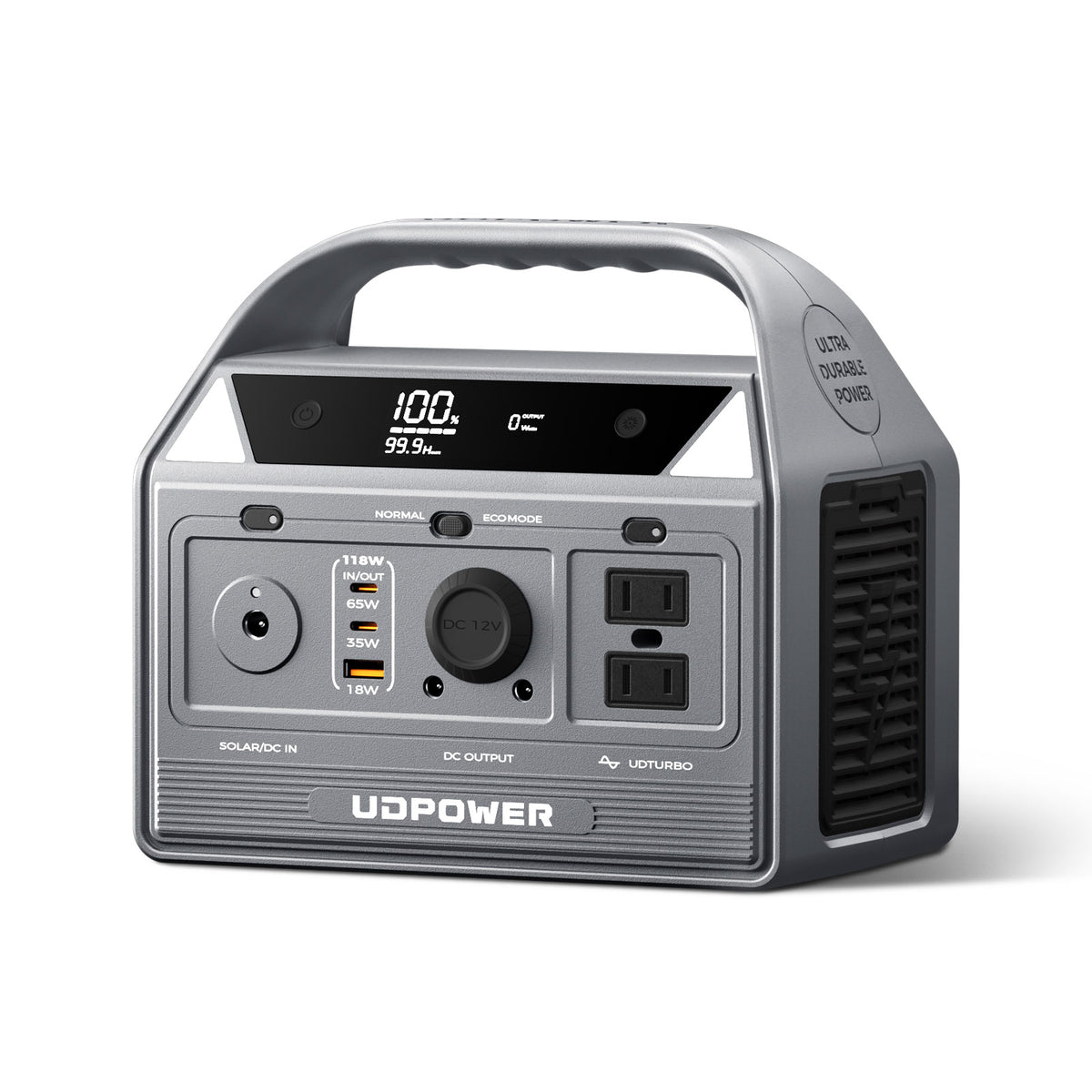
UDPOWER C400 — For lightweight solar charging and basic essentials
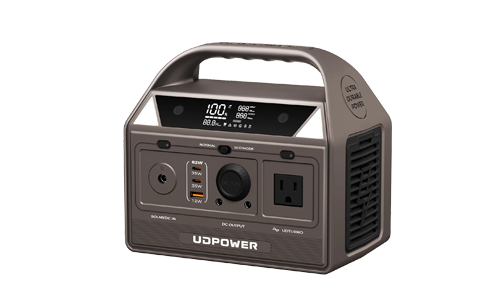
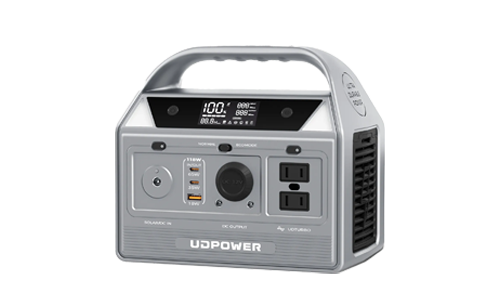
At 256Wh and 400W rated AC output, the C400 makes sense for phones, cameras, lights, a laptop, or a short off-grid stop. Its approximate 6.88-pound weight makes it easier to carry than a 1,000Wh-class station. I would not buy it as a confident all-night refrigerator-and-CPAP solution without measuring the exact energy budget first.
- Capacity: 256Wh LiFePO4
- Rated AC output: 400W pure sine wave
- Supported solar input: up to 150W, 11–28V
- Approximate weight: 6.88 lb
- Suitable solar starting point: compatible 120W panel or official bundle
My reason to choose it: portability matters more than long runtimes or high-power appliances.
View C400 and solar options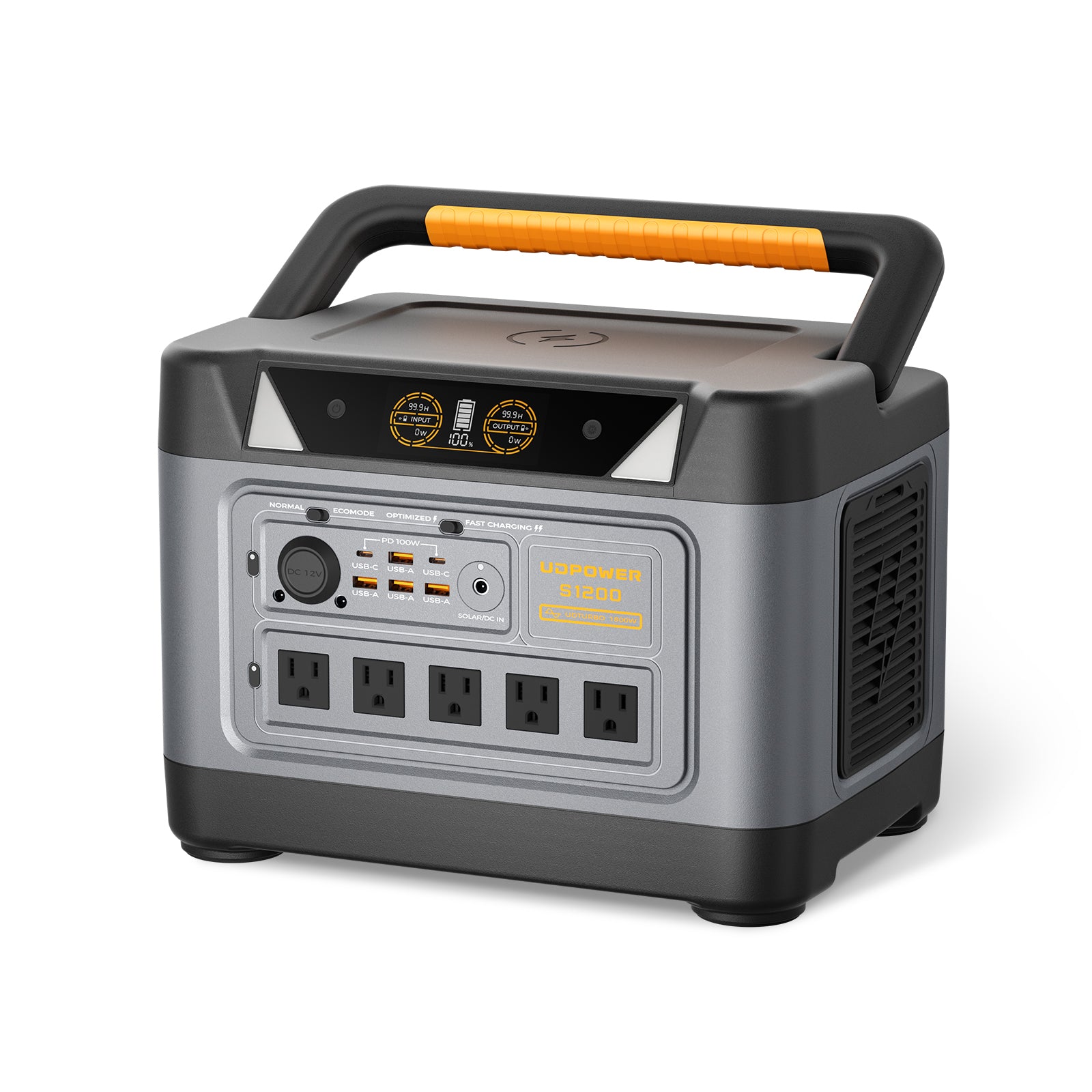
UDPOWER S1200 — The balanced choice for camping, RVs, and home essentials
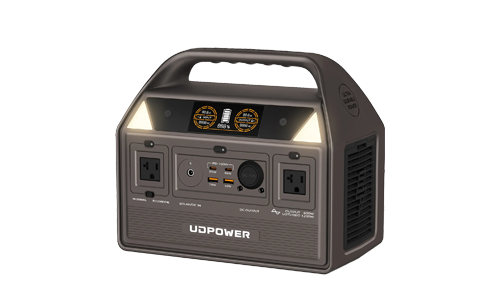
The S1200 combines roughly 1,190Wh of battery capacity with 1,200W rated AC output. For people who need a camping refrigerator, CPAP, networking equipment, and lights, it is the capacity class I would evaluate before moving to a much heavier system. Its 400W maximum solar input also gives useful headroom for compatible multi-panel setups.
- Capacity: approximately 1,190Wh LiFePO4
- Rated AC output: 1,200W pure sine wave
- UDTURBO: up to 1,800W for compatible higher-power loads, with reduced efficiency above rated output
- Solar input: up to 400W, DC7909, 12–75V and 12A maximum
- Approximate weight: 26 lb
- Outlet configurations vary; verify whether you are ordering the 3-AC or 5-AC version
My reason to choose it: a meaningful overnight battery without crossing into the 40-pound class.
View S1200 and solar kits
UDPOWER S2400 — For longer reserve and higher-power appliances
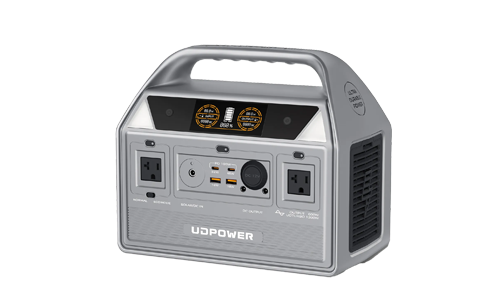
The S2400 offers 2,083Wh of stored energy and 2,400W rated AC output, so it is better suited to larger simultaneous loads or longer backup intervals. Its substantial battery is useful when a refrigerator, kitchen appliance, and electronics all compete for power, but the extra capacity comes with roughly 40.8 pounds of weight.
- Capacity: 2,083Wh LiFePO4
- Rated AC output: 2,400W pure sine wave
- UDTURBO: up to 3,000W for compatible higher-power operation, with lower efficiency above rated output
- Maximum recommended solar panel setup: 420W; follow 12–50V and 10A input specifications
- Approximate weight: 40.8 lb
- Dual-panel 420W bundles contain two 210W panels; connection must follow UDPOWER's supported configuration
My reason to choose it: output headroom and stored reserve matter more than frequent carrying. Its two solar connectors do not combine their charging power.
View S2400 and solar kitsCompare the models before deciding
| Specification | UDPOWER C400 | UDPOWER S1200 | UDPOWER S2400 |
|---|---|---|---|
| Battery capacity | 256Wh | 1,190Wh | 2,083Wh |
| Rated AC output | 400W | 1,200W | 2,400W |
| High-power capability | Up to 800W on supported loads | Up to 1,800W on supported loads | Up to 3,000W on supported loads |
| Maximum solar configuration | 150W | 400W input | 420W recommended panel setup |
| Solar voltage range | 11–28V | 12–75V | 12–50V |
| Approximate weight | 6.88 lb | 26 lb | 40.8 lb |
| Battery chemistry | LiFePO4 | LiFePO4 | LiFePO4 |
| Best buying reason | Light and simple | Balanced all-around backup | More energy and higher output |
| Official details | C400 | S1200 | S2400 |
One other option worth knowing about is the UDPOWER C600, a 596Wh/600W middle-size station. At the time of this update, its official listing shows it as sold out, so I would check availability rather than plan a purchase around it.

For the complete range of current bundles, see UDPOWER Solar Generators. To compare station configurations and kits, use the UDPOWER model comparison page.
12. Seven Buying Mistakes That Are Easy to Avoid
- Choosing by Wh alone. A battery with generous capacity may still lack enough rated AC output for your appliance. Check both watt-hours and watts.
- Using maximum adapter wattage as daily average use. A laptop's 100W power adapter doesn't mean it consumes 100W all day. Measure actual usage when possible.
- Assuming a solar panel produces its rated wattage all day. Shadows, season, weather, and angle change daily harvest. Plan with useful sun hours, not daylight hours.
- Buying panels before checking Voc and current. Two panels with equal watts can have very different electrical characteristics. A connector that fits is not proof of safety.
- Ignoring an entire cloudy day. If your daily load is only barely covered by good-weather solar, even a single poor-sun day can empty the reserve.
- Buying a huge battery for continuous electric heating. A 1,500W resistive heater consumes 1,500Wh per hour before losses. Electric heat is an expensive use of portable battery energy.
- Confusing bundled solar watts with station charging speed. Two 210W panels give 420W combined nameplate capacity, but actual charge power depends on the approved connection and the station's input limits. On S2400, the two solar input ports do not add together.
A separate purchase mistake is assuming that a solar generator is automatically the right tool. For people who only need a phone charged during a brief outage, a smaller power bank may be more convenient. For sustained 240V whole-home loads, a larger engineered system may be necessary. For a broader decision, read Is a Solar Generator Worth It?
13. A Final Solar Generator Buying Checklist
Before I would place an order, I would want clear answers to every line in this checklist. If one answer is missing, I would find the exact specification before paying more for a larger kit.
| Check | What to write down | Decision rule |
|---|---|---|
| 1. Must-run devices | Exact appliances and operating settings | Prioritize essentials |
| 2. Peak simultaneous load | Total normal running watts and startup requirements | Fit rated output and supported high-power behavior |
| 3. Energy per day | Actual or best-estimate Wh/day | Use full-day consumption for cycling devices |
| 4. No-sun interval | One night, 24 hours, or two days | Keep a practical battery reserve |
| 5. Solar harvest | Panel watts × useful hours × realistic yield | Compare recovered energy with consumed energy |
| 6. PV electrical limits | Voc, Vmp, Imp, Isc, input voltage, input current, wiring, connector | All limits and installation requirements must match |
| 7. Port and charging needs | AC, USB-C, 12V, wall, car, solar | Use the actual connections you need |
| 8. Real carrying weight | Battery and all panels/cables | The complete kit must fit the trip |
| 9. Exact bundle contents | Number of panels, panel rating, cables | Don't infer from a bundle's total watts |
| 10. Support and warranty | Current warranty terms, model documentation, support route | Confirm before relying on it for critical loads |
14. Frequently Asked Questions About Choosing a Solar Generator
What size solar generator do I need for my home?
Start with the essential devices you want to back up, their simultaneous running watts, startup demands, and daily watt-hours. A 1,000–2,000Wh-class portable station can be a useful starting point for selected essentials, but full-home air conditioning, electric heating, or 240V circuits may require a much larger professionally designed system.
Is a 1,000Wh solar generator enough?
It depends on what you run. Using a 90% AC planning efficiency, 1,000Wh provides approximately nine hours at a steady 100W load, before extra low-load overhead or reserve. A refrigerator, CPAP, fan, and other devices must be sized from their combined actual energy use.
What's the difference between watts and watt-hours?
Watts measure how much power a device draws or a generator supplies at one moment. Watt-hours measure energy over time. You need enough rated output watts to run the devices together and enough battery watt-hours to run them for the desired duration.
Do solar generators work without sunlight?
Yes. A charged solar generator can supply power at night or during cloudy weather from its stored battery energy. Solar panels cannot reliably replenish that energy without sufficient sunlight, so the battery must cover your planned no-sun interval.
How much solar panel wattage do I need for a 1,000Wh battery?
Panel size depends more on how quickly you need to replace energy than on battery size alone. Under a simplified four-useful-sun-hour model at 70% solar yield, a 210W panel may recover about 588Wh per day, while 400W of effective solar input may recover about 1,120Wh per day. Confirm the station's voltage, current, and wattage limits.
Can a 200W solar panel fully charge a 2,000Wh power station in one day?
Usually not from empty in ordinary conditions. At four useful sun hours and a 70% planning yield, 200W of effective input produces roughly 560Wh in a day. A 2,000Wh battery would generally need several such days, allowing for charging behavior and other losses.
How do I know if my solar panels are compatible with a power station?
Compare open-circuit voltage, operating voltage, operating and short-circuit current, total panel wattage, connector, polarity, and the approved wiring arrangement with the exact station manual. Do not assume compatibility based on connector fit or wattage alone.
Can I connect two solar panels to one generator?
Sometimes, if the manufacturer supports that specific two-panel arrangement and all voltage, current, power, and connector requirements are met. Series and parallel connections behave differently. For UDPOWER, do not use series wiring unless the exact model documentation explicitly permits it.
Can I charge a solar generator and use it at the same time?
Many portable power stations, including supported UDPOWER models, allow pass-through operation. But if connected devices consume more power than solar delivers, the battery may still discharge. Follow the specific model's charging and temperature instructions.
Should I choose LiFePO4 or another battery chemistry?
LiFePO4 is a strong choice for a frequently used solar generator because it is designed for long cycle life. Compare the manufacturer's stated capacity-retention benchmarks, battery protections, weight, warranty, and operating limits instead of judging chemistry by name alone.
Will a solar generator run a refrigerator overnight?
It can if its AC or compatible DC output meets the refrigerator's electrical and startup requirements and its battery stores enough usable energy for the full night. Measure the refrigerator's duty cycle and actual overnight watt-hours rather than assuming the compressor runs continuously.
Can a solar generator power a CPAP machine?
Yes, with a compatible AC supply or correctly matched DC solution and adequate measured overnight capacity. Heated tubing and humidification can significantly affect energy use. Test your exact prescribed setup for a full night and retain a reserve.
How many solar panels come with a 420W UDPOWER kit?
UDPOWER's 420W dual-panel kits contain two 210W solar panels, not one 420W panel. Check the exact selected product variant and included accessories. The combined panel rating does not guarantee 420W of continuous charging input.
Is a bigger solar generator always better?
No. A larger unit costs more, weighs more, and may be harder to carry. The better choice is the smallest system that safely runs your simultaneous loads, covers the planned no-sun period with reserve, and has a realistic way to replenish daily energy.
15. Sources and Further Reading
Manufacturer ratings and model configuration details are available on the UDPOWER C400, UDPOWER S1200, and UDPOWER S2400 product pages. Panel electrical specifications are published for the UDPOWER 120W panel and UDPOWER 210W panel. For model-specific compatibility and bundle contents, consult the UDPOWER FAQ and manuals.
For independent background on sunlight, generation variability, and energy storage, visit the PVWatts solar calculator and the U.S. Department of Energy's solar and storage basics. These sources explain the physical principles; the planning calculations in this guide are simplified examples for portable power stations.
Also useful: Can You Charge a Portable Power Station With a Solar Panel?, Solar Panel Connector Types, and What Appliances Cannot Be Used With Solar Power?
Find a Solar Generator That Fits Your Actual Power Needs
Start with the appliances you need, then compare a battery-only station with a matched solar kit. Whether you're planning a weekend camping trip, an RV stay, or a home outage reserve, choose capacity, output, and daily solar recovery together.
Related Articles


