

How to Choose a Portable Air Conditioner: Size, BTU & SACC
Portable Air Conditioner Buying Guide
Last updated: September 7, 2026
Quick answer: The right portable air conditioner is not simply the model with the biggest BTU number. Start with your room's square footage and heat load, compare the portable AC's DOE/SACC cooling capacity, check whether its exhaust kit fits your window, and then compare efficiency, hose design, noise, drainage, running watts and electrical requirements.
For a bedroom, an inverter model with a good low-speed noise rating is often worth paying more for. For a sunny top-floor room or larger space, a dual-duct or well-designed inverter portable AC can be a better choice. For humid climates, drainage and dehumidification matter almost as much as the thermostat setting.
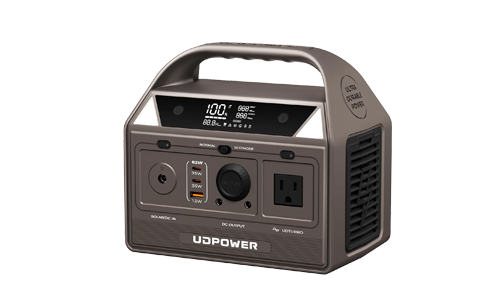
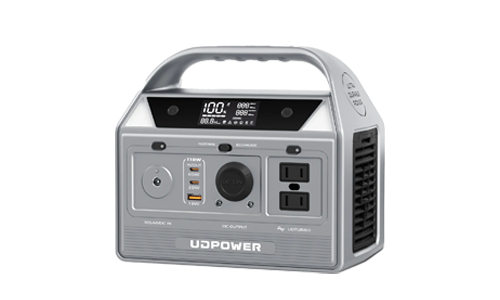
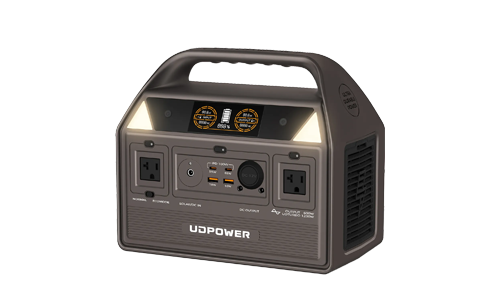
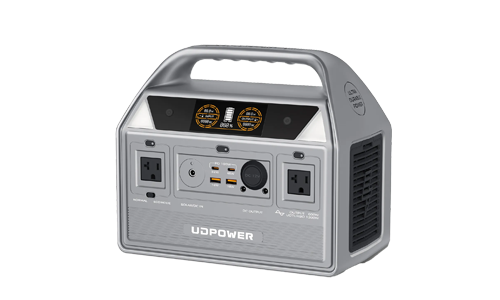
If you also want cooling during a power outage, choose the air conditioner first and then size backup power from its actual 120V input watts. A portable power station such as the UDPOWER S1200 may support selected smaller portable AC units, while the UDPOWER S2400 provides substantially more output headroom and battery capacity for compatible 120V portable cooling loads.

Is a Portable Air Conditioner Right for Your Home?
A portable air conditioner makes the most sense when you need to cool one room but cannot or do not want to install a window unit, mini-split or permanent HVAC system.
That commonly includes apartments, rental homes, bedrooms with unusual windows, upstairs offices, guest rooms, dorm-style spaces and homes where central air does not cool one area well.
| Cooling option | Best for | Main advantage | Main limitation |
|---|---|---|---|
| Portable AC | Rentals, difficult windows, temporary room cooling | Minimal permanent installation and easier to relocate | Compressor and condenser stay indoors, so noise and efficiency can be less favorable than other options |
| Window AC | Standard compatible windows and seasonal room cooling | Often strong cooling efficiency and good value | Requires suitable window installation and may be restricted by landlords or HOAs |
| Mini-split | Long-term room or zone cooling | Quiet, efficient and excellent temperature control | Higher installation cost and permanent installation |
| Evaporative cooler | Hot, dry climates | Lower electrical demand | Does not provide compressor-based refrigerated cooling and performs poorly in humid climates |
A compressor-based portable air conditioner has to move heat out of the room. That normally requires an exhaust hose to a window or another approved outdoor opening. A product that uses water and has no hot-air exhaust may actually be an evaporative cooler rather than a refrigerated air conditioner.
If you can safely install a window AC and portability is not important, compare both categories before buying. If permanent or window-mounted equipment is not practical, a properly sized portable AC can still solve a difficult one-room cooling problem.
The 7-Step Portable AC Buying Process
1. Measure the actual room
Multiply room length by width. Do not use the apartment's total square footage when you are only cooling one closed room.
2. Estimate how difficult the room is to cool
Sun exposure, top-floor location, high ceilings, poor insulation, large windows, computers and additional occupants all add heat.
3. Compare DOE/SACC capacity
Do not compare one portable AC by a large ASHRAE headline rating and another by its smaller DOE/SACC number. Compare like with like.
4. Check the window before ordering
Measure the window opening and check the vent-panel dimensions, hose length and installation direction.
5. Check watts, amps and outlet requirements
A standard-looking plug does not mean every outlet or shared circuit in your home is a good place to run the AC.
6. Match features to the room
Bedroom buyers should pay attention to low-speed noise. Humid-climate buyers should inspect drainage. Daily users should care about efficiency and inverter control.
7. Think about installation as part of performance
A correctly sized AC with a poorly sealed exhaust panel can perform worse than expected. The machine and installation should be treated as one cooling system.
How to Choose Portable AC Size by Room
Start by calculating the floor area:
Room length in feet × room width in feet
A 12 × 15 ft bedroom is 180 sq. ft. A 16 × 20 ft living room is 320 sq. ft.
ENERGY STAR publishes the following general room-air-conditioner capacity baseline for rooms with approximately 8-foot ceilings. Portable AC shoppers can use it as a cooling-load reference, but the final purchase should still be checked against the specific portable model's DOE/SACC rating and manufacturer room-size recommendation.
| Room area | General cooling capacity baseline | Typical room example | Source |
|---|---|---|---|
| 100–150 sq. ft. | 5,000 BTU/h | Small bedroom or compact office | ENERGY STAR |
| 150–250 sq. ft. | 6,000 BTU/h | Bedroom or small den | ENERGY STAR |
| 250–300 sq. ft. | 7,000 BTU/h | Large bedroom or office | ENERGY STAR |
| 300–350 sq. ft. | 8,000 BTU/h | Primary bedroom or smaller living area | ENERGY STAR |
| 350–400 sq. ft. | 9,000 BTU/h | Medium living room | ENERGY STAR |
| 400–450 sq. ft. | 10,000 BTU/h | Large bedroom or living room | ENERGY STAR |
| 450–550 sq. ft. | 12,000 BTU/h | Large living room or studio | ENERGY STAR |
| 550–700 sq. ft. | 14,000 BTU/h | Large open room | ENERGY STAR |
An oversized air conditioner may reach the thermostat setting quickly without running long enough to manage humidity as effectively. An undersized unit may run continuously and still fail to catch up on hot afternoons. Match capacity to the actual space and heat load rather than choosing the largest number your budget allows.
SACC vs. ASHRAE BTU: Which Number Matters?
This is one of the most important portable AC buying details in the United States.
You may see two cooling-capacity numbers on the same portable air conditioner. For example, a product might be marketed with a large ASHRAE-style BTU number while also showing a smaller DOE or SACC capacity.
For comparing portable air conditioners, pay close attention to the DOE/SACC number.
The U.S. Department of Energy's portable-air-conditioner test procedure accounts for factors that are especially important to portable units, including duct heat transfer and infiltration effects. That helps explain why the SACC value can be noticeably lower than the large headline BTU number.
| Specification | What it tells you | How to use it | Source |
|---|---|---|---|
| ASHRAE / headline BTU | A cooling-capacity figure that may appear prominently in marketing | Useful only when compared using the same rating method | Check the specific product label |
| DOE / SACC | Seasonally Adjusted Cooling Capacity for portable ACs | Use this when comparing portable AC cooling performance | U.S. eCFR |
| CEER | Combined Energy Efficiency Ratio | When comparing otherwise similar portable units, higher efficiency is generally preferable | U.S. eCFR |
| Recommended room size | The manufacturer's intended coverage area | Use it as a final cross-check after accounting for your room's heat load | GE Appliances example |
If two portable ACs both say “14,000 BTU” in large text but one has a substantially higher SACC, they are not necessarily equivalent cooling machines. Compare the SACC, CEER, recommended room size, compressor design and noise level before comparing price.
Adjust for Sun, People, Ceilings and Electronics
Square footage gets you into the right neighborhood. Heat load determines whether you should stay there or move up.
ENERGY STAR recommends adjusting room AC capacity for several common conditions:
| Room condition | Adjustment | Why it matters | Source |
|---|---|---|---|
| Heavily shaded room | Reduce capacity by about 10% | Lower solar heat gain reduces cooling demand | ENERGY STAR |
| Very sunny room | Increase capacity by about 10% | Direct solar gain adds significant afternoon heat | ENERGY STAR |
| More than two regular occupants | Add about 600 BTU/h for each additional person | People produce heat inside the conditioned space | ENERGY STAR |
| Kitchen | Add about 4,000 BTU/h | Cooking appliances add a large internal heat load | ENERGY STAR |
Also use common sense for conditions that are harder to express with one universal adjustment:
- Ceilings significantly above 8 ft.
- Finished attics and top-floor bedrooms.
- Large west-facing glass areas.
- Old single-pane windows.
- Poor insulation.
- Gaming computers or multiple monitors.
- Server or networking equipment.
- Frequently opened doors.
- Open layouts connected to other rooms.
Example: A 220 sq. ft. home office is not always a “small room”
Imagine a 220 sq. ft. office on the top floor with west-facing windows, two monitors, a desktop PC and afternoon sun.
The floor area alone may point you toward a modest cooling class. But the actual room behaves more like a harder-to-cool space because the roof, glass and electronics all add heat at the same time the outdoor temperature peaks.
In that situation, choosing from the very bottom of the recommended range can lead to an AC that runs continuously from 2 p.m. until sunset without pulling the room down to the temperature you expected.
Single-Hose vs. Dual-Hose vs. Inverter Portable AC
After sizing, air-management design is one of the most useful ways to separate an inexpensive portable AC from a better long-term purchase.
| Design | How it works | Best fit | Main tradeoff |
|---|---|---|---|
| Single-hose | Uses indoor air in the cooling process and exhausts hot air outside through one hose | Smaller rooms, lower initial budget, occasional use | Exhausting room air can contribute to negative pressure and replacement-air infiltration |
| Dual-hose / dual-duct | Separates outdoor condenser airflow from conditioned indoor air more effectively | Hotter rooms, larger rooms and buyers prioritizing cooling performance | Often larger, more complex and more expensive |
| Inverter compressor | Can vary compressor output instead of operating only in simple full-on/full-off cycles | Bedrooms, daily summer use and buyers who value smoother comfort | Usually costs more upfront |
Do not buy by hose count alone
Dual-duct design has a real airflow advantage, but that does not mean every dual-hose machine automatically cools better than every single-hose machine.
The final product still depends on compressor performance, heat exchangers, airflow design, controls, insulation, duct design and installation quality.
Use hose design as one selection factor, then compare the actual SACC and CEER. Those numbers can tell you more about the complete machine than simply counting hoses.
Why inverter technology matters most in bedrooms
A conventional compressor often cycles between stronger cooling and stopping. An inverter compressor can adjust output more gradually on compatible designs.
That can make room temperature feel steadier and may reduce the abrupt sound changes that are especially noticeable while sleeping. It does not mean every inverter portable AC is quiet, so still check the published dBA specification.
Window, Hose and Installation Requirements
The exhaust system is not an accessory. It is part of the air conditioner.
A compressor-based portable AC removes heat from the room and must reject that heat somewhere else. If hot condenser air stays inside, the room does not receive meaningful net cooling.
Check these measurements before ordering
- Window opening width or height.
- Window-kit adjustment range.
- Whether the window slides vertically or horizontally.
- Whether the room has a crank-out casement window.
- Exhaust-hose diameter.
- Maximum manufacturer-approved hose length.
- Distance between the planned AC location and the window.
Longer or badly routed exhaust ducting adds airflow resistance and increases the amount of heat released from the hose back into the room. Follow the specific manufacturer's exhaust-hose limits rather than extending the system by guesswork.
GE, for example, states that its portable ACs must vent outside and advises against extending the supplied exhaust hose because doing so can reduce cooling performance. See the GE portable AC guidance.
The window seal matters more than it looks
A loose vent panel can create a direct path for hot outdoor air to leak into the room. In a single-hose setup, additional infiltration through other gaps can make the problem worse.
Seal obvious gaps around the window insert, keep the exhaust hose as short and straight as the manufacturer allows, and avoid crushing or sharply bending it.
A good installation can sometimes improve real comfort more than moving from one mediocre portable AC to another with a slightly larger marketing BTU number.
How to Compare Portable AC Efficiency
Do not judge efficiency from cooling capacity alone. Two portable ACs can deliver similar room cooling while drawing different amounts of electricity.
When specifications are available, compare CEER using the same rating method. Higher efficiency means more cooling is delivered for a given amount of electrical energy.
A simple shopping hierarchy
- Make sure both models are genuinely large enough for the room.
- Compare DOE/SACC cooling capacity.
- Compare CEER or other equivalent efficiency information.
- Check actual rated input watts.
- Compare compressor and hose design.
- Then compare purchase price.
A portable air conditioner that runs every afternoon for several summers can consume far more electricity over its life than its purchase-price difference. For daily-use bedrooms and home offices, efficiency deserves more weight than it does for a guest room used five weekends a year.
How Quiet Should a Bedroom Portable AC Be?
Portable AC noise matters more than window AC noise because the compressor, condenser fan and evaporator fan are all inside the room with you.
Many current portable ACs advertise sound levels somewhere around the low-40s to upper-50s dBA depending on model, fan speed and test conditions. Instead of relying on marketing words such as “quiet” or “sleep friendly,” look for a published low-speed or sleep-mode specification.
| Room use | What to prioritize | Why |
|---|---|---|
| Bedroom | Low-speed dBA, inverter control, sleep mode | Changes in compressor sound may matter as much as the average noise level |
| Home office | Stable fan sound and multiple fan speeds | Video calls and focused work make sudden noise changes noticeable |
| Living room | Cooling performance and airflow | Moderate sound may be less noticeable around TV and conversation |
| Guest room | Simple controls and moderate noise | Low-frequency use may not justify the most expensive acoustic design |
If sleep is the primary use case, read owner reviews specifically about compressor cycling rather than simply searching the reviews for “quiet.” A machine can have an acceptable average dBA rating yet still wake a light sleeper when the compressor repeatedly changes state.
Humidity, Drainage and Dehumidification
Cooling comfort is not only about dry-bulb temperature. A 76°F room at high humidity can feel much less comfortable than the same temperature at moderate humidity.
Portable air conditioners remove moisture as they cool. What happens to that water depends on the design and conditions.
Common condensate arrangements
- Self-evaporating: part of the condensate is discharged through the exhaust system.
- Internal tank: the unit stops or alerts you when water must be emptied.
- Continuous drain: a hose can route condensate to an appropriate drain where the installation permits.
“Self-evaporating” does not always mean you will never drain the unit. During periods of high humidity, moisture removal can exceed what the machine is able to re-evaporate and exhaust.
If the AC will run overnight in Florida, Houston or another humid environment, learning that the tank needs frequent attention after you install it beside the bed is the wrong time to discover the drainage design.
Watts, Amps and What Your Household Circuit Can Handle
Many U.S. portable air conditioners plug into a standard 115V or 120V receptacle. That does not mean the electrical load should be ignored.
The compressor can make an air conditioner one of the largest plug-in loads in the room.
Check the label for these numbers
- Rated voltage.
- Rated current in amps.
- Rated input watts if listed.
- Compressor or startup requirements.
- Required circuit rating.
Volts × Amps = Watts
A 120V appliance drawing 10A represents roughly 1,200W of electrical load as a simple planning estimate.
The actual product label should take priority over a calculated estimate when rated input power is provided.
Do not load the same circuit blindly
A portable AC may share a circuit with bedroom outlets, computers, televisions, lamps or appliances in another part of the home.
If the breaker trips when the compressor starts, that is not a signal to keep resetting the breaker and hoping for a different result.
Some manufacturers specify that larger portable AC models should use a dedicated circuit. GE, for example, states that its portable units use a common 115V/15A outlet while larger models may need a dedicated circuit to avoid breaker trips. See the manufacturer guidance.
Avoid casual extension-cord setups
Follow the air conditioner's own manual. Some manufacturers specifically instruct users to plug the AC directly into a grounded wall receptacle rather than an extension cord, surge protector or multi-outlet adapter.
How Much Does a Portable Air Conditioner Cost to Run?
The most accurate estimate uses the air conditioner's actual electrical input and your utility rate.
Watts ÷ 1,000 × hours = kWh
kWh × your electricity rate = estimated cost
Example
Suppose a portable AC draws 1,000W while the compressor is actively running.
| Active compressor time | Energy at 1,000W | Cost at $0.15/kWh | Cost at $0.20/kWh | Cost at $0.30/kWh |
|---|---|---|---|---|
| 2 hours | 2.0 kWh | $0.30 | $0.40 | $0.60 |
| 4 hours | 4.0 kWh | $0.60 | $0.80 | $1.20 |
| 8 hours | 8.0 kWh | $1.20 | $1.60 | $2.40 |
This is deliberately a simple continuous-load example. Real AC energy use changes because thermostats and inverter compressors change compressor run time and power.
A room that has already reached the target temperature may use substantially less energy than the same room during the first hour after a hot sunny afternoon.
Best Portable AC Type by Room and Use Case
| Situation | What to prioritize | What to avoid |
|---|---|---|
| Small bedroom | Correct SACC, inverter operation, low-speed noise, sleep mode | Oversizing solely for a larger headline BTU number |
| Sunny top-floor bedroom | Extra heat-load margin, good SACC, inverter or strong dual-duct design | Buying from floor area alone |
| Home office | Electronics heat load, noise, efficient part-load operation | Ignoring computers and monitors in the heat-load calculation |
| Humid climate | Drainage options, moisture removal and easy condensate management | Assuming “self-evaporating” always means zero draining |
| Apartment rental | Window compatibility, reversible installation, manageable weight | Ordering before checking landlord rules or window type |
| Large living room | High verified SACC, good airflow and dual-duct/inverter options | Expecting a small portable unit to cool connected rooms |
| Garage | Insulation, door leakage, actual room heat load | Using square footage alone in an uninsulated hot garage |
| Summer outage backup | AC running watts, voltage, startup behavior and battery runtime | Choosing backup power by BTU alone |
Can a Portable Power Station Run a Portable Air Conditioner?
Yes, some portable power stations can run compatible 120V portable air conditioners, but this is one of the easiest backup-power calculations to get wrong.
Four separate conditions have to work:
- The air conditioner must use a voltage the power station supplies.
- The AC's normal electrical input must fit the power station's output capability.
- The compressor's startup behavior must be compatible.
- The battery must have enough watt-hours for the runtime you actually need.
BTU tells you cooling capacity. It does not tell you the electrical watts that a backup battery must deliver.
For a deeper explanation, see Can a Solar Generator Power an AC?.
Portable AC backup runtime formula
For UDPOWER planning, use a 90% conversion-efficiency assumption for ordinary AC loads:
Power station capacity in Wh × 0.90 ÷ portable AC running watts
If the compressor cycles, real elapsed runtime can be longer than a constant-load calculation. If the AC runs continuously because the room is very hot, actual results will be closer to the continuous-load estimate.
| Portable AC continuous load | UDPOWER S1200 1,190Wh |
UDPOWER S2400 2,083Wh |
Practical interpretation |
|---|---|---|---|
| 600W | About 1.8 hr | About 3.1 hr | A relatively efficient small cooling load |
| 700W | About 1.5 hr | About 2.7 hr | Still a significant battery load |
| 800W | About 1.3 hr | About 2.3 hr | Common range where capacity becomes the limiting factor |
| 1,000W | About 1.1 hr | About 1.9 hr | S1200 is approaching its rated output once other loads are added |
| 1,200W | About 0.9 hr at its rated-output limit | About 1.6 hr | Little normal output margin remains on S1200 |
| 1,400W | Above S1200's normal 1,200W rated output | About 1.3 hr | S2400 is the more appropriate normal operating range |
These are mathematical planning values for constant loads. They are not guaranteed AC runtimes.
Use the UDPOWER Portable Power Station Runtime Calculator with the actual running wattage from your air conditioner's label or a watt meter.
The UDPOWER S2400 supplies U.S.-standard 120V AC output. It does not provide 240V split-phase output and is not a replacement for a central air-conditioning system, large hardwired HVAC equipment or other 240V household loads.
For more on this distinction, read 120V vs. 240V Power: Key Differences Explained.
Recommended UDPOWER Backup Options for Portable Cooling
UDPOWER does not make the portable air conditioner discussed in this buying guide. These recommendations are for shoppers who want a compatible battery backup for selected 120V cooling equipment and other household essentials during an outage.

UDPOWER S1200: Better for Smaller Portable AC Loads
The S1200 is the practical starting point when you have already verified that your portable AC fits within its normal output range. Its 1,190Wh battery gives substantially more short-term cooling capability than smaller camping-focused power stations, while its 26 lb weight remains manageable for home backup.
- Capacity: 1,190Wh LiFePO4
- Rated AC output: 1,200W pure sine wave
- UDTURBO: supports compatible loads up to 1,800W
- AC outlets: 5 on the current grey version
- Weight: approximately 26.0 lb
- Solar input: up to 400W
- UPSPrime: ≤10ms response
- Output voltage: 120V, 60Hz
For normal AC selection, use the 1,200W rated output as your primary compatibility line. UDTURBO can expand compatibility with selected higher-power loads, but conversion efficiency may decrease above rated output, so runtime should be planned more conservatively in that operating range.
View UDPOWER S1200 See What a 1200W Power Station Can Run
UDPOWER S2400: Better for Higher-Draw Portable Cooling
The S2400 is the better choice when a portable AC's normal electrical demand is too close to the S1200's rated output or when you want additional battery capacity for cooling plus a router, lights, refrigerator or other essential equipment.
- Capacity: 2,083Wh LiFePO4
- Rated AC output: 2,400W pure sine wave
- UDTURBO: supports compatible loads up to 3,000W
- AC outlets: 6
- Weight: approximately 40.8 lb
- Dimensions: approximately 15.8 × 9.5 × 10.1 in
- Solar input: up to 400W through the specified DC input range
- UPSPrime: ≤10ms response
- Output voltage: 120V, 60Hz
The larger inverter gives the S2400 much more operating headroom for a portable AC. Its 2,083Wh battery is about 75% larger than the S1200 battery, so at the same electrical load its theoretical runtime is roughly 1.75 times as long.
View UDPOWER S2400 Compare S1200 vs. S2400| Backup need | S1200 | S2400 |
|---|---|---|
| Fan, Wi-Fi, lights and electronics | Excellent fit | Excellent fit with longer runtime |
| Smaller compatible portable AC | Possible after checking running watts and startup behavior | More output and runtime headroom |
| 1,000–1,200W cooling load | Near the upper end of normal rated operation | Comfortable normal output range |
| Portable AC plus several additional essentials | Combined load must be managed carefully | Better choice |
| 120V portable cooling during short outage | Use when electrical requirements fit | Best UDPOWER option covered here |
| 240V central air conditioner | Not supported | Not supported |
Real Portable AC Buying Examples
Example 1: 180 sq. ft. bedroom
The room is shaded, has an 8-foot ceiling and is used by one person.
The buying priority should be a properly sized DOE/SACC unit with low-speed noise and inverter control rather than buying the largest machine that fits beside the bed.
Because the room is used for sleep, pay particular attention to compressor noise, sleep mode, display-light controls and drainage alerts.
Example 2: 250 sq. ft. west-facing home office
The office has two monitors, a desktop computer and strong afternoon sun.
Although the floor area looks modest, heat load is higher than a normal bedroom of the same size. Use the sunny-room adjustment as a starting point and treat the computer equipment as additional internal heat.
This is a case where an inverter or stronger dual-duct model may justify the additional purchase price.
Example 3: 400 sq. ft. top-floor studio
The space has a high ceiling, several windows and an open connection to a kitchen area.
This is no longer a simple “400 sq. ft.” portable AC problem. Ceiling volume, kitchen heat and open-space air movement can push demand substantially higher.
Before purchasing an oversized portable AC, also compare whether a window unit, through-wall unit or mini-split is a better long-term solution.
Example 4: Portable AC for outage backup
Suppose the selected AC measures 800W while actively cooling.
S2400: 2,083Wh × 0.90 ÷ 800W = about 2.34 hours
If the compressor only runs half the time after the room reaches temperature, elapsed cooling time can be longer. During extreme heat, however, the compressor may run almost continuously.
That is why buying an air conditioner with lower real electrical consumption can sometimes add more backup runtime than simply buying a larger battery.
The “Cooling Envelope” Test
A useful way to judge a portable AC is to stop thinking about one specification and ask whether the entire cooling envelope works.
| Part of the system | Question to answer before buying |
|---|---|
| Room | How large and how difficult is the space to cool? |
| Cooling capacity | Does the DOE/SACC rating match the adjusted room demand? |
| Airflow design | Is single-hose, dual-hose or inverter operation appropriate for the use case? |
| Window | Can the vent kit be installed and sealed properly? |
| Electrical circuit | Can the outlet and circuit support the AC safely? |
| Humidity | How will condensate be managed? |
| Noise | Will the machine be acceptable at night or during calls? |
| Energy use | What will daily or monthly operation actually cost? |
| Backup | If outages matter, what are the actual running watts and required runtime? |
If one part of this envelope fails, a strong specification elsewhere may not save the purchase.
Common Portable AC Buying Mistakes
| Mistake | Why it causes problems | Better approach |
|---|---|---|
| Buying by the largest BTU printed on the page | The number may not be the DOE/SACC capacity | Compare portable ACs using the same capacity method |
| Using square footage alone | Sun, ceilings, windows, people and electronics change heat load | Adjust the room before choosing capacity |
| Assuming bigger is always better | Oversizing can hurt comfort and humidity management | Choose enough capacity without extreme oversizing |
| Buying before measuring the window | The exhaust kit may not fit | Measure the opening and panel range first |
| Extending the exhaust hose casually | Extra duct length and bends can reduce performance | Stay within manufacturer instructions |
| Ignoring the window seal | Hot outdoor air can leak back into the room | Seal the vent panel carefully |
| Buying single vs. dual hose by theory alone | Actual product performance varies | Compare SACC and CEER as well as hose design |
| Ignoring noise until the first night | Portable AC compressors are inside the room | Check low-speed dBA and compressor behavior |
| Ignoring drainage | High humidity may require more condensate management | Read the drainage section of the manual before purchase |
| Sharing a crowded electrical circuit | Compressor loads can contribute to breaker trips | Follow the manufacturer's circuit requirements |
| Buying backup power from BTU | BTU describes cooling, not electrical demand | Use actual volts, amps, watts and startup behavior |
| Expecting battery backup to run AC all day | Air conditioning is a high-energy continuous load | Calculate watt-hours before relying on battery cooling |
Portable Air Conditioner Pre-Purchase Checklist
Before you click Buy, you should be able to answer every question below.
- What is the exact square footage of the room?
- Is the room sunny, shaded, upstairs or poorly insulated?
- How high is the ceiling?
- How many people regularly use the room?
- Are computers, cooking appliances or other heat sources present?
- What is the portable AC's DOE/SACC capacity?
- What room size does the manufacturer recommend?
- Is the model single-hose, dual-hose or inverter?
- What is the published operating noise?
- Does the exhaust kit fit your actual window?
- How will condensate be drained?
- What are the rated voltage, amps and watts?
- Does the manufacturer require a dedicated circuit?
- Will you use the AC mainly during the day or while sleeping?
- How often will it run during the summer?
- If backup power matters, what are the actual running watts?
Those three checks prevent a large share of portable AC buyer regret.
Portable Air Conditioner FAQ
What size portable air conditioner do I need?
Start with the room's square footage, then adjust for sun exposure, ceiling height, insulation, occupancy, windows and internal heat sources. When comparing portable air conditioners, use the DOE/SACC cooling capacity and confirm the manufacturer's recommended room size rather than relying only on a larger headline BTU figure.
How many BTU do I need for a 200 sq. ft. room?
ENERGY STAR's general room-air-conditioner guidance places a 150–250 sq. ft. room around a 6,000 BTU/h baseline under typical conditions. A very sunny room, high ceiling, poor insulation or additional internal heat may require more capacity. For a portable AC, compare the model's DOE/SACC rating and room-size recommendation before buying.
What is SACC on a portable air conditioner?
SACC means Seasonally Adjusted Cooling Capacity. It is a U.S. Department of Energy portable-air-conditioner cooling-capacity metric that accounts for portable-AC-specific operating effects. It is useful for comparing real cooling capability between portable models.
Why does a portable AC have two different BTU ratings?
Portable AC listings may show a larger headline or ASHRAE-style BTU figure and a smaller DOE/SACC figure. They come from different rating approaches. When comparing portable air conditioners in the U.S., the DOE/SACC figure is especially useful because it reflects the portable AC test procedure.
Is a dual-hose portable AC better than a single-hose model?
Dual-duct designs can reduce the negative-pressure effect associated with exhausting conditioned room air through one hose, which can improve real cooling performance. However, hose count alone does not determine the quality of the entire air conditioner. Compare actual SACC, efficiency, compressor design, noise and installation requirements.
Is an inverter portable AC worth it?
It often is for bedrooms and frequent summer use. Inverter compressors can vary cooling output rather than relying only on simple full-on/full-off compressor cycles, which can provide steadier comfort and smoother operation. Compare the actual noise and efficiency specifications because not every inverter model performs the same way.
Does a portable air conditioner need a window?
A conventional compressor-based portable AC needs a way to exhaust heat outside. A window is the most common solution. Other installation methods may be possible if specifically allowed by the manufacturer, but the hot exhaust air cannot simply stay in the room.
Do ventless portable air conditioners really work?
A product with no exhaust hose may be an evaporative air cooler rather than a conventional refrigerated portable air conditioner. Evaporative coolers can be useful in hot, dry climates but do not provide the same cooling process and are much less effective in humid conditions.
Can I extend a portable AC exhaust hose?
Only if the manufacturer specifically allows it. Increasing exhaust-hose length or adding excessive bends can increase airflow resistance, release more heat back into the room and reduce cooling performance. Follow the instructions for your exact model.
Do portable air conditioners need to be drained?
It depends on the model and humidity. Some units evaporate much of their condensate through the exhaust, while others use an internal tank or support continuous drainage. Even a self-evaporating model may require draining during periods of high humidity.
Can I plug a portable air conditioner into a normal outlet?
Many U.S. portable ACs use a standard 115V or 120V receptacle, but you must follow the electrical requirements of the specific model. Larger units can place a heavy load on a household circuit and some manufacturers recommend a dedicated circuit.
Can I use an extension cord with a portable air conditioner?
Follow the manufacturer instructions for your exact air conditioner. Some manufacturers specifically advise plugging room air conditioners directly into a properly grounded wall outlet rather than using an extension cord, surge protector or multi-outlet adapter.
How many watts does a portable air conditioner use?
Electrical consumption varies significantly by capacity, efficiency and compressor design. Many household portable ACs can draw several hundred watts to more than 1,000W while actively cooling. Check the rated input watts or amperage on the specific model rather than estimating electrical demand from BTU alone.
Can a portable power station run a portable air conditioner?
Yes, if the air conditioner's voltage, running watts and compressor startup behavior are compatible with the power station. Battery capacity also determines runtime. A portable AC can drain a battery quickly, so calculate runtime from actual electrical watts rather than cooling BTU.
How long will the UDPOWER S1200 run a portable AC?
Using the 90% planning-efficiency assumption, an 800W continuous portable AC load is approximately 1.34 hours and a 1,000W load is approximately 1.07 hours on the 1,190Wh S1200. Actual elapsed runtime may differ because air-conditioner compressors cycle and power demand changes with room conditions.
How long will the UDPOWER S2400 run a portable AC?
Using the same 90% planning assumption, an 800W continuous load is approximately 2.34 hours, a 1,000W load approximately 1.87 hours and a 1,200W load approximately 1.56 hours on the 2,083Wh S2400. Actual results depend on compressor cycling, temperature and other connected loads.
Can the UDPOWER S2400 run central air conditioning?
No. The S2400 supplies standard U.S. 120V AC output and is designed for compatible plug-in appliances and selected essentials. It does not provide 240V split-phase power and should not be treated as a whole-home central air-conditioning power source.
Final Recommendation
If you remember only one thing from this guide, make it this: buy the portable air conditioner for the room you actually have, not the BTU number that looks best on the product page.
Measure the room, account for its heat load, compare DOE/SACC capacity, verify the vent kit, and check noise, humidity management and electrical requirements.
For a bedroom, quieter inverter operation may matter more than maximum capacity. For a sunny or top-floor room, extra cooling headroom and better air-management design matter more. For humid climates, drainage deserves serious attention. For daily summer use, efficiency can matter more than a modest difference in purchase price.
And if your goal includes cooling during a blackout, make that a separate calculation. Choose the AC first, find its real running watts, and then determine how much backup output and battery capacity you need.
Plan Your Summer Backup Power
Already know the running wattage of your portable air conditioner? Use it to compare backup power capacity and estimated runtime before the next summer outage.
View Home Backup Power Stations View UDPOWER S1200 View UDPOWER S2400 Calculate Backup Runtime Read the AC Backup Power GuidePortable AC sizing and rating information in this guide was reviewed against current U.S. ENERGY STAR and Department of Energy/eCFR guidance on September 7, 2026. UDPOWER product specifications and images were checked against the current official UDPOWER product pages. Runtime figures are planning estimates based on 90% conversion efficiency and constant electrical loads; actual performance varies with compressor cycling, temperature, battery condition, AC settings and simultaneous loads.
Related Articles


