

How Much Power Does a Radio Use? Watts & Runtime Guide
Last Updated:

Quick Answer: How Much Power Does a Radio Use?
Most small radios are very low-power devices. A compact AM/FM or emergency radio may need only a few watts, while a handheld two-way radio may use less than 1W in standby but several watts while receiving or transmitting. Vehicle-mounted GMRS, marine, and ham radios can draw much more when transmitting.
For backup planning, the most important number is electrical input power, not speaker wattage and not the radio's advertised RF transmit wattage.
Typical Radio Wattage by Type
There is no single wattage for “a radio.” A pocket FM receiver, NOAA weather alert radio, marine handheld, GMRS mobile radio, and amateur radio transceiver are electrically very different devices.
The most useful way to compare them is to start with actual manufacturer specifications and convert voltage and current into watts where necessary.
| Radio type | Official example | Useful planning number | What matters | Source |
|---|---|---|---|---|
| Pocket AM/FM radio | Retekess V112 | 5V × 0.5A = up to about 2.5W at the specified charging input | Very small load. The charging-input rating is more useful for backup planning than the headphone volume setting. | Retekess V112 specifications |
| Home NOAA weather alert radio | Midland WR120 | Use the supplied adapter or measure wall draw | The listed 0.5W speaker output is not the same as total electrical consumption. | Midland WR120 guide |
| Desktop NOAA / AM / FM alert radio | Midland WR400 | A few watts is a reasonable starting assumption, but measure if exact runtime matters | The radio can also provide a 5V/1A USB output while on wall power, which should not be confused with its own consumption. | Midland WR400 guide |
| Handheld two-way radio | Icom IC-V3MR | About 0.54W standby, 3.6W at maximum receive audio, 6.48W transmit on high | Usage pattern matters more than one headline wattage number. | Icom IC-V3MR specifications |
| Handheld marine VHF | Icom IC-M94D | About 2.5–5W receiving and up to about 10.8W at 6W transmit | Transmit time can noticeably change battery life. | Icom IC-M94D specifications |
| Mobile GMRS radio | Midland MXT575 | Do not assume a 50W radio consumes only 50W | 50W describes its radio-frequency output class. Use actual supply current for backup sizing. | Midland MXT575 guide |
The Three Different “Watt” Numbers People Confuse
A large share of bad radio runtime estimates start with the wrong wattage. Three different specifications can all be labeled in watts, but they describe different things.
| Specification | What it means | Should you use it for battery runtime? | Example |
|---|---|---|---|
| Electrical input watts | Power the radio takes from a battery, USB charger, DC supply, or wall adapter | Yes | 5V × 1A = 5W maximum input |
| Speaker output watts | Audio power delivered to the speaker | No | A 0.5W speaker does not mean the complete radio uses exactly 0.5W |
| RF transmit watts | Radio-frequency power sent toward the antenna while transmitting | No | A 50W GMRS radio can require substantially more electrical input than 50W because the transmitter is not 100% efficient |
This distinction matters most with communication radios. The FCC allows certain GMRS mobile, repeater, and base stations to operate at transmitter output levels up to 50W on applicable main channels, but that limit describes transmitter output rather than the DC input your battery must provide.
Source: FCC GMRS transmitting power rules.
How to Find Your Radio's Real Power Consumption
You usually do not need to guess. Start with the radio, charger, or owner's manual and work through these steps.
Two-Way Radio Power Use: Standby vs Receive vs Transmit
Two-way radios are where a simple “watts × hours” estimate needs one extra step: duty cycle.
The Icom IC-V3MR, for example, lists a 7.2V supply with approximately 75mA standby current, 500mA at maximum receive audio, and 0.9A when transmitting on high power.
| Mode | Official current | Calculated electrical power | Why it matters |
|---|---|---|---|
| Standby | 75mA at 7.2V | About 0.54W | A radio monitoring quietly can spend most of its day here. |
| Receive, maximum audio | 500mA at 7.2V | About 3.6W | Speaker volume and audio activity raise consumption. |
| Transmit, high | 0.9A at 7.2V | About 6.48W | Frequent transmitting cuts operating time more quickly. |
Source: Icom IC-V3MR official specifications.
Example: a mostly-listening emergency radio
Suppose a radio spends 90% of its time in standby, 5% receiving at high audio, and 5% transmitting.
That average is far lower than the 6.48W transmit load because transmitting happens only briefly.
How Much Electricity Does a Radio Use?
Radio electricity consumption is easier to understand in watt-hours and kilowatt-hours.
A 5W radio running for eight hours uses:
Using the U.S. Energy Information Administration's January–July 2026 residential average electricity price of about 18.19 cents per kWh, even a small radio left running continuously is inexpensive compared with heating, cooling, refrigeration, or cooking appliances.
| Continuous radio load | Energy per day | Energy per year | Approx. annual electricity cost at 18.19¢/kWh |
|---|---|---|---|
| 2W | 48Wh | 17.52kWh | About $3.19 |
| 5W | 120Wh | 43.8kWh | About $7.97 |
| 10W | 240Wh | 87.6kWh | About $15.93 |
| 25W | 600Wh | 219kWh | About $39.84 |
Electricity price source: U.S. Energy Information Administration, Electric Power Monthly.
How Long Can a Portable Power Station Run a Radio?
For a first-pass estimate, divide the power station's usable energy by the radio's average wattage.
UDPOWER planning calculations in this guide use 90% conversion efficiency. Actual runtime varies with output type, station overhead, battery condition, temperature, radio behavior, and whether other devices are connected.
| UDPOWER model | Capacity | 2W radio | 5W radio | 10W radio | 25W load | 100W communications setup |
|---|---|---|---|---|---|---|
| C200 | 192Wh | ~86.4 hr | ~34.6 hr | ~17.3 hr | ~6.9 hr | ~1.7 hr |
| C400 | 256Wh | ~115.2 hr | ~46.1 hr | ~23.0 hr | ~9.2 hr | ~2.3 hr |
| S1200 | 1,190Wh | ~535.5 hr | ~214.2 hr | ~107.1 hr | ~42.8 hr | ~10.7 hr |
This is one reason a direct USB or DC connection can make more sense for a small radio than turning on a large AC inverter just to feed a low-power wall adapter.
For your own device, use the UDPOWER Runtime Calculator or read the more detailed Battery Runtime Estimator: Watts to Watt-Hours.
AC vs USB vs DC: Which Uses Less Battery?
If a radio supports more than one input method, the connection you choose can affect runtime.
| Connection | Power path | Best use | Runtime consideration |
|---|---|---|---|
| AC outlet | Battery DC → inverter AC → radio adapter DC | Radios that only have a wall adapter | Convenient, but involves extra conversion stages and inverter overhead. |
| USB | Battery DC → regulated USB DC | Rechargeable emergency radios, pocket radios, USB-powered electronics | Often a better choice for very small loads because the AC inverter can remain off. |
| 12V DC | Battery DC → regulated DC output → compatible radio | Some mobile communications equipment | Can avoid AC conversion, but voltage, connector polarity, and current requirements must match the radio. |
Build a Real 24-Hour Emergency Communication Kit
A radio by itself hardly uses any energy. During an actual outage, however, the radio is usually only one part of the communication plan.
Phones, a modem/router, lights, and charging cables often consume more energy than the radio.
| Device | Example use | Example energy budget | Why it belongs in the kit |
|---|---|---|---|
| Weather / AM-FM radio | 5W for 8 hours | 40Wh | Weather alerts, local news, evacuation information, emergency broadcasts. |
| Two smartphones | About 15Wh each for one full recharge | 30Wh | Calls, texts, maps, flashlight, emergency contacts. |
| LED light | 10W for 5 hours | 50Wh | Safe indoor lighting after dark. |
| Router + modem | 15W for 8 hours | 120Wh | Useful when utility power is down but internet service remains available. |
| Reserve | Unexpected charging or longer outage | 50Wh | Prevents the plan from depending on a perfectly predictable outage. |
| Total example | One communication-focused outage day | 290Wh | The full kit needs much more energy than the radio itself. |
This is why a 192Wh or 256Wh station can be excellent for a radio-centered grab-and-go kit, while a larger station becomes more useful once Wi-Fi, medical equipment, refrigeration, or longer outages enter the plan.
For prioritizing loads during an outage, see What to Run First During a Power Outage. If keeping internet access matters, read How to Keep Wi-Fi Running During a Power Outage.
Radio Backup During Severe Weather and Power Outages
For U.S. emergency preparedness, a NOAA Weather Radio is different from an ordinary AM/FM receiver. NOAA Weather Radio All Hazards broadcasts official warnings, watches, forecasts, and hazard information continuously through the National Weather Service network.
A conventional AM/FM radio usually cannot receive the dedicated NOAA weather frequencies. You need a receiver designed for NOAA Weather Radio.
NOAA also recommends looking for receivers with recognized alert capabilities such as the Public Alert or NOAA Weather Radio All Hazards logo. Useful home features include tone alerts, Specific Area Message Encoding (SAME), battery backup, and an external antenna connection.
Official guidance:
- National Weather Service: NOAA Weather Radio receivers
- National Weather Service: emergency preparedness and NOAA Weather Radio
A practical storm-season radio checklist
- Program the correct local NOAA channel and SAME location before storm day.
- Keep backup AA batteries available if your radio supports them.
- Test the radio periodically rather than assuming it will work during an emergency.
- Keep the correct USB, DC, or AC power cable with the radio.
- Store the portable power station charged instead of waiting for an outage warning.
- Keep phones charged as a second communication method.
- Know whether your internet service continues operating when neighborhood power fails.
Best UDPOWER Options for Radio Backup
You do not need a 2,000Wh power station simply to operate a small radio. Choose the battery around the full emergency kit, not around the radio alone.
 Best fit for a compact emergency communication kit
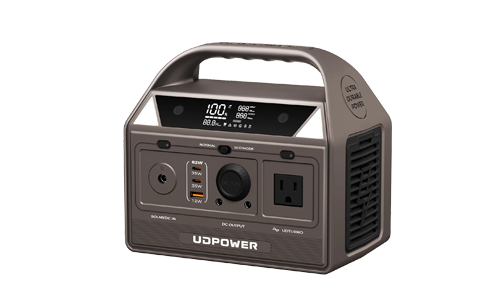
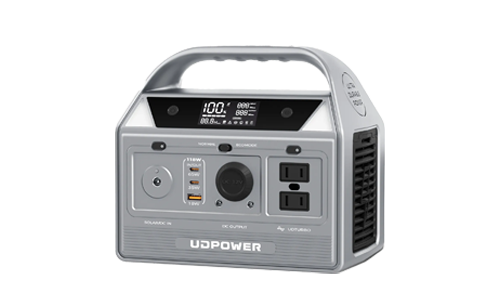
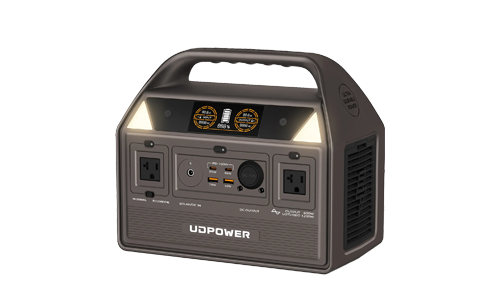
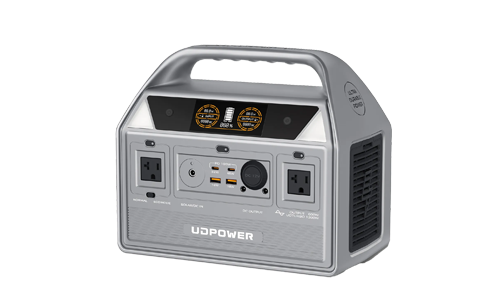
UDPOWER C400 Portable Power Station
The UDPOWER C400 is the most relevant UDPOWER choice if your main goal is powering a radio, phones, LED lights, laptop, router for limited periods, and other small electronics.
- Battery capacity: 256Wh LiFePO4
- Rated AC output: 400W pure sine wave
- Surge output: up to 800W
- AC outlets: 2
- USB-C: 2 ports, up to 100W combined output
- Solar input: up to 150W
- Weight: approximately 6.88 lb
- Battery specification: 80%+ remaining capacity after 3,000 cycles in the detailed technical specifications
A 5W radio is only a tiny fraction of the C400's 400W inverter rating. The reason to choose the C400 is therefore not radio wattage—it is the ability to keep the rest of a small emergency communications kit running as well.
View UDPOWER C400 View Compact Power Stations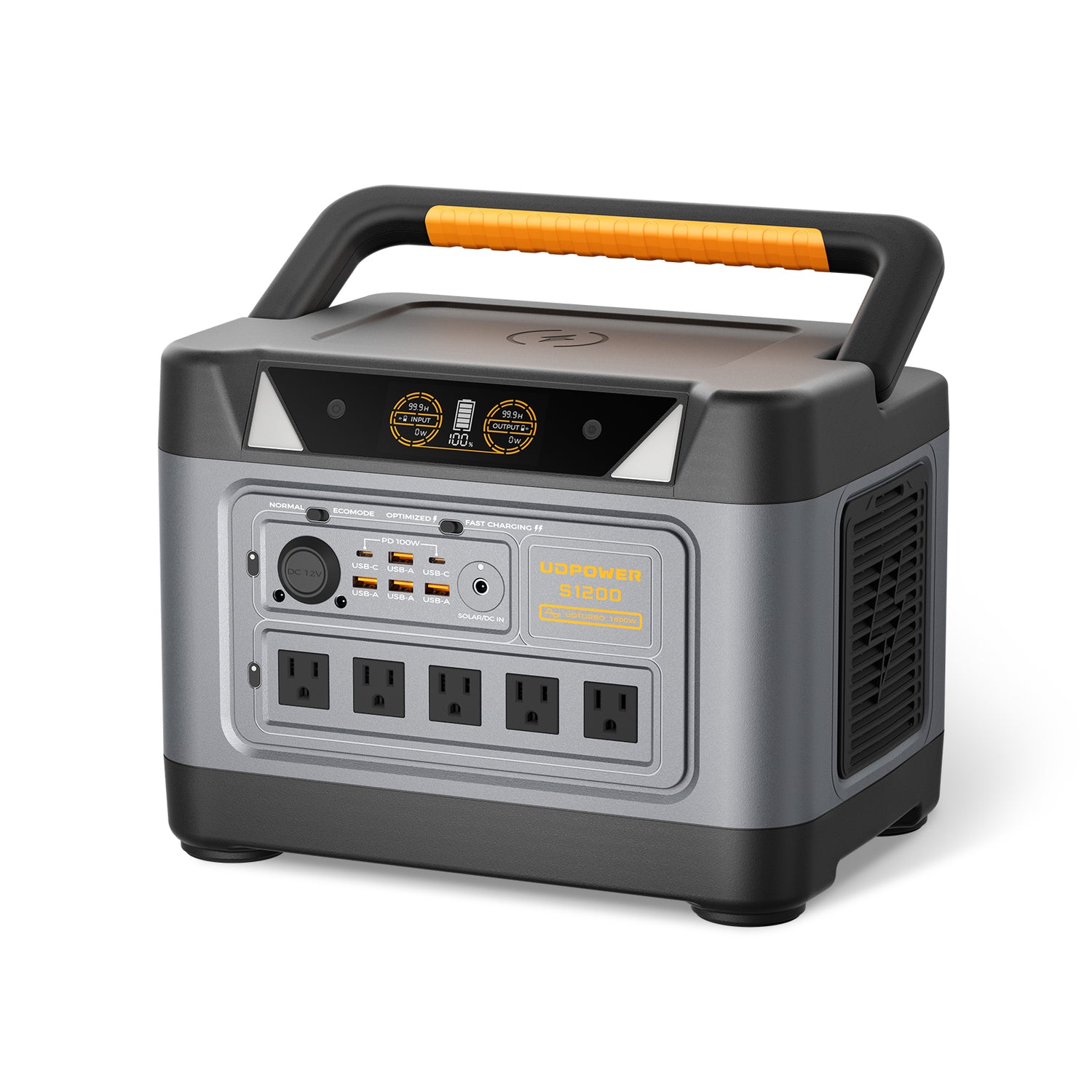 Best when the radio is part of a full home outage plan
UDPOWER S1200 Portable Power Station
The UDPOWER S1200 is not necessary for a radio alone. It makes sense when communication backup also includes a router, CPAP, refrigerator, lights, laptops, TV, or several devices at the same time.
- Battery capacity: 1,190Wh class LiFePO4 battery
- Rated AC output: 1,200W pure sine wave
- UDTURBO: compatible loads up to 1,800W in battery/inverter mode, with reduced conversion efficiency above rated output
- UPS/bypass limit: 1,200W
- UPSPRIME transfer: 10ms or less
- Solar input: up to 400W
- Weight: approximately 26 lb
For a radio-focused article, the key difference is runtime rather than inverter power. At the same low communications load, the S1200's much larger battery provides substantially more reserve for internet, refrigeration, medical equipment, and lighting.
View UDPOWER S1200 View Home Backup Options| Your backup goal | Better UDPOWER direction | Why |
|---|---|---|
| Radio only | C200 class | A small radio does not require a large inverter or battery. |
| Radio + phones + lights | C200 or C400 | Compact, easy to store, and enough energy for small electronics. |
| Radio + phones + lights + occasional Wi-Fi | C400 | 256Wh gives more useful headroom while remaining lightweight. |
| Communication kit + CPAP or refrigerator | S1200 | Much more stored energy and 1,200W rated AC output. |
| Radio plus several higher-power household essentials | Compare larger models | Size by your complete simultaneous wattage and daily watt-hour requirement. |
Browse the complete UDPOWER portable power station collection if your outage plan includes more than communications equipment.
Do You Need Solar Just to Run a Radio?
Usually not.
A small radio uses so little energy that a fully charged portable power station can often support it for a long time. Solar becomes more useful when the outage lasts several days or the battery is also powering phones, lighting, Wi-Fi, medical equipment, fans, or refrigeration.
| Situation | Is solar important? | Practical approach |
|---|---|---|
| Radio for one evening | No | Charge the radio or power station before severe weather arrives. |
| Radio + phone charging for 1–2 days | Usually optional | A compact charged power station is normally simpler. |
| Multi-day outage with phones and lighting | Useful | Solar can restore part of the battery during daylight. |
| Radio + router + CPAP + refrigerator | Much more useful | Daily energy consumption is now hundreds or thousands of Wh rather than a few dozen. |
For longer off-grid setups, see UDPOWER solar generator kits.
Common Radio Backup Mistakes
- Using speaker watts as power consumption. A 0.5W speaker specification is not the same as the radio's wall-plug draw.
- Using RF transmit watts as battery input watts. A 50W mobile radio does not automatically draw exactly 50W from its DC supply.
- Ignoring standby, receive, and transmit duty cycle. Two-way radio energy use depends heavily on how much time is spent talking.
- Assuming Wh ÷ 2W gives perfect low-load runtime. Power-station electronics consume energy too, which matters much more at very small loads.
- Running a USB-capable radio through AC unnecessarily. A direct USB/DC connection may avoid inverter overhead.
- Buying a large battery for the radio alone. Size the station around phones, lights, Wi-Fi, CPAP, refrigeration, and other real outage loads.
- Waiting until the outage to test cables. Confirm the correct adapter, connector, voltage, polarity, and charging cable beforehand.
- Assuming every AM/FM radio receives NOAA Weather Radio. NOAA weather frequencies require a compatible receiver.
- Leaving the station discharged in storage. Check and recharge emergency equipment periodically.
A Simple Radio Backup Test You Can Do Before Storm Season
Instead of trusting a theoretical runtime number, run one realistic test at home.
This test is often more valuable than debating whether the radio is a 3W, 4W, or 5W load because it includes the station's own overhead, charging losses, cables, and your actual usage pattern.
Sources and Methodology
The radio examples in this guide use manufacturer specifications where available. Calculated wattages use volts × amps. Portable power station runtime examples use 90% conversion efficiency as a planning assumption and should not be treated as guaranteed operating time.
| Source | Used for |
|---|---|
| Retekess V112 | Pocket radio charging voltage and current example |
| Icom IC-V3MR | Standby, receive, and transmit current example |
| Icom IC-M94D | Marine VHF receive and transmit current example |
| Midland WR120 | Weather radio power source and speaker-output example |
| Midland WR400 | Desktop weather radio and USB-output example |
| Midland MXT575 | 50W mobile GMRS radio example |
| Federal Communications Commission | GMRS transmitter output limits |
| National Weather Service | NOAA Weather Radio receiver guidance |
| U.S. Energy Information Administration | 2026 U.S. residential electricity-price reference |
| UDPOWER C400 specifications | 256Wh capacity, 400W output, 150W solar input, weight and output specifications |
| UDPOWER S1200 specifications | Capacity, rated output, UDTURBO, UPS and solar-input specifications |
Related UDPOWER Guides
Frequently Asked Questions
How many watts does a typical radio use?
A small AM/FM or rechargeable emergency radio often uses only a few watts. A 2–5W planning range works for many compact receivers, but the exact figure should come from the radio's input specification or a watt-meter measurement.
Does a radio use a lot of electricity?
Usually no. A 5W radio running continuously would use about 43.8kWh in an entire year. Radios are generally tiny loads compared with refrigerators, air conditioners, heaters, microwaves, and other household appliances.
How much power does a NOAA weather radio use?
There is no single NOAA weather-radio wattage. Many are low-power devices, but speaker wattage is not enough to determine total consumption. Check the adapter label, manual, or measure wall power if exact runtime matters.
Is a 50W GMRS radio a 50W electrical load?
Not necessarily. The 50W figure normally refers to RF transmitter output. The radio also loses energy in its transmitter electronics and powers its display, receiver, audio circuit, control board, and other components. Size a backup supply from the manufacturer's DC input or current specification.
Why does a two-way radio use more power when transmitting?
Receiving mainly powers the receiver, processing electronics, and audio system. Transmitting also drives the RF power amplifier so the radio can send energy through the antenna, which requires substantially more electrical power.
Can a portable power station run a radio overnight?
Yes. A small radio is one of the easiest devices for a portable power station to support overnight. In many cases, phones, lights, Wi-Fi equipment, or other emergency devices will consume far more energy than the radio.
How do I calculate radio runtime from a battery?
A simple UDPOWER planning formula is battery watt-hours × 0.90 ÷ average radio watts. For extremely small AC loads, actual runtime can be lower because the power station itself also consumes energy while the inverter is operating.
Is USB better than AC for powering an emergency radio?
If the radio is designed for USB input, USB can be a more efficient choice for a very small load because it may allow the portable power station's AC inverter to remain off. Always use a voltage and charging method supported by the radio manufacturer.
Can a normal AM/FM radio receive NOAA Weather Radio?
Usually not. NOAA Weather Radio uses dedicated frequencies around 162.400–162.550MHz, so a compatible weather-radio receiver is required.
What size power station do I need for an emergency radio?
For the radio alone, even a small power station can provide substantial runtime. Choose capacity based on everything else you need during an outage, such as phone charging, lights, router/modem, CPAP, fans, refrigeration, or laptops.
Should I buy a large power station just for a weather radio?
No. A large power station is generally unnecessary for a weather radio alone. A larger battery only makes sense when the radio is part of a broader emergency-power plan.
Do I need a solar panel to keep a radio running during an outage?
Usually not for a short outage. Solar becomes more useful during multi-day events when the same power station is also supporting phones, lighting, internet equipment, medical devices, or refrigeration.
Build the Right Backup Kit for the Next Outage
Start with the radio, then add the devices you would actually miss when the grid goes down: phones, lights, internet, medical equipment, and refrigeration. Choose capacity from that complete energy budget instead of buying a large power station just because the word “emergency” is on the checklist.
View Portable Power Stations Calculate Your Runtime Get the Power Outage Planning GuideRelated Articles


