

How Much Electricity Does an Electric Kettle Use? Watts, kWh & Cost
Last updated: September 17, 2026
An electric kettle uses a lot of power while it is heating, but only for a few minutes. Many household kettles draw roughly 1,200 to 1,500 watts, while some models may be closer to 1,000W or 1,800W.
A 1,500W kettle running for four minutes uses about 0.10 kWh. At the latest published U.S. residential average electricity price of 18.34 cents per kWh, that costs about 1.83 cents per boil.
Water volume matters more than the wattage printed on the kettle. Heating about 1 liter of water from room temperature to near boiling typically takes roughly 0.11 kWh, or about 2 cents at the current U.S. average rate. Boiling only enough water for one mug can cost well under one cent.

Electric kettles are a good example of why appliance wattage can be misleading. Seeing "1,500W" on a kettle can make it sound like an expensive appliance, especially compared with a 100W television or a 60W laptop charger.
But your electricity bill is based on energy used over time, not wattage alone. A kettle may draw fifteen times as much power as a 100W appliance, but if it operates for only three or four minutes, its total energy use remains relatively small.
This guide looks at both sides of the equation: how much power a kettle needs at any moment and how much electricity it actually consumes each time you boil water.
How Many Watts Does an Electric Kettle Use?
For practical planning, many U.S. electric kettles fall around 1,200W to 1,500W. Compact and travel models can use less, while some higher-output models can approach 1,800W.
The exact number is normally printed on the kettle's rating label, base, packaging, or instruction manual. If the label lists voltage and current instead of watts, use:
For example, a kettle drawing 12.5 amps from a 120V outlet uses approximately:
| Kettle Power | Current at 120V | Typical Use Case | What It Means | Reference |
|---|---|---|---|---|
| 1,000W | About 8.3A | Lower-power or compact kettle | Slower heating but lower instantaneous power demand | UDPOWER appliance guide |
| 1,200W | 10A | Common lower-power household kettle | May take slightly longer to heat the same amount of water | UDPOWER 1200W guide |
| 1,500W | 12.5A | Common full-size U.S. kettle | High instantaneous draw but short operating time | UDPOWER 2000W guide |
| 1,800W | 15A | High-output kettle | Requires substantial circuit and backup-power capacity | Check exact appliance rating label |
Watts vs. kWh: The Difference That Matters
Two measurements are important when talking about an electric kettle:
Watts (W) tell you how much power the kettle demands while its heating element is operating.
Kilowatt-hours (kWh) tell you how much electrical energy the kettle actually consumes over time. This is the number your utility uses when calculating the usage portion of your electricity bill.
A 1,500W kettle is a 1.5-kilowatt appliance. It would consume 1.5 kWh only if the heating element ran continuously for a full hour.
A normal boil lasts only a few minutes.
For a 1,500W kettle running for four minutes:
That distinction is important. A kettle is a high-power appliance, but it is not necessarily a high-energy appliance when used for only a few minutes.
This same principle applies to many heat-producing appliances. For a broader comparison, see Which Appliances Use the Most Electricity?.
How Much Does It Cost to Boil an Electric Kettle?
The latest available U.S. Energy Information Administration monthly data reports an average residential electricity price of 18.34 cents per kWh for June 2026. The data was released August 26, 2026.
Your local rate can be significantly higher or lower, so use the price shown on your own electricity bill whenever possible.
Using the 1,500W, four-minute example:
That is about 1.83 cents per boil.
| Kettle | Example Heating Time | Energy Used | Cost at 18.34¢/kWh | Source / Method |
|---|---|---|---|---|
| 1,000W | 6 minutes | 0.100 kWh | 1.83¢ | EIA electricity price + calculated usage |
| 1,200W | 5 minutes | 0.100 kWh | 1.83¢ | EIA electricity price + calculated usage |
| 1,500W | 4 minutes | 0.100 kWh | 1.83¢ | EIA electricity price + calculated usage |
| 1,800W | About 3.3 minutes | About 0.100 kWh | About 1.83¢ | EIA electricity price + calculated usage |
This table illustrates an important point: if different kettles are heating roughly the same amount of water through the same temperature increase, the faster kettle can draw more watts without necessarily using dramatically more total electricity.
Cost at Different Electricity Rates
Electricity rates vary widely across the United States. A kettle using 0.10 kWh per boil would cost approximately:
| Electricity Rate | Cost Per 0.10 kWh Boil | Cost for 3 Boils Per Day | Approx. Annual Cost | Method |
|---|---|---|---|---|
| 10¢/kWh | 1.0¢ | 3.0¢ | $10.95 | 0.10 kWh × local rate |
| 18.34¢/kWh | 1.83¢ | 5.50¢ | $20.08 | Current EIA U.S. average |
| 25¢/kWh | 2.5¢ | 7.5¢ | $27.38 | 0.10 kWh × local rate |
| 35¢/kWh | 3.5¢ | 10.5¢ | $38.33 | 0.10 kWh × local rate |
| 45¢/kWh | 4.5¢ | 13.5¢ | $49.28 | 0.10 kWh × local rate |
Electric Kettle Cost by Water Volume
Wattage is useful for determining whether an outlet or power station can run your kettle. For estimating actual energy use, however, the amount of water you heat is often more useful.
Water requires a predictable amount of heat to raise its temperature. Real kettles also lose some energy into the kettle body and surrounding air.
A published assessment of electric kettles found approximately 0.108 to 0.115 kWh was required to heat one liter of water from about 59°F (15°C) to about 208°F (98°C), depending on the kettle design. The measured efficiencies in the study were generally in the 80% to high-80% range under the tested conditions.
A more recent thermal analysis also describes typical kettle thermal efficiency in roughly the 80% to 90% range and estimates about 0.11 kWh for heating one liter of water.
| Water Amount | Approx. Energy | Cost at 18.34¢/kWh | Practical Example | Source / Method |
|---|---|---|---|---|
| 8 fl oz / 237 mL | About 0.026 kWh | About 0.48¢ | Small mug | Scaled planning estimate based on approximately 0.11 kWh/L |
| 12 fl oz / 355 mL | About 0.039 kWh | About 0.72¢ | Large mug | Scaled planning estimate based on approximately 0.11 kWh/L |
| 16 fl oz / 473 mL | About 0.052 kWh | About 0.95¢ | Two smaller servings | Scaled planning estimate based on approximately 0.11 kWh/L |
| 0.5 liter | About 0.055 kWh | About 1.01¢ | About two mugs | Electric kettle energy assessment |
| 1.0 liter | About 0.110 kWh | About 2.02¢ | Several cups | Measured kettle data |
| 1.5 liters | About 0.165 kWh | About 3.03¢ | Large batch | Planning estimate scaled from measured 1L consumption |
| 1.7 liters | About 0.187 kWh | About 3.43¢ | Typical full-size kettle near maximum fill | Planning estimate scaled from measured 1L consumption |
This is why one of the easiest ways to reduce kettle electricity use is simply to boil only the amount of water you intend to use.
How Water Temperature Changes Electricity Use
Not every drink needs water at 212°F.
If your kettle has selectable temperature settings, stopping at a lower temperature can reduce electricity use because the kettle has a smaller temperature increase to produce.
The following table assumes approximately one liter of water starting at 68°F (20°C) and uses an 85% planning efficiency. Real kettles and starting temperatures vary.
| Target Temperature | Example Use | Estimated Electricity | Estimated Cost | Source / Method |
|---|---|---|---|---|
| 160°F / 71°C | Lower-temperature hot water | About 0.070 kWh | About 1.28¢ | Water heat-capacity calculation using practical kettle efficiency |
| 175°F / 79°C | Some green teas | About 0.081 kWh | About 1.49¢ | Efficiency reference |
| 195°F / 91°C | Coffee and many hot drinks | About 0.097 kWh | About 1.77¢ | Calculated estimate |
| 212°F / 100°C | Full boil at sea-level conditions | About 0.109 kWh | About 2.01¢ | Thermal analysis reference |
For one boil, the savings are measured in fractions of a cent. Over thousands of heating cycles, however, unnecessary temperature and unnecessary water volume both add up.
How Much Does an Electric Kettle Cost Per Day, Month, and Year?
Suppose each boil consumes 0.10 kWh. The following estimates use the latest published U.S. average residential electricity price of 18.34¢/kWh.
| Boils Per Day | Daily Electricity | Monthly Electricity | Monthly Cost | Annual Cost | Source |
|---|---|---|---|---|---|
| 1 | 0.10 kWh | 3.0 kWh | $0.55 | $6.69 | EIA rate + calculation |
| 2 | 0.20 kWh | 6.0 kWh | $1.10 | $13.39 | EIA rate + calculation |
| 3 | 0.30 kWh | 9.0 kWh | $1.65 | $20.08 | EIA rate + calculation |
| 5 | 0.50 kWh | 15.0 kWh | $2.75 | $33.47 | EIA rate + calculation |
| 8 | 0.80 kWh | 24.0 kWh | $4.40 | $53.55 | EIA rate + calculation |
| 10 | 1.00 kWh | 30.0 kWh | $5.50 | $66.94 | EIA rate + calculation |
These estimates assume each heating cycle consumes 0.10 kWh. If you usually boil only one mug, your actual cost may be substantially lower. If you routinely fill a 1.5- or 1.7-liter kettle, it can be higher.
Does a Higher-Wattage Kettle Cost More to Run?
Not necessarily.
This is one of the most useful things to understand about electric kettles.
A higher-wattage kettle draws more electricity every second, but it can also heat the water faster. If two kettles have similar thermal efficiency and heat the same amount of water from the same starting temperature to the same final temperature, their total kWh consumption can be surprisingly close.
For example:
| Power | Example Runtime | Total Energy | Main Difference |
|---|---|---|---|
| 1,000W | 6 minutes | 0.10 kWh | Lower power for longer |
| 1,200W | 5 minutes | 0.10 kWh | Moderate power and time |
| 1,500W | 4 minutes | 0.10 kWh | Higher power for less time |
| 1,800W | About 3.3 minutes | About 0.10 kWh | Highest instantaneous load |
The table is an illustration, not a prediction of exact boil times. Actual performance depends on kettle construction, water quantity, initial temperature, heat loss, and automatic shutoff behavior.
The practical takeaway is:
How Much Electricity Does Keep-Warm Mode Use?
For kettles with temperature-hold or keep-warm functions, the electricity used after the initial boil can become significant compared with the boil itself.
One published kettle assessment used a representative temperature-controlled model and measured approximately 0.127 kWh to keep one liter near 98°C for one hour.
At 18.34¢/kWh, that would cost approximately:
That is roughly comparable to the electricity required for another full one-liter heating cycle.
The same study modeled standby power around 0.25W for one representative kettle. Even if that level continued around the clock, it would equal only about 2.2 kWh per year. In other words, for many temperature-control kettles, keep-warm behavior matters much more than ordinary standby consumption.
View the electric kettle energy assessment.
What Changes Electric Kettle Power Consumption?
| Factor | Effect on Electricity Use | Why It Matters | What You Can Do |
|---|---|---|---|
| Water volume | Major | More water requires more heat energy | Boil only what you need |
| Starting water temperature | Major | Cold water requires a larger temperature increase | Expect longer heating from very cold tap water |
| Target temperature | Major | Heating to 175°F takes less energy than reaching a full boil | Use temperature presets when appropriate |
| Kettle efficiency | Moderate | Some electricity heats the kettle body and surrounding air | Use a properly functioning kettle and avoid unnecessary heating |
| Repeated boiling | Major over time | Every unnecessary reboil adds another heating cycle | Pour the water when it is ready |
| Keep-warm mode | Can become significant | The kettle repeatedly replaces lost heat | Disable it when you do not need prolonged hot-water availability |
| Electricity rate | Changes cost, not kWh | The same kettle use costs more in high-rate areas | Use your utility's actual rate |
| Time-of-use pricing | Changes cost by time | Some utilities charge more during peak hours | Check your utility rate plan |
| Altitude | Small but real | Water boils at a lower temperature at higher elevations | Do not assume 212°F is the boiling point everywhere |
| Kettle condition | Usually modest | Scale buildup and aging components can affect heat transfer and shutoff behavior | Clean and descale according to the manufacturer instructions |
How to Measure Your Kettle's Actual Electricity Use
Generic tables are useful for planning, but your own kettle can be measured quite accurately.
Method 1: Use the Wattage Label and a Timer
If your kettle is rated at 1,500W and runs for 3 minutes 30 seconds:
At 18.34¢/kWh:
Method 2: Use a Plug-In Electricity Meter
A plug-in meter can show actual watts and accumulated kWh. This is usually the easiest way to measure the real consumption of a kettle over one or several cycles.
Because an electric kettle is a high-current appliance, make sure the meter is specifically rated for the kettle's voltage, amperage, and wattage. A typical 1,500W kettle draws about 12.5A at 120V.
Method 3: Measure Several Boils
One measurement can be affected by starting water temperature and water quantity. A more useful household estimate is to measure five or ten normal heating cycles and divide the total kWh by the number of cycles.
That gives you a realistic "kWh per boil" number based on how you actually use the kettle.
Can a Portable Power Station Run an Electric Kettle?
Yes, but an electric kettle is one of the more demanding small appliances because its heating element can draw 1,200W, 1,500W, or more continuously while heating.
For kettle use, pay attention to two different specifications:
AC output in watts: Determines whether the power station can operate the kettle.
Battery capacity in watt-hours: Determines approximately how many heating cycles the battery can provide.
This distinction is explained in more detail in How Do You Know If a Portable Power Station Can Power Your Device?.
Unlike refrigerators, pumps, or motor-driven tools, a basic resistance-heating kettle generally does not have a large motor-start surge. The important number is therefore its operating wattage.
| Kettle Wattage | UDPOWER S1200 | UDPOWER S2400 | Best Practical Choice |
|---|---|---|---|
| 1,000W | Within 1,200W rated output | Well within 2,400W rated output | S1200 or S2400 |
| 1,200W | At rated output limit | Plenty of output headroom | S1200 for kettle-only use; S2400 for more headroom |
| 1,500W | Above normal 1,200W rated output; S1200 supports UDTURBO up to 1,800W for compatible devices | Within 2,400W rated output | S2400 is the simpler match |
| 1,800W | At the upper UDTURBO level rather than normal rated output | Within 2,400W rated output | S2400 recommended for greater operating margin |
For a typical 1,500W household kettle, the UDPOWER S2400 provides considerably more output headroom than a 1,200W-class station.
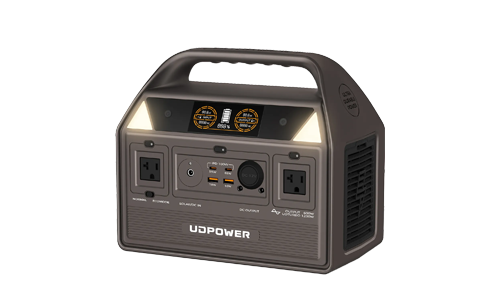
UDPOWER S2400: Recommended for Typical High-Wattage Kettles
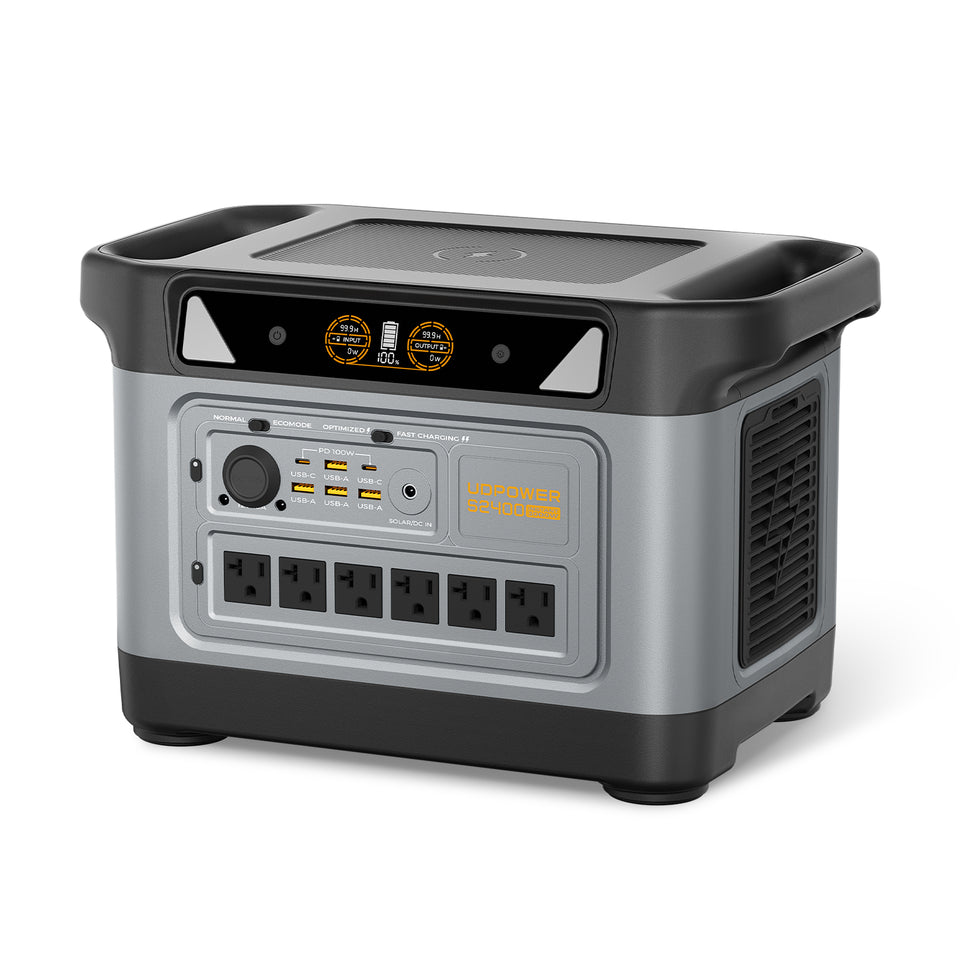
- Battery capacity: 2,083Wh LiFePO4
- Rated AC output: 2,400W pure sine wave
- UDTURBO: Up to 3,000W
- AC outlets: 6
- Battery life: 4,000+ cycles
- Solar input: Up to 400W
The 2,400W rated output makes the S2400 a practical choice for common 1,500W electric kettles while leaving more headroom than a 1,200W-class station.
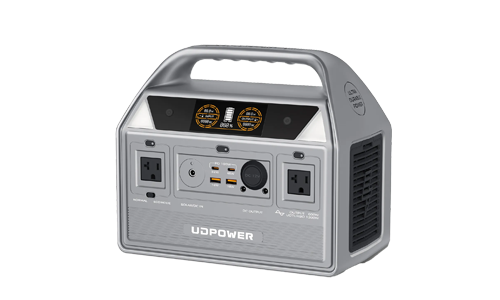
View UDPOWER S2400UDPOWER S1200: A Better Match for Lower-Wattage Kettles
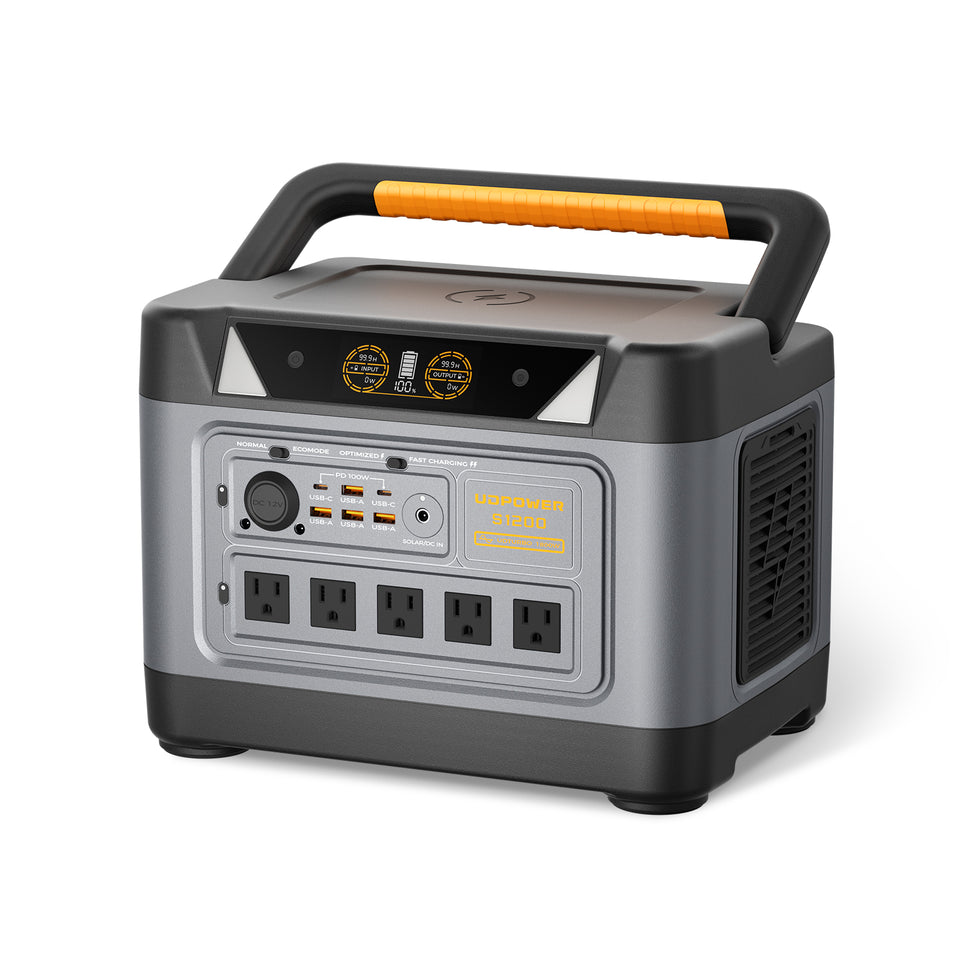
- Battery capacity: 1,190Wh LiFePO4
- Rated AC output: 1,200W pure sine wave
- UDTURBO: Up to 1,800W for compatible higher-power devices
- Battery life: 4,000+ cycles
For an electric kettle rated at 1,200W or less, the S1200 is the more compact option. For a conventional 1,500W kettle, the S2400 provides considerably more normal rated-output headroom.
View UDPOWER S1200How Many Times Can a Portable Power Station Boil a Kettle?
A useful way to answer this question is to calculate energy per boil rather than trying to convert battery capacity directly into kettle runtime.
If heating approximately one liter requires about 0.11 kWh, that equals roughly 110Wh delivered to the kettle.
For realistic planning, the estimates below use a 90% AC conversion efficiency. Actual results will vary with water quantity, starting temperature, kettle efficiency, battery temperature, state of charge, and other loads connected to the power station.
| Power Station | Battery Capacity | Estimated AC Energy at 90% | Approx. 1L Boils at 0.11 kWh Each | Approx. 0.5L Boils at 0.055 kWh Each | Product Source |
|---|---|---|---|---|---|
| UDPOWER S1200 | 1,190Wh | About 1,071Wh | About 9–10 | About 19 | S1200 specifications |
| UDPOWER S2400 | 2,083Wh | About 1,875Wh | About 17 | About 34 | S2400 specifications |
For a deeper look at this distinction, read What Can a 2000W Portable Power Station Run? or What Can a 1200W Portable Power Station Run?.
Does Running a Kettle From a Portable Power Station Save Electricity?
Not if the power station itself was charged from the grid.
Charging a battery and later converting its DC energy back into 120V AC introduces conversion losses. If a wall outlet is available, plugging the kettle directly into the wall is normally the more energy-efficient route.
A portable power station is useful when the wall outlet is unavailable: during a power outage, camping trip, RV stop, remote work setup, emergency, or other off-grid situation.
If the power station is recharged from solar panels, the kettle can instead use stored solar energy, although the solar panels and battery system still have an equipment cost.
How to Reduce Electric Kettle Electricity Use
1. Boil Only the Water You Need
This usually makes the largest practical difference. Heating 0.5 liter requires far less energy than repeatedly filling a 1.7-liter kettle for one cup of tea.
2. Do Not Automatically Reboil the Water
If the kettle finished only a few minutes ago, the water may still be hot enough for your intended use. Reboiling simply adds another heating cycle.
3. Use the Right Temperature
If your kettle offers temperature control, there is no need to bring every liter of water to 212°F when your drink or recipe calls for a lower temperature.
4. Turn Off Keep-Warm Mode When You Do Not Need It
Holding water near boiling temperature for an hour can consume an amount of electricity comparable to another heating cycle.
5. Keep the Kettle Clean
Follow the manufacturer's descaling instructions, especially in hard-water areas. A clean heating surface helps the kettle operate as designed and avoids abnormal heating or shutoff behavior.
6. Use an Insulated Container for Repeated Hot-Water Use
If you need several cups over a long period, heating the required amount once and moving it to an insulated flask can be more sensible than repeatedly boiling or leaving the kettle in keep-warm mode.
Is an Electric Kettle an Energy-Hungry Appliance?
The answer depends on what you mean by "energy-hungry."
In terms of instantaneous power, yes. A 1,500W kettle is a heavy load compared with phones, laptops, TVs, routers, or LED lights.
In terms of total household electricity consumption, usually not. The kettle typically operates for only a few minutes at a time.
For comparison, a device using only 100W but operating continuously for 24 hours consumes:
That is equivalent to roughly twenty-four 0.10 kWh kettle heating cycles.
This is why judging an appliance only by its wattage can lead to the wrong conclusion. Running time is just as important.
The same concept is useful when evaluating other household appliances. See How Much Does It Cost to Run a Refrigerator? for an example of a lower-wattage appliance whose long operating time makes its total annual electricity consumption much more significant.
Frequently Asked Questions
How much electricity does an electric kettle use per boil?
A typical heating cycle may use roughly 0.05 to 0.15 kWh depending mainly on the amount of water, starting temperature, target temperature, and kettle efficiency. Heating around one liter from cool tap temperature to near boiling commonly uses roughly 0.11 kWh.
How many watts does an electric kettle use?
Many household electric kettles use around 1,200 to 1,500 watts, although lower- and higher-power models exist. Check the rating label on your specific kettle for the exact number.
How much does it cost to boil a kettle in the United States?
If a heating cycle consumes 0.10 kWh, it costs about 1.83 cents at the June 2026 U.S. residential average electricity price of 18.34 cents per kWh. Local utility rates vary, so your actual cost may be different.
Does a 1,500W kettle use 1.5 kWh of electricity?
Only if the heating element runs continuously for one hour. A 1,500W kettle running for four minutes uses about 0.10 kWh.
Is a 1,500W kettle expensive to run?
Usually not per heating cycle because the kettle operates for only a few minutes. A four-minute 1,500W cycle uses approximately 0.10 kWh, costing about 1.83 cents at 18.34 cents per kWh.
Does a higher-wattage kettle use more electricity?
Not necessarily. A higher-wattage kettle draws more power but may heat the water faster. When two kettles heat the same quantity of water through the same temperature increase, their total kWh consumption can be relatively similar if their efficiencies are comparable.
Is it cheaper to boil only one cup of water?
Yes. Heating less water requires less energy. An 8-ounce serving may require only around a quarter of the energy needed to heat approximately one liter, although small-volume efficiency varies by kettle.
Does keep-warm mode use much electricity?
It can. One published assessment measured approximately 0.127 kWh to hold one liter near 98°C for one hour in a representative kettle. That is comparable to the energy required for another full one-liter heating cycle.
Can a portable power station run a 1,500W electric kettle?
Yes, if the power station supports at least the kettle's required AC output. The UDPOWER S2400 provides 2,400W rated AC output, making it a more straightforward match for a typical 1,500W kettle than a conventional 1,200W-class station.
How many times can the UDPOWER S2400 boil a kettle?
Using a planning estimate of 0.11 kWh per one-liter heating cycle and 90% AC conversion efficiency, the 2,083Wh UDPOWER S2400 could provide approximately 17 one-liter heating cycles from a full battery. Real results vary with kettle efficiency, water temperature, water quantity, battery conditions, and other loads.
Is an electric kettle a good appliance to use during a power outage?
It can be if your backup power system has enough AC output. A kettle consumes considerable power while heating but operates only briefly, so its total energy requirement per boil is relatively modest compared with continuously operating high-power appliances such as space heaters.
What is the easiest way to calculate my kettle's exact cost?
Measure its kWh use with a properly rated plug-in electricity meter, then multiply that number by the electricity rate shown on your utility bill. This accounts for your real kettle, water quantity, heating time, and local electricity price.
Sources and Further Reading
| Source | Used For |
|---|---|
| U.S. Energy Information Administration — Electric Power Monthly Table 5.3 | Latest published U.S. residential electricity price used in cost calculations |
| Electric Kettles: An Assessment of Energy-Saving Potentials | Measured kettle energy consumption, efficiency, standby, and keep-warm data |
| Habits in the Boil: How Electric Kettles Reveal Barriers and Opportunities for Sustainable Energy Transitions | Kettle thermal efficiency and approximate energy required to heat one liter of water |
| UDPOWER S2400 Official Product Page | S2400 battery capacity, rated AC output, UDTURBO output, cycle life, outlets, and product image |
| UDPOWER S1200 Official Product Page | S1200 capacity, rated output, UDTURBO capability, cycle life, and product image |
Need Backup Power for an Electric Kettle or Other Household Appliances?
Start by checking the appliance's rated watts, then choose a portable power station with enough AC output and battery capacity for the way you plan to use it.
For a typical 1,500W electric kettle, the UDPOWER S2400 offers 2,400W of rated AC output and a 2,083Wh LiFePO4 battery. Lower-power kettles may also work with smaller power stations when their wattage stays within the supported output range.
View All Portable Power Stations View UDPOWER S2400 Get the Power Station Sizing GuideRelated Articles


