How Long Will a 2000W Power Station Run a Refrigerator?
ZacharyWilliamIn plain English: a 2000W-class power station will usually run a refrigerator just fine, but the real runtime comes from battery size, not the 2000W label. With a battery around the size of the UDPOWER S2400 (2,083Wh), many modern full-size refrigerators land somewhere around roughly 18 to 40+ hours depending on the EnergyGuide label, kitchen temperature, ice maker use, and how often the door opens. If you are still comparing what a 2000W-class unit can realistically handle beyond a fridge, the best companion read is What Can a 2000W Portable Power Station Run?.

The short answer
If your refrigerator is efficient and averages about 40–55W over the day, a 2,083Wh unit can often keep it cold for about 33–41 hours. If it is a bigger or older fridge averaging 70–100W, think more like 18–25 hours.
- 2000W tells you whether the station can start and run the fridge.
- Wh tells you how long it can keep the fridge going.
- For most households, runtime planning is better done from the fridge’s EnergyGuide kWh/year label than from a guessed wattage.

A better way to think about it
A fridge is not a steady 200W or 300W load all day. The compressor cycles on and off. That is why two refrigerators with similar size can have very different runtimes on the same power station. If you want the broader 2000W buying picture first, read What Will a 2000 Watt Solar Generator Run? and then come back here for refrigerator-specific runtime planning.
- Modern, efficient fridge: usually the easiest case.
- Side-by-side or older unit: shorter runtime.
- Hot kitchen + frequent door opening: noticeably shorter runtime.
Runtime table using real refrigerator energy examples
This table is built the way most shoppers actually need it: starting from yearly energy use, then converting that into daily use, average watt draw, and estimated runtime. The planning math below uses a conservative 85% usable AC energy to leave room for inverter losses and normal real-world slippage.
The planning formula
Use this if you want a fast estimate before a storm, a camping trip, or a backup-power purchase.
| Refrigerator example | Annual energy use | Daily use | Average draw | Runtime on UDPOWER S2400 (2,083Wh, planning basis) |
Runtime on UDPOWER S1200 (1,190Wh, planning basis) |
Source |
|---|---|---|---|---|---|---|
|
Current efficient full-size example 19.6 cu ft bottom-freezer |
381 kWh/year | 1.04 kWh/day | 43.5W | About 40.7 hours | About 23.3 hours | ENERGY STAR |
|
Current side-by-side example 20.7 cu ft side-by-side |
460 kWh/year | 1.26 kWh/day | 52.5W | About 33.7 hours | About 19.3 hours | ENERGY STAR Product Finder |
|
U.S. refrigerator-freezer average Good planning baseline if you do not know your label yet |
588 kWh/year | 1.61 kWh/day | 67.1W | About 26.4 hours | About 15.1 hours | U.S. Department of Energy |
|
Large current example 27.4 cu ft bottom-freezer |
630 kWh/year | 1.73 kWh/day | 71.9W | About 24.6 hours | About 14.1 hours | ENERGY STAR Product Finder |
Why the 2000W label confuses so many buyers
The phrase “2000W power station” sounds like it answers everything, but it only answers one question: can the inverter handle the load? It does not tell you how long the battery will last. That same misunderstanding shows up when people compare battery backup with gas units, which is why this 2000 Watt Generator Guide is useful if you are deciding between a quiet indoor power station and a small inverter generator.

What watts tell you
Power nowWatts are about instant output. A 2000W-class station is usually strong enough for a refrigerator because most fridges run far below that level once the compressor is already going.
What watt-hours tell you
Fuel in the tankWatt-hours are about stored energy. That is the number that decides whether your fridge lasts 10 hours, 20 hours, or more than a day.
Same fridge, different battery = very different runtime
If your refrigerator averages about 67W across the day, a 1,500Wh-class battery gives roughly 19 hours on the same 85% planning basis, while a 2,083Wh battery lands around 26 hours. That difference is why capacity matters more than the headline watt rating once you already know the unit can start the fridge.
Quick calculator for your own refrigerator
If you have the EnergyGuide label, use the yearly kWh number. If not, enter your best estimate for average watts. The calculator below compares a typical full-size backup pick and a smaller backup unit side by side.

If you enter both fields, the calculator uses the yearly kWh value first.
For outage prep, round your final answer down instead of up.
2,083Wh battery, 2,400W AC output, up to 3,000W surge.
1,190Wh battery, 1,200W rated output, 1,800W surge.
Will a 2000W-class power station actually start a refrigerator?
In most cases, yes. The main issue is not steady running power. It is the compressor startup surge. A fridge may look modest once it is running, but startup is the moment that separates a comfortable setup from a frustrating one. If you have not checked your refrigerator’s usual running range yet, How Many Watts Does a Fridge Use? is the right follow-up before you choose a station size.

Mini fridge
Usually the easy case. This is where smaller units like the UDPOWER S1200 make the most sense.
Modern full-size refrigerator
Usually a good match for a 2000W-class station, especially if the unit has real surge headroom and pure sine wave AC output.
Older or feature-heavy fridge
Still often workable, but this is where startup surge and shorter runtime become more important. Measure once if you can.
Practical buying rule
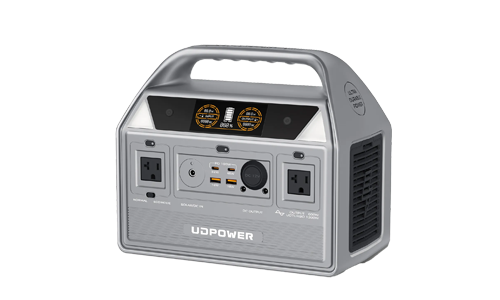
If your goal is “fridge first” outage backup, shop for enough battery capacity for overnight runtime, then make sure the station has enough surge support for startup. On the UDPOWER side, the S2400 is the more natural fit for full-size refrigerator backup because it combines 2,083Wh of capacity with 2,400W pure sine wave AC output and surge support up to 3,000W.
What changes runtime in real life
This is where a “33-hour fridge” on paper can turn into a 24-hour fridge in your kitchen. None of these are marketing details. They are the things that actually decide whether your battery makes it through the outage.

1) Kitchen temperature
Hotter room, more compressor cycling, shorter runtime. Summer outages are harder on batteries than cool-weather outages.
2) Door opening
Every “just checking” moment leaks cold air. Families with kids usually see shorter runtime than careful outage planning suggests.
3) Ice maker and dispensers
Built-in extras can add hidden energy use. If you are stretching runtime, turning off the ice maker is a smart first move.
4) Defrost cycles
Auto-defrost models can draw more at certain points. That is another reason label-based planning beats one-time watt guesses.
5) Fridge age
Older models often use more energy than newer efficient units. That means shorter runtime even when the outside dimensions look similar.
6) What else is on the station
If the same power station is also running Wi-Fi, lights, or a coffee maker, refrigerator runtime drops because the battery is sharing the work.
Which UDPOWER model makes the most sense for fridge backup?
If your real priority is protecting groceries and getting through the first outage window without panic, capacity matters. That is why these two models solve different problems.
UDPOWER S2400

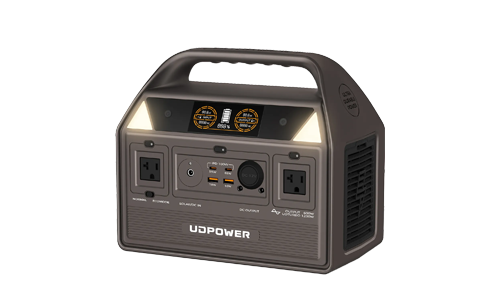
Best fit for most full-size refrigerators, longer outage coverage, and fridge-plus-essentials planning. Official highlights include 2,083Wh capacity, 2,400W pure sine wave output, surge support up to 3,000W, 6 AC outlets + 10 DC outputs, fast charging in about 1.5 hours, and up to 400W solar charging.
UDPOWER S1200

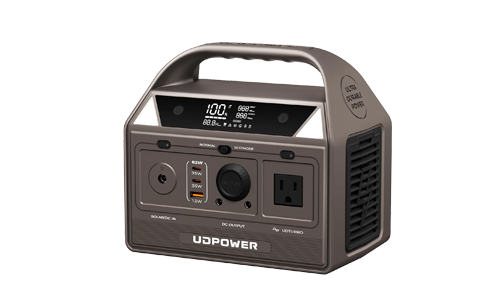
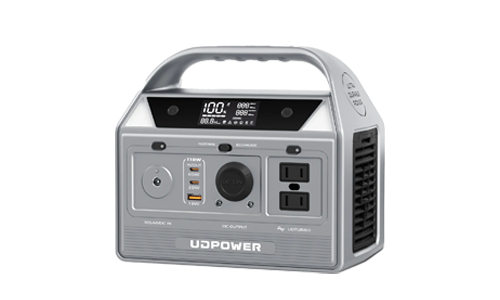
Better if your target is a mini fridge, a very efficient smaller refrigerator, or a shorter emergency window. Official product details highlight 1,190Wh capacity, 1,200W rated output, 1,800W surge, and a layout with 5 AC outlets and 10 DC outputs.
If your outage may last longer than a day
A battery-only answer is usually enough for short blackouts. For multi-day outages, pair the power station with daytime recharging. If you are planning that kind of setup, the most useful follow-up read is this solar charging and voltage safety guide so you do not accidentally build a panel setup that looks right on paper but misses the station’s input limits.
How to stretch refrigerator runtime during a power outage
If you want more hours without buying a larger station, the best gains usually come from behavior, not hardware. For a bigger outage plan that covers fridge strategy, communications, and what to power first, pair this guide with Portable Power Station Runtime Planning for Outages and Power Priorities: What to Run First.

Keep the door shut
Make one list, open once, grab everything, close it. This sounds small, but it is one of the biggest real-world differences.
Turn off extras
Disable the ice maker and avoid unnecessary dispenser use when you are living on backup power.
Do not load the station with kitchen extras
Microwaves, coffee makers, and kettles are fine in short bursts, but they steal runtime from the fridge fast.
Use the cooler strategically
If you have a few high-turnover items, moving them to a cooler can reduce fridge door openings and help the battery last longer.
Food safety still matters more than squeezing one more hour
U.S. food safety guidance is simple: a refrigerator keeps food safe for about 4 hours if the door stays closed. After that, temperature matters more than guesswork. If you want the simple fridge/freezer rules in one place, read Food Safety During a Power Outage. If you are building a complete emergency plan, the natural next step is Power Outage Checklist (24/48/72 Hours).
FAQ
Can a 2000W power station run a full-size refrigerator?
Usually yes. The output is typically enough for the fridge, and the real question becomes startup surge plus how large the battery is.
How long will a 2,083Wh power station run a refrigerator?
For many modern full-size refrigerators, a practical planning range is about 24 to 40 hours. Efficient models can do better. Bigger or older models can do worse.
Is 2000W enough, or do I need a 3000W station?
If the power station can handle your fridge’s startup surge, 2000W-class is often enough. Moving up helps more with battery size and multi-device use than with the fridge alone.
Should I plan from the fridge watt label or the EnergyGuide label?
The EnergyGuide label is usually better for runtime planning because it reflects actual energy use over time instead of just a momentary draw.
Can I run a refrigerator and freezer on the same power station?
You can if the combined running load and startup surges stay inside the station’s limits, but battery runtime will drop sharply. For emergency use, many people prioritize the refrigerator first.
Will solar panels let me keep the fridge running indefinitely?
Sometimes, but only if the daily solar input roughly keeps up with the fridge’s daily energy use and the wiring stays within the station’s solar input limits.
Keep reading if you’re comparing 2000W backup options
Most readers do not stop at one question. They want to know whether a 2000W-class unit is enough, how it compares with a gas generator, what a fridge really draws, and how to plan for the first 24 to 72 hours of an outage. These are the best next reads on UDPOWER for exactly that path.
What Can a 2000W Portable Power Station Run?
Start here if you want the broader device list beyond refrigerators, including kitchen loads, CPAP, Wi-Fi, and common household electronics.
What Will a 2000 Watt Solar Generator Run?
Best for readers comparing “2000W solar generator” language with battery capacity, surge handling, and solar recharging expectations.
2000 Watt Generator Guide
Helpful if you are deciding between a small gas inverter generator and an indoor-safe portable power station for outage backup.
How Many Watts Does a Fridge Use?
Use this if you still need a better handle on running watts, startup surge, and why fridge labels can be misleading.
Portable Power Station Runtime Planning for Outages
A practical next step if your goal is not just keeping the fridge cold, but stretching battery runtime across your essential loads.
Power Priorities: What to Run First
Read this after sizing your fridge backup if you want a simple order for what deserves power first during a real outage.