





Are Portable Power Stations Tax-Free in Florida in 2026?
Last updated: September 8, 2026
Short answer: not automatically. Florida now permanently exempts qualifying portable engine-driven generators rated at 10,000 running watts or less from sales tax. A battery-powered portable power station, however, does not fit that generator definition simply because a manufacturer or retailer calls it a “battery generator” or “solar generator.”
There is an important second rule: Florida separately exempts qualifying solar energy systems and their components. The state's guidance specifically includes photovoltaic power-conditioning equipment and energy-storage components such as batteries when they are part of a qualifying solar energy system. That means a battery power station used as part of a solar setup may raise a different exemption question, but the words “solar generator” on the box do not automatically make the purchase tax-free.
For most shoppers: do not assume a stand-alone portable power station is tax-free at checkout. Confirm how the seller is classifying the transaction before relying on an exemption.
If you searched “Is a solar generator tax free in Florida?”, you may have found conflicting answers. Much of that confusion comes from older Florida Disaster Preparedness Sales Tax Holiday pages that used price limits, including a $3,000 generator threshold in 2024. Those rules are not the same as Florida's current 2026 permanent generator exemption.
This guide explains the rules that matter now, the difference between fuel generators and battery power stations, the separate solar-energy exemption, and what Florida residents should check before buying hurricane backup power.
What Changed in Florida's Generator Tax Rules?
The biggest change is that qualifying portable generators no longer depend on a short hurricane-season shopping window.
Florida Department of Revenue Tax Information Publication 25A01-05 states that beginning August 1, 2025, several products that had previously appeared in temporary tax holidays became permanently exempt. Portable generators were included, but Florida gave the term a specific definition: they must be portable, engine-driven generators capable of producing 10,000 running watts or less.
| Rule | 2024 Disaster Preparedness Holiday | Current 2026 Rule |
|---|---|---|
| Type of program | Temporary sales tax holiday | Permanent statutory exemption for qualifying portable generators |
| Timing | June 1–14 and August 24–September 6, 2024 | Year-round |
| Generator threshold | Sales price of $3,000 or less | 10,000 running watts or less |
| Generator definition | Portable generators used for specified outage needs | Portable engine-driven machine converting fuel energy into electrical power |
| Current price cap in generator paragraph | $3,000 | No sales-price cap stated in the current portable-generator paragraph |
| Official source | Florida DOR TIP 24A01-04 | 2026 Florida Statutes §212.08 and Florida DOR TIP 25A01-05 |
Do not use the old $3,000 figure when shopping in 2026. That number came from Florida's 2024 Disaster Preparedness Sales Tax Holiday. The current permanent portable-generator provision uses a technology definition and a 10,000-running-watt ceiling instead.
Which Generators Are Tax-Free in Florida in 2026?
Florida Statutes §212.08(7)(yyy) defines a qualifying portable generator as a portable engine-driven machine that converts chemical energy from the fuel powering the engine into mechanical energy and then into electrical power, with output of 10,000 running watts or less.
That wording matters more than the product name on a retailer's website.
| Example | Running Output | Engine/Fuel Driven? | Portable Generator Exemption? |
|---|---|---|---|
| Portable gasoline generator | 5,000W | Yes | Generally yes, assuming it meets the statutory definition |
| Portable propane generator | 8,500W | Yes | Generally yes, assuming it meets the statutory definition |
| Portable engine generator | 10,000W | Yes | Within the stated wattage ceiling |
| Portable engine generator | 10,500W | Yes | Not under this exemption because it exceeds 10,000 running watts |
| Battery portable power station | 2,400W inverter output | No | Not under the engine-driven portable-generator exemption |
Notice that the law says running watts. It does not say starting watts, peak watts, surge watts, or advertised model number. If you are buying an engine generator close to the 10,000W line, check the manufacturer's published continuous or running output.
Are Battery Generators Tax-Free in Florida?
A battery generator is not automatically tax-free under Florida's permanent portable-generator exemption.
Products commonly called battery generators, solar generators, or portable power stations normally store electricity in a rechargeable battery and use an inverter to supply AC power. They do not contain the fuel-burning engine required by §212.08(7)(yyy).
In everyday conversation, calling both products “generators” makes sense because both can provide electricity during an outage. For Florida sales-tax purposes, however, the underlying technology matters.
Simple test: if the product stores electricity in a rechargeable battery and has no fuel-powered engine, do not assume it qualifies for Florida's permanent portable generator exemption merely because the listing calls it a generator.
This distinction is especially important for shoppers searching terms such as Florida generator tax exemption 2026 or Florida hurricane tax free generator. A search result that says “generators are tax-free in Florida” may be correct for qualifying engine-driven generators while still being incomplete for battery power stations.
Is a Solar Generator Tax-Free in Florida?
Not simply because it is called a solar generator.
Most consumer solar generators combine a portable battery, inverter, charging electronics and one or more solar panels. The battery unit itself is usually not an engine-driven generator, so it does not fit Florida's permanent portable-generator definition.
But that is not the end of the analysis. Florida has a second, separate exemption for solar energy systems and components.
This is why two statements can both be true:
1. A battery power station does not automatically qualify for Florida's engine-driven portable-generator exemption.
2. Batteries, storage equipment and photovoltaic power-conditioning equipment may qualify under Florida's separate solar-energy-system exemption when the purchase meets that exemption's requirements.
The practical question is therefore not just, “Does the retailer call this a solar generator?” It is, “Is this transaction being sold and documented as qualifying equipment used in a Florida solar energy system?”
The Florida Solar-Energy-System Exemption Most Buyers Miss
Florida Statutes §212.08(7)(hh) separately exempts solar energy systems or components of those systems. The Florida Solar Energy Center provides the Department of Revenue with the list of equipment considered qualifying solar-system equipment.
Florida Department of Revenue's solar exemption guidance says eligible systems must convert sunlight into energy for use as a power source for another system. The certified component categories include:
| Solar Component Category | Examples Identified in Florida Guidance | Why It Matters to Portable Power |
|---|---|---|
| Photovoltaic collectors | Photovoltaic modules | Solar panels can fall within the qualifying solar-system framework |
| Photovoltaic power-conditioning equipment | Inverters, converters, charge controllers, transformers and related equipment | These are technologies commonly used between solar generation, batteries and electrical loads |
| Storage units | Batteries, regulators, mechanical housing and related equipment | Florida's solar exemption guidance expressly recognizes batteries as potential solar-system storage components |
| Integral accessories | Specified DC wiring, disconnects, fuses, mounting hardware and other equipment integral to the solar system | Some supporting equipment may qualify when genuinely part of the solar system |
| Source | Florida DOR TIP 19A01-09: Solar Energy Systems Sales and Use Tax Exemption | |
There is an important condition. Florida DOR says sellers must document exempt solar-system sales, and its suggested purchaser certification states that the equipment and hardware are being purchased or leased for use exclusively in a solar energy system.
The Department also warns that merely incorporating a solar component into a consumer product does not necessarily turn the entire product into a tax-exempt solar energy system. Classification depends on what is being purchased, how it is used and whether it meets the state's solar-system requirements.
What this means for a portable power station: Florida's solar-system exemption creates a legitimate separate path that may be relevant to battery storage used as part of a qualifying solar installation. However, Florida's published guidance does not simply say that every retail product marketed as a “portable solar generator” is automatically exempt. Confirm the classification and documentation with the seller before assuming no tax is due.
For the current official overview, see the Florida Department of Revenue Sales Tax Incentives page and Florida Solar Energy Center energy-policy information.
Florida Portable Power and Generator Tax Decision Table for 2026
| Product or Purchase | Likely Treatment | Reason | What the Buyer Should Check |
|---|---|---|---|
| Gasoline portable generator, 7,500 running watts | Tax-exempt under the portable-generator rule | Engine-driven and below the 10,000-running-watt ceiling | Verify published running wattage |
| Propane portable generator, 9,000 running watts | Tax-exempt under the portable-generator rule | Fuel-powered engine and within the statutory limit | Verify the applicable running output |
| Engine generator rated above 10,000 running watts | Does not fit this exemption | Exceeds the current wattage ceiling | Do not use peak or starting watts in place of running watts |
| Stand-alone battery portable power station for general backup | Do not assume it is exempt | No fuel-powered engine, so the portable-generator paragraph does not apply | Check whether another specific exemption applies |
| Product marketed as a “battery generator” | Name alone does not determine tax status | Florida's generator definition is technology-based | Check whether it actually has a qualifying fuel-powered engine |
| Portable power station sold with solar panel | Potentially relevant to the separate solar-system exemption | Florida separately exempts qualifying solar systems and components | Ask whether the transaction qualifies and whether the seller will document the exemption |
| Solar photovoltaic modules | Can qualify under the solar-system exemption | PV modules appear in Florida's certified solar-component guidance | Confirm the specific purchase and use meet the exemption requirements |
| Battery/storage unit used exclusively as part of qualifying solar system | May qualify under the solar-system exemption | Batteries and storage units are included in Florida's solar-component guidance | Seller documentation and qualifying use matter |
| Portable power bank | Not automatically exempt under the current permanent generator rule | The old 2024 disaster holiday separately covered portable power banks priced at $60 or less | Do not rely on old 2024 holiday pages |
Which Florida Disaster-Preparedness Items Are Permanently Tax-Free Now?
Florida's 2026 statute includes several products that are useful during hurricane season and are now permanently exempt instead of being limited to a short disaster-preparedness shopping window.
| Item | Current Qualification | 2026 Status |
|---|---|---|
| AA, AAA, C, D, 6-volt and 9-volt batteries | Specified battery sizes | Permanently exempt |
| Smoke detection devices | Must meet the statutory definition | Permanently exempt |
| Carbon monoxide alarms | Must meet the statutory definition | Permanently exempt |
| Fire extinguishers | Must meet the statutory definition | Permanently exempt |
| Portable generators | Portable, engine-driven, 10,000 running watts or less | Permanently exempt |
| Waterproof tarps and flexible waterproof sheeting | 1,000 square feet or less | Permanently exempt |
| Ground anchor systems and tie-down kits | Qualifying products | Permanently exempt |
| Portable gas or diesel fuel cans | 5 gallons or less | Permanently exempt |
| Propane tanks | 20 pounds or less | Permanently exempt |
| Life jackets | Qualifying U.S. Coast Guard-approved personal flotation devices | Permanently exempt |
| Sunscreen | Qualifying sunscreen products | Permanently exempt |
| Insect repellent | Qualifying EPA-registered products intended for skin application | Permanently exempt |
| Official source | 2026 Florida Statutes §212.08 | |
For hurricane preparation, this changes the buying strategy. There is little reason to wait until a named storm is approaching to purchase qualifying permanent-exemption items. Buying early also avoids the inventory shortages and shipping delays that often appear when a storm track begins drawing attention.
Does Florida's 2026 Hunting, Fishing and Camping Tax Holiday Make Portable Power Stations Tax-Free?
No. The current camping holiday should not be treated as a portable-power-station exemption.
Florida's 2026 Hunting, Fishing and Camping Sales Tax Holiday runs from September 1 through December 31, 2026. The Florida Department of Revenue lists qualifying camping supplies such as:
| Camping Item | Maximum Sales Price Listed by Florida DOR |
|---|---|
| Camping lantern | $30 or less |
| Flashlight | $30 or less |
| Camping stove | $50 or less |
| Portable hammock | $50 or less |
| Collapsible camping chair | $50 or less |
| Sleeping bag | $50 or less |
| Tent | $200 or less |
| Portable power station | Not listed as an eligible camping supply |
| Official source | Florida DOR TIP 26A01-06 |
In other words, buying a portable power station for camping during this four-month holiday does not by itself make the station tax-free.
What About the Florida Disaster Preparedness Tax-Free Holiday in 2026?
This is another area where older Google results can create confusion.
Florida had two Disaster Preparedness Sales Tax Holidays in 2024. At that time, qualifying portable generators priced at $3,000 or less and portable power banks priced at $60 or less were among the eligible products.
By contrast, Florida's current 2026 Department of Revenue tax publications include the 2026 Back-to-School holiday and the September–December Hunting, Fishing and Camping holiday, while the qualifying portable-generator rule is now a permanent statutory exemption.
So if you are searching “Florida disaster preparedness tax free items” specifically to decide when to buy a qualifying engine generator, the old strategy of waiting for a Disaster Preparedness Holiday is no longer necessary for that generator exemption.
Key distinction: permanent generator exemption does not mean every electrical backup product became permanently exempt. Florida specifically defined the qualifying generator as an engine-driven machine.
How Much Florida Sales Tax Could You Pay on a Taxable Portable Power Station?
Florida's general state sales tax rate is 6%. Many counties also impose a discretionary sales surtax on taxable purchases, so the total can be higher depending on where the product is delivered.
The table below shows how much tax can change the final cost of a battery power station if the transaction is taxable. These are examples, not county-specific quotes.
| Product Price | 6.0% Total Rate | 7.0% Total Rate | 7.5% Total Rate | 8.0% Total Rate |
|---|---|---|---|---|
| $500 | $30.00 | $35.00 | $37.50 | $40.00 |
| $1,000 | $60.00 | $70.00 | $75.00 | $80.00 |
| $1,500 | $90.00 | $105.00 | $112.50 | $120.00 |
| $2,500 | $150.00 | $175.00 | $187.50 | $200.00 |
| Tax-rate source | Florida Department of Revenue — Florida Sales and Use Tax | |||
Because county surtax depends on the delivery location and other transaction details, the actual checkout amount can differ from the examples above.
Does the Florida Tax Exemption Apply When You Buy Online?
Florida sales tax rules are not limited to purchases made at a physical Florida store. Taxable remote sales delivered into Florida are generally subject to Florida sales and use tax and any applicable county surtax when the seller or marketplace has a collection obligation.
The same principle makes proper product classification important at online checkout. A checkout system cannot determine tax treatment from the marketing phrase “solar generator” alone.
If You Believe Florida Sales Tax Was Charged Incorrectly
- Keep the invoice or order confirmation showing the product and tax charged.
- Keep the manufacturer's specifications, especially the running-watt rating if the product is an engine-driven generator.
- Identify which exemption you believe applies: the portable-generator exemption or the separate solar-energy-system exemption.
- Contact the retailer and ask it to review the tax classification.
- If relying on the solar-energy-system exemption, ask what exemption documentation the seller requires.
- If the issue remains unclear, verify the treatment with the Florida Department of Revenue rather than relying on an old retailer article or social-media post.
Florida DOR explains that when sales tax was paid directly to a dealer, a consumer generally requests the refund from the dealer. See the Florida Department of Revenue refund guidance.
Tax Status Should Not Be the Only Factor in Florida Hurricane Backup Planning
The tax question matters, but a product that qualifies for an exemption is not automatically the right backup-power choice for your home.
A fuel generator and a battery portable power station solve different problems.
| Florida Hurricane Consideration | Battery Portable Power Station | Fuel-Powered Portable Generator |
|---|---|---|
| Indoor use | Can power indoor appliances without combustion exhaust when used according to product instructions | Must be operated safely outdoors because combustion produces carbon monoxide |
| Noise | Generally much quieter | Engine noise is significant |
| Fuel storage | No gasoline or propane required for battery operation | Requires appropriate fuel supply |
| Solar recharging | Available on compatible stations | Not normally the primary energy source |
| Extended outage | Runtime depends on stored watt-hours and access to recharging | Can continue operating while fuel remains available |
| High continuous loads | Depends on inverter rating and battery capacity | Larger engine generators can support heavier loads |
| Florida permanent generator exemption | Not automatically covered by the engine-driven generator rule | Qualifying engine-driven units of 10,000 running watts or less are exempt |
For a deeper comparison, read Portable Power Station vs. Generator for Power Outages.
If your main goal is keeping food cold, the more useful question is not just the generator's sales-tax status but how much energy your refrigerator actually consumes. See Can a Portable Power Station Run Your Refrigerator?.
For multi-day storm planning, the Power Outage Checklist: What to Do in 24, 48 & 72 Hours provides a practical way to prioritize loads and supplies.
Portable Power Options for Florida Hurricane Backup
If you decide that quiet battery backup fits your hurricane plan, size the station according to the appliances you actually need to keep running rather than choosing by tax status alone.
The two UDPOWER options below provide different levels of stored energy and AC output. Their inclusion here is a backup-power recommendation, not a statement that the products automatically qualify for Florida's engine-driven portable-generator exemption.
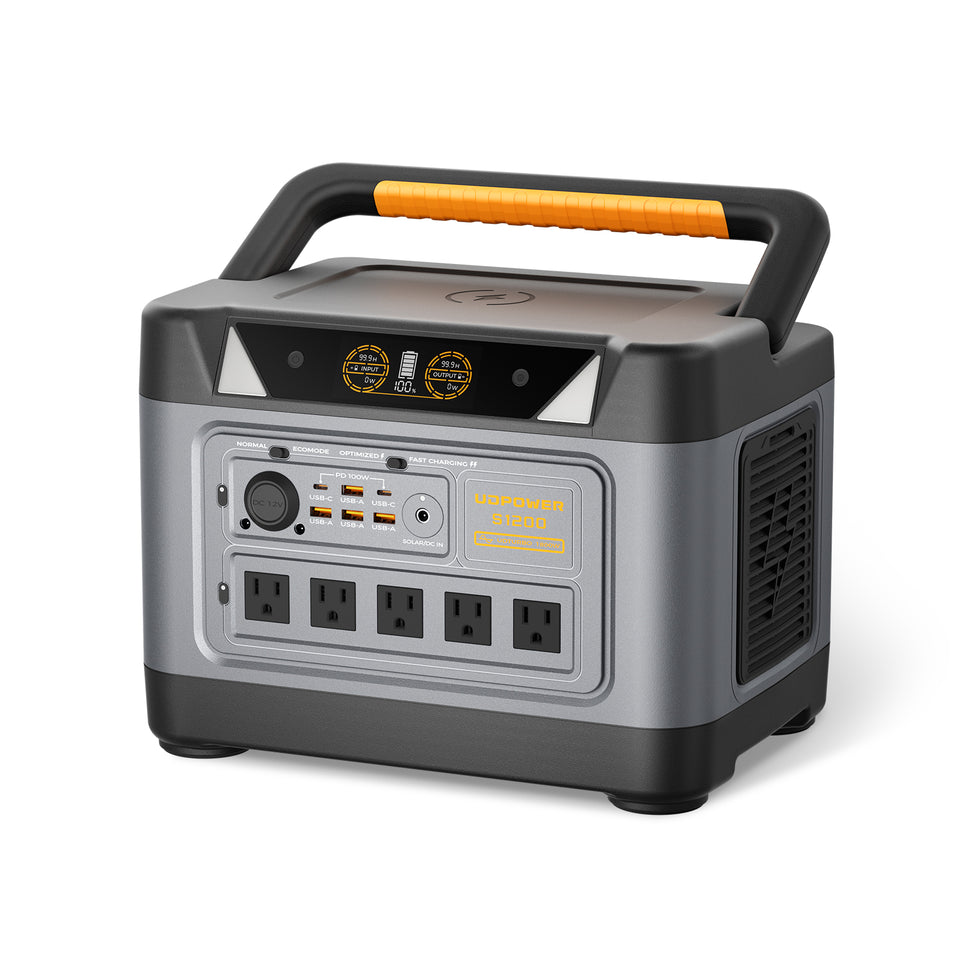
UDPOWER S1200 — For Essential Home Backup
The S1200 is a practical size for households that want to prioritize refrigeration, communications, CPAP equipment, lights and smaller household electronics during a power outage without operating a combustion engine indoors.
Best fit: refrigerators, fans, routers, phones, laptops, CPAP devices and other priority electronics where power consumption stays within the station's supported output.
Florida tax note: the S1200 is a battery portable power station, not an engine-driven fuel generator. Do not assume Florida's §212.08(7)(yyy) portable-generator exemption applies. If purchasing equipment for use exclusively as part of a qualifying solar energy system, confirm the separate solar-system exemption and required documentation before checkout.
View UDPOWER S1200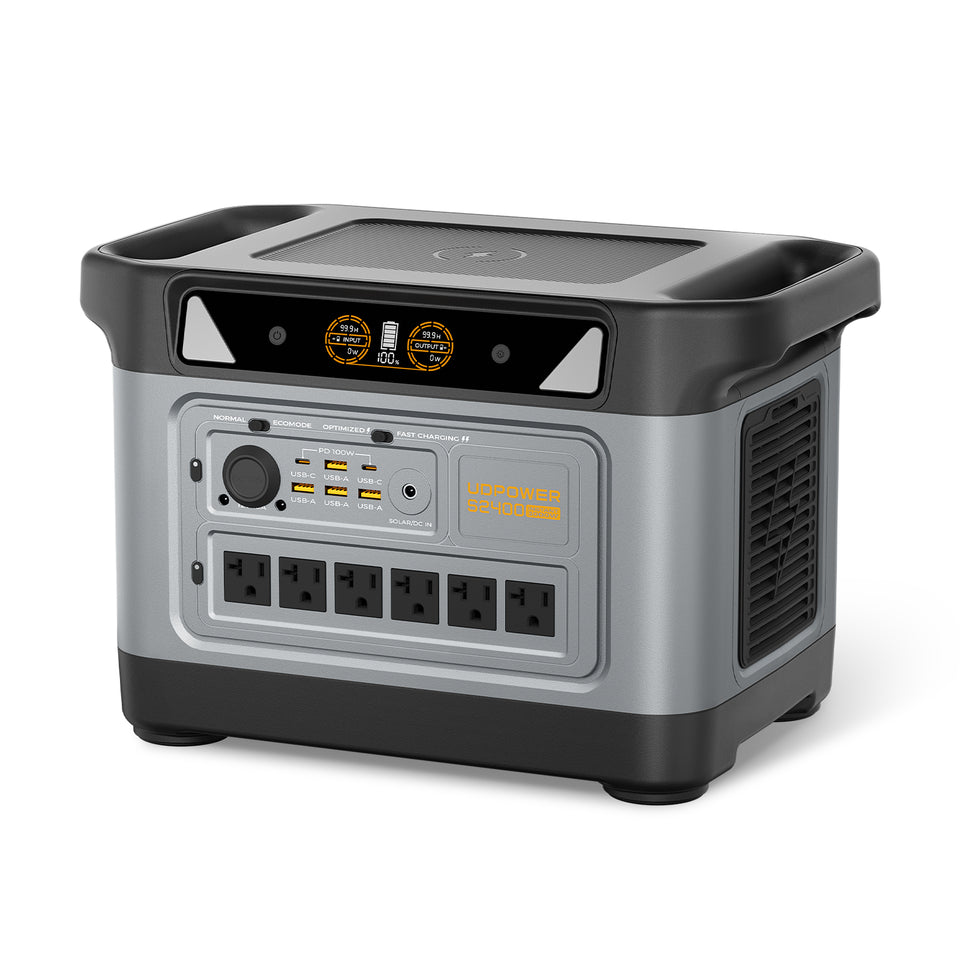
UDPOWER S2400 — For Larger Backup Loads and Longer Runtime
The S2400 roughly doubles the usable battery class of the S1200 and provides substantially more AC output, making it better suited to households that need to run several priority devices or higher-wattage appliances during a longer outage.
Best fit: larger refrigerator loads, several fans, communications equipment, computers, kitchen appliances and other combinations where both capacity and inverter output matter.
Florida tax note: like the S1200, the S2400 is battery-based and does not fit the fuel-engine definition used by Florida's permanent portable-generator exemption. A solar-panel bundle should also not be assumed tax-free merely because it is marketed as a solar generator; qualification under Florida's separate solar-energy-system exemption depends on the transaction and required documentation.
View UDPOWER S2400Not sure which capacity is right? Browse all UDPOWER Portable Power Stations or compare UDPOWER Solar Generator configurations.
If you are planning to recharge from solar during a long Florida outage, read How to Choose the Right Solar Generator before choosing panel and battery capacity.
30-Second Florida Tax Checklist Before You Buy Backup Power
- Is it engine-driven? If no, the permanent portable-generator exemption probably is not the rule you should be relying on.
- Does it burn gasoline, propane or another fuel? That is part of the statutory distinction between a qualifying generator and a battery station.
- What are its running watts? Qualifying engine-driven generators must be rated at 10,000 running watts or less.
- Are you looking at an old $3,000 generator limit? That was part of the 2024 temporary Disaster Preparedness Holiday, not the current permanent generator rule.
- Is it called a “solar generator”? The marketing name alone does not establish exemption status.
- Will it be used exclusively as qualifying solar-energy-system equipment? If so, ask the seller whether the separate Florida solar-system exemption can be documented.
- Is tax still showing at checkout? Ask the seller how the product or transaction is classified before purchasing on the assumption that the tax will later disappear.
A Better Way to Think About Florida's 2026 Generator Tax Exemption
The easiest mistake is to divide products into “generator” and “not a generator” according to the words consumers use. Florida's rules are more specific than that.
For tax purposes, there are really three questions:
| Question | If Yes | If No |
|---|---|---|
| Is it a portable engine-driven generator producing 10,000 running watts or less? | Look to the permanent portable-generator exemption | Move to the next question |
| Is it equipment or a component used exclusively as part of a qualifying solar energy system? | The separate solar-energy-system exemption may apply, subject to qualification and documentation | Do not assume either exemption applies |
| Does another specific Florida exemption cover the product? | Follow the requirements for that exemption | The ordinary Florida sales-tax rules generally apply |
This approach is more reliable than searching for whether a “battery generator” or “solar generator” is tax-free because those consumer terms do not map neatly onto the wording of Florida tax law.
Frequently Asked Questions
Is a solar generator tax free in Florida?
Not automatically. Most consumer solar generators are battery portable power stations and therefore do not meet Florida's separate definition of an engine-driven portable generator. Florida does, however, exempt qualifying solar energy systems and their components, including certain energy-storage equipment. A particular solar-generator transaction should be evaluated under that separate rule rather than assumed to be exempt based only on its product name.
Are battery generators tax free in Florida?
Battery generators are not automatically covered by Florida's permanent portable-generator exemption because that law defines a portable generator as an engine-driven machine powered by fuel. Battery storage used as part of a qualifying solar energy system may be considered separately under Florida's solar-energy-system exemption.
What generators are tax free in Florida in 2026?
Florida Statutes §212.08(7)(yyy) exempts portable engine-driven generators capable of producing 10,000 running watts or less. The current rule is permanent rather than being limited to a short hurricane tax holiday.
Is there a $3,000 price limit on Florida tax-free generators in 2026?
The $3,000 limit commonly found in older search results came from Florida's 2024 Disaster Preparedness Sales Tax Holiday. The current 2026 portable-generator statute instead defines qualifying products by their engine-driven design and a maximum of 10,000 running watts. The current portable-generator paragraph does not state the old $3,000 sales-price cap.
Do I need to wait for a Florida hurricane sales tax holiday to buy a generator?
Not for an engine-driven portable generator that qualifies under the current permanent exemption. Qualifying portable generators have been permanently exempt since August 1, 2025.
Are portable power banks tax free in Florida in 2026?
Do not rely on the old disaster-holiday rule for power banks. Florida's 2024 Disaster Preparedness Holiday included portable power banks with a sales price of $60 or less, but that temporary provision should not be confused with the current permanent portable-generator exemption.
Are solar panels tax free in Florida?
Florida has a separate sales-and-use-tax exemption for qualifying solar energy systems and components. Photovoltaic modules are included in Florida's solar-component guidance. The seller must properly document exempt transactions.
Can batteries qualify for Florida's solar tax exemption?
Yes, batteries are included among the storage-unit components identified in Florida Department of Revenue's solar-energy-system guidance. That does not mean every battery product is automatically tax-free. The purchase must meet the requirements of the solar-system exemption, including qualifying use and documentation.
Does Florida's 2026 camping sales tax holiday include portable power stations?
Portable power stations are not listed among the eligible camping supplies in Florida DOR TIP 26A01-06. The listed camping supplies include certain lanterns, flashlights, camping stoves, hammocks, chairs, sleeping bags and tents within specified price limits.
Does Florida's generator tax exemption apply to online purchases?
A qualifying item's tax treatment is not limited to physical-store purchases. For taxable online sales delivered into Florida, sellers and marketplace providers may be required to collect Florida sales tax and applicable county surtax. If you believe an exempt item was taxed incorrectly, contact the retailer and provide the documentation supporting the exemption.
What should I do if a retailer charged Florida sales tax on a generator that should be exempt?
Keep your receipt and manufacturer specifications and contact the retailer first. Florida Department of Revenue guidance generally directs consumers who paid sales tax to a dealer to request the refund from that dealer. If the classification remains disputed, check directly with Florida DOR.
Does county sales surtax apply if the product itself is exempt?
Florida's discretionary county surtax generally applies to transactions that are subject to sales or use tax. When a purchase is properly exempt from the underlying tax, the normal county surtax treatment follows that exempt status. For a taxable portable power station, however, applicable county surtax may increase the total tax due.
Official Sources Used for This Guide
- 2026 Florida Statutes §212.08 — Sales Tax Exemptions
- Florida Department of Revenue TIP 25A01-05 — New Sales Tax Exemptions Beginning August 1, 2025
- Florida Department of Revenue TIP 24A01-04 — 2024 Disaster Preparedness Sales Tax Holidays
- Florida Department of Revenue TIP 19A01-09 — Solar Energy Systems Sales and Use Tax Exemption
- Florida Department of Revenue — Sales Tax Incentives
- Florida Department of Revenue — Florida Sales and Use Tax
- Florida Department of Revenue TIP 26A01-06 — 2026 Hunting, Fishing and Camping Sales Tax Holiday
- Florida Department of Revenue — Current Tax Information Publications
- Florida Solar Energy Center — Florida Energy Policy
Florida tax rules can change, and the tax treatment of a particular transaction can depend on the product, its use and the documentation supplied to the retailer. For a purchase where exemption status materially affects your decision, verify the current treatment with the seller or Florida Department of Revenue.
Build a Better Florida Backup Power Plan
Start with the appliances you need to protect, calculate the energy required, then choose the battery capacity, AC output and recharging method that fit your outage plan.
Compare Portable Power Stations View Solar Generator Options Get the 24–72 Hour Power Outage GuideRelated Articles


