

What Is UL 2743? Portable Power Station Safety Standard Explained
Latest updated: October 8, 2026

If you are comparing portable power stations, you may see phrases such as “UL 2743,” “UL certified,” “tested to UL standards,” or “UL Listed” in product descriptions. They sound similar, but they do not necessarily mean the same thing.
UL 2743 is especially relevant because it is a safety standard written for portable power packs—the product category that includes many battery-powered portable power stations used for camping, emergency backup, RV travel, mobile work, and temporary power.
For a shopper, the practical takeaway is simple: UL 2743 is a meaningful end-product safety standard for the right class of portable power station, but the number alone is not enough. You should still confirm which exact model was evaluated, who certified it, what certification mark appears on the product, and whether the unit fits the way you plan to use it.
What Is UL 2743?
UL 2743 is the Standard for Portable Power Packs. It defines safety requirements for a category of portable or movable energy-storage products that contain internal batteries or electrochemical capacitors and provide electrical power to appliances or other equipment.
That description matters because UL 2743 is not simply a “battery test.” A modern portable power station is more than a battery. Depending on the design, it can combine a battery pack, battery management system, charger, inverter, AC receptacles, USB outputs, DC outputs, enclosure, controls, wiring, thermal management, and other functions into a single finished product.
The current public scope of UL 2743 specifically covers integral features such as inverters, vehicle adapters, lights, internal batteries, charging of internal batteries, and certain other functions when they are part of the power pack.
That makes UL 2743 particularly relevant when the question is not merely “Is the battery safe?” but rather:
- Has the complete portable power product been evaluated against a standard intended for this product category?
- Do the battery, charging system, outputs, internal components, and product construction operate together as a finished unit?
- Is the device actually within the portable power pack category covered by the standard?
You can review the official scope on the UL Standards & Engagement UL 2743 page and UL Solutions' overview of portable power pack testing.
What Is the Current UL 2743 Standard?
As of this update, the active version is UL 2743, Edition 3, published September 24, 2025. The previous second edition has been superseded.
| Item | Current Information | Why It Matters |
|---|---|---|
| Standard | UL 2743 | Identifies the relevant portable power pack standard. |
| Title | Portable Power Packs | Shows that the standard is product-category specific. |
| Current edition | Edition 3 | Older articles may still describe Edition 2. |
| Publication date | September 24, 2025 | Useful when checking whether an explanation of the standard is current. |
| Lithium-ion / sodium-ion threshold in published scope | 20 kWh aggregate capacity | Above this level, the UL 2743 scope directs products to UL 9540. |
| Official source | UL Standards & Engagement | Best starting point for checking the current edition and scope. |
This edition detail is worth checking because many older web pages still repeat information based on the 2018 second edition. A useful portable power station safety guide should distinguish the current standard from superseded versions rather than treating “UL 2743” as a static label that never changes.
What Products Does UL 2743 Cover?
UL 2743 covers portable and movable power packs intended to provide electrical power to equipment or appliances. That can include products commonly marketed today as portable power stations, provided the product falls within the standard's scope.
The public scope recognizes products intended for:
- indoor use only,
- temporary outdoor use, or
- outdoor use.
It also addresses portable power packs that can include integrated features such as an inverter, lights, voltage indicators, vehicle adapters, charging circuitry, internal batteries, and certain air-compressor functions.
Products that are outside the UL 2743 scope
The current public scope specifically excludes several categories that shoppers sometimes confuse with portable power stations.
| Product or Use | UL 2743? | Why |
|---|---|---|
| Small phone-style power bank | Not the intended UL 2743 category | The UL 2743 scope excludes power banks covered by UL 2056. |
| Lithium-ion portable power pack above 20 kWh | No under the published capacity threshold | The current scope directs products above the threshold to UL 9540. |
| System permanently connected to premises wiring | No | UL 2743 excludes power packs permanently connected to premises wiring. |
| System designed to supply premises wiring | No | The current scope directs this type of application toward UL 9540. |
| Utility-interactive energy storage system | No | Utility-interactive systems fall outside UL 2743's portable power pack scope. |
This distinction is especially important as portable power stations grow larger. A product can have wheels or handles and still have functions that move it into a different standards category.
What Does UL 2743 Evaluate?
Consumers sometimes search for a simple checklist of “UL 2743 requirements.” The problem is that a short web summary cannot substitute for the actual standard.
The more useful way to understand UL 2743 is to look at the product systems included in its scope. It addresses the complete portable power pack and integral functions rather than treating the battery as an isolated component.
| Area | Why It Is Relevant to a Portable Power Station |
|---|---|
| Internal energy storage | The battery or electrochemical capacitor is part of the finished power pack. |
| Charging | The standard's scope includes charging of internal batteries when part of the product. |
| Inputs and outputs | Portable power stations typically combine charging inputs with AC, USB, or DC outputs. |
| Integral inverter | Many portable power stations convert stored DC energy into household-style AC output. |
| Product construction | Safety depends on the complete assembly, not only the chemistry printed on the battery. |
| Intended environment | The standard distinguishes indoor, temporary outdoor, and outdoor-use classifications. |
| Integrated accessories | Functions such as lights, vehicle adapters and certain compressors can fall within the evaluation when integral to the product. |
The third edition also includes updates addressing topics such as cord-and-plug connections, additional battery chemistries, backpacked portable power packs, and peak-discharge-current rating requirements. For the exact test procedures, conditions, pass/fail criteria, and construction requirements, use the current published standard rather than a marketing summary.
What UL 2743 Does Not Mean
Certification is useful, but it should not be stretched beyond what it actually tells you.
UL 2743 does not mean the product can be hardwired into your house
A conventional portable power station is normally used by plugging appliances directly into its receptacles. UL 2743 specifically excludes products permanently connected to premises wiring, products intended to supply premises wiring, and utility-interactive systems.
If you are planning whole-home or panel-connected battery backup, you are dealing with a different installation category. Do not assume that a UL 2743 portable power station can simply be connected to a breaker panel because it has enough watts.
UL 2743 does not tell you how long your appliance will run
Certification does not replace capacity planning. Runtime depends on battery capacity in watt-hours, conversion losses, appliance power consumption, temperature, operating mode, and other factors.
If runtime is your main concern, use the UDPOWER portable power station buying guide to calculate the watt-hours and output you actually need.
UL 2743 does not mean every possible use is safe
You still need to follow the manufacturer's operating limits. A certified product can still be misused by blocking ventilation, exceeding input limits, using incompatible solar wiring, exposing an indoor-only unit to rain, physically damaging the battery, or connecting loads beyond its design limits.
For broader operating precautions, see the portable power station safety guide.
UL 2743 does not mean “zero fire risk”
No safety standard means a battery-powered device can never fail. Product certification is a risk-reduction measure, not a promise that physical damage, improper charging, severe environmental exposure, unauthorized modification, defective accessories, or misuse can never cause a problem.
UL Certified vs UL Listed vs Tested to UL 2743
This is one of the most important distinctions to understand when shopping.
The UL standard and the organization that certifies a product are two separate things.
UL 2743 is a standard. A qualified certification organization may evaluate a product to an applicable safety standard. In the United States, OSHA's Nationally Recognized Testing Laboratory program recognizes multiple private testing and certification organizations, and each NRTL uses its own certification mark.
| Claim | What You Should Ask | Buyer Interpretation |
|---|---|---|
| “UL 2743 standard” | Is the manufacturer only naming the standard, or is there a certification? | The standard number alone does not prove a particular product was certified. |
| “Tested to UL 2743” | Who performed the testing? Was this testing part of a certification program? | Testing language may not be equivalent to a product listing or certification. |
| “Certified to UL 2743” | Which certification body certified the exact model? What is the certification record? | Stronger claim, but it should still be verifiable. |
| “UL Listed” | Can the exact product be verified in the relevant UL certification record? | “UL Listed” should not be used as a generic synonym for any product evaluated to a UL standard. |
| “ETL Listed to UL 2743” or another NRTL mark | Does the certification body's listing identify the exact model and applicable standard? | A UL standard can be used by a recognized certification body other than UL itself where it is within that body's recognized scope. |
OSHA explains that recognized NRTLs use their own registered certification marks and that a properly certified product generally carries the certification mark authorized by that laboratory. You can read OSHA's explanation in its NRTL FAQ.
Is UL 2743 Required for a Portable Power Station?
There is not a simple rule saying every consumer portable power station sold in the United States must carry a UL 2743 certification.
The answer depends on the product, application, workplace rules, local requirements, purchasing requirements, and how the equipment will be used.
OSHA's NRTL rules are a good example of why a simple yes-or-no answer can be misleading. OSHA requires NRTL approval for certain categories of electrical equipment under specified workplace circumstances. OSHA also states that its authority applies to employers rather than creating a blanket requirement that every manufacturer certify every product it sells.
You can review OSHA's products requiring NRTL approval and NRTL program overview.
For a normal consumer purchase
Even when a particular certification is not legally mandatory for your personal use, independent product-safety certification can still be a meaningful buying criterion—especially for a device that stores hundreds or thousands of watt-hours of energy and may be charged inside a home, RV, garage, workshop, or campsite.
For workplace or institutional use
The purchasing requirements can be stricter. Employers, commercial facilities, institutions, local authorities, insurers, or procurement departments may require equipment carrying an acceptable certification mark.
If the power station is for a commercial facility rather than personal camping or home backup, confirm the requirements before purchasing. UDPOWER also maintains a commercial and institutional portable power station collection for applicable use cases.
How to Verify UL Certification on a Portable Power Station
Do not stop at a certification icon on a sales page. Verification should take a few minutes and can prevent a much more expensive mistake.
5-Step Certification Check
- Identify the exact model number. Certification usually applies to specified products or model families—not automatically to every product made by a brand.
- Inspect the product label or official documentation. Look for the actual certification mark and the applicable model information.
- Identify the certification organization. Do not assume that the presence of “UL 2743” means UL Solutions performed the certification.
- Search the certifier's database or certificate record. Match the brand, model, standard, and certification information.
- Check that the record matches the product being sold now. Similar-looking models, old revisions, regional variants, and bundle names can create confusion.
1. Match the model, not just the brand
A company can sell multiple portable power stations with different capacities and internal designs. Never assume certification for Model A automatically applies to Model B.
2. Look for a real certification mark
OSHA explains that an NRTL-authorized certification mark signifies that the laboratory tested and certified a product within the relevant program. A simple standards logo in advertising is not the same evidence as a product certification mark.
3. Confirm who issued the certification
UL LLC is one OSHA-recognized NRTL, but it is not the only one. Intertek, CSA Group, TÜV organizations, SGS, MET Laboratories and other organizations also appear on OSHA's current NRTL list.
See the current OSHA list of NRTLs.
4. Match the safety standard
A product can carry certification for one aspect of its design without necessarily being certified to UL 2743. For example, seeing a mark associated with a battery component or power supply should not automatically be interpreted as certification of the entire portable power station to UL 2743.
5. Keep transport documentation separate
A UN 38.3 test summary is important for lithium-battery transportation, but it does not substitute for end-product evaluation under UL 2743. More on that distinction below.
UL 2743 vs UL 9540: What Is the Difference?
UL 2743 and UL 9540 are both relevant to stored electrical energy, but they address different product categories and use cases.
| Question | UL 2743 | UL 9540 |
|---|---|---|
| Standard title | Portable Power Packs | Energy Storage Systems and Equipment |
| Typical product context | Portable or movable power pack / portable power station | Energy storage system, including stationary and defined mobile ESS applications |
| Portable lithium-ion / sodium-ion capacity threshold | Up to 20 kWh within the published UL 2743 scope | UL 2743 directs higher-capacity products to UL 9540 |
| Permanent connection to premises wiring | Excluded from UL 2743 scope | UL 9540 addresses ESS applications integrated into broader electrical installations |
| Supplying premises wiring | Excluded | Potential UL 9540 application depending on system design and installation |
| Utility-interactive operation | Excluded | Covered within the broader UL 9540 ESS framework |
| Official source | UL 2743 | UL 9540 |
The easiest way to remember the distinction is:
UL 2743 follows the portable power pack. UL 9540 follows the energy storage system.
A 1,000Wh or 2,000Wh battery station that you carry to a campsite and plug appliances directly into is a very different product concept from a battery energy storage system designed to interact with a home's electrical system.
UL 2743 vs UN 38.3: They Answer Different Questions
UL 2743 and UN 38.3 often appear beside each other on portable power station specification pages, but they should not be treated as interchangeable certifications.
| Comparison | UL 2743 | UN 38.3 |
|---|---|---|
| Primary purpose | Safety standard for portable power packs | Lithium cell and battery transport testing under the UN Manual of Tests and Criteria |
| Main context | Finished portable power product | Transportation of lithium cells and batteries |
| Does it replace the other? | No | No |
| What a shopper should conclude | Relevant to product-level portable power pack safety | Relevant to lithium battery transport compliance |
| Primary source | UL Standards | UNECE Manual of Tests and Criteria |
UN 38.3 exists because lithium cells and batteries can face altitude changes, vibration, shock, temperature changes, and other stresses during transport. The UN Manual of Tests and Criteria defines the required lithium-battery transport test framework.
That means a product advertising only “UN 38.3” has not necessarily demonstrated what a consumer might assume from the phrase “UL 2743 certified portable power station.” The two serve different purposes.
UL 2743 vs UL 2054
UL 2054 is another standard that appears in battery-related discussions. The key difference is the level of the product being addressed.
UL 2054 is titled Household and Commercial Batteries. Its scope covers portable primary and rechargeable batteries used as power sources in products. Importantly, its published scope states that it does not cover the combination of the battery and host product when that complete product is covered by its applicable host-product requirements.
| Question | UL 2743 | UL 2054 |
|---|---|---|
| Primary focus | Portable power pack as a finished product | Portable household/commercial battery |
| Includes complete power station architecture? | Designed for the portable power pack product category | Its scope excludes the combination of the battery and host product when covered by host-product requirements |
| Best shorthand | End-product level | Battery level |
| Official source | UL 2743 | UL 2054 |
This is why checking only the internal battery certification can leave part of the story unanswered. The battery may be an important component, but the finished portable power station also contains charging, conversion, controls, connectors, wiring, protection systems, and output circuitry.
UL 2743 vs Other Common Portable Power Station Marks
| Standard / Mark | Main Purpose | Does It Prove the Entire Portable Power Station Meets UL 2743? |
|---|---|---|
| UL 2743 | Portable power pack safety standard | Only when the specific product has actually been certified/listed to the standard by the claimed certification body |
| UN 38.3 | Lithium battery transportation testing | No |
| UL 2054 | Household and commercial battery safety | No |
| UL 9540 | Energy storage systems and equipment | Different system category and application |
| FCC | Radio-frequency / electromagnetic regulatory requirements applicable to covered electronic devices | No |
| RoHS | Restrictions involving specified hazardous substances in electrical/electronic products in applicable markets | No |
A long row of logos can look reassuring, but the logos answer different questions. The right buying approach is not to count logos. It is to understand what each one actually covers.
Should UL 2743 Affect Your Portable Power Station Buying Decision?
Yes, but it should be one part of a broader buying decision.
When two products have similar capacity, output, and price, verifiable product-safety certification can be a meaningful differentiator. But buying purely by the certification line can still lead to the wrong power station if the battery is too small, output is too low, solar input is incompatible, or the unit is too heavy for the way you travel.
Use this buying order
- Define what you need to power. List running watts and startup requirements.
- Calculate energy use. Estimate watt-hours rather than guessing from inverter wattage.
- Choose the capacity class. A weekend electronics setup and multi-day refrigerator backup need very different batteries.
- Check charging limits. Solar voltage, current, wattage, connector and polarity all matter.
- Check battery chemistry and cycle-life specifications.
- Check product-level safety claims and supporting certification information.
- Check warranty and support.
For a complete sizing process, see How to Choose a Portable Power Station or use the UDPOWER power station comparison tool.
A useful question most comparison charts miss
Instead of asking only, “Is this a UL certified power station?” ask:
That one question is more useful than a generic certification badge because it forces the product claim, model identity, standard, certification body, and application to line up.
UDPOWER Portable Power Stations and UL 2743
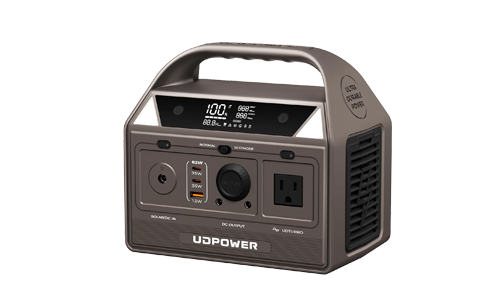
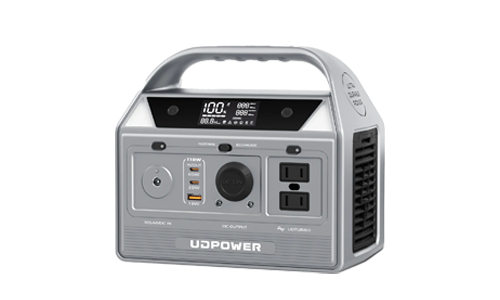
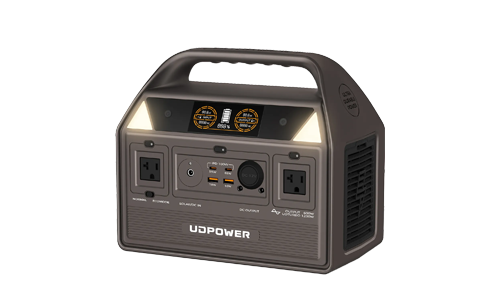
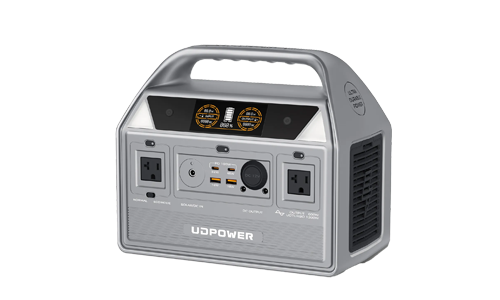
UDPOWER's current official product specifications list UL2743 under Testing and Certification for models including the C600, S1200, and S2400. Because certification terminology should be precise, shoppers should use the product page together with available certification documentation rather than interpreting a specification line more broadly than it states.
UDPOWER also maintains a Compliance & Certification Library where customers can review available product compliance documents.
UL 2743-Listed Specifications on Current UDPOWER Product Pages
| Model | Capacity | Rated AC Output | Battery | Weight | Testing & Certification Listed on Product Page | Official Product Page |
|---|---|---|---|---|---|---|
| UDPOWER C600 | 596Wh | 600W | LiFePO4 | 12.3 lb | UL2743, PSE, FCC, ROHS, UN38.3 | C600 |
| UDPOWER S1200 | 1,191Wh | 1,200W | LiFePO4 | Approx. 26.0 lb | UL2743, PSE, FCC, ROHS, UN38.3 | S1200 |
| UDPOWER S2400 | 2,083Wh | 2,400W | LFP | Approx. 40.8 lb | UL2743, FCC, ROHS, UN38.3 | S2400 |
Which UDPOWER Portable Power Station Fits Your Use?
Certification should not decide battery size for you. Choose the product according to the load and runtime you actually need.
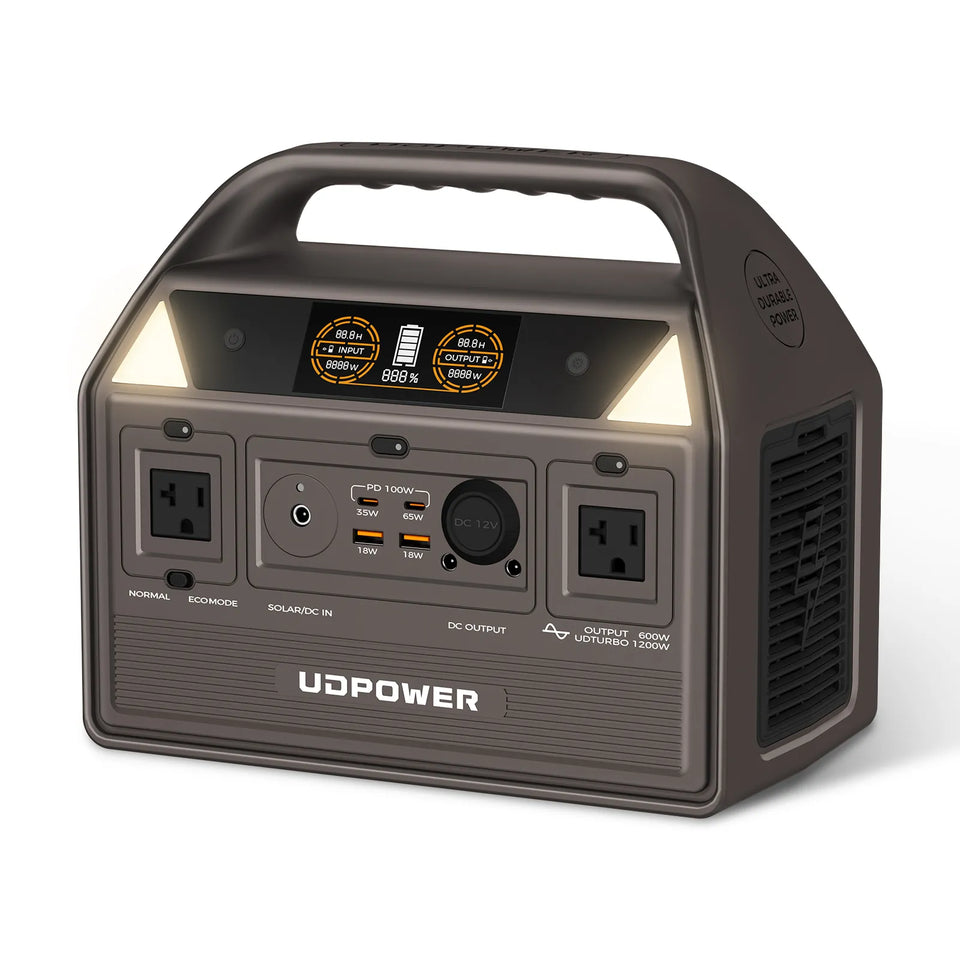
UDPOWER C600 — Compact Portable Power
The C600 is the most portable of these three options. Its 596Wh battery and 600W rated AC output fit weekend camping, electronics, mobile work, smaller refrigeration loads, and moderate emergency backup where weight matters.
- Capacity: 596Wh
- Rated AC output: 600W pure sine wave
- Battery: LiFePO4
- Solar input: Up to 240W
- Weight: 12.3 lb
- Product-page testing and certification: UL2743, PSE, FCC, ROHS, UN38.3

UDPOWER S1200 — Balanced Home, RV and Camping Backup
The S1200 moves into the 1,000Wh-class range with enough output for many refrigerators, CPAP setups, routers, televisions, laptops, camping appliances, and other everyday backup loads while remaining considerably lighter than a 2,000Wh-class station.
- Capacity: 1,191Wh
- Rated AC output: 1,200W pure sine wave
- UDTURBO support: Up to 1,800W for compatible higher-power loads
- Battery: LiFePO4
- Solar input: Up to 400W
- UPS mode: Response time ≤10 ms
- Weight: Approx. 26.0 lb
- Product-page testing and certification: UL2743, PSE, FCC, ROHS, UN38.3
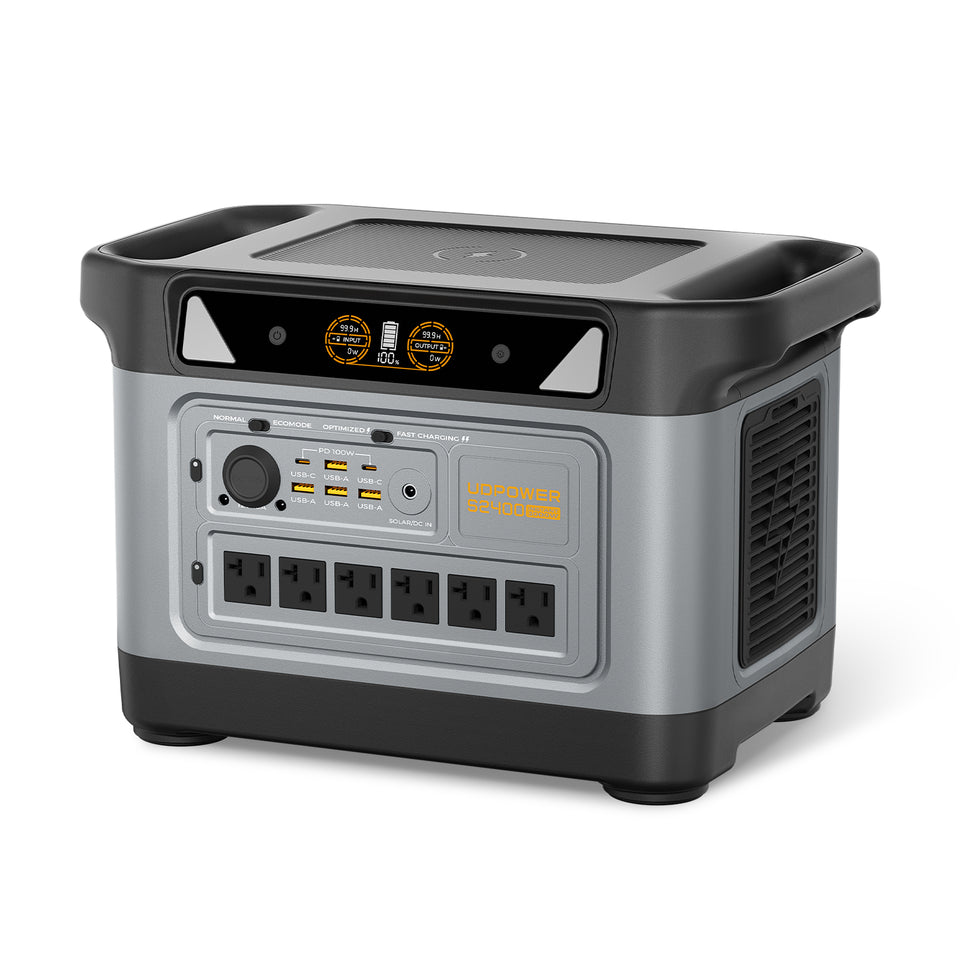
UDPOWER S2400 — Higher-Capacity Portable Backup
The S2400 is designed for buyers who need substantially more battery capacity and AC output. Its 2,083Wh battery and 2,400W rated pure sine wave AC output make it better suited to longer outage support, RV use, higher-power appliances, and setups where several devices may run together.
- Capacity: 2,083Wh
- Rated AC output: 2,400W pure sine wave
- UDTURBO support: Up to 3,000W for applicable higher-power operation
- Battery: LFP
- Solar input: Up to 400W
- UPS mode: Response time ≤10 ms
- Weight: Approx. 40.8 lb
- Product-page testing and certification: UL2743, FCC, ROHS, UN38.3
How to Choose Between C600, S1200 and S2400
| If Your Priority Is... | Start With | Reason |
|---|---|---|
| Low weight and easy carrying | C600 | 12.3 lb and 596Wh make it considerably easier to move. |
| Balanced outage backup and portability | S1200 | 1,191Wh and 1,200W provide substantially more runtime and appliance capability without moving into the S2400 weight class. |
| Longer runtime and higher-power appliances | S2400 | 2,083Wh battery and 2,400W rated AC output provide more capacity and output headroom. |
| Weekend camping and electronics | C600 or S1200 | Choose based on daily watt-hours and whether larger appliances are part of the trip. |
| Home essentials during outages | S1200 or S2400 | The right choice depends on appliance wattage and how many hours of backup you need. |
For a side-by-side comparison of current models, use the UDPOWER Portable Power Station Comparison Tool.
UL 2743 Is Useful, but Verification Is More Useful Than a Badge
The most important lesson is not that every portable power station must have exactly the same logo. It is that safety claims should be specific and verifiable.
A strong product claim connects five things:
- the exact model,
- the applicable safety standard,
- the certification organization,
- the certification record or authorized mark, and
- the intended product application.
When one of those pieces is missing, ask for more information rather than filling in the gap yourself.
This is especially important with portable power stations because the category now ranges from compact 200Wh units to products approaching the limits of what consumers would normally consider portable. The larger the battery and the more complex the electrical architecture, the less useful a vague statement such as “safety certified” becomes.
Frequently Asked Questions About UL 2743
What is UL 2743?
UL 2743 is the Standard for Portable Power Packs. It covers portable and movable power packs containing internal batteries or electrochemical capacitors that provide power to appliances or equipment. The current active third edition was published September 24, 2025.
What does UL 2743 mean on a portable power station?
It indicates that the UL 2743 portable power pack standard is being referenced for the product. To determine whether the exact power station is actually certified or listed to that standard, verify the model, certification body, certification mark, and available certification record.
What is a UL 2743 certified portable power station?
Generally, it means a specific portable power station model has been evaluated and certified to the UL 2743 safety standard by a qualified certification organization. The certification claim should be verifiable and should match the exact model being sold.
Are portable power stations UL Listed?
Some portable power stations may carry a UL listing or another recognized certification mark, while others may use a different NRTL or may only reference testing or compliance. Do not assume every portable power station is UL Listed. Check the exact model and certification record.
Does a portable power station need UL certification?
There is no blanket rule saying every consumer portable power station sold in the United States must carry UL 2743 certification. Requirements can depend on the product, workplace use, jurisdiction, procurement policy, installation, and other factors. Independent safety certification can still be a valuable purchasing criterion even where it is not mandatory for personal consumer use.
Is UL 2743 required by law?
UL 2743 is a product safety standard, not a universal law requiring every portable power station sold to consumers to carry the certification. However, regulations, workplace rules, local requirements, authorities having jurisdiction, insurers, retailers, or institutional purchasing policies can require approved or certified equipment in particular circumstances.
What is the current version of UL 2743?
The current active version is UL 2743 Edition 3, published September 24, 2025. Older second-edition information may still appear in articles written before the third edition was released.
What is the UL 2743 capacity limit?
The current published scope lists an aggregate capacity limit of 20 kWh for lithium-ion or sodium-ion portable power packs, 70 kWh for lead-acid or valve-regulated nickel technologies, and 3 kWh for electrochemical capacitors. Products exceeding the applicable UL 2743 threshold are directed to UL 9540.
What is the difference between UL 2743 and UL 9540?
UL 2743 covers portable power packs within its defined scope. UL 9540 covers energy storage systems and equipment. UL 2743 specifically excludes products permanently connected to premises wiring, products intended to supply premises wiring, and utility-interactive products, which are within the broader ESS context addressed by UL 9540.
What is the difference between UL 2743 and UN 38.3?
UL 2743 is a portable power pack safety standard. UN 38.3 is part of the United Nations lithium battery transportation test framework. Passing UN 38.3 transport testing is not the same as certifying a complete portable power station to UL 2743.
What is the difference between UL 2743 and UL 2054?
UL 2054 focuses on household and commercial batteries used as power sources in products, while UL 2743 addresses the complete portable power pack product category. A battery-level standard should not automatically be treated as certification of the complete portable power station.
How do I verify UL certification?
Find the exact model number, identify the certification mark on the product or official documentation, determine which organization issued the certification, and search the certification body's records. Make sure the brand, model, standard, and certification record all match the product you are buying.
Does “tested to UL 2743” mean “UL Listed”?
Not necessarily. Testing language, certification language, and a UL Listing are not automatically interchangeable. Ask who conducted the evaluation, whether the product is part of a formal certification program, and what certification mark and record apply to the exact model.
Can a portable power station certified to UL 2743 be connected directly to a home electrical panel?
Do not assume so. UL 2743 excludes power packs that are permanently connected to premises wiring or have a function to supply premises wiring. Home electrical integration should use equipment designed and approved for that purpose and follow applicable electrical codes and installation requirements.
Does UL 2743 guarantee that a portable power station cannot catch fire?
No safety standard guarantees zero risk. Certification helps evaluate products against defined safety requirements, but proper use, physical condition, compatible charging equipment, temperature, ventilation, input limits, storage, and manufacturer instructions still matter.
Choose a Portable Power Station for the Load You Actually Need
Start with wattage and runtime, then compare battery capacity, charging limits, portability, safety information, and warranty. UDPOWER's comparison tools and application-specific collections can help narrow the choices without buying more—or less—battery than you need.
Compare Power Stations Shop Portable Power Stations
Read the Portable Power Station Buying Guide
Read the Portable Power Station Safety Guide
View the Compliance & Certification Library
Explore Home Backup Power Stations
Explore Outdoor Power Stations
Primary Sources
- UL Standards & Engagement — UL 2743, Portable Power Packs
- UL Solutions — Portable Power Pack Testing
- UL Standards & Engagement — UL 9540, Energy Storage Systems and Equipment
- UL Standards & Engagement — UL 2054, Household and Commercial Batteries
- UNECE — UN Manual of Tests and Criteria, Revision 8
- OSHA — Nationally Recognized Testing Laboratory Program
- OSHA — NRTL Frequently Asked Questions
- OSHA — Current List of NRTLs
Related Articles


