CPAP Power Consumption: How Much Power Does Your CPAP Use?
ZacharyWilliamCPAP Power Guide
Latest updated: May 12, 2026
If you use a CPAP every night, the question is not just “Can a battery turn it on?” The better question is: how many watt-hours does your exact CPAP setup use over a full night, and how much reserve should you keep for an outage?
This guide explains typical CPAP wattage, why humidifiers change runtime so much, how to estimate power use without guessing, and which UDPOWER portable power station size makes sense for camping, travel, and home backup.
Quick Answer: How Much Power Does a CPAP Use?
Most CPAP machines use about 20–40 watts without heated humidification. With a heated humidifier or heated tubing, many setups move into the 60–90 watt range, and some older or high-heat setups can approach 100–120 watts.
For an 8-hour night, that usually means:
- No heated humidifier: about 160–320Wh per night for many users.
- Humidifier on low/medium: about 480–720Wh per night.
- High heat, heated hose, cold room, or high pressure: plan closer to 720–960Wh per night.
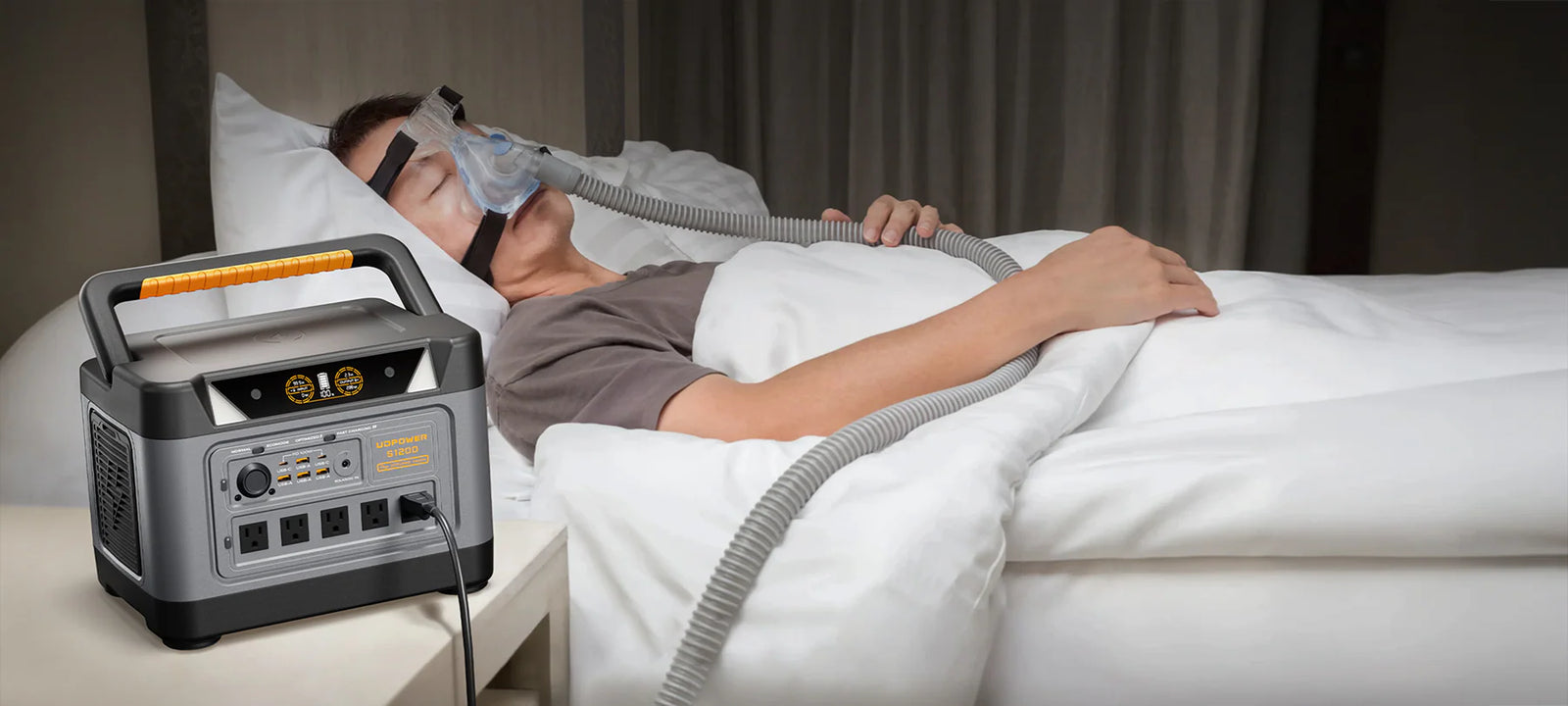
For one comfortable overnight backup, a UDPOWER C600 can work well when the humidifier is off or low. For sudden power outages where you want fast switchover, choose an S-Series model such as the UDPOWER S1200 because it includes UPS-style backup with a ≤10ms response time.
Why CPAP Power Consumption Matters
A CPAP machine uses continuous positive airway pressure to help keep your airway open while you sleep. The National Heart, Lung, and Blood Institute describes CPAP as a machine that uses mild air pressure to keep breathing airways open during sleep. For many users, that makes reliable overnight power more than a comfort issue.
When you are camping, traveling in an RV, or preparing for storms, CPAP backup planning should answer four practical questions:
- Will the battery run the CPAP for your whole sleep window?
- Will it still have reserve if the night is colder or your humidifier works harder?
- Will it switch fast enough during a sudden outage?
- Can you recharge it the next day with AC, car charging, or solar?
The mistake many shoppers make is buying only by “watts.” CPAP machines usually do not need a huge output rating. They need enough battery capacity and the right setup.
Watts vs Watt-Hours: The Number That Decides Runtime
Watts tell you how much power your CPAP is pulling at a moment. Watt-hours tell you how much energy it uses over time.
For CPAP backup, watt-hours matter most because you need the machine to run through the night.
| Term | What It Means | CPAP Example | Why It Matters |
|---|---|---|---|
| Watts (W) | Instant power draw | A CPAP using 40W while running | Helps confirm the power station output can handle the device |
| Watt-hours (Wh) | Energy used over time | 40W × 8 hours = 320Wh | Decides how long the battery can run your CPAP |
| Power adapter rating | The maximum the adapter can supply | A 65W or 80W adapter does not mean the CPAP always uses 65W or 80W | Useful for compatibility, but not always accurate for runtime |
Simple Rule
For battery planning, use the CPAP’s measured average wattage if you can. If you cannot measure it, choose a conservative range based on whether you use heated humidification and heated tubing.
Typical CPAP Wattage by Setup
CPAP power consumption varies by brand, pressure setting, mask leak, humidifier level, room temperature, and whether the unit is a travel CPAP or a bedside CPAP. Use the table below as a practical planning range, then confirm your own machine.
| CPAP Setup | Typical Running Wattage | 8-Hour Energy Use | Best Battery Planning Use | Source / Check Point |
|---|---|---|---|---|
| Travel CPAP, no heated humidifier | 6–25W | 48–200Wh | Short camping trips, airline travel, minimal comfort features | ResMed battery guide |
| Standard CPAP, humidifier off | 20–40W | 160–320Wh | Best runtime for outages and off-grid nights | NHLBI CPAP overview |
| Standard CPAP, higher pressure or active leak compensation | 30–60W | 240–480Wh | More realistic if your pressure is high or mask fit is not ideal | ResMed battery guide |
| CPAP with heated humidifier | 60–90W | 480–720Wh | Comfortable home outage backup with larger battery reserve | ResMed AirSense 11 guide |
| CPAP with humidifier plus heated tube, cold room, or older unit | 90–120W+ | 720–960Wh+ | Plan with a 1000Wh+ class station if you want a full night plus reserve | Philips DreamStation 2 instructions |
The safest planning method is to measure your own setup for one full night. If you cannot measure it, size the battery for the higher range and keep reserve.
What Changes CPAP Power Use?
The same CPAP machine can use very different amounts of power on different nights. These are the biggest factors.
1. Heated Humidifier
The humidifier is usually the biggest power increase. Heating water takes far more energy than running the blower alone. If your priority is maximum battery life during an outage, turning humidification off or down is the first setting to consider, as long as you can tolerate it and your clinician has not told you otherwise.
2. Heated Tube
A heated hose keeps air warmer and helps reduce condensation, but it adds steady power draw. In cold rooms, the heated tube may work harder.
3. Pressure Setting
Higher pressure can increase blower load. Do not lower prescribed pressure just to save battery power. If comfort or runtime is a concern, ask your sleep provider what changes are safe.
4. Mask Leak
A poor seal can make the CPAP work harder to maintain pressure. Fixing mask leaks may improve comfort and can also reduce unnecessary power use.
5. AC vs DC Connection
Using the CPAP’s normal wall plug through a power station’s AC outlet is simple and widely compatible. A model-specific DC cable can be more efficient because it avoids AC inverter losses, but it must match your CPAP model and voltage requirements.
How to Find Your CPAP’s Real Wattage
There are three ways to estimate CPAP power consumption. The best method is measuring. The second-best method is using your machine’s documentation. The least accurate method is using the adapter label by itself.
| Method | How to Do It | Accuracy | Best For |
|---|---|---|---|
| Use a plug-in watt meter | Plug the CPAP into the meter, run your normal settings overnight, and record total kWh or average watts. | Best | Real runtime planning |
| Check the user manual or manufacturer battery guide | Look for power supply rating, DC input, battery guide, or power consumption table. | Good | Pre-purchase estimates |
| Read the adapter label | Multiply volts × amps if watts are not listed. Example: 24V × 2.71A ≈ 65W. | Conservative | Compatibility checks, not exact runtime |
| Use a planning range | Use 20–40W without heat or 60–90W with heated humidification. | Useful starting point | Fast backup sizing |
Adapter Label Tip
The ResMed AirSense 11 uses a 65W AC adapter, but that does not mean it pulls 65W all night. It means the adapter can provide up to that amount when needed. Runtime planning is more accurate when based on measured overnight consumption.
CPAP Battery Runtime Formula
Use this formula for a realistic AC-outlet estimate:
Runtime ≈ Battery Capacity × 0.85 ÷ CPAP Watts
The 0.85 planning factor allows for inverter and conversion losses when you power the CPAP through an AC outlet. Real results vary, but this gives a safer estimate than using the full battery capacity with no losses.
Example 1: CPAP without humidifier
A CPAP using 40W for 8 hours uses about 320Wh before conversion losses. On a 596Wh power station, an AC estimate is:
596Wh × 0.85 ÷ 40W ≈ 12.7 hours
That is enough for one full night with reserve when humidification is off.
Example 2: CPAP with humidifier
A CPAP setup using 90W for 8 hours uses about 720Wh. On a 1191Wh power station, an AC estimate is:
1191Wh × 0.85 ÷ 90W ≈ 11.2 hours
That can cover one full night with heated humidification, but it leaves less reserve than running without heat.
Runtime Tables for UDPOWER Portable Power Stations
The following estimates use official UDPOWER battery capacities and an 85% AC efficiency planning factor. If you use the correct DC cable for your CPAP, runtime may improve because the power station’s AC inverter is not being used.
Estimated Runtime by CPAP Wattage
| CPAP Power Draw | C200 192Wh | C400 256Wh | C600 596Wh | S1200 1191Wh | S2400 2083Wh |
|---|---|---|---|---|---|
| 20W travel/no heat | ~8.2 hr | ~10.9 hr | ~25.3 hr | ~50.6 hr | ~88.5 hr |
| 30W efficient CPAP | ~5.4 hr | ~7.3 hr | ~16.9 hr | ~33.7 hr | ~59.0 hr |
| 40W common no-humidifier plan | ~4.1 hr | ~5.4 hr | ~12.7 hr | ~25.3 hr | ~44.3 hr |
| 60W low humidifier | ~2.7 hr | ~3.6 hr | ~8.4 hr | ~16.9 hr | ~29.5 hr |
| 90W humidifier/heated tube | ~1.8 hr | ~2.4 hr | ~5.6 hr | ~11.2 hr | ~19.7 hr |
| 120W high heat/older setup | ~1.4 hr | ~1.8 hr | ~4.2 hr | ~8.4 hr | ~14.8 hr |
What Those Numbers Mean in Real Nights
| 8-Hour CPAP Setup | Energy Needed Per Night | C600 596Wh | S1200 1191Wh | S2400 2083Wh | Practical Takeaway |
|---|---|---|---|---|---|
| 20W travel/no heat | ~160Wh | ~3.2 nights | ~6.3 nights | ~11.1 nights | Great for camping when comfort heat is off |
| 40W typical no humidifier | ~320Wh | ~1.6 nights | ~3.2 nights | ~5.5 nights | Best balance of runtime and realistic home use |
| 60W low humidifier | ~480Wh | ~1.1 nights | ~2.1 nights | ~3.7 nights | C600 can cover a night, but reserve is limited |
| 90W humidifier/heated tube | ~720Wh | Less than 1 night | ~1.4 nights | ~2.5 nights | Choose S1200 or S2400 for confidence |
| 120W high heat/older setup | ~960Wh | Less than 1 night | ~1.1 nights | ~1.8 nights | Use a large station and test before relying on it |
Planning note: these are runtime estimates, not medical guidance. Always test your CPAP and battery setup before a storm or trip.
Recommended UDPOWER CPAP Battery Backup Options
For CPAP use, the best product depends on whether you need one night, multiple nights, humidifier support, or fast outage switchover. Below are practical recommendations using official UDPOWER product specifications.

Best Overall for CPAP Outages: UDPOWER S1200
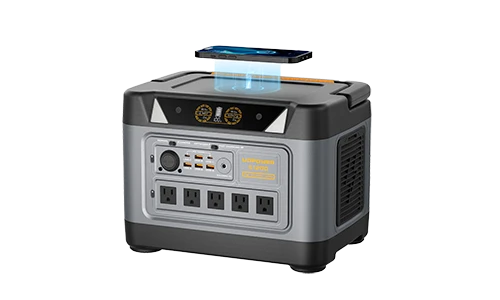
1191Wh 1200W AC ≤10ms UPS 26.0 lb
- Best fit for CPAP users who want a strong overnight backup with real reserve.
- UPS Prime response time ≤10ms helps during sudden outages when the CPAP is already plugged into the station.
- Estimated CPAP runtime: about 25.3 hours at 40W, or about 11.2 hours at 90W through AC.
- Solar charging input: 12V–75V, 12A, 400W max.

Best for Multi-Day Backup: UDPOWER S2400
2083Wh 2400W AC ≤10ms UPS 40.8 lb
- Best fit if you need CPAP plus other home essentials such as a router, phone charging, fan, or refrigerator support.
- Estimated CPAP runtime: about 44.3 hours at 40W, or about 19.7 hours at 90W through AC.
- UPS Prime response time ≤10ms for supported essential devices.
- Solar charging supports up to 400W according to the S2400 product page guidance.

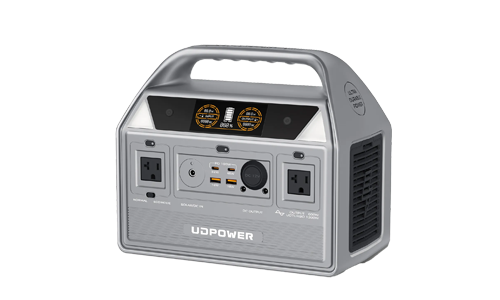
Best Compact Overnight Option: UDPOWER C600
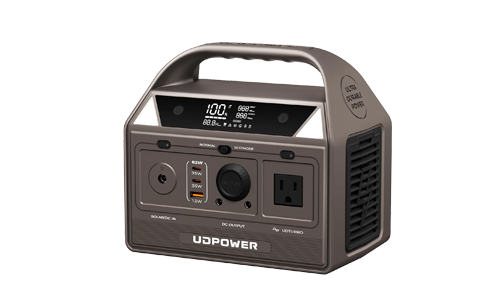
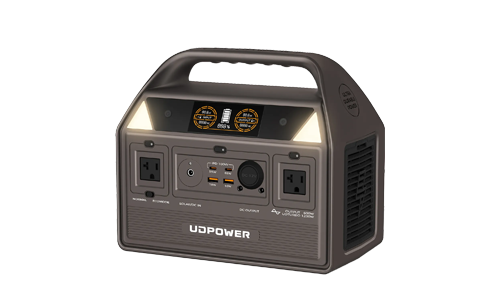
596Wh 600W AC LiFePO4 12.3 lb
- Best fit for one-night CPAP use when the humidifier is off or set low.
- Estimated CPAP runtime: about 12.7 hours at 40W, or about 8.4 hours at 60W through AC.
- Solar charging input: 240W max.
- Not designed as a fast-transfer UPS. For sensitive CPAP outage switchover, choose S1200 or S2400.

Best for Short Backup or Travel Testing: UDPOWER C400
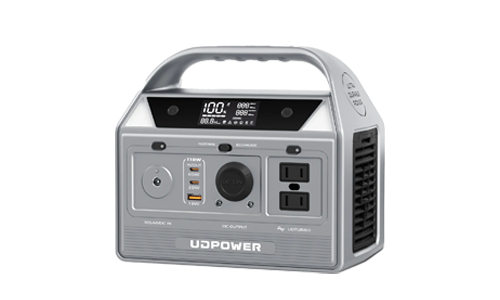
256Wh 400W AC LiFePO4 6.88 lb
- Best fit for short runtime needs, travel CPAP, or backup testing with humidification off.
- Estimated CPAP runtime: about 5.4 hours at 40W through AC.
- Solar charging input: 150W max.
- Not the best choice if you need a guaranteed full night with humidifier on.
| Model | Capacity | AC Output | Weight | UPS-Style Switchover | Best CPAP Use | Official Product Page |
|---|---|---|---|---|---|---|
| UDPOWER C200 | 192Wh | 200W | ~5.4 lb | No | Short runtime, emergency top-up, travel CPAP without heat | C200 specs |
| UDPOWER C400 | 256Wh | 400W | ~6.88 lb | No | Short backup or lightweight camping | C400 specs |
| UDPOWER C600 | 596Wh | 600W | ~12.3 lb | No fast-transfer UPS | One night with humidifier off or low | C600 specs |
| UDPOWER S1200 | 1191Wh | 1200W | ~26.0 lb | ≤10ms UPS Prime | Best overall for CPAP outages | S1200 specs |
| UDPOWER S2400 | 2083Wh | 2400W | ~40.8 lb | ≤10ms UPS Prime | Multi-day CPAP plus home essentials | S2400 specs |
Best Setup for Running a CPAP During a Power Outage
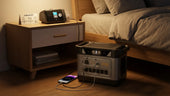
For a simple home outage setup, keep the power station near the bed, charge it before storm season, and test the CPAP before relying on it overnight.
Recommended Outage Setup
- Charge the power station fully before severe weather.
- Plug your CPAP’s original AC adapter into the power station’s AC outlet.
- If using S1200 or S2400 as a UPS-style backup, keep the power station connected to wall power and plug the CPAP into the station.
- Run one daytime test for at least 30 minutes, then run a full overnight test when possible.
- Decide your emergency settings in advance: humidifier off, low, or normal.
- Keep distilled water available if you use humidification.
Important for Sudden Outages
Pass-through charging is not the same as fast UPS switchover. If your main concern is the CPAP staying on when grid power suddenly drops, choose a model designed for fast transfer, such as S1200 or S2400. The C600 can power a CPAP, but it is not designed as a sub-10ms UPS.
The American Lung Association recommends that people using home medical devices such as CPAP or BiPAP have a battery backup or car adapter and speak with a healthcare provider about alternatives if an outage continues. That is why a real CPAP outage plan should include both power and a medical fallback plan.
Can Solar Panels Recharge a CPAP Backup Battery?
Yes. A solar-compatible portable power station can be recharged from solar panels during the day, which is useful for multi-day outages and off-grid camping. The key is to match the solar panel voltage, current, and connector to the power station’s input limits.
| UDPOWER Model | Solar Input | CPAP Recharging Strategy | Good Fit |
|---|---|---|---|
| C400 | 150W max | Useful for small trips and topping up after low-watt CPAP use | Travel CPAP, humidifier off |
| C600 | 240W max | Recharge during the day after one overnight CPAP session | Camping and short outages |
| S1200 | 400W max | Stronger daily recovery for CPAP plus small essentials | Storm prep, RV, longer camping trips |
| S2400 | Up to 400W supported by product-page guidance | Best for CPAP plus refrigerator, router, lights, and phones | Multi-day home backup |
For solar accessories and compatible options, visit the UDPOWER solar panels collection. For exact runtime estimates, you can also use the portable power station runtime calculator.
How to Reduce CPAP Power Consumption
Runtime improves most when you reduce heating demand. The goal is not to make therapy uncomfortable, but to choose an emergency mode you can tolerate and test before you need it.
| Tip | Why It Helps | What to Watch |
|---|---|---|
| Turn off or lower heated humidification | Heating water is often the largest power draw | Dryness may increase; test before an emergency |
| Turn off or lower heated tubing | Reduces steady heating load through the night | Condensation may increase in cold rooms |
| Fix mask leaks | Leaks can make the blower work harder | Use the fit test or guidance from your CPAP provider |
| Use a correct DC cable when available | Can reduce conversion losses compared with AC inverter use | Must match the CPAP model and voltage exactly |
| Keep the CPAP and battery indoors | Batteries and humidifiers perform better within normal temperature ranges | Keep ventilation clear and avoid covering the power station |
| Measure one full night | Replaces guessing with real data | Measure with your normal mask, pressure, and climate settings |
Do not change prescribed pressure settings only to extend runtime. If your current setting makes battery backup difficult, ask your sleep provider what emergency settings or travel options are appropriate for you.
How to Choose the Right CPAP Power Station Size
Here is the easiest way to choose without overbuying or underbuying.
| Your Need | Recommended Capacity | UDPOWER Pick | Why |
|---|---|---|---|
| Short backup, travel CPAP, humidifier off | 200–300Wh | C200 or C400 | Lightweight, but not ideal for a full humidified night |
| One night, CPAP without humidifier or low humidifier | 500–600Wh | C600 | Enough for many 40–60W setups with some reserve |
| One full night with humidifier or stronger reserve | 1000Wh+ | S1200 | Best balance of runtime, UPS-style backup, and portability |
| Multiple nights or CPAP plus refrigerator/router/fan | 2000Wh+ | S2400 | More stored energy for multi-day outages |
FAQ: CPAP Power Consumption
How many watts does a CPAP use?
Many CPAP machines use about 20–40W without heated humidification. With a heated humidifier or heated tube, many setups use about 60–90W, and some high-heat or older setups can use 100W or more.
How much electricity does a CPAP use in 8 hours?
A 40W CPAP uses about 320Wh in 8 hours. A 90W CPAP setup with heated humidification uses about 720Wh in 8 hours. Add a reserve because real-world conditions can increase power draw.
Does a CPAP humidifier use a lot of power?
Yes. The heated humidifier is often the biggest reason CPAP runtime drops on battery power. Turning the humidifier off or lowering it can dramatically extend runtime.
Can a portable power station run a CPAP all night?
Yes, if the battery capacity matches your CPAP’s wattage. A 596Wh station can run many no-humidifier CPAP setups for one night. For humidifier use or more reserve, a 1000Wh+ station is a safer choice.
What size battery do I need for a CPAP?
For a no-humidifier CPAP, many users can plan around 300–500Wh for one night. For humidifier use, plan closer to 700–1000Wh per night. For multi-day backup, choose 1000Wh to 2000Wh+ depending on your settings and recharge plan.
Is AC or DC better for CPAP battery runtime?
DC can be more efficient because it avoids AC inverter losses, but the DC cable must match the CPAP model and voltage. AC is simpler because you can use the CPAP’s original power adapter.
Can I plug my CPAP into a power station while the power station is charging?
Many power stations support pass-through operation, but pass-through is not always the same as fast UPS switchover. If you need the CPAP to stay on during a sudden outage, choose a model with UPS-style transfer, such as UDPOWER S1200 or S2400.
Will the UDPOWER C600 run a CPAP overnight?
It can run many CPAP setups overnight if the humidifier is off or low. At 40W, the C600 estimate is about 12.7 hours through AC. At 90W, the estimate is about 5.6 hours, so humidifier-heavy use is better matched to S1200 or S2400.
Which UDPOWER model is best for CPAP outages?
The S1200 is the best overall choice for most CPAP outage users because it offers 1191Wh capacity and UPS Prime response time ≤10ms. The S2400 is better if you also need to power a refrigerator, router, lights, or multiple nights of CPAP use.
Can solar panels keep my CPAP running during a multi-day outage?
Solar panels can help recharge a compatible power station during the day. Your results depend on sunlight, panel wattage, input limits, weather, and how much energy your CPAP used overnight.
Build a CPAP Backup Plan Before the Next Outage
Start with your CPAP’s real wattage, choose the right reserve, and test the setup before you need it. If you want a simple starting point, compare UDPOWER CPAP backup options or use the runtime calculator with your exact watts.
Sources and Product Data Used
This guide uses UDPOWER official product pages for product capacity, output, weight, solar input, and UPS information. External reader resources are linked below for CPAP basics and medical-device outage planning.