Should You Buy a House with Solar Panels?
This guide helps homebuyers decide whether a house with solar panels is a smart purchase. It explains the difference between owned, financed, leased, and PPA solar systems; what documents to request; how to verify real savings; what to inspect before closing; and why rooftop solar may not provide backup power during outages. It also includes a practical checklist and UDPOWER portable power station recommendations for homes with solar but no battery backup.
Buying a home with solar panels can be a smart move, but only if you know who owns the system, whether there is a lease or loan attached, how much power it actually produces, and what happens during an outage. This guide gives you a practical homebuyer checklist before you make an offer.
Quick Answer: Yes, but only after you verify the solar paperwork
You should consider buying a house with solar panels when the system is owned outright, the roof is in good condition, the utility bills prove real savings, and the installer warranty or monitoring access can transfer to you. Be much more cautious if the panels are leased, covered by a power purchase agreement, tied to a solar loan, installed on an aging roof, or not producing the output the seller claims.
The best deal is usually a home with paid-off solar panels and clean documentation. The riskiest deal is a home where the seller cannot clearly explain whether the panels are owned, leased, financed, or transferable.

1. What you are really buying
A solar home is not just “a house with panels on the roof.” You are buying a package: roof condition, solar hardware, utility rules, production history, warranties, and sometimes a contract that follows the property. Treat the solar system like a second mini-inspection inside the home purchase.
| Item | What to verify | Why it matters | Helpful source |
|---|---|---|---|
| Ownership | Owned outright, financed, leased, or power purchase agreement | This affects home value, closing paperwork, monthly payments, and whether the panels count as an asset. | Fannie Mae solar property guidance |
| Utility rate plan | Net metering, net billing, time-of-use rates, export credits, and monthly minimum charges | A system that saves money under one owner’s rate plan may save less after a utility rule change. | DSIRE net metering policy maps |
| Electricity price | Local cents per kWh and how fast rates have changed | Solar is more valuable where grid electricity is expensive and daytime usage is high. | EIA electricity price table |
| Tax assumptions | Whether the seller already claimed incentives and whether you are buying used equipment | Do not price the house as if you can claim a credit on panels that were already installed by the seller. | IRS Residential Clean Energy Credit |
| Backup capability | Battery, critical-load panel, hybrid inverter, generator inlet, or no backup at all | Most grid-tied solar systems shut down during outages unless they are designed with backup equipment. | CPUC net energy metering and net billing |
The short version for buyers: the panels can be a real advantage, but the paperwork decides whether they are a benefit or a closing headache.
2. Owned, financed, leased, or PPA: which is best?
The biggest question is not how many panels are on the roof. It is who owns them. Ask this before you fall in love with the house.
| Solar setup | Buyer-friendly rating | What it means | What to ask for | Offer strategy |
|---|---|---|---|---|
| Paid-off, owner-owned panels | Best | The seller owns the system and can transfer the equipment, warranties, monitoring access, and documents to you. | Proof of payoff, permit records, interconnection approval, warranties, production reports, installer info. | Value it as a home feature, but still adjust for roof age, inverter age, and real production. |
| Solar loan attached to the seller | Good if paid off before closing | The seller may still owe money. Some loans create title or underwriting issues. | Loan payoff statement, title report, UCC filing status, lender transfer rules. | Ask the seller to pay it off at or before closing unless the loan terms are clearly favorable. |
| Solar lease | Needs careful review | You may have to take over a monthly lease payment, meet transfer requirements, and follow the solar company’s rules. | Full lease agreement, escalation clause, remaining term, buyout price, maintenance terms, transfer fee. | Compare the lease payment against verified bill savings. Ask for a seller credit or buyout if the numbers are weak. |
| Power purchase agreement (PPA) | Needs careful review | You pay for the electricity the system produces, usually at a contract rate. The solar company often owns the equipment. | PPA rate, annual escalator, remaining years, production guarantee, transfer process, buyout schedule. | Do not assume “solar = free electricity.” Run the contract rate against your utility rate. |
| Old or underperforming system | Risky | The system may look good in listing photos but produce little value if the inverter is old, panels are shaded, or monitoring is offline. | Last 12–24 months of production, repair history, monitoring screenshot, solar inspection report. | Negotiate based on repair cost or treat the system as neutral until it passes inspection. |
3. Documents to request before your offer
Do not wait until the last week of escrow to ask for solar paperwork. Solar transfer delays can slow down lender approval, title clearance, and closing. Ask the listing agent for a solar packet before you write the offer or during your inspection period.
Solar document packet checklist
- Proof that the solar panels are owned outright, or a full copy of the solar loan, lease, or PPA.
- Payoff statement if the seller still has a solar loan.
- Copy of any UCC filing, lien notice, or title exception related to the system.
- Permit approval, final inspection sign-off, and utility interconnection approval.
- Panel, inverter, battery, and workmanship warranties.
- System design or one-line diagram showing panel size, inverter size, and any battery or backup panel.
- Monitoring login transfer instructions and at least 12 months of production history.
- At least 12 months of electric bills, ideally showing both energy usage and solar credits.
- Maintenance and repair records, including inverter replacement, roof leak repairs, or panel removal/reinstall work.
- HOA approval if the home is in an HOA community.
If the seller cannot provide these items, that does not automatically mean the home is a bad purchase. It does mean you should slow down, ask for a solar inspection, and protect your offer with clear contingencies.
4. How to decide if the solar system adds value
Solar value is not one fixed number. It depends on ownership, local rates, system age, roof condition, production, and whether the next buyer will see the panels as an asset or an obligation.
National studies have found that owned solar can support resale value. Zillow reported that homes with solar sold for 4.1% more on average in a 2019 analysis, and Lawrence Berkeley National Laboratory has published research on solar home price premiums. Those numbers are useful background, not a guaranteed premium for every house. A leased system, a shaded system, or panels on a roof that needs replacement can reduce the practical value quickly.
| Value factor | Strong signal | Weak signal | How to use it in your offer | Source |
|---|---|---|---|---|
| Ownership | Paid off, owned by seller, no title issue | Lease/PPA with long remaining term or high escalation | Owned systems can justify value; leases should be valued by net savings only. | Fannie Mae appraisal solar overview |
| Electricity rate | High local kWh price and rising bills | Low kWh price, high fixed fees, weak export credit | High rates make self-consumed solar more valuable. | EIA average electricity prices |
| Export credit rules | Favorable net metering or strong time-of-use savings | Low export credits where daytime surplus is not worth much | In low-export markets, batteries or daytime usage can matter more than panel count. | California NEM/NBT explanation |
| System age | Recent panels, modern inverter, active monitoring | Old inverter, no monitoring, unknown installer | Ask for repair credit if key components are near replacement age. | NREL solar financing guide |
| Resale premium | Owned solar in a market where buyers understand solar savings | Contract-heavy system that creates buyer hesitation | Use resale studies as context, not as your only valuation method. | Zillow solar resale analysis |
A simple buyer math test
Ask for the seller’s last 12 months of electric bills and solar production. Then compare three numbers:
- Current grid bill without solar: what a similar home would likely pay based on usage and local kWh rate.
- Actual bill with solar: what the seller paid after credits, fixed charges, and time-of-use rates.
- Any solar payment: loan, lease, or PPA payment that you would inherit.
| Example scenario | Monthly utility bill before solar | Monthly utility bill after solar | Solar payment | Net monthly result | Buyer interpretation |
|---|---|---|---|---|---|
| Paid-off owned system | $230 | $55 | $0 | About $175 savings | Strong positive if roof and hardware check out. |
| Solar loan seller pays off at closing | $230 | $55 | $0 after closing | About $175 savings | Similar to owned system once payoff is documented. |
| Lease with fixed payment | $230 | $65 | $140 | About $25 savings | Small benefit; review remaining term and escalation. |
| PPA with rising contract rate | $230 | $80 | $130 to solar company | About $20 savings | Only attractive if rate stays below utility cost and transfer is easy. |
| Underperforming system | $230 | $180 | $0 | About $50 savings before repairs | May still help, but inspection and repair budget matter. |
These are example numbers for decision-making. Use the actual utility bills, actual solar contract, and your local rate plan before assigning value.
5. Solar inspection checklist
A general home inspector may note that panels exist, but they may not test system production, inverter status, roof penetrations, or electrical workmanship. A separate solar inspection is worth it when the system is large, older, leased, or important to the purchase price.
| Inspection area | What to look for | Red flags | Buyer action |
|---|---|---|---|
| Roof life | Age of shingles, roof condition under/around mounting points, signs of leaks | Panels installed on a roof near end of life | Request seller credit for removal/reinstall or roof work. |
| Panel condition | Cracked glass, damaged frames, missing clamps, animal damage, heavy shading | Broken modules or trees blocking key sunlight hours | Ask for repair estimate and updated production estimate. |
| Inverter | Age, error codes, warranty status, monitoring connection | No monitoring login, repeated inverter faults | Negotiate repair or replacement if output cannot be verified. |
| Electrical panel | Clean labeling, permitted work, safe disconnects, code-compliant interconnection | Unlabeled breakers, amateur wiring, missing permit records | Bring in a licensed electrician or solar inspector. |
| Battery/backup | Battery model, usable capacity, critical-load panel, transfer equipment | Seller says “backup” but there is no battery or backed-up circuit | Ask the inspector to demonstrate what stays powered during outage mode. |
| Production history | Monthly kWh production for at least one year | Production far below expected output, missing summer data | Use production data, not listing claims, to estimate savings. |
6. Mortgage, appraisal, and title issues
Solar can affect mortgage underwriting when the system is financed, leased, or treated as personal property. Fannie Mae guidance says lenders should review documentation for solar-related secured loans, including title reports, UCC financing statements, promissory notes, and security agreements. If the panels are collateral for another debt, that can affect how the system is treated in the appraisal and loan file.
Do this early
Send the solar paperwork to your lender and title company as soon as you receive it. Do not assume the solar company, seller, title company, and lender will automatically coordinate. If a transfer agreement, payoff, or lien release is required, make it a written closing condition.
| Question | Why it matters | Who should answer | Source |
|---|---|---|---|
| Are the panels real property or personal property? | Owned and attached panels are easier to value than third-party-owned panels. | Lender, appraiser, title company | Fannie Mae |
| Is there a UCC filing or lien? | A filing can delay closing if it must be subordinated, released, or clarified. | Title company, solar lender, seller | Freddie Mac |
| Will a lease or PPA transfer to the buyer? | You may need solar company approval and signed transfer documents. | Solar company, seller, buyer’s agent | NREL |
| Can the buyer claim a tax credit on existing panels? | Used clean energy property is not eligible under IRS guidance. | Tax preparer, IRS guidance | IRS |
7. Will rooftop solar power the house during an outage?
This is where many buyers get surprised. A standard grid-tied solar system usually does not keep the house running when the grid goes down. For safety, grid-tied systems are commonly designed to shut down unless the home also has the right backup equipment, such as a battery, backup inverter, or critical-load panel.
Ask the seller one simple question: “Show me exactly what stays powered if the grid is down.” If the answer is vague, assume the solar system lowers bills but does not provide outage backup.
| Setup | Can it help during an outage? | Best use | Buyer note |
|---|---|---|---|
| Grid-tied solar only | Usually no | Lower daytime electricity use and utility bill savings | Great for bills, but not a backup system by itself. |
| Solar plus home battery | Yes, if wired for backup | Critical circuits, evening use, time-of-use shifting | Confirm battery capacity, backed-up circuits, and battery warranty. |
| Solar plus critical-load panel | Yes, for selected circuits | Fridge, router, lights, medical device, selected outlets | Ask which circuits are backed up before assuming comfort loads are included. |
| Portable power station | Yes, for plug-in essentials | Fridge cycles, CPAP, Wi-Fi, phones, laptops, small appliances | Portable, indoor-safe, and useful even when rooftop solar is not configured for backup. |
| Gas generator | Yes, if used safely outdoors | Higher loads and longer outages with fuel available | Never run indoors or in a garage. Carbon monoxide risk is serious. |
For many solar-home buyers, the practical answer is simple: use rooftop solar for bill reduction, and keep a separate backup plan for the devices you cannot lose during a storm or grid outage.
8. UDPOWER product bridge: backup power for solar homes
If the house has rooftop solar but no home battery, a portable power station can cover the “inside essentials” gap: Wi-Fi, phones, laptops, CPAP, lights, small fans, and refrigerator cycling. It is not a replacement for a whole-home battery or a hardwired backup system, but it is a practical move-in safety layer for many buyers.
Use portable power stations by plugging devices directly into the unit. Do not backfeed wall outlets or connect a portable power station to house wiring unless the setup is designed and installed by qualified professionals.

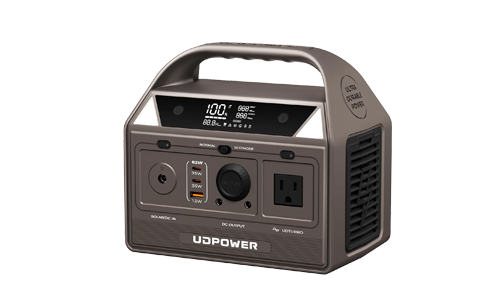
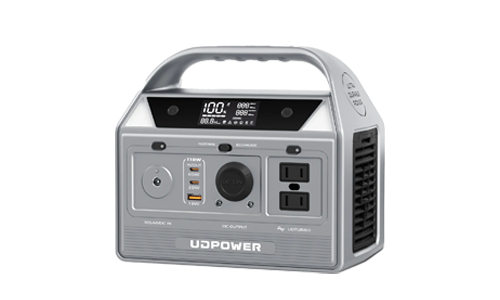
UDPOWER C400 Portable Power Station
Best for: quick backup for phones, laptops, router use, small devices, and roadside emergency support.
Key specs from UDPOWER: 256Wh capacity, 400W pure sine wave AC output, 800W surge, LiFePO4 battery, 6.88 lb, up to 150W solar input, and 400A jump starter function for 12V vehicles.

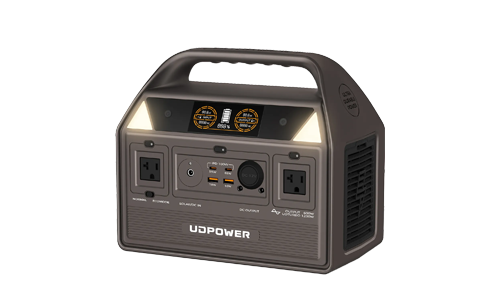
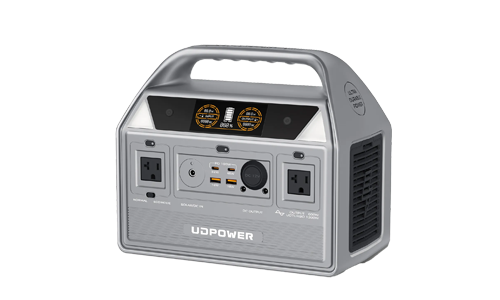
UDPOWER C600 Portable Power Station
Best for: router, laptop work, lighting, small appliances, CPAP depending on wattage, and short outage essentials.
Key specs from UDPOWER: 596Wh capacity, 600W pure sine wave AC output, 1200W max surge, LiFePO4 battery, 12.3 lb, 2 AC outlets, USB-C output up to 100W total, and up to 240W solar input.
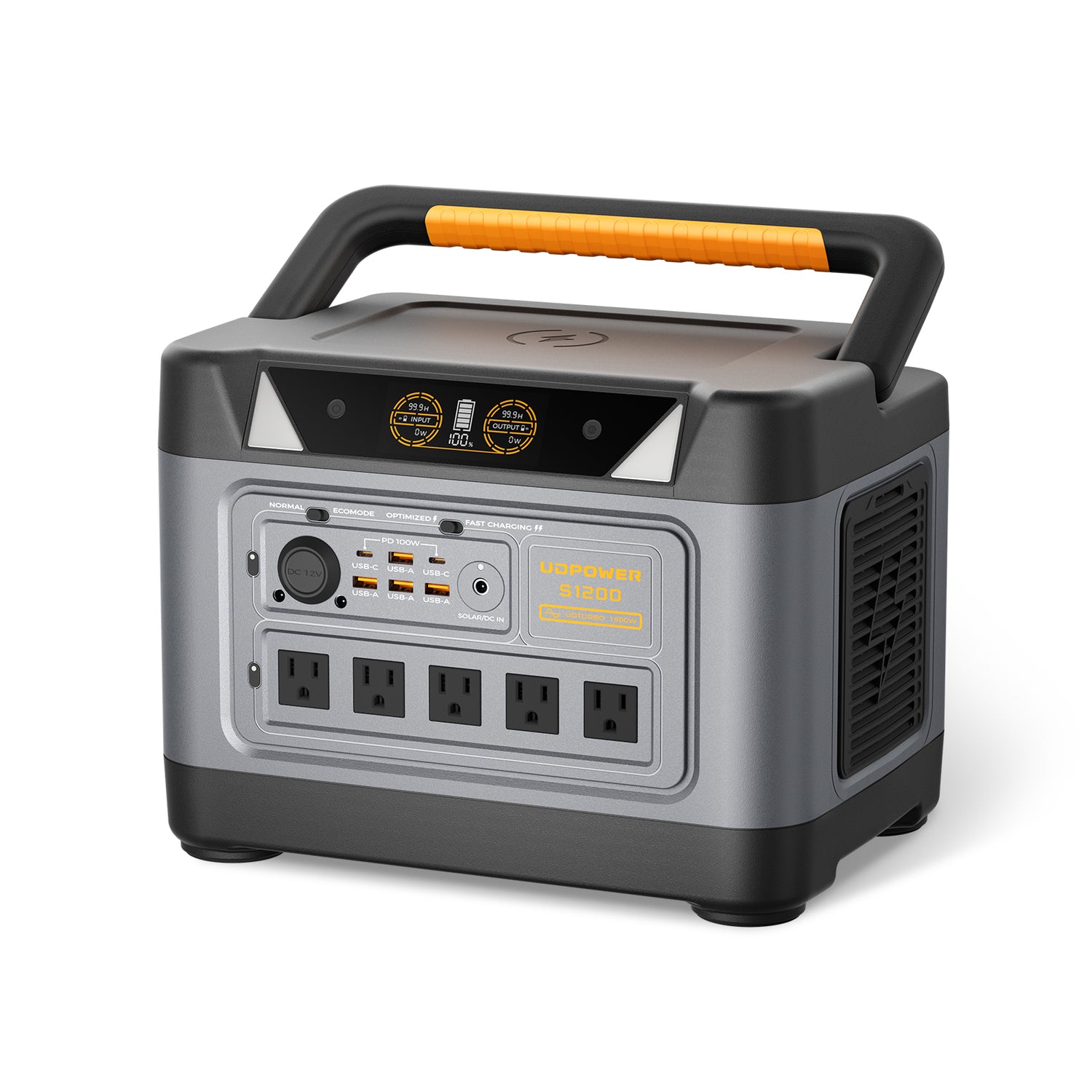
UDPOWER S1200 Portable Power Station
Best for: fridge cycling, CPAP, Wi-Fi, laptops, lights, and multi-device outage coverage for renters or new homeowners who do not yet have a hardwired battery.
Key specs from UDPOWER: 1,190Wh listed capacity, 1,200W rated pure sine wave output, up to 1,800W surge, 5 AC outlets, UPSPRIME response time ≤10ms, approximately 26 lb, and up to 400W solar charging input.
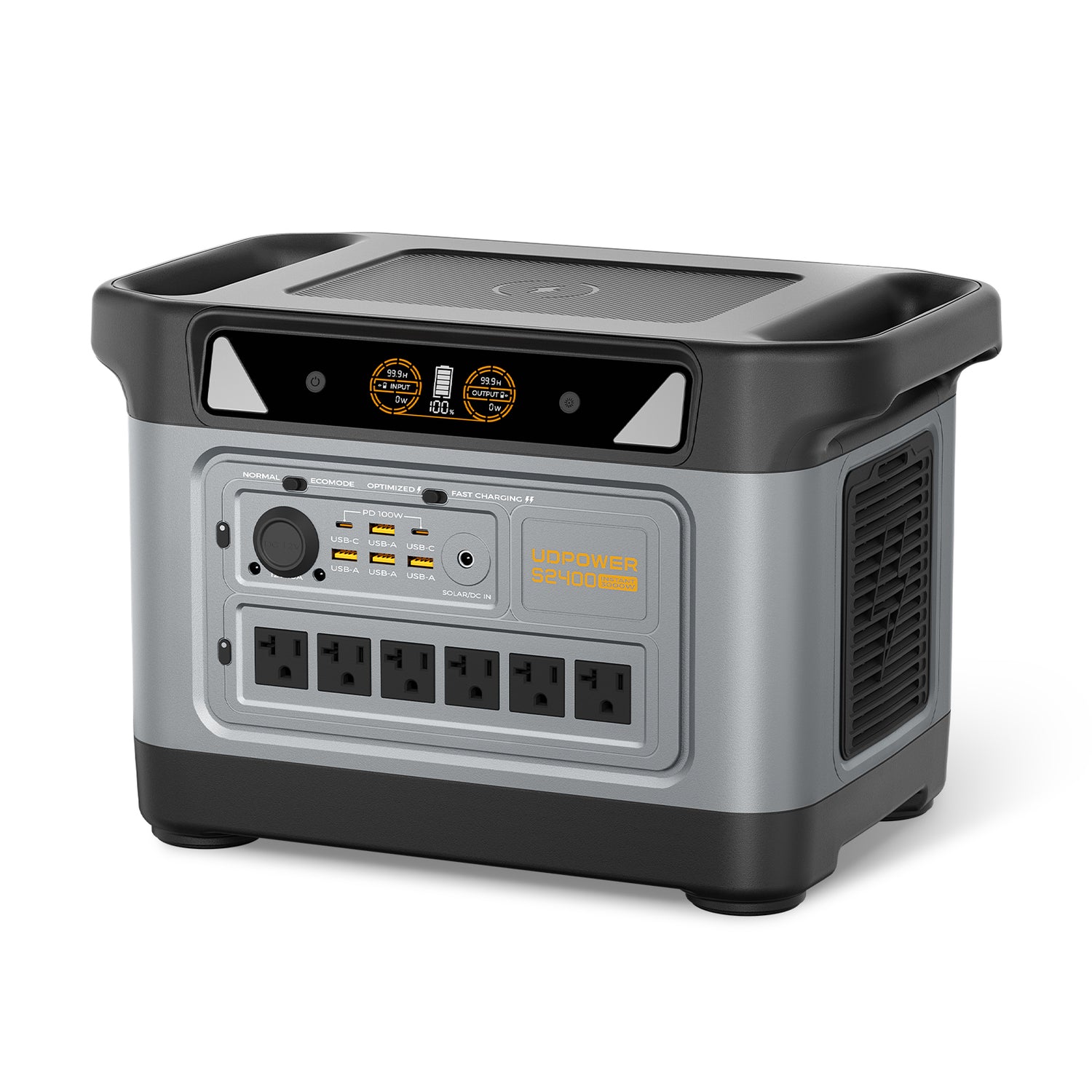
UDPOWER S2400 Portable Power Station
Best for: longer outages, higher-output everyday appliances within the wattage limit, refrigerator support, home office backup, and RV or emergency planning.
Key specs from UDPOWER: 2,083Wh capacity, 2,400W pure sine wave AC output, up to 3,000W startup surge, 6 AC outlets, UPSPRIME response time ≤10ms, approximately 40.8 lb, and solar input up to 400W.
| Buyer need | Suggested UDPOWER model | Why it fits | Product source |
|---|---|---|---|
| Move-in kit for phones, router, small electronics, and emergency car support | C400 | Lightweight 256Wh unit with 400W AC output and jump-starter function. | C400 product page |
| Quiet backup for Wi-Fi, laptop, lights, and small household essentials | C600 | 596Wh capacity and 600W AC output in a manageable size. | C600 product page |
| Most homeowners who want an essentials-first backup unit | S1200 | 1,190Wh class capacity, 1,200W AC output, 5 AC outlets, and UPS-style switchover. | S1200 product page |
| Longer runtime, higher output, and more multi-device flexibility | S2400 | 2,083Wh capacity, 2,400W AC output, 6 AC outlets, and stronger surge support. | S2400 product page |
For a full lineup, compare UDPOWER portable power stations or view UDPOWER solar generator kits.
9. Offer and negotiation tips
Solar should make the home easier to buy, not harder. Use the offer period to turn vague solar claims into written terms.
Use these buyer-friendly conditions
- For owned systems: require proof that the system is paid off and will transfer with the home.
- For financed systems: require seller payoff and lien/UCC release before or at closing, unless you intentionally agree to assume the debt.
- For leases or PPAs: require the full contract, transfer approval, exact monthly rate, annual escalator, buyout price, and remaining term.
- For roof concerns: ask for roof age, solar mounting inspection, and removal/reinstall cost if the roof is near replacement.
- For claimed savings: require electric bills and solar production reports, not verbal estimates.
- For backup claims: require a demonstration or documentation showing which loads are backed up during an outage.
When to walk away
You do not need to reject every home with a lease or PPA, but you should walk away or renegotiate hard when the seller cannot provide the solar contract, the solar company will not approve transfer in time, the roof needs major work under the panels, the system is not producing, or the lease/PPA payment wipes out most savings.
Bottom line
A house with solar panels can be a strong purchase when the system is owned, documented, productive, and installed on a healthy roof. It can also be a frustrating purchase when the panels come with unclear ownership, long contract obligations, weak utility credits, or no outage capability.
Buy the house if the solar system passes the same standard you would apply to the roof, HVAC, plumbing, and electrical panel: proof, performance, condition, and clear ownership. If those four items check out, solar can lower your bills and make the home more resilient. If they do not, treat solar as a negotiation item, not a bonus.
FAQ: Buying a house with solar panels
Is it a good idea to buy a house with solar panels?
Yes, it can be a good idea if the panels are owned, the roof is healthy, the system has strong production records, and the utility bills show real savings. If the panels are leased or covered by a PPA, review the contract before you decide.
Do solar panels increase home value?
Owned solar panels can support home value, especially in areas with high electricity rates and buyers who understand solar savings. Leased panels or PPA systems are different because they may add a payment obligation instead of a clear asset.
Can I claim a tax credit if I buy a house that already has solar panels?
Do not assume so. The IRS states that used clean energy property is not eligible for the Residential Clean Energy Credit. If you add new qualifying equipment after closing, check current IRS rules and keep your purchase and installation records.
What is better: owned solar panels or leased solar panels?
Owned panels are usually easier for buyers because there is no monthly solar contract to assume. Leased panels can still save money, but you need to review the payment, annual increase, remaining term, buyout price, and transfer process.
What is a solar PPA?
A solar power purchase agreement means you buy the electricity the system produces, often at a contract rate. The solar company may own the equipment. When buying a home with a PPA, compare the PPA rate with your local utility rate and check whether the rate increases each year.
Will solar panels keep my house powered during a blackout?
Not automatically. Many rooftop solar systems shut down when the grid is down unless the home has battery backup or specific backup equipment. Ask the seller to show exactly which circuits or devices stay powered during an outage.
Should I ask for a solar inspection?
Yes, especially if the system is older, expensive, leased, tied to a loan, or important to the sale price. A solar inspection can check inverter status, production, roof penetrations, wiring, permits, and visible panel condition.
What happens if the roof needs replacement after I buy the house?
If panels must be removed and reinstalled, that can add cost and scheduling complexity. Before buying, ask for roof age, panel installation date, roof warranty, and an estimate for panel removal and reinstall if the roof is near the end of its life.
Can a solar lease delay closing?
Yes. A lease or PPA may require buyer approval, transfer forms, solar company signatures, or lender review. Send the contract to your lender and title company early so the transfer does not become a last-minute closing issue.
What backup power should I add if the house has solar but no battery?
For plug-in essentials, a portable power station is a practical first step. UDPOWER S1200 is a balanced option for many home essentials, while S2400 offers more capacity and output for longer outages and larger everyday loads within its rating.
Need backup power after buying a solar home?
Start with the devices that matter most: fridge time, Wi-Fi, phones, laptops, CPAP, lights, and small appliances. Then choose a portable power station by wattage and runtime instead of guessing.
View portable power stations View solar generator kits Get the sizing guideRelated Articles