

How Long Do Electric Coolers Stay Cold?
Last updated:
An electric cooler can keep food and drinks cold for as long as it has a suitable power source, but that does not mean every electric cooler performs the same way. A compressor cooler may hold a true refrigerator temperature in summer heat, while a thermoelectric cooler may only cool a set number of degrees below the surrounding air.
Battery capacity, cooler type, outdoor temperature, temperature setting, food load, lid openings, ventilation, and the condition of the door seal all affect how long the cooler stays cold. The most useful answer therefore separates two different questions: how long the cooler can operate on power, and how long it remains safely cold after power is disconnected.
Quick Answer
While connected to wall, vehicle, solar-supported, or battery power, an electric cooler can remain cold continuously, provided the power supply is adequate and the surrounding temperature stays within the cooler's operating limits.
On a portable power station, a common 48–54W thermoelectric cooler may run for approximately:
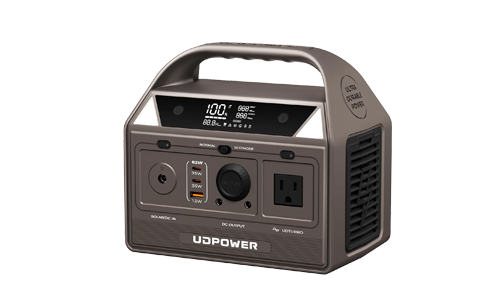
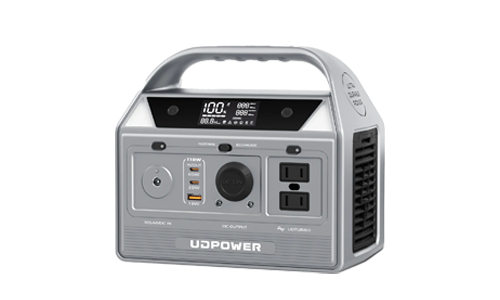
- 9.9–11.2 hours on a 596Wh UDPOWER C600
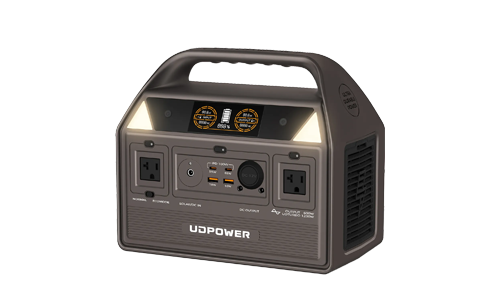
- 19.8–22.3 hours on a 1,190Wh UDPOWER S1200
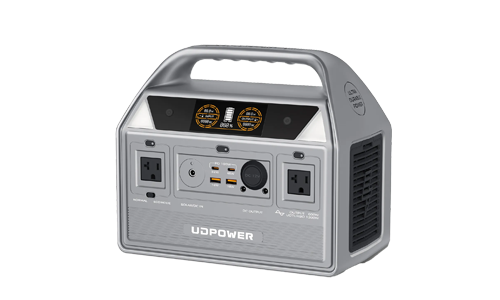
- 34.7–39.1 hours on a 2,083Wh UDPOWER S2400
An efficient compressor cooler can run much longer because its compressor cycles on and off. If its measured average consumption is 10–25W, the C600 may provide approximately 21–54 hours, the S1200 about 43–107 hours, and the S2400 about 75–187 hours.
After power is disconnected, there is no universal safe cold-retention time. A full, pre-chilled, well-insulated cooler with frozen packs may remain cold for many hours, while a nearly empty cooler in a hot vehicle may warm above 40°F quickly. Use an appliance thermometer rather than relying on how cold the food feels.

There Are Two Different “Cold Time” Questions
Most short answers about electric coolers mix together operating time and passive cold retention. They are not the same measurement.
1. Powered operating time
This is how long the cooler can actively remove heat while connected to electricity. It may be effectively unlimited on a wall outlet, but finite when powered by a vehicle battery, built-in battery, or portable power station.
Powered operating time is primarily determined by:
- The cooler's total energy consumption in watt-hours
- The battery's usable watt-hour capacity
- Ambient temperature and direct sunlight
- The selected refrigerator or freezer temperature
- How often the compressor runs
2. Unpowered cold-retention time
Once unplugged, an electric cooler becomes an insulated box. Its compressor, fan, or thermoelectric plate is no longer removing heat. The internal temperature begins moving toward the surrounding temperature.
Cold-retention time depends more on insulation, thermal mass, shade, lid openings, and frozen contents than on the cooler's electrical wattage.
Electric Cooler Types Compared
The term “electric cooler” is used for several different appliances. Identifying the cooling system is the first step toward estimating runtime and temperature performance.
| Cooler type | How it works | Typical power behavior | Temperature capability | Best use | Source |
|---|---|---|---|---|---|
| Thermoelectric cooler | Uses a thermoelectric plate and fan to move heat from inside to outside. | Often draws power continuously. Many 12V examples use approximately 36–54W. | Usually cools a fixed number of degrees below ambient temperature rather than holding an exact setpoint. | Drinks, snacks, road trips and moderate weather. | U.S. Department of Energy; Koolatron FAQ |
| 12V compressor cooler | Uses a compressor and refrigerant system similar to a household refrigerator. | The compressor draws power while cooling, then switches off or slows after reaching the set temperature. | Can usually maintain a selected refrigerator temperature and many models can freeze. | Meat, dairy, medicine when permitted by its storage instructions, camping and multi-day travel. | Dometic CFX3; Igloo ICF |
| Battery-powered compressor cooler | Combines a compressor cooler with an internal removable or built-in battery. | Runs from its internal battery until depleted, then requires charging or external power. | Similar temperature control to other compressor coolers. | Short trips where carrying a separate power station is not preferred. | Check the specific cooler manufacturer's rated battery test conditions. |
| Portable mini refrigerator | May use a compressor or thermoelectric system and commonly connects through AC power. | AC conversion and compressor startup may increase power-station requirements. | Varies widely by model; confirm whether it is a true refrigerator or only an ambient-temperature cooler. | Cabins, dorms, RVs and stationary campsites. | UDPOWER refrigerator wattage guide |
On a phone, swipe or drag the table horizontally to view all columns.
Why Hot Weather Changes How Long an Electric Cooler Stays Cold
A compressor cooler normally works toward a selected internal temperature. A thermoelectric cooler works differently: its cooling capability is commonly described as a temperature difference below the surrounding air.
For example, Koolatron lists several thermoelectric models as capable of cooling up to 40°F below the surrounding temperature. That does not guarantee a 40°F interior in every environment.
| Ambient temperature | Best-case interior at 40°F below ambient | Suitable for perishable food? | Practical interpretation |
|---|---|---|---|
| 70°F | Approximately 30°F | Potentially, if the actual measured temperature remains at or below 40°F | Moderate indoor or shaded conditions are favorable. |
| 80°F | Approximately 40°F | Borderline | There is little safety margin for sunlight, opening the lid or warm food. |
| 90°F | Approximately 50°F | No, not for long-term perishable-food storage | The cooler may make drinks feel cool without holding a safe refrigerator temperature. |
| 100°F | Approximately 60°F | No | A closed vehicle can make thermoelectric performance especially limited. |
This is an illustrative best-case calculation, not a temperature guarantee. Actual performance depends on the cooler, airflow, loading, voltage and weather. Source: Koolatron P20 specifications.
“Cool to the touch” is not the same as food-safe
Drinks can still feel refreshing at 50°F, but meat, dairy, seafood, eggs and prepared food should generally be held at 40°F or below. Use a thermometer placed near the food, not against the cooler wall or directly on a frozen pack.
How Long Does an Electric Cooler Stay Cold After It Is Unplugged?
There is no reliable universal number. Depending on the cooler and conditions, the interior may remain acceptably cold for a short stop, several hours, or much longer when packed with frozen items and cold packs.
Koolatron states that its insulated electric coolers retain cold for many hours when unplugged and identifies one model with a manufacturer claim of up to 3.3 days of cold retention. That is a model-specific claim, not a safe assumption for every electric cooler or every weather condition.
The time that matters for perishable food is not when the cooler stops feeling cold. It is the time at which food rises above 40°F.
| Condition after unplugging | Expected effect on cold retention | Recommended action |
|---|---|---|
| Cooler is full of pre-chilled food and frozen water bottles | More thermal mass slows temperature rise. | Keep it closed and monitor the center temperature. |
| Cooler is nearly empty | Warm air enters easily and there is little cold mass to absorb heat. | Fill empty space with cold packs or frozen bottles. |
| Cooler is in shade at moderate temperature | Heat enters more slowly. | Keep it off hot asphalt and allow ventilation around the exterior. |
| Cooler is inside a parked vehicle | The rapidly rising cabin temperature can shorten safe cold time. | Move it to shade or reconnect it to a suitable power source. |
| Lid is opened frequently | Cold air escapes and humid warm air enters. | Use a separate drinks cooler when possible. |
| Warm groceries are added after unplugging | The food load absorbs the cooler's stored cold energy. | Chill groceries before packing or restore power immediately. |
Manufacturer cold-retention reference: Koolatron 12V cooler FAQ.
A better way to find your cooler's real unplugged time
Step 1: Recreate your normal load
Pack the cooler with the same quantity of cold food, drinks and frozen packs you normally carry. A test with an empty cooler will not represent a real trip.
Step 2: Test at a realistic ambient temperature
Pre-cool the contents, place the cooler in the expected environment, and allow it to reach its normal operating temperature before disconnecting power.
Step 3: Log the time to 40°F
Place a refrigerator thermometer or temperature logger in the center of the food area. Record how long it takes to rise from its starting temperature to 40°F.
Step 4: Add a safety buffer
Do not plan around the exact test limit. Reduce the measured time by at least 20–25% to account for hotter days, extra lid openings, weaker seals and warmer food.
How Cold Must an Electric Cooler Be to Keep Food Safe?
The FDA recommends keeping cold perishable food at 40°F or below. Food should not remain in the 40–140°F temperature range for more than two hours, or more than one hour when the outdoor temperature is above 90°F.
| Measured temperature or condition | What it means | Action | Official source |
|---|---|---|---|
| 40°F or below | Normal cold-storage range for perishable food. | Continue monitoring, especially during hot weather. | FDA storage guidance |
| Above 40°F for less than two hours | The food may still be within the general FDA time limit. | Restore refrigeration promptly and assess each item conservatively. | FDA outdoor food safety |
| Above 40°F for two hours or more | Perishable food may have spent too long in the danger zone. | Discard affected perishable food. | FoodSafety.gov |
| Outdoor temperature above 90°F | The safe unrefrigerated window is reduced. | Use a one-hour limit for perishable food above 40°F. | FDA outdoor food safety |
| Food smells or looks normal but temperature history is unknown | Appearance and smell cannot reliably confirm safety. | When in doubt, discard it rather than tasting it. | FoodSafety.gov emergency guidance |
The most useful cooler accessory costs very little
Keep an appliance thermometer or wireless temperature sensor inside the cooler. It provides a more reliable answer than battery percentage, estimated runtime, the temperature of the outer wall, or touching a food package.
How to Calculate How Long a Battery Will Run an Electric Cooler
The battery's watt-hour capacity determines how much energy is available. The cooler's average wattage determines how quickly that energy is used.
The 0.90 factor allows for approximately 10% conversion and system losses. Actual efficiency can vary depending on whether the cooler uses a 12V DC outlet or an AC adapter, battery temperature, cable quality and the power station's operating mode.
Example: 596Wh battery and a 54W thermoelectric cooler
Example: 596Wh battery and a compressor cooler averaging 15W
The compressor cooler can last much longer even if it draws 40–60W while actively cooling. Once the set temperature is reached, the compressor cycles off, lowering its average consumption across the full day.
Do not calculate from startup watts alone
Startup or maximum wattage determines whether a power source can operate the cooler safely. Average wattage or measured watt-hours per day determines runtime. These are different numbers.
Electric Cooler Runtime by Average Power Draw
The table below uses the official battery capacities of the UDPOWER C600, S1200 and S2400 and applies a 90% usable-capacity factor. It assumes the cooler is the only device connected.
| Average cooler draw | Example operating pattern | C600 596Wh |
S1200 1,190Wh |
S2400 2,083Wh |
|---|---|---|---|---|
| 10W average | Very efficient compressor cooler after pre-cooling in moderate conditions | About 53.6 hours | About 107.1 hours | About 187.5 hours |
| 15W average | Efficient small or mid-size compressor cooler with normal cycling | About 35.8 hours | About 71.4 hours | About 125.0 hours |
| 25W average | Compressor cooler in warm weather or with frequent openings | About 21.5 hours | About 42.8 hours | About 75.0 hours |
| 40W average | Large, dual-zone or hard-working compressor cooler | About 13.4 hours | About 26.8 hours | About 46.9 hours |
| 48W continuous | Common thermoelectric product specification | About 11.2 hours | About 22.3 hours | About 39.1 hours |
| 54W continuous | Typical Koolatron thermoelectric FAQ figure | About 9.9 hours | About 19.8 hours | About 34.7 hours |
Product capacities: UDPOWER C600, UDPOWER S1200 and UDPOWER S2400. Thermoelectric wattage reference: Koolatron.
Why the same cooler may use 10W one day and 40W the next
A compressor cooler's average draw is not fixed. It may cycle gently overnight but run almost continuously in afternoon heat. A freezer setting also requires more energy than a 37–40°F refrigerator setting.
For reliable trip planning, measure the cooler for at least 24 hours in conditions similar to the expected trip rather than using only the wattage printed on its label.
Real Compressor-Cooler Energy Data: Why Daily Consumption Matters
Igloo publishes average 12V consumption figures for its ICF compressor coolers at a 39.2°F operating temperature and 89.6°F ambient temperature. Converting the listed amp-hour-per-hour values at 12V provides an approximate average wattage.
| Cooler example | Official 12V consumption | Approx. average watts | C600 estimate | S1200 estimate | S2400 estimate |
|---|---|---|---|---|---|
| Igloo ICF 18 | 0.85Ah per hour | About 10.2W | About 52.6 hours | About 105.0 hours | About 183.8 hours |
| Igloo ICF 32 | 0.88Ah per hour | About 10.6W | About 50.8 hours | About 101.4 hours | About 177.5 hours |
| Igloo ICF 40 | 0.93Ah per hour | About 11.2W | About 48.1 hours | About 96.0 hours | About 168.0 hours |
| Igloo ICF 60 | 1.05Ah per hour | About 12.6W | About 42.6 hours | About 85.0 hours | About 148.8 hours |
| Igloo ICF 80DZ | 3.10Ah per hour | About 37.2W | About 14.4 hours | About 28.8 hours | About 50.4 hours |
Cooler consumption source: Igloo ICF official information. Runtime figures are UDPOWER planning estimates calculated at 90% usable capacity, not tested performance guarantees.
This example explains why a compressor cooler drawing 40–60W when the compressor is active can average far less over a full hour. It also shows why a large dual-zone cooler may require substantially more battery capacity than a compact single-zone model.
Which UDPOWER Power Station Fits an Electric Cooler?
Choose capacity according to the cooler's measured daily watt-hours, trip length and other devices you plan to operate. Output wattage is rarely the difficult part for a 12V cooler; battery capacity usually determines whether the setup lasts through the night or through the weekend.

UDPOWER C600: Best for Overnight and Efficient Cooler Setups
The C600 is a practical match for a compact compressor cooler, car camping, fishing days and overnight stops where portability matters.
- Battery capacity: 596Wh
- Rated AC output: 600W
- Surge output: up to 1,200W
- 12V car outlet: up to 136W
- Weight: approximately 12.3 lb
- Estimated cooler runtime: about 21–54 hours at a measured 10–25W average draw
It is a strong option for an efficient single-zone compressor cooler plus light phone, camera or camping-light use. For a continuously running thermoelectric cooler, expect a shorter operating window.
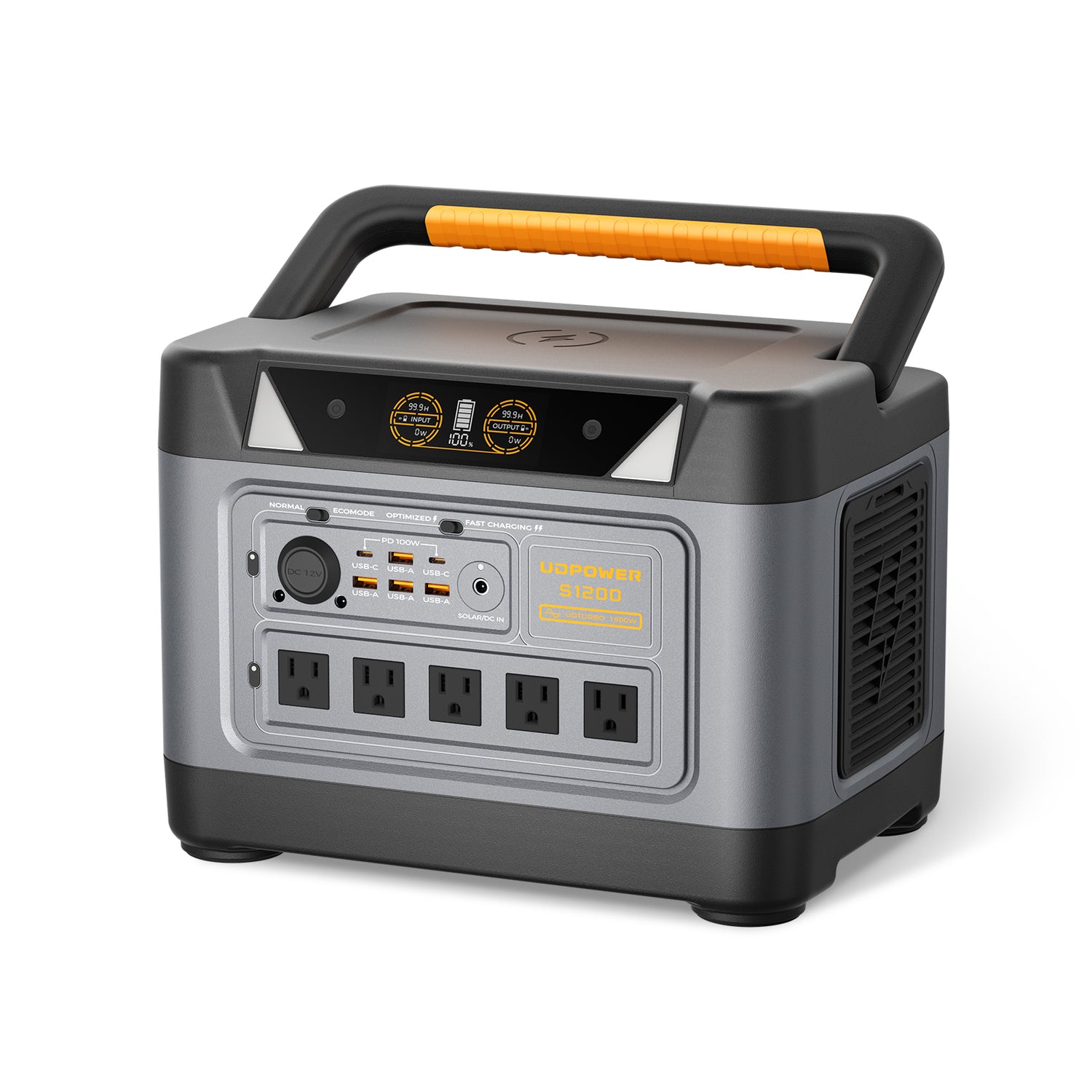
UDPOWER S1200: Best Balance for Weekend Camping
The S1200 provides more room for hot weather, repeated cooler openings and additional campsite devices without moving into a 2,000Wh-class battery.
- Battery capacity: 1,190Wh
- Rated AC output: 1,200W pure sine wave
- Surge support: up to 1,800W
- Battery chemistry: LiFePO4
- Weight: approximately 26 lb
- Estimated cooler runtime: about 43–107 hours at a measured 10–25W average draw
This is the more comfortable choice for a weekend with a compressor cooler, phones, camp lights, a fan or occasional laptop charging. Always subtract the energy used by other devices from the battery available to the cooler.
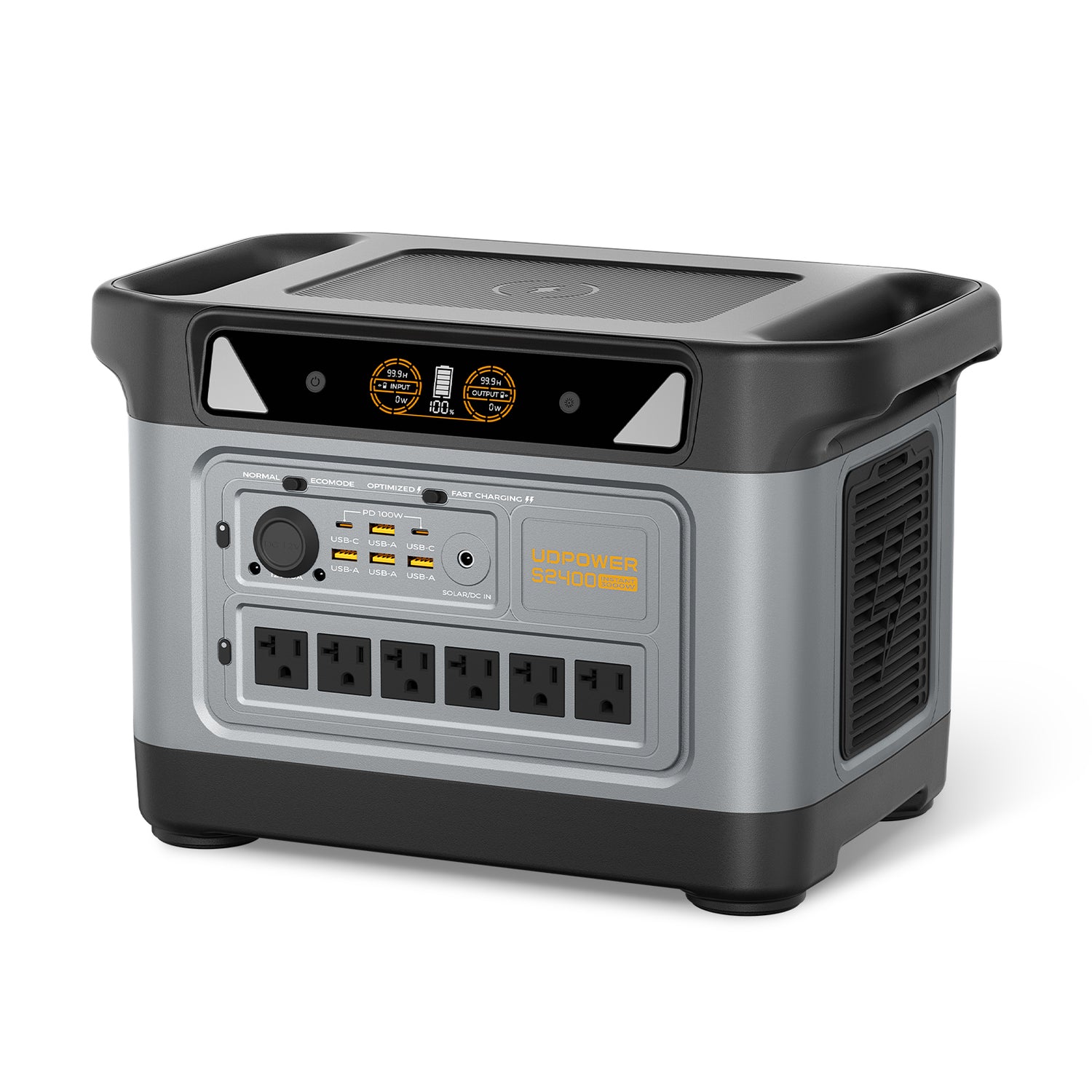
UDPOWER S2400: Best for Dual-Zone Coolers and Multi-Day Basecamps
The S2400 is better suited to a large compressor cooler, dual-zone refrigerator/freezer, hot-weather operation or a campsite where the cooler shares power with higher-demand equipment.
- Battery capacity: 2,083Wh
- Rated AC output: 2,400W pure sine wave
- Surge support: up to 3,000W
- AC outlets: 6
- Weight: approximately 40.8 lb
- Estimated cooler runtime: about 75–187 hours at a measured 10–25W average draw
Its larger battery also creates a better reserve for cloudy weather, delayed driving, warm groceries and power use after sunset.
Need a broader comparison? Visit the UDPOWER portable power station collection or the RV and camping power station page.
How to Measure Your Electric Cooler's Real Power Consumption
Manufacturer wattage is useful for checking compatibility, but a 24-hour energy measurement gives a much better runtime estimate.
1. Pre-cool the cooler and food at home
Starting with a warm cooler measures pull-down energy rather than normal holding energy. Pre-cooling also reduces battery use at the campsite.
2. Pack it as you would for the trip
Use the normal amount of food, drinks and cold packs. Set the same refrigerator or freezer temperature you intend to use.
3. Run it for at least 24 hours
Read total watt-hours from the power station display or an inline 12V energy meter. A 48-hour test provides a better sample when temperatures vary between day and night.
4. Calculate average watts
If the cooler uses 480Wh in 24 hours, its average load is 20W.
5. Size the battery with a reserve
Multiply measured daily energy by the number of off-grid days, then add at least a 20–30% reserve for heat, additional openings and unexpected delays.
| Test item | Your result | Why it matters |
|---|---|---|
| Ambient daytime temperature | _____ °F | Higher temperature normally increases compressor runtime. |
| Cooler set temperature | _____ °F | A freezer setting usually consumes more energy than refrigeration. |
| Test duration | _____ hours | Use at least 24 hours when possible. |
| Total energy used | _____ Wh | This is the most useful battery-sizing number. |
| Average power | _____ W | Total Wh divided by total hours. |
| Planned trip length | _____ days | Multiply daily use by off-grid days before adding reserve. |
What Determines How Long an Electric Cooler Stays Cold?
Ambient temperature
Heat must be removed from the cooler faster than it enters. A cooler sitting in 95°F air requires more energy than the same cooler operating at 70°F.
Direct sunlight and hot surfaces
Sunlight heats the lid and walls, while asphalt, truck beds and enclosed vehicle interiors can expose the cooler to temperatures far above the weather forecast.
Compressor or thermoelectric design
Compressor coolers normally use energy in cycles. Thermoelectric coolers commonly draw power continuously, which can reduce battery runtime even when their listed wattage appears modest.
Temperature setting
Holding drinks at 40°F takes less energy than keeping meat frozen near 0°F. A dual-zone unit running one refrigerator compartment and one freezer compartment may consume much more than a single-zone refrigerator.
Starting temperature
Cooling warm soda, groceries or recently cooked food can consume a large amount of the available battery. Electric coolers are most efficient when used to maintain already-cold contents.
Food quantity and thermal mass
A reasonably full cooler changes temperature more slowly than an empty one. However, blocking internal air vents can create warm spots, so leave the airflow path recommended by the manufacturer.
Lid openings
Each opening replaces some cold air with warm, humid air. Drinks are usually accessed more often than food, which is why separating them can noticeably reduce refrigerator energy use.
Door gasket and insulation condition
Dirt, damage or misalignment around the seal increases heat leakage. Inspect the gasket before a long trip and clean any debris from the sealing surface.
Condenser ventilation
Compressor and thermoelectric systems must release heat outside the cooler. Blocking the vents can increase power consumption, reduce cooling performance and cause protective shutdowns.
Battery temperature
Extreme heat and cold can reduce usable battery energy. Keep the power station dry, shaded and ventilated rather than placing it against the cooler's warm exhaust.
Other connected devices
A cooler may run for 40 hours by itself but much less when the same battery also powers a CPAP, fan, laptop, lights or coffee maker. Add the watt-hours for every device rather than considering them separately.
What Size Battery Do You Need for an Electric Cooler?
The best battery is not determined by cooler capacity in quarts. It is determined by measured watt-hours per day, trip duration and the availability of recharging.
| Trip or use case | Cooler type | Suggested battery class | Practical recommendation |
|---|---|---|---|
| Day trip or tailgate | Small thermoelectric or compressor cooler | Approximately 250–600Wh | Pre-chill everything and verify that the battery covers the full parked period. |
| Overnight car camping | Efficient single-zone compressor cooler | Approximately 500–700Wh | A C600-class battery is often practical when the cooler is the main load. |
| Two-night weekend | Small or mid-size compressor cooler | Approximately 1,000–1,200Wh | An S1200-class battery adds reserve for heat, lights and phone charging. |
| Three or more off-grid days | Compressor cooler | 1,200–2,000Wh plus recharging | Combine a larger station with solar or vehicle charging rather than relying only on stored energy. |
| Large dual-zone refrigerator/freezer | Dual-zone compressor | Approximately 2,000Wh or measured daily use × trip days | An S2400-class station is more suitable for high daily consumption and additional camp loads. |
| Emergency food protection at home | Portable cooler or refrigerator | Size from measured kWh per day | Keep ice packs ready and prioritize food loads over optional devices. |
For a complete camping energy budget, see How Many Wh Do I Need for Camping?
How to Keep an Electric Cooler Cold Longer
Before leaving home
- Run the cooler from wall power until it reaches the target temperature.
- Chill or freeze food and drinks before packing.
- Freeze water bottles to add cold thermal mass without loose meltwater.
- Measure the cooler's 24-hour energy use.
- Fully charge the portable power station.
- Confirm that all cables fit securely.
- Test whether the power station's ECO mode remains active while the compressor cycles off.
At the campsite
- Place the cooler in deep shade rather than inside a closed vehicle.
- Keep the exterior vents unobstructed.
- Do not place the power station in the cooler's hot exhaust airflow.
- Use the cooler's 12V cable when it is supported by both devices.
- Open the lid only when necessary.
- Keep frequently accessed drinks in a separate cooler.
- Monitor internal temperature with a thermometer.
- Recharge during the day instead of waiting for the battery to become nearly empty.
Use 12V DC when compatible
Many camping compressor coolers are designed to run directly from a 12V car-style outlet. Using the cooler's approved DC cable can avoid the additional step of converting battery DC power to AC and then back to DC through an adapter.
Check connector fit, voltage requirements and outlet limits before connecting. The UDPOWER C600 car outlet, for example, is rated up to 136W, which is above the normal operating draw of many portable coolers.
Use solar to replace daytime energy
Solar does not automatically make cooler operation unlimited. The panel must generate enough daily energy to replace the cooler's consumption plus conversion losses and other loads.
Explore UDPOWER solar generator kits or portable solar panels for daytime recharging options.
What Should You Do If the Cooler Loses Power?
- Keep the lid closed. Opening it to check the food releases cold air and shortens the remaining safe time.
- Check the internal thermometer. Battery percentage alone does not tell you whether food remains safe.
- Add frozen packs or ice. Place cold sources around the food without blocking the cooler's temperature sensor or airflow once power is restored.
- Move the cooler to shade. Avoid closed vehicles, direct sunlight and hot pavement.
- Restore an appropriate power source. Use wall, vehicle, solar-supported or portable-station power within the cooler manufacturer's requirements.
- Track time above 40°F. Discard perishable food that has remained above 40°F for two hours, or one hour in temperatures above 90°F.
Do not use smell or taste as a safety test
Food can contain unsafe bacterial growth without an obvious change in smell, appearance or taste. Temperature and time are the more reliable indicators.
Common Electric Cooler Mistakes
| Mistake | Why it reduces performance | Better approach |
|---|---|---|
| Loading room-temperature food immediately before leaving | The cooler spends substantial energy pulling the contents down to temperature. | Pre-chill food and the cooler overnight. |
| Using a thermoelectric cooler for meat in a hot vehicle | Its temperature is tied to ambient conditions and may remain above 40°F. | Use a compressor cooler and verify temperature with a thermometer. |
| Sizing the battery from maximum watts | Maximum watts do not show daily energy consumption. | Measure watt-hours over 24 hours. |
| Assuming a full battery equals a full weekend | Weather, freezer settings and other devices can consume more energy than expected. | Add a 20–30% reserve and a recharge plan. |
| Blocking the cooler's external vents | Trapped heat makes the system work harder and may trigger protection. | Follow the manufacturer's clearance requirements. |
| Leaving a vehicle outlet active while parked | The cooler may drain the vehicle starter battery. | Use a separate power station or a properly designed auxiliary battery system. |
| Using ECO auto-off without testing | A cycling compressor can temporarily draw almost no power, which some stations may interpret as inactivity. | Test before travel and use normal output mode if necessary. |
Frequently Asked Questions
How long will an electric cooler stay cold while plugged in?
It can stay cold continuously as long as it receives suitable power, operates within its environmental limits and can release heat through its vents. A wall outlet may provide effectively unlimited operation, while a battery is limited by its usable watt-hours.
How long does a 12V cooler stay cold after unplugging?
There is no universal time. Insulation, ambient temperature, food quantity, frozen packs and lid openings determine how quickly it warms. Monitor the interior with a thermometer and focus on the time it remains at or below 40°F.
Can an electric cooler run overnight?
Yes. Many compressor coolers can run overnight from a properly sized portable power station. A 596Wh station can provide about 21–54 hours for a cooler averaging 10–25W, assuming a 90% usable-capacity factor and no other loads.
How much power does an electric cooler use?
Many thermoelectric coolers use approximately 36–54W continuously. Portable compressor coolers may draw approximately 35–60W while actively cooling but average much less because the compressor cycles off after reaching the set temperature.
Does a compressor cooler use less battery than a thermoelectric cooler?
It often does over a full day. Although a compressor can draw more power at the moment it is running, it cycles off after reaching temperature. A thermoelectric cooler may continue drawing power nearly all the time.
Can an electric cooler keep food frozen?
A compressor cooler with a freezer-rated temperature range can keep food frozen when adequately powered. Most thermoelectric coolers are not designed to maintain freezer temperatures.
Will a thermoelectric cooler keep meat safe?
Only if its measured interior remains at or below 40°F. Because thermoelectric performance depends on ambient temperature, it may not hold a safe temperature in hot weather even though the contents feel cool.
Should I use the AC outlet or 12V outlet on a power station?
Use the cooler manufacturer's approved connection. When a compatible 12V cable is available, direct DC operation can avoid an additional AC conversion step. Confirm voltage, connector type, polarity and outlet limits first.
Can I leave an electric cooler plugged into my car overnight?
It may drain the vehicle's starter battery unless the outlet switches off with the ignition or the cooler has effective low-voltage protection. A separate portable power station is generally a more predictable option for parked overnight use.
Why did my power station turn off while the cooler was connected?
A compressor cooler cycles off after reaching temperature. If the power station is in an automatic low-load or ECO mode, it may interpret the temporary low draw as inactivity. Test the setup before travel and use the station's normal output mode when required.
How can I make my electric cooler battery last longer?
Pre-cool the cooler and food, keep it shaded, use the refrigerator setting instead of freezing when appropriate, minimize openings, maintain ventilation, use the approved 12V connection and recharge during daylight.
How many watt-hours do I need for a weekend cooler?
Measure the cooler's 24-hour consumption and multiply it by the number of days. Then add 20–30% reserve and the energy required by other devices. Efficient compressor coolers may need roughly 250–700Wh per day, but large or dual-zone models can use more.
Is a 500Wh power station enough for an electric cooler?
It may be enough for one night with an efficient compressor cooler. It may provide only about 8–11 hours for a thermoelectric cooler drawing around 48–54W continuously. Use the cooler's measured average draw for a dependable answer.
Can solar panels keep an electric cooler running indefinitely?
Only when daily solar production consistently replaces the cooler's consumption, conversion losses and other loads. Cloud cover, shade, panel angle, season and the power station's solar input limit must all be considered.
What temperature should an electric cooler be set to?
For general perishable-food storage, set the cooler so the actual food-area temperature remains at or below 40°F. A setting around 35–38°F can provide some margin, but confirm the result with a thermometer because displayed and food temperatures may differ.
Build a Cooler Power Setup That Matches Your Trip
Start with the cooler's measured watt-hours per day, add every other device, include a reserve, and choose a battery with enough capacity to reach your next reliable charging opportunity.
Calculation Method and Accuracy Note
Runtime estimates in this guide use:
These are planning estimates rather than guaranteed operating times. Actual results vary with battery state of charge, battery age, cable losses, output type, cooler model, thermostat cycling, ventilation, temperature setting, food load, weather and other connected devices.
For the most accurate result, measure the cooler's watt-hours over at least 24 hours under realistic conditions and retain a 20–30% energy reserve.
Sources
- U.S. Food and Drug Administration: Handling Food Safely While Eating Outdoors
- FoodSafety.gov: Keep Food Cool for the Summer
- U.S. Department of Energy: Thermoelectric Coolers
- Koolatron: 12V Thermoelectric Cooler FAQ
- Igloo: ICF Electric Cooler Energy Information
- Dometic: CFX3 Compressor Cooler Series
- UDPOWER C600 Official Specifications
- UDPOWER S1200 Official Specifications
- UDPOWER S2400 Official Specifications
Related Articles


