10 Best Off-Grid Communities: Cost, Rules, Membership, and How to Choose the Right Fit
ZacharyWilliamLast updated: May 14, 2026
Searching for the best off-grid communities usually means you are not just looking for a pretty cabin photo. You want to know which places are real, how people actually get in, what it costs, what daily life feels like, and whether you can test the lifestyle before selling everything you own.
This guide focuses on real off-grid, low-grid, and eco-community models that ordinary readers can research, visit, rent near, buy into, or apply to join. It also explains the less-glamorous details most listicles skip: governance, dues, infrastructure limits, internet, resale, trial stays, and backup power etiquette.
Quick Answer: What Are the Best Off-Grid Communities to Research First?
The strongest starting points are Greater World Earthship Community for Earthship-style homes, Three Rivers Recreation Area for a property-owner off-grid HOA, Dancing Rabbit and Earthaven for ecovillage life, Twin Oaks for income-sharing community living, Lasqueti Island for a whole-island off-grid lifestyle, Carmelita Gardens for warm-weather off-grid homes, and Rachel Carson EcoVillage for high-efficiency cohousing near a city.
The best fit depends less on which community sounds “most sustainable” and more on your personal constraints: budget, climate tolerance, work situation, medical access, family needs, social bandwidth, and how much shared decision-making you can realistically enjoy.

What Counts as an Off-Grid Community Today?
An off-grid community is not always a remote commune with no internet. In 2026, the term covers several different models:
- Fully off-grid neighborhoods where each home generates its own electricity and manages water or waste systems.
- Ecovillages that combine low-impact housing, shared land, gardens, workshops, and community governance.
- Income-sharing communities where members trade a conventional paycheck lifestyle for shared labor, housing, food, and community support.
- Low-energy cohousing communities that may still use some grid infrastructure but are designed to use far less energy than a conventional neighborhood.
- Off-grid rural towns or islands where homes are private, but the local culture expects self-reliance.
The main difference is ownership and responsibility. In a property-owner community, you buy land or a home and manage your own systems. In an ecovillage, you also join a social structure. In an income-sharing community, your money, labor, and daily schedule may be much more integrated with the group.
10 Best Off-Grid Communities: Quick Comparison
Use this table as a first-pass filter. Cost ranges can change quickly, so treat them as research starting points and confirm details directly with the community, local real estate listings, or the official membership contact.
| Community | Location | Best For | How You Usually Get In | Cost Reality | Official / Useful Source |
|---|---|---|---|---|---|
| Greater World Earthship Community | Taos, New Mexico | Earthship homes, desert solar living, alternative construction | Buy land, build, buy an existing Earthship, or test with a rental stay | Land plus specialty build costs; completed Earthships often price like custom homes | Earthship Biotecture buying info |
| Three Rivers Recreation Area | Central Oregon | Off-grid cabins, vacation homes, solar/wind/generator setups | Buy property inside the landowners’ association | Lots, cabins, and custom homes vary widely; HOA rules and road access matter | Three Rivers area overview |
| Dancing Rabbit Ecovillage | Rutledge, Missouri | Low buy-in ecovillage learning, natural building, shared sustainability culture | Visitor program, residency, then membership application after residency period | No big land purchase for most members; expect dues, lease/co-op fees, and housing costs | Residency and membership |
| Earthaven Ecovillage | Near Black Mountain, North Carolina | Permaculture, forest village life, off-grid systems, long-term community building | Visit, learn, join a membership path, pay fees, and secure housing or a site | Joining and commons fees plus housing, dues, neighborhood costs, and build costs | Earthaven cost page |
| Twin Oaks Community | Louisa, Virginia | Income-sharing, communal economics, long-running intentional community life | Three-week visitor period, then provisional/full membership process | No home purchase, but income and labor are shared under community systems | Twin Oaks official site |
| EcoVillage at Ithaca | Ithaca, New York | Low-energy cohousing, organic farms, community near a college town | Complete community process, then rent or buy when housing is available | More like market housing than a cheap land experiment; strong community participation expected | EVI sustainability overview |
| Emerald Earth Sanctuary | Mendocino County, California | Natural building, small-scale off-grid education, land-based community | Case-by-case involvement through stays, workshops, work-trade, or direct contact | Less standardized than a real estate purchase; current opportunities may change | GEN listing |
| Lasqueti Island | British Columbia, Canada | Whole-island off-grid life, private land, remote coastal independence | Buy or rent privately and integrate into the island community | Private real estate plus ferry, supply, water, power, and remote-living logistics | Natural Resources Canada profile |
| Carmelita Gardens | Cayo District, Belize | Warm-weather off-grid homes, solar/rainwater systems, expat-friendly living | Buy a lot or home, then plan around residency, taxes, healthcare, and travel | International move costs matter as much as the home price | Carmelita Gardens official site |
| Rachel Carson EcoVillage | Near Pittsburgh, Pennsylvania | All-electric high-performance homes, cohousing, low energy bills near a city | Inquirer, Explorer, then Founder or resident path depending on availability | Home purchase or rental path; monthly maintenance fees and volunteer participation expected | Membership overview |
Tip: If you are only beginning, do not start by asking “Which one is cheapest?” Start by asking “Which one can I visit, understand, and leave safely if it is not a fit?”
Which Community Type Fits You?
The same “off-grid” label can describe very different lives. Use this fit table before getting attached to a location.
| If You Want... | Look First At... | Why It Fits | Potential Deal Breaker |
|---|---|---|---|
| Private ownership with neighbors nearby | Greater World, Three Rivers, Carmelita Gardens, Lasqueti Island | You can own or control your home while still benefiting from an off-grid culture. | You carry more responsibility for power, water, repairs, transportation, insurance, and resale. |
| Hands-on ecovillage learning | Dancing Rabbit, Earthaven, Emerald Earth | Better for people who want gardening, building, shared governance, and ecological learning. | Meetings, workdays, visitor steps, and social norms may feel intense if you want privacy. |
| Lower cash buy-in | Dancing Rabbit, Twin Oaks, work-trade style communities | You may avoid a major land purchase while testing the lifestyle. | Lower cash cost can mean more shared labor, fewer private assets, or less conventional independence. |
| Community living without being far from services | EcoVillage at Ithaca, Rachel Carson EcoVillage | You get community structure and efficient homes while staying closer to healthcare, schools, and jobs. | These are not always “fully off-grid”; they are better described as low-energy or renewable-ready cohousing. |
| Remote island or international lifestyle | Lasqueti Island, Carmelita Gardens | Good for people who value independence, climate, and adventure more than convenience. | Supply runs, healthcare access, residency rules, taxes, storms, and internet reliability require serious planning. |
How Membership and Costs Usually Work
Most mistakes happen when people confuse “off-grid” with “low-cost.” Some communities are affordable because they share labor and resources. Others are expensive because every home needs specialized power, water, heating, septic, road, and building systems.
| Model | Typical Entry Path | Common Costs | Best For | Watch Out For |
|---|---|---|---|---|
| Property-owner off-grid HOA | Buy a lot, cabin, or home | Purchase price, HOA dues, road access, batteries, solar, water, septic, repairs | People who want privacy and ownership | Remote insurance, fire risk, winter access, generator noise rules, resale limits |
| Ecovillage membership | Visit, apply, become resident, then member | Visitor fees, joining fees, commons fees, dues, co-op fees, rent or build costs | People who want shared land, shared culture, and sustainability learning | Governance fatigue, conflict resolution, unclear housing availability |
| Income-sharing community | Visitor period, acceptance, provisional membership | Usually low cash buy-in, but income and work are shared | People who want communal economics, not private equity | Leaving may mean limited financial buildup compared with owning a home |
| Cohousing / low-energy village | Orientation, membership process, buy or rent a unit | Unit purchase or rent, monthly maintenance fees, common-house expenses | People who want community plus nearby services | Not always fully off-grid; rules and fees can resemble condominium living |
| Remote private community | Buy or rent privately and integrate locally | Land/home, ferry or road logistics, local contractor scarcity, backup power, storage | Independent households with practical skills and strong planning habits | Isolation, weather, medical access, delivery delays, supply-chain friction |
Community Profiles: Membership, Cost, and Reality Check
1. Greater World Earthship Community — Taos, New Mexico
Best for: people drawn to Earthship design, passive solar homes, water catchment, desert resilience, and alternative building culture.
Greater World is the best-known Earthship neighborhood near Taos. It is useful for beginners because you can tour, rent, and learn before considering land or a finished home. Earthship Biotecture lists land and buying information for people who want to build or purchase in the community.
- Entry path: visit, tour, rent, research land or resale homes, then plan a build or purchase.
- Cost reality: do not assume “recycled materials” means cheap. Specialized labor, permitting, land, water systems, and finish quality can push total costs into custom-home territory.
- Reality check: high-desert living means sun, wind, temperature swings, water discipline, and a very different maintenance mindset.
2. Three Rivers Recreation Area — Central Oregon
Best for: buyers who want a private cabin or vacation home in a true off-grid HOA setting.
Three Rivers Recreation Area is often described as a private, gated, off-grid community of roughly 4,000 acres in Central Oregon. Homes commonly rely on solar, wind, propane, generators, and battery systems rather than conventional utility power.
- Entry path: buy property in the community and follow the landowners’ association rules.
- Cost reality: small lots, older cabins, improved properties, and custom homes can sit in very different price bands.
- Reality check: ask about road maintenance, winter access, fire response, water hauling or wells, generator rules, battery age, and who maintains the solar system.
3. Dancing Rabbit Ecovillage — Rutledge, Missouri
Best for: people who want to learn by living inside an ecovillage before making a large land purchase.
Dancing Rabbit has one of the clearer public paths for people who want to explore residency. The community describes a path that can include visiting, residency, and eventual membership after a residency period. Its cost-of-living information also makes it easier to see that low buy-in does not mean zero expenses.
- Entry path: visitor program, residency, then membership application after the required residency period.
- Cost reality: expect co-op fees, land lease or housing costs, and member dues based on income rather than a conventional home purchase model.
- Reality check: this is a social system as much as an energy system. Your ability to communicate, compromise, and participate matters.
4. Earthaven Ecovillage — Near Black Mountain, North Carolina
Best for: people serious about permaculture, shared land, hands-on infrastructure, and Appalachian forest living.
Earthaven publishes a formal cost page and membership information. As of the latest public information reviewed, Earthaven lists one-time joining and commons fees, with flexible payment options and amounts adjusted over time. That transparency makes it easier to budget compared with many informal projects.
- Entry path: visit, learn through programs or stays, become accepted into the membership path, then secure a site or housing arrangement.
- Cost reality: budget for membership fees, dues, housing, neighborhood costs, tools, transport, and possible build expenses.
- Reality check: a forest ecovillage is not just a scenic lifestyle. Expect mud, maintenance, meetings, seasonal work, and shared responsibility.
5. Twin Oaks Community — Louisa, Virginia
Best for: people who are genuinely curious about income sharing, communal labor, and a long-running intentional community.
Twin Oaks is not a typical “buy a cabin and install solar” route. It is an income-sharing community where members contribute labor and receive community-provided basics. The official site states that members work in community business and domestic areas and receive housing, food, healthcare, and personal spending money.
- Entry path: complete the visitor program, then apply through the community’s membership process.
- Cost reality: no conventional home purchase, but you are entering a shared economic system.
- Reality check: this is the wrong choice if your main goal is private equity, complete schedule independence, or conventional ownership.
6. EcoVillage at Ithaca — Ithaca, New York
Best for: readers who want strong community design, green building, farms, and access to a town rather than a remote survivalist lifestyle.
EcoVillage at Ithaca is better described as low-energy cohousing than a fully off-grid settlement. Its value is the combination of passive solar design, green buildings, shared land, and community structure near Ithaca.
- Entry path: learn about the community, visit or attend events, complete the process required to rent or buy when units become available.
- Cost reality: resale and rental availability can be limited, and prices may track the local housing market.
- Reality check: it is a strong model for sustainable neighborhood design, not necessarily the right fit for someone who wants total independence from systems and neighbors.
7. Emerald Earth Sanctuary — Mendocino County, California
Best for: people drawn to natural building, land-based learning, and small-scale off-grid culture.
Emerald Earth is a small intentional community and education hub. Its own website notes that it has been updating site information, so treat public details as a starting point and contact the community directly for current opportunities.
- Entry path: case-by-case involvement through contact, events, stays, workshops, or work-trade opportunities when available.
- Cost reality: less standardized than buying a property in an HOA; costs depend on the arrangement.
- Reality check: small communities can be rewarding but fluid. Always verify current resident capacity, expectations, and legal housing arrangements.
8. Lasqueti Island — British Columbia, Canada
Best for: independent households who want a real remote-island off-grid lifestyle, not a formal membership community.
Lasqueti Island is not one organization you apply to join. It is a rural island community known for being outside the conventional hydro grid. Natural Resources Canada describes Lasqueti as a remote island with a population of about 400 and no hydro grid or natural gas service.
- Entry path: buy or rent privately, visit in multiple seasons, and integrate respectfully with local residents.
- Cost reality: real estate is only the first line item. Budget for ferry logistics, fuel, solar/battery systems, tools, storage, repairs, and emergency planning.
- Reality check: remote island life rewards self-sufficiency but punishes poor planning. Test winter, storms, internet, and supply runs before committing.
9. Carmelita Gardens — Cayo District, Belize
Best for: people considering a warm-weather off-grid home with solar power, rainwater systems, and a planned village feel.
Carmelita Gardens positions itself as a master-planned Belize community with off-grid living, solar energy, rainwater collection, and eco-septic systems. It is attractive because it offers a more structured path than trying to invent a tropical homestead alone.
- Entry path: choose a lot or home, visit in person, confirm legal ownership, and plan around residency, healthcare, taxes, and travel.
- Cost reality: international living costs are not just home prices. Add flights, legal advice, insurance, medical access, banking, and backup funds.
- Reality check: do not buy based on vacation energy. Visit in hotter, wetter, and less tourist-friendly conditions before deciding.
10. Rachel Carson EcoVillage — Near Pittsburgh, Pennsylvania
Best for: people who want high-efficiency homes, cohousing, shared values, and access to city services.
Rachel Carson EcoVillage is not a remote off-grid wilderness community. It is included because many readers searching “off-grid communities” are actually looking for a lower-energy, lower-isolation way to live with community support. Its official materials describe a three-stage path to membership and high-performance all-electric homes designed for very low energy use.
- Entry path: start as an Inquirer, become an Explorer, then move toward Founder or resident options if available.
- Cost reality: expect home purchase or rental costs, monthly maintenance fees, and volunteer participation.
- Reality check: this is best for people who want community and efficiency, not total separation from modern infrastructure.
Trial-Stay Checklist Before You Commit
A trial stay is not a vacation. Treat it like a due-diligence trip. You are testing comfort, community, infrastructure, money, and your own expectations.
| What to Test | What to Observe | Why It Matters |
|---|---|---|
| Power | Battery capacity, solar input, generator hours, quiet hours, shared-grid rules | Energy limits affect sleep, remote work, food storage, medical devices, and comfort. |
| Water | Rainwater, wells, hauling, filtration, seasonal shortages, hot-water limits | Water discipline is often harder than power discipline for beginners. |
| Internet | Actual upload speeds, video-call reliability, storm performance, data limits | Remote work fails quickly if internet is “usually fine” but not dependable. |
| Transportation | Road conditions, ferry schedules, winter closures, vehicle wear, fuel access | A cheap property can become expensive if every supply run is difficult. |
| Community governance | Meeting frequency, decision rules, conflict process, labor expectations | Most people leave communities for social reasons, not solar-panel reasons. |
| Exit path | Resale, lease transfer, refund rules, waiting lists, leaving income-sharing membership | A good plan includes how to leave without financial damage. |
Portable Power Setup for Off-Grid Scouting and Trial Stays
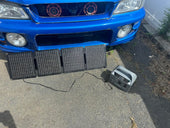
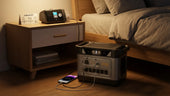
When you visit an off-grid community, bringing your own quiet power source is both practical and respectful. Shared systems may be reserved for residents, tools, refrigeration, pumps, or common buildings. A portable power station lets you run personal essentials without asking the community to carry your load.
For a simple runtime estimate, use this field rule: usable hours ≈ battery watt-hours × 0.85 ÷ device watts. The 0.85 factor accounts for typical inverter and conversion losses. Actual runtime depends on device cycling, temperature, battery condition, and whether you are using AC or DC output.
| Use Case | Typical Loads | Recommended UDPOWER Setup | Why |
|---|---|---|---|
| Weekend scouting trip | Phone, camera, small light, laptop top-ups | C400 + 120W solar panel | Light enough for travel, strong enough for laptops, lights, and small electronics. |
| Visitor cabin or work-trade stay | Laptop, router, fan, CPAP, small fridge | C600 + 120W solar panel | 596Wh capacity and 600W AC output cover the most common small off-grid loads. |
| Longer trial stay or RV base camp | Router, lights, fridge, Starlink-style internet, tool charging | S1200 + 120W or higher compatible solar input | About 1,190Wh class capacity, 1,200W AC output, UPS mode, and up to 400W solar input. |
| Extended cabin support | Multiple appliances, work setup, fridge, power tools, backup internet | S2400 + compatible solar panels | 2,083Wh capacity, 2,400W AC output, 6 AC outlets, and UPS mode for heavier off-grid use. |
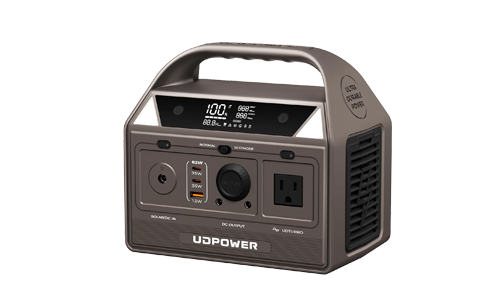
UDPOWER C400 Portable Power Station

Best for: scouting trips, car camping, short visitor stays, laptop work, camera charging, lights, and small 12V gear.
- Capacity: 256Wh
- AC output: 400W pure sine wave, 800W surge
- Weight: approximately 6.88 lb
- Solar charging input: 150W max
- Battery: LiFePO4, 80%+ capacity after 3,000 cycles
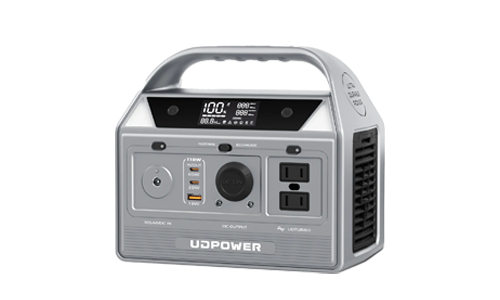
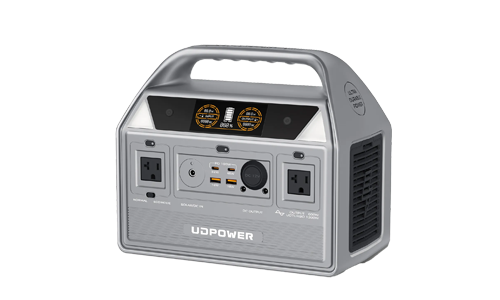
UDPOWER C600 Portable Power Station

Best for: visitor cabins, CPAP backup, router and laptop work, small fridge support, and longer weekend stays.
- Capacity: 596Wh
- AC output: 600W pure sine wave, 1,200W max
- Weight: 12.3 lb
- Solar charging input: 240W max
- Battery: LiFePO4, 80%+ capacity after 3,000 cycles
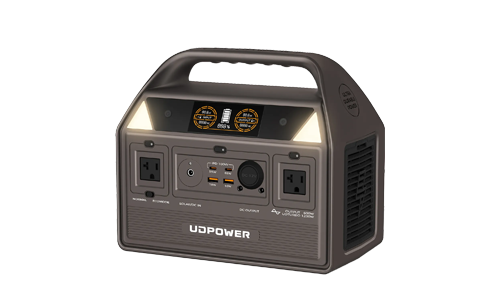
UDPOWER S1200 Portable Power Station
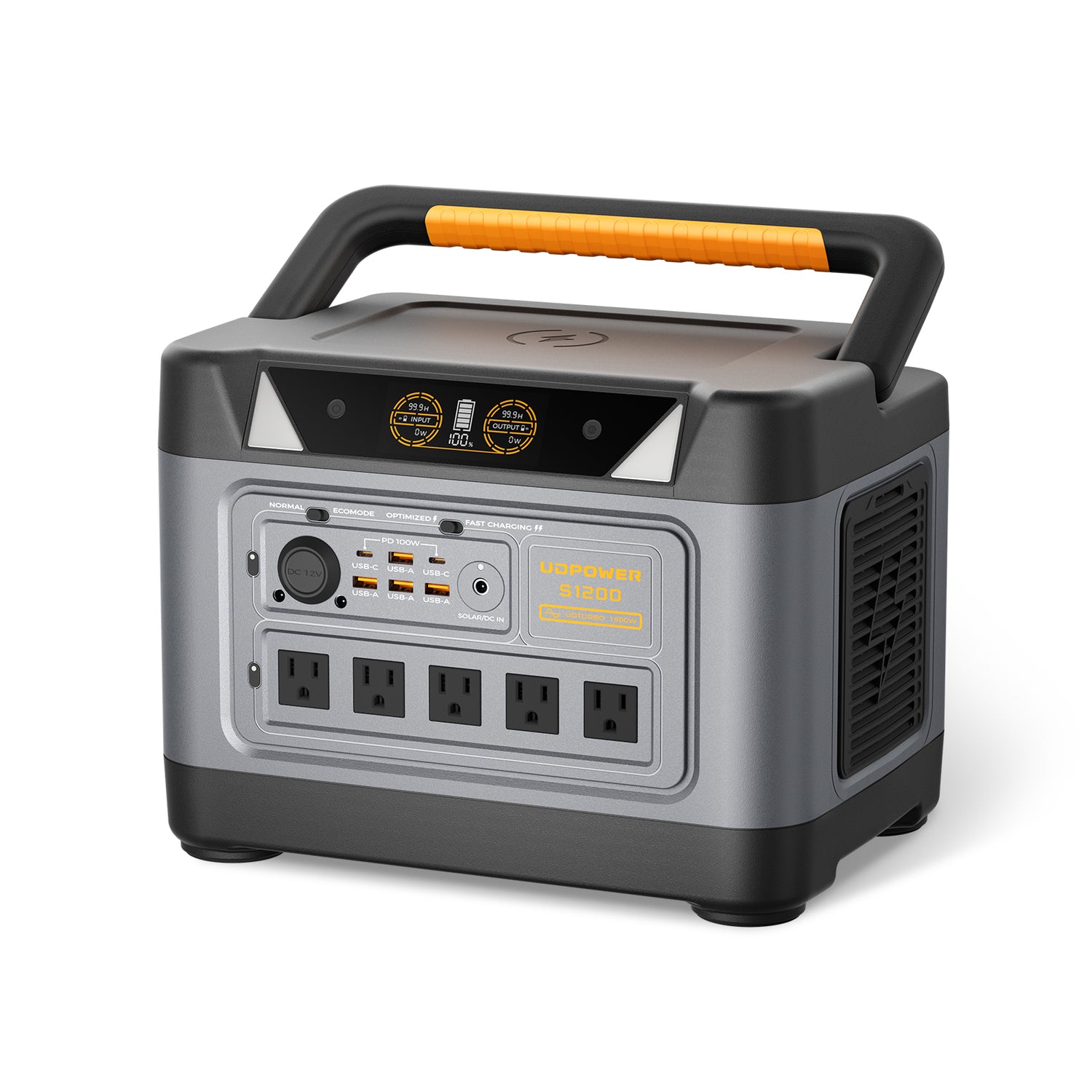
Best for: off-grid RV base camps, visitor cabins, internet backup, small appliances, and higher-demand trial stays.
- Capacity: about 1,190Wh class / official listing around 1,191Wh
- AC output: 1,200W pure sine wave, 1,800W max
- Weight: approximately 26.0 lb
- Solar charging input: 12V–75V, 12A, 400W max
- UPS mode: response time ≤10ms
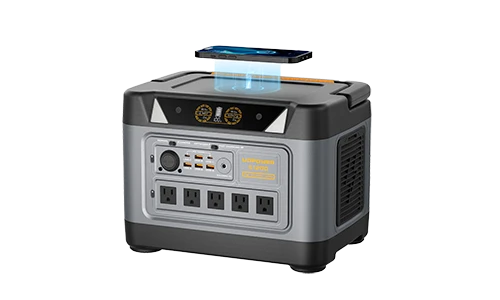
UDPOWER S2400 Portable Power Station
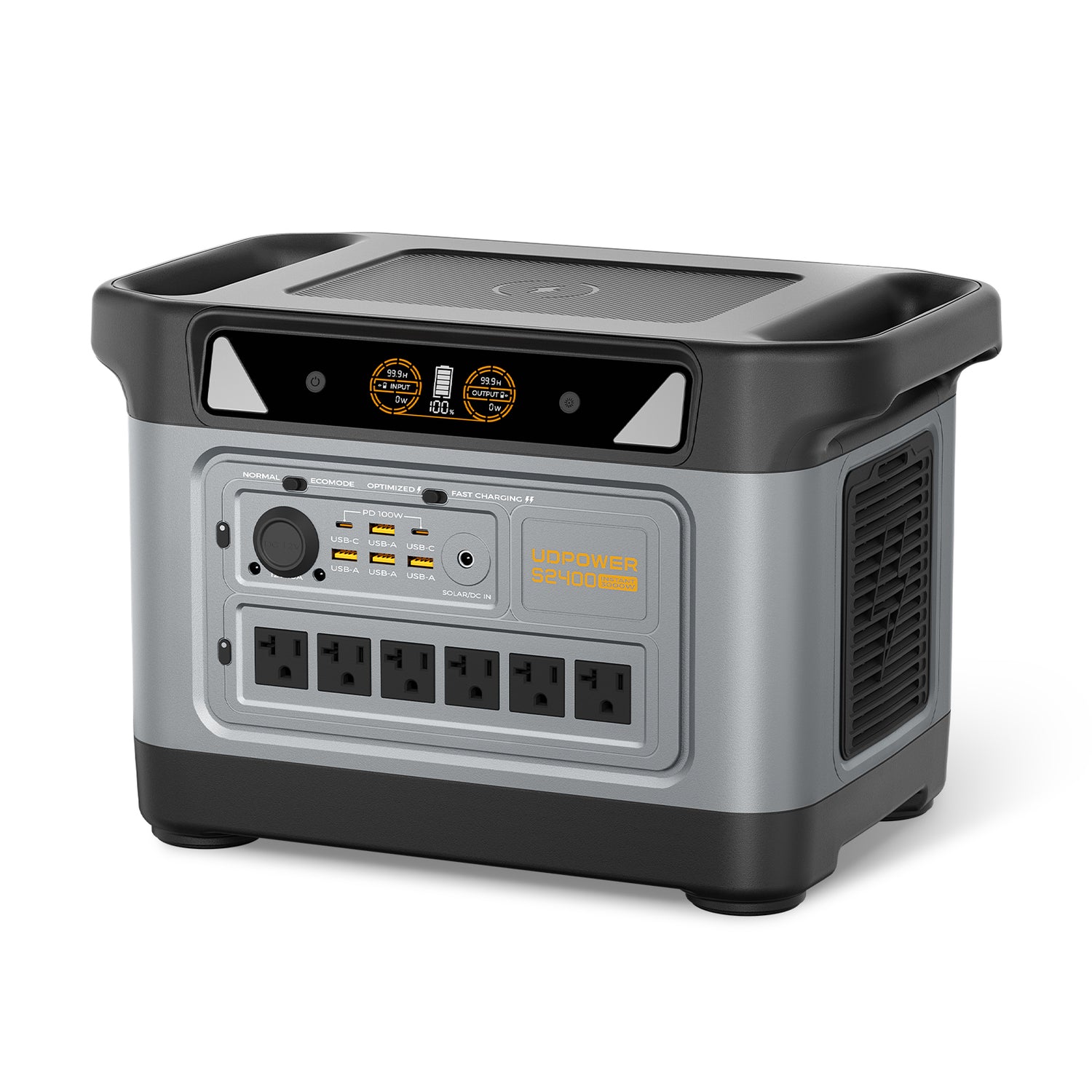
Best for: extended cabin support, larger appliance loads, multiple outlets, tool charging, and backup power for serious off-grid use.
- Capacity: 2,083Wh
- AC output: 2,400W pure sine wave, up to 3,000W instantaneous peak for startup surges
- Weight: approximately 40.8 lb
- AC outlets: 6
- UPS mode: response time ≤10ms
UDPOWER 120W Portable Solar Panel
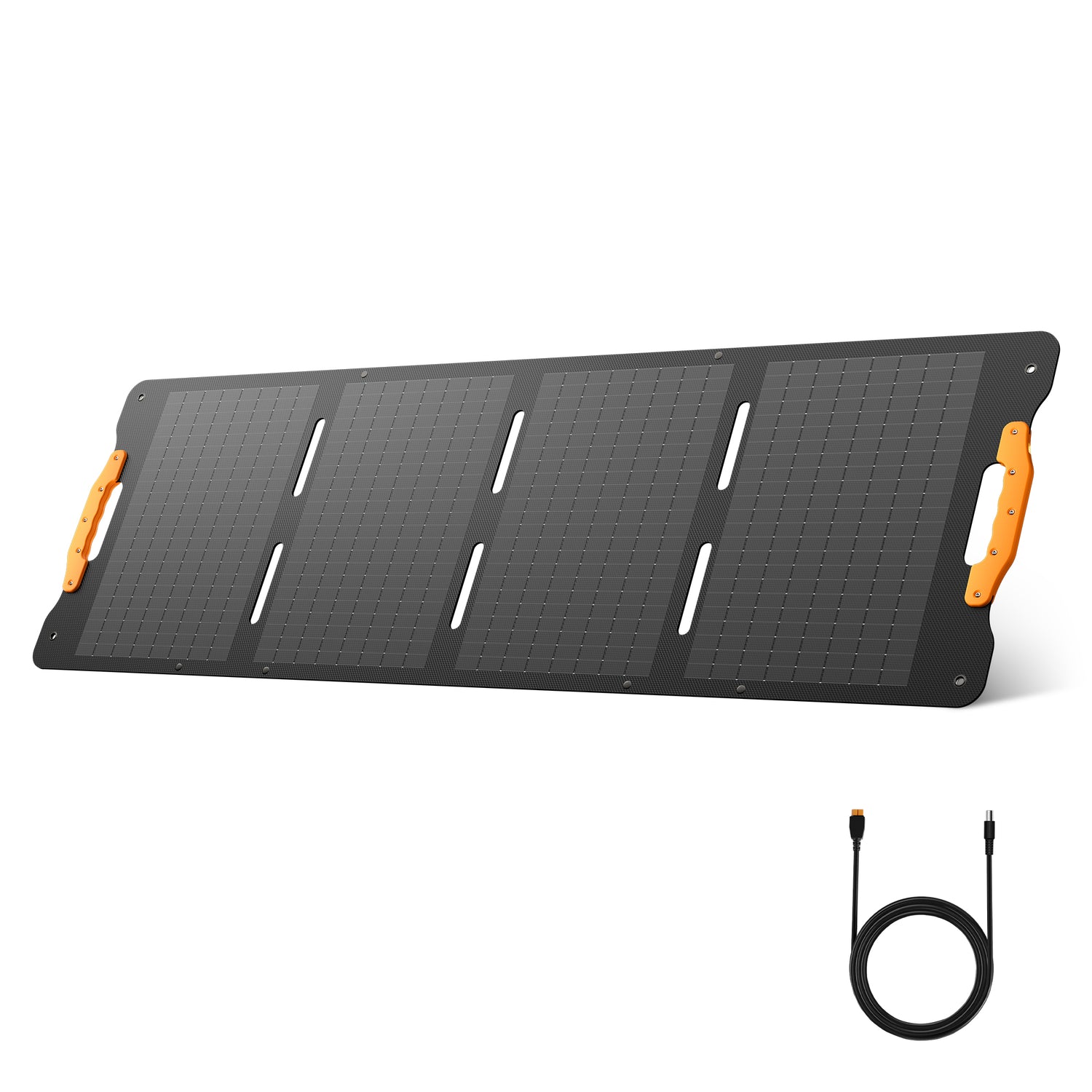
Best for: topping up a portable power station during daytime visits, camping trips, RV stops, and emergency backup use.
- Rated power: 120W
- Open circuit voltage: 21.5V
- Maximum power voltage: 17.92V
- Efficiency: ≥22%
- Waterproof class: IP65
Questions to Ask Before Joining Any Off-Grid Community
Good communities will not be offended by practical questions. They will usually appreciate that you are doing real due diligence.
| Category | Ask This | Green Flag | Red Flag |
|---|---|---|---|
| Membership | What are the exact steps from visitor to resident to member? | Clear written process and realistic timelines. | Vague promises, pressure to commit quickly, or no written policy. |
| Money | What are all upfront fees, monthly dues, deposits, and refund rules? | Transparent cost sheet and explanation of where money goes. | Hidden “contributions,” unclear equity, or pressure to wire money before visiting. |
| Housing | Can I rent first, and what happens if I leave? | Trial options, resale rules, and examples of past transitions. | No clear exit path or unrealistic resale assumptions. |
| Power | Who owns and maintains solar, batteries, generators, inverters, and wiring? | Documented system ownership and maintenance responsibilities. | Old batteries, no maintenance logs, unsafe wiring, or “someone handles it” answers. |
| Governance | How are conflicts handled? | Clear conflict process, meeting norms, and decision rules. | People avoid the question or blame past members. |
| Daily life | What do new members usually struggle with after six months? | Honest answers about work, privacy, weather, money, and communication. | Only idealized answers with no mention of trade-offs. |
Build Your Off-Grid Power Plan Before You Visit
Before you commit to land, a community, or a long trial stay, make a simple power list: phone, laptop, router, fan, CPAP, fridge, lights, tools, and any medical or work equipment you cannot be without. Then match that list to a portable power station and compatible solar panel instead of guessing.
Off-Grid Community FAQs
Are off-grid communities legal in the United States?
Yes, but legality depends on county zoning, building codes, septic rules, water rights, fire codes, and whether you are using a permitted home, RV, tiny home, or alternative structure. Always check local rules before buying land.
How much does it cost to join an off-grid community?
It can range from a short visitor fee or low monthly dues to the full cost of buying land, building a home, or purchasing a high-performance cohousing unit. The cheapest cash path is not always the easiest life path because it may require more labor, shared decision-making, or fewer ownership rights.
Can I join an off-grid community with no experience?
Often yes, especially if you are willing to learn and contribute. Useful beginner skills include cooking, gardening, cleaning, childcare, bookkeeping, remote work, carpentry basics, solar basics, and respectful communication.
What is the easiest way to test off-grid community life?
Start with a tour, workshop, rental stay, volunteer stay, or visitor program. Avoid making a home purchase before you have experienced the community in normal weather, not just during a festival, open house, or perfect weekend.
Do off-grid communities have internet?
Many do, but quality varies. Some use satellite internet, fixed wireless, cellular, fiber nearby, or community networks. If you work online, test upload speed, video calls, power reliability, and bad-weather performance before committing.
Can families with children live in off-grid communities?
Yes, but you need to ask about schooling, safety, healthcare access, other families, transportation, child-friendly work expectations, and winter logistics. Talk to current parents whenever possible.
What should I bring for an off-grid community visit?
Bring layered clothing, a headlamp, work gloves, sturdy shoes, medications, offline maps, a notebook, reusable water bottle, personal power bank, and a portable power station if you need dependable power for work or medical devices.
Is an off-grid community the same as a commune?
No. Some are income-sharing communes, but many are private landowner associations, cohousing neighborhoods, rural islands, or planned eco-villages. The ownership and governance model matters more than the label.
What is the biggest reason people leave off-grid communities?
People often leave because of social fit, money, workload, family needs, climate, isolation, or mismatch between expectations and daily reality. Power systems and gardens are important, but long-term fit usually depends on relationships and practical routines.
Do I need a portable power station if the community already has solar?
It is still useful. Your own power station can run personal essentials, reduce pressure on shared systems, support travel days, and provide backup during maintenance, low-sun periods, or generator quiet hours.