What Is a Power Generating Station? A Practical Guide for Homes, Businesses, and Backup Power Planning
ZacharyWilliamLatest update: May 15, 2026
A power generating station is where electricity begins. It may be a natural gas plant outside a city, a hydroelectric dam, a wind farm, a solar farm, a nuclear plant, or a smaller distributed energy system tied into a local grid. The job is the same: convert an energy source into usable electrical power and deliver it safely where people need it.
This guide explains the idea in plain English, then connects it to the questions most people actually have: how power stations work, why electricity travels at high voltage, what different plant types are good at, and how this topic relates to portable power stations and solar generators for home backup.
Quick Answer
A power generating station, also called a power plant or power station, is a facility that converts a primary energy source into electricity. In many plants, fuel, steam, moving water, or wind spins a turbine connected to a generator. Solar photovoltaic plants work differently: solar panels create direct current electricity, then inverters convert it into grid-compatible alternating current.
For everyday readers, the key idea is simple: a generating station creates electricity; a battery power station stores electricity for later use. That difference matters when you are choosing backup power for outages, camping, RV travel, CPAP use, refrigerators, routers, or small appliances.

What Does “Power Generating Station” Mean?
A power generating station is not just a building with big machines inside. It is a full system built to do five things reliably:
- Take in an energy source, such as natural gas, coal, uranium, sunlight, wind, flowing water, biomass, geothermal heat, or stored water in a pumped-hydro system.
- Convert that energy into electricity, usually through a turbine and generator, or through solar panels and inverters.
- Control voltage and frequency so the electricity matches grid requirements.
- Send power into transmission or distribution lines so it can reach homes, businesses, factories, hospitals, and data centers.
- Adjust output as demand changes, because electricity use rises and falls throughout the day.
The simplest way to picture it
Energy source → conversion equipment → generator or inverter → transformer → power lines → your outlet.
That chain is why your home can use a toaster, refrigerator, router, or EV charger without thinking about what kind of plant produced the electricity upstream.
In the United States, electricity still comes from a mix of sources. The U.S. Energy Information Administration reported that natural gas was the top source of utility-scale electricity generation in 2025 at about 41%, renewables supplied about 24%, and nuclear supplied about 18%. The U.S. also reached a record 4.43 thousand terawatt-hours of electricity generation in 2025, showing how central electricity has become to daily life, heating, cooling, industry, data centers, and transportation.
| Question | Plain-English answer | Why it matters |
|---|---|---|
| Is a power generating station the same as a power plant? | Yes. In everyday use, “power generating station,” “power station,” and “power plant” usually mean the same thing. | Search results and utility documents may use different names for the same concept. |
| Does every power station burn fuel? | No. Natural gas, coal, biomass, and oil plants burn fuel, but hydro, wind, solar, nuclear, and geothermal plants use different conversion methods. | The fuel source affects emissions, cost, reliability, startup time, and location. |
| Does a solar farm have a generator? | Not in the same rotating-machine sense. Solar panels create DC electricity; inverters convert it to AC for the grid. | This is why solar power stations look different from turbine-based plants. |
| Can a portable power station generate electricity? | By itself, no. A portable power station stores electricity in a battery. When paired with solar panels, the panel generates power and the station stores and delivers it. | This helps customers understand the difference between a power plant, a gas generator, and a battery power station. |
How a Power Generating Station Works
Most power generating stations follow the same basic logic: turn one kind of energy into another until it becomes electricity. The details change by plant type, but the flow is easy to understand.
| Step | What happens | Example | Source |
|---|---|---|---|
| 1. Energy source enters the system | The station receives fuel, sunlight, wind, moving water, geothermal heat, or nuclear heat. | Natural gas enters a turbine plant; water flows through a hydro station; sunlight hits solar panels. | EIA: How electricity is generated |
| 2. Energy is converted into motion, heat, or electric current | Many stations create mechanical motion by spinning a turbine. Solar photovoltaic plants create DC electricity directly. | Steam spins a turbine in a nuclear or coal plant; wind spins turbine blades; solar panels create DC power. | EIA: Generator basics |
| 3. A generator or inverter prepares electricity | A rotating generator produces electricity through electromagnetic induction, while solar inverters convert DC to AC. | A gas turbine drives a generator; a solar farm uses inverters before grid connection. | EIA: Electric generators |
| 4. Voltage is stepped up | Transformers raise voltage so electricity can travel long distances more efficiently. | Power leaves the plant at high voltage before entering long-distance transmission lines. | EIA: Delivery to consumers |
| 5. Electricity is transmitted and distributed | High-voltage lines move power across long distances; local distribution systems step it down for homes and businesses. | Your neighborhood transformer reduces voltage before electricity reaches household outlets. | EIA: Transmission and distribution |
The generator is the heart of many power stations
In many plants, electricity is produced when a magnetic field and conductor move relative to each other. That is the basic principle behind most electric generators. The turbine can be driven by steam, combustion gas, water, wind, or another mechanical source. The generator then converts that motion into electrical energy.
Solar power stations are the major exception
Solar photovoltaic plants do not need steam, combustion, or a spinning turbine to make electricity. Panels produce DC electricity from sunlight, and inverters convert it to grid-ready AC. That is also the idea behind many portable solar generator kits: the solar panel creates power, while the portable power station stores it and delivers it through AC, USB, and DC outputs.
Major Types of Power Generating Stations
No single power station type is perfect. Some are better for steady 24/7 output, some respond quickly to changing demand, and some produce electricity without direct fuel combustion. The grid works because different plant types cover different jobs.
| Type | Primary energy source | How electricity is made | Strengths | Trade-offs | Everyday takeaway |
|---|---|---|---|---|---|
| Natural gas plant | Natural gas | Gas turbine or steam cycle drives a generator. | Flexible output, widely used in the U.S., often faster to ramp than coal or nuclear. | Produces CO₂ and depends on fuel supply. | Often helps meet daily peaks when demand rises. |
| Coal plant | Coal | Coal heats water into steam, steam spins a turbine, turbine drives a generator. | Large, dispatchable power output. | Higher air emissions and slower startup; many regions are reducing coal use. | Still part of the grid, but less dominant than in past decades. |
| Nuclear plant | Uranium fuel | Nuclear fission creates heat; heat makes steam; steam drives a turbine generator. | Very high output, low direct carbon emissions, strong baseload role. | High construction cost, long project timelines, strict safety requirements, waste management. | Usually runs steadily rather than switching on and off quickly. |
| Hydroelectric station | Moving or stored water | Water flows through turbines connected to generators. | Renewable, fast response, useful for grid balancing where geography allows. | Requires suitable water resources; can affect ecosystems and river systems. | One of the easiest plant types to visualize: moving water turns machinery. |
| Wind farm | Wind | Wind turns turbine blades, which drive a generator. | No fuel cost, renewable, scalable onshore or offshore. | Output changes with wind conditions and needs grid balancing. | Great when windy, but not always available on demand. |
| Solar photovoltaic station | Sunlight | Solar panels produce DC electricity; inverters convert it to AC. | No fuel cost, quiet, modular, fast to deploy. | Output depends on sunlight; storage is often needed for nighttime use. | The same concept powers portable solar charging kits, just at a different scale. |
| Geothermal plant | Heat from the earth | Underground heat creates steam or hot fluid that drives generation equipment. | Steady renewable output in suitable locations. | Geographically limited and can require complex drilling. | Useful where underground heat resources are strong. |
| Battery energy storage station | Stored electricity | Batteries charge from the grid or renewable generation, then discharge through inverters. | Fast response, helps stabilize the grid, stores solar/wind energy. | Limited duration compared with fuel-based plants; needs charging source. | This is the utility-scale cousin of a home portable power station. |
What most articles miss
The real question is not “which power station type is best?” It is “what job does the grid need at this moment?” A hot summer afternoon, a calm winter night, a cloudy week, and a sudden outage all stress the grid in different ways. That is why generation, storage, transmission, and local backup all matter.
How Electricity Gets From the Station to Your Home
A power generating station usually does not send electricity straight to your wall outlet at household voltage. It first sends power through a grid system designed for distance, safety, and efficiency.
- Generation: The power station produces electricity.
- Step-up transformer: Voltage is raised for efficient long-distance transmission.
- Transmission lines: High-voltage lines move bulk power across long distances.
- Substation: Voltage is reduced for regional and local distribution.
- Distribution lines: Local lines deliver power to neighborhoods, businesses, and homes.
- Service transformer: Voltage is stepped down again before entering your building.
That system is why a storm-damaged distribution line can cause a local outage even when power plants are still producing electricity. Your home depends not only on generation, but also on the wires, transformers, substations, and local equipment between the plant and your panel.
| Grid layer | What it does | What can go wrong | Backup power implication |
|---|---|---|---|
| Generation | Creates electricity from fuel, renewables, nuclear heat, water, or stored energy. | Fuel shortage, equipment failure, generation shortfall, extreme heat or cold. | Large grid events can raise outage risk, especially during peak demand. |
| Transmission | Moves bulk electricity long distances at high voltage. | Wildfire risk, ice, wind damage, equipment failure, congestion. | A distant problem can affect multiple regions. |
| Distribution | Delivers lower-voltage electricity to neighborhoods. | Fallen trees, poles, local transformers, vehicle accidents, storms. | Most household outages are felt here, which is why home backup matters. |
| Customer side | Your breaker panel, circuits, devices, and backup equipment. | Overloaded circuits, wrong extension cords, poor load planning. | Choosing the right portable power station starts with watts and runtime. |
Power Station Terms That Actually Matter
Power articles often bury readers in engineering language. For ordinary buyers, homeowners, RV travelers, and emergency-prep planners, these are the terms worth knowing.
| Term | Meaning | Home-friendly example | Why it matters |
|---|---|---|---|
| Watt (W) | Rate of power use or output at a moment in time. | A 100W device uses power faster than a 20W router. | Use watts to check whether a device can be powered. |
| Watt-hour (Wh) | Amount of energy stored or used over time. | A 596Wh battery can run a 100W load for about 5 hours after real-world losses. | Use watt-hours to estimate runtime. |
| Kilowatt (kW) | 1,000 watts. | A 2.4kW output rating equals 2,400W. | Large appliances and power plants are often described in kW or MW. |
| Kilowatt-hour (kWh) | 1,000 watt-hours of energy. | A home using 30kWh/day uses 30,000Wh/day. | Your electric bill is usually based on kWh. |
| Rated output | Continuous power a generator or power station is designed to deliver. | A 600W station can normally run devices up to 600W continuous output. | Do not size backup power from surge rating alone. |
| Surge power | Short burst for startup loads. | Fridges, pumps, and compressors may need extra startup power. | Useful for motor loads, but not a long-term output rating. |
| Capacity factor | How much electricity a plant actually produces compared with full-time maximum output. | A wind farm may not produce full output when wind is low. | Explains why capacity and actual generation are not the same. |
| Inverter | Converts DC battery or solar power into AC power. | A portable power station uses an inverter to run AC appliances. | Inverter quality affects compatibility with sensitive electronics. |
Capacity vs generation: the mistake many readers make
A power plant’s capacity tells you how much it can produce at a given moment. Its generation tells you how much electricity it actually produced over time. A 100MW wind farm and a 100MW gas plant do not necessarily produce the same annual energy because weather, dispatch decisions, maintenance, and demand all matter.
Power Generating Station vs Portable Power Station vs Generator
The words sound similar, but they describe different products and systems. This distinction is especially important when customers search for “power station,” “solar generator,” or “backup generator.”
| Item | Creates electricity? | Stores electricity? | Can be used indoors? | Best for | Important limit |
|---|---|---|---|---|---|
| Utility power generating station | Yes | Usually no, unless paired with storage | Not a consumer product | Grid-scale electricity supply | Depends on grid transmission and distribution to reach you. |
| Gas generator | Yes, using fuel | No | No. Must be used outdoors because of exhaust fumes. | Longer outages, high-wattage outdoor power, fuel-based backup | Noise, maintenance, fuel storage, carbon monoxide risk. |
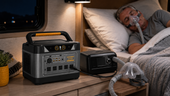
| Portable power station | No, not by itself | Yes | Yes, when used according to product instructions | Indoor backup, CPAP, routers, refrigerators, laptops, camping, RV trips | Runtime is limited by battery capacity and load wattage. |
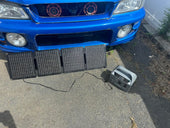
| Solar generator kit | The solar panel creates power; the station stores and delivers it | Yes | The power station can be used indoors; solar panels work outdoors in sun | Quiet off-grid charging, camping, RV use, emergency backup | Solar input depends on sunlight, panel angle, shade, and weather. |
Practical safety note
A fuel generator should never be used indoors, in a garage, or near windows because of carbon monoxide risk. A battery-based portable power station is different: it stores electricity and has no fuel-burning engine, which is why many people choose it for indoor-friendly backup of smaller essentials.
UDPOWER Product Guide: Backup Power for Real-Life Use
Understanding power generating stations helps explain where your electricity comes from. But during a home outage, camping trip, RV weekend, or CPAP backup situation, what you need is local stored energy you can control. That is where a portable power station fits.
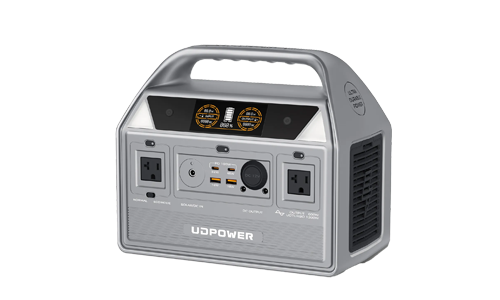
UDPOWER portable power stations are built for quiet, rechargeable backup power. For solar-ready setups, see the UDPOWER Solar Generators collection. For battery-only comparison, start with UDPOWER Portable Power Stations.

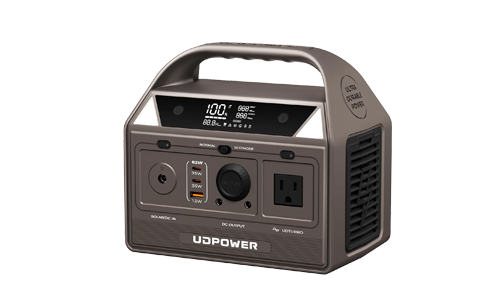
UDPOWER C400 — compact backup for short trips and light essentials
256Wh400W output800W surge6.88 lb
The C400 is a good fit when portability matters more than long runtime. Use it for phones, cameras, laptops, small fans, LED lights, short CPAP backup planning, and car-based emergency gear. It also includes a vehicle jump-start function for 12V vehicles, which gives it a roadside-use advantage over many small battery stations.
Best match: short camping trips, trunk emergency kit, weekend travel, small electronics, light backup.

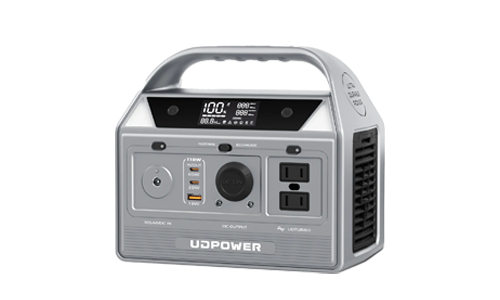
UDPOWER C600 — the balanced everyday backup choice
596Wh600W output1200W surge12.3 lb
The C600 gives you a more comfortable runtime window for common essentials without becoming hard to carry. It is strong for routers, laptops, cameras, projectors, portable coolers, lights, small fans, and overnight emergency use when you do not need to run high-wattage appliances.
Best match: home essentials, camping comfort, small refrigerator/cooler planning, router backup, drone and camera charging.
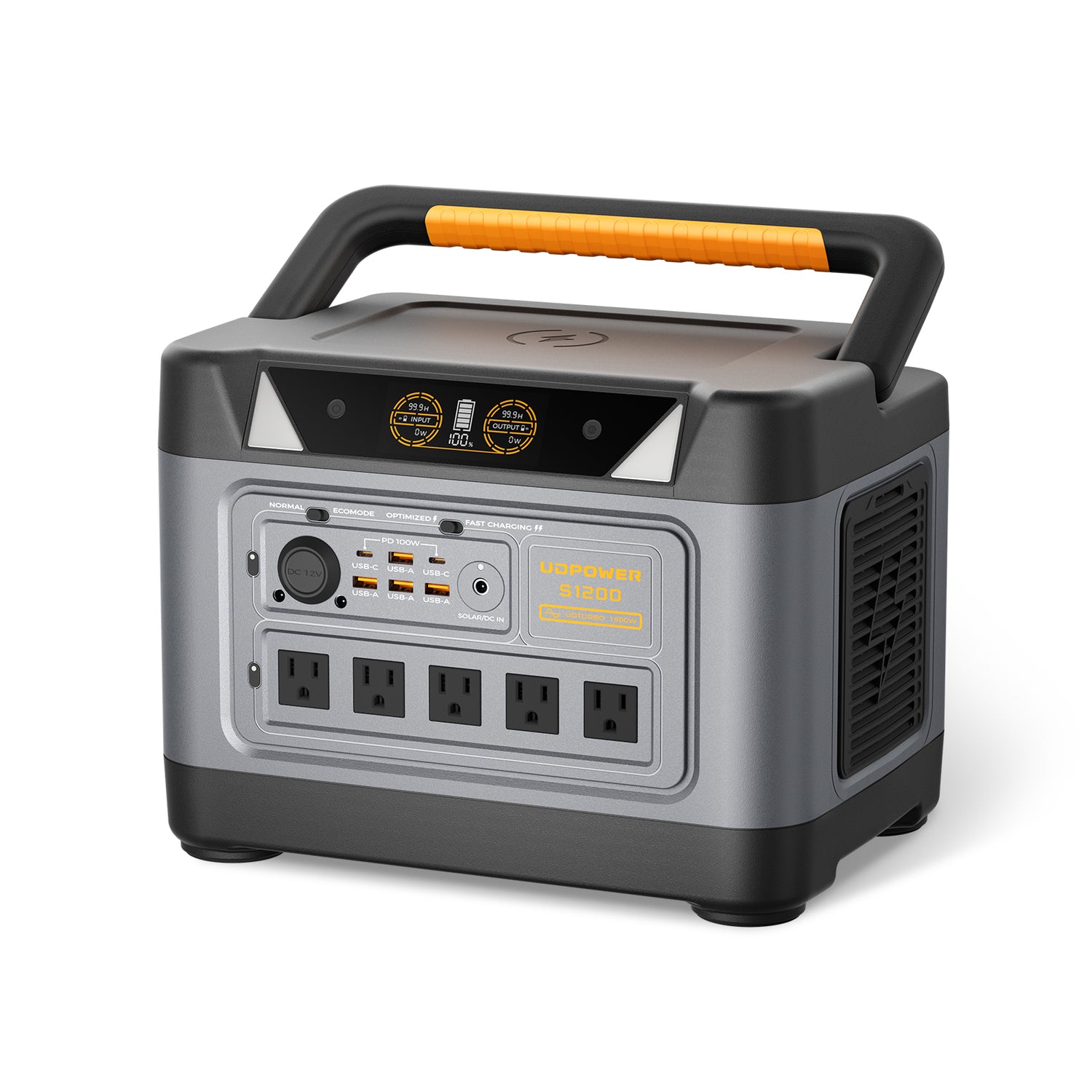
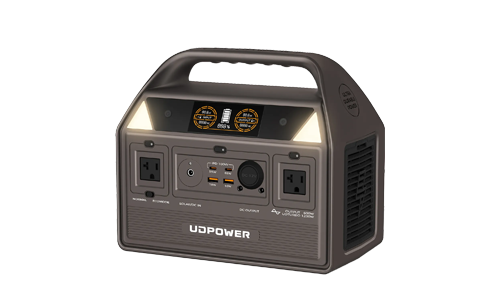
UDPOWER S1200 — home backup power for larger essentials
1,190Wh1,200W output1,800W surge26.0 lb
The S1200 is the better fit when you need longer runtime and higher output for outage planning. It can support more demanding combinations such as a refrigerator, router, phone charging, laptop, lights, and selected kitchen or work devices within the rated output limit. It also includes UPSPRIME switchover under 10ms for compatible backup use cases.
Best match: home outage kit, refrigerator planning, CPAP and router backup, RV power, work-from-home backup.
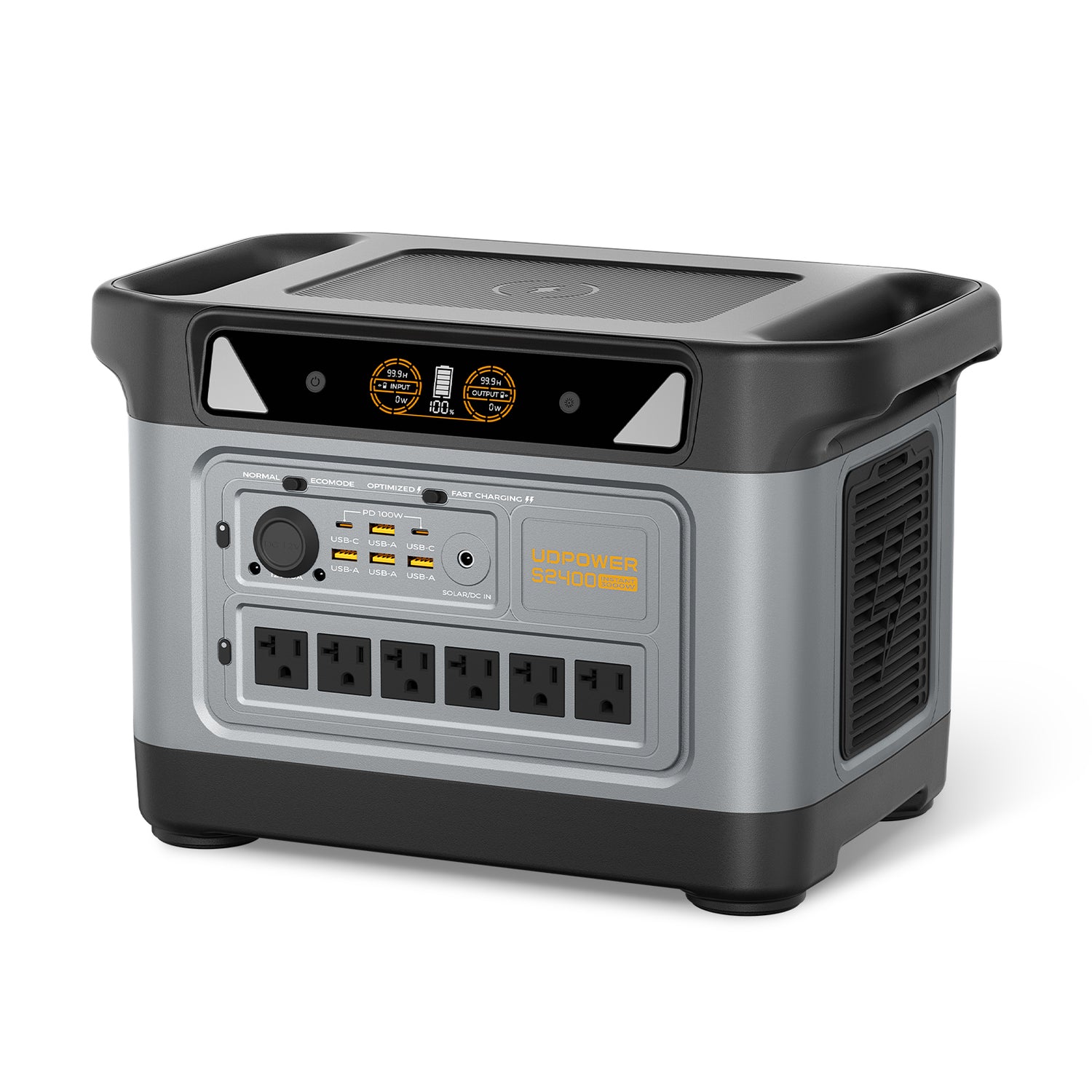
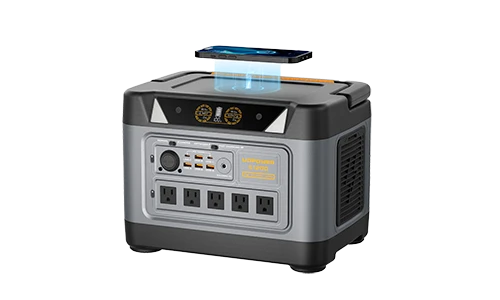
UDPOWER S2400 — high-capacity backup for bigger loads and longer outages
2,083Wh2,400W output3,000W surge40.8 lb
The S2400 is built for users who need more output headroom and longer runtime. With 6 AC outlets, multiple DC outputs, and solar input support up to 400W, it is a stronger choice for RV setups, home backup, extended outages, refrigerators, power tools within rating, and multiple-device use.
Best match: longer backup windows, larger appliances within rating, RV power, higher-output emergency setups.
| Model | Capacity | Rated AC output | Surge / peak support | Weight | Solar input | Best use case | Product source |
|---|---|---|---|---|---|---|---|
| UDPOWER C400 | 256Wh | 400W pure sine wave | 800W surge | Approx. 6.88 lb | 150W max | Light portable backup, travel, small electronics, jump-start support | C400 product page |
| UDPOWER C600 | 596Wh | 600W pure sine wave | 1200W max | 12.3 lb | 240W max | Balanced home, camping, router, laptop, camera, cooler backup | C600 product page |
| UDPOWER S1200 | 1,190Wh | 1,200W pure sine wave | 1,800W surge | 26.0 lb | 400W max | Home essentials, refrigerator planning, CPAP/router backup, RV use | S1200 product page |
| UDPOWER S2400 | 2,083Wh | 2,400W pure sine wave | 3,000W surge | 40.8 lb | 400W max | Longer outages, RVs, multiple devices, larger loads within rating | S2400 product page |
Runtime Examples for Common Home and Outdoor Loads
Runtime is where many shoppers get misled. A 1200W power station does not mean it runs everything for 1200 hours, and a 600W output rating does not tell you battery capacity. Use this simple planning formula:
Practical runtime formula
Estimated runtime = battery capacity (Wh) × 0.85 ÷ device watts
The 0.85 factor is a practical planning estimate for inverter and system losses. Actual runtime can be higher or lower depending on device behavior, temperature, battery age, power mode, and whether the load cycles on and off.
| Load example | Typical watts | C400 256Wh | C600 596Wh | S1200 1,190Wh | S2400 2,083Wh | Planning note |
|---|---|---|---|---|---|---|
| Wi-Fi router / modem | 20W | About 10.9 hrs | About 25.3 hrs | About 50.6 hrs | About 88.5 hrs | Good use case for battery backup because the load is small. |
| Laptop | 60W | About 3.6 hrs | About 8.4 hrs | About 16.9 hrs | About 29.5 hrs | Actual draw may drop after the laptop battery is full. |
| LED light string / small lighting | 10W | About 21.8 hrs | About 50.7 hrs | About 101 hrs | About 177 hrs | Lighting is one of the most efficient emergency uses. |
| CPAP without heated humidifier | 30–50W | About 4.4–7.3 hrs | About 10.1–16.9 hrs | About 20.2–33.7 hrs | About 35.4–59 hrs | Humidifier and heated tube can sharply increase power use. |
| TV or projector | 100W | About 2.2 hrs | About 5.1 hrs | About 10.1 hrs | About 17.7 hrs | Brightness mode can change actual watts. |
| Refrigerator average draw | 60–100W average | About 2.2–3.6 hrs | About 5.1–8.4 hrs | About 10.1–16.9 hrs | About 17.7–29.5 hrs | Startup surge and compressor cycling matter; check your fridge label or meter. |
| Small coffee maker | 600–900W | Not recommended for most models | Only if within surge and short-use limits | Short sessions within rating | Better output headroom | Heating appliances drain batteries quickly. |
| Microwave / high-watt kitchen load | 1000–1500W | Not suitable | Not suitable for many microwaves | Only selected lower-watt models within rating | Better match, but runtime will be short | Check continuous watts, startup behavior, and total load stacking. |
For more runtime-specific planning, see UDPOWER’s 600Wh runtime guide, 1000W power station runtime guide, and battery charging time calculator.
How to Choose a Backup Setup After You Understand Power Stations
Once you understand the difference between grid generation and local stored power, choosing a backup setup becomes much easier. Start with your actual loads, not the biggest number on the product page.
Step 1: List what you truly need during an outage
For most households, the first backup list is not “the whole house.” It is usually:
- Refrigerator or small freezer
- Router and modem
- Phones and laptops
- LED lights
- CPAP or medical-adjacent sleep equipment
- Small fan
- Portable cooler or 12V fridge for camping/RV use
Step 2: Check running watts and startup watts
Running watts tell you the steady load. Startup watts matter for motors and compressors. Refrigerators, pumps, and some tools may briefly need more power when starting. Choose a power station that can handle both the continuous load and the startup surge.
Step 3: Choose capacity based on hours, not hope
If your essentials total 100W and you want about 10 hours, you need roughly 1,000Wh of usable energy. Because real systems have losses, a station around 1,190Wh, such as the UDPOWER S1200, is a more realistic fit than a 500–600Wh unit for that target.
Step 4: Decide whether you need solar charging
Solar is not magic during a storm, but it is very useful for multi-day outages, camping, RV travel, and off-grid work. A solar generator kit combines a portable power station with compatible solar panels. For solar-ready options, see UDPOWER Solar Generators and UDPOWER 120W Portable Solar Panel.
Step 5: Avoid “whole-home” assumptions
Portable power stations are excellent for essential loads, but they are not the same as a permanently installed whole-home battery or standby generator. Air conditioners, electric heaters, ovens, dryers, and well pumps can require much higher output and installation planning. Use a portable power station for defined essential loads unless your system is specifically designed for whole-home backup.
| Use case | Good starting point | Why | Helpful internal link |
|---|---|---|---|
| Short outdoor trip | C400 or C600 | Portable size, enough output for small electronics and comfort items. | Outdoor power stations |
| RV camping | C600, S1200, or S2400 | Depends on whether you are charging devices or powering larger AC loads. | RV camping power stations |
| Home essentials | S1200 or S2400 | More capacity and output for refrigerators, routers, lights, and multiple devices. | Home backup power stations |
| CPAP backup | C600 for lighter backup; S1200 for longer runtime | Capacity and humidifier settings strongly affect runtime. | CPAP battery backup |
| Solar-assisted backup | Solar generator kit | Solar panels help recharge the battery during daylight. | Solar generators |
Environmental and Reliability Considerations
Power generating stations are judged by more than just output. A useful electricity system needs reliability, affordability, safety, fuel availability, environmental responsibility, and enough flexibility to handle changing demand.
| Consideration | What it means | Why readers should care |
|---|---|---|
| Reliability | Can the grid provide power when demand spikes or weather changes? | Reliable generation plus transmission reduces outage risk, but local outages can still happen. |
| Dispatchability | Can a plant increase or decrease output when needed? | Flexible resources help balance solar, wind, and changing demand. |
| Emissions | Fuel-burning plants produce direct emissions; renewables and nuclear have different environmental profiles. | Cleaner generation affects air quality, climate goals, and local policy. |
| Water use | Thermal plants may need water for cooling; hydro plants depend on water flow. | Drought and heat can affect power availability in some regions. |
| Storage | Batteries and pumped hydro store energy for later use. | Storage helps make variable renewable energy more useful after sunset or when wind drops. |
| Local backup | Home batteries, portable power stations, and solar generator kits support critical loads during outages. | Your personal resilience depends on what you can power locally when the grid is down. |
Bottom Line
A power generating station is the starting point of the electricity chain. It converts fuel, water, wind, sunlight, nuclear heat, geothermal heat, or stored energy into electricity, then sends that electricity through the grid. But the grid is only one side of real-life power planning.
For homes, RVs, camping, and emergency preparedness, the practical question is: what do you need to keep running when grid power is unavailable? For small devices, a compact station like the C400 may be enough. For everyday backup, the C600 is a balanced choice. For refrigerators, routers, CPAP, and longer outages, the S1200 or S2400 gives you more capacity and output headroom.
Need Backup Power You Can Use at Home, in an RV, or Off Grid?
Compare UDPOWER portable power stations by capacity, output, weight, and solar charging options.
View Portable Power Stations View Solar Generator Kits Get a Home Backup Guide
FAQs About Power Generating Stations
What is a power generating station in simple words?
It is a facility that makes electricity. It takes an energy source such as natural gas, water, wind, sunlight, nuclear heat, coal, or geothermal heat and converts it into electrical power for the grid.
Is a power generating station the same as a power plant?
Yes. The terms power generating station, power station, generating station, and power plant are often used to mean the same thing.
What are the main parts of a power generating station?
Common parts include the energy source, turbine or conversion equipment, generator or inverter, transformer, control systems, protection equipment, cooling systems where needed, and grid connection equipment.
Do all power stations use turbines?
No. Natural gas, coal, nuclear, hydro, wind, and many geothermal plants use turbines, but solar photovoltaic power stations use solar panels and inverters rather than spinning turbines.
Why do power stations use high voltage transmission?
Electricity is stepped up to high voltage so it can travel long distances more efficiently and at lower cost. It is later stepped down to safer voltages for homes and businesses.
What is the difference between MW and MWh?
MW measures power output at a moment in time. MWh measures energy produced or used over time. A 100MW plant running at full output for 10 hours would produce 1,000MWh.
Is a portable power station a power generating station?
No. A portable power station stores electricity in a battery and delivers it through AC, USB, or DC outputs. It does not create electricity by itself. When paired with solar panels, the solar panels generate power and the station stores it.
Can a solar generator power a house?
A portable solar generator can power selected household essentials, but it usually cannot power an entire home unless the system is specifically sized and installed for whole-home backup. Start with essential loads such as a refrigerator, router, lights, phones, laptop, or CPAP.
Which UDPOWER model is best for home outages?
For light backup, the C600 can cover smaller essentials. For a stronger home outage kit, the S1200 offers 1,190Wh capacity and 1,200W output. For longer runtime and larger loads within rating, the S2400 offers 2,083Wh capacity and 2,400W output.
How do I estimate how long a portable power station will run my device?
Use this practical estimate: battery capacity in Wh × 0.85 ÷ device watts. For example, a 596Wh power station running a 100W device gives about 5 hours of realistic planning runtime.
Can I use solar panels with a portable power station?
Yes, if the solar panel voltage, current, wattage, and connector are compatible with the power station input. UDPOWER solar generator kits are designed to pair compatible panels with compatible power stations.
What should I power first during an outage?
Prioritize essentials: medical or sleep equipment, refrigerator or freezer, router, phone, lighting, and basic communication devices. Avoid high-heat appliances unless your power station is rated for them and you understand how quickly they drain the battery.
Related UDPOWER Guides and Collections
External Sources Used for Data Checks
- U.S. Energy Information Administration — How electricity is generated
- U.S. Energy Information Administration — Electricity in the United States
- U.S. Energy Information Administration — Electricity delivery to consumers
- U.S. Energy Information Administration — U.S. electricity generation in 2025 hit a record
- U.S. Department of Energy — Electricity 101