How to Convert HP to Wattage (Horsepower to Watts)
ZacharyWilliam- 0.5 hp ≈ 373 W
- 1 hp ≈ 746 W
- 1.5 hp ≈ 1,119 W
- 2 hp ≈ 1,491 W
But here is the part most quick answers skip: if you are sizing a portable power station, generator, inverter, pump backup, or tool circuit, the actual electrical draw is usually higher than the bare hp-to-watt conversion because motor efficiency, voltage, and startup surge all matter.

If you searched “how to convert hp to wattage,” you probably do not need a physics lecture. You need a number you can actually use. Maybe you are checking whether a pump will run on a backup battery. Maybe you are comparing a motor nameplate to a power station. Maybe you are looking at a tool, air compressor, sump pump, or small machine and want to know what the horsepower label means in plain electrical terms.
This guide keeps it practical. First, you will get the exact conversion. Then you will get the part that matters in real life: how to turn that conversion into a smarter buying or backup-power decision.
What hp to watts really means
Horsepower is a measure of power output. Watts are also a measure of power. The reason people convert hp to watts is simple: watts are easier to compare with modern electrical products, especially batteries, inverters, power stations, and appliance labels.
In everyday U.S. use, when someone says “1 hp motor,” they usually mean mechanical horsepower. That converts to 745.7 watts. But on some imported equipment, you may see metric horsepower instead, which is slightly lower.
| Horsepower type | 1 hp in watts | Where you may see it | What to do |
|---|---|---|---|
| Mechanical horsepower | 745.7 W | Most U.S. consumer and workshop discussions | Use this as your default unless the label says otherwise |
| Metric horsepower (PS / CV) | 735.5 W | Some imported motors, pumps, and European-style specs | Use this only when the product clearly uses metric hp |
Conversion reference: NIST Guide to the SI conversion factors.
The horsepower to watts formula
For standard mechanical horsepower, use this formula:
If you want the answer in kilowatts instead of watts, divide by 1,000:
Examples:
- 0.25 hp × 745.7 = 186.4 W
- 0.5 hp × 745.7 = 372.9 W
- 1 hp × 745.7 = 745.7 W
- 2 hp × 745.7 = 1,491.4 W
- 5 hp × 745.7 = 3,728.5 W
That is the exact conversion. But if your next question is “Will my battery backup run it?” or “What size power station do I need?” keep going, because the raw conversion is only the starting point.
Common hp to watt conversions table
This is the fast lookup table most readers actually want.
| Horsepower | Watts | Kilowatts | Useful shorthand |
|---|---|---|---|
| 1/8 hp | 93.2 W | 0.093 kW | Under 100 W |
| 1/4 hp | 186.4 W | 0.186 kW | About 200 W |
| 1/3 hp | 248.6 W | 0.249 kW | About 250 W |
| 1/2 hp | 372.9 W | 0.373 kW | About 375 W |
| 3/4 hp | 559.3 W | 0.559 kW | About 560 W |
| 1 hp | 745.7 W | 0.746 kW | About 750 W |
| 1.5 hp | 1,118.6 W | 1.119 kW | About 1.12 kW |
| 2 hp | 1,491.4 W | 1.491 kW | About 1.5 kW |
| 3 hp | 2,237.1 W | 2.237 kW | About 2.24 kW |
| 5 hp | 3,728.5 W | 3.729 kW | About 3.73 kW |
Source: NIST conversion factors.
Why real motor wattage is often higher than the hp conversion
This is where a lot of articles stop too early. A 1 hp motor is not always a 746-watt wall load. That 746-watt figure is the mechanical output equivalent. The electrical input can be higher because motors are not 100% efficient.
A more useful planning formula for electric motors is:
So if a motor is 1 hp and about 85% efficient:
That number is already much more useful for battery backup or inverter sizing than 746 W alone.
| Motor size | Theoretical output watts | At 80% efficiency | At 85% efficiency | At 90% efficiency |
|---|---|---|---|---|
| 0.5 hp | 372.9 W | 466 W | 439 W | 414 W |
| 1 hp | 745.7 W | 932 W | 877 W | 829 W |
| 1.5 hp | 1,118.6 W | 1,398 W | 1,316 W | 1,243 W |
| 2 hp | 1,491.4 W | 1,864 W | 1,755 W | 1,657 W |
These are planning estimates, not a substitute for the equipment label. Actual draw varies by motor design, voltage, load, and how hard the machine is working.
Best order of trust when you are sizing real equipment
- First choice: the product label or manual if it gives running watts or input watts.
- Second choice: the nameplate amps and voltage, especially for pumps and tools.
- Third choice: hp-to-watt conversion, used as a smart estimate when watts are not listed.
Startup is the other big reason people get this wrong. Motors often need a brief burst of extra power when they first start. That is why a backup unit that looks large enough on paper can still fail in the real world. Fluke notes that motor inrush current can run several times normal full-load current, which is why startup headroom matters so much for pumps, compressors, and some shop tools.
Helpful background: Fluke on motor inrush current and Fluke on power factor.
A simple real-world rule
If you are sizing backup power for a motor load, do not buy based on the raw hp conversion alone. Use the conversion as step one, then check the nameplate and leave room for startup.
- For light non-motor loads, the raw watt number is often enough.
- For pumps, compressors, refrigerators, and saws, always leave extra headroom.
- If the label data and the hp conversion disagree, trust the label.
How to size a portable power station the right way
If your real goal is not the math but the buying decision, this is the faster way to think about it.
- Convert hp to theoretical watts. Start with hp × 745.7.
- Estimate real running watts. If it is an electric motor, divide by estimated efficiency or check the nameplate.
- Check startup headroom. Motors can pull much more power when starting, even if only for a moment.
- Match the inverter output. Your power station needs enough continuous output for running load and enough surge support for startup.
- Check runtime separately. Wattage tells you whether it can run. Watt-hours tell you how long it can run.
For runtime, use this planning formula:
That is why a tool can be “compatible” with a power station and still only run for a short time. Output wattage and battery capacity are two different decisions.
To keep the math easy, you can also use UDPOWER’s portable power station runtime calculator and battery unit conversion tools after you estimate the real load in watts.
| If your load looks like this | What matters most | What to watch for |
|---|---|---|
| Small fans, chargers, routers, lights | Battery capacity and port mix | Usually easy to run; surge is not the main issue |
| Mini fridges, CPAP, small pumps | Running watts plus startup margin | Do not size by running watts alone |
| 1 hp-class motors, larger pumps, heavier tools | Continuous output, startup support, runtime | Nameplate verification is strongly recommended |
| Multiple loads at the same time | Total combined watts | Add simultaneous loads, not just the biggest one |
UDPOWER product picks by wattage range
Product bridge: once you convert horsepower into a realistic watt estimate, the next step is choosing a power station with enough output and enough battery. These picks are based on the current official UDPOWER product listings and are best used as planning shortcuts, not as a replacement for the equipment label.

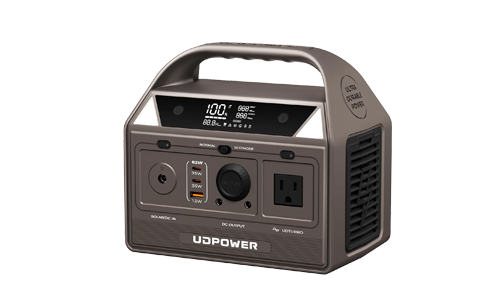
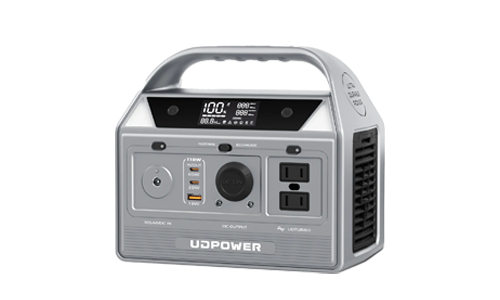
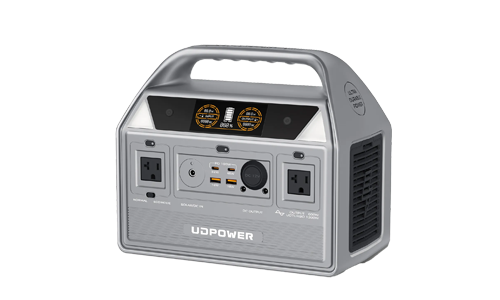
UDPOWER C600
If your converted load lands in the lower range and you are dealing with small electronics, chargers, lights, or some lighter-duty motor loads after label verification, the C600 is the first model worth looking at.
- 596Wh battery capacity
- 600W rated output
- 1200W peak output
- LiFePO₄ battery with 4,000+ cycles
- Best fit: lighter jobs, short runtimes, small gear, and portability-first use
Good companion link: portable power stations for short trips.

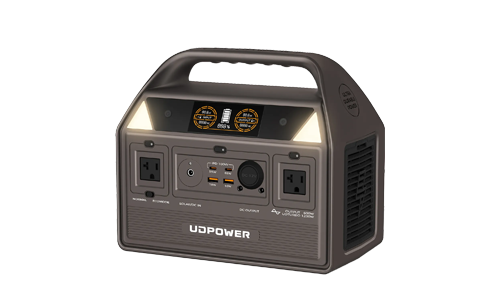
UDPOWER S1200
If your real running watts land around the upper hundreds to roughly 1,200W, the S1200 is the more realistic step up. It is a better match for people who are moving beyond simple charging and into small appliances, home backup basics, and selected motor loads after a proper startup check.
- 1,190Wh battery capacity
- 1,200W rated pure sine wave output
- UDTURBO up to 1,800W
- 26.0 lb listed weight
- UPSPRIME backup under 10 ms
- Best fit: stronger home backup, RV use, and many medium-load applications
Related collection: portable power stations for home.
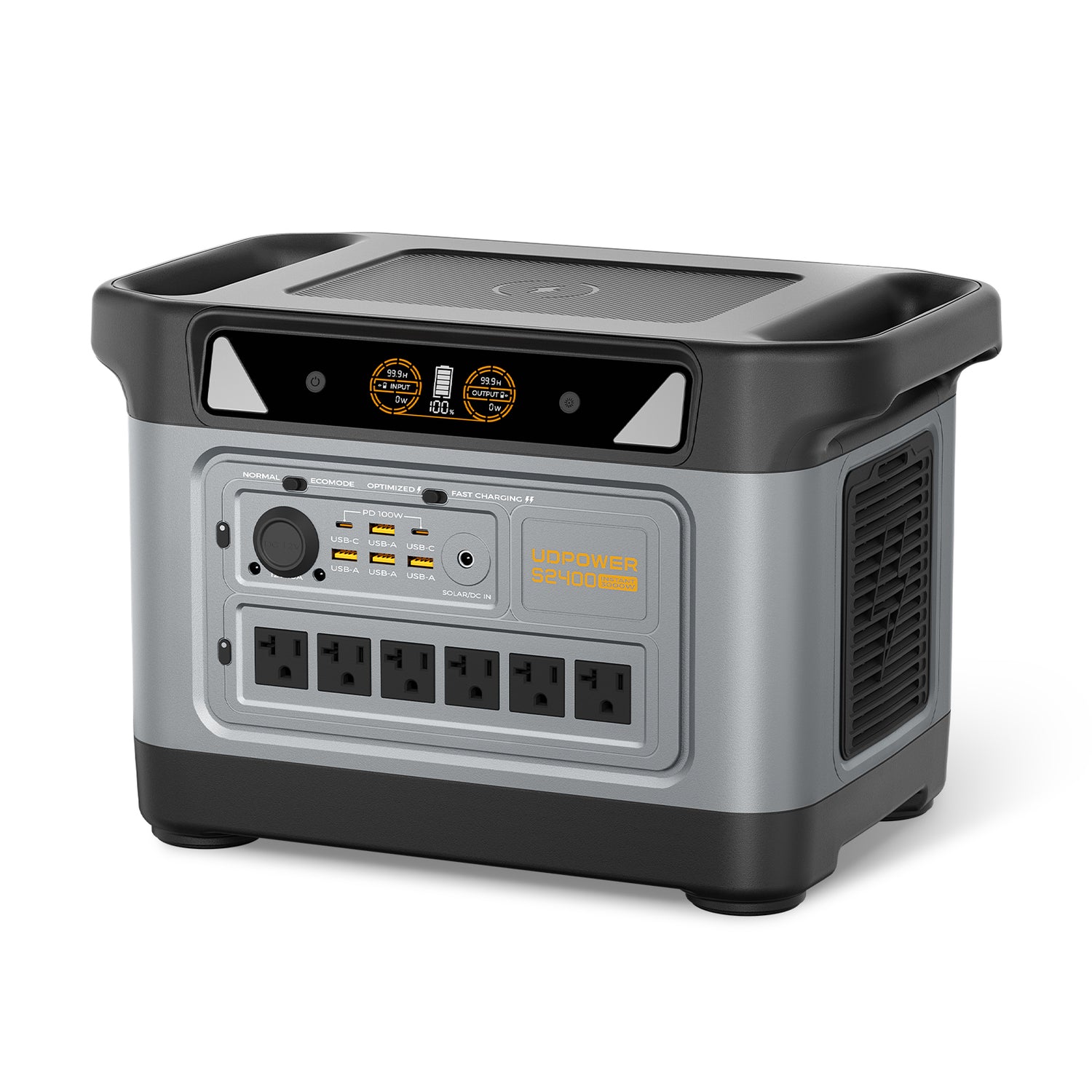
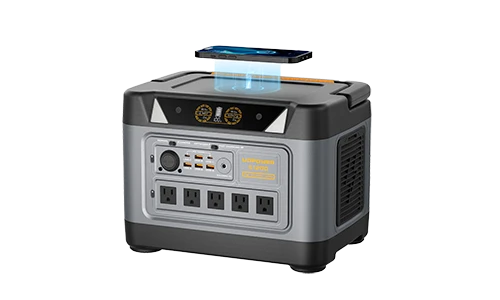
UDPOWER S2400
If your estimate lands well above 1,200W, or you are dealing with heavier motor starts and want more breathing room, the S2400 is the stronger option. This is the safer place to start when the raw hp conversion looks manageable but the real machine is the kind of load that punishes undersized backup power.
- 2,083Wh battery capacity
- 2,400W rated output
- UDTURBO surge support up to 3,000W
- UPSPRIME switchover time ≤10 ms
- Solar input 12–50V, up to 400W listed
- Best fit: heavier backup jobs, longer runtime, larger tools, and more demanding loads
Useful collection: portable power stations for RV camping or portable power stations for outdoor use.
Common mistakes people make when converting hp to watts
- Mistake 1: Treating hp as wall power. Horsepower is often output power, not the actual input draw from the outlet or battery.
- Mistake 2: Ignoring startup demand. A motor that “should” fit on paper may still fail to start.
- Mistake 3: Buying by wattage only. You also need enough battery capacity if runtime matters.
- Mistake 4: Skipping the label. If the nameplate gives volts, amps, or watts, that is usually more useful than hp alone.
- Mistake 5: Forgetting the horsepower type. Mechanical hp and metric hp are close, but not identical.
A better shortcut for ordinary readers
Use the raw hp conversion to get your first number. Then ask one question: is this a motor that starts hard? If the answer is yes, size one tier more carefully, not one tier more optimistically.
For pump-heavy use cases, this companion guide is worth reading next: Water Pump Wattage: Real Running Watts for 0.5 HP, 1 HP, 1.5 HP, and 2 HP Pumps.
FAQ
Is 1 hp always 746 watts?
It is 745.7 watts in standard mechanical horsepower, which is the normal U.S. conversion. But that does not mean a 1 hp electric motor always pulls only 746 watts from the wall.
What is 0.5 hp in watts?
0.5 hp equals about 372.9 watts. For a real motor, the electrical running draw may be higher than that.
What is 1.5 hp in watts?
1.5 hp equals about 1,118.6 watts. In real use, a 1.5 hp motor can draw more than that once efficiency losses are included.
Why does my 1 hp motor need more than 746 watts to run?
Because 746 watts is the mechanical output equivalent, not a guarantee of actual electrical input. Efficiency losses and startup surge can push the real requirement higher.
Can I size a power station using hp alone?
You can use hp as a first estimate, but you should still verify the label data and account for startup behavior. For motor-driven equipment, hp alone is not the whole story.
What is the difference between hp and kW?
Both measure power. In mechanical horsepower, 1 hp equals 0.7457 kW.
What if my equipment label only shows amps?
That can still be useful. Voltage and amperage data often give a better real-world estimate than hp alone, especially when you are trying to match a motor to backup power.
How do I estimate runtime after I know the watts?
Use battery watt-hours and divide by the load, with a realistic efficiency factor. A quick planning formula is runtime ≈ battery Wh × system efficiency ÷ load W.
Related reading on UDPOWER
Need the next step, not just the conversion?
Use the conversion to get your starting number, then match that number to the right output class, startup headroom, and runtime. That is how you avoid buying too small, overspending on capacity you do not need, or ending up with a unit that looks fine on paper but struggles in real life.