How Noisy Is a Solar Generator?
ZacharyWilliamSolar generators are famous for being “quiet,” but that doesn’t always mean “silent.” Here’s what actually makes noise, what decibel numbers mean, and how to pick a setup that won’t annoy your campsite—or your sleep.

What “noisy” means (dBA basics)
Most brands describe sound in dBA (A-weighted decibels), which roughly tracks how our ears perceive loudness. The tricky part: decibels are logarithmic, so small number changes can feel bigger than you’d expect.
Here’s a simple reference table to anchor the numbers. Source values: Yale EHS decibel chart (dBA). View source

| Sound / Environment | Approx. Level (dBA) | What it feels like | Source |
|---|---|---|---|
| Quiet natural area (no wind) | ~20 | “True quiet” (you’ll notice almost anything) | Yale EHS |
| Whisper | ~25 | Very soft, but can be noticeable in a silent room | Yale EHS |
| Suburban area at night | ~40 | Light ambient background noise | Yale EHS |
| Household refrigerator | ~55 | Steady hum; easy to ignore for most people | Yale EHS |
| Normal conversation | ~60–70 | Talking volume | Yale EHS |
| City traffic | ~85 | Loud enough to matter over time | Yale EHS |
If you’re using a solar generator indoors or in a tent, your personal “comfort zone” is often somewhere below conversation level. For longer exposure, it’s also smart to understand basic safety guidance: OSHA’s hearing conservation trigger starts at an 8-hour time-weighted average of 85 dBA (and OSHA’s permissible limit is higher). OSHA overview and NIOSH/CDC guidance are good references if you’re comparing louder equipment.
Where the noise comes from
A solar generator (portable power station + solar input) doesn’t have an engine. That’s why it’s so quiet compared to gasoline. When you do hear one, it’s usually one of these:
- Cooling fans: The most common source. Fans ramp up during higher AC loads, fast wall charging, or hot weather.
- Inverter & electronics: Occasionally a faint “coil whine” or electrical hum—more noticeable in silent rooms.
- Relays / clicks: Quick clicks when switching modes (AC on/off, UPS/EPS behavior, load changes).
- Solar isn’t the noisy part: Solar panels themselves are silent; you’ll hear wind or fabric flapping long before “solar noise.”
Typical solar generator noise ranges
There isn’t one universal number because sound changes with load, charging speed, temperature, and even where you place the unit. Still, you can think in “buckets”:

| Scenario | What you’ll likely hear | Typical noise expectation | Notes |
|---|---|---|---|
| Idle / DC-only (phone charging) | Often nothing | Near ambient | Fans may stay off; environment noise dominates. |
| Light AC load (router, small TV, laptop) | Occasional soft fan | “Whisper to quiet room” territory | Many modern units try to keep fan speed low at small loads. |
| Medium to high AC load (kitchen appliances, power tools) | Fan becomes obvious | Noticeable indoors; generally still far below a gas generator | Heat + sustained draw = fan ramps up. |
| Fast wall charging | Fan noise is common | Often the loudest “normal” use case | Some brands add a “quiet charging” option that slows charging to reduce fan noise. |
For a concrete example of how reviewers describe this: WIRED notes one portable power station’s fan sits around ~30 dB with a “quiet charging mode” option (review context varies by model and conditions). Source
Solar generator vs. gas generator (side-by-side)
If you’ve ever tried to talk over a generator, you already get the main difference: a solar generator is mostly fan noise, while a gas generator is combustion + exhaust + vibration.
| Type | Typical sound character | Example published noise spec | Source |
|---|---|---|---|
| Solar generator (battery-based) | Fan + light electronic noise | Some models are published in the “whisper-quiet” range | (See UDPOWER examples below) |
| Quiet inverter gas generator | Engine sound, but controlled | 48–57 dBA (published for Honda EU2200i) | Honda spec |
| Inverter generators (manufacturer measured at 7m, 1/4 load) | Engine sound varies with load | 58–66 dB(A) examples (Briggs & Stratton) | Briggs FAQ |
How to measure noise the right way
If you care about quiet (bedroom backup, vanlife, tent camping), do a quick “real world” check when you get your unit:
- Pick a distance: 3 feet (about 1m) is easy indoors; 23 feet (7m) is common for generator-style ratings.
- Hold the load steady: Fan behavior jumps around with changing watts. Test at a steady load for 3–5 minutes.
- Test your loudest use case: Fast wall charging + AC load is often louder than DC-only use.
- Measure when it matters: A quiet room at night reveals sounds you’d never notice at noon.
Phone meter apps are fine for rough comparisons (same phone, same distance, same room), but don’t treat them like lab instruments. If you’re comparing published numbers across brands, prioritize specs that clearly state distance and load.
How to keep your setup quiet
Most “solar generator noise problems” aren’t defects—they’re just heat management. Here are practical fixes that usually work:
- Lower the heat, lower the fan: Run smaller loads, or split loads across DC ports when possible.
- Avoid fast charging at night: If your unit supports slower/quiet charging, use it when you’re sleeping.
- Give it airflow: Don’t put it in a tight cabinet or under a blanket. Blocked vents = louder fans.
- Move it farther away: Even a few extra feet can make a big difference (distance matters a lot in dB).
- Put it on a stable surface: Hard plastic tables can “amplify” vibration; a rubber mat can reduce resonance.
UDPOWER examples (published noise specs)
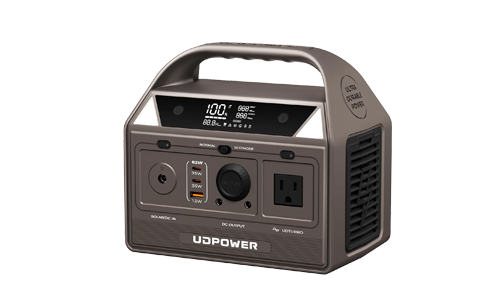
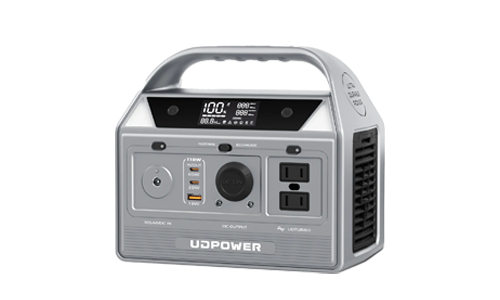
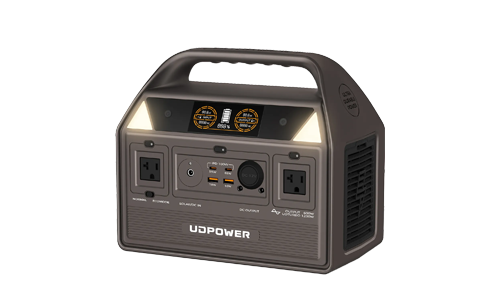
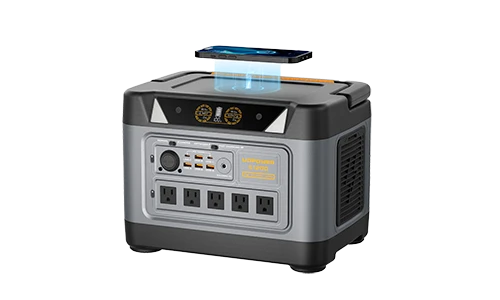
If you want quiet power for home backup or camping, it helps when a brand publishes a noise target. Below are UDPOWER models that list noise performance on their official product pages, plus the basic specs people usually compare.
Tip: If you’re pairing with solar, you can browse complete bundles in the UDPOWER Solar Generators collection and confirm compatibility details in the FAQs & User Manual.
| Model | Published noise note | Capacity | Rated output | Source |
|---|---|---|---|---|
| UDPOWER S1200 | <25 dB “whisper quiet for 24/7 use” (listed on product page) | 1,190Wh | 1,200W (pure sine wave) | Official S1200 page |
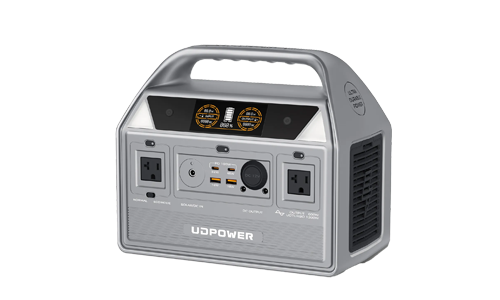
| UDPOWER C600 | Operates below 30 dB with an “advanced silent fan” (listed on product page) | 596Wh | 600W (1,200W peak) | Official C600 page |
Related reading on UDPOWER (useful if you’re building a full solar setup): Solar panel pairing guide (120W vs 210W vs 2×120W) and How to confirm a power station can run your device.
FAQ
Are solar generators “silent”?
They’re silent in the sense that there’s no engine. But most solar generators can still make sound from cooling fans, relays, or a faint electronic hum. Under light loads, many are close to “background noise.” Under heavy loads or fast charging, fans can be noticeable.
Do solar panels make noise?
Solar panels themselves don’t produce operating noise. What you might hear is wind, fabric flapping (on foldable panels), or the environment around your campsite or driveway.
When will the fan turn on?
Typically during high AC output, hot ambient temperatures, sustained mid-to-high loads, or fast wall charging. If you only run small electronics, the fan may stay off or run intermittently.
Is <25–30 dB actually quiet?
On a dBA chart, that’s in the “whisper” neighborhood—very quiet in everyday life. But in a silent room, you can still notice it. If you’re a light sleeper, plan on distance and placement doing most of the work. (A whisper is listed around 25 dBA on the Yale EHS reference chart: source.)
How do I make my solar generator quieter at night?
Avoid fast charging while sleeping, keep ventilation clear, run lower loads, and place the unit farther away. Even small distance changes can reduce perceived loudness significantly (inverse square law basics: reference).
Is a gas inverter generator “quiet enough” instead?
Quiet inverter generators can be impressive, but they still have an engine. For context, Honda publishes 48–57 dBA for the EU2200i (measured per their spec and usage context): source. If your main goal is low noise (especially overnight), battery-based solar generators usually win.
Does the “quietest” unit always mean the “best” unit?
Not always. Noise is one factor. Also consider output (watts), capacity (watt-hours), charging speed, UPS/EPS needs, and your typical loads. A quiet unit that’s undersized can force high draw and more fan noise—so sizing correctly helps quietness too.