What Is Solar Power? A Clear, Beginner-Friendly Guide to How It Works, What It Can Run, and When It Makes Sense
Solar power turns sunlight into usable energy, but most beginners still have the same questions: how does it actually work, does it work on cloudy days, and what can it realistically run? This guide explains solar power in plain English, covering panels, batteries, output limits, portable vs rooftop systems, and how to choose the right setup for home backup, RV travel, camping, or everyday use.
If you have ever looked at a solar panel, a “solar generator,” or a home backup setup and thought, “I understand the idea, but what is solar power really?” this guide is for you. We will skip the classroom jargon and focus on the things regular people actually want to know: how sunlight turns into usable electricity, what affects output, what solar can realistically run, where batteries fit in, and how to tell whether a small portable setup or a larger backup system makes sense for your life.
The short answer
Solar power is energy from the sun that gets converted into usable electricity or heat. In everyday U.S. consumer use, the term usually means solar photovoltaic (PV): solar panels capture sunlight, create DC electricity, and then either send it to a battery for storage or through an inverter so you can run normal household devices. If all you remember is one thing, remember this: solar panels make power during sunlight hours, while batteries make that power more useful after the sun moves, clouds roll in, or the grid goes down.

What solar power actually is

Solar power is not one single product. It is a way of turning sunlight into usable energy. In most consumer conversations, “solar power” means one of these three things:
Solar panels
These collect sunlight and generate electricity during the day.
Battery storage
These store some of that energy so you can use it later.
Inverters and charging electronics
These make solar power usable for phones, laptops, appliances, and other everyday gear.
A complete solar setup
This is the full chain: sunlight → panel → charge controller/electronics → battery → inverter/output ports.
The reason solar feels confusing to beginners is that people use one word for several different things. A panel is not a battery. A battery is not a panel. And a “solar generator” is usually not a traditional fuel generator at all. In most cases, it is simply a portable power station paired with compatible solar panels.
| Term | What it means | What it does in real life |
|---|---|---|
| Solar panel | PV panel that turns sunlight into DC electricity | Charges a battery or powers a solar system while the sun is available |
| Portable power station | Rechargeable battery with AC/DC/USB outputs | Runs your devices and can often recharge from solar |
| Solar generator | Usually a portable power station plus solar panels | Gives you a cleaner, quieter off-grid or backup power setup |
| Home solar system | Larger fixed installation, usually roof- or ground-mounted | Offsets home energy use and may pair with battery backup |
The U.S. Energy Information Administration explains that solar PV devices convert sunlight directly into electricity, and that larger panels can be grouped into arrays that power homes and much larger systems. Source
How solar power works step by step
The simplest way to understand solar is to follow the energy path from the sky to your device.
Step 1: Sunlight hits the panel
Solar panels are made from photovoltaic cells. Those cells absorb light and start the electrical process.
Step 2: The panel makes DC electricity
The electricity coming off the panel is direct current, or DC.
Step 3: The power gets managed
Depending on the setup, electronics regulate the incoming solar power so it can safely charge a battery or feed the system correctly.
Step 4: You either store it or use it
You can send the energy to a battery for later or convert it to AC power for standard plugs and appliances.
On the science side, EIA explains that photovoltaic cells use semiconductor materials. When photons from sunlight are absorbed, electrons are freed and begin to flow through a circuit as electricity. That is the technical core of what solar power is. Source
| Part of the system | What it does | Why it matters |
|---|---|---|
| PV cells / panel | Turns light into DC electricity | No panel, no solar input |
| Charge control / input electronics | Regulates incoming solar power | Protects the battery and improves charging performance |
| Battery | Stores energy for later use | Makes solar useful after sunset or during outages |
| Inverter | Converts DC to AC | Lets you run normal wall-plug devices |
| Outputs | USB, DC, and AC outlets | Connects your devices to the stored energy |
Solar PV vs solar thermal: most readers only need to know this
There are two big ways sunlight gets used:
Solar PV
This is what most people mean today. It creates electricity directly from sunlight.
Solar thermal
This uses the sun’s heat rather than directly making electricity. It can heat water, air, or special fluids.
If you are shopping for a foldable panel, a portable power station, a home battery backup, or a small off-grid setup, you are almost certainly dealing with solar PV, not solar thermal. EIA separately describes PV systems as electricity-producing systems and notes that solar energy can also be used for heating water, buildings, or fluids in thermal systems. Source
What affects real-world solar output
This is where beginner expectations usually go off track. A 120W or 210W panel is not a promise that you will see that exact number all day. Rated wattage is a lab-style benchmark. Real-world output moves up and down.
The biggest factors
- Sun intensity: bright direct sun beats hazy or weak sun.
- Time of day: midday is usually stronger than early morning or late afternoon.
- Season and latitude: winter days and low sun angles reduce production.
- Cloud cover: solar still works in many cloudy conditions, but output drops.
- Shade: partial shading can hurt output more than many beginners expect.
- Panel angle and direction: poor placement leaves energy on the table.
- Heat: strong sunlight is good, but high panel temperature can reduce efficiency.
- System losses: conversion losses, cable losses, and charging overhead all matter.
EIA notes that available sunlight depends on the time of day, location, season, and weather. That sounds basic, but it explains most real-world solar disappointment. The panel is not “bad” just because it is not hitting nameplate power at 8 a.m. on a cloudy winter day. Source
| Condition | What you usually see | What to do |
|---|---|---|
| Direct midday sun | Best charging performance | Use this window for your main solar harvest |
| Light clouds | Reduced but still useful output | Keep charging expectations realistic |
| Heavy overcast | Much lower output | Treat solar as a top-up, not a full replacement |
| Partial shade | Can drop output hard | Move the panel so the full face sees sunlight |
| Poor tilt angle | Lower harvest than the weather alone would suggest | Re-angle the panel and re-check input on the display |
What solar power can actually run
A better question than “What can solar power run?” is “How much solar input do I get, how much battery do I have, and how many watts does my device use?” Solar panels make energy. Batteries store energy. Your devices consume energy. Once you understand that three-part relationship, solar gets much easier to size.
Good matches for small-to-mid portable solar setups
- Phones and tablets
- Laptops
- Wi-Fi routers and modems
- LED lights
- Cameras and drones
- CPAP machines
- Small 12V fridges or efficient mini fridges
- Some TVs and work-from-home gear
Loads that need more planning
- Microwaves
- Coffee makers
- Space heaters
- Hair dryers
- Window air conditioners
- Full-size kitchen appliances
High-wattage appliances are where beginners confuse battery capacity with output power. A unit may have enough stored energy for a while, but still fail if the device’s running or surge demand is too high.
| Use case | Typical solar-friendly fit? | Why |
|---|---|---|
| Phone charging | Yes | Low power draw and easy to support |
| Laptop + router | Yes | Great match for portable solar + battery backup |
| CPAP overnight | Often yes | Usually workable with the right battery size and settings |
| Portable fridge | Often yes | Good use case if you budget for cycling and daily recharge |
| Microwave | Sometimes | Needs enough inverter output and battery headroom |
| Space heater | Usually poor fit | Consumes energy too fast for most portable solar setups |
| Window A/C | Sometimes, but advanced | Requires careful power and runtime planning |
A fast way to think about it
If your main goal is keeping small essentials alive longer, solar is excellent. If your main goal is running big heating or cooling loads for long stretches, solar is still possible, but the system gets larger, heavier, and more expensive fast.
Common solar setups for real life
1. Small backup kit
Best for phones, lights, router backup, and short power interruptions.
2. Camping or road trip setup
Best for charging personal electronics, cameras, drones, fans, and some compact fridges.
3. Work-from-home outage setup
Best for laptop, modem/router, phone, and a monitor or lamp.
4. Serious home backup setup
Best for longer outages or heavier essentials that need more output and more stored energy.
What changes between those setups?
- The size of the battery
- The maximum output power
- The number and type of ports
- The solar input the station can accept
- The panel wattage and how fast you can recharge
| Setup type | Main goal | What matters most |
|---|---|---|
| Light portable | Keep essentials charged | Weight, portability, simple charging |
| Weekend off-grid | Recharge daily from sunlight | Panel size, good weather, efficient loads |
| Remote work backup | Stay online during outages | Router runtime, laptop charging, quiet indoor-safe use |
| Home backup | Run more devices, longer | Capacity, inverter output, solar recharge speed |
UDPOWER picks that fit this topic
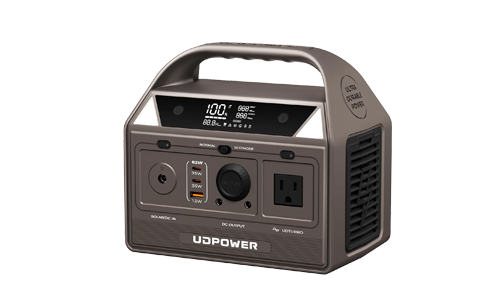
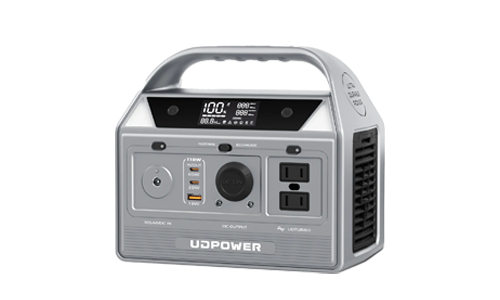
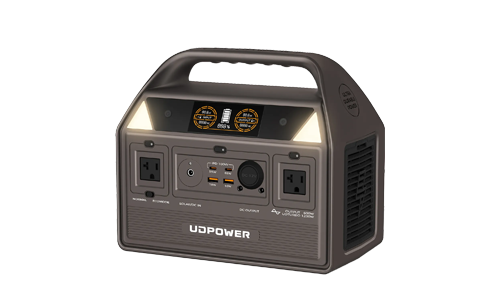
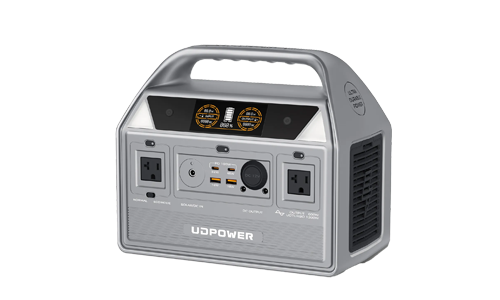
This article is mainly educational, but if you want to turn the concept of solar power into a practical setup, these are the most natural product fits from the current UDPOWER lineup.

UDPOWER S1200
A strong match for readers who now understand solar power and want a practical entry point for home backup, RV trips, camping, or remote work. The current product page lists 1,190Wh capacity, 1,200W output, fast charging, LiFePO4 battery chemistry, and <10ms UPS support.
- Great for: router, laptop, lights, CPAP, small appliance backup
- Why it fits this article: big enough to make solar feel useful, but still simple for beginners
- Pair with: 120W or 210W solar panel depending on your recharge expectations

UDPOWER S2400
If your question is not just “What is solar power?” but “How do I make it meaningfully useful at home?”, this is the stronger step up. The current page lists 2,083Wh capacity, 2,400W pure sine wave output, up to 3,000W surge, 6 AC outlets, LiFePO4 battery, and <10ms UPS.
- Great for: longer outages, heavier essentials, more devices at once
- Why it fits this article: shows how solar becomes more than a gadget and starts becoming real backup planning
- Pair with: 210W foldable panel when faster recharge matters

UDPOWER 120W Portable Solar Panel
The current product page highlights 120W rated power, 22% efficiency, IP65 weather resistance, and compatibility with UDPOWER portable power stations.
- Good fit for: lighter backup, camping, topping up smaller stations, fair-weather off-grid use
- Why it fits this article: easy way to experience how solar input works in real life

210W Portable Foldable Solar Panel
The current page lists 210W output, 22%+ efficiency, IP65 water resistance, and compatibility with the C600, S1200, and S2400.
- Good fit for: faster daytime recharging, RV use, longer outages, larger stations
- Why it fits this article: makes the jump from “solar concept” to “solar that actually helps” much easier
| Product | Current headline spec | Best fit | Link |
|---|---|---|---|
| S1200 | 1,190Wh / 1,200W / LiFePO4 / UPS | Best first serious solar-ready backup station | View product |
| S2400 | 2,083Wh / 2,400W / 3,000W surge / 6 AC | Best for heavier home backup or longer runtime goals | View product |
| 120W panel | 120W / 22% efficiency / IP65 | Best for lighter, easier solar charging | View product |
| 210W panel | 210W / ≥22% efficiency / IP65 | Best when faster charging matters more | View product |
Common mistakes and myths
“Solar panels store power.”
No. They generate power. Storage happens in a battery.
“A higher-watt panel means I always get that wattage.”
No. It means the panel is rated up to that output under specific conditions. Real-world results vary.
“If I buy a panel, I can run my gear all night.”
Not without storage. Nighttime use is a battery question, not a solar panel question.
“Solar works only in perfect weather.”
Not true. Solar still works in many imperfect conditions. It is just less productive.
“Solar is only for full home systems.”
Also not true. Some of the most practical solar setups are small, portable, and targeted at a few essential loads.
FAQ
No. Solar power is electricity produced from sunlight. A battery stores electricity for later use. In a practical setup, solar panels make the power and the battery saves some of it.
Yes, but output is lower than in strong direct sun. Cloud cover reduces solar harvest, sometimes a little and sometimes a lot, depending on the weather.
Panels can help power a home, but a complete home setup needs the right system design. For backup use, you also need storage or a grid-tied arrangement, depending on the goal.
A solar panel generates electricity from sunlight. A solar generator is usually a portable power station paired with one or more solar panels so you can both collect and store energy.
Not directly from the panel. To use solar energy at night, you need a battery that was charged earlier.
No. It is also useful for camping, RV travel, off-grid work, outdoor events, remote work backup, and cutting dependence on fuel-powered generators for smaller loads.
Phones, tablets, laptops, routers, LED lights, cameras, and other low-to-moderate power devices are usually the easiest fit. Heavy heating and cooling loads need much more planning.
Choose based on how fast you want to recharge, how much battery capacity you are pairing it with, and how portable you need the setup to be. The larger panel is usually the better choice when daily solar recovery matters more.
Yes, as long as the station’s solar input specs match the panel setup. This is one of the simplest ways for everyday users to turn solar power into practical off-grid or backup energy.
For many people, the easiest starting point is a portable power station plus one compatible foldable solar panel. It is simpler, faster to deploy, and easier to understand than a full fixed home installation.
Sources
To keep this page useful for normal readers, sources are listed plainly here rather than interrupting the article with citation markers.
| Source | What it supports in this article | Link |
|---|---|---|
| U.S. Energy Information Administration | What solar PV is, how PV cells work, and the limits of sunlight availability | Open source |
| EIA: Photovoltaics and Electricity | How PV cells convert sunlight into electricity and how panels/arrays are formed | Open source |
| U.S. Department of Energy | PV technology basics and the idea that PV materials convert sunlight into electrical energy | Open source |
| EIA: Solar energy and the environment | Context on lifecycle, materials, and why “clean while operating” still deserves nuance | Open source |
| UDPOWER S1200 product page | Current S1200 specs used in the product bridge | Open source |
| UDPOWER S2400 product page | Current S2400 specs used in the product bridge | Open source |
| UDPOWER 120W solar panel page | Current 120W panel specs used in the product bridge | Open source |
| UDPOWER 210W solar panel page | Current 210W panel specs used in the product bridge | Open source |
Ready to turn solar power into a setup that actually helps?
Reading about solar is useful. Matching the right panel and battery to your real devices is where it starts paying off.
Related Articles