How Many Wh Do I Need for Camping?
ZacharyWilliam
For most campers, the right answer is not “the biggest battery you can afford.” It is the number of watt-hours that matches your actual campsite: lights, phones, fans, CPAP, fridge, laptop, Starlink Mini, camera gear, and the number of nights you will be away from wall power.
Updated: April 27, 2026
Quick Answer: Most Campers Need 300Wh to 1,500Wh
A light overnight camper may only need 150–300Wh. A weekend campsite with phones, lights, a fan, camera batteries, and a laptop usually fits better in the 500–1,000Wh range. If you are running a CPAP overnight, a portable fridge, Starlink Mini, or multiple devices for several days, plan around 1,000–2,000Wh+.
A simple rule works well: calculate your daily device use, add 15–25% for real-world losses, then add another 20% reserve so you are not draining the battery to zero every night.
What Wh Means for Camping
Wh stands for watt-hours. It tells you how much energy a battery can store. Watts tell you how much power a device needs at one moment. Watt-hours tell you how long you can keep using it.
Device watts × hours used = watt-hours used
Example: 40W fan × 6 hours = 240Wh
This is why two campers with the same power station can get very different results. One person may only charge a phone and run a lantern. Another person may run a CPAP, fan, fridge, laptop, and satellite internet. The second campsite can use ten times more energy, even if both trips are called “weekend camping.”
For AC-powered devices, real runtime is lower than the label capacity because the power station has to convert battery power into household-style AC power. A practical planning estimate is to treat an AC load as using about 10–15% extra energy. USB-C and DC loads are usually more efficient, but the exact result depends on the device, cable, temperature, and power station settings.
Camping Wh Sizing Table
Use this table as the starting point. It is intentionally practical: it looks at the type of campsite first, not just the battery number on the box.
| Camping Style | Typical Gear | Estimated Daily Use | Recommended Battery Size | Best Fit |
|---|---|---|---|---|
| Minimal overnight | Phone, headlamp, compact lantern, small speaker | 80–180Wh/day | 150–300Wh | Compact power station or larger power bank |
| Weekend basics | 2–4 phones, LED lights, camera batteries, fan, small laptop use | 250–600Wh/day | 500–800Wh | UDPOWER C600 |
| Comfort campsite | Fan overnight, laptop, drone, projector, more lighting, multiple people | 600–1,000Wh/day | 1,000–1,500Wh | UDPOWER S1200 |
| CPAP or fridge camping | CPAP, 12V fridge, fan, lights, phones, laptop, camera gear | 800–1,500Wh/day | 1,200–2,000Wh+ | UDPOWER S2400 |
| Basecamp with high-watt appliances | Coffee maker, kettle, microwave bursts, power tools, larger fridge | Highly variable | 2,000Wh+ with high AC output | UDPOWER S2400 |
Tip: If you want an interactive estimate, use the UDPOWER portable power station runtime calculator after listing your device watts and hours.
How to Calculate Your Camping Wh
The fastest way is to build a one-day energy budget, then multiply it by the number of days you will camp without reliable recharging.
Step 1: List every device
Include the obvious items, such as phones and lights, but also the things that quietly use a lot of power: fans, CPAP heated humidifiers, portable fridges, laptops, Starlink Mini, drone chargers, and camera battery chargers.
Step 2: Find the watts
Check the device label, power adapter, user manual, or an energy meter. For USB devices, you can estimate from the battery rating. For appliances with compressors or motors, check both running watts and startup surge.
Step 3: Multiply watts by hours
A 30W fan running for 8 hours uses about 240Wh. A 65W CPAP power supply running for 8 hours can require up to about 520Wh before real-world settings and losses. A 1,000W kettle used for 5 minutes may only use about 83Wh, but it still requires a power station that can handle the high output while it is running.
Step 4: Add a real-world buffer
Add 15–25% for conversion losses, colder weather, longer-than-planned use, battery aging, and the fact that you may not want to drain the station completely. For camping, it is better to come home with 20% left than to run out before morning.
Good planning target = daily Wh × camping days × 1.2 to 1.4
Example: 500Wh/day × 2 days × 1.3 = 1,300Wh target
Camping Device Watt-Hour Table
The table below uses realistic planning ranges. Your exact device may be lower or higher, so always check the label or manual when the device is important for safety, sleep, food storage, or work.
| Device | Typical Watts | Common Camping Use | Estimated Wh Used | Planning Notes / Source |
|---|---|---|---|---|
| Smartphone | 10–20Wh per full charge | 1–2 charges | 10–40Wh | Use phone battery rating; Wh = mAh × V ÷ 1000. General estimating method: Energy.gov |
| LED lantern | 5–10W | 5 hours | 25–50Wh | Check brightness mode; low mode can cut energy use dramatically. |
| String lights | 10–20W | 4 hours | 40–80Wh | Use LED lights instead of incandescent camping lights. |
| Bluetooth speaker | 5–15W | 4 hours | 20–60Wh | Higher volume and charging while playing increase draw. |
| Camera battery charger | 10–25W | 2 hours | 20–50Wh | Mirrorless camera users should budget extra for multiple batteries. |
| Drone battery charger | 60–120W | 1 battery cycle | 60–120Wh+ | Multi-battery charging hubs can draw more; check charger label. |
| Laptop | 45–100W | 2–4 hours | 90–400Wh | Video editing, gaming, and charging from empty use more energy. |
| Camping fan | 10–40W | 6–8 hours | 60–320Wh | Overnight fan use is one of the biggest “small” campsite loads. |
| CPAP machine | 30–65W+ | 8 hours | 240–520Wh+ | Humidifier and heated tube can raise demand. Example CPAP power supply reference: ResMed AirSense 11 |
| Portable fridge / 12V cooler | 15–60W average | 24 hours | 360–720Wh | Compressor cycling, outside temperature, food load, and how often you open the lid matter. Food temperature guidance: FDA |
| Starlink Mini | 20–40W average | 6–8 hours | 120–320Wh | Official support lists Starlink Mini average power in this range: Starlink Support |
| Coffee maker | 600–1,000W | 10 minutes | 100–170Wh | Short runtime, high output. Battery size is not enough; check AC output rating. |
| Electric kettle | 1,000–1,500W | 5 minutes | 85–125Wh | Needs a high-output power station even though total Wh may look modest. |
Real Campsite Examples
These examples show why “How many Wh do I need?” is really a lifestyle question. Two nights with only phones and lights is very different from two nights with a CPAP, fridge, and fan.
Example 1: One-Person Overnight Tent Trip
| Device | Use | Wh |
|---|---|---|
| Phone | 1 full charge | 15Wh |
| LED lantern | 5W × 4 hours | 20Wh |
| Headlamp | Recharge once | 5Wh |
| Bluetooth speaker | 10W × 2 hours | 20Wh |
| Total | Before reserve | 60Wh |
A 150–300Wh setup is enough here. A larger unit may be unnecessary unless you also want a fan, laptop, or emergency backup.
Example 2: Weekend Family Campsite
| Device | Use | Wh per Day |
|---|---|---|
| 4 phones | 1 charge each | 60Wh |
| LED lighting | 20W × 4 hours | 80Wh |
| Camping fan | 25W × 6 hours | 150Wh |
| Camera / drone charging | Mixed charging | 120Wh |
| Laptop | 60W × 2 hours | 120Wh |
| Total | Before reserve | 530Wh/day |
For one night, a 596Wh-class power station can work if you manage usage. For two nights without solar, a 1,000Wh+ station is much more comfortable.
Example 3: CPAP Camping Night
| Device | Use | Wh |
|---|---|---|
| CPAP | 45W × 8 hours | 360Wh |
| Phone | 1 charge | 15Wh |
| Small light | 8W × 3 hours | 24Wh |
| Total | Before reserve | 399Wh |
For CPAP camping, do not size the battery too tightly. Heated humidification, pressure settings, cold weather, and inverter losses can change the result. A 500–1,000Wh station is a safer starting range for one night, while multi-night CPAP camping often deserves 1,000Wh+ or dependable solar.
Example 4: Powered Basecamp with Fridge and Starlink Mini
| Device | Use | Wh per Day |
|---|---|---|
| Portable fridge | Estimated 500Wh/day | 500Wh |
| Starlink Mini | 30W × 8 hours | 240Wh |
| Fan | 30W × 8 hours | 240Wh |
| Lights and phones | Shared campsite use | 120Wh |
| Laptop | 65W × 3 hours | 195Wh |
| Total | Before reserve | 1,295Wh/day |
This is where a 2,000Wh-class station starts to make sense. You can reduce the number by using DC outputs, turning off internet when not needed, pre-chilling the fridge, adding shade, and recharging with solar during the day.
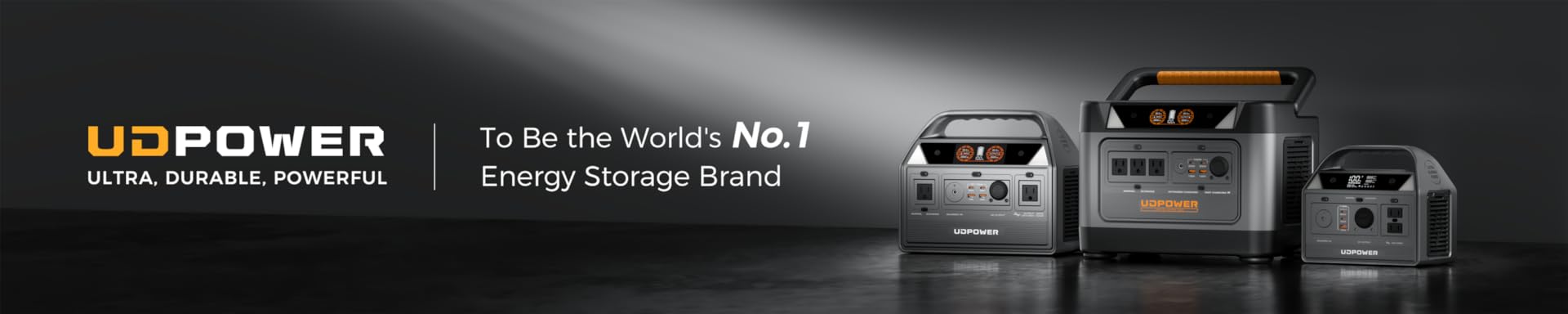
Recommended UDPOWER Camping Setups
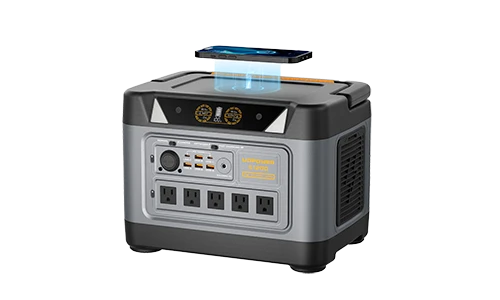
The best camping power station is the one that matches both capacity and output. Capacity tells you how long it lasts. Output tells you what it can run at the moment you plug it in.

UDPOWER C400 — Best for Light Camping and Short Trips
Choose the UDPOWER C400 if your campsite is mostly phone charging, LED lights, camera batteries, a small fan, or a laptop for short use.
- Capacity: 256Wh
- AC output: 400W pure sine wave, 800W surge
- Weight: about 6.9 lb
- Best use: overnight tent camping, compact backup, light electronics

UDPOWER C600 — Best for Weekend Camping Basics
Choose the UDPOWER C600 if you want a balanced weekend setup for phones, lights, camera gear, fan use, a laptop, and a small fridge with careful planning.
- Capacity: 596Wh
- AC output: 600W pure sine wave, 1200W max
- Weight: 12.3 lb
- Best use: weekend electronics, fan, camera/drone charging, medium off-grid use
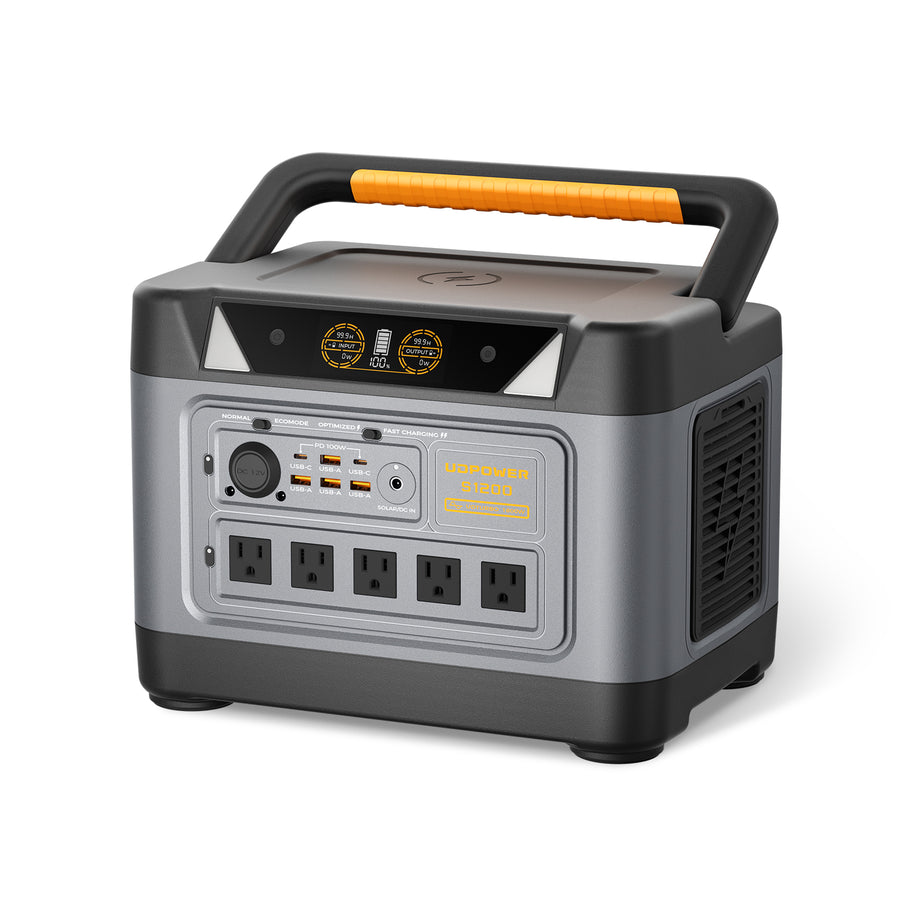
UDPOWER S1200 — Best for Comfort Camping and Longer Runtime
Choose the UDPOWER S1200 if you are powering a campsite for more people, running a fan overnight, using a CPAP, charging larger gear, or keeping more reserve for changing weather.
- Capacity: 1,190Wh
- AC output: 1,200W pure sine wave, UDTURBO up to 1,800W
- Weight: 26.0 lb
- Best use: CPAP, weekend family camping, larger electronics, backup reserve
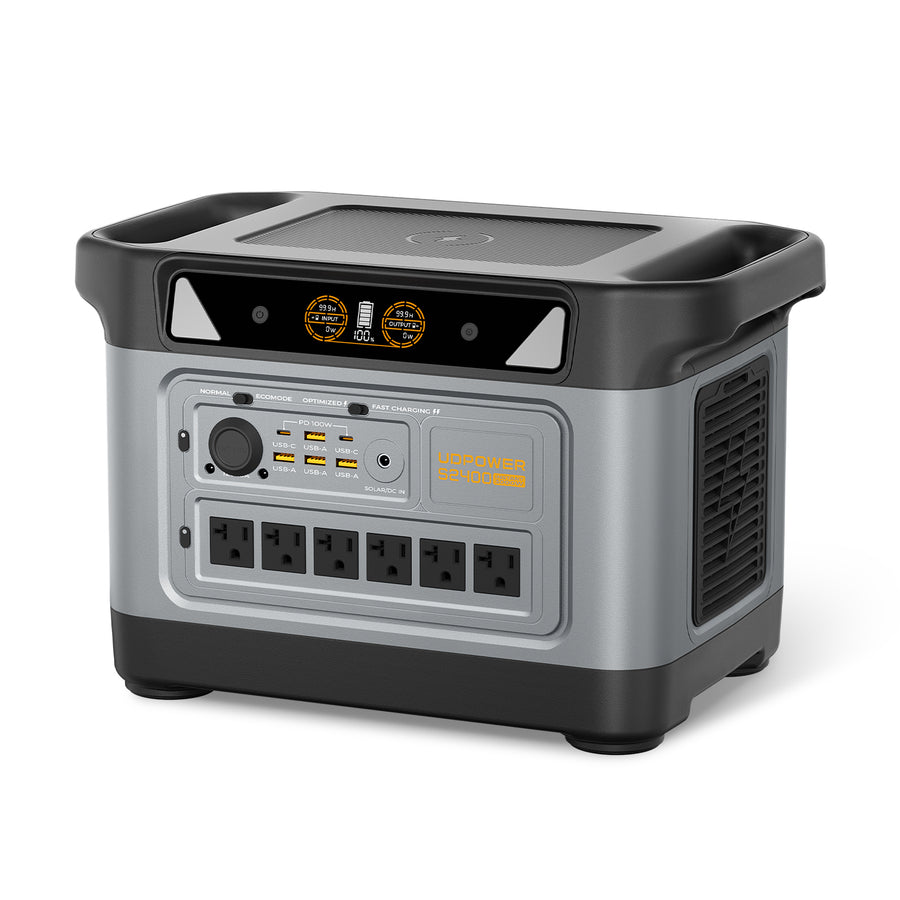
UDPOWER S2400 — Best for Powered Basecamp
Choose the UDPOWER S2400 if you want enough headroom for a fridge, CPAP, Starlink Mini, laptop, fan, and short high-watt appliance use such as a coffee maker or kettle.
- Capacity: 2,083Wh
- AC output: 2,400W pure sine wave, 3,000W surge
- Weight: 40.8 lb
- Best use: basecamp, RV support, high-watt appliances, longer fridge runtime, multi-device camping
Runtime Table by UDPOWER Model
The estimates below use about 85% usable energy for AC loads. DC and USB loads may perform differently. Always check whether the device’s startup surge is within the power station’s output rating.
| Load Example | UDPOWER C400 256Wh |
UDPOWER C600 596Wh |
UDPOWER S1200 1,190Wh |
UDPOWER S2400 2,083Wh |
|---|---|---|---|---|
| 20W lights | About 10.9 hours | About 25.3 hours | About 50.6 hours | About 88.5 hours |
| 40W fan or Starlink Mini average | About 5.4 hours | About 12.7 hours | About 25.3 hours | About 44.3 hours |
| 60W CPAP / fridge average | About 3.6 hours | About 8.4 hours | About 16.9 hours | About 29.5 hours |
| 100W laptop / small projector | About 2.2 hours | About 5.1 hours | About 10.1 hours | About 17.7 hours |
| 600W short appliance | Not recommended; exceeds rated output | Within rated output, but drains quickly | About 1.7 hours equivalent | About 3.0 hours equivalent |
| 1,200W appliance | Not supported | Not for continuous 1,200W use | Near rated limit; use carefully | About 1.5 hours equivalent |
Product capacity and output references: C400, C600, S1200, and S2400.
How Solar Changes the Number
Solar does not remove the need to size your battery. It changes the way you plan. With good sun, solar can replace part of yesterday’s use. With shade, clouds, poor angle, smoke, trees, or short winter days, output can drop sharply.
| Solar Setup | Conservative Daily Recovery | Better-Sun Daily Recovery | Best For | Planning Source |
|---|---|---|---|---|
| 120W panel | 180–300Wh/day | 300–450Wh/day | Phone, lights, fan offset, small electronics | NREL PVWatts for location-based solar estimates |
| 240W total panels | 360–600Wh/day | 600–900Wh/day | Weekend camping, laptop, fan, partial fridge offset | NREL PVWatts |
| 400W+ class solar setup | 600–1,000Wh/day | 1,000–1,500Wh/day | Basecamp, longer trips, fridge/CPAP support | NREL PVWatts |
A useful camping strategy is to size the battery for the night and bad weather, then use solar to extend the trip. If your campsite needs 700Wh per day and your solar setup reliably recovers 400Wh, you still need enough battery to handle the remaining 300Wh plus reserve.
For UDPOWER solar setups, browse solar generator kits if you want a station-and-panel bundle, or visit solar panels if you already know which station you are pairing with. Always check solar input voltage and connector compatibility before mixing panels and power stations.
Common Mistakes When Choosing Camping Wh
- Buying by watts instead of Wh. Watts tell you what the station can run. Wh tells you how long it can run.
- Ignoring startup surge. Fridges, pumps, and some tools may briefly require much more power than their running watts.
- Assuming solar always performs at the panel label rating. Panel angle, heat, clouds, shade, and cable losses all reduce real-world input.
- Running electric heat from a battery. Space heaters, electric blankets, hot plates, and kettles can drain a station quickly. Use short bursts only if the output rating allows it.
- Forgetting overnight loads. Fans, CPAP machines, and fridges run while you sleep, which makes them more important than short daytime charging.
- Not keeping a reserve. A good camping plan leaves at least 20% battery for weather changes, delays, and emergencies.
- Leaving the power station in direct sun. Solar panels need sun. The power station should stay shaded and ventilated when possible.
So, What Size Should You Buy?
If your camping power needs are simple, do not overbuy. A compact 256Wh–596Wh station can be enough for phones, lights, cameras, and short laptop use. If you want comfort items like a fan, CPAP, fridge, drone charging, or Starlink Mini, a 1,000Wh+ station becomes much easier to live with. If your campsite includes a fridge, internet, multiple people, and high-watt appliances, a 2,000Wh-class station gives you the buffer that smaller units cannot.
Fast Recommendation
Light overnight: 150–300Wh
Weekend basics: 500–800Wh
Comfort camping: 1,000–1,500Wh
Fridge / CPAP / basecamp: 1,500–2,000Wh+
FAQ: Camping Watt-Hours
Is 300Wh enough for camping?
Yes, 300Wh can be enough for a light overnight trip with a phone, headlamp, lantern, and small electronics. It is usually not enough for overnight fan use, CPAP, fridge, or multi-person weekend camping.
Is 500Wh enough for a weekend camping trip?
It can be enough for a careful weekend setup with phones, lights, camera batteries, and limited fan or laptop use. If you need a CPAP, fridge, or Starlink Mini, 500Wh may feel tight unless you recharge during the day.
How many Wh do I need for CPAP camping?
Many CPAP camping setups should start around 500–1,000Wh for one night, especially if using AC power, humidification, or heated tubing. For multiple nights, calculate your machine’s wattage and add a safety reserve.
How many Wh do I need to run a camping fridge?
A portable fridge may use roughly 360–720Wh per day depending on temperature, insulation, thermostat setting, food load, and door openings. Hot weather and poor ventilation can push usage higher.
Can a 1,000Wh power station run a campsite?
Yes, a 1,000Wh-class station is a strong fit for comfort camping. It can support lights, phones, laptops, fans, camera gear, and some overnight needs. It may still be limited if you run a fridge, CPAP, and internet together for multiple days.
Do I need 2,000Wh for camping?
You do not need 2,000Wh for basic camping. You should consider 2,000Wh if you want fridge support, CPAP, Starlink Mini, laptop work, several people charging devices, or short high-watt appliance use with more reserve.
How much battery do I need for Starlink Mini camping?
Starlink Mini commonly falls around 20–40W average power draw. For 8 hours, plan about 160–320Wh before conversion losses and reserve. If you also run a laptop and lights, size the whole campsite together.
Should I choose more watts or more Wh?
You need both, but for different reasons. Choose enough watts to start and run your devices safely. Choose enough Wh to last the number of hours or days you need.
Does solar mean I can buy a smaller power station?
Sometimes, but only if you have dependable sun and enough panel wattage. For camping, it is safer to size the battery for nighttime and bad weather, then use solar to extend runtime.
What is the best UDPOWER model for camping?
For light camping, choose C400. For weekend basics, choose C600. For comfort camping and CPAP-style needs, choose S1200. For powered basecamp, fridge support, and higher-watt appliances, choose S2400.
Choose Your Camping Power Setup
Start with your device list, calculate your daily Wh, then choose a station that gives you enough output and reserve. If you are unsure, size for the longest night, not the shortest afternoon.
Use Runtime Calculator View Camping Power Stations View Solar Generator Kits