

How Many Watts Does a TV Use: 24, 32, 50, 55, 65 Inch TV and More [With a Data Table]
Last updated: September 24, 2026
Quick Answer: How Many Watts Does a TV Use?
Most modern TVs use about 30 to 200 watts while they are on. A small 32-inch LED TV commonly uses around 30–50W, a 55-inch TV often uses about 70–120W, and many 65-inch TVs fall near 90–160W during normal home viewing.
If you do not know your exact TV wattage, 100W is a practical first estimate for a typical mid-size modern television. For a large or very bright TV, 150W is a safer planning number. Extra-large Mini-LED, OLED, older plasma, or unusually bright HDR setups can use considerably more.
The most important detail is that the wattage printed on the back of your TV may be a maximum electrical rating rather than its normal viewing power. For an electricity-cost estimate or portable power station runtime calculation, the best number is the TV's actual measured wattage while you watch the content you normally use.

TV Wattage by Screen Size
Screen size is the fastest way to estimate television wattage when the exact model is unknown. It is only a starting point, though. Two TVs with the same diagonal size can have noticeably different power consumption because of panel technology, brightness, picture mode, local dimming, HDR performance, and energy-saving settings.
| TV Size | Typical Home Viewing | Bright Room / HDR / Vivid Mode | Simple Planning Wattage | Best Use of This Number |
|---|---|---|---|---|
| 24 inches | 20–35W | 30–45W | 30W | Small bedroom, kitchen, RV, or compact TV |
| 32 inches | 30–50W | 45–65W | 40W | Bedroom, dorm, camper, small living space |
| 40–43 inches | 45–75W | 65–95W | 60W | Efficient mid-size TV |
| 50 inches | 60–100W | 85–130W | 80W | Typical family-room TV |
| 55 inches | 70–120W | 95–150W | 95W | Common living-room TV |
| 65 inches | 90–160W | 120–200W | 125W | Large living-room TV |
| 75 inches | 110–200W | 150–260W | 155W | Large-screen home theater |
| 85 inches | 150–270W | 200–330W | 210W | Extra-large, high-brightness setup |
Planning ranges are based on current consumer efficiency guidance and model-level testing trends from ENERGY STAR, RTINGS TV power testing, and EnergySage. Exact model consumption can fall outside these ranges.
How Many Watts Does a TV Use Per Hour?
This question is often phrased as “how many watts does a TV use per hour,” but watts already describe the TV's power draw at a particular moment. Energy used over time is measured in watt-hours (Wh) or kilowatt-hours (kWh).
A 100W TV running for one hour consumes:
If the same TV runs for five hours, it consumes 0.50kWh.
| TV Power | Energy in 1 Hour | Energy in 5 Hours | Energy in 8 Hours |
|---|---|---|---|
| 40W | 0.040kWh | 0.20kWh | 0.32kWh |
| 60W | 0.060kWh | 0.30kWh | 0.48kWh |
| 95W | 0.095kWh | 0.475kWh | 0.76kWh |
| 125W | 0.125kWh | 0.625kWh | 1.00kWh |
| 155W | 0.155kWh | 0.775kWh | 1.24kWh |
| 210W | 0.210kWh | 1.05kWh | 1.68kWh |
How Much Electricity Does a TV Use?
Electricity consumption depends on two numbers: the TV's actual wattage and how long it stays on.
For example, a 95W TV used five hours per day consumes:
- Per day: 95W × 5 ÷ 1,000 = 0.475kWh
- Per 30-day month: 0.475 × 30 = 14.25kWh
- Per year: 0.475 × 365 = about 173.4kWh
Estimated TV Electricity Use at 5 Hours Per Day
| TV Size | Planning Wattage | Daily Use | Monthly Use | Annual Use |
|---|---|---|---|---|
| 24 inches | 30W | 0.15kWh | 4.5kWh | 54.8kWh |
| 32 inches | 40W | 0.20kWh | 6.0kWh | 73.0kWh |
| 43 inches | 60W | 0.30kWh | 9.0kWh | 109.5kWh |
| 50 inches | 80W | 0.40kWh | 12.0kWh | 146.0kWh |
| 55 inches | 95W | 0.475kWh | 14.25kWh | 173.4kWh |
| 65 inches | 125W | 0.625kWh | 18.75kWh | 228.1kWh |
| 75 inches | 155W | 0.775kWh | 23.25kWh | 282.9kWh |
| 85 inches | 210W | 1.05kWh | 31.5kWh | 383.3kWh |
These are planning estimates, not specifications for every TV in that size class. Your own viewing hours and actual measured wattage provide a much better result.
How Much Does It Cost to Run a TV?
Once you know your TV's kWh consumption, electricity cost is straightforward:
The U.S. Energy Information Administration's August 2026 Short-Term Energy Outlook places the average U.S. residential electricity price at about 18.2 cents per kWh for 2026. Your rate may be much lower or higher depending on your state, utility, rate plan, and time-of-use pricing.
Estimated Monthly and Annual TV Cost
The table below assumes five hours of TV use per day and an electricity price of $0.182/kWh.
| TV Size | Planning Wattage | Monthly Energy | Estimated Monthly Cost | Estimated Annual Cost |
|---|---|---|---|---|
| 24 inches | 30W | 4.5kWh | $0.82 | $9.96 |
| 32 inches | 40W | 6.0kWh | $1.09 | $13.29 |
| 43 inches | 60W | 9.0kWh | $1.64 | $19.93 |
| 50 inches | 80W | 12.0kWh | $2.18 | $26.57 |
| 55 inches | 95W | 14.25kWh | $2.59 | $31.55 |
| 65 inches | 125W | 18.75kWh | $3.41 | $41.52 |
| 75 inches | 155W | 23.25kWh | $4.23 | $51.48 |
| 85 inches | 210W | 31.5kWh | $5.73 | $69.75 |
Electricity-price reference: U.S. Energy Information Administration Short-Term Energy Outlook.
TV Energy Consumption Calculator Formula
You do not need a special calculator if you know three numbers: watts, hours per day, and your electricity price.
For a 120W TV used six hours per day at $0.182/kWh:
120 ÷ 1,000 × 6 × 30 × $0.182 = about $3.93 per month.
How Many Amps Does a TV Use?
Most modern televisions draw less than 2 amps from a standard 120V U.S. household outlet. To estimate amps from watts:
For example, a 100W TV connected to a 120V outlet draws about:
100 ÷ 120 = 0.83 amps
| TV Size | Planning Wattage | Approx. Amps at 120V |
|---|---|---|
| 24 inches | 30W | 0.25A |
| 32 inches | 40W | 0.33A |
| 43 inches | 60W | 0.50A |
| 50 inches | 80W | 0.67A |
| 55 inches | 95W | 0.79A |
| 65 inches | 125W | 1.04A |
| 75 inches | 155W | 1.29A |
| 85 inches | 210W | 1.75A |
If your TV label lists volts and amps but does not list watts, you can reverse the formula:
A label showing 120V and 1.2A indicates an electrical rating of about 144W. Do not automatically assume the TV uses 144W every moment it is on. Nameplate current is often more useful as an upper electrical rating than as an everyday consumption measurement.
For a more detailed explanation, see How Many Amps Does a TV Use?
TV Power Consumption by Display Type
The letters on the box do not tell you exactly how much electricity a TV will use. Screen size, brightness and picture settings can matter as much as the underlying display technology.
| TV Type | Broad Planning Range | How Power Use Behaves | Best Way to Estimate |
|---|---|---|---|
| LED-backlit LCD | About 30–200W | Backlight level has a large effect on consumption. | Measure in your normal Standard or Cinema picture mode. |
| QLED / Mini-LED | About 60–300W+ | High brightness and strong HDR output can raise maximum power considerably. | Check both normal SDR use and bright HDR content. |
| OLED | About 60–250W+ | Power changes with the image because individual pixels generate their own light. | Measure representative content rather than one static screen. |
| Older plasma | About 100–500W | Usually consumes substantially more power than a modern LED TV. | Measure the actual set before sizing backup power. |
| Older CRT | About 60–400W | Consumption varies widely by screen size and design. | Use the label as a limit and confirm with a watt meter. |
For current television efficiency criteria and how brightness, default picture settings and HDR are considered, see ENERGY STAR Television Key Product Criteria.
What Changes a TV's Wattage the Most?
Screen Size
A larger screen has more illuminated area, so power consumption generally increases with size. Efficiency improvements can still make a newer large TV use less electricity than an older smaller set.
Brightness
Brightness is one of the biggest day-to-day variables. A TV running in a bright showroom-style mode can draw significantly more power than the same set in a comfortable home-viewing mode.
Picture Mode
Vivid, Dynamic and Sports modes often prioritize brightness and visual impact. Cinema, Standard and energy-saving modes may reduce power consumption while remaining more comfortable in a normal living room.
HDR Content
HDR can increase power demand because highlights may be driven much brighter than ordinary SDR content. If you mostly watch HDR movies or play HDR games, do not measure your TV only while it is displaying a dark menu screen.
What Is on the Screen
This is especially important for OLED. Dark scenes may use noticeably less electricity than a bright snow scene, hockey game, white webpage or high-brightness animated image.
Automatic Brightness Control
Some televisions use a room-light sensor to lower brightness automatically in darker rooms. ENERGY STAR specifically recognizes automatic brightness control as an energy-saving feature.
Connected Devices
A television may be only part of the load. Soundbars, game consoles, cable boxes, streaming devices, routers and modems can substantially change the total wattage of a home entertainment setup.
Standby and Quick-Start Features
A modern TV is not always electrically “off” when the screen is dark. Network functions, voice assistants, fast-start features and software updates may remain active.
Current ENERGY STAR television criteria limit qualifying models to no more than 0.5W in passive standby and 1.0W in network-active standby. Older TVs, non-certified models or different settings may consume more.
How to Find Your TV's Actual Wattage
If you are estimating an electric bill, generator load or portable power station runtime, measuring your own television is better than relying on a generic size chart.
1. Check the Rear Label
Look for watts, input power, volts or amps. If the label gives watts, treat it as an electrical rating unless the manufacturer specifically identifies it as typical on-mode consumption.
2. Read the EnergyGuide Label
The yellow EnergyGuide label is useful for comparing similar TVs. It shows estimated annual energy consumption and annual operating cost using a standardized test and usage assumption.
It is not the same thing as a live watt reading. The FTC television label calculation assumes five hours of on-mode use and 19 hours of standby each day.
3. Check the Manufacturer's Specifications
Some manufacturers publish typical power consumption, maximum power consumption, standby power and annual energy use separately. Make sure you know which number you are reading.
4. Use a Plug-In Watt Meter
This is the most useful approach when battery runtime matters. Plug the TV into the meter, then plug the meter into the wall.
- Set the TV to the picture mode and brightness you normally use.
- Watch ordinary SDR content for several minutes and record the typical wattage.
- If you regularly watch HDR movies or play games, run bright HDR content and note the higher readings.
- Turn on your soundbar, streaming device, router or console if you plan to power them from the same backup battery.
- Use the normal combined reading for runtime estimates and keep the higher measured load in mind when checking inverter output.
How Much Electricity Does a TV Use in 24 Hours?
If a television stayed on continuously for 24 hours, even a modest wattage would add up. The table below uses an electricity rate of $0.182/kWh.
| TV Power | Energy in 24 Hours | Approx. Cost Per 24 Hours | Approx. 30-Day Cost if Left On 24/7 |
|---|---|---|---|
| 40W | 0.96kWh | $0.17 | $5.24 |
| 95W | 2.28kWh | $0.41 | $12.45 |
| 125W | 3.00kWh | $0.55 | $16.38 |
| 210W | 5.04kWh | $0.92 | $27.52 |
This is why leaving a television on all day can matter even though a TV is not normally one of the largest electrical loads in a home.
Is It Cheaper to Leave the TV On or Turn It Off?
It is almost always cheaper to turn your TV off when you are not watching it. A television may use anywhere from roughly 30W to 200W or more while the screen is on, while a modern TV in standby usually uses only a small fraction of that amount.
There is no meaningful electricity-cost advantage to leaving a modern TV running just to avoid turning it back on later. The brief power used during startup is tiny compared with the energy consumed by leaving the screen on for another hour, several hours, or overnight.
TV On vs. Standby vs. Fully Off
| TV State | Example Power Draw | Energy Per Day | Approx. Monthly Cost |
|---|---|---|---|
| Left on 24 hours a day | 95W | 2.28kWh | $12.45 |
| Used 5 hours, standby for 19 hours | 95W on / 0.5W standby | About 0.485kWh | About $2.65 |
| Used 5 hours, completely disconnected afterward | 95W on / 0W off | 0.475kWh | About $2.59 |
The estimates above use an electricity price of $0.182 per kWh, consistent with the cost examples used elsewhere in this guide.
Does Turning a TV Off and On Use More Electricity?
No, not enough to justify leaving the TV running. A TV may briefly draw a little more power during startup, but that short burst is insignificant compared with the energy used by keeping a 50W, 100W or 200W television operating when nobody is watching.
For example, leaving a 95W TV on for an extra eight hours every night uses about 22.8kWh per month. At $0.182/kWh, that adds roughly $4.15 per month, or about $50 per year, simply from those unnecessary hours.
Should You Unplug the TV When You Are Not Using It?
Usually, you do not need to unplug a modern TV every time you finish watching it. Turning it off with the remote normally puts it into a low-power standby state.
ENERGY STAR television criteria allow no more than 0.5W in passive standby and 1.0W in network-active standby for qualifying models. TVs with quick-start modes, voice assistants, network connections or older electronics may use more.
If your TV uses 0.5W in standby for 19 hours per day, that standby consumption costs only about $0.63 per year at $0.182/kWh. So if your goal is to lower your electric bill, reducing unnecessary screen-on hours usually matters much more than unplugging the television every night.
Do TVs Use a Lot of Electricity?
Usually, no. A modern television is a relatively modest household electrical load compared with electric space heating, water heating, clothes drying, cooking appliances or central air conditioning.
A 100W TV running for five hours consumes about 0.5kWh. For comparison, a 1,500W space heater running for only one hour consumes 1.5kWh.
That does not mean TV electricity use is irrelevant. Your total rises when:
- the screen is very large;
- brightness is kept near maximum;
- the TV runs many hours every day;
- HDR or high-brightness content is used frequently;
- a game console, sound system, cable box or other devices run with it;
- the TV is left on when nobody is watching.
For most households, reducing unnecessary viewing hours and extreme brightness settings will matter more than worrying about fractions of a watt in standby.
TV Power Usage vs. Your Full Entertainment System
If you are only estimating your electricity bill, TV wattage by itself may be enough. If you are preparing for a blackout, camping trip or portable power station purchase, it is better to calculate the entire system.
A TV drawing 95W may become a 120W, 180W or 250W setup once internet equipment, a soundbar or game console is turned on.
| Example Setup | Planning Load | What to Measure |
|---|---|---|
| Efficient small TV only | About 40–60W | TV |
| Typical living-room TV only | About 95–125W | TV |
| TV + modem/router | About 110–150W | TV, modem or fiber ONT, router |
| TV + internet + sound system | About 150–200W | TV, network equipment, soundbar or speakers |
| Large TV + gaming setup | About 200–300W+ | TV, console, router, audio equipment |
These are example planning loads, not fixed specifications. Measure your own setup whenever runtime matters.
Can a Portable Power Station Run a TV?
Yes. Most modern TVs are easy loads for a portable power station. Even a 200W television is far below the continuous AC output of many current portable power stations.
The more useful question is usually not “Can it run my TV?” but “How long will it run my complete TV setup?”
Check three things:
Continuous AC Output
The power station's continuous AC output must be higher than the combined load of the television and anything else plugged into the station.
Battery Capacity in Watt-Hours
Watt-hours determine how much stored energy you have. For a low-watt TV, battery capacity usually matters much more than having an extremely high inverter rating.
AC Output Quality
For ordinary household electronics, a pure sine wave AC inverter is the preferred choice. Current UDPOWER S1200 and S2400 specifications list pure sine wave AC output.
For a dedicated compatibility guide, read Can You Run a TV Off a Portable Power Station?
How Long Will a Portable Power Station Run a TV?
For UDPOWER runtime planning, this article uses approximately 90% conversion efficiency:
For example, a 1,190Wh power station running a measured 95W TV:
1,190Wh × 0.90 ÷ 95W ≈ 11.3 hours
This is a planning estimate rather than a guaranteed runtime. Battery state of charge, temperature, inverter overhead, TV brightness, battery age, connected devices and changing screen content can affect actual results.
Estimated TV Runtime: UDPOWER S1200 vs. S2400
| Measured Load | Typical Scenario | S1200 1,190Wh | S2400 2,083Wh |
|---|---|---|---|
| 60W | Efficient small or mid-size TV | About 17.9 hours | About 31.2 hours |
| 95W | Typical 55-inch TV | About 11.3 hours | About 19.7 hours |
| 125W | Typical large living-room TV | About 8.6 hours | About 15.0 hours |
| 180W | TV + internet + streaming or audio | About 6.0 hours | About 10.4 hours |
| 250W | Large TV + gaming or extra equipment | About 4.3 hours | About 7.5 hours |
| 300W | Higher-power entertainment setup | About 3.6 hours | About 6.2 hours |
Enter your own measured television wattage into the UDPOWER Portable Power Station Runtime Calculator for a more useful estimate.
Recommended UDPOWER Portable Power Stations for TV Backup
A television itself does not require a very large inverter. The main reason to move from a smaller battery to an S1200 or S2400 is longer runtime and the ability to keep other essentials running during the same outage.
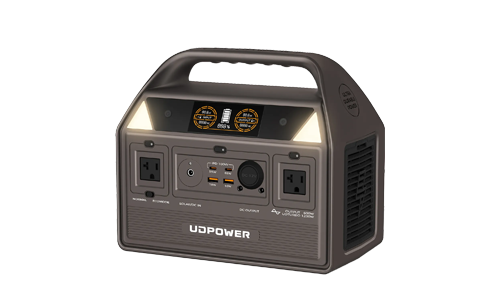
UDPOWER S1200: Best Fit for Most Home TV Backup Setups

The S1200 is a practical choice when the goal is not only to power a television, but also to keep Wi-Fi, lights, charging devices or other low-power essentials available during an outage.
| Specification | UDPOWER S1200 |
|---|---|
| Battery Capacity | 1,190Wh |
| Rated AC Output | 1,200W pure sine wave |
| Higher-Power Capability | Up to 1,800W through UDTURBO for compatible loads |
| Battery Chemistry | LiFePO4 |
| AC Outlets | 5 on the current grey version |
| Solar Input | Up to 400W |
| Weight | Approximately 26.0 lb |
| UPSPrime Switchover | <10 ms |
Example: At a measured 95W TV load, the S1200 provides a mathematical planning estimate of about 11.3 hours using the 90% efficiency assumption. At a 180W complete entertainment load, the estimate is about 6.0 hours.
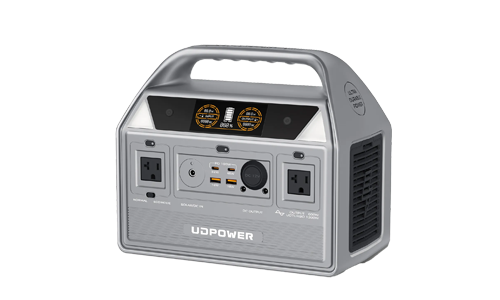
View UDPOWER S1200UDPOWER S2400: Best for Longer Outages and More Devices

The S2400 makes more sense when you want longer TV runtime or plan to run several devices at the same time. Its larger battery is the main advantage for low-watt entertainment equipment.
| Specification | UDPOWER S2400 |
|---|---|
| Battery Capacity | 2,083Wh |
| Rated AC Output | 2,400W pure sine wave |
| Higher-Power Capability | Up to 3,000W through UDTURBO for compatible loads |
| Battery Chemistry | LiFePO4 |
| AC Outlets | 6 |
| Solar Input | Up to 400W |
| Weight | Approximately 40.8 lb |
| UPSPrime Switchover | <10 ms |
Example: At a measured 95W TV load, the S2400 gives a mathematical planning estimate of about 19.7 hours. At a 180W TV, internet and audio setup, the estimate is about 10.4 hours.
View UDPOWER S2400Which One Should You Choose for a TV?
| Your Goal | Better Fit | Why |
|---|---|---|
| One TV for several hours | S1200 | More than enough AC output and strong runtime without moving to the larger battery. |
| TV + Wi-Fi + lights + device charging | S1200 | Good balance of capacity, output and portability. |
| Long overnight outage | S2400 | 2,083Wh capacity provides substantially more runtime. |
| Large TV plus several other household devices | S2400 | Larger battery, higher rated output and six AC outlets. |
| RV or extended campsite entertainment | S1200 or S2400 | Choose mainly by desired runtime and how many other devices will run at the same time. |
See all current models in the UDPOWER Portable Power Stations collection, or browse portable power stations for home backup and portable power stations for camping and RV use.
How to Reduce TV Electricity Use Without Ruining the Picture
Lower Excessive Brightness
If the TV was left in a showroom-style Vivid or Dynamic mode, reducing brightness or backlight intensity can make a meaningful difference in power consumption.
Use Automatic Brightness Control
If your TV has a room-light sensor, try it before turning the feature off. It can reduce unnecessary brightness in darker rooms.
Turn the TV Off When Nobody Is Watching
Reducing unused screen-on hours usually saves more electricity than obsessing over tiny standby loads.
Use a Sleep Timer
If you regularly fall asleep with the TV on, a sleep timer can prevent several hours of unnecessary operation every night.
Use Efficient Streaming Hardware
If your smart TV can run the streaming app directly, it may eliminate the need to power another device. Avoid using a game console purely as a streaming box when a lower-power option is available.
Compare EnergyGuide Labels When Buying a New TV
Compare annual kWh between models of similar size. A large television will usually consume more energy than a small one, so compare like-for-like rather than choosing only the lowest annual number.
Measure Before an Outage
If you own a portable power station, run a real test before you need it. Measure your normal TV setup, calculate the estimated runtime, then confirm it under your actual viewing conditions.
Frequently Asked Questions About TV Wattage and Electricity Use
How many watts does a TV use?
Most modern TVs use about 30 to 200 watts during normal viewing. Smaller 32-inch TVs commonly use 30–50W, while many 55-inch TVs use 70–120W and 65-inch models often use around 90–160W. Extra-large, very bright or older televisions can use more.
How many watts does a 32-inch TV use?
A modern 32-inch TV commonly uses about 30–50W during normal viewing. Bright settings may raise consumption. About 40W is a reasonable first estimate when the exact model is unknown.
How many watts does a 55-inch TV use?
Many 55-inch TVs use around 70–120W during normal home viewing. Bright HDR or Vivid modes can move consumption closer to 95–150W or beyond on some models.
How many watts does a 65-inch TV use?
A typical 65-inch television often falls around 90–160W during normal viewing. High-brightness HDR, Mini-LED and certain OLED models can use more, so measure your exact TV when battery runtime matters.
How many watts does a TV use per hour?
A TV does not use a different number of watts simply because one hour passes. A 100W TV draws about 100W while operating and consumes 100Wh, or 0.10kWh, of energy in one hour.
How much electricity does a TV use per month?
A 95W TV used five hours per day consumes about 14.25kWh in a 30-day month. At $0.182/kWh, that would cost about $2.59 per month. Your result depends on actual wattage, viewing hours and utility rate.
How much electricity does a TV use in 24 hours?
A 100W TV left on for 24 hours consumes 2.4kWh. A 40W TV consumes 0.96kWh, while a 200W TV consumes 4.8kWh over the same period.
How many amps does a TV use?
Most modern TVs use less than 2 amps from a 120V U.S. outlet. A 100W TV draws about 0.83A, a 125W TV about 1.04A, and a 200W TV about 1.67A.
How many kilowatts does a TV use?
Divide watts by 1,000. A 100W TV draws 0.10kW, a 150W TV draws 0.15kW, and a 200W TV draws 0.20kW while operating.
How many kWh does a TV use?
Multiply TV watts by viewing hours and divide by 1,000. A 100W TV used five hours consumes 0.5kWh. Used five hours every day for 30 days, it consumes about 15kWh.
Does a TV use a lot of electricity?
Compared with major heating, cooling and cooking appliances, most modern TVs do not use much electricity. Consumption becomes more significant with very large screens, high brightness and long daily viewing hours.
Does leaving the TV on use a lot of electricity?
It can add up. A 100W TV left on 24 hours uses 2.4kWh per day, compared with only 0.5kWh if it runs five hours. Turning the TV off when nobody is watching is one of the easiest ways to reduce its energy use.
How much power does a TV use in standby mode?
ENERGY STAR qualifying televisions are limited to 0.5W or less in passive standby and 1.0W or less in network-active standby. Actual use can be higher on older or non-certified models and when quick-start or network features remain active.
Will a 300W power station run a TV?
It can run many modern televisions if the station provides a true 300W continuous AC output and the TV plus all connected devices remain below that limit. Battery capacity in Wh determines how long the setup will run.
Will a 1,000W power station run a TV?
Yes, a power station with 1,000W of continuous AC output can run almost any ordinary household television because most TVs consume far less than 1,000W. Runtime depends mainly on battery capacity and the total connected load.
How long will a 1,000Wh battery run a 100W TV?
Using a 90% planning efficiency, the estimate is 1,000Wh × 0.90 ÷ 100W, or about nine hours. Actual runtime can be lower because of inverter overhead, temperature, battery condition and changing TV power consumption.
Can a portable power station run a TV and Wi-Fi at the same time?
Yes, as long as the combined TV, modem, router and any other connected devices remain below the power station's continuous AC output. Use the combined measured wattage when calculating runtime.
What is the most accurate way to know TV power consumption?
Use a plug-in watt meter while watching the content and picture mode you normally use. The rear label and EnergyGuide label are useful references, but a live measurement provides the best number for portable power station runtime planning.
Choose the Right Backup Power for Your TV
Start with the TV's actual wattage, add the power used by Wi-Fi, audio and streaming equipment, then choose a battery capacity based on the number of hours you want to stay powered.
View Portable Power Station Options View UDPOWER S1200 View UDPOWER S2400 Calculate Your Expected Runtime Get the Portable Power Station Sizing GuideSources and Data Notes
TV power consumption varies by model, picture mode, brightness, content and connected equipment. The ranges and calculations in this guide are intended for practical planning rather than replacing the specifications of an individual television.
- ENERGY STAR — Televisions
- ENERGY STAR — Television Key Product Criteria
- RTINGS — OLED and LED TV Power Consumption and Electricity Cost
- EnergySage — How Many Watts Does a TV Use?
- U.S. Energy Information Administration — Short-Term Energy Outlook
- Federal Trade Commission — Updated Television EnergyGuide Labels
- ENERGY STAR — Digital Media Players and Efficient Streaming
Related Articles


